The Ongoing Restoration of the Sacrament
By Nick Galieti
Among the many ordinances of the Church of Jesus Christ of Latter-day Saints, none are practiced more regularly than is the weekly partaking of the Sacrament, or Sacrament of the Lord’s Supper. Considering the regularity with which people take the Sacrament, the historic origins, as well as the symbolic and scriptural principles at the heart of this ordinance, are some of the least understood by Latter-day Saints generally. Additionally, the Sacrament ordinance is a prime example of how the restoration of all things is an ongoing part of the faith, rooted deeply in the Atonement of Jesus Christ and Heavenly Father’s Plan of Salvation. Reviewing the ancestral history, or iterations of the unifying sacraments of the past, up to current practices, help demonstrate how culture and eternal doctrine harmonize to teach the central role of Jesus Christ in the work of salvation.
Jewish tradition adopted sacramental symbolism within the Passover feasts. The Passover feast was performed in remembrance of the Children of Israel being saved in ancient Egypt. For those that followed the Prophet Moses’ council to paint the doorpost of their house with the blood of the lamb, the angel of death would pass over the inhabitants of their home. In gratitude and remembrance of God’s grace and mercy, this feast would honor and acknowledge Jehovah’s divine power to save.
Elder Jeffrey R. Holland emphasized this connection between the modern sacrament and the Passover when he stated, “every ordinance of the gospel focuses in one way or another on the atonement of the Lord Jesus Christ, and surely that is why [the sacrament] ordinance with all its symbolism and imagery comes to us more readily and more repeatedly than any other in our life. It comes in what has been called “the most sacred, the most holy, of all the meetings of the Church” (Joseph Fielding Smith, Doctrines of Salvation, comp. Bruce R. McConkie, 3 vols., Salt Lake City: Bookcraft, 1954–56, 2:340). Perhaps we do not always attach that kind of meaning to our weekly sacramental service. How “sacred” and how “holy” is it? Do we see it as our Passover, remembrance of our safety and deliverance and redemption? With so very much at stake, this ordinance commemorating our escape from the angel of darkness should be taken more seriously than it sometimes is. It should be a powerful, reverent, reflective moment. It should encourage spiritual feelings and impressions. As such it should not be rushed. It is not something to “get over” so that the real purpose of a sacrament meeting can be pursued. This is the real purpose of the meeting. And everything that is said or sung or prayed in those services should be consistent with the grandeur of this sacred ordinance.”[1]
[Read more…] about Come, Follow Me Week 12 – Doctrine and Covenants 27-28
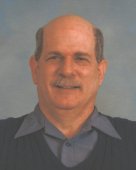 Steven L. Mayfield was born and raised in the San Francisco area. He served an LDS mission in Colorado and Nebraska. He has served in the Church as Stake Young Adult President, Elder’s Quorum counselor and instructor, Sunday School teacher, and ward clerk. Steve received a B.S. degree in police science from Weber State College (University) in 1980. His law enforcement career includes FBI file clerk (San Francisco, 1973-1977), Deputy Sheriff Jefferson County Colorado (1981-1990), and since 1994 as a crime scene investigator for the Salt Lake City Police Department. For more than the last ten years Steve has worked under the direction of George Throckmorton, and has assisted him in a number of historical/questioned document cases (non-law enforcement) including “The John D. Lee Lead Scroll.”
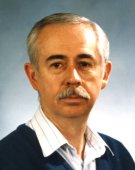 George Throckmorton recently retired from the Salt Lake City Police Department Crime Laboratory where he spent the last decade as the Director of the Lab. George has been in law enforcement for forty years and has been a Forensic Document Examiner for thirty-five of those years. George began his career with the Ogden City Police Department and has also worked for the San Diego Sheriff’s Crime Lab, Utah State Crime Lab, Utah Attorney General’s Office and the Salt Lake District Attorney’s Office. He has also taught at the Institute of Applied Science in Chicago, Washington State University, Weber State University, and is presently teaching as an Adjunct Professor at the Salt Lake Community College.