• Skip to primary navigation
  • Skip to main content
  • Skip to primary sidebar
  • Skip to footer

FAIR

  • Find Answers
  • Blog
  • Media & Apps
  • Conference
  • Bookstore
  • Archive
  • About
  • Get Involved
  • Search

Trevor Holyoak

Book Review: “The Coming Forth of the Book of Mormon: A Marvelous Work and a Wonder”

January 19, 2016 by Trevor Holyoak

The Coming Forth of the Book of Mormon: A Marvelous Work and a Wonder
Available from the FairMormon Bookstore at 15% off
This book contains the papers from the 44th Annual Brigham Young University Sidney B. Sperry Symposium, held in October, 2015. The Sperry Symposium is held annually, and draws most of its speakers from the Church Educational System. Each year’s theme is usually based on the book of scripture that will be studied by LDS adults in the coming year, and this volume fits right in with this year’s Gospel Doctrine study of the Book of Mormon.

The first paper in the book is by Elder Merrill J. Bateman. He gave the keynote speech on “The Coming Forth of Plain and Precious Truths.” He describes many aspects of the gospel that may be only vaguely mentioned in the Bible, but for which we learn much more from the Book of Mormon. Some examples are the plan of salvation, the premortal life, the fall of Adam, the atonement and resurrection, and specific doctrines taught by Christ.

[Read more…] about Book Review: “The Coming Forth of the Book of Mormon: A Marvelous Work and a Wonder”

Filed Under: Apologetics, Book of Mormon, Book reviews, Doctrine, Evidences, Joseph Smith, LDS History, LDS Scriptures, Lesson Aids, Prophets

FairMormon TV now available for Android TV and Roku

January 21, 2015 by Trevor Holyoak

FairMormon TVFairMormon TV is now available on Google Play for Android TV. Watch videos produced by FairMormon and listen to the FairMormon Radio audio stream. (The views expressed are not necessarily those of FairMormon or The Church of Jesus Christ of Latter-day Saints.)

If you have a Roku box, we are waiting for approval to have it added to the channel store, but it is still available as a private channel.

And if you have an Amazon Fire TV, the app is nearly finished for that as well. Click here to sign up to be a beta tester.

Filed Under: General, News from FAIR

Book Review: A Refuge from the Storm: The Priesthood, the Family, the Church

October 28, 2014 by Trevor Holyoak

A Refuge from the StormTitle: A Refuge from the Storm: The Priesthood, the Family, the Church
Author: Boyd K. Packer
Publisher: Deseret Book Company
Genre: Nonfiction
Year Published: 2014
Number of Pages: 224
Binding: Hardcover and Deseret Bookshelf eBook
ISBN13: 978-1609079833
Price: $25.99

Reviewed by Trevor Holyoak

Boyd K. Packer is, of course, the president of the Quorum of the Twelve Apostles of The Church of Jesus Christ of Latter-day Saints. As a general authority in the church for over 50 years, he has given many talks on the priesthood, the family, and the Church. This book is a collection of 24 of them. Many of the talks are from General Conference, but there are also some from other meetings, such as Worldwide Leadership Training, firesides, BYU Women’s Conference, and a seminar for new mission presidents. While most of the talks are available online, there are a few that are not readily available outside this book.

I was initially a little disappointed to find that this was a collection of talks and not something newly written (other than perhaps the introduction) like many other books by general authorities. But as I began to look through it, I realized that the talks (even those given decades ago) apply more to the situation the world is in today than they did when they were given. They were prophetic.

The book begins by explaining its purpose: “The gospel of Jesus Christ enables individuals to become exalted by being part of eternal families. The gospel contains the purpose, the doctrine, and the plan. The priesthood is the power and the authority. The Church has the means and the organization. The exalted, eternal family is the end of the gospel plan. In this book, we will discuss those three interconnected elements of the gospel: the priesthood, the family, and the Church” (pages ix-x). The remainder of the book is divided into three parts along those elements, with the repeating underlying message that “The ultimate end of all activity in the Church is that a man and his wife and their children might be happy at home, protected by the principles and laws of the gospel, sealed safely in the covenants of the everlasting priesthood” (page 25).

I will give an example from each section, and let the book speak for itself. In 1992, he gave some instruction that is particularly relevant today regarding the priesthood: “There are some things about the priesthood that every elder should know if he is to understand how the Church is governed to have things right before the Lord. There are principles and precepts and rules which are often overlooked and seldom taught. Some of these principles are found in the scriptures, others in the handbooks. Some of them are not found in either. They are found in the Church. You might call them traditions, but they are more than that. They are revelations which came when the Brethren of the past assembled themselves, agreed upon His word, and offered their prayers of faith. The Lord then showed them what to do. They received by revelation…These are things we do to have things right before the Lord” (pages 3-4).

He said this about The Proclamation on the Family in a Worldwide Leadership Training Broadcast in 2008: “A proclamation in the Church is a significant, major announcement. Very few of them have been issued from the beginning of the Church. They are significant; they are revelatory…It is scripturelike in its power. When you wonder why we are the way we are and why we do the things we do and why we will not do some of the things that we will not do, you can find the authority for that in this proclamation on the family. There are times when we are accused of being intolerant because we won’t accept and do the things that are supposed to be the norm in society. Well, the things we won’t do, we won’t do. And the things we won’t do, we can’t do, because the standard we follow is given of Him. As we examine this proclamation more closely, see if you don’t see in it the issues that are foremost in society, in politics, in government, in religion now that are causing the most concern and difficulty. You’ll find answers there – and they are the answers of the Church” (page 87).

In General Conference, October, 2006, he explained part of the role of the Church: “The principles of the gospel life we follow are based on doctrine, and the standards accord with the principles. We are bound to the standards by covenant, as administered through the ordinances of the gospel by those who have received priesthood and the keys of authority. Those faithful Brethren were not free, and we are not free, to alter the standards or to ignore them. We must live by them…If we are doing the best we can, we should not become discouraged. When we fall short, as we do, or stumble, which we might, there is always the remedy of repentance and forgiveness…Some suppose that our high standards will repel growth. It is just the opposite. High standards are a magnet. We are all children of God, drawn to the truth and to good…Those who come out of the world into the Church, keep the commandments, honor the priesthood, and enter into activity have found the refuge” (pages 150-153).

As I read this book, my testimony of Boyd K. Packer as a prophet, seer, and revelator has grown, as has my conviction that this is God’s church, and my understanding of the things I need to improve on as a priesthood holder, husband, and father. I highly recommend it to anyone that seeks a better understanding of their place within God’s plan and wishes to find their “refuge from the storm.”

Filed Under: Book reviews, Chastity, Doctrine, Politics, Temples

“This is a Woman’s Church”

August 9, 2014 by Trevor Holyoak


Sharon Eubank’s presentation, given on August 8 at the 2014 FairMormon Conference, received the rare honor of a standing ovation. The transcript can be viewed here.

You can purchase access to the rest of the conference videos at the FairMormon Bookstore.


Sharon Eubank was born in Redding, California, to Mark and Jean Eubank. She received a bachelor’s degree in English from Brigham Young University and served as a full-time missionary for the Church of Jesus Christ of Latter-day Saints in the Finland Helsinki mission. Her career includes working as a legislative aide in the U.S. Senate for 4 years and owning a retail education store in Provo, Utah, for 7 years.

Since 1998, she has been employed by the Church in the Welfare Department. She helped to establish 17 international LDS employment offices Africa and Europe. For five years she directed the humanitarian wheelchair program expanding its scope to 50,000 individual donations each year and implementing World Health Organization training standards.

In 2008 Sharon became regional director of the LDS Charities for the Middle East Africa North area where she oversaw humanitarian work with active country offices in Egypt, Syria, Lebanon, Afghanistan, Jordan, and Morocco. She also served on the Relief Society general board during Sister Julie B. Beck’s administration until April 2012.

Currently, Sharon is the director of LDS Charities, the humanitarian organization of the Church of Jesus Christ of Latter-day Saints.

Filed Under: Apologetics, Doctrine, FAIR Conference, Gender Issues, LDS Culture, News from FAIR, Politics, pornography, Women

Book Review: Mormon’s Codex: An Ancient American Book

April 6, 2014 by Trevor Holyoak

Title: Mormon’s Codex: An Ancient American BookMormon's Codex
Author: John L. Sorenson
Publisher: Deseret Book
Genre: Nonfiction
Year Published: 2013
Number of Pages: 826 pages
Binding: Hardcover
ISBN13: 978-1609073992
List Price: $59.99 (currently available from FairMormon bookstore for $50.99)

Reviewed by Trevor Holyoak

John L. Sorenson has been studying the relationship of the Book of Mormon to Mesoamerica for over 60 years. He received an MA in archaeology from BYU and a PhD in anthropology from UCLA. His best known book prior to this was “An Ancient American Setting for the Book of Mormon,” published in 1985.

“Mormon’s Codex” is the culmination of his studies. It begins with a Foreword by Terryl Givens and then has three main sections followed by an appendix. At the center of the book are colorful maps and photographs of places and artifacts. There are also black and white photos interspersed throughout the text.

Part 1 is called “Orientation.” It introduces the Book of Mormon and its orgins and tells us about problems with archaeology. One way archaeologists have been able to base the Bible in reality is through finding convergences where the text agrees with archaeological findings. This book investigates the same type of convergences between the Book of Mormon and Mesoamerica. This is not easy, because “only a fraction of the material that was left behind by ancient peoples has been preserved and is waiting to be found” (page 11). There is also the problem that only a fraction of what has been discovered has been excavated, and only a fraction of the items found have been studied and published. In spite of this, there is a tendency among archaeologists to “speak as if their data were complete and their inferences were facts” (page 12).

Sorenson lists key places from the Book of Mormon text and then places them on the map. He has found that a limited Mesoamerican geography is the best fit, specifically around Guatemala. He has gone as far as to identify plausible locations for many places, such as the narrow neck of land, the east and west seas, the river Sidon, the city of Nephi, and the final Nephite and Jaredite battleground (this is the only Jaredite place that he is very certain about). He concludes that the text of the Book of Mormon fits this area so well that it only could have been produced by people living in that place and time.

The histories of the Jaredites and Nephites are laid out, followed by a parallel history of Mesoamerica. It is also pointed out that there is a limited amount of history to go on from the Book of Mormon (three centuries are covered in a mere four pages, for instance).

Part 2 covers “Correspondences by Topic.” It first lays out geographical correspondences, such as distances and characteristics of the land. This is where a possible site for Jerusalem is first mentioned, a submerged city called Samabaj that was discovered recently in Lake Atitlan.

Evidence for transoceanic voyages is laid out, with a list of some of the plants that have been found in both hemispheres. This is followed by a similar list of diseases, as well as a discussion of languages, records, and writing systems. Also covered are human biology, political economy, society, population and distribution, material culture, government and political processes, warfare, knowledge systems, and ideology and religion.

Part 3 has “Correspondences from Archaeology and History.” I found this part to be the most interesting. It is split up into four time periods: before 600 BC, between 600 and 1 BC, between AD 1 and 200, and between AD 200 and 400. One of the things discussed is the apparent absence of fortifications, since they are a common part of the war chapters. There have actually been more found than is commonly recognized. Sorenson has tabulated 75 named sites that date before AD 400. (It hasn’t been published because the project kept expanding.) He tells how it took generations of work at Tikal before they realized an embankment was actually a wall. It took over 30 years to trace the miles of wall found, and it may not yet be fully revealed.

A possible location for Bountiful has been identified, based on geography, but it has not yet been studied, so Sorenson still considers such correspondence to be premature. However, Santa Rosa is a good candidate for Zarahemla, all the way down to evidence of destruction from the right time period preceding Christ’s visit in 3rd Nephi. In fact, corresponding evidence such as volcanic ash has been found in the same time period in many places in the area. This also includes the city of Jerusalem being covered with water as mentioned previously. In addition, there is evidence of significant cultural and religious
upheaval at that time which corresponds with the Book of Mormon text.

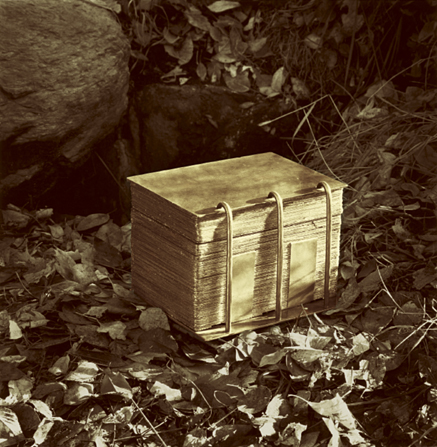
Sorenson explains how the codex (the plates) may have been transported to New York from Mesoamerica by relating the story of English sailors who trekked 3,000 miles from Mexico to Nova Scotia in 1589 over a period of nine months. And near the end of the 20th century, an adventurer named David Ingram walked 4,000 miles from Maine to Tampico in 11 months.

In the appendix, Sorenson explains how he has modified his views of the Jaredites since the publication of “An Ancient American Setting for the Book of Mormon.” He now sets them in Veracruz, with the three main lands in Jalapa, Cordoba, and Tuxtepec. And he has changed his mind to an Atlantic Ocean crossing instead of the North Pacific. However, he notes that all this still remains tentative.

I would have preferred if the book were laid out a bit differently – he tends to explain Book of Mormon history and Mesoamerican history separately and then gives a summary conclusion. He explains that “to recapitulate detailed parallels would be tedious; an alert reader can identify further general and specific correspondences” (page 665). While this may be the case, I believe it would better suit the purpose of the book to combine the parallel information, pointing out correspondences in more detail as it goes. On the other hand, I appreciate that in places where the evidence is weak or still lacking, he is quick to point it out.

This book is a treasure trove of information about New World archaeology and how it may relate to the Book of Mormon. It probably won’t convince critics (although it will be harder for them to say there is no evidence), but as a believer in the Book of Mormon as scripture and as real history, it helped me better visualize the events and people it contains. I highly recommend it to anyone interested in physical evidence for the Book of Mormon and placing it on the map.

Filed Under: Apologetics, Book of Mormon, Book reviews, Evidences, Geography, Science

Book Review: Letters to a Young Mormon

January 9, 2014 by Trevor Holyoak

Title: Letters to a Young Mormon
Author: Adam S. Miller
Publisher: Neal A. Maxwell Institute for Religious Scholarship
Genre: Religion – Faith
Year Published: 2014
Number of Pages: 78 pages
Binding: Paperback
ISBN-10: 0842528563
ISBN-13: 978-0842528566
Price: $9.95

Reviewed by Trevor Holyoak

This is the first book in a new “Living Faith” series from the Maxwell Institute. While reading it, I struggled to determine just who the “young Mormon” is that the book is aimed at. Is it for teenagers, or perhaps for 20-somethings? I think I actually understand it much better as a 40 year old father than I would have at a younger age, mostly due to the knowledge and experience I have since gained. Then I discovered, thanks to Amazon, that there has been a whole crop recently of books entitled “Letters to a Young XXXXX” (for example, Letters to a Young Contrarian by the late atheist Christopher Hitchens). Briefly looking at some of them, it appears that this book may have been loosely modeled after them. However I still question exactly who the intended audience is.

The book covers a wide range of topics of interest to Mormons, including agency, work, sin, faith, scripture, prayer, history, science, hunger, sex, temples, and eternal life. While I did find some new insights in some of these letters, much of what is contained is vague enough that any parent who shares the book with their teenage child may want to read it themselves so they can discuss it together. The chapter on sex, in particular, warrants this, as the only thing really clear in it is an admonition to avoid pornography, and then only for some of what I consider to be the right reasons.

I asked my two teenage daughters to read a couple chapters each. My 17 year old chose the chapters on history and hunger and thought they were too vague and wished the author had connected the dots. She is probably more familiar with some of the things mentioned (but not explained) in the history letter – such as “Joseph Smith’s clandestine practice of polygamy, Brigham Young’s strong-armed experiments in theocracy, or George Albert Smith’s mental illness” (page 48) – than many young LDS people her age because I have tried to teach her about some of the more difficult topics, yet she had questions about the usage of the word “clandestine” and about George Albert Smith. In fact, with that kind of loaded wording, someone picking it up off the shelf and glancing casually at the page might get the initial impression that it is anti-Mormon material. This chapter may provide an opportunity for a parent to teach their child how to find trustworthy answers for any questions that are raised.

On the other hand, my 16 year old (who doesn’t like to read and appreciated the shortness of the sections) read the prayer and the temple sections, and found she could actually relate to some of it. I think the temple chapter is one of the better ones in the book, and it was particularly timely for her because the material in it complemented what I told her in a discussion we recently had after she stumbled upon a critical video on YouTube.

There are a few other places in the book where I feel good answers are given to common issues. One example is an explanation for the seemingly unscientific account of the creation found in Genesis. The author begins by explaining that the Hebrews “thought the world was basically a giant snow globe. When God wanted to reveal his hand in the creation of their world, he borrowed and repurposed the commonsense cosmology they already had. He wasn’t worried about its inaccuracies, he was worried about showing his hand at work in shaping their world as they knew it” (page 53). Miller continues through the creation sequence as the Hebrews would have understood it, and then follows up by relating his experience in changing his point of view from a literal one that he retained beyond his mission to one that allows more for the scientific explanations of today.

In regard to some of the struggles we might have when learning about church history, he points out that “it’s a false dilemma to claim that either God works through practically flawless people or God doesn’t work at all…. To demand that church leaders, past and present, show us only a mask of angelic pseudo-perfection is to deny the gospel’s most basic claim: that God’s grace works through our weakness. We need prophets, not idols” (page 47).

Where Miller is clear on things, he excels by providing much food for thought and discussion. And in spite of its weaknesses, the bright spots in this book make it a worthwhile read for people who will not be troubled by its overwhelming vagueness, although I do believe a parental advisory may be in order.

Filed Under: Apologetics, Book reviews, LDS Culture, LDS History, LDS Scriptures, pornography, Science, Temples

Please join us for the FAIR Conference tomorrow!

July 31, 2013 by Trevor Holyoak

Although you can no longer buy tickets online, they may be purchased at the door for $64.95 for the full conference (both days) or $39.95 for a single day. (Lunch will not be included.)

If you can’t make it in person, we have video streaming available for $25. Watch it on your Roku box, your PC or Mac, or your tablet. At least a 1.5 Mbps connection will be needed for smooth streaming. And if you can’t actually watch during the conference, a video archive will be available for later viewing as part of your streaming purchase.

Either way, we hope you’ll join us!

Filed Under: Uncategorized

FAIR’s Front Page app for Android

November 13, 2012 by Trevor Holyoak

If you would like to read FAIR’s Front Page without using the full FAIR app that was announced yesterday, there is also now an app just for that.

FAIR’s Front Page contains daily news clippings about how the Church of Jesus Christ of Latter-day Saints is represented in the media. It is also available by e-mail (you can sign up at http://www.fairlds.org).

Android app on Google Play


Filed Under: Uncategorized

FAIR app now available for Android

November 12, 2012 by Trevor Holyoak

We are pleased to announce that we now have an app available for Android. It can be downloaded from Google Play. Listen to podcasts, watch YouTube videos, read the blog, and access other online FAIR content conveniently from your Android device. The ads contained in the app will help provide funds for FAIR.
 

Android app on Google Play


Filed Under: General, News from FAIR

Review: No Weapon Shall Prosper: New Light on Sensitive Issues

May 29, 2012 by Trevor Holyoak

Review of No Weapon Shall Prosper: New Light on Sensitive Issues
Edited by Robert L. Millett
Published by BYU Religious Studies Center and Deseret Book, 2011

Rather than focusing primarily on the methods commonly used by critics as other recent books of this genre do (such as Michael Ash’s Shaken Faith Syndrome, which I also highly recommend), this book contains essays that address some of the most common issues that are used to attack the faith of members of The Church of Jesus Christ of Latter-day Saints. It is intended to help the reader gain a better understanding of these topics in a faith-promoting, but scholarly and honest environment, against the flood of misinformation available online today. Indeed, the editor notes that “The Internet is filled with thousands of pages of anti-Mormon polemic, and it is extremely difficult for people to receive an honest and fair appraisal of Mormonism without significant effort on their part” (page viii).

Besides those by the editor, Robert L. Millett, the book contains contributions by Daniel L. Belnap, J. Spencer Fluhman, Steven C. Harper, Brian M. Hauglid, Daniel K. Judd, Kerry Muhlestein, Ugo A. Perego, Brent L. Top, and John W. Welch. They are split into four categories: Restored Christianity, Latter-day Saint Church History, Scriptural Perspectives, and Doctrinal Teachings. The topics include what it means to be a Christian, the various accounts of the First Vision, the Smiths’ involvement in money-digging and the supernatural, the Kinderhook plates, Joseph Smith’s youngest plural wife, DNA and the Book of Mormon, the Book of Abraham, and Jesus Christ and salvation, among many others. Many of the topics are written by experts in the area – for example, a population geneticist discusses DNA and the Book of Mormon, two Egyptologists discuss the Book of Abraham, and an editor of the Joseph Smith Papers tackles the subject of multiple versions of the First Vision. I would like to concentrate on a few topics of particular interest to me in order to give an idea of the overall book.

Kent P. Jackson’s cleverly titled “Are Christians Christians?” discusses what it means to be a Christian from the point of view of mainstream Christianity and where it came from. He examines statements from the Presbyterian and Methodist churches that declare us to be unchristian. He explains why their definition is unbiblical, and happily admits that we should not be included in it. “We, of all people, should not be offended that other churches consider our baptisms invalid and do not recognize the authority of our priesthood holders to officiate in their ordinances. Since the first days of our church’s history, we have denied the validity of the authority and ordinances of all other churches (see D&C 22). We concede that we are not members of the historic Christian church that includes our Catholic, Orthodox, and Protestant brothers and sisters. But to consider us not Christians on issues of belief is another matter” (page 55). He then goes on to explain that our definition of the word Christian is scriptural (although we have no official statement of such), and that by that definition we would also include those of other faiths previously mentioned.

Steven C. Harper, an editor of the Joseph Smith Papers, wrote about the accounts of Joseph Smith’s First Vision, saying it “may be the best documented theophany (vision of God) in history.” He finds the five different known accounts in eight statements (plus contemporary hearsay) to be “rich documentation” and “a good reason to believe him” rather than being evidence of an inconsistent and evolving story as others contend. (Page 63.) He describes how Fawn Brodie and Wesley Walters shaped the criticisms that are popular today, and did not reconsider their interpretations even when new evidence against them came to light. He points out that “those who share the skeptics’ assumptions will likely arrive at the same conclusions as the skeptics. But those who are open to the possibility that Joseph told the truth can discover other meanings from the same facts” (page 71).

Ugo A. Perego, who holds a PhD in genetics and biomolecular sciences, handles the question of whether DNA proves or disproves the Book of Mormon. He goes into great detail explaining how DNA is used in research, the current theories about migrations into the Americas, and describes the various theories for and against the Book of Mormon based on available DNA evidence. He points out the problems with each of these theories (such as evidence showing up in the wrong time period, wrong assumptions being used, and misunderstandings of the limitations of DNA research) and arrives at the conclusion that DNA evidence can neither be used to prove nor disprove that the people in the Book of Mormon actually existed. (In fact, he points out that it can’t even be used to prove that Jesus existed.) He says that “I find no difficulties in reconciling my scientific passion about Native American history with my religious beliefs. I am not looking for a personal testimony of the Book of Mormon in the double helix. …Anyone using DNA to ascertain the accuracy of historical events of a religious nature – which require instead a component of faith – will be sorely disappointed” (page 208).

One of the essays on the Book of Abraham is by Kerry Muhlestein, who has a PhD in Egyptology from UCLA. He begins by explaining how he got interested in the Book of Abraham, and why Egyptologists outside the church dismiss it. He also found that many members of the church who struggle with the issues involved with the Book of Abraham aren’t looking for an excuse to leave the church, but have “encountered well-written (though not necessarily well-documented or researched) arguments…and did not know how to answer the questions posed by these arguments.” He found that those publishing critical information are generally unaware that it is “based on incorrect information and bad assumptions. They are misled by the mistakes, lies, and trash put out by a few, and they unwittingly pass the information along without really looking into their sources” (page 219).

He then goes on to debunk some of the misinformation, such as the idea that there was no human sacrifice in ancient Egypt. He also found that one of the words supposedly made up by Joseph Smith (Olishem) has been discovered in two ancient texts. He discovered that Egyptians had access to biblical stories by 200 BC (which was the right time period for the papyri), and were particularly interested in Abraham. He presented this information to a conference put on by the Russian Academy of Science and received positive reviews. He talks about evidence that what we actually have possession of today was a very small part of what Joseph had, and gives reasons why it likely was not the source of the Book of Abraham, other than Facsimile 1. He also briefly discusses the mystery of the Kirtland Egyptian Papers, which were not likely to have been used in the translation process, as some critics have claimed. Another important point he makes is that “written by his own hand, upon papyrus” does not mean that the actual papyrus we have was written by the hand of Abraham, but that it is a copy of the original that Abraham would have written on much earlier. He also devotes several pages to Facsimile 1, pointing out many evidences (and some possible theories) for the authenticity of the interpretations provided by Joseph Smith.

Overall, I thought the book was quite good, although some essays were better than others. Some of the more doctrinal ones, in particular, presented a few points as given that not all members would agree on. But such is the nature of Mormonism. The book could be used to answer questions for oneself, to help a member friend or an investigator, or for inoculation against misinformation and half-truths encountered in a hostile environment. It would be useful reading for those preparing to serve a mission, for families, and for any individual interested in learning more about these issues or defending the church.

This book is available at the FAIR bookstore here.

Filed Under: Apologetics, Book of Mormon, Book reviews, Doctrine, Early Christianity, Joseph Smith, LDS History, Polygamy, Science

  • « Go to Previous Page
  • Go to page 1
  • Interim pages omitted …
  • Go to page 68
  • Go to page 69
  • Go to page 70
  • Go to page 71
  • Go to page 72
  • Go to Next Page »

Primary Sidebar

Faithful Study Resources for Come, Follow Me

Subscribe to Blog

Enter your email address:

Subscribe to Podcast

Podcast icon
Subscribe to podcast in iTunes
Subscribe to podcast elsewhere
Listen with FAIR app
Android app on Google Play Download on the App Store

Pages

  • Blog Guidelines

FAIR Latest

  • Come, Follow Me with FAIR – Genesis 5; Moses 6 – Part 2 – Autumn Dickson
  • Come, Follow Me with FAIR – Genesis 5; Moses 6 – Jennifer Roach Lees
  • Come, Follow Me with FAIR – Genesis 5; Moses 6 – Part 1 – Autumn Dickson
  • The Good News Recipe
  • Come, Follow Me with FAIR – Genesis 3–4; Moses 4–5 – Part 2 – Autumn Dickson

Blog Categories

Recent Comments

  • Kathleen Chin on Forsake Not Your Own Mercy
  • Wish to remain anon on In Memoriam: Sarah Allen
  • Daniel Peterson on In Memoriam: Sarah Allen
  • Matt on In Memoriam: Sarah Allen
  • Jerry Allred on Come, Follow Me with FAIR – Moses 1; Abraham 3 – Jennifer Roach Lees

Archives

Follow Us

  • Facebook
  • Twitter
  • iTunes
  • YouTube
Android app on Google Play Download on the App Store

Footer

FairMormon Logo

FAIR is a non-profit organization dedicated to providing well-documented answers to criticisms of the doctrine, practice, and history of The Church of Jesus Christ of Latter-day Saints.

Donate to FAIR

We are a volunteer organization. We invite you to give back.

Donate Now

Site Footer