• Skip to primary navigation
  • Skip to main content
  • Skip to primary sidebar
  • Skip to footer

FAIR

  • Find Answers
  • Blog
  • Media & Apps
  • Conference
  • Bookstore
  • Archive
  • About
  • Get Involved
  • Search

Apologetics

Mormon FAIR-Cast 101: Dan Peterson takes questions

August 8, 2012 by SteveDensleyJr

https://media.blubrry.com/mormonfaircast/www.fairlatterdaysaints.org/wp-content/uploads/2012/08/2012-0731-DAN-PETERSON-ANTI-MORMON-A.mp3

Podcast: Download (38.3MB)

Subscribe: RSS

Dan Peterson takes questions from callers who both support and oppose the Church on this live interview with Mills Crenshaw that appeared on K-Talk radio on July 31, 2012, in Salt Lake City, Utah. Brother Peterson answers questions about the Book of Abraham and a variety of questions about the Book of Mormon, including ones pertaining to DNA studies, Mesoamerican and Near-Eastern archaeology, and Joseph Smith’s production of the Book of Mormon.

A native of southern California, Daniel C. Peterson received a bachelor’s degree in Greek and philosophy from Brigham Young University (BYU) and, after several years of study in Jerusalem and Cairo, earned his Ph.D. in Near Eastern Languages and Cultures from the University of California at Los Angeles (UCLA). Dr. Peterson is a professor of Islamic Studies and Arabic at BYU and founder and the editor-in-chief of the University’s Middle Eastern Texts Initiative (METI). He is a past chairman of the board of the Foundation for Ancient Research and Mormon Studies (FARMS) and, until very recently, served as Director of Advancement for its successor organization, the Neal A. Maxwell Institute for Religious Scholarship. From 1988, when he founded it, through mid-June of 2012, he edited the FARMS Review, which was renamed the Mormon Studies Review in late 2011. He is the author of several books and numerous articles on Islamic and Latter-day Saint topics, including a biography of the Prophet Muhammad (Eerdmans, 2007). A former bishop, Dr. Peterson served in the Switzerland Zürich Mission, and, for approximately eight years, on the Gospel Doctrine writing committee for The Church of Jesus Christ of Latter-day Saints. He currently serves as a Gospel Doctrine teacher in his home ward. He is married to the former Deborah Stephens, of Lakewood, Colorado, and they are the parents of three sons.

This recording is posted here by permission of K-Talk Radio. The opinions expressed in this interview do not necessarily represent the views of FAIR or The Church of Jesus Christ of Latter-day Saints.

Filed Under: Anti-Mormon critics, Apologetics, Book of Abraham, Book of Mormon, FAIR Conference, Podcast

Why I Still Choose To Believe

August 8, 2012 by John Lynch

There are many paths by which we might return to God, or so some would claim. “Organized religion is not necessary” they might say, “and is too prone to abuse by those who would use it to control their fellow man.” Others who disbelieve in God entirely think it is but an opiate to the masses, or a delusional pacification into a state of peace by promising something that will never come in this life. I am aware of such arguments, and yet I am a decided member of the Church of Jesus Christ of Latter-day Saints.

Yes, I believe!

This last week, FAIR (www.fairlds.org) concluded two days of conference addresses by faithful Latter-day Saints who look deeply into issues that trouble the faith of some and which challenge their choice to believe. These individuals did not shrink from the controversies, but exercised faith as they looked at controversies and critical questions in order to provide faithful answers for those who struggle. It was something of an academic pursuit, seeking to “negate the negatives”, or eliminate reasons to disbelieve. These individuals have looked closely at that which might destroy the faith of others, and yet they believe!

The topics were myriad. Joshua Johansen spoke of his personal struggles with attraction to men, but how Church standards of morality served him as he sought the same blessings we all desire – that of an eternal family. Neylan McBain spoke of the challenges facing women in a Church governed by patriarchal principles amidst a world that eschews anything but direct equality of practice and opportunity. In so doing, she highlighted both the struggles and the principles of cooperative conduct between men and women that are so central to a gospel life.

Brother Darius Gray shared insights on the rich heritage of black Mormons throughout the history of the restoration.

Dr. John Sorenson spoke on evidences of Book of Mormon culture within the Americas, and evidences of ancient Americas in the Book of Mormon. Royal Skousen shared insights that reflect and support the authenticity of the historicity of the Book of Mormon as found in the original texts.

Brother Brian Hales shared insights on the moral strength of Joseph Smith during the development of the practice of polygamy, and Ugo Perego disabused notions of DNA studies serving to condemn the historicity of the Book of Mormon. This was just the first day of a conference of believers!

Brother Jack Welch shared evidences of authenticity of the Book of Mormon through the poetic use of Chiasmus, an ancient device used to reinforce and emphasize specific teachings. Brant Gardner addressed a criticism of directions in the Book of Mormon, and turned the argument around into an evidence of its authenticity.

Dr. John Gee spoke of the Book of Abraham, and gave insights against criticisms that would claim the translation by Joseph Smith was fraudulent. Don Bradley shared insights on the lost 116 page manuscript and the likely role the lost record played in the temple worship of the Lehites. Hartt Wixam reviewed the history of the defense of the faith from the earliest modern efforts, and Dr. Dan Peterson reviewed his vision of the role of faithful defense in progressing the kingdom, and in so doing announced a new publication known as “The Interpreter” which will serve to provide academic insights to the defense of the Church. This concluded two days of spiritual uplift from knowledgeable believers.

For the first time in FAIR history, a non-member, Rosemary Avance, shared insights on the parallel process of de-conversion, and how that can help inform us in our desires to help those who leave us for various reasons.

All it takes is a simple foray into the online world to learn that critics of the Church abound with arguments that seek to chip away at the faith of some. For the past 14 years, I have worked from within FAIR to help provide needed answers, and in so doing I have been made aware, I suppose,of virtually every argument one could concoct for losing my faith. I doubt anyone could come up with an argument I have not heard of, looked into, or am not intimately aware of. And yet I believe!

It is not that I am ignorant of the thorniest issues. It is not that I am delusional or under the influence of a religious brew of mind numbing barbiturates that remove my ability to reason clearly. It is not that I am afraid of losing my family, or the association of friends that causes me to ignore facts that should destroy my faith. It is not that I have confused emotion for spiritual confirmation, and I have therefore confounded tear jerking sentiment with spiritual confirmation. No, it is none of these things. And yet, I believe!

No, my belief is a choice. It is a deliberate action borne of faith. While I am aware of those things that might challenge faith, I have decided to believe! I don’t do it by ignoring some questions that for me may remain unanswered, but I believe despite the fact that I do not, as yet, have all the answers!

A sentiment was expressed in 2005 by Wendy Ulrich, a Ph.D., M.B.A. and psychologist, who spoke at a FAIR conference just like the one that just concluded. She said “In my experience, neither critics nor apologists for the Church do much to convince me whether or not to believe. Debates, analysis, and scientific evidence may alternately undermine or support my beliefs, but belief itself is a choice.” She later stated, “If God can ask the brother of Jared, who has heard His voice and seen His finger, “Believest thou the words which I shall speak?”, then certainly we also have a choice to believe or not, regardless of our previous spiritual experiences or our intellectual skills. We believe because we are trying to learn object constancy with God, to trust that He is still there even when we cannot feel Him, and that He will tell us the truth, even when it seems improbable.” As described by Sister Ulrich, I have sought such object constancy with God, and I have found Him! Yes, through my choice, I have come to persist in my belief!

When the Church initiated its support for Proposition 8, my personal experience with my older brother (who was among the first 500 individuals in the Unites States to die of AIDS) caused me to want to shrink. I did not want to step into the controversy, and would that the Lord would take such a cup from me. But He did not. I was therefore forced to confront my loyalties, and to work through my thoughts and feelings. My answer did not come from reason. It did not come from an angelic visit, or some religious conviction that allowed me to lay aside my fears. In the end, I simply chose to follow the counsel of the 15 prophets, seers and revelators who asked me for my efforts. Through that submission of faith, I received personal revelation that assured me that my actions were correct. My heart filled with compassion for all individuals involved, and despite my support for Proposition 8, my compassion for those who sought to legalize same sex marriage was actually heightened greatly! No, it wasn’t that I got some great answer that convinced me to change my views.Rather, I chose to believe! And the answer came after my choice.

I could provide you with other examples of similar subjects that were not immediately comfortable to me. Among such a list would be polygamy, why some members of African descent were denied access to the priesthood for a time, and questions around issues of gender participation. In admitting this, I do not want you to suppose that all such issues threaten my faith in the Church, or that they caused me to question my previous choices to believe.

Rather, these issues were among those for which I had not yet achieved a degree of comfort that allowed me to think “this poses no issue for me”. But in each instance, I nevertheless chose to believe, and that choice guided my actions. It was after I actively followed the consequence for my choices that the insights and evidences came that supported my choice. So, despite my having ongoing questions, I still believe!

Why I choose to believe is, in a way, quite simple. Having been raised in a religiously agnostic but intellectually rigorous environment, I discovered that the paradigms I had operated under did not satisfy me, nor did they serve to direct me or develop me in my moral choices in life. It was not until I sought after divine influence and power in my life that I felt myself change.

In short, I felt like the people of King Benjamin and to declare with them “Yea, I believe all the words which [I was taught concerning the restoration of priesthood power and the principles of exaltation, and eternal family unity]; and also, I know of their surety and truth, because of the Spirit of the Lord Omnipotent, which has wrought a mighty change in me, or in my heart, that I have no more disposition to do evil, but to do good continually.” Yes, because of the change the doctrines of salvation and exaltation have had on me, I believe!

But it does not stop there. No, I have continuously tried the Lord through my obedience, and experienced affirmation after affirmation that my choices to believe are good. I have had rich experiences that transcend emotion, that reach beyond coincidence and defy nature, which testify to me that it is good for me to believe. So, I choose to believe!

Yes, I know all the reasons to not believe. I have even been put off by the actions of leaders, had my feelings hurt by a member or two, and had the world try to drag me into practices that seem enticing. I have read all the secular teachings that challenge belief in God, and all the criticisms that challenge belief in the restoration. I am aware of probably every reason that exists to abandon my faith, and yet none of that has the power to dissuade me. No, I have seen too much, I have persisted too long, I have experienced too much change, too much affirmation, and too much personal development from the simple act of submission by choosing to believe.

I invite you to join with me. If you are faced with things for which you don’t yet have satisfactory answers, hold to those things for which you do in fact have answers and let them bolster your strength to persist. Strive for understanding for the things where you don’t yet have satisfaction, and seek it by first choosing to persist in your belief so that, through the corresponding actions that naturally follow, you may eventually receive the affirmations and understanding you seek. Persist in patience, knowing with an assurance that I can most certainly give you is true, that the answers are there, and they will indeed come. All it requires is for you to choose to continue to believe!

If you are interested in reading the full remarks of Wendy Ulrich and her thoughts on “Faith, Cognitive Dissonance, and the Psychology of Religious Experience” you can find her FAIR presentation here


Filed Under: Apologetics, FAIR Conference, Homosexuality

Learning About the Founding of Mormonism from Jon Krakauer (And Other Fallacies)

July 30, 2012 by Stephen Smoot

I like to consider myself a fairly open-minded guy. After all, I am studying history (particularly religious history) as my college major, which has exposed me a plethora of divergent world views. I know what it feels like to be an outsider of a religion looking in, so I often cut people slack when they approach Mormonism from perhaps not the greatest vantage.

That said, I have some serious misgivings when someone begins an article on the history of Mormonism like this:

And how did Mormonism come to be, anyway? Wasn’t it founded only a relatively little while ago by some dude in upstate New York? (Upstate New York?!)

I didn’t know the answer to any of these questions.

So, I’ve begun searching for answers.

My first stop, which which all the information below comes from, was John Krakauer’s 2003 book Under The Banner Of Heaven: A Story Of Violent Faith.

Yikes! There’s a big red flag right there. Allow me to explain. Jon Krakauer has penned a popular, yet highly questionable book on Mormonism. The punchline to Krakauer’s book is something along the lines of: “Mormonism, an inherently violent faith, is a shining example of how religious fundamentalism is dangerous, and will lead to killing people.”

There are so many problems with Krakauer’s book that to enumerate them here would take some considerable time. So instead I would direct the reader to this useful review of Krakauer’s book by Craig Foster. (Also don’t forget the Church’s posted review on the LDS Newsroom website.) [Read more…] about Learning About the Founding of Mormonism from Jon Krakauer (And Other Fallacies)

Filed Under: Apologetics, Book of Mormon, Joseph Smith, LDS History Tagged With: 1826 trial, Book of Mormon, Seer Stone, translation

Mormon FAIR-Cast 100: Dan Peterson on “apologetics”

July 30, 2012 by SteveDensleyJr

https://media.blubrry.com/mormonfaircast/www.fairlatterdaysaints.org/wp-content/uploads/2012/07/2012_07_29_religion_today.mp3

Podcast: Download (8.6MB)

Subscribe: RSS

In this episode of Religion Today that originally aired on July 29, 2012, Martin Tanner talks with Dan Peterson talks about what it means to be an “apologist,” what drew him to apologetics, the history of Mormon apologetics, and some of the evidences of the truthfulness of the Book of Mormon.

Professor Peterson is one of the presenters at the 2012 FAIR Conference. For more information about the conference, go to FAIRlds.org.

A native of southern California, Daniel C. Peterson received a bachelor’s degree in Greek and philosophy from Brigham Young University (BYU) and, after several years of study in Jerusalem and Cairo, earned his Ph.D. in Near Eastern Languages and Cultures from the University of California at Los Angeles (UCLA). Dr. Peterson is a professor of Islamic Studies and Arabic at BYU and founder and the editor-in-chief of the University’s Middle Eastern Texts Initiative (METI). He is a past chairman of the board of the Foundation for Ancient Research and Mormon Studies (FARMS) and, until very recently, served as Director of Advancement for its successor organization, the Neal A. Maxwell Institute for Religious Scholarship. From 1988, when he founded it, through mid-June of 2012, he edited the FARMS Review, which was renamed the Mormon Studies Review in late 2011. He is the author of several books and numerous articles on Islamic and Latter-day Saint topics, including a biography of the Prophet Muhammad (Eerdmans, 2007). A former bishop, Dr. Peterson served in the Switzerland Zürich Mission, and, for approximately eight years, on the Gospel Doctrine writing committee for The Church of Jesus Christ of Latter-day Saints. He currently serves as a Gospel Doctrine teacher in his home ward. He is married to the former Deborah Stephens, of Lakewood, Colorado, and they are the parents of three sons.

Listeners will note that parts of this recording were unfortunately cut out. This recording was used by permission of KSL Radio and does not necessarily represent the views of The Church of Jesus Christ of Latter-day Saints or of FAIR.

Filed Under: Apologetics, Book of Mormon

Is God a Moral Monster?

July 28, 2012 by Daniel C. Peterson

Many people — seekers, believing Christians, even some Latter-day Saints — have problems with the portrayal of God in the Old Testament.

Probably even more people just have problems with the Old Testament itself, because they find it hard to follow.  This is, I think, very unfortunate, both because the Old Testament is at the foundation of all Judeo-Christian faith and because, among other things, it’s a rich treasure house of history, moral lessons, inspirational stories, and literature.  But that’s a topic for another day.

They’re bothered because, sometimes, the Old Testament God seems to be arrogant, petty, “jealous,” harsh, and violent.  The Old Testament seems to tolerate or even endorse slavery, the oppression of women, and mass murder (effectively, ethnic cleansing).

The problem is that, for Christian believers (unless, perhaps, they follow the ancient heretic Marcion), the God of the Old Testament is also the God of the New.  How can the loving Jesus be reconciled with the often vengeful and fierce Jehovah?  (For Latter-day Saints, Jesus is Jehovah.) [Read more…] about Is God a Moral Monster?

Filed Under: Apologetics, Book reviews

Fundamentalist or Fundamentals? Get a Grip on Your Faith

July 25, 2012 by John Lynch

Some people cling to elements of their faith as if any threat to it would serve as a death blow to their eternal lives. Like proverbial sand in their hands, they hold it so tight that their grip presses the precious granules through their fingers, and they watch their shifting cargo slip grain-by-grain through their grasp until they finally consider there is not enough to hold, and they let go completely. They are left to wonder how quickly it was lost when they had held on so tight.

A cute animated video series that pokes fun at major Hollywood movies once did a satire of the Blair Witch Project. A famous line from that video is often repeated by my children. In a desire to seek safety, one character implores“Quick, back to the tent!” Another responds sarcastically “Yea, the tent is safe. Nothing can penetrate the NYLON!” My boys always follow such quotes with hearty laughter, unaware of the profound realities exemplified in this humorous poke at a famous horror film. Like those who cling to the sand of faith in their hands, some of us put too much trust in the nylon fabric of some simple element of our faith. We trust in a child like perspective that is thin yet unsustainable under any real threat, seeking the sense of security it once represented for us, unaware that it provides no real protection but only hides from us from what scares us outside.

For the past 15 years I have worked with countless people who, for one reason or another, have struggled with their faith. Some had already left in their hearts, but reached out in a desperate last attempt to regain what had already been released – like the sand that had already slipped through their fingers. Others reach out in response to someone they love who has abandoned what they had once “known”, looking for help to bolster the faith that remained, and give them answer to the criticisms that threaten them. Those who struggle are often in the throes of spiritual agony, looking desperately for the safety of the “tent” that had served as a sense of security in the past.

In contrast, some people manage the nuances and twists and turns of critical information seemingly without the emotional and spiritual knots that become the undoing others. These seem able to navigate these challenges without the compulsion to cling to elements that slip through their fingers, or to seek safety behind a fabric of perception that brings no real safety at all. These are comfortable with the shifting sands of changing perspectives, and are comfortable knowing that, while the tent may represent security, the only real path to safety is not in returning, but in pressing forward.

Faith is a word that by definition includes uncertainty. Alma states plainly that “faith is not to have a perfect knowledge of things; therefore if ye have faith ye hope for things which are not seen, which are true.” (Alma 32:21). By this we learn that faith demands that we not have proof or evidence demonstrated by our natural senses, but that we persist towards that which cannot be demonstrated by the natural man. In the Lectures on Faith, we read “that faith is the assurance which men have of the existence of things which they have not seen—that is, with their natural eyes—and the principle of action in all intelligent beings.” (Lectures on Faith 1:9). Faith is the power that drives us forward to what is true despite our lack of assurance so often sought by what nature has endowed us withas our senses.

In a similar vein, the exercise of faith, like a muscle, occurs when there is opposition to it. The muscle that is strengthened is the one that persists to perform despite the weight that works against it. This muscle of faith therefore demands that we continue in our belief and hope for that which is true even in the very presence of that which not only fails to confirm our belief, but actually challenges it!

Consider faith in the same light as courage. Does the lion tamer, who raised the deadly giant creature, require courage when putting his head in the mouth of the feline he raised from a cub? Perhaps it requires some, but what about the little old lady in the third row? She knows nothing of the animal, and its propensities. She has only heard its roar, seen its threatening teeth, and shrunk at the glistening muscles that drive it. Ask her to do the same as the lion tamer. Which of these two will show the most courage for the very same act? It is the one who faces the greatest fear! Even so it is with our faith.

Those who know no doubt rely upon faith, but it is exercised most greatly by those who face doubt in large and threatening ways because they actually know less. For these, persistence in behavior – being “faith full” –draws upon their reservoir of trust in God much more so than those whose personality or experience delivers no such doubts.

When I have seen people who were otherwise stalwart in faith shrink in the face of adversity. It is usually because they cling too tightly to some element of belief that itself is not some solid monolith as they might have supposed, but turns out to have shifting elements like sand. As they increase their grip on the granules, the shifting nature lets the grains slip one by one out of their hand until there is not enough for them to hold to.

The actual topics of conversation in this regard could be myriad. It is almost always some teaching that is culturalized such that it becomes unofficially canonized in Mormon lore, or is perhaps something that was once taught and is no longer adhered to. We see this most markedly when the Church changes a policy or decision. Two large examples include the cessation of the practice of polygamy, and the lifting of the restriction of priesthood ordination of people from African ancestry. When polygamy stopped, some people clung to practices of prior years, and could not handle the shifting sands of practice. In the case of the priesthood ban, some could not let go of faulty teachings that sought to justify it, and they abandoned their faith because of it.

People who cling so tightly to teachings and beliefs like this which can change are generally referred to as “fundamentalists”. These are people who cannot manage threats to their faith because of changes to what they had anchored themselves to. They leave no room for ongoing revelation, presuming that what was must always remain. Rather than reconsider their own thinking or assumptions, they conclude that the Church itself has moved away from truth and they find themselves rejecting it all! It is not because they lacked spiritual confirmations of gospel truths, or genuine communication with God. Rather, it is because the changes forced them to re-evaluate their thinking, and forced them to consider their faith all over again. Their assumptions – the grains of fundamental issues in their handful of beliefs – must be reconsidered.

Because of one element that is now questioned, they must rethink it all (or so they suppose). In the end, they find themselves exchanging what they know for the doubts they now have forced upon them! The result is the proverbial baby swirling the drain with the bath wash.

Our friends and neighbors who seek the safety of the tent are those who look back on the naïve safety of what was really just a temporary shelter, believing they can regain the sense of security they once knew. These people have often had affirming experiences that touched them, and changed them. However, they generally failed to move on to house their faith in fundamental beliefs that has both a firm foundation and walls that cannot be shaken or penetrated. Unfortunately, some bells cannot be un-rung! When the safety of their prior perceptions are called into question, all that can be done is to press forward and leave the seeming but deceptive safety of the tent and seek that shelter that comes from a more firm foundation.

There are many topics that can shake our faith and threaten the security of what we “know”. I need not recount them here. The topics that shake one are not an issue for another. Some people are seemingly never shaken. For those who endure, however, there is a predictable pattern that others might do well to follow. Such who endure are those who are not fundamentalist, but who focus on fundamentals. These are not those who cling to elements of belief, but who get a grip on faith!

The fundamental issues in the restored gospel are not expansive. They are really quite simple. I tend to think of them as the following: First, the priesthood of God has been restored through Joseph Smith, a prophet of God. Second, that very priesthood persists in the Church in the leadership of a First Presidency and Quorum of Twelve Apostles, men ordained with keys which control the covenant exercise of the ordinances that bind us and our Father in commitments and promises. Third, the Lord continues to govern His church through these leaders, and the process of revelation available to them is available to me individually so that like Nephi, I can know for myself what they know. Fourth, the Lord has revealed scriptures in addition to the Bible that can help me govern my spiritual life, including and especially the Book of Mormon. Fifth, Jesus Christ loves me such that he willingly suffered what I rightly deserve to suffer for my mistakes, but he freely gives to me the opportunity to let go of my guilt such that my confidence can be regained in the presence of God and I can return to Him as His child!

These five fundamentals I can hold to. I have had spiritual confirmations that I can rely on that affirm the same to me. These issues I need not exchange for temporary questions that arise from Church history, political commentary, or changes in practice. Virtually everything else, I need not cling to.

When it comes down to it, I need to base myself in these fundamentals, and avoid the fundamentalism that leads me to question the leaders who are so basic to the fundamental principle of ongoing revelation. If God does indeed provide ongoing revelation, and he teaches line upon line, precept upon precept, then it leads to reason that those in the past taught things that sometime in the future may not be believed. That is OK! We need not think that because God used one infallible prophet to guide us that the next infallible prophet cannot guide us even closer to what is right. Or, that the shifting needs of time and circumstances might not call for changing actions today compared to yesterday.

When I do encounter that which threatens my belief, the healthiest thing for me to do is return not to the thin fabric of tent of some tangential experience, but reaffirm for myself the fundamental teachings I already “know”. I don’t need to cling to the shifting uncertainty of my assumptions, but to hold simply to the basic teachings foundational in the gospel. In this light I can persist, despite my doubts, across the chasm of uncertainty until I am able to reconcile what I know with what I don’t. I do this by recalling how merciful the Lord has been with me, and with all his Children. My journal, the scriptures, and the experiences of others can remind me of the affirmations I have already received on these fundamental issues. I do this by continuing to do what I know in my heart of hearts is right so that the Spirit,who can quickly withdraw when offended, is comfortable with me in His presence. I do this by keeping close to my Father in Heaven, expressing myself to him freely, and letting him express freely to me. And, I do this by letting go of my own assumptions, and letting God guide me in wisdoms paths. In so doing, I can find the strength to persist.

As I venture out of the deceptive safety of my thinly veiled tent, I may need to re-evaluate some of my original assumptions. This can be challenging, but necessary. Do I associate my faith with that which is not fundamental? It doesn’t really matter if the ward I attended as a youth has the deacons line up on the side of the chapel, or in the front when passing the sacrament! It doesn’t matter whether Joseph translated the Book of Mormon using a seer stone in a hat or aUrim and Thummim set in spectacles. It doesn’t matter if polygamy started with Joseph or Brigham. What matters is that I know the fundamentals, and that I have a spiritual grounding in them.

So a brief bit of advice. As you sojourn out in the online world where “anything goes” and truth and falsehood share equal billing, don’t be a fundamentalist, but focus on the fundamentals themselves. And don’t cling to your assumptions of belief so tightly that the Lord cannot guide you through the progressive world of ongoing revelation. Rather, get a grip on your faith! Focus on the simple truths you know by staying close to the Father that loves you. Then, as you learn more, you will have the patience with your faith to cross the chasms of uncertainty you are sure to encounter. After all, if God didn’t expect you to journey through life with doubts, he would be here himself telling you what to do. No, he give us doubts so that we might exercise faith, and when we do, we become strong enough to be useful to Him and His kingdom, and earn for ourselves a seat at His marriage feast.

This article also appeared in Meridian Magazine.

Filed Under: Apologetics

Mormon FAIR-Cast 96: FAIR on the Radio Pt 2

July 11, 2012 by SteveDensleyJr

https://media.blubrry.com/mormonfaircast/www.fairlatterdaysaints.org/wp-content/uploads/2012/07/John-Lynch-Steve-Smoot-FAIR-Conf-1.mp3

Podcast: Download (21.6MB)

Subscribe: RSS

This is the second part of the interview with John Lynch and Stephen Smoot that originally aired on June 27 and is posted here by permission of K-Talk Radio. The opinions expressed in this interview do not necessarily represent the views of FAIR or The Church of Jesus Christ of Latter-day Saints.

Filed Under: Apologetics, Podcast

Mormon FAIR-Cast 96: FAIR on the Radio Pt 1

July 11, 2012 by SteveDensleyJr

https://media.blubrry.com/mormonfaircast/www.fairlatterdaysaints.org/wp-content/uploads/2012/07/John-Lynch-Steve-Smoot-FAIR-Conf-P.mp3

Podcast: Download (21.4MB)

Subscribe: RSS

FAIR Board Chairman John Lynch and FAIR Member Stephen Smoot appeared on K-Talk radio, in Salt Lake City, Utah to discuss the mission of FAIR, its history and to take questions from callers. Some of the issues addressed were:

  • What are the core beliefs one must maintain in order to be considered an “orthodox” Mormon?
  • What is the distinction between knowledge and belief?
  • Why are there different versions of Joseph Smith’s first vision?
  • If Mitt Romney is elected President, will he be required to adopt the political positions of the Church?
  • Is the Church a racist or sexist organization?

John and Stephen also discussed the 2012 FAIR Conference that is being held in Utah on August 2 and 3 in Sandy, Utah.

This recording originally aired on June 27 and is posted here by permission of K-Talk Radio. The opinions expressed in this interview do not necessarily represent the views of FAIR or The Church of Jesus Christ of Latter-day Saints.

Filed Under: Apologetics, FAIR Conference, Podcast, Politics, Racial Issues, Women

Changes at the Maxwell Institute, and “controlling the narrative”

June 23, 2012 by Mike Parker

As many are no doubt aware by now, late last week Daniel C. Peterson was dismissed as editor of the Mormon Studies Review (formerly known as Review of Books on the Book of Mormon, FARMS Review of Books, and FARMS Review, in that order), the flagship journal of the Neal A. Maxwell Institute for Religious Scholarship at BYU (formerly the Foundation for Ancient Research and Mormon Studies, or “FARMS”).

Dr. Peterson has been the editor of the Review since its inception and first issue in 1989. At that time FARMS was a private foundation that served as a “clearinghouse” for cutting-edge research on the Book of Mormon. It also published works of an apologetic nature, typically reviews of books and other materials that were critical of The Church of Jesus Christ of Latter-day Saints.

In 1998 FARMS became part of Brigham Young University, gaining some “official” status as part of the Church’s university. Although editorial freedom was promised in this arrangement, over the years there has been increasing tension at the organization between Peterson and others who believed it should defend the Church in print, and university-appointed administrators who did not agree with this approach.

Last week Dr. M. Gerald Bradford, executive director of the Maxwell Institute, fired Peterson as editor of the Review via email while Peterson was out of the country. (As far as I can tell, Peterson retains his position at the Institute as editor-in-chief of the Middle Eastern Texts Initiative.) [Read more…] about Changes at the Maxwell Institute, and “controlling the narrative”

Filed Under: Apologetics, News stories

Review: No Weapon Shall Prosper: New Light on Sensitive Issues

May 29, 2012 by Trevor Holyoak

Review of No Weapon Shall Prosper: New Light on Sensitive Issues
Edited by Robert L. Millett
Published by BYU Religious Studies Center and Deseret Book, 2011

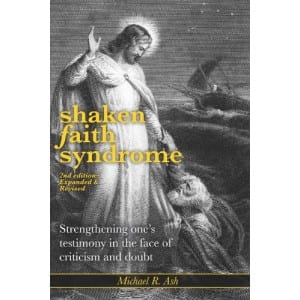
Rather than focusing primarily on the methods commonly used by critics as other recent books of this genre do (such as Michael Ash’s Shaken Faith Syndrome, which I also highly recommend), this book contains essays that address some of the most common issues that are used to attack the faith of members of The Church of Jesus Christ of Latter-day Saints. It is intended to help the reader gain a better understanding of these topics in a faith-promoting, but scholarly and honest environment, against the flood of misinformation available online today. Indeed, the editor notes that “The Internet is filled with thousands of pages of anti-Mormon polemic, and it is extremely difficult for people to receive an honest and fair appraisal of Mormonism without significant effort on their part” (page viii).

Besides those by the editor, Robert L. Millett, the book contains contributions by Daniel L. Belnap, J. Spencer Fluhman, Steven C. Harper, Brian M. Hauglid, Daniel K. Judd, Kerry Muhlestein, Ugo A. Perego, Brent L. Top, and John W. Welch. They are split into four categories: Restored Christianity, Latter-day Saint Church History, Scriptural Perspectives, and Doctrinal Teachings. The topics include what it means to be a Christian, the various accounts of the First Vision, the Smiths’ involvement in money-digging and the supernatural, the Kinderhook plates, Joseph Smith’s youngest plural wife, DNA and the Book of Mormon, the Book of Abraham, and Jesus Christ and salvation, among many others. Many of the topics are written by experts in the area – for example, a population geneticist discusses DNA and the Book of Mormon, two Egyptologists discuss the Book of Abraham, and an editor of the Joseph Smith Papers tackles the subject of multiple versions of the First Vision. I would like to concentrate on a few topics of particular interest to me in order to give an idea of the overall book.

Kent P. Jackson’s cleverly titled “Are Christians Christians?” discusses what it means to be a Christian from the point of view of mainstream Christianity and where it came from. He examines statements from the Presbyterian and Methodist churches that declare us to be unchristian. He explains why their definition is unbiblical, and happily admits that we should not be included in it. “We, of all people, should not be offended that other churches consider our baptisms invalid and do not recognize the authority of our priesthood holders to officiate in their ordinances. Since the first days of our church’s history, we have denied the validity of the authority and ordinances of all other churches (see D&C 22). We concede that we are not members of the historic Christian church that includes our Catholic, Orthodox, and Protestant brothers and sisters. But to consider us not Christians on issues of belief is another matter” (page 55). He then goes on to explain that our definition of the word Christian is scriptural (although we have no official statement of such), and that by that definition we would also include those of other faiths previously mentioned.

Steven C. Harper, an editor of the Joseph Smith Papers, wrote about the accounts of Joseph Smith’s First Vision, saying it “may be the best documented theophany (vision of God) in history.” He finds the five different known accounts in eight statements (plus contemporary hearsay) to be “rich documentation” and “a good reason to believe him” rather than being evidence of an inconsistent and evolving story as others contend. (Page 63.) He describes how Fawn Brodie and Wesley Walters shaped the criticisms that are popular today, and did not reconsider their interpretations even when new evidence against them came to light. He points out that “those who share the skeptics’ assumptions will likely arrive at the same conclusions as the skeptics. But those who are open to the possibility that Joseph told the truth can discover other meanings from the same facts” (page 71).

Ugo A. Perego, who holds a PhD in genetics and biomolecular sciences, handles the question of whether DNA proves or disproves the Book of Mormon. He goes into great detail explaining how DNA is used in research, the current theories about migrations into the Americas, and describes the various theories for and against the Book of Mormon based on available DNA evidence. He points out the problems with each of these theories (such as evidence showing up in the wrong time period, wrong assumptions being used, and misunderstandings of the limitations of DNA research) and arrives at the conclusion that DNA evidence can neither be used to prove nor disprove that the people in the Book of Mormon actually existed. (In fact, he points out that it can’t even be used to prove that Jesus existed.) He says that “I find no difficulties in reconciling my scientific passion about Native American history with my religious beliefs. I am not looking for a personal testimony of the Book of Mormon in the double helix. …Anyone using DNA to ascertain the accuracy of historical events of a religious nature – which require instead a component of faith – will be sorely disappointed” (page 208).

One of the essays on the Book of Abraham is by Kerry Muhlestein, who has a PhD in Egyptology from UCLA. He begins by explaining how he got interested in the Book of Abraham, and why Egyptologists outside the church dismiss it. He also found that many members of the church who struggle with the issues involved with the Book of Abraham aren’t looking for an excuse to leave the church, but have “encountered well-written (though not necessarily well-documented or researched) arguments…and did not know how to answer the questions posed by these arguments.” He found that those publishing critical information are generally unaware that it is “based on incorrect information and bad assumptions. They are misled by the mistakes, lies, and trash put out by a few, and they unwittingly pass the information along without really looking into their sources” (page 219).

He then goes on to debunk some of the misinformation, such as the idea that there was no human sacrifice in ancient Egypt. He also found that one of the words supposedly made up by Joseph Smith (Olishem) has been discovered in two ancient texts. He discovered that Egyptians had access to biblical stories by 200 BC (which was the right time period for the papyri), and were particularly interested in Abraham. He presented this information to a conference put on by the Russian Academy of Science and received positive reviews. He talks about evidence that what we actually have possession of today was a very small part of what Joseph had, and gives reasons why it likely was not the source of the Book of Abraham, other than Facsimile 1. He also briefly discusses the mystery of the Kirtland Egyptian Papers, which were not likely to have been used in the translation process, as some critics have claimed. Another important point he makes is that “written by his own hand, upon papyrus” does not mean that the actual papyrus we have was written by the hand of Abraham, but that it is a copy of the original that Abraham would have written on much earlier. He also devotes several pages to Facsimile 1, pointing out many evidences (and some possible theories) for the authenticity of the interpretations provided by Joseph Smith.

Overall, I thought the book was quite good, although some essays were better than others. Some of the more doctrinal ones, in particular, presented a few points as given that not all members would agree on. But such is the nature of Mormonism. The book could be used to answer questions for oneself, to help a member friend or an investigator, or for inoculation against misinformation and half-truths encountered in a hostile environment. It would be useful reading for those preparing to serve a mission, for families, and for any individual interested in learning more about these issues or defending the church.

This book is available at the FAIR bookstore here.

Filed Under: Apologetics, Book of Mormon, Book reviews, Doctrine, Early Christianity, Joseph Smith, LDS History, Polygamy, Science

  • « Go to Previous Page
  • Go to page 1
  • Interim pages omitted …
  • Go to page 40
  • Go to page 41
  • Go to page 42
  • Go to page 43
  • Go to page 44
  • Interim pages omitted …
  • Go to page 46
  • Go to Next Page »

Primary Sidebar

Faithful Study Resources for Come, Follow Me

Subscribe to Blog

Enter your email address:

Subscribe to Podcast

Podcast icon
Subscribe to podcast in iTunes
Subscribe to podcast elsewhere
Listen with FAIR app
Android app on Google Play Download on the App Store

Pages

  • Blog Guidelines

FAIR Latest

  • Come, Follow Me with FAIR – Doctrine and Covenants 137–138 – Part 2 – Autumn Dickson
  • Come, Follow Me with FAIR – Doctrine and Covenants 137–138 – Mike Parker
  • FAIR December Newsletter
  • Come, Follow Me with FAIR – Doctrine and Covenants 137–138 – Part 1 – Autumn Dickson
  • Prophets of God 

Blog Categories

Recent Comments

  • LHL on Come, Follow Me with FAIR – Doctrine and Covenants 132 – Mike Parker
  • Stephen Johnsen on Come, Follow Me with FAIR – Doctrine and Covenants 132 – Mike Parker
  • Bruce B Hill on Come, Follow Me with FAIR – Doctrine and Covenants 124 – Part 1 – Autumn Dickson
  • Gabriel Hess on Join us Oct 9–11 for our FREE virtual conference on the Old Testament
  • JC on When the Gospel “Doesn’t Work”

Archives

Follow Us

  • Facebook
  • Twitter
  • iTunes
  • YouTube
Android app on Google Play Download on the App Store

Footer

FairMormon Logo

FAIR is a non-profit organization dedicated to providing well-documented answers to criticisms of the doctrine, practice, and history of The Church of Jesus Christ of Latter-day Saints.

Donate to FAIR

We are a volunteer organization. We invite you to give back.

Donate Now

Site Footer