• Skip to primary navigation
  • Skip to main content
  • Skip to primary sidebar
  • Skip to footer

FAIR

  • Find Answers
  • Blog
  • Media & Apps
  • Conference
  • Bookstore
  • Archive
  • About
  • Get Involved
  • Search

Apologetics

Review: No Weapon Shall Prosper: New Light on Sensitive Issues

May 29, 2012 by Trevor Holyoak

Review of No Weapon Shall Prosper: New Light on Sensitive Issues
Edited by Robert L. Millett
Published by BYU Religious Studies Center and Deseret Book, 2011

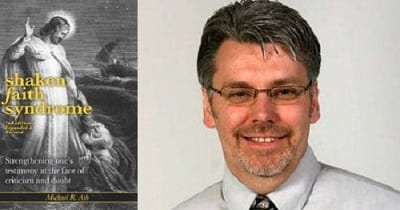
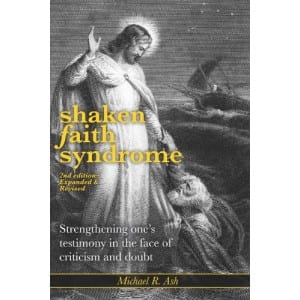
Rather than focusing primarily on the methods commonly used by critics as other recent books of this genre do (such as Michael Ash’s Shaken Faith Syndrome, which I also highly recommend), this book contains essays that address some of the most common issues that are used to attack the faith of members of The Church of Jesus Christ of Latter-day Saints. It is intended to help the reader gain a better understanding of these topics in a faith-promoting, but scholarly and honest environment, against the flood of misinformation available online today. Indeed, the editor notes that “The Internet is filled with thousands of pages of anti-Mormon polemic, and it is extremely difficult for people to receive an honest and fair appraisal of Mormonism without significant effort on their part” (page viii).

Besides those by the editor, Robert L. Millett, the book contains contributions by Daniel L. Belnap, J. Spencer Fluhman, Steven C. Harper, Brian M. Hauglid, Daniel K. Judd, Kerry Muhlestein, Ugo A. Perego, Brent L. Top, and John W. Welch. They are split into four categories: Restored Christianity, Latter-day Saint Church History, Scriptural Perspectives, and Doctrinal Teachings. The topics include what it means to be a Christian, the various accounts of the First Vision, the Smiths’ involvement in money-digging and the supernatural, the Kinderhook plates, Joseph Smith’s youngest plural wife, DNA and the Book of Mormon, the Book of Abraham, and Jesus Christ and salvation, among many others. Many of the topics are written by experts in the area – for example, a population geneticist discusses DNA and the Book of Mormon, two Egyptologists discuss the Book of Abraham, and an editor of the Joseph Smith Papers tackles the subject of multiple versions of the First Vision. I would like to concentrate on a few topics of particular interest to me in order to give an idea of the overall book.

Kent P. Jackson’s cleverly titled “Are Christians Christians?” discusses what it means to be a Christian from the point of view of mainstream Christianity and where it came from. He examines statements from the Presbyterian and Methodist churches that declare us to be unchristian. He explains why their definition is unbiblical, and happily admits that we should not be included in it. “We, of all people, should not be offended that other churches consider our baptisms invalid and do not recognize the authority of our priesthood holders to officiate in their ordinances. Since the first days of our church’s history, we have denied the validity of the authority and ordinances of all other churches (see D&C 22). We concede that we are not members of the historic Christian church that includes our Catholic, Orthodox, and Protestant brothers and sisters. But to consider us not Christians on issues of belief is another matter” (page 55). He then goes on to explain that our definition of the word Christian is scriptural (although we have no official statement of such), and that by that definition we would also include those of other faiths previously mentioned.

Steven C. Harper, an editor of the Joseph Smith Papers, wrote about the accounts of Joseph Smith’s First Vision, saying it “may be the best documented theophany (vision of God) in history.” He finds the five different known accounts in eight statements (plus contemporary hearsay) to be “rich documentation” and “a good reason to believe him” rather than being evidence of an inconsistent and evolving story as others contend. (Page 63.) He describes how Fawn Brodie and Wesley Walters shaped the criticisms that are popular today, and did not reconsider their interpretations even when new evidence against them came to light. He points out that “those who share the skeptics’ assumptions will likely arrive at the same conclusions as the skeptics. But those who are open to the possibility that Joseph told the truth can discover other meanings from the same facts” (page 71).

Ugo A. Perego, who holds a PhD in genetics and biomolecular sciences, handles the question of whether DNA proves or disproves the Book of Mormon. He goes into great detail explaining how DNA is used in research, the current theories about migrations into the Americas, and describes the various theories for and against the Book of Mormon based on available DNA evidence. He points out the problems with each of these theories (such as evidence showing up in the wrong time period, wrong assumptions being used, and misunderstandings of the limitations of DNA research) and arrives at the conclusion that DNA evidence can neither be used to prove nor disprove that the people in the Book of Mormon actually existed. (In fact, he points out that it can’t even be used to prove that Jesus existed.) He says that “I find no difficulties in reconciling my scientific passion about Native American history with my religious beliefs. I am not looking for a personal testimony of the Book of Mormon in the double helix. …Anyone using DNA to ascertain the accuracy of historical events of a religious nature – which require instead a component of faith – will be sorely disappointed” (page 208).

One of the essays on the Book of Abraham is by Kerry Muhlestein, who has a PhD in Egyptology from UCLA. He begins by explaining how he got interested in the Book of Abraham, and why Egyptologists outside the church dismiss it. He also found that many members of the church who struggle with the issues involved with the Book of Abraham aren’t looking for an excuse to leave the church, but have “encountered well-written (though not necessarily well-documented or researched) arguments…and did not know how to answer the questions posed by these arguments.” He found that those publishing critical information are generally unaware that it is “based on incorrect information and bad assumptions. They are misled by the mistakes, lies, and trash put out by a few, and they unwittingly pass the information along without really looking into their sources” (page 219).

He then goes on to debunk some of the misinformation, such as the idea that there was no human sacrifice in ancient Egypt. He also found that one of the words supposedly made up by Joseph Smith (Olishem) has been discovered in two ancient texts. He discovered that Egyptians had access to biblical stories by 200 BC (which was the right time period for the papyri), and were particularly interested in Abraham. He presented this information to a conference put on by the Russian Academy of Science and received positive reviews. He talks about evidence that what we actually have possession of today was a very small part of what Joseph had, and gives reasons why it likely was not the source of the Book of Abraham, other than Facsimile 1. He also briefly discusses the mystery of the Kirtland Egyptian Papers, which were not likely to have been used in the translation process, as some critics have claimed. Another important point he makes is that “written by his own hand, upon papyrus” does not mean that the actual papyrus we have was written by the hand of Abraham, but that it is a copy of the original that Abraham would have written on much earlier. He also devotes several pages to Facsimile 1, pointing out many evidences (and some possible theories) for the authenticity of the interpretations provided by Joseph Smith.

Overall, I thought the book was quite good, although some essays were better than others. Some of the more doctrinal ones, in particular, presented a few points as given that not all members would agree on. But such is the nature of Mormonism. The book could be used to answer questions for oneself, to help a member friend or an investigator, or for inoculation against misinformation and half-truths encountered in a hostile environment. It would be useful reading for those preparing to serve a mission, for families, and for any individual interested in learning more about these issues or defending the church.

This book is available at the FAIR bookstore here.

Filed Under: Apologetics, Book of Mormon, Book reviews, Doctrine, Early Christianity, Joseph Smith, LDS History, Polygamy, Science

Our History of Nasty Ad Hominem Attacks

May 10, 2012 by awyatt

Earlier today a well-known critic of FAIR made the following statement on an Internet message board:

“MI/FAIR/FARMS has a history of nasty ad hominem attacks (see the Simon Southerton adultery accusations)…”

We at FAIR have been asking, for a long, long time, for concrete examples of where we have engaged in ad hominem fallacies, as we don’t really want to do so. (I know; that may seem incredulous to some. But it really is true.) This statement, by the critic on the message board, was the first concrete example I’ve noticed.
[Read more…] about Our History of Nasty Ad Hominem Attacks

Filed Under: Apologetics

Mormon FAIR-Cast 87: Fostering Faith and Countering Criticism: The Role of Apologetics in in the Information Age

May 9, 2012 by SteveDensleyJr

https://media.blubrry.com/mormonfaircast/www.fairlatterdaysaints.org/wp-content/uploads/2012/05/Fostering-Faith-and-Countering-Criti.mp3

Podcast: Download (10.1MB)

Subscribe: RSS

On March 29, 2012, Scott Gordon appeared at the UVU Conference on Mormonism and the Internet. In this address, he explains the mission, purpose and history of FAIR.

Filed Under: Apologetics, Podcast

Joseph Smith’s First Vision Accounts: More Mormon Church Suppression and Cover-Up

May 9, 2012 by Stephen Smoot

The Church is at it again. The different accounts of Joseph Smith’s First Vision, which the Church has been sneaky enough to hide in places like the Ensign and BYU Studies, continues to be suppressed and hid from unsuspecting Church members. The damning contradictions in the Prophet’s different accounts are, in fact, so damaging that the Church thought it wise to talk about them only in a place so obscure and so concealed that nobody would be able to find it without any serious effort. I am speaking, of course, about YouTube. After all, nobody watches the Mormon Messages videos produced by the Church. What better place to hide this information from Church members than in a place that certainly has never been talked about in an official Church magazine or website?

But enough talk. Let’s take a look at the video itself:
[Read more…] about Joseph Smith’s First Vision Accounts: More Mormon Church Suppression and Cover-Up

Filed Under: Anti-Mormon critics, Apologetics, Joseph Smith, LDS History Tagged With: censorship, Church History, First Vision, Joseph Smith, Mark Ashurst-McGee, Mormon Messages

How NOT to keep people from leaving the Church

May 6, 2012 by SteveDensleyJr

I led a discussion in a high priests group today about personal apostasy and how we can help by sharing the gospel over the internet. I asked for people to share their personal experiences regarding why people leave, and I shared some figures from a 1988 study that is summarized by Kevin Barney here. With regard to reasons people become inactive in the Church, the study reported the following:

  • 54% wanted to spend their limited time and resources on other interests and activities.
  • 40% indicated that they didn’t feel they belonged
  • 25% reported feeling it didn’t matter to anyone whether they attended or not.
  • About a third gave contextual reasons (movement to a new community where they didn’t get involved, work schedule conflicts, etc.).
  • 23% reported problems with specific doctrines or teachings,
  • 20% reported problems with other members of the congregation
  • Some said the church demanded too much of their time and money
  • Others said it no longer was a help in finding the meaning in life.
  • Female respondents in particular were affected by marriage to a nonmember spouse.

As I opened it up for discussion, the idea was expressed, and I agreed, that a fundamental reason for loss of faith was a loss of the Spirit. So many of the factors listed above can be tolerated if an individual feels a strong connection with God that is associated with activity in this Church (prayer, scripture reading, Church and temple attendance, etc.)
[Read more…] about How NOT to keep people from leaving the Church

Filed Under: Apologetics

Another Look at Baptism for the Dead

May 4, 2012 by Steve Willoughby

THE topic of vicarious or “proxy” baptisms performed by members of the Church of Jesus Christ of Latter-day Saints has recently received a lot of attention, both positive and negative. (And both factual and lacking in accuracy, it’s fair to say.) I’m sure the topic will come up again, so even though it’s not at this moment a hot topic bouncing around the news, I’d like to share a few of my own thoughts about this issue and the way it’s been characterized as a horrible, disrespectful thing to do on behalf of the deceased. [Read more…] about Another Look at Baptism for the Dead

Filed Under: Apologetics, Interfaith Dialogue, Temples

City Creek Mall

March 30, 2012 by Cassandra Hedelius

Salt Lake City, Utah was founded by leaders and members of the Church of Jesus Christ of Latter-day Saints in 1847, as they arrived after a difficult overland trek to escape religious persecution. Over time, the church has grown from a small, regional group to a world-wide, thriving major religion. Likewise, the city has grown into a major center of commerce and industry, with residents of many religions. Despite the broadened scope of each, a special relationship between the Church and its headquarter city remains.

Salt Lake City has faced many of the challenges common to cities: upper-income flight to the suburbs, aging infrastructure, an influx of low-income residents with heavier claims on public services, decreased economic vitality, and increased crime. Like many cities, Salt Lake City has sought to attract businesses in order to provide jobs for residents and prevent the degradation of the city environment.

The Church has shared the city’s concern for economic vitality, both out of concern for the residents’ livelihoods and because of the Church’s downtown Temple Square which attracts thousands of visitors annually. Were Salt Lake City to suffer urban decay, these visitors would be affected.

In recent years the area around Temple Square in Salt Lake City looked likely to suffer exactly that fate. Many businesses had moved to other areas of the city and the area was becoming run down, decreasing the quality of life for residents.

The Church has responded in two ways. First, through its Inner City Project, the Church has assigned service missionaries to provide job training, transportation, and other help to inner-city Salt Lake City residents. The hope is that the city environment will benefit from residents who are less plagued by joblessness, health troubles, and feeling hopeless to rise economically. Second, the Church has invested in the City Creek Mall as an economic development project, in hopes that the construction and other jobs will provide opportunity for residents and that the new infrastructure will stave off urban decay.

Some criticize the church for its investment, judging that the funds could have been better spent elsewhere. (The total estimated cost of the project is $1.5 billion; it is not known how this was shared between the church and its development partner, The Taubman Company.) These criticisms ignore the merits of the Church’s strategy–the City Creek Center addresses the roots of urban decay, and the Inner City Project addresses its symptoms. There are many places in the world with greater need–and the Church’s humanitarian programs commit significant resources to them–but the Church shouldn’t be condemned for helping its own neighbors in the city to which it has special historical ties.

Whatever funds the Church spend on City Creek did not come from member tithes; the funds came from returns on church properties and investments. The Church owns these assets from the happy historical accident of acquiring them many decades ago and prudent management since then.

Filed Under: Apologetics

FAIR Questions 3: Sharing the Book of Mormon

March 28, 2012 by SteveDensleyJr

https://media.blubrry.com/mormonfaircast/www.fairlatterdaysaints.org/wp-content/uploads/2012/02/FAIR-Questions-3-Sharing-the-Book-o.mp3

Podcast: Download (5.4MB)

Subscribe: RSS

FAIR Questions features a question that was submitted to FAIR volunteers through the FAIR website at fairlds.org. The answer in each episode is compiled from the various responses provided by the volunteers.

And now for the question:

I just want to start out by saying that I have the highest respect for all church apologists. I am 19 years old and just saving up some money before I send my papers in to serve a mission. I download the podcasts from FAIR and I listen to them all the time. I just want to say, thank you so much for everything you do. After having some questions of my own answered, my testimony has been strengthened beyond words. I have also been able to help others because of what I have learned from the podcasts and books I have read. I just want to ask a question from the point of view of someone who deals with non-members and apostate members on a daily basis: What is the best advice you can give me as a prospective missionary in regards to teaching people about The Book of Mormon? I know it’s a very general question, but if you could leave one ounce of your knowledge with me it would be a blessing to me!

And now for the answer:

Thank you for your kind words. We here at FAIR are not compensated monetarily. Our only “payment” is kind words of gratitude that we get from individuals such as you.

Congratulations on your decision to serve a mission! Although it will be challenging at times, it will be completely worth it.

Can you think of anything the world needs right now more than the Gospel of Jesus Christ?  Unfortunately, the world is extremely divided as to what is meant by the Gospel of Jesus Christ. The Bible alone, as magnificent as it is, has not united the believing world under one Lord, one faith or one baptism. In fact, it seems that the Bible itself has never come under more criticism or skepticism at any time since its inception than it is today. Many around the world are concluding that the Bible is irrelevant in their lives. They say that Jesus may have been just a legend or a mere myth which, over time, transformed him into a God in the minds of a group of people who came to call themselves Christians. The very value of scripture seems to be assailed constantly.

What if there was a record that shared a common genesis with the Biblical record, yet was maintained and revealed to us from a separate nation apart from Judea? What if another people, or several groups of people had preserved their own witness of the divinity of Christ? What would be its value to the world today? What if there was a volume of scripture, apart from the Bible, that bore witness of the foundational truths contained in the Bible? What if that volume came to us as a result of God calling a Prophet today to once again bear witness that Jesus is the very Eternal God manifesting Himself to all nations – a book that reminds us of the important promises and Covenants made long centuries ago, to a people long dead, which are being fulfilled in our day? Wouldn’t that go a long way toward showing that God is the same yesterday, today and forever, and that he remembers his covenants to the children of men, and that no matter how long it seems to take to the human mind, He has not forgotten or forsaken his ancient promises?

The Book of Mormon was published in 1830 before Joseph Smith was even 25 years old. In a few short years you will be that same age. Even with all the educational advantages you will have between now and the time you are that age, can you imagine producing a volume like the Book of Mormon? Could you sit day after day in front of a scribe and recite endless passages of Isaiah, or even Jacob chapter 5? Could you speak for days in one long paragraph, without any double checking, without any punctuation, without any proof reading, and then submit the final product of hundreds of pages to a publisher?

Several months before the Book of Mormon was published, Section 4 of the Doctrine and Covenants was written. It is inspiring to note that this section was given by the young Prophet to his father, who had encouraged Joseph to listen to the Angel Moroni when Joseph had confided in him about the angel’s visit almost five years previously. Looking back over the nearly two hundred years since this revelation was given, its prophetic import is astounding:

“Now behold, a marvelous work is about to come forth among the children of men. Therefore, O ye that embark in the service of God, see that ye serve him with all your heart, might, mind and strength, that ye may stand blameless before God at the last day. For behold the field is white already to harvest: and lo, he that thrusteth in his sickle with his might, the same layeth up in store that he perisheth not, but bringeth salvation to his soul…. Ask and ye shall receive; knock and it shall be opened unto you, Amen.”

This revelation was given in February of 1829. The Church would not be officially established for over another year. Yet the young Prophet had the temerity to predict that this effort, the Restoration of the Gospel was going to result in a Marvelous Work. You live in a day and time where over a hundred Temples dot the earth, with dozens under construction. You are going on your mission at a time when there are nearly fourteen million people around the globe who are now members of the Church established by a twenty five year old Prophet and five other men on April 6th, 1830. Before you are much older, this Church will celebrate its Bicentennial. Who would have gambled on the chances of this movement in its infancy in February of 1829? Yet that is what young Joseph did. Why? Because he told the truth. He knew that God was behind the work he had begun and nothing was ultimately going to defeat it.

Section 5 of the Doctrine and Covenants was also written before the Book of Mormon was published. It tells us that there will be three other witnesses who will see the plates and bear witness to the world that they are real. They will affix their testimony to the volume and millions upon millions will read their words and know that they, not just Joseph, have actually seen the plates with their eyes and will bear solemn and consistent testimony that it is the work of God, and not man, as long as that work is published to the world.

What kind of audacity would it take for a complete fraud and a forger to make such a statement before the witnesses had seen the plates he supposedly didn’t have?  Imagine after making such a prediction in the absence of real plates, that you were to actually find three people to lie for you, stand by their testimonies despite the fact that they would all become estranged from you at some point, and who would never deny their testimonies regardless of suffering, persecution, loss of reputation and cruel mockery even decades after your untimely death at the hands of a mob? Where in the world can you find an instance where a confederacy of liars ever withstood such a test? What could possibly hold these witnesses to their word under the most trying circumstances even after the ring leader of the conspiracy was long dead and could no longer hold any influence over them?

When weighed in the balance, as incredible as it seems at first glance, the only consistent explanation for the success of this Church, and for the lives of the witnesses and most especially for the unshakeable testimony of Joseph Smith despite all the forces arrayed against him is, that the Book of Mormon is true. Every other explanation seems to wither with the test of time or persecution. No other explanation can account for the rise of this Church out of total obscurity to what it is today.

The Book of Mormon is tangible evidence for the prophetic calling of Joseph Smith. As Hugh Nibley once said, books don’t write themselves. Somebody had to have written the Book of Mormon. The question is whether it is ancient or modern. Critics who wish to dismiss Joseph Smith as a fraud must confront this book.

As Elder Jeffrey R. Holland recently said:

“I testify that one cannot come to full faith in this latter-day work—and thereby find the fullest measure of peace and comfort in these, our times—until he or she embraces the divinity of the Book of Mormon and the Lord Jesus Christ, of whom it testifies. If anyone is foolish enough or misled enough to reject 531 pages of a heretofore unknown text teeming with literary and Semitic complexity without honestly attempting to account for the origin of those pages—especially without accounting for their powerful witness of Jesus Christ and the profound spiritual impact that witness has had on what is now tens of millions of readers—if that is the case, then such a person, elect or otherwise, has been deceived; and if he or she leaves this Church, it must be done by crawling over or under or around the Book of Mormon to make that exit. In that sense the book is what Christ Himself was said to be: ‘a stone of stumbling, … a rock of offence,’  a barrier in the path of one who wishes not to believe in this work. Witnesses, even witnesses who were for a time hostile to Joseph, testified to their death that they had seen an angel and had handled the plates. ‘They have been shown unto us by the power of God, and not of man,’ they declared. ‘Wherefore, we know of a surety that the work is true.’”

With regard to how to teach from and about the Book of Mormon, follow the suggestions that are found in the missionary manual Preach My Gospel. If your investigators have unusual or difficult questions, you can always refer them to our FAIRwiki where many of these kinds of questions are addressed. But remember that it is the Spirit that will convert people to the gospel. And the Spirit will confirm the testimony of Christ that is found in the Book of Mormon. Remember that the Book of Mormon has the potential, if it is read, to re-convert an unbelieving generation to Jesus Christ.

Finally, always keep in mind that our witness is primarily the testimony of Christ and his apostles, that he died, was resurrected, and ascended to heaven, and that he will come again in glory. Everything else is merely an appendage to that witness. Keep that foremost in your mind as you engage both the honest in heart as well as the rest of the world, and it should be a great help to you.

If there is an issue that you have been wondering about, you can often find the latest answers at the FAIR wiki, found at fairmormon.org. If you can’t find your answer there, feel free to pose your question to the FAIR apologists by visiting the FAIR contact page. Occasionally, such a question will be featured on FAIR Questions. Before questions are used for this podcast, permission is obtained from the questioner.

FAIR Questions or comments about this episode can be sent to [email protected], or join the conversation at fairblog.org.

Tell your friends about us and help increase the popularity of this podcast by subscribing in iTunes and by writing a review.

Music for this episode was provided courtesy of Lawrence Green.

The opinions expressed in this podcast are not necessarily the views of the Church of Jesus Christ of Latter-day Saints, or of FAIR.

Filed Under: Apologetics, Book of Mormon, Joseph Smith, Podcast

John Carter

March 28, 2012 by David Farnsworth

I went to see John Carter of Mars last night (bear with me… this is actually NOT off-topic from apologetics), and the theater was gracious enough to give me a (virtually) private screening in 3D. 😉

Loved the movie (although apparently no one else does, and my teenage kids refused to come with me, saying all their friends hated it…).

But (believe it or not) I actually mentioned this movie in my home teaching message earlier this month about prophets, and the role of prophets.

Why?

Well John Carter is really over-the-top fantasy. Mars does not look like this, as we all know. But we need to remember that the first John Carter story was written 100 years ago. This was only 20 years or so after an Italian astronomer looked through a telescope at Mars and thought he saw canali (it means channels, but it got translated into English as canals). Everyone thought that he had seen signs of civilization on Mars. This included Percival Lowell, the top astronomer in the United States at that time. So when Edgar Rice Burroughs took to his typewriter a few years later to write fantasy tales about this Mars, he was building off of the best scientific evidence of the day. It was not utter fantasy, in other words.

And this is decades AFTER Brigham Young had speculated about men on the moon or men on the sun. So while BY may look foolish today, and generates reams of hilarity penned by the antis, he would not have looked foolish in his own day (and in fact in all the anti-Mormon hysteria generated in those days, nobody ever remarked on Brigham Young’s silly non-scientific ideas), and not for a generation or two afterward either.

I brought all this up to my home teaching families. Prophets are not supposed to be super-scientists. But I said the antis will object anyway, saying that prophets cannot make scientific mistakes like that, even if the world does not know better, because God would tell them how the universe really works.

But would He really, I asked. Did God tell Isaiah that you cannot stop the sun and make it go backward 15 degrees? Did God tell Moses and Abraham about quantum theory? Or disabuse them of the notion that the Heavens are a dome over the world? Well, if not, what DOES he tell prophets? The short answer is that He tells prophets how to guide the people through the perils of the day. Specifically, I mentioned the Church Presidency message on lds.org that changes several times a week, with messages on such topics as civility in politics, or generosity and moderation in dealing with immigration.

Surely this is more important than knowing whether there really are canals on Mars, and populated by beautiful Martian princesses waiting to be saved by dashing Confederate cavalry officers… 😉

David Farnsworth
Tigard OR 97224

Filed Under: Apologetics, Science

Mormon FAIR-Cast 73: Purpose, history and offerings of FAIR

February 8, 2012 by SteveDensleyJr

https://media.blubrry.com/mormonfaircast/www.fairlatterdaysaints.org/wp-content/uploads/2012/01/FAIR-Conference-Interview.mp3

Podcast: Download (9.2MB)

Subscribe: RSS

Mike Ash and Martin Tanner discuss the purpose of FAIR, the history of FAIR, various FAIR publications and the topics covered in the 2011 FAIR Conference in this episode of Religion Today that originally aired on July 31, 2011.

This recording was used by permission of KSL Radio and does not necessarily represent the views of The Church of Jesus Christ of Latter-day Saints or of FAIR.

Filed Under: Apologetics, FAIR Conference, News from FAIR, Podcast

  • « Go to Previous Page
  • Go to page 1
  • Interim pages omitted …
  • Go to page 41
  • Go to page 42
  • Go to page 43
  • Go to page 44
  • Go to page 45
  • Go to page 46
  • Go to Next Page »

Primary Sidebar

Faithful Study Resources for Come, Follow Me

Subscribe to Blog

Enter your email address:

Subscribe to Podcast

Podcast icon
Subscribe to podcast in iTunes
Subscribe to podcast elsewhere
Listen with FAIR app
Android app on Google Play Download on the App Store

Pages

  • Blog Guidelines

FAIR Latest

  • Come, Follow Me with FAIR – Introduction to the Old Testament – Jennifer Roach Lees
  • Come, Follow Me with FAIR – Introduction to the Old Testament – Part 1 – Autumn Dickson
  • The Lord Looketh on the Heart
  • Come, Follow Me with FAIR – Christmas – Part 2 – Autumn Dickson
  • Other Bible Translations

Blog Categories

Recent Comments

  • STW on Come, Follow Me with FAIR – Introduction to the Old Testament – Part 1 – Autumn Dickson
  • Mary Louise Miner on Prophets of God 
  • Trevor Holyoak on Join us Oct 9–11 for our FREE virtual conference on the Old Testament
  • Nalo on Come, Follow Me with FAIR – The Articles of Faith and Official Declarations 1 and 2 – Part 2 – Autumn Dickson
  • Diana on Come, Follow Me with FAIR – Doctrine and Covenants 132 – Mike Parker

Archives

Follow Us

  • Facebook
  • Twitter
  • iTunes
  • YouTube
Android app on Google Play Download on the App Store

Footer

FairMormon Logo

FAIR is a non-profit organization dedicated to providing well-documented answers to criticisms of the doctrine, practice, and history of The Church of Jesus Christ of Latter-day Saints.

Donate to FAIR

We are a volunteer organization. We invite you to give back.

Donate Now

Site Footer