• Skip to primary navigation
  • Skip to main content
  • Skip to primary sidebar
  • Skip to footer

FAIR

  • Find Answers
  • Blog
  • Media & Apps
  • Conference
  • Bookstore
  • Archive
  • About
  • Get Involved
  • Search

Apologetics

Mormon FAIR-Cast 60: Mormon Voices

November 21, 2011 by SteveDensleyJr

https://media.blubrry.com/mormonfaircast/www.fairlatterdaysaints.org/wp-content/uploads/2011/11/MormonVoices-Announcement.mp3

Podcast: Download (4.6MB)

Subscribe: RSS


In this KSL Radio broadcast of Religion Today, host Martin Tanner interviews John Lynch about the announcement of Mormon Voices. To better reflect its organizational focus and methods, The Mormon Defense League (MDL) announced today that it has changed its name to “MormonVoices.”

The new web site is MormonVoices.org. Scott Gordon, president of FAIR and Managing Director of Mormon Voices has commented: “This new name better reflects our helping Mormons become involved in online discussions where positive representation of the Church is needed to offset offensive stereotypes and misinformation. In the current politically charged environment where issues of Mormon beliefs are frequently discussed, Mormons increasingly want to properly represent themselves and not let stereotypes and caricatures remain,” Gordon explained. “We want to empower members of The Church to respond to the articles that are appearing in the press. As Elder Perry said in General conference,

‘The growing visibility and reputation of the Church presents some remarkable opportunities to us as its members. We can help “disabuse the public mind” and correct misinformation when we are portrayed as something we are not. More important, though, we can share who we are.’”

“As an organization we will continue to publicly stand up for the LDS Church and correct misinformation spread by public figures, but our new name more clearly reflects our approach and fits well with the admonition by our leaders to get involved online,” stated John Lynch, Chairman of FAIR and a Managing Director of the newly named MormonVoices.

The general public can go to MormonVoices.org to find accurate information about issues regarding The Church of Jesus Christ of Latter-day Saints. Corrections regarding common misconceptions are provided, along with willingness to help writers and others who want to verify the accuracy of information regarding the Church, its doctrines, teachings, or history. MormonVoices serves as an organizing force to help Church members become involved, and to share online resources to be more effective in their discourse. It is a non-profit wholly owned subsidiary of FAIR and is operated by self-motivated Mormons who seek to improve the public understanding about the Church.  MormonVoices is dedicated to providing reliable, independent information about the doctrine, beliefs, and practices of The Church of Jesus Christ of Latter-day Saints. MormonVoices is not owned by, controlled by, or affiliated with the Church.

This broadcast is posted here by permission of KSL Radio.

Filed Under: Apologetics, Mormon Voices, Podcast

Best of FAIR 13: “Uh oh!” to “Ah ha!” in Apologetics: 20/20 Foresight for a Faithful Future in Defending the Church

November 16, 2011 by SteveDensleyJr

https://media.blubrry.com/mormonfaircast/www.fairlatterdaysaints.org/wp-content/uploads/2011/11/Uh-oh_-to-_Ah-ha_-in-Apologetics_.mp3

Podcast: Download (26.2MB)

Subscribe: RSS

In this address from the 2009 FAIR Conference, John Lynch provides practical advise on how to help those who are struggling with their faith. “What we’re about at FAIR is the idea of tending the gardens of the heart. . . . Our real objective is the preservation of faith and not the presentation of definitive answers. To that end, it’s not enough to answer the arguments of the critics any more than it is enough to weed the flowers in our garden. We must also nourish them and water them and give them ongoing light to reach towards. This means several things need to occur.

  • Answers need to include not only refutation of false ideas, but affirmations of true concepts.
  • We need to not only respond with evidences against the arguments of our critics but arguments in favor of the hope that is in us.
  • We need to help members interpret their religious world in the light of true principles including those that allow for mistakes.”

The text of Brother Lynch’s address can be found here.

John Lynch is a Silicon Valley sales and marketing executive specializing in high-tech startup ventures. He is a member of the Board of Directors of FAIR and serves as its Chairman. Having served in many missionary callings, including twice as a Stake Mission President, multiple times as a Ward Mission Leader, and having worked at the Provo Missionary Training Center as a teacher and trainer, John has seen the impact of both well-prepared and poorly prepared defenders of the faith. John is currently the Young Men’s President for the Los Gatos Ward, Saratoga California Stake.

Filed Under: Anti-Mormon critics, Apologetics, FAIR Conference, Podcast

Harold Bloom on the Mormon Breakthrough

November 14, 2011 by Stephen Smoot

Harold Bloom, the celebrated Yale literary critic, has offered a recent opinion piece with the New York Times. The topic: Mitt Romney, 19th century vs. 21st century Mormonism, and the “crucial precedent” that has been set by Romney’s progress thus far in the upcoming presidential election. As he usually is with his writings, Bloom is very thoughtful and captivatingly eloquent with this article. This is a refreshing relief, considering the questionable remarks of other recent popular social commentators.

By way of introduction, Harold Bloom has previously written on Mormonism, to which he gives the crowning title “the American religion”.[1] Bloom is positively enamored with Joseph Smith, whom he cordially refers to as an “authentic religious genius”, and is amazed at the power of Joseph Smith’s revelations. Granted, it appears that Bloom’s admiration for Joseph Smith and his revelations is on a sort of quasi-literary level; I don’t think it would be too much of a stretch to say that Bloom would place Joseph’s revelations on the same level as great poetry or literature, but nothing more. Notwithstanding, Bloom is a first-rate intellectual who has given us some probing, albeit somewhat flawed, writings to explore.[2]

[Read more…] about Harold Bloom on the Mormon Breakthrough

Filed Under: Apologetics Tagged With: Harold Bloom, Joseph Smith, Mitt Romney, modern Church, New York Times, presidential election

The Book of Mormon, The Doctrine and Covenants, and the Archaeology Question

November 2, 2011 by Stephen Smoot

The authenticity of the Book of Mormon has been repeatedly assailed by critics of the LDS Church on the grounds that is lacks any confirmatory archaeological evidence that supports its claimed historicity as an ancient record. Countless books, articles, DVDs and internet websites have ceaselessly repeated the following cacophonous refrain:
[Read more…] about The Book of Mormon, The Doctrine and Covenants, and the Archaeology Question

Filed Under: Anti-Mormon critics, Apologetics, Book of Mormon Tagged With: anti-Mormon, archaeology, Book of Mormon, Doctrine and Covenants, evidence

“A Most Remarkable Book”: Supplementary Reading

October 7, 2011 by Stephen Smoot

A Most Remarkable Book – Trailer

This week FAIR has released a new DVD exploring the issues surrounding the Book of Abraham. “A Most Remarkable Book: Evidence for the Divine Authenticity of the Book of Abraham” puts forth answers to various criticisms directed against the Book of Abraham, as well as provides evidence favorable to the Book of Abraham’s ancient authenticity.
[Read more…] about “A Most Remarkable Book”: Supplementary Reading

Filed Under: Anti-Mormon critics, Apologetics, Book of Abraham Tagged With: bibliography, Book of Abraham, critics, DVD, Joseph Smith Papyri, Pearl of Great Price

Best of FAIR 10: On Being An Apologist: Imperatives, Predicaments, Perils, and Blessings.

September 4, 2011 by SteveDensleyJr

https://media.blubrry.com/mormonfaircast/www.fairlatterdaysaints.org/wp-content/uploads/2011/08/On-Being-An-Apologist.mp3

Podcast: Download (28.2MB)

Subscribe: RSS

Robert White discusses his experience as a church leader and as an apologist. He explains why apologetics is important and cautions against some pitfalls of apologetics. As C.S. Lewis said, “nothing is more dangerous to one’s own faith than the work of an apologist. Because no doctrine of that Faith seems to me so spectral, so unreal as one that I have just successfully defended. . . . That is why we apologists take our lives in our hands and can be saved only by falling back continually from the web of our own arguments … from Christian apologetics [in]to Christ himself.  That is also why we need one another’s continual help — oremus pro invincem (let us pray for one another).”

He shares his thoughts on the idea of inoculating the saints against anti-Mormon arguments. In providing an inoculation, can we be sure we know what disease, or argument, each individual will be exposed to? Is it possible that we may do more harm than good in administering the wrong inoculation? He contrasted inoculations with transfusions. The Gospel Principles manual is designed “not [to] inoculate but transfuse into the lives of the Latter-day Saints the fundamental faith in the fundamental gospel restored through the Prophet.” If people know the Church is true, then they will be strengthened against the attacks of anti-Mormon arguments when encountered.

The full text of this address can be found here.

Robert B. White, Q.C., served a mission in Eastern Canada after which he returned to Edmonton and received degrees in finance (with distinction) and law (with distinction and the Silver Medal) at the University of Alberta. He is a senior partner and litigation practice group leader in a large, multi-national law firm with offices across Canada and in Japan. Robert works exclusively in trials and appeals and loves the law. He is listed in each of the three published, peer reviewed “Best Lawyers in Canada” lists. He was hired as an adjunct professor in law while in my third year of law school, and while practicing he taught for 18 years. He has written four law books, all published by Canada Law Book, with a second edition of one under way. Robert has served in many Church positions, including bishop, stake president, and area seventy. He is married to Lonni. They have six children and twenty grandchildren.

Filed Under: Apologetics, FAIR Conference, Podcast

Mitt Romney, Fox News, and the Mormon Question: A Few Questions for Discussion

July 18, 2011 by Stephen Smoot

Christian, adjective: of, relating to, or professing Christianity or its teachings : the Christian Church.

informal having or showing qualities associated with Christians, esp. those of decency, kindness, and fairness.

noun a person who has received Christian baptism or is a believer in Jesus Christ and his teachings.[1]

A few weeks ago CNN published an interview with Tricia Erickson, a dedicated Evangelical critic of Mormonism, wherein it was repeatedly affirmed that neither Mitt Romney nor the Church he belongs to is authentically Christian. On Sunday, July 17, 2011 the Deseret News printed an article that reported how “‘Fox & Friends’ co-host Ainsley Earhardt said Mitt Romney was not a Christian during her program this morning.” The pertinent statement by Ms. Earhardt, as reported by the Deseret News, is as follows:

“Can (Gov. Rick Perry) get in and raise money with Mitt Romney? That I don’t know,” said host Dave Briggs.

“There are a lot of Republicans who think he can’t,” replied co-host Clayton Morris.

“Well the Christian coalition — I think (Perry) can get a lot of money from that base because (of) Romney obviously not being a Christian,” said co-host Earhardt. “Rick Perry, he’s always on talk shows — on Christian talk shows — he has days of prayer in Texas.”

I am puzzled by this statement. What is it that is so “obvious” that proves Mitt Romney is not a Christian? Presumably Ms. Earhardt has in mind the fact that Romney is a Latter-day Saint and because Latter-day Saints are not Christians ergo Mitt Romney is not a Christian.

This of course brings up the question as to whether or not Mormons are Christians. As Professor Stephen E. Robinson has written[2], there are typically six categories that the arguments of excluding Mormons from being Christian fall under, viz.,

1. The Exclusion by Definition (Mormons are excluded from being Christian because of ad hoc idiosyncratic definitions of “Christian” and “Christianity” offered by sectarians who deviate from the standard English lexical definition.)

2. The Exclusion by Misrepresentation (“Latter-day Saints… [are] judged to be non-Christian for things they do not believe, whether these things are fabrications, distortions, or anomalies.”[3])

3. The Exclusion by Name-Calling (Hurling unsavory epithets such as “cult” at the Church in an attempt to alienate or estrange outsiders and shock members. As with the “Exclusion by Definition”, in most cases the epithets are idiosyncratic definitions that go beyond the accepted standard English definition.)

4. The Historical or Traditional Exclusion (Mormons do not accept certain “historical” or “traditional” Christian beliefs or practices, and thus are not Christian.)

5. The Canonical or Biblical Exclusion (Mormons have an open canon of scripture, and accept additional books as canonical which are not accepted by other Christian denominations. Thus, Mormons are not Christian.)

6. The Doctrinal Exclusion (Mormons do not accept “orthodox” Christian doctrines, and hold to “heretical” views of the nature of God and scripture, to name only two. Therefore, Mormons are not Christian.)

The question as to whether or not Mormons are Christians is a horse that has been beaten mercilessly in recent years, and so I do not wish to launch into a full exploration at this point. Suffice it to say that the Latter-day Saints are positively appalled at this accusation, and have responded vigorously to critical arguments[4]. However, I do wish to ask a few questions for discussion that I feel are pertinent to this debate.

1. First and foremost, what is “Christianity” and who therefore can rightly be called “Christian”?  On what basis/criteria does one define these terms?

1. Who is allowed to define who is Christian and who isn’t? By what authority or on what grounds does this individual/group/Church, etc., claim the right to be the final arbiters in deciding who and who isn’t Christian?

2. Mormons are accused of not being Christian because they do not accept “orthodox” beliefs. What is “orthodoxy” and who is allowed to define “orthodoxy”? On what basis was this definition of “orthodoxy” established?

3. Mormon doctrine is often alleged to be contrary to “biblical teaching”. Who has the right to establish what “biblical doctrine” is? By what authority is such established? What methodological and/or exegetical tools were employed to establish this standard?

4. Is doctrinal difference enough to exclude Mormons from being Christians? What about Jesus’ teaching that his true disciples [i.e. Christians] are those who keep his commandments and love their neighbors (John 13:34-35)? In other words, is any weight to be given to Jesus’ criteria for true and false prophets (or, in this case, disciples) as found in Matthew 7:15-20 when it comes to evaluating who is a Christian and who isn’t?

5. If Mormons are to be excluded from being Christian because they do not conform to “traditional” or “historic” Christianity, then what of those disciples of Christ who antedate the arrival of these “traditional” doctrines (eg. Nicene Trinitarianism, creatio ex nihilo, etc.)? Are they likewise not Christian? [Hint: This is a question about maintaining consistent standards in evaluating who is and who isn’t a Christian]

These are some questions that I put forth for discussion. Those who wish to exclude the Latter-day Saints as being Christian must, I contend, first adequately answer these questions.

Notes:

[1]: Oxford American Dictionary, s.v. Christian.

[2] Stephen E. Robinson, Are Mormons Christian? (Salt Lake City, UT: Bookcraft, 1991).

[3]: Robinson, Are Mormons Christians?, 21, emphasis in original.

[4]: See especially Daniel C. Peterson and Stephen D. Ricks, Offenders for a Word: How Anti-Mormons Play Words Games to Attack the Latter-day Saints (Provo, UT: Foundation for Ancient Research and Mormon Studies, 1992). This wonderful text is available online at the website of the Neal A. Maxwell Institute for Religious Scholarship. See here.

Filed Under: Apologetics, Doctrine, Interfaith Dialogue, Politics Tagged With: Are Mormons Christian?, Christian, Fox News, Mitt Romney, Mormon Question, Politics, Stephen E. Robinson

Joseph Smith: The Profile of a Prophet

July 15, 2011 by Stephen Smoot

The following PDF attachment is an exploration into Joseph Smith meeting the criteria of an authentic prophet. It was originally part of my review of Joel Kramer’s anti-Mormon DVD The Bible vs. Joseph Smith. Upon the wise suggestion of Greg Smith, a fellow FAIR volunteer, I excised this portion of my review and rewrote parts of it to stand alone as a separate article. As you may discover upon reading, this article does have a sort of devotional flavor to it. But I hope that the main point behind this article is easily recognizable.

With that in mind, I offer for the reader’s consideration Joseph Smith: The Profile of a Prophet for those interested. Feel free to download and keep a copy if you wish.

Joseph Smith: The Profile of a Prophet

Filed Under: Apologetics, LDS History Tagged With: Hugh B. Brown, Joseph Smith, prophet

A Note on the First Visions of Paul and Joseph Smith

July 11, 2011 by Stephen Smoot

Luke reports three accounts of Paul’s conversion on the road to Damascus in the book of Acts. The first is in Acts 9:1-9. The second appears in Acts 22:6-11. And the third is recorded in Acts 26:12-20. Below are these three accounts reprinted as they appear in the King James Version:

Acts 9:1-9

1And Saul, yet breathing out threatenings and slaughter against the disciples of the Lord, went unto the high priest,

2And desired of him letters to Damascus to the synagogues, that if he found any of this way, whether they were men or women, he might bring them bound unto Jerusalem.

3And as he journeyed, he came near Damascus: and suddenly there shined round about him a light from heaven:

4And he fell to the earth, and heard a voice saying unto him, Saul, Saul, why persecutest thou me?

5And he said, Who art thou, Lord? And the Lord said, I am Jesus whom thou persecutest: it is hard for thee to kick against the pricks.

6And he trembling and astonished said, Lord, what wilt thou have me to do? And the Lord said unto him, Arise, and go into the city, and it shall be told thee what thou must do.

7And the men which journeyed with him stood speechless, hearing a voice, but seeing no man.

8And Saul arose from the earth; and when his eyes were opened, he saw no man: but they led him by the hand, and brought him into Damascus.

9And he was three days without sight, and neither did eat nor drink.

Acts 22:6-11

6And it came to pass, that, as I made my journey, and was come nigh unto Damascus about noon, suddenly there shone from heaven a great light round about me.

7And I fell unto the ground, and heard a voice saying unto me, Saul, Saul, why persecutest thou me?

8And I answered, Who art thou, Lord? And he said unto me, I am Jesus of Nazareth, whom thou persecutest.

9And they that were with me saw indeed the light, and were afraid; but they heard not the voice of him that spake to me.

10And I said, What shall I do, Lord? And the Lord said unto me, Arise, and go into Damascus; and there it shall be told thee of all things which are appointed for thee to do.

11And when I could not see for the glory of that light, being led by the hand of them that were with me, I came into Damascus.

Acts 26:12-20

12Whereupon as I went to Damascus with authority and commission from the chief priests,

13At midday, O king, I saw in the way a light from heaven, above the brightness of the sun, shining round about me and them which journeyed with me.

14And when we were all fallen to the earth, I heard a voice speaking unto me, and saying in the Hebrew tongue, Saul, Saul, why persecutest thou me? it is hard for thee to kick against the pricks.

15And I said, Who art thou, Lord? And he said, I am Jesus whom thou persecutest.

16But rise, and stand upon thy feet: for I have appeared unto thee for this purpose, to make thee a minister and a witness both of these things which thou hast seen, and of those things in the which I will appear unto thee;

17Delivering thee from the people, and from the Gentiles, unto whom now I send thee,

18To open their eyes, and to turn them from darkness to light, and from the power of Satan unto God, that they may receive forgiveness of sins, and inheritance among them which are sanctified by faith that is in me.

19Whereupon, O king Agrippa, I was not disobedient unto the heavenly vision:

20But shewed first unto them of Damascus, and at Jerusalem, and throughout all the coasts of Judæa, and then to the Gentiles, that they should repent and turn to God, and do works meet for repentance.

Notice how Luke attributes additional words to the Lord Jesus to Paul in his third account than in his first two. In the first account, Jesus tells Paul to “arise, and go into the city, and it shall be told thee what thou must do” (Acts 9:6). In the second report, Luke describes Jesus telling Paul to “arise, and go into Damascus; and there it shall be told thee of all things which are appointed for thee to do” (Acts 22:10). But notice in the third account how Luke quotes Jesus as saying much more to Paul than in the previous two accounts:

And he said, I am Jesus whom thou persecutest. But rise, and stand upon thy feet: for I  have appeared unto thee for this purpose, to make thee a minister and a witness both of these things which thou hast seen, and of those things in the which I will appear unto thee; Delivering thee from the people, and from the Gentiles, unto whom now I send thee,To open their eyes, and to turn them from darkness to light, and from the power of  Satan unto God, that they may receive forgiveness of sins, and inheritance among them which are sanctified by faith that is in me (Acts 26:15-18).

This added information in the third report from Luke is understandable, considering the context. In Acts 26 Paul is relating to Agrippa the reason behind his imprisonment and the ruckus he had created with the Jews at the Temple. Luke reports that Paul got into hot water with his pious Jewish peers for not only preaching against the Law of Moses but also for allegedly bringing “Greeks also into the temple, and pollut[ing] this holy place” (Acts 21:28). So grievous was Paul’s perceived profaning of the temple that his zealous would-be executioners immediately took him outside the precincts of the temple to summarily dispatch him (Acts 21:30-31). Fortunately for Paul the clatter alerted the Roman authorities, who took him into their custody before he could be killed (Acts 21:32-40).

As such, Paul had a lot of explaining to do on his part. Why was he so hated amongst his Jewish peers to the point of blood lust? Furthermore, as a Jew what business did he have associating with Gentiles? Paul gives Agrippa the answer, as reported by Luke: Jesus had specifically charged Paul to witness unto the Gentiles, and to win them over from their Satanic paganism to forgiveness and sanctification through Christ. Hence, we can infer, Paul gave this additional detail to Agrippa because of its expediency and relevance to his defense before the Gentile king. It certainly would have done Paul no good to relate this revolutionary (not to mention blasphemous) information to his Jewish enemies in Acts 22. As a matter of fact, these same Jewish foes patiently listened to Paul’s story until he described a hitherto unrecorded vision in the Jerusalem temple wherein he was commissioned by the Lord to depart unto the Gentiles. Upon hearing this unbearably shocking detail they cut him off and were driven to madness as they demanded his life (Acts 22:17-22). Furthermore, Luke had no need to provide this information in Acts 9 since he has yet to detail the ministry of the Apostles to the Gentiles beginning in Acts 10. It would throw off the development of the narrative history for Luke to provide a full account of the Lord’s words to Paul before the reader even knows what is going on with the Gentiles in the first place. But, once Luke has firmly established Paul’s role as the apostle to the Gentiles, and given the immediate context of Paul’s account to Agrippa, it makes perfect sense why he would omit this information until the third account in Acts 26.

What does all this have to do with Joseph Smith’s own theophany in 1820? Critics of Joseph Smith are eager to point out that his first recorded account of his vision written in 1832 is not as detailed as his accounts written in subsequent years, especially his 1838 account that was later canonized in the Pearl of Great Price. Surely, these critics contend, Joseph Smith was evolving his story over time to suit his purposes. His story becomes grander and more spectacular with each telling, in what can only be Joseph’s desperate attempt to bolster his prophetic legitimacy in the face of widespread apostasy and doubt within the Church.

However, this argument is unwarranted, and is especially dangerous for sectarian critics of Joseph Smith. I shall allow the esteemed Professor Richard L. Anderson to explain, since he has done a better job in succinctly demonstrating the sectarians’ dilemma than I could ever hope to:

Critics love to dwell on supposed inconsistencies in Joseph Smith’s spontaneous accounts of his first vision. But people normally give shorter and longer accounts of a vivid experience that is retold more than once. Joseph Smith was cautious about public explanations of his sacred experiences until the Church grew strong and could properly publicize what God had given him. Thus his most detailed first-vision account came after several others–at the time that he began his formal history that he saw as one of the key responsibilities of his life (see JS-H 1:1 2, 17 20). In Paul’s case there is the parallel. His most detailed account of Christ’s call is the last recorded mention of several. Thus before Agrippa, Paul related how the glorified Savior first prophesied his work among the gentiles; this was told only then because Paul was speaking before a gentile audience (see Acts 26:16 – 18). Paul and Joseph Smith had reasons for delaying full details of their visions until the proper time and place.[1]

Thus, for me at least, when faced with anti-Mormon allegations against the authenticity of Joseph Smith’s First Vision, the phrase “he who lives in a glass house shouldn’t throw stones” comes to mind.

Notes:

[1]: Richard L. Anderson, Parallel Prophets: Paul and Joseph Smith.

Filed Under: Apologetics, Joseph Smith, LDS History Tagged With: First Vision, Joseph Smith, New Testament, Paul

FAIR Issues 9: Challenging Issues and Keeping the Faith Pt 9

June 8, 2011 by SteveDensleyJr

https://media.blubrry.com/mormonfaircast/www.fairlatterdaysaints.org/wp-content/uploads/2011/06/Challenging-Issues-and-Keeping-the-Faith-pt-9.mp3

Podcast: Download (5.9MB)

Subscribe: RSS

In this episode, Michael Ash asks, why are some intelligent and rational members negatively affected by critical claims, while others are not?  The full text of this article can be found at Mormon Times.

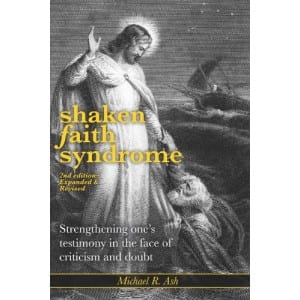
Brother Ash is author of the book Shaken Faith Syndrome: Strengthening One’s Testimony in the Face of Criticism and Doubt, as well as the book, of Faith and Reason: 80 Evidences Supporting the Prophet Joseph Smith. Both books are available for purchase online through the FAIR Bookstore.

Tell your friends about the FAIR-Cast. Share a link on your Facebook page and help increase the popularity of the FAIR-Cast by rating it in iTunes.

Filed Under: Anti-Mormon critics, Apologetics, Podcast

  • « Go to Previous Page
  • Go to page 1
  • Interim pages omitted …
  • Go to page 42
  • Go to page 43
  • Go to page 44
  • Go to page 45
  • Go to page 46
  • Go to Next Page »

Primary Sidebar

Faithful Study Resources for Come, Follow Me

Subscribe to Blog

Enter your email address:

Subscribe to Podcast

Podcast icon
Subscribe to podcast in iTunes
Subscribe to podcast elsewhere
Listen with FAIR app
Android app on Google Play Download on the App Store

Pages

  • Blog Guidelines

FAIR Latest

  • Come, Follow Me with FAIR – Doctrine and Covenants 137–138 – Part 2 – Autumn Dickson
  • Come, Follow Me with FAIR – Doctrine and Covenants 137–138 – Mike Parker
  • FAIR December Newsletter
  • Come, Follow Me with FAIR – Doctrine and Covenants 137–138 – Part 1 – Autumn Dickson
  • Prophets of God 

Blog Categories

Recent Comments

  • LHL on Come, Follow Me with FAIR – Doctrine and Covenants 132 – Mike Parker
  • Stephen Johnsen on Come, Follow Me with FAIR – Doctrine and Covenants 132 – Mike Parker
  • Bruce B Hill on Come, Follow Me with FAIR – Doctrine and Covenants 124 – Part 1 – Autumn Dickson
  • Gabriel Hess on Join us Oct 9–11 for our FREE virtual conference on the Old Testament
  • JC on When the Gospel “Doesn’t Work”

Archives

Follow Us

  • Facebook
  • Twitter
  • iTunes
  • YouTube
Android app on Google Play Download on the App Store

Footer

FairMormon Logo

FAIR is a non-profit organization dedicated to providing well-documented answers to criticisms of the doctrine, practice, and history of The Church of Jesus Christ of Latter-day Saints.

Donate to FAIR

We are a volunteer organization. We invite you to give back.

Donate Now

Site Footer