Cross-posted from The Interpreter Foundation
Review of Jana Riess, The Next Mormons: How Millennials Are Changing the LDS Church (New York: Oxford University Press, 2019). 312 pages. $29.95.
Abstract: Riess’s book surveying the beliefs and behaviors of younger members of The Church of Jesus Christ of Latter-day Saints was supposed to compare the attitudes of younger generations with those of older generations. Unfortunately, flaws in the design, execution, and analysis of the survey prevent it from being what it was supposed to be. Instead the book is Riess’s musings on how she would like the Church to change, supported by cherry-picked interviews and an occasional result from the survey. The book demonstrates confusion about basic sampling methods, a failure to understand the relevant literature pertaining to the sociology of religion, and potential breaches of professional ethics. Neither the survey results nor the interpretations can be used uncritically.
Oxford University Press has a number of excellent titles in sociology and the sociology of religion that I can recommend.1 Unfortunately, the volume under review is not one of those. On the bright side, this book did not come out of the division of Oxford University Press that deals with sociology but out of the division that deals with religious studies. The unfortunate flip side is that this book did not benefit from peer review by someone who actually does social science.
The author of the book, Jana Riess, is a journalist with a PhD in American religious history from Columbia University, where she studied under Richard Bushman. She has no training in social science or statistical analysis and outsourced the statistical work on her book to others. Her book is based on a survey she calls “The Next Mormons Survey.” She put more effort into this book than typically expected from a journalist, and it shows, but the result does not attain the level of top-quality social science work. Riess’s book is not horrible, but it is plagued with problems. As David Frankfurter, professor of religion at Boston University, once noted, “[M]any scholars in Religious Studies have had a certain aversion to the positivistic use of evidence, borne of post-modern critiques of scientific verifiability and a general relativism toward truth-claims.”2 They thus tend not to be well situated to evaluate or use evidence, which shows in the book under consideration. On a certain level, the book deserves to be taken seriously, seriously enough to go to the effort to dissect certain aspects and analyze them carefully. I will discuss the problems with the book in order of the steps taken to put the book together. [Read more…] about Conclusions in Search of Evidence
 René Alexander Krywult, a native of Vienna, Austria, Europe, has been a member of FairMormon for over eighteen years and has been instrumental in founding the German-speaking FairMormon group. He is a software developer and project manager for a European financial institution. He is married to Gabriele Krywult, and they have four children and three grandchildren. His first publication was “Mormon Deification Compared to Orthodox Christian Theosis” in the magazine Spirituality in East and West of Dialog Center International, a Protestant network of organizations engaged in researching new religious movements. More articles on the FairMormon website followed. He organized four FairMormon conferences in Germany from 2009 to 2015 and spoke at all of them.
 Scott Gordon serves as President of FairMormon, a non-profit corporation staffed by volunteers dedicated to helping members deal with issues raised by critics of the LDS faith. He has an MBA from Brigham Young University, and a BA in Organizational Communications from Brigham Young University. He is currently an instructor of business and technology at Shasta College in Redding, California. Scott has held many positions in The Church of Jesus Christ of Latter-day Saints including serving as a bishop for six years. He is married and has five children.
 Huh? How could that be? I knew I’d just unplugged the phone.
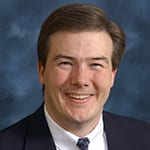 Steve Densley, Jr. is a Utah attorney (J.D., Brigham Young University). He graduated with University Honors from BYU with a combined B.A./M.A. in public policy and political science. He has published articles in the Utah Bar Journal, the Journal of Law and Family Studies, Interpreter: A Journal of Mormon Scripture, and Meridian Magazine. He currently serves as an executive board member of The Interpreter Foundation. He was the Executive Vice President of FairMormon from 2013-15, a recipient of the John Taylor Defender of the Faith Award, and was a producer of FairMormon’s podcast when it twice won the People’s Choice Award for Best Podcast in the Religion & Spirituality category. He has served as an elders quorum president, high councilor, young men’s president, gospel doctrine teacher, and is currently the 1st counselor in his ward’s bishopric. He and his wife Heather have four children and a grandchild on the way.
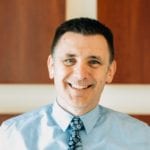 Geret Giles is a psychologist in private practice since 1995. He has a Master’s Degree in Marriage and Family Therapy from Brigham Young University and a Ph.D. in Counseling Psychology from the Pennsylvania State University. He treats couples, families, individuals, adolescents, and children for issues such as depression, anxiety, and relationship issues. For the past 15 years Dr. Giles has also worked with Utah’s Division of Human Services to provide forensic evaluations when questions arise as to the competence and mental state of criminal defendants. He is married to the former Kelley Clements. Together they have four children—three of whom are married—and three grandchildren. Their youngest is currently serving an LDS mission in Brazil. Geret and his wife are getting used to being “empty nesters” and are finding the transition more delightful than they expected!
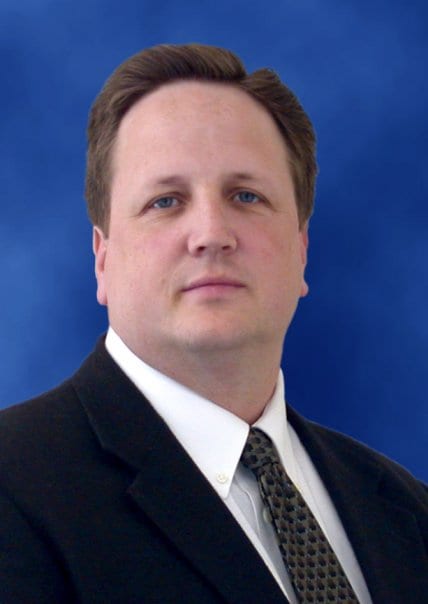 John Lynch is a Silicon Valley sales and marketing executive specializing in high-tech startup ventures. He is a member of the Board of Directors of FAIR and serves as its Chairman. Having served in many missionary callings, including twice as a Stake Mission President, multiple times as a Ward Mission Leader, and having worked at the Provo Missionary Training Center as a teacher and trainer, John has seen the impact of both well-prepared and poorly prepared defenders of the faith.