• Skip to primary navigation
  • Skip to main content
  • Skip to primary sidebar
  • Skip to footer

FAIR

  • Find Answers
  • Blog
  • Media & Apps
  • Conference
  • Bookstore
  • Archive
  • About
  • Get Involved
  • Search

Faith Crisis

LeadingLDS Podcast: How I Lead as Bishop After a Faith Crisis

February 8, 2018 by FAIR Staff

https://media.blubrry.com/mormonfaircast/media.blubrry.com/leadinglds/content.blubrry.com/leadinglds/2018-02-05-HIL-Dan-Conway.mp3

Podcast: Download (63.1MB)

Subscribe: RSS

Dan Conway is a bishop in Newcastle, in northeast England, and has also served as an elders quorum president. He served a mission to Scotland, and works as a digital marketing executive. In this podcast episode from Leading LDS, Dan Conway, a bishop in England, explains how he experienced a faith crisis and overcame it, in part, through the efforts of FairMormon.

Filed Under: Faith Crisis, Podcast, Testimonies

Some Thoughts on Finding “Truth”: The Right Tool for the Job

February 24, 2017 by Mike Ash

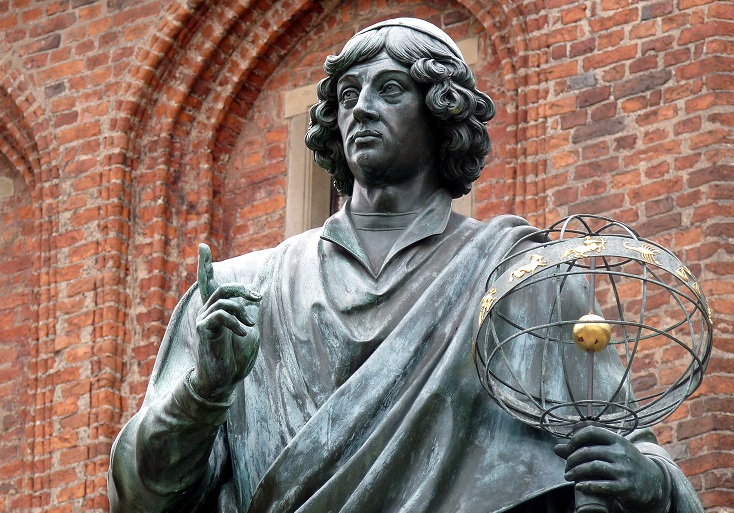
Nicolaus Copernicus Monument by Bertel Thorvaldsen

According to the on-line Oxford Dictionary, science is defined as “the intellectual and practical activity encompassing the systematic study of the structure and behaviour of the physical and natural world through observation and experiment.”[i] In short, science works by interpreting data, and data is typically collected through observations (using eyes, computers, microscopes, etc.).

Thousands of years ago, in the early days of human history, our ancestors could see that the sun, moon, planets, and stars moved across the sky. Direct observation demonstrated that the sun rose in the east and set in the west. In winter months, the days became shorter, and in the summer, longer. The Milky Way also rises from the horizon. North Americans watch the ribbon of stars arch into the sky, nearly paralleling the horizon in the winter months, and arching straight overhead during the summer months.

Very early humans recorded the movement of these celestial objects. NASA, for example, points to the discovery of an ancient lunar calendar that dates to about 32,000 B.C.[ii] The ancient Egyptians likewise had an annual calendar that was based on the “rhythms of the farming year.”[iii] The “morning rising of Sirius or the morning setting of Pleiades, were taken as announcing the Nile flood or as a reminder to plough.”[iv]

All evidence, and the direct eye-witness observations of millions of people all over the world, testified that celestial objects moved above the Earth. Any argument for an alternative interpretation of the observable data would have been preposterous. In fact, when the Greek mathematician and astronomer Aristarchus (about 300 B.C.) suggested that the Earth revolved around the sun (rather than the sun around the Earth), his arguments were rejected because they didn’t fit the prevailing understanding of the cosmos.

It was nearly 2000 years later before Copernicus revived the theory in the mid-1500s (and his writings, like Aristarchus before him, were initially rejected by many people). The Copernicus model was imperfect, however, and it wasn’t until Kepler suggested elliptical orbits (instead of circular orbits) that some of the problems began to fade. In 1632 Galileo could support the Copernicus/Kepler model with observations made through the newly invented telescope.

For thousands of years before Copernicus, Kepler, and Galileo, humans were technically “wrong” regarding what they saw with their very eyes. They weren’t wrong that the sky seemed to move, and they weren’t wrong knowing when to plant and harvest, but they didn’t have a complete understanding as to how the sky appeared to move. Sixteenth-century astronomers added information to the undeniable fact that the sky appears to move, by showing that the universe was not geocentric (Earth-centered), but rather that the universe was heliocentric (sun-centered). While the demarcation between accurate and inaccurate might be debated, I see the Copernicus/Kepler resolution as building on previously accurate beliefs, and correcting erroneous beliefs. There really is an Earth, a sun, a moon, planets, and stars, and they somehow move in predictable patterns with very real relationships to each other.

In our modern world, more modifications were made thanks to better astronomical tools. We now know that a heliocentric universe is also incorrect. Our planets orbit around the sun, but the universe doesn’t. Our solar system orbits around the center of our Milky Way Galaxy, and our galaxy is just one of perhaps a hundred billion galaxies in the observable universe.[v] Each new refinement comes, in part, by building on the discoveries and calculations of previous scientists, as well as continually improved technology (or tools) which offer greater access to understanding the space in which we live.

Even though scientific understanding has evolved tremendously in the course of human history, each generation is typically pretty confident that they have the answers (or are, at least, headed in the right direction). While the humble and inquisitive can acknowledge that we still have a lot to learn, it’s human nature to believe that we are probably right. It’s hard to imagine that some of our cherished truths might be overturned or drastically altered with additional discoveries—but some of them will.

While we know more today (scientifically) and have achieved more in modern times (technologically) than we might have even imaged tens of thousands of years ago, I find it fascinating that the more we learn and achieve, the more we discover, ironically, that there is an even greater collective of things which are unknown.

It’s as if we achieve knowledge and technology by discovering a new doorway, but each door we open leads to the discovery of enormous storerooms filled with new data and information that needs exploration and answers. We might reach inside some of the rooms to examine and learn about those things contained therein, but we are never quite able to learn the full details of everything inside every room.

Sometimes, there are doorways within those rooms that lead to new related, yet undiscovered, information. And as we examine the few bits of things we can analyze and measure, new doors are opened just down the hall and we again peek into storerooms full of new mysteries. The opening of doors to the unknown seems to outpace those things which we can fully comprehend. The pursuit of such mysteries is exciting—especially as puzzles are solved and pieces come together—but is also never-ending.

One of the theoretical pursuits of science is to find the “theory for everything”—a unifying principal or paradigm that explains everything. We want to understand the overall structure of the building which houses all the doors, the rooms to which they lead, and the furnishings within. We hope—or at least suspect—that there may be a unifying set of laws that govern everything. But in the meantime, we find that some of the different rooms seem to have laws which don’t cooperate with the laws in other rooms.

A few years ago, I read a book entitled, Knocking on Heaven’s Door: How Physics and Scientific Thinking Illuminate the Universe and the Modern World, by Dr. Lisa Randall. Randall is one of America’s leading scientists on theoretical particle physics and cosmology, and her religious beliefs seem to be on the continuum somewhere between agnostic and atheist. Nevertheless, she recognizes that a turf war between science and religion can be avoided if we realize that the two perspectives don’t necessarily pitch their tents in the same campground. “Science is not religion. We’re not going to be able to answer the ‘why’ questions. … Religion asks questions about morals, whereas science just asks questions about the natural world.”[vi]

I’ve often heard those who lean toward the agnostic/atheist point of view as saying something to the effect: “I don’t believe that feelings are accurate barometers of truth”—and by “feelings” they are, of course, referring to spiritual promptings, manifestations, revelations, inspirations, or any other communication which comes via supernatural discourse or impressions.

The problems with such a claim, however, are numerous. First, I personally don’t believe that “feelings” accurately describes how I’ve received spiritual enlightenment (although this is a topic for another time). Secondly, all humans incorporate “feelings” in their decision-making process (yes, even scientists—which is part of the reason that science occasionally reverses the conclusions of previous positions). Thirdly, “truth” doesn’t universally describe all conclusions (which are often temporary points of consensus) in all fields of knowledge (including spiritual knowledge).

As noted above, there is yet to be discovered a “theory for everything,” and we often run into seemingly conflicting laws in the world of physics. Randall explains, for example, that “Newton’s laws are instrumental and correct, but they cease to apply at or near the speed of light where Einstein’s theory applies. Newton’s laws are at the same time both correct and incomplete. They apply over a limited domain.”[vii] This, in some ways, is not unlike what we find with the moving sky, moving Earth, and moving solar system models. All three positions have validity depending on one’s perspective and ability to measure and observe.

“As scales decrease,” notes Randall, “matter seems to be governed by properties so different that they appear to be part of entirely different universes.”[viii] Newton’s laws work well for the types of things he was able to observe (and the same kinds of things we can observe today) but at very small distances the rules change and we have to apply quantum mechanics. Likewise, at extremely high speeds the rules of relativity take over. With the enormous densities of black holes, we must turn to general relativity.[ix]

The rules and principles of quantum mechanics, string theories, and general relativity are theoretical tools to help us better understand our world and the cosmos. Just as the telescope helped humans understand the solar system, the microscope helped us understand the miniature world around us, and as DNA helps us understand our physical relationship to life on this planet, so likewise tools such as the Large Hadron Collider (nearly 600 feet underground, beneath the France-Switzerland border) help us understand the early formation of the universe.

The right tool is needed for each different job. We can’t measure heat with a hammer, or weight with a yardstick. When it comes to understanding spiritual truths, we must use spiritual tools such as humility, scriptures study, and prayer. There are currently no scientific tools available to examine the existence of God or the reality of the Resurrection.

Conversely, it’s important to recognize that the Holy Ghost reveals all of those that are “expedient,” or necessary, to return to God (D&C 75:10), not necessarily those things which explain quarks, black holes, gravity, Earth’s diversity of life, or even Book of Mormon geography. Revelation on scientific principles are typically not “expedient” for our divine family reunion.

The late scientist, Dr. Stephen Jay Gould, advocated what he termed “non-overlapping magisteria” (NOMA) for the supposed conflict between science and religion. Gould defined “magisteria”—a term he borrowed from Pope John Paul II—as “a domain where one form of teaching holds the appropriate tools for meaningful dialogue and resolution.”[x] While not all of his atheist friends agreed with Gould, the scholar argued that the domains of religion and science don’t overlap.

NOMA also cuts both ways. If religion can no longer dictate the nature of factual conclusions residing properly within the magisterium of science, then scientists cannot claim higher insight into moral truth from any superior knowledge of the world’s empirical constitution.[xi]

Truth is truth, and while the Holy Ghost may certainly prompt or inspire scientists and scholars, we should be open to accepting the scientific discoveries about the natural world because science offers the best tools for discovering those truths. As Joseph Smith said, “One of the grand fundamental principles of Mormonism is to receive truth, let it come from whence it may.”[xii]

While Randall sees no reason to believe in a God, and although she agrees that scientific tools cannot measure the existence of a divine being, she nevertheless believes that God, if He exists, should leave some sort of fingerprint on those things which can be measured by science. “…it is inconceivable from a scientific perspective,” she writes, “that God could continue to intervene without introducing some material trace of his actions.”[xiii] If Randall knew me and my religious beliefs, she might be surprised to find that I agree with her.

I personally believe that there is a grand unifying theory for everything; that there are top-tier laws and principles which govern all areas of physics. I also believe, however, that the grand unifying theory for everything governs all facets in our universe, including not only the physical world, but also the unseen world of the spiritual realm, and the moral codes of the divine realm. This grand law, is the law of God. Like the pinnacle of a pyramid, it sits above all other subordinate laws, including those physical laws discovered in science. If we fully understood the grand divine law, we would see that the spiritual world, moral principles, and physics are intertwined and are not—in the big scheme of existence—contrary to the other laws.

The problem is that we simply don’t know enough about physics, the cosmos, and our own material universe to confidently state with certainty that God’s imprint is absent. Before we understood those light waves which are invisible to human eyes, those waves were, for all intents and purposes, non-existent. While we can’t see—with the unaided eye—x-rays or infrared light, we know they exist because we’ve discovered tools which can measure or “see” them.

Thanks to physics, we do understand more about our world and cosmos than at any other time in the past (even if that understanding is incomplete). Scientists are aware, however, that there are many more things we really don’t understand. The stuff in the universe that interacts with light, notes Randall, “constitutes only about four percent of the energy density of the universe. About 23 percent of its energy is carried by something known as dark matter that has yet to be positively ID’d.”[xiv] Dark matter somehow interacts—albeit weakly—with matter we know. Detecting it, however, has thus far remained elusive.

“Even more mysterious than dark matter,” Randall continues, “is the substance that constitutes the remaining 73 percent and that has become known as dark energy.”[xv] Einsteinian equations for the universe are based, in part, on the matter and energy found in the universe. These equations show that some other energy—“not carried by matter… particles or other stuff”—is required to exist. The conclusion is based on the observations and “measurements of the characteristics of the universe.” This dark energy “doesn’t clump like conventional matter. It doesn’t dilute as the universe expands but maintains a constant density. The expansion of the universe is slowly accelerating as a consequence of this mysterious energy, which resides throughout the universe, even if it were empty of matter.”[xvi]

Dark energy and dark matter are possibly the mere tips of enormous icebergs of undiscovered properties and laws in our universe (or perhaps just in our dimension). Most scientists who have spent any time studying what we know about the universe, seem open to the possibility that there may be multiple universes, or even multiple dimensions in our own universe. “…space,” Randall explains, “might contain more than the three dimensions we know about: up-down, forward-backward, and left-right. In particular, it could contain entirely unseen dimensions that hold the key to understanding particle properties and masses.”[xvii]

I’m a big fan of science and I believe that science, as a self-correcting discipline, is moving closer to truths about how the diversity of life developed on Earth, and how our planet and perhaps the universe was formed. As a human institution, scientific explorations have, at times, stumbled, changed positions, or hit dead ends—but then so have more than a few of our religious beliefs for the simple fact that we can’t help but see through a glass, darkly (1 Corinthians 13:12; once again, a topic for another time).

Overall, I believe that scientific truths are part of God’s universal grand truth. Not only don’t we need to fear the discoveries which science brings to light, but we need to embrace those discoveries—even if it means reexamining religious traditions that are based on human assumptions.

With so much left to learn and discover, I think it’s a bit naïve to claim that God’s fingerprint is missing from the physical world. We have not yet discovered all the tools we need to measure the physical world. When, or if, we ever do, I suspect that God’s fingerprint will be as visible as a human fingerprint under ultraviolet light. Until that day comes, however, God has already given us the right tools to know that He is there. It’s found in all religions and in all cultures.

All people of the Earth—at every stage of known history—are given the ability to seek and find God through the spiritual practices of their culture, and according to the spiritual light available. The answer to God’s existence may also come packaged in the cultural raiment of those seeking spiritual enlightenment (another topic for another discussion). God grants all His children a door which can be opened to feel his presence—a door that can be reached by every normal human, regardless of their status or stature. Neither technological abundance, nor scientific deficiency, impacts access to spiritual tools. While I believe that the revelatory tool is as much a part of God’s universal law as is our embryonic understanding of physics, this “expedient” tool is all that is necessary to mark the path which ultimately leads back to the Father.


[i] https://en.oxforddictionaries.com/definition/science (accessed 9 February 2017).


[ii] “The Oldest Lunar Calendars,” https://sservi.nasa.gov/articles/oldest-lunar-calendars/ (accessed 9 February 2017).


[iii] John Romer, Egypt: From the Great Pyramid to the Fall of the Middle Kingdom, V2 (New York: St. Martin’s Press, 2017), 97.


[iv] Bartel L. van der Waerden, Science Awakening II: The Birth of Astronomy (Noordhoff International Publishing, 1974), 13.


[v] http://www.physics.org/facts/sand-galaxies.asp (accessed 9 February 2017).


[vi] Quoted by Corey S. Powell, “The Discover Interview: Lisa Randall,” Discover (July 2006), at http://discovermagazine.com/2006/jul/interview-randall/ (accessed 9 February 2017).


[vii] Lisa Randall, Knocking on Heaven’s Door: How Physics and Scientific Thinking Illuminate the Universe and the Modern World (Harper Collins Publishing, 2012; Kindle Edition), 8.


[viii] Ibid., 69.


[ix] Ibid., 71.


[x] Stephen Jay Gould, Rock of Ages: Science and Religion in the Fullness of Life (New York: Ballantine Publishing Group, 199), 3.


[xi] Ibid., 9-10.


[xii] Joseph Smith, History of the Church of Jesus Christ of Latter-day Saints, 5:499.


[xiii] Randall, 50-51.


[xiv] Ibid., 119-120.


[xv] Ibid., 122.


[xvi] Ibid., 123.


[xvii] Ibid., 119.


Michael R. Ash is the author of: Of Faith and Reason: 80 Evidences Supporting The Prophet Joseph Smith. He is the owner and operator of MormonFortress.com and is on the management team for FairMormon. He has been published in Sunstone, Dialogue: A Journal of Mormon Thought, the Maxwell Institute’s FARMS Review, and is the author of Shaken Faith Syndrome: Strengthening One’s Testimony in the Face of Criticism and Doubt. He and his wife live in Ogden, Utah, and have three daughters.


Filed Under: Apologetics, Evidences, Faith Crisis, Michael R. Ash, Uncategorized Tagged With: apologetics, Copernicus, cosmos, faith, Michael R. Ash, science, Truth

Book Review: A Reason for Faith: Navigating LDS Doctrine & Church History

September 16, 2016 by Trevor Holyoak

Available from the FairMormon bookstore at 20% off

In the prologue of A Reason for Faith, the editor, Laura Hales, lays out the purpose of the book. Members of the church sometimes come across new information in an unfriendly setting that damages their faith. This book is a compilation of articles about many of the topics that are not often discussed in a church or family setting, and can be difficult to understand. They are laid out by scholars in an honest but faithful manner, and while they can’t possibly cover the topics completely in the amount of space given, they are meant to be a springboard for further study where necessary.

The first chapter is by Richard Bushman, on “Joseph Smith and Money Digging.” He recounts the history of scholarship in this area, where it was originally denied by those inside the church due to being based on accounts thought to be unreliable published by critics of the church. As he began his own research, he found evidence that convinced him that Joseph was indeed involved with folk magic and seer stones, and that these things were too common in the 19th century to invalidate Joseph’s prophetic claims or be scandalous. [Read more…] about Book Review: A Reason for Faith: Navigating LDS Doctrine & Church History

Filed Under: Apologetics, Bible, Book of Abraham, Book of Mormon, Book reviews, Chastity, DNA, Faith Crisis, Gender Issues, Homosexuality, Joseph Smith, LDS History, LDS Scriptures, Masonry, Polygamy, Prophets, Racial Issues, Science, Temples, Women

The Critic’s Big List of Problems

August 25, 2016 by Trevor Holyoak

by Michael R. Ash

hands-computer-828898-galleryAny member who has undergone a faith crisis knows that there are many critics on the Internet who are happy to share a Big List of Mormon Problems to help facilitate one’s exit from the Church. These lists can serve as the catalyst for the initial testimony damage, or contribute the final straw in a “death by a thousand cuts” (the “Big List of Mormon Problems” is not the real name of any list but designates features which all of these lists have in common).



Such lists have been around long before the Internet was invented but received limited interest and distribution. While some of the works found their way into member or investigator homes, in the hands of missionaries, or even in local libraries, much of the material was picked up only by those critics or LDS apologists (defenders) who found the topics interesting.

Today, however, anyone can create a quick Big List of Mormon Problems, convert it to a pdf, and post it on-line. Depending on the creator’s writing abilities and social networking skills, a well-written piece by an outgoing author could quickly attain viral status. [Read more…] about The Critic’s Big List of Problems

Filed Under: Anti-Mormon critics, Apologetics, Faith Crisis, Michael R. Ash

The Courage of Our Convictions: Embracing Mormonism in a Secular Age

August 17, 2016 by Trevor Holyoak


Patrick Mason’s presentation from the 2016 FairMormon Conference. The transcript can be viewed here.

Audio and Video Recording Copyright © 2016 The Foundation for Apologetic Information and Research, Inc. Any reproduction or transcription of this material without prior express written permission is prohibited.

You can purchase access to the rest of the conference videos here.

Patrick Q. Mason holds the Howard W. Hunter Chair in Mormon Studies at Claremont Graduate University, where he is also an associate professor of religion and chair of the Religion Department. After earning his BA in History from Brigham Young University, he attended the University of Notre Dame where he earned an MA in International Peace Studies and PhD in History. He is the author, editor, or co-editor of several books, including most recently Planted: Belief and Belonging in an Age of Doubt (Deseret Book and Neal A. Maxwell Institute), Out of Obscurity: Mormonism since 1945 (Oxford University Press), Directions for Mormon Studies in the Twenty-First Century (University of Utah Press), and later this fall an introductory college textbook called What Is Mormonism? (Routledge). A frequently sought-after expert on Mormonism and religion in American life, Mason has appeared in numerous media outlets including National Public Radio, the Today Show, New York Times, Los Angeles Times, Wall Street Journal, and the Huffington Post. He lives in Claremont, California, with his wife Melissa and their four children.

Filed Under: Apologetics, FAIR Conference, Faith Crisis

Fair Issues 100: Evidence versus proof

May 15, 2016 by Ned Scarisbrick

https://media.blubrry.com/mormonfaircast/www.fairlatterdaysaints.org/wp-content/uploads/2016/05/Fair-Issues-100-Pod.mp3

Podcast: Download (11.8MB)

Subscribe: RSS

Ash (newer) PictureIn this installment brother Ash explains the differences between what we consider as evidence versus proof in religious matters.

The full text of this article can be found at Deseret News online.

Brother Ash is author of the book Shaken Faith Syndrome: Strengthening One’s Testimony in the Face of Criticism and Doubt, as well as the book, of Faith and Reason: 80 Evidences Supporting the Prophet Joseph Smith. Both books are available for purchase online through the FairMormon Bookstore. Tell your friends about the Mormon Fair-Cast. Share a link on your Facebook page and help increase the popularity of the Mormon Fair-Cast by subscribing to this podcast in iTunes, and by rating it and writing a review.

The views and opinions expressed in the podcast may not reflect those of the Church of Jesus Christ of Latter-day Saints or that of FairMormon


Filed Under: Anti-Mormon critics, Apologetics, Book of Mormon, Evidences, Fair Issues, Faith Crisis, General, Hosts, Joseph Smith, Michael R. Ash, Ned Scarisbrick, Podcast, Power of Testimony Tagged With: Book of Mormon evidences

The Ancient Art of Misleading by Selective Citation

April 29, 2016 by Gregory Smith

Books

A recent article was posted in which a woman struggling with her faith reported a “punch in the gut feeling” because Elder L. Whitney Clayton of the Seventy told BYU grads:

A few of you may have run into some who cease to hold fast to the iron rod wandered off the straight and narrow path, and have become lost. …. We should disconnect immediately and completely from …those who have lost their faith” [Citation as provided, no text omitted] [1]

All is not well

Our first clue that all is not right is the presence of the ellipsis: the three dots that represent omitted material: … [Read more…] about The Ancient Art of Misleading by Selective Citation

Filed Under: Anti-Mormon critics, Faith Crisis, Prophets Tagged With: apologetics, discipleship, doubt, Elder L. Whitney Clayton, Greg Smith

4th Watch 23: The challenge of discipleship

April 21, 2016 by Ned Scarisbrick

https://media.blubrry.com/mormonfaircast/www.fairlatterdaysaints.org/wp-content/uploads/2016/04/4th-Watch-23-Pod.mp3

Podcast: Download (31.3MB)

Subscribe: RSS

4thWatch SmallBack in the day, late 60’s and the early 70’s just across the border in Rosarito Beach, Baja California the big “X” XERB was one of the flamethrower am radio stations of its day. The big “X” was the brainchild of Robert Weston Smith.  Bob Smith?  So who is Bob Smith?  If you don’t recognize the name you just might remember the voice.

It’s the “Wolfman.”  He was one of the most successful disk jockeys of his day.  You might remember him in the movie “American Graffiti” done by George Lucas in 1973.  The Wolfman made a considerable amount of money on the big “X” and most of it came from the late night programs that came to be known as the prayer shawl preachers or PSP’s as I call them.

At one point Wolfman Jack was said to be making over $50,000.00 a month from the revenue generated by these programs.  A considerable amount of cash back then which did NOT go unnoticed by the Mexican authorities. Kind of like when Han Solo said to Luke Skywalker in the original Star Wars movie, “ancient weapons and hokey religions are no match for a good blaster at your side kid.” The blaster of the PSP’s made the bucks.  I’m not sure how the radio station changed hands but the Wolfman got pushed out and things changed.

Running at 250,000 watts XERB could be heard from border to border.  American stations could only broadcast at 50,000 watts of power due to FCC regulations so the big “X” was quite an adventure for am radio.

If we go back further in time the most powerful commercial radio station in the ever in the USA was WLW in the (700KHz AM) in Cincinnati Ohio, which during certain times in the 1930’s broadcast 500,000 watts of radiated power.  At night, it covered half the globe.  Neighbors within the vicinity of the transmitter heard the audio in their pots, pans and mattresses, literally.  I’m providing a link in the show notes for those who may be interested in the history of WLW.  https://en.wikipedia.org/wiki/wlw

Today we have the new and improved border blasters and you’re listening to one of them now.  The internet podcast.  Just about anyone with a computer and microphone can produce and air podcasts.  For that matter you can effectively have your own TV station.  It’s called YouTube.  All without the need for mass quantities of money.

Bob Dylan sang the lyrics of our day thinking he was just talking about the days in which he lived.  That was in 1964.  Over fifty years ago. Truly the times are a changing and I would suspect that in another fifty years our todays might seem as foolish to those who look upon us from their enlightened era with mild if not outright amusement.

Some things don’t change and for good reason.  Being a disciple of Jesus Christ is one of those things that doesn’t change.  The way we show our discipleship does and should change to adapt to the environment and culture in which we live.  What may be welcomed in Mormon Central aka Salt Lake City Utah may not be well received in another part of the world but our intent should always be the same. To represent our Lord and Savior and his loving and kindness by using our hands as His hands and the tone of our voice as He would talk to those in need of His care.

In October of 2006 brother James A. Faust, second counselor in the First Presidency of the Church of Jesus Christ of Latter-day Saints offered this view of discipleship.

Our responsibility is clear for those who have received the testimony of Jesus Christ.  To become His disciples.

In doing so I try hard not to denigrate another’s testimony or their faith tradition.  In the opening of this podcast I referred to the “prayer shawl preachers” in a manner that some may see or in this case hear as unacceptable . Truth is often in the ear of the beholder because our intent is interpreted by the distance from our heads to our hearts and that takes time.  Oh, I know what you think I meant but I’m not sure what you heard is what was in my heart. Yes yes, I know. Ain’t it the truth?  Does this happen to you?  Happens to me.

When such events take place I try really hard to apologize and not defend what I said or did.  It is not about being right but building a bridge of understanding.  Brother Ned, you need to build a bridge to get over yourself!  Sorry if my style offends you.  I meant no disrespect.  I’m sorry.  Well, you’re still a jerk!  I sorry you feel that way.  It’s just my amateur attempt at humor.  Amateur?  You got that right! Now Brother Ned,…

So you got a spiritual wound did you?  Here, let me have a look under that bandaged dressing. Oh, you’ll be fine just take some Life-N-All and call me in the morning.  By the way, Life-N-All is available online at Brother Ned’s Discount Warehouse of Worship right here in Boise Idaho, say hallelujah! Life-N-All is the only supplement that contains the three essential elements to get you up to speed and keep your there.  Vitamins R, P and M.

What’s next?

Do what you can do not what someone else can do.  They may need just what you have.  Your hands may what they see and feel.  It may be your voice that offers what they need to hear.  Perhaps your smile is the one they can understand better than anyone else’s.  Make sense?

I would like to offer two extreme views of how we can experience the gospel as a disciple of Jesus.  The first one I call the “Mormon-Gnostics” or as   Cassandra Hedelius would say Mormon Gnosticism.   She gave a presentation at the August 7, 2015 annual conference of the FairMormon group about this subject which you can read with the link I’m providing in the show notes…

http://www.fairmormon.org/perspectives/fair-conferences/2015-fairmormon-conference/a-house-of-order-a-house-of-god

They go too far.  There is little if any need of a Church structure.  The only relationship that counts is the one with the Lord.

Going to the other extreme are those whom I call the Corporate Mormons.  They have turned the gospel into a company.  By what they say and do they wind up worshipping the structure instead of He who created them.  They go too far.  If you find yourself going too far in one of these directions start asking yourself questions.  Both directions can lead to dangerous forms of discipleship.

In a Zoom conversation with Scott Gordon a few of us on the FairMormon volunteer blog list had a conversation about the direction our podcasts and written blog articles should be going.  A decision was made to focus our efforts toward your standard and average member who sit in the pews week after week.  So my podcasts are designed to fit that mold.  Mold?  Did I say mold?  Who’s mold?  Standard and average?  So the enlightened or the ultra-ignorant need not read or listen? Ultra-ignorant their talking about you Brother Ned. I’m going to take care of this right now.  Where’s the forget me stick? An effective piece of equipment to be sure.  You decide what’s best for you.  In my view there are no “molds” we are relegated to fit into.  Make up your own mind and choose for yourself.  You are a child of the ever living God. Don’t let me or anyone else tell you what or who you are.

Continuing on…

It is rather easy to see those who are becoming more Gnostic in their form of worship.  They start distancing themselves for Church activity because “they” have received the true light of the gospel.  It might be more difficult for those who are going toward the corporate world view to see that they are becoming administrators of the bureaucracy instead of a minister of the gospel.  Numbers, percentages and ratios may have value for a general overview of how a Ward or congregation is moving but if that becomes our defining attention perhaps our discipleship is moving in the wrong direction.

Next segmento…

You may have seen the movie Mars Attacks or not.  It was done is 1996 and is probably the best spoof of the fifty’s and sixty’s science fiction “B” movies ever made.  If you done seen it you know what I mean if you haven’t you might want to give it try. Extra campy and lots of great performances by well-known actors.

Peirce Brosnan who was great in the 007 movies plays a scientist in this flick who portrays great wisdom and superior knowledge to whom all most bow with awe and reverence.

In one part of the movie some engineer type comes up with a translation device of the Martian language.  All the Martians say in the movie is, ak, ak ak, ak, so we never know what they are really saying until we can hear the translation.  In the clip I’m going to let you hear tell me if it makes sense to you.

Peirce Brosnan is sitting at a table with a pipe in his hand and looking upward as if he has just heard some great new cosmic wisdom.  Also in the room is an Army general.  Both hear the same thing and the general has a different reaction to the translation than that of the great super genius professor.  Being as I’m your basic simple person and not a super genius my reaction to the translation is pretty close to the generals response.

If you are part of a group, congregation, study club or other religious / spiritual path and what you are hearing doesn’t line up with the “four points on the eternal line of wisdom” you might want consider moving away from such an affiliation.

Some of the Mormon-Gnostics may fall into this classification.  For dark is the suede that mows like a harvest is just a bunch of baloney sauce.  Don’t go in that direction.

Next…

The four points of truth? This is part of the brother Ned value system and not to be considered official doctrine but probably should be.  First point.  Our heads.  Second point.  Our hearts.  Third point. Our gut.  Point number four.  The Holy Scriptures.

You ever get that “gut” feeling you know something is just wrong or right?  What does our out gut have to do with feelings?  The Savior told us that His bowels were full of compassion.

Mosiah 15:9, “Having ascended into heaven, having the bowels of mercy; being filled with compassion towards the children of men; standing betwixt them and justice; having broken the bands of death, taken upon himself their iniquity and their transgressions, having redeemed them, and satisfied the demands of justice.”

What does mercy have to do with our bowels?  A figurative representation I would think even though back in the day they thought feelings generated in our bowels.  The Savior knew better of course but He was relating in terms they could understand without going into the science of how feelings are created.  Ever heard the saying, “go with your gut?” So, if you’re gut, heart and head line up with God’s revealed word I would say your discipleship is moving in the right direction.

Last segment…

In listening to all these colorful illustrations you may recall something the Lord has pressed upon your “four lines of truth.”   You may remember something you did or said back in your day.  Could have been in ’69 or ’89 or even in ’09 that you considered the best days of your life. A mission perhaps?  You just laid in down and forgot to pick it up again. So, how about we pick it back up and keep moving forward in our discipleship to the glory of Him who is our Lord and Savior.

President Faust offers us a good guideline…

How about if we go about doing good?  We may not need the loud voice that the border blasters used but then again we may need it to get someone’s attencion then the quit voice of love could move in to replace the giant noise of the world’s value system.

In closing what I’m about to offer as a question that just might be the most important part of this podcast.

If you’re listening say Amen…

What if the disappearance of a sense of responsibility is the most far-reaching consequence of submission to authority?

As always the views expressed in this podcast are those of the presenter and may not represent, reflect or even remotely resemble those of anyone who is lives in the real world about anything at any time but they should and are soon be canonized by the Church.  Or not… J


Filed Under: Conversion, Doctrine, FAIR Conference, Faith Crisis, General, Hosts, LDS Culture, Mormon Voices, Ned Scarisbrick, Podcast, Power of Testimony Tagged With: discipleship

“What Should I Do If I Think I’ve Received Revelation Different from Apostles and Prophets?”

January 11, 2016 by Gregory Smith

What ought we to do if we believe we have received revelation that differs with the united voice of the First Presidency and Twelve apostles?

One of the great strengths–and arguably one of the defining features–of LDS doctrine as a belief in on-going revelation, both to Church leaders and individuals members. Members understand that the revelation they receive is only for their areas of stewardship and responsibility.

What should we do, then, in the case where we sincerely believe we have received revelation that tells us that the highest councils of united Church leaders are mistaken?

I here suggest five important principles drawn from apostles and prophets about such situations, which have blessed my life.
[Read more…] about “What Should I Do If I Think I’ve Received Revelation Different from Apostles and Prophets?”

Filed Under: Doctrine, Faith Crisis, General Conference, Power of Testimony, Prophets

Bamboozled by the “CES Letter”

September 28, 2015 by Mike Ash

MA

Bamboozled by the “CES Letter” (free download)

In April 2013 Jeremy T. Runnells published a pdf booklet entitled, “Letter to a CES Director.” This booklet, which is now typically referred to as the “CES Letter,” catalogues Runnells’ concerns and reasons why he left The Church of Jesus Christ of Latter-day Saints. Runnells has worked hard to make his booklet available to people everywhere (and in several languages) and has, unfortunately, been the agent for leading at least a few other believers out of Mormonism.

Sadly, most of those who have been bamboozled by the “CES Letter“ are Latter-day Saints who were blind-sided by scholarly-sounding interpretations of challenging data. In my opinion, however, the “CES Letter’s” caricature of Mormonism is fundamentally flawed and does not accurately represent either Mormonism or the only logical interpretations of the data.

Unfortunately, the reason the CES Letter has enjoyed any success is that most Latter-day Saints have never been exposed to some of the more complex matters in early Mormon history. On average, the typical Latter-day Saint has never needed to think outside of the box on Mormon-related philosophical, historical, or scholarly issues.

Also available for purchase in paperback edition

“Bamboozled by the ‘CES Letter'” explains, with a bit of humor, why these complex issues need not kill a testimony. Interpretation matters. A growing number of laymembers as well as educated Mormon scholars, are fully aware of the complex issues but continue strong in their faith because they recognize that there are logical interpretations which can be integrated with their belief in Mormonism.

Bamboozled by the “CES Letter” (free download)

Filed Under: Anti-Mormon critics, Apologetics, Faith Crisis, Michael R. Ash, Resources

  • « Go to Previous Page
  • Go to page 1
  • Interim pages omitted …
  • Go to page 15
  • Go to page 16
  • Go to page 17
  • Go to page 18
  • Go to page 19
  • Interim pages omitted …
  • Go to page 26
  • Go to Next Page »

Primary Sidebar

Faithful Study Resources for Come, Follow Me

Subscribe to Blog

Enter your email address:

Subscribe to Podcast

Podcast icon
Subscribe to podcast in iTunes
Subscribe to podcast elsewhere
Listen with FAIR app
Android app on Google Play Download on the App Store

Pages

  • Blog Guidelines

FAIR Latest

  • Come, Follow Me with FAIR – Doctrine and Covenants 137–138 – Part 2 – Autumn Dickson
  • Come, Follow Me with FAIR – Doctrine and Covenants 137–138 – Mike Parker
  • FAIR December Newsletter
  • Come, Follow Me with FAIR – Doctrine and Covenants 137–138 – Part 1 – Autumn Dickson
  • Prophets of God 

Blog Categories

Recent Comments

  • LHL on Come, Follow Me with FAIR – Doctrine and Covenants 132 – Mike Parker
  • Stephen Johnsen on Come, Follow Me with FAIR – Doctrine and Covenants 132 – Mike Parker
  • Bruce B Hill on Come, Follow Me with FAIR – Doctrine and Covenants 124 – Part 1 – Autumn Dickson
  • Gabriel Hess on Join us Oct 9–11 for our FREE virtual conference on the Old Testament
  • JC on When the Gospel “Doesn’t Work”

Archives

Follow Us

  • Facebook
  • Twitter
  • iTunes
  • YouTube
Android app on Google Play Download on the App Store

Footer

FairMormon Logo

FAIR is a non-profit organization dedicated to providing well-documented answers to criticisms of the doctrine, practice, and history of The Church of Jesus Christ of Latter-day Saints.

Donate to FAIR

We are a volunteer organization. We invite you to give back.

Donate Now

Site Footer