• Skip to primary navigation
  • Skip to main content
  • Skip to primary sidebar
  • Skip to footer

FAIR

  • Find Answers
  • Blog
  • Media & Apps
  • Conference
  • Bookstore
  • Archive
  • About
  • Get Involved
  • Search

LDS History

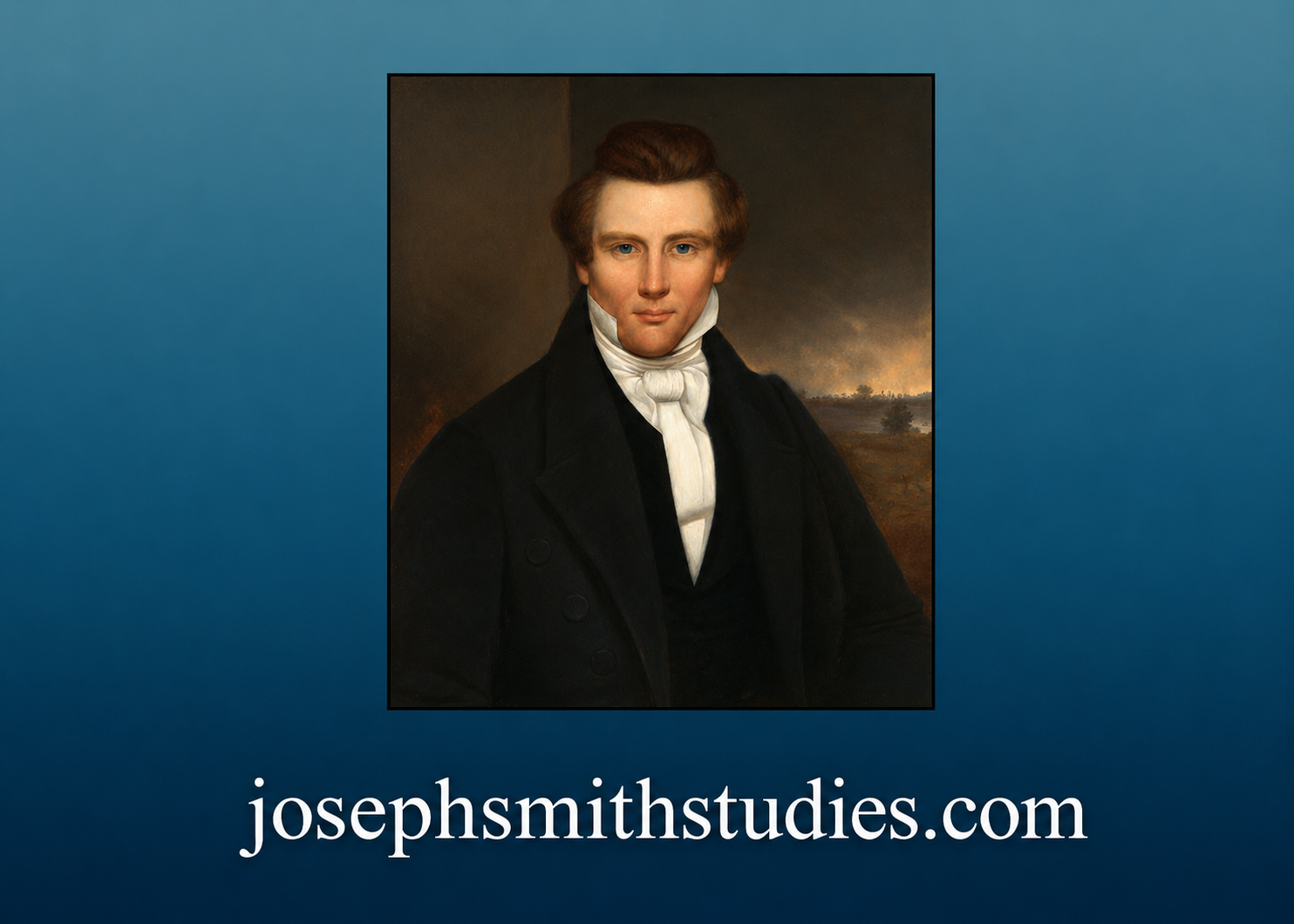
Joseph Smith: The Profile of a Prophet

July 15, 2011 by Stephen Smoot

The following PDF attachment is an exploration into Joseph Smith meeting the criteria of an authentic prophet. It was originally part of my review of Joel Kramer’s anti-Mormon DVD The Bible vs. Joseph Smith. Upon the wise suggestion of Greg Smith, a fellow FAIR volunteer, I excised this portion of my review and rewrote parts of it to stand alone as a separate article. As you may discover upon reading, this article does have a sort of devotional flavor to it. But I hope that the main point behind this article is easily recognizable.

With that in mind, I offer for the reader’s consideration Joseph Smith: The Profile of a Prophet for those interested. Feel free to download and keep a copy if you wish.

Joseph Smith: The Profile of a Prophet

Filed Under: Apologetics, LDS History Tagged With: Hugh B. Brown, Joseph Smith, prophet

A Note on the First Visions of Paul and Joseph Smith

July 11, 2011 by Stephen Smoot

Luke reports three accounts of Paul’s conversion on the road to Damascus in the book of Acts. The first is in Acts 9:1-9. The second appears in Acts 22:6-11. And the third is recorded in Acts 26:12-20. Below are these three accounts reprinted as they appear in the King James Version:

Acts 9:1-9

1And Saul, yet breathing out threatenings and slaughter against the disciples of the Lord, went unto the high priest,

2And desired of him letters to Damascus to the synagogues, that if he found any of this way, whether they were men or women, he might bring them bound unto Jerusalem.

3And as he journeyed, he came near Damascus: and suddenly there shined round about him a light from heaven:

4And he fell to the earth, and heard a voice saying unto him, Saul, Saul, why persecutest thou me?

5And he said, Who art thou, Lord? And the Lord said, I am Jesus whom thou persecutest: it is hard for thee to kick against the pricks.

6And he trembling and astonished said, Lord, what wilt thou have me to do? And the Lord said unto him, Arise, and go into the city, and it shall be told thee what thou must do.

7And the men which journeyed with him stood speechless, hearing a voice, but seeing no man.

8And Saul arose from the earth; and when his eyes were opened, he saw no man: but they led him by the hand, and brought him into Damascus.

9And he was three days without sight, and neither did eat nor drink.

Acts 22:6-11

6And it came to pass, that, as I made my journey, and was come nigh unto Damascus about noon, suddenly there shone from heaven a great light round about me.

7And I fell unto the ground, and heard a voice saying unto me, Saul, Saul, why persecutest thou me?

8And I answered, Who art thou, Lord? And he said unto me, I am Jesus of Nazareth, whom thou persecutest.

9And they that were with me saw indeed the light, and were afraid; but they heard not the voice of him that spake to me.

10And I said, What shall I do, Lord? And the Lord said unto me, Arise, and go into Damascus; and there it shall be told thee of all things which are appointed for thee to do.

11And when I could not see for the glory of that light, being led by the hand of them that were with me, I came into Damascus.

Acts 26:12-20

12Whereupon as I went to Damascus with authority and commission from the chief priests,

13At midday, O king, I saw in the way a light from heaven, above the brightness of the sun, shining round about me and them which journeyed with me.

14And when we were all fallen to the earth, I heard a voice speaking unto me, and saying in the Hebrew tongue, Saul, Saul, why persecutest thou me? it is hard for thee to kick against the pricks.

15And I said, Who art thou, Lord? And he said, I am Jesus whom thou persecutest.

16But rise, and stand upon thy feet: for I have appeared unto thee for this purpose, to make thee a minister and a witness both of these things which thou hast seen, and of those things in the which I will appear unto thee;

17Delivering thee from the people, and from the Gentiles, unto whom now I send thee,

18To open their eyes, and to turn them from darkness to light, and from the power of Satan unto God, that they may receive forgiveness of sins, and inheritance among them which are sanctified by faith that is in me.

19Whereupon, O king Agrippa, I was not disobedient unto the heavenly vision:

20But shewed first unto them of Damascus, and at Jerusalem, and throughout all the coasts of Judæa, and then to the Gentiles, that they should repent and turn to God, and do works meet for repentance.

Notice how Luke attributes additional words to the Lord Jesus to Paul in his third account than in his first two. In the first account, Jesus tells Paul to “arise, and go into the city, and it shall be told thee what thou must do” (Acts 9:6). In the second report, Luke describes Jesus telling Paul to “arise, and go into Damascus; and there it shall be told thee of all things which are appointed for thee to do” (Acts 22:10). But notice in the third account how Luke quotes Jesus as saying much more to Paul than in the previous two accounts:

And he said, I am Jesus whom thou persecutest. But rise, and stand upon thy feet: for I  have appeared unto thee for this purpose, to make thee a minister and a witness both of these things which thou hast seen, and of those things in the which I will appear unto thee; Delivering thee from the people, and from the Gentiles, unto whom now I send thee,To open their eyes, and to turn them from darkness to light, and from the power of  Satan unto God, that they may receive forgiveness of sins, and inheritance among them which are sanctified by faith that is in me (Acts 26:15-18).

This added information in the third report from Luke is understandable, considering the context. In Acts 26 Paul is relating to Agrippa the reason behind his imprisonment and the ruckus he had created with the Jews at the Temple. Luke reports that Paul got into hot water with his pious Jewish peers for not only preaching against the Law of Moses but also for allegedly bringing “Greeks also into the temple, and pollut[ing] this holy place” (Acts 21:28). So grievous was Paul’s perceived profaning of the temple that his zealous would-be executioners immediately took him outside the precincts of the temple to summarily dispatch him (Acts 21:30-31). Fortunately for Paul the clatter alerted the Roman authorities, who took him into their custody before he could be killed (Acts 21:32-40).

As such, Paul had a lot of explaining to do on his part. Why was he so hated amongst his Jewish peers to the point of blood lust? Furthermore, as a Jew what business did he have associating with Gentiles? Paul gives Agrippa the answer, as reported by Luke: Jesus had specifically charged Paul to witness unto the Gentiles, and to win them over from their Satanic paganism to forgiveness and sanctification through Christ. Hence, we can infer, Paul gave this additional detail to Agrippa because of its expediency and relevance to his defense before the Gentile king. It certainly would have done Paul no good to relate this revolutionary (not to mention blasphemous) information to his Jewish enemies in Acts 22. As a matter of fact, these same Jewish foes patiently listened to Paul’s story until he described a hitherto unrecorded vision in the Jerusalem temple wherein he was commissioned by the Lord to depart unto the Gentiles. Upon hearing this unbearably shocking detail they cut him off and were driven to madness as they demanded his life (Acts 22:17-22). Furthermore, Luke had no need to provide this information in Acts 9 since he has yet to detail the ministry of the Apostles to the Gentiles beginning in Acts 10. It would throw off the development of the narrative history for Luke to provide a full account of the Lord’s words to Paul before the reader even knows what is going on with the Gentiles in the first place. But, once Luke has firmly established Paul’s role as the apostle to the Gentiles, and given the immediate context of Paul’s account to Agrippa, it makes perfect sense why he would omit this information until the third account in Acts 26.

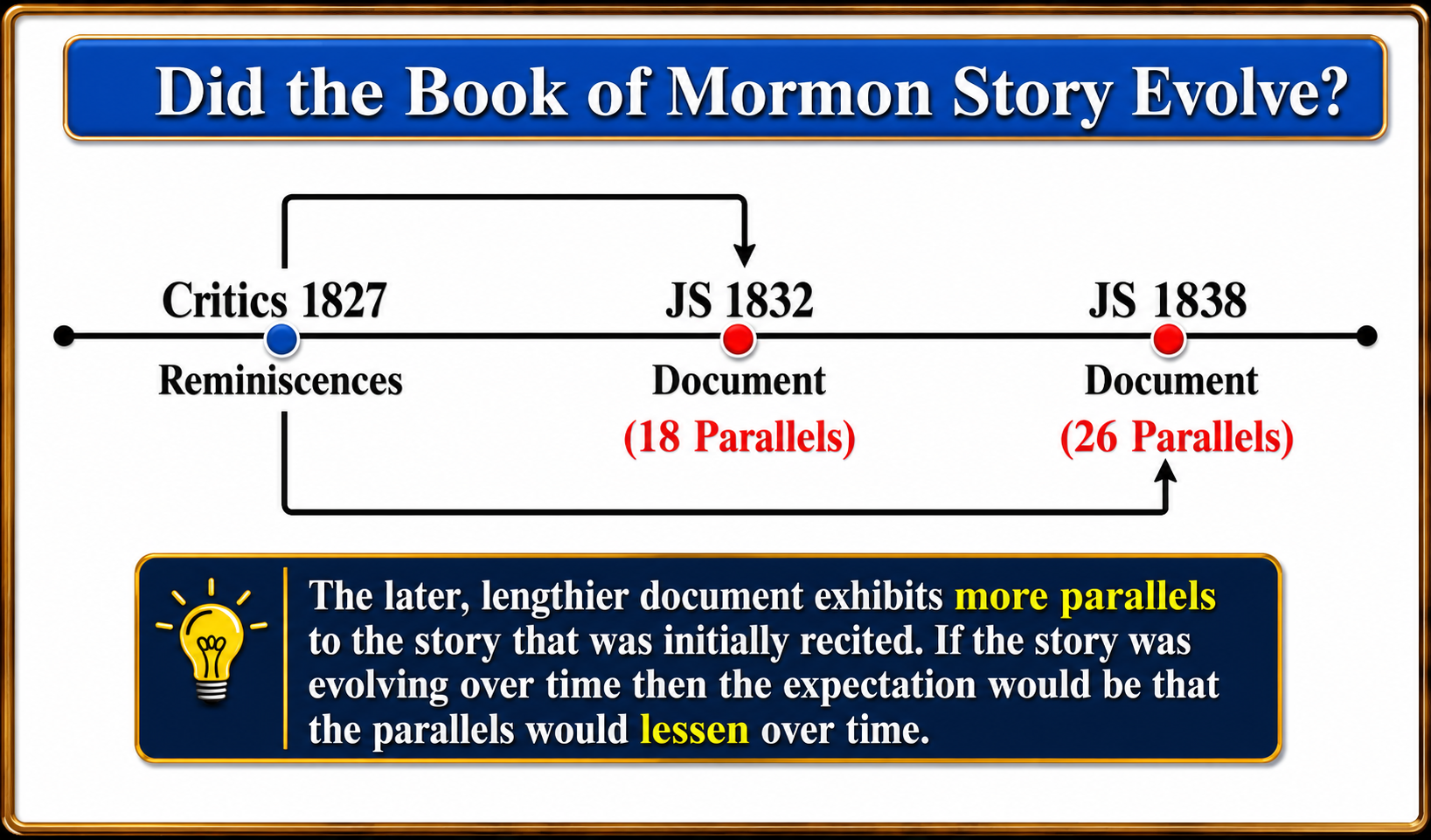
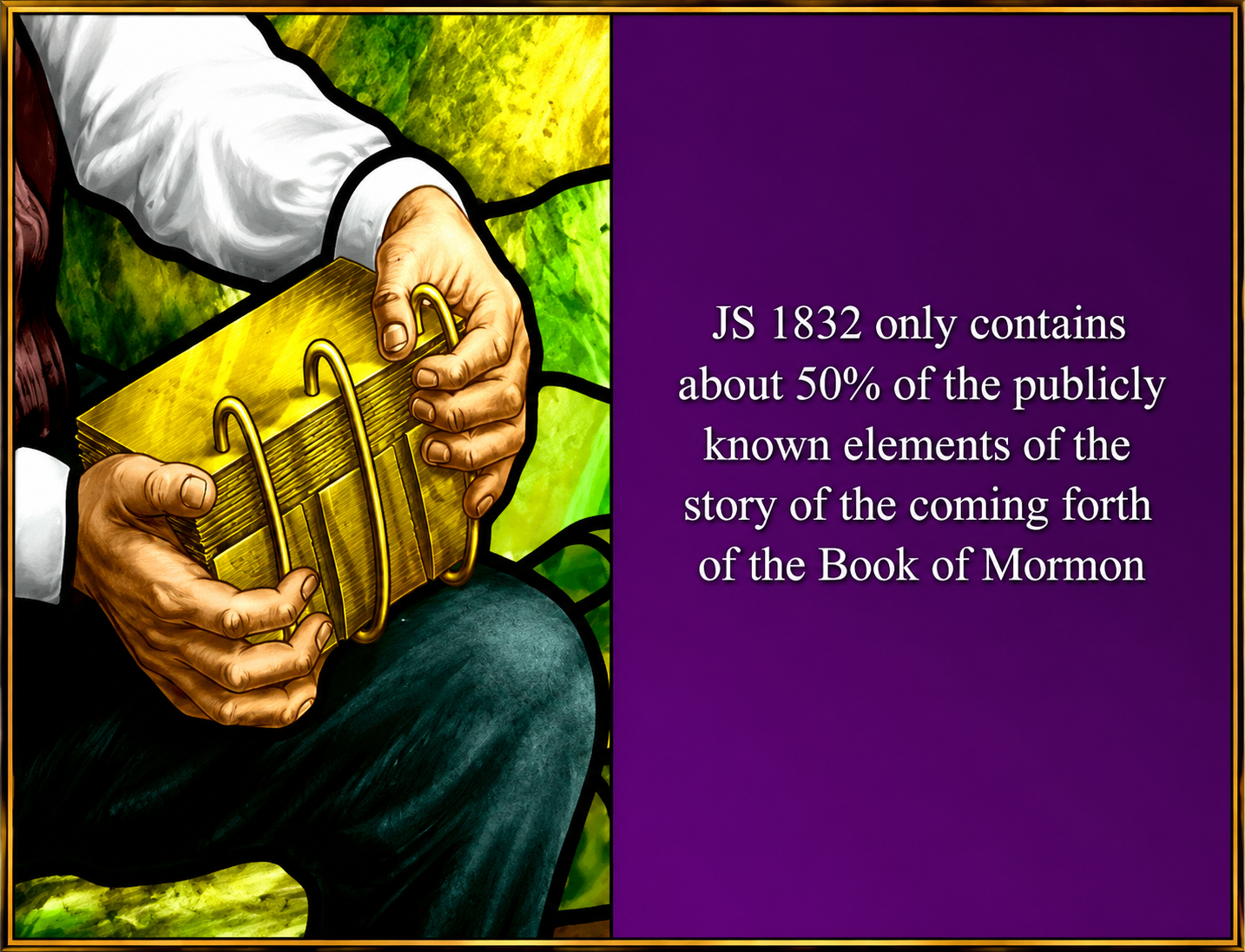
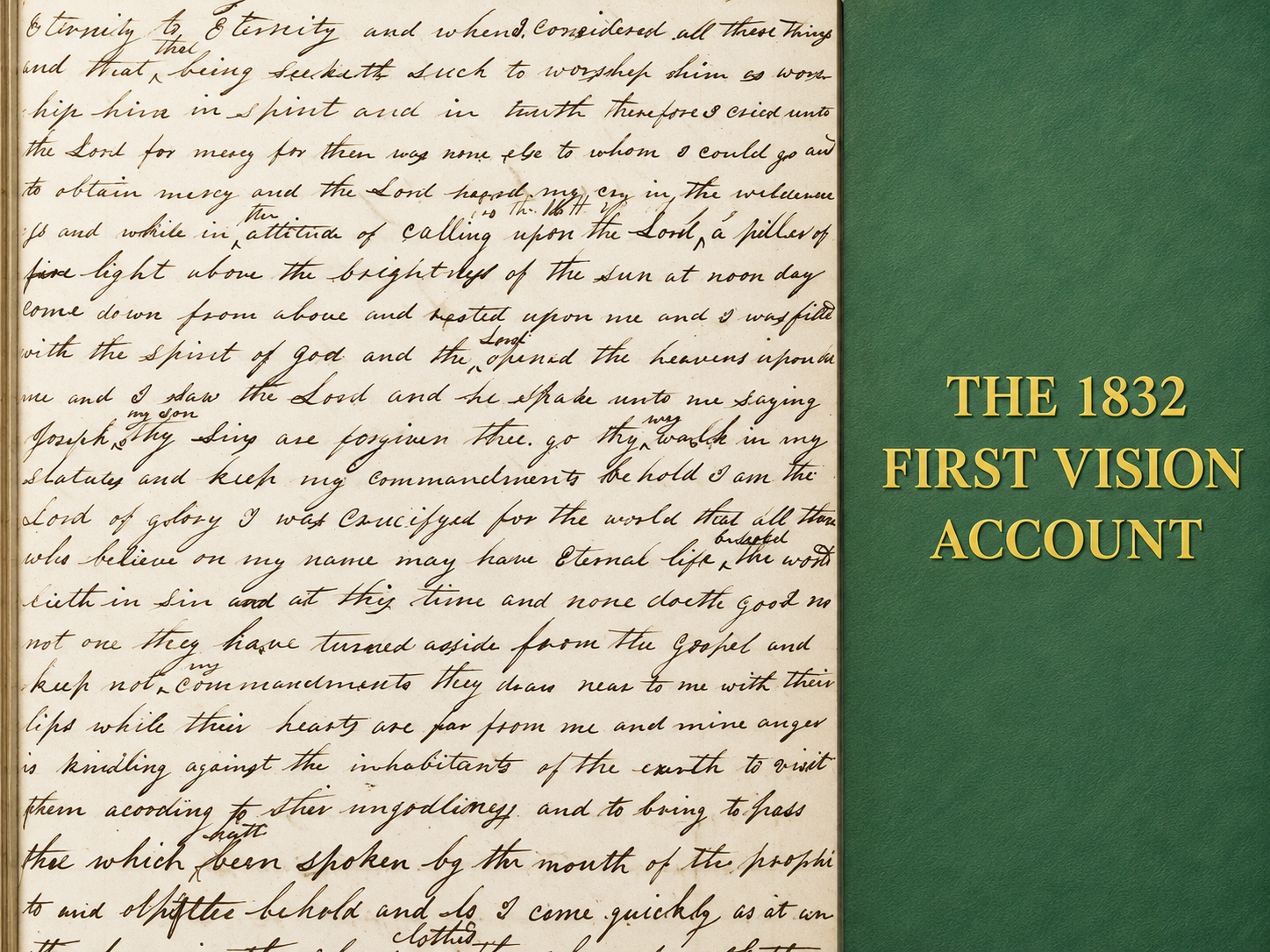
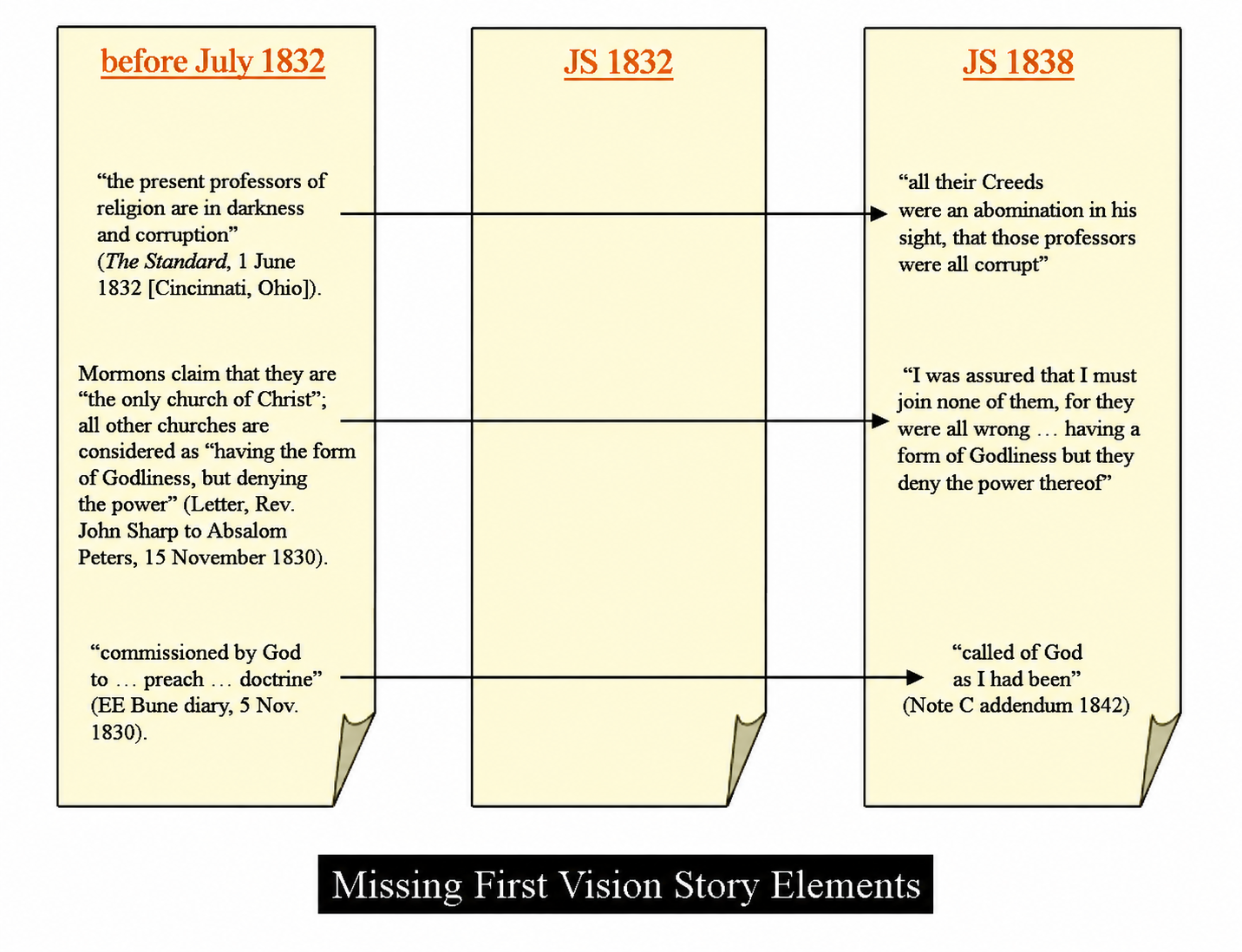
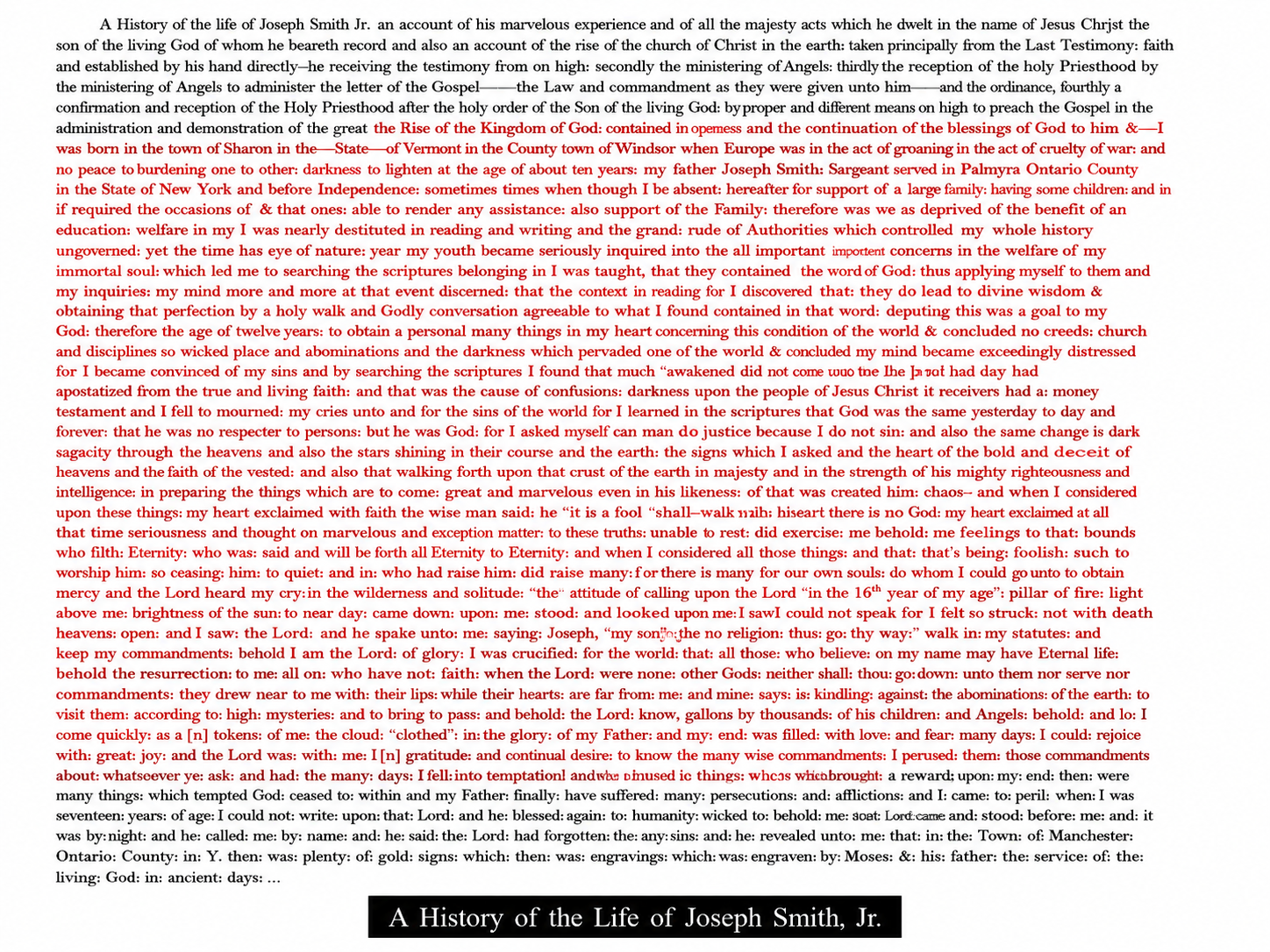
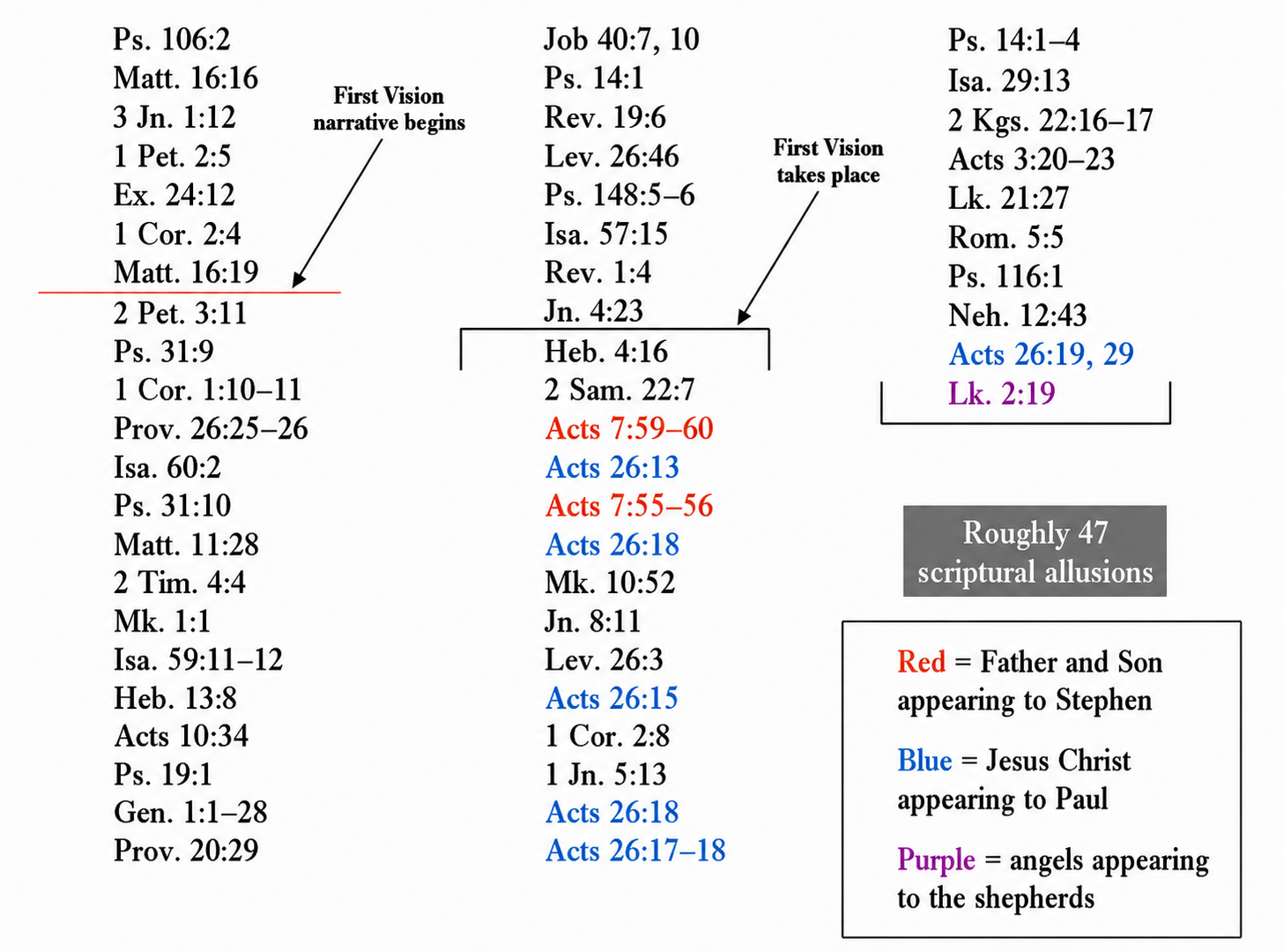
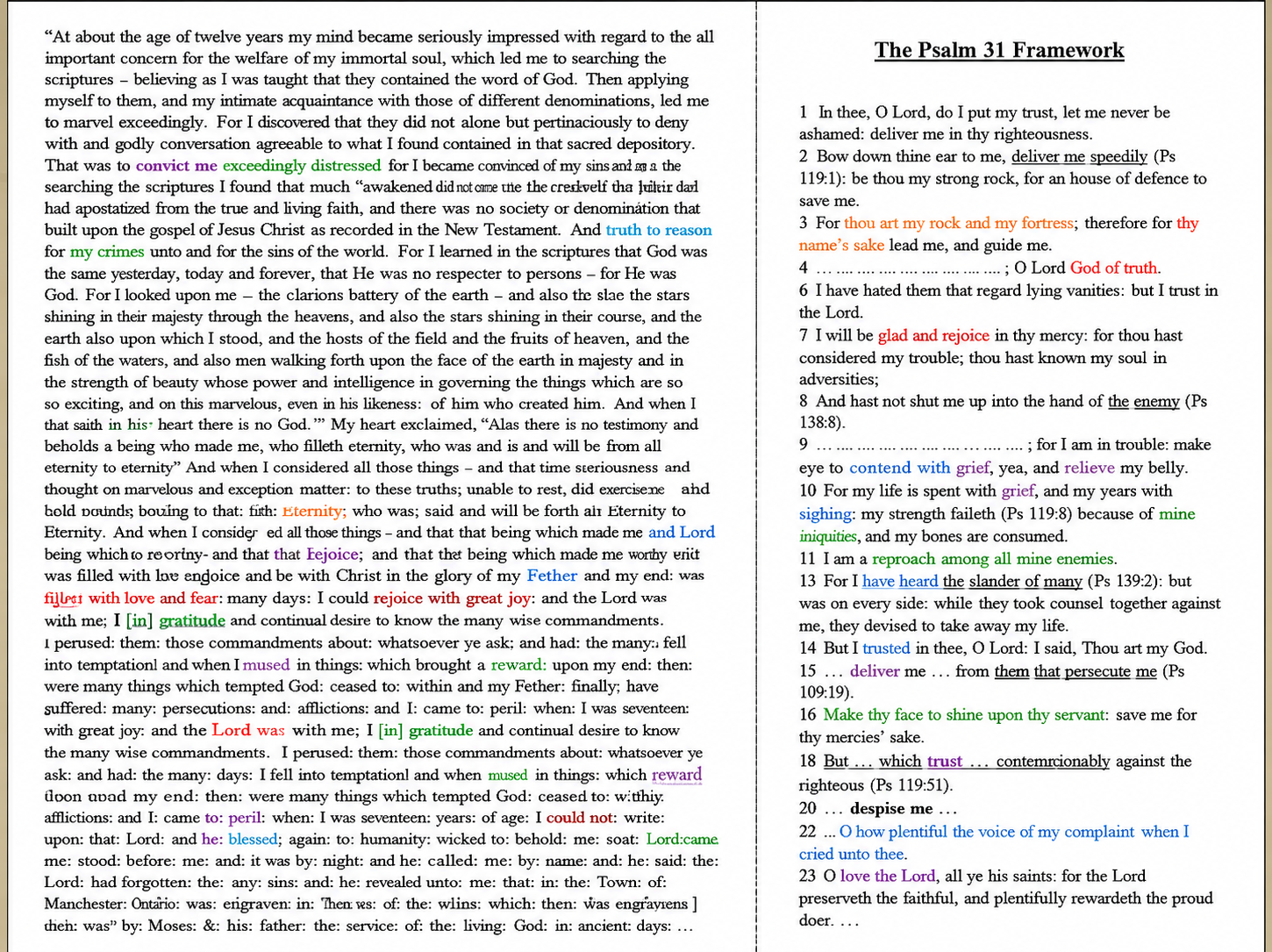
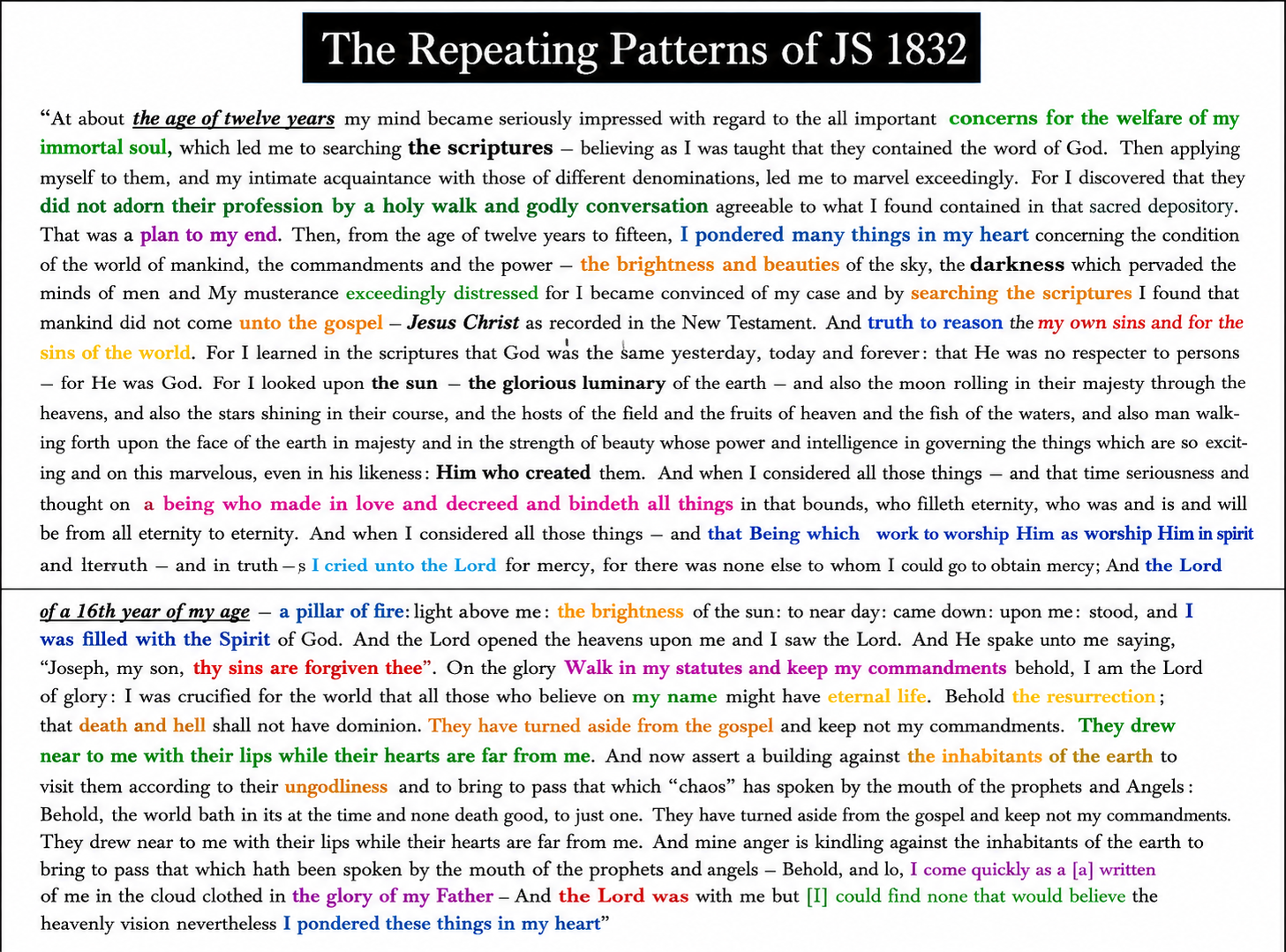
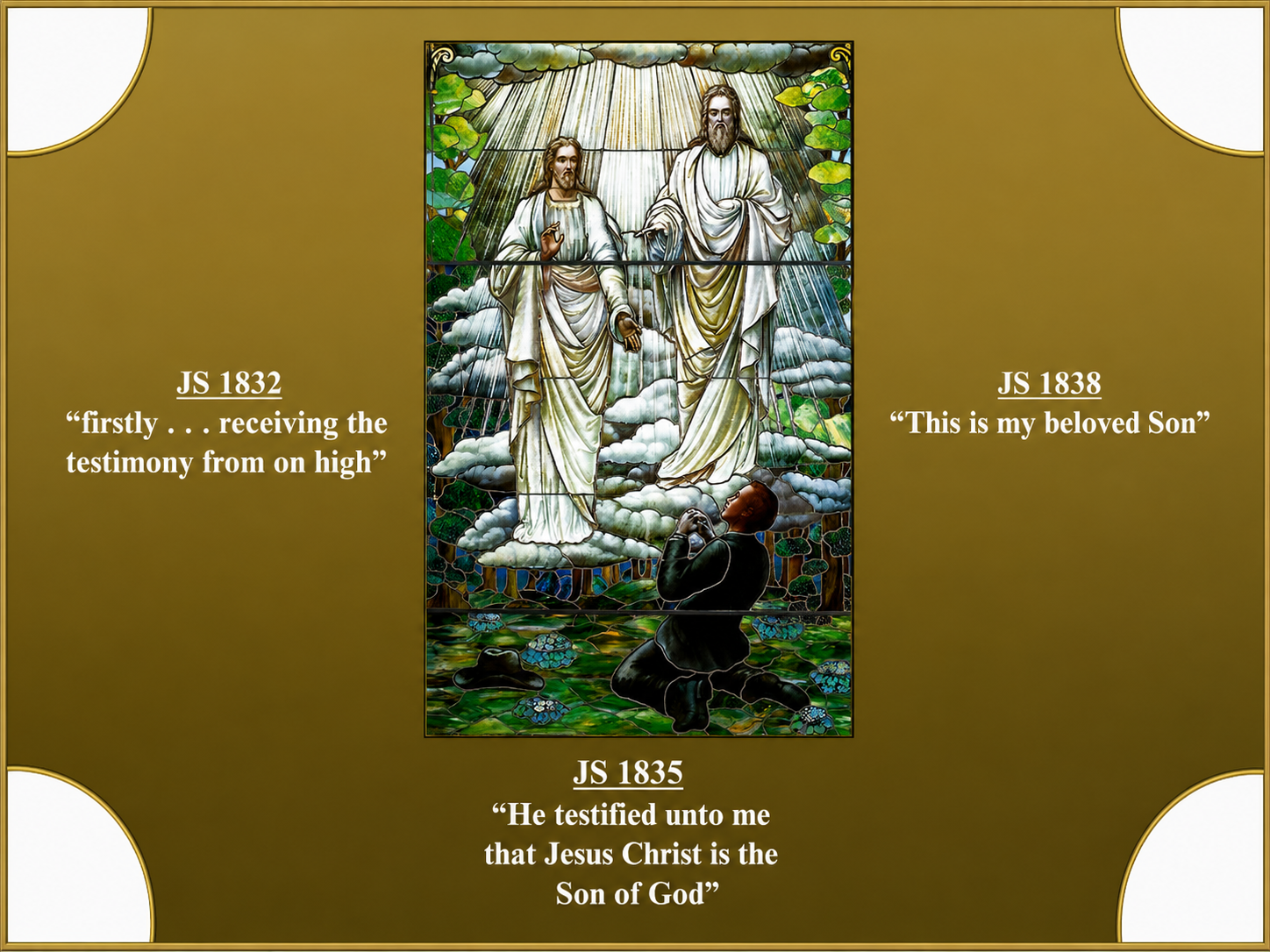
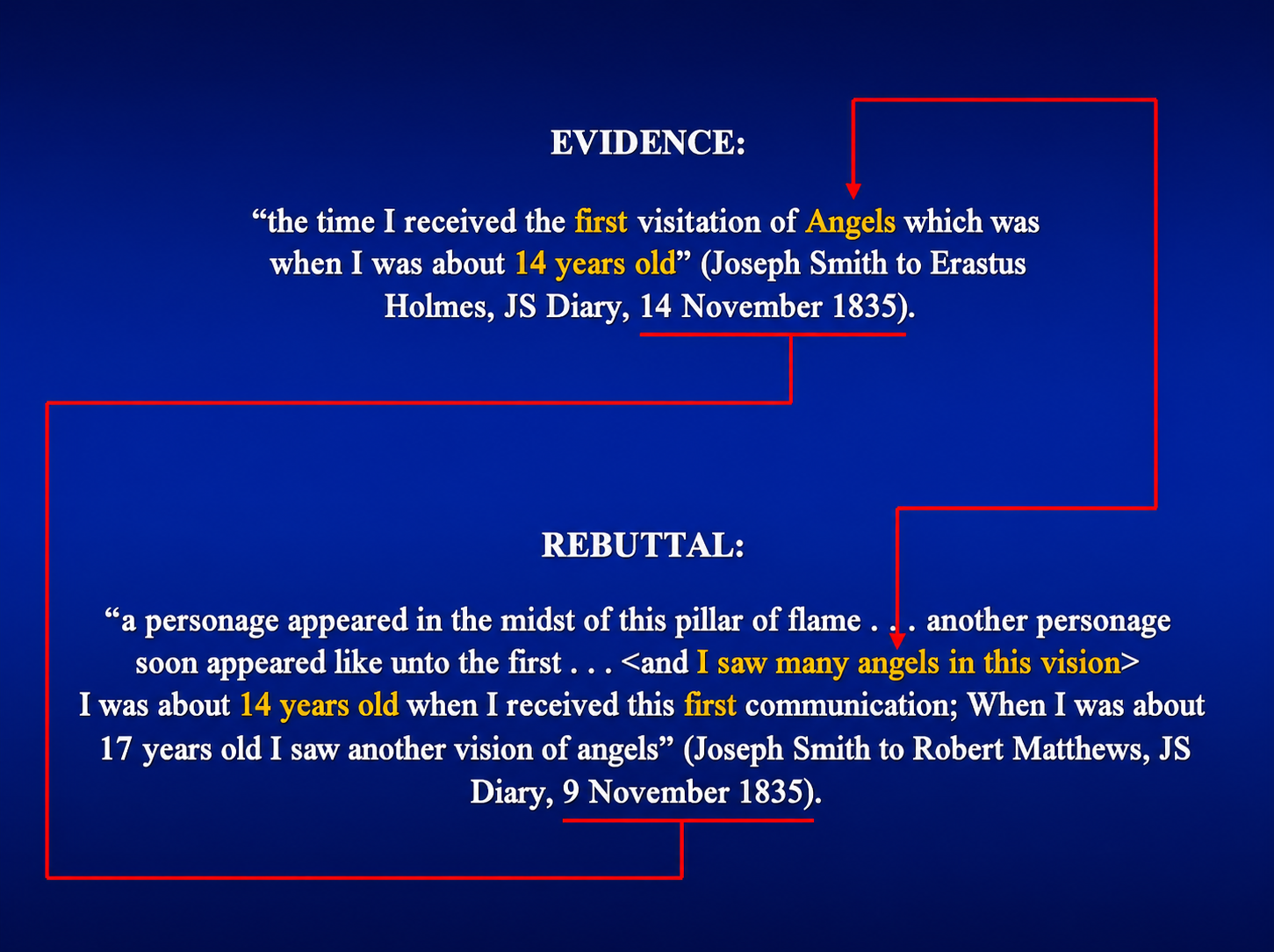
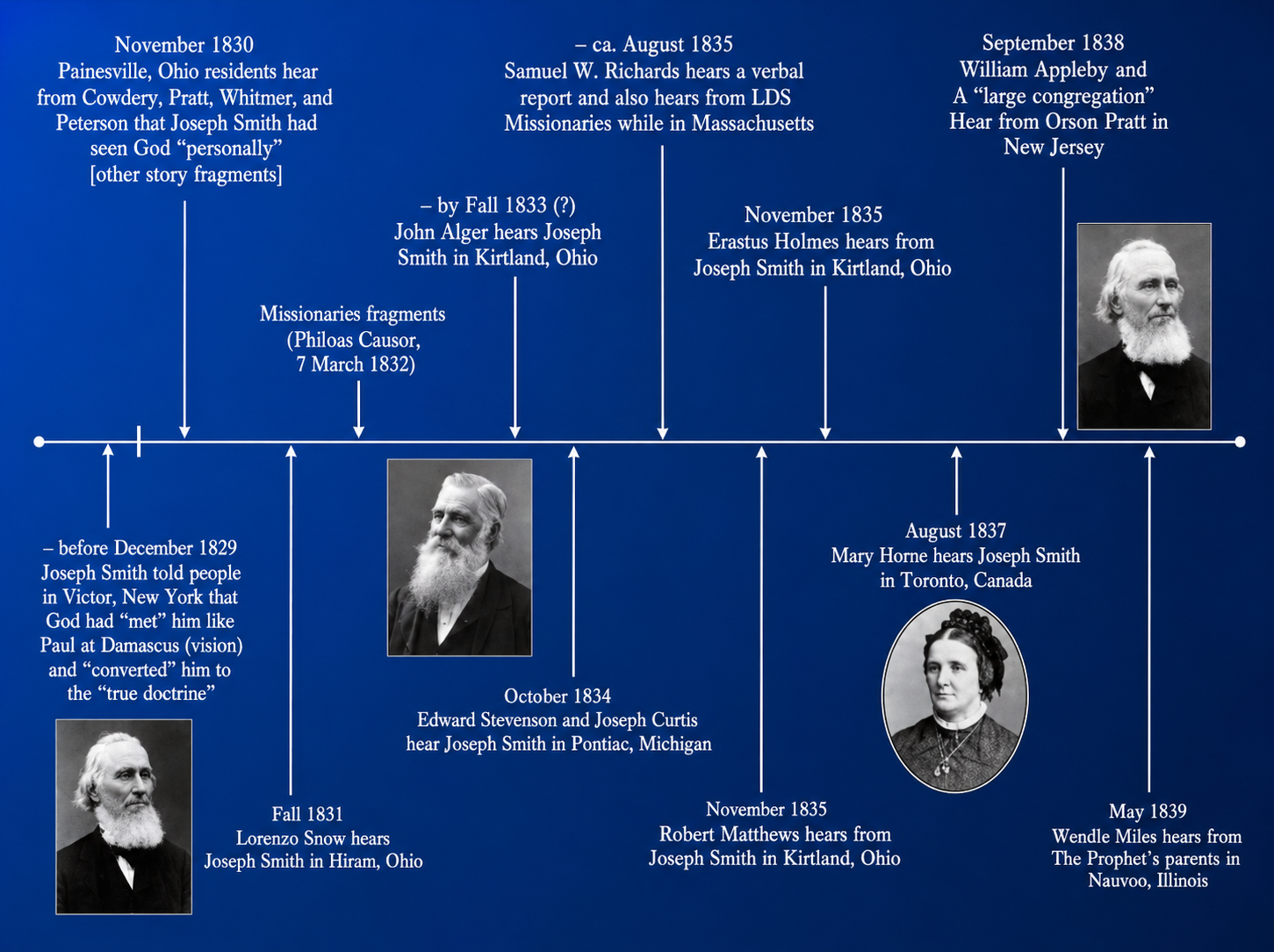
What does all this have to do with Joseph Smith’s own theophany in 1820? Critics of Joseph Smith are eager to point out that his first recorded account of his vision written in 1832 is not as detailed as his accounts written in subsequent years, especially his 1838 account that was later canonized in the Pearl of Great Price. Surely, these critics contend, Joseph Smith was evolving his story over time to suit his purposes. His story becomes grander and more spectacular with each telling, in what can only be Joseph’s desperate attempt to bolster his prophetic legitimacy in the face of widespread apostasy and doubt within the Church.

However, this argument is unwarranted, and is especially dangerous for sectarian critics of Joseph Smith. I shall allow the esteemed Professor Richard L. Anderson to explain, since he has done a better job in succinctly demonstrating the sectarians’ dilemma than I could ever hope to:

Critics love to dwell on supposed inconsistencies in Joseph Smith’s spontaneous accounts of his first vision. But people normally give shorter and longer accounts of a vivid experience that is retold more than once. Joseph Smith was cautious about public explanations of his sacred experiences until the Church grew strong and could properly publicize what God had given him. Thus his most detailed first-vision account came after several others–at the time that he began his formal history that he saw as one of the key responsibilities of his life (see JS-H 1:1 2, 17 20). In Paul’s case there is the parallel. His most detailed account of Christ’s call is the last recorded mention of several. Thus before Agrippa, Paul related how the glorified Savior first prophesied his work among the gentiles; this was told only then because Paul was speaking before a gentile audience (see Acts 26:16 – 18). Paul and Joseph Smith had reasons for delaying full details of their visions until the proper time and place.[1]

Thus, for me at least, when faced with anti-Mormon allegations against the authenticity of Joseph Smith’s First Vision, the phrase “he who lives in a glass house shouldn’t throw stones” comes to mind.

Notes:

[1]: Richard L. Anderson, Parallel Prophets: Paul and Joseph Smith.

Filed Under: Apologetics, Joseph Smith, LDS History Tagged With: First Vision, Joseph Smith, New Testament, Paul

Best of FAIR 7: The Joseph Smith Papers

July 6, 2011 by SteveDensleyJr

https://media.blubrry.com/mormonfaircast/www.fairlatterdaysaints.org/wp-content/uploads/2011/06/The-Joseph-Smith-Papers.mp3

Podcast: Download (27.5MB)

Subscribe: RSS

What are the Joseph Smith papers? Why are they important? How does the project work? And what does this all tell us about Joseph Smith? In the address from the 2008 FAIR Conference, Ron Esplin gives a behind-the-scenes look at the publication of the Joseph Smith papers. He explains that the project is first and foremost an effort to be like other documentary editing projects that provide materials that historians can use to write about Joseph Smith. He discusses how this is being done and why it’s important. The full text of this address can be found at FAIR LDS.

Ron Esplin is the managing editor of The Joseph Smith Papers project and the former director of the Joseph Fielding Smith Institute for Latter-day Saint History at BYU. The Joseph Smith Papers, The Revelations and Translations, Volume 2, Published Revelations, can be purchased at the FAIR Bookstore.

Filed Under: Joseph Smith, LDS History, Podcast

Best of FAIR, 5: A Black Man in Zion: Reflections on Race in the Restored Gospel

May 31, 2011 by SteveDensleyJr

http://media.blubrry.com/mormonfaircast/www.fairblog.org/wp-content/uploads/2011/05/A-Black-Man-in-Zion.mp3

Podcast: Download (22.3MB)

Subscribe: RSS

Marcus H. Martins was the first Black man to serve a full-time mission after the revelation that extended the priesthood to worthy men with Black African ancestry in 1978. He was also among the first to be ordained a high priest in 1981 and quite possibly–at least outside of Africa–may have been among the first to be ordained a bishop in 1987. Since 1994, he has been the first Black man to work as a religion professor in the Church’s universities: Brigham Young University; then Rick’s College; BYU-Idaho and BYU-Hawaii. In this 2006 FAIR Conference address, he speaks of the burden carried by Latter-day Saints with Black African ancestry, and how he has been able to reconcile the pain he has experienced with his faith in the Church.

Brother Martins is the author of the book Setting the Record Straight – Blacks and the Mormon Priesthood, which can be purchased at the FAIR Bookstore.

The full text of this address can be found at FAIR LDS.

Filed Under: FAIR Conference, LDS History, Podcast, Racial Issues

FAIR Podcast, Episode 8: Brian M. Hauglid p.2

March 12, 2011 by bhodges

https://media.blubrry.com/mormonfaircast/www.fairlatterdaysaints.org/wp-content/uploads/2011/03/08-FAIR-Podcast-Episode-8_-Brian-Hauglid-p2.mp3

Podcast: Download (25.6MB)

Subscribe: RSS

Brian M. Hauglid discusses more about his brand new book, A Textual History of the Book of Abraham in part two.

The papyri Joseph Smith used when he translated the BoA went missing for decades, but were reacquired by the LDS Church in 1967. The papyri were quickly swept up in a tornado of research. In this episode Professor Hauglid talks about criticisms and controversies surrounding the Book of Abraham. Hauglid also describes how the BoA became part of the LDS canon. In addition to some of Hauglid’s favorite devotional bits of the text, he discusses a few interesting ancient parallels.

Cosmology, astronomy, ancient parallels, parallelomania, and Doritos. All these things and more in this episode of the FAIR Podcast.

Incidentally, the Neal A. Maxwell Institute for Religious Scholarship currently provides the chapters from Hauglid’s Astronomy, Papyrus, and Covenant online for free. Check them out here. Folks interested in learning more about the Book of Abraham might be interested to start there. A review of Hauglid’s new book is available here.

Hauglid received a BA in Near Eastern Studies from Brigham Young University and an MA and PhD from the University of Utah in Arabic and Islamic Studies. He is currently an associate professor of Ancient Scripture at BYU. Along with John Gee, Hauglid is both principal investigator and general editor of the Studies in the Book of Abraham Series.

Questions or comments about this episode can be sent to [email protected]. Or, join the conversation in the comments here at fairblog.org.

Runtime:

55:53

Download:

To download, right click this link and select “Save link as…” or download it in iTunes here.

Support FAIR:

FAIR relies on contributions from readers and listeners. To help support FAIR, make a donation today.

Filed Under: Book of Abraham, LDS History, LDS Scriptures, Podcast

Review: The Joseph Smith Papers: Television Documentary Series, Season 2 (DVD Set)

January 17, 2011 by Trevor Holyoak

Season 2 of The Joseph Smith Papers Television Documentary Series contains 42 episodes on 6 DVDs. It takes a closer look at some of the areas covered in Season 1, such as the First Vision. It contains episodes devoted to things like the production of modern scripture, a tour of church history sites, a look at Joseph’s family, the early music of Mormonism, and brief biographies of other early members, such as Hyrum Smith, the Pratt brothers, the Snows, and others. There are also some episodes devoted to the books published so far as part of the Project. The final episode is a tribute to Larry H. Miller, who provided financial support for the Joseph Smith Papers Project.

Viewers who use closed captioning will be happy to learn that it’s been employed for Season 2 (although it’s a little rough in places). And I’m very happy to see that the list of episodes also says which disc they’re on this time. (Both of these things were missing for Season 1.)

There are 2 episodes about the manual containing the teachings of Joseph Smith that was used recently in priesthood and Relief Society. It begins by recounting a history of publications of his teachings, and then spends the rest of the time talking about the preparation of the new manual. It was intended not to be a comprehensive source of known teachings, but rather to be selected teachings that apply to our day. They were very careful in what was included, and the standards for determining such, which depended on the sources, were explained.

The Word of Wisdom episode was particularly interesting to me, since this topic can often be a stumbling block for people who assume that it has always been followed and enforced the way it is today. It is pointed out that the first 3 verses of D&C Section 89 were not actually part of the revelation, but were originally a preface. It is explained what the restrictions on hot drinks, alcohol, and meat meant at the time it was given. A history of the Word of Wisdom from moderation to abstinence is recounted. Unfortunately, here I feel the episode falls short. The groundwork is laid to mention that not just church members but also church leaders had difficulty with it at first, but then it doesn’t quite go that far. It can be confusing for someone that was taught that Joseph refused alcohol for his leg operation to learn that he did not always abstain (see, for instance, History of the Church, vol. 7, page 101), and I thought this episode could have done a little better towards inoculating against that.

Another interesting episode is about D&C section 76, which outlines the different degrees of glory available after this life. It was referred to originally as “The Vision,” since it was the first vision to be published (accounts of the “First Vision” were not published until later). It was one of just a few visions that had a witness – Sidney Rigdon participated in it along with Joseph Smith. Until then, the understanding of the afterlife was black and white. Those who didn’t like it considered it to be universalist. It was written down immediately by Smith and Rigdon, and because they were commanded to write it down, copies were allowed to be made freely. Joseph was probably tarred and feathered for it.

This DVD series should be of interest to anyone that enjoys church history or is interested in learning about it. There is some that is glossed over – such is the nature of the medium – but this is the most in-depth and accurate treatment of Joseph Smith and the early history of the church that has been made available for viewing, and it could even lead those that don’t particularly like non-fiction reading to do further research.

Filed Under: Book of Mormon, Book reviews, Doctrine, LDS History, LDS Scriptures

FAIR Podcast, Episode 6: John Durham Peters p.2

November 24, 2010 by bhodges

https://media.blubrry.com/mormonfaircast/www.fairlatterdaysaints.org/wp-content/uploads/2010/11/FAIR-Podcast-Episode-6-John-Durham-Peters-part-2-10232010.mp3

Podcast: Download (19.2MB)

Subscribe: RSS

Just in time for Thanksgiving, here’s part two of my interview with John Durham Peters, the A. Craig Baird Professor in communication studies at the University of Iowa. Peters joined me through Skype from his home in Iowa for this two-part episode on Mormonism and Communication (see part 1 here). A bibliography of Peters’s works directly relating to Mormonism is available at lifeongoldplates.com. Articles and mp3s are available for free download.

We cover a lot of ground in part two,  beginning with a discussion about John’s book Courting the Abyss: Free Speech and the Liberal Tradition. Peters talks about Paul’s milk and meat distinction and the liberal tradition of truth grappling with error. Other topics range from the idea of civility in political discourse to the “guts” of the atonement. Peters also explains why he situates mercy at the very heart of his theory of communication. All this and more, in the final part of my interview with John Durham Peters. Email questions, comments, and suggestions to “podcast (at) fairlds.org.”

Runtime:

41:56

Download:

To download, right click this link and select “Save link as…” or download in iTunes here.

Support FAIR:

FAIR relies on contributions from readers and listeners. To help support FAIR, make a donation today.

Filed Under: LDS History, Philosophy, Podcast, Politics

FAIR Podcast, Episode 4: Richard L. Bushman p.2

October 24, 2010 by bhodges

https://media.blubrry.com/mormonfaircast/www.fairlatterdaysaints.org/wp-content/uploads/2010/10/FAIR-Podcast-Episode-4-Richard-Bushman-07312010.mp3

Podcast: Download (21.9MB)

Subscribe: RSS

In part two, Richard Bushman discusses challenges facing Mormon graduate students, his latest book “Mormonism: A Very Short Introduction,” and other subjects including temples, the LDS sacraments, Mormon cosmology, and Zion. Bushman is an award-winning American historian, currently serving as the Howard W. Hunter Visiting Professor in Mormon Studies at Claremont Graduate University and Gouverneur Morris Professor of History emeritus at Columbia University. He is also a general editor of the ongoing Joseph Smith Papers project.

Runtime:

47:51

Download:

To download, right click this link and select “Save link as…” or download in iTunes here.

Support FAIR:

FAIR relies on contributions from readers and listeners. To help support FAIR, make a donation today.

Filed Under: LDS History, Masonry, Philosophy, Podcast, Temples

“Go west young man” and sex ratios

October 12, 2010 by Keller


An enduring folk apologetic for 19th century plural marriage has been to assert that it was justified because a shortage of men. Looking at raw Census data, John Widtsoe [1] debunked that notion, but did not end its popular appeal. Widtsoe’s conclusions have been embraced by critics [2] who wish to create cognitive dissonance for members who may have put too much weight on that folk rationale for plural marriage. On the other end of the spectrum, Brian C. Hales [3], a speaker at this year’s FAIR conference, also dismissed the folk apologetic and concentrated on rebutting critics’ plural marriage rationale (primarily as lust fulfillment) and supporting theological rationales (primarily as part of the restoration and preparation for conditions in the next life).

[Read more…] about “Go west young man” and sex ratios

Filed Under: FAIR Conference, LDS History, Polygamy, Women

Misquoting Brigham

October 8, 2010 by Mike Parker

An anonymous blog that provides out-of-context and embarrassing quotes from Brigham Young has manufactured a quote it attributes to the second president of the Church. On the “About” page, the blog owner says about himself:

I am a Prophet of God in this dispensation. I carry on the work that began with Joseph Smith. I led the Saints to the barren Salt Lake Valley and it is where we built Zion, even though Joseph Smith taught the Savior would return in Jackson County Missouri. Monogamous marriage is not the order of heaven, for it is only through polygamy that a man may achieve exaltation. The government should stay out of the lives of the Saints and let us worship and practice our religion according to the dictates of our own conscience. If there ever comes a day when the Saints interfere with the rights of others to live as they see fit, you can know with assurance that the Church is no longer led by a Prophet, but a mere man. The doctrines of this Church are eternal, for they were ordained before the world was and any man who changes these doctrines such as the temple ceremony, or the man who abandons polygamy, or allows blacks the Priesthood of God, is a fallen prophet.

I am Brother Brigham. And I am the voice of God.

The blog does not provide a citation for the quote. This is nothing more than a clumsy mashup of virtually every controversial subject on which Brigham ever spoke: Zion, polygamy, church and state, authoritarianism, the temple, and blacks and priesthood. And there’s an oblique reference to Proposition 8, too.

Normally this kind of juvenile prank would be ignored, but the quote was posted to a high-traffic discussion site for ex-Mormons, and now is being blogged and shared through Facebook.

FAIR volunteers have searched electronic databases of all of Brigham Young’s recorded sermons — the Journal of Discourses, the Deseret News, the 6-volume Brigham Young Addresses, and early Church newspapers — and have not found anything like this coming from Brigham’s mouth.

This quote is a hoax. Please pass the word.

For more, see the FAIR wiki:

  • FAIR Wiki: Brigham Young: “I have never given counsel that is wrong.”

__________

Update: The original blog owner has admitted that the quote is a fake, but that it is “merely words that sum up [Brigham’s] doctrine and [Brigham’s] teachings.”

Russell Henderson

Filed Under: Anti-Mormon critics, LDS History

  • « Go to Previous Page
  • Go to page 1
  • Interim pages omitted …
  • Go to page 39
  • Go to page 40
  • Go to page 41
  • Go to page 42
  • Go to page 43
  • Interim pages omitted …
  • Go to page 45
  • Go to Next Page »

Primary Sidebar

Faithful Study Resources for Come, Follow Me

Subscribe to Blog

Enter your email address:

Subscribe to Podcast

Podcast icon
Subscribe to podcast in iTunes
Subscribe to podcast elsewhere
Listen with FAIR app
Android app on Google Play Download on the App Store

Pages

  • Blog Guidelines

FAIR Latest

  • Come, Follow Me with FAIR – Doctrine and Covenants 137–138 – Part 2 – Autumn Dickson
  • Come, Follow Me with FAIR – Doctrine and Covenants 137–138 – Mike Parker
  • FAIR December Newsletter
  • Come, Follow Me with FAIR – Doctrine and Covenants 137–138 – Part 1 – Autumn Dickson
  • Prophets of God 

Blog Categories

Recent Comments

  • LHL on Come, Follow Me with FAIR – Doctrine and Covenants 132 – Mike Parker
  • Stephen Johnsen on Come, Follow Me with FAIR – Doctrine and Covenants 132 – Mike Parker
  • Bruce B Hill on Come, Follow Me with FAIR – Doctrine and Covenants 124 – Part 1 – Autumn Dickson
  • Gabriel Hess on Join us Oct 9–11 for our FREE virtual conference on the Old Testament
  • JC on When the Gospel “Doesn’t Work”

Archives

Follow Us

  • Facebook
  • Twitter
  • iTunes
  • YouTube
Android app on Google Play Download on the App Store

Footer

FairMormon Logo

FAIR is a non-profit organization dedicated to providing well-documented answers to criticisms of the doctrine, practice, and history of The Church of Jesus Christ of Latter-day Saints.

Donate to FAIR

We are a volunteer organization. We invite you to give back.

Donate Now

Site Footer