• Skip to primary navigation
  • Skip to main content
  • Skip to primary sidebar
  • Skip to footer

FAIR

  • Find Answers
  • Blog
  • Media & Apps
  • Conference
  • Bookstore
  • Archive
  • About
  • Get Involved
  • Search

Book of Moses

How Does Moses 5-8 Illustrate the Consequences of Keeping and Breaking Temple Covenants One By One? (Old Testament Gospel Doctrine 5B)

January 27, 2018 by Jeffrey M. Bradshaw

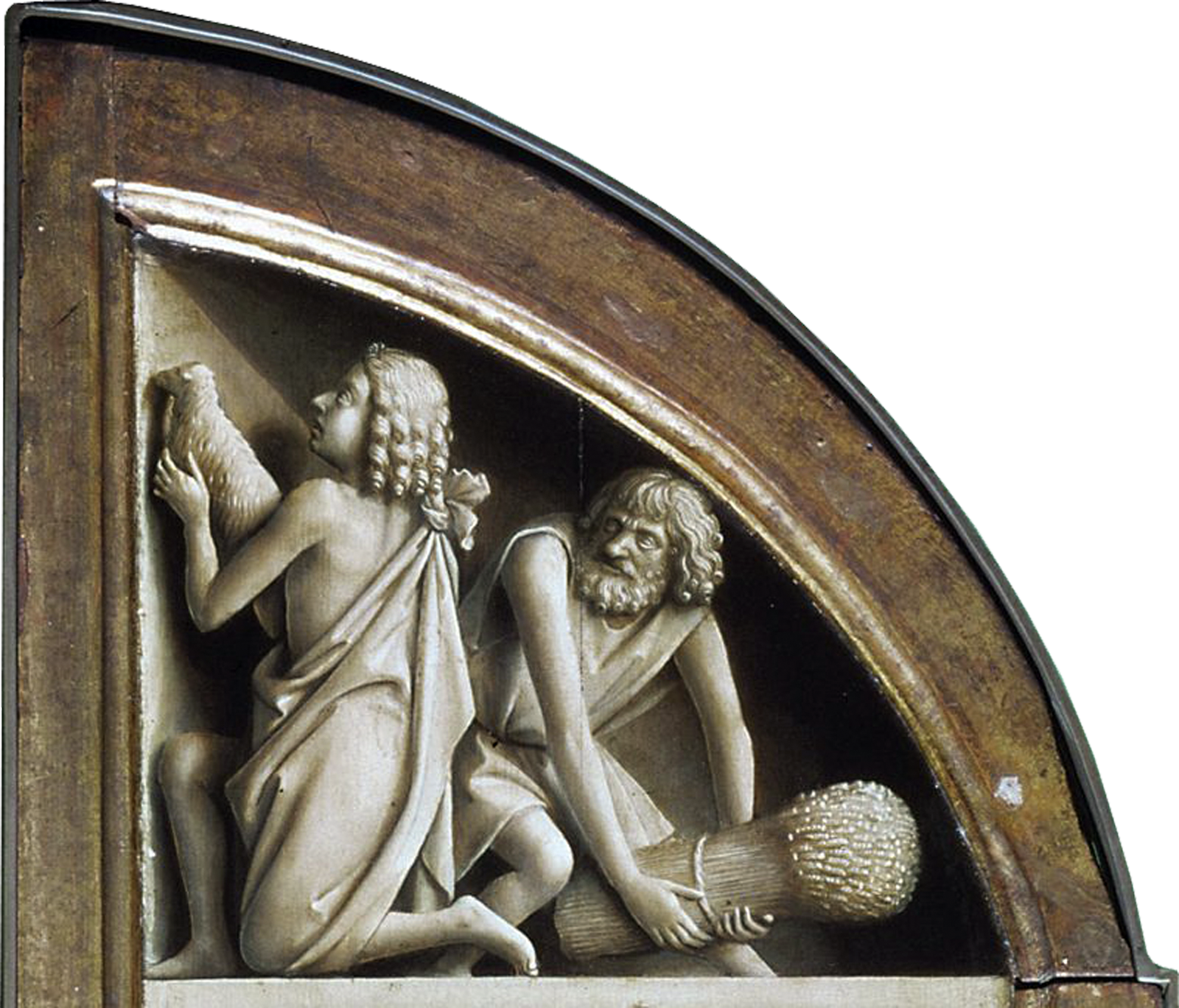
Jan van Eyck, ca. 1395-1441: Offering of Abel and Cain, 1425-1429

An Old Testament KnoWhy for Gospel Doctrine Lesson 5: “If Thou Doest Well, Thou Shalt Be Accepted” (Moses 5-7) (JBOTL05B). See the link to video supplements to this lesson at the end of this article under “Further Reading.”

Question: Some people believe that the basic teachings and covenants available today in LDS temple ordinances were not revealed to Joseph Smith until he got to Nauvoo. Others say he knew a great deal about temple matters long before that time. What could the Prophet have learned about temple covenants as he translated Moses 5-8 in 1830-31?

Summary: Because the book of Moses tells the story of the Creation and the Fall of Adam and Eve, it is obvious to endowed members of the Church that the book of Moses is a temple text, containing a pattern that interleaves sacred history with covenant-making themes. What may be new to many Latter-day Saints, however, is that the temple themes in the book of Moses extend beyond the first part of this story that contains the fall of Adam and Eve — their “downward road.” There is a part two of the temple story given in the book of Moses that describes an “upward road” that is to be climbed by making and keeping an ordered sequence of temple covenants. Significantly, Moses 5-8 appears to have been structured so as to present the consequences of both keeping and breaking specific temple covenants one by one.


The full article may be found at the Interpreter Foundation website: KnoWhy OTL05B — How Does Moses 5-8 Illustrate the Consequences of Keeping and Breaking Temple Covenants One By One?

As a video supplement to this lesson, see Jeffrey M. Bradshaw, “The LDS story of Enoch As a Temple Text” (http://www.templestudies.org/2013-enoch-and-the-temple-conference/conference-videos/). Several other excellent video presentations on Enoch and the temple are available at this same link.

For additional discussion of evidence that Joseph Smith knew much about temple matters early on in his ministry, see: “What Did Joseph Smith Know about Temple Ordinances by 1836?” (http://interpreterfoundation.org/conferences/2014-temple-on-mount-zion-conference/2014-temple-on-mount-zion-conference-videos/).

Filed Under: Bible, Book of Moses, Joseph Smith, Lesson Aids, Masonry, Questions, Temples Tagged With: Gospel Doctrine: Old Testament, Joseph Smith Translation

Why Was Joseph Smith Initially Prohibited from Publishing His Bible Translation? (Old Testament Gospel Doctrine 5A)

January 27, 2018 by Jeffrey M. Bradshaw

Liz Lemon Swindle, 1953-: Go with Me to Cumorah, 1997

An Old Testament KnoWhy for Gospel Doctrine Lesson 5: “If Thou Doest Well, Thou Shalt Be Accepted” (Moses 5-7) (JBOTL05A). See the link to video supplements for this lesson at the end of this article under “Further Reading.”

Question: For a while, the Lord prohibited Joseph Smith from sharing his Bible translation publicly. Also, Moses 1:42 explicitly says that the account of Moses’ vision should not be shown “unto any except them that believe.” Any guesses as to the reasons behind these restrictions?

Summary: I believe that these initial restrictions were due, at least in part, to the sacred content of many of the changes and additions in Joseph Smith’s Bible translation. This makes sense if we regard the knowledge that Joseph Smith received as he translated the Bible as part of a divine tutorial on priesthood and temple doctrines, authority, and ordinances. In fact, some parts of Genesis seem to contain echoes of what temple studies scholars would call a “temple text.” My study of the book of Moses and others of the initial revelations and teachings of Joseph Smith have convinced me that he knew early on much more about these matters than he taught publicly, contradicting the view of those who consider the fundamental doctrines, covenants, and teachings of the Nauvoo temple ordinances a late invention

The full article may be found at the Interpreter Foundation website: KnoWhy OTL05A — Why Was Joseph Smith Initially Prohibited from Publishing His Bible Translation?

For more discussion of evidence that Joseph Smith knew much about temple matters early on in his ministry, see the first video supplement to this lesson: “What Did Joseph Smith Know about Temple Ordinances by 1836?” (http://interpreterfoundation.org/conferences/2014-temple-on-mount-zion-conference/2014-temple-on-mount-zion-conference-videos/).

For a playlist of one-minute video clips discussing various aspects of Mormonism and Masonry in Nauvoo, see the second video supplement to this lesson at the FairMormon YouTube Channel (https://www.youtube.com/watch?v=X0zdSoYy_fg&list=PLw_Vkm1zYbIHW8n88zdpJuzK83caT7A2H).

Filed Under: Bible, Book of Abraham, Book of Moses, Joseph Smith, LDS History, LDS Scriptures, Lesson Aids, Masonry, Questions, Temples Tagged With: Gospel Doctrine: Old Testament, Joseph Smith Translation

Did Satan Actually Deceive Eve? (Old Testament Gospel Doctrine 4A)

January 19, 2018 by Jeffrey M. Bradshaw

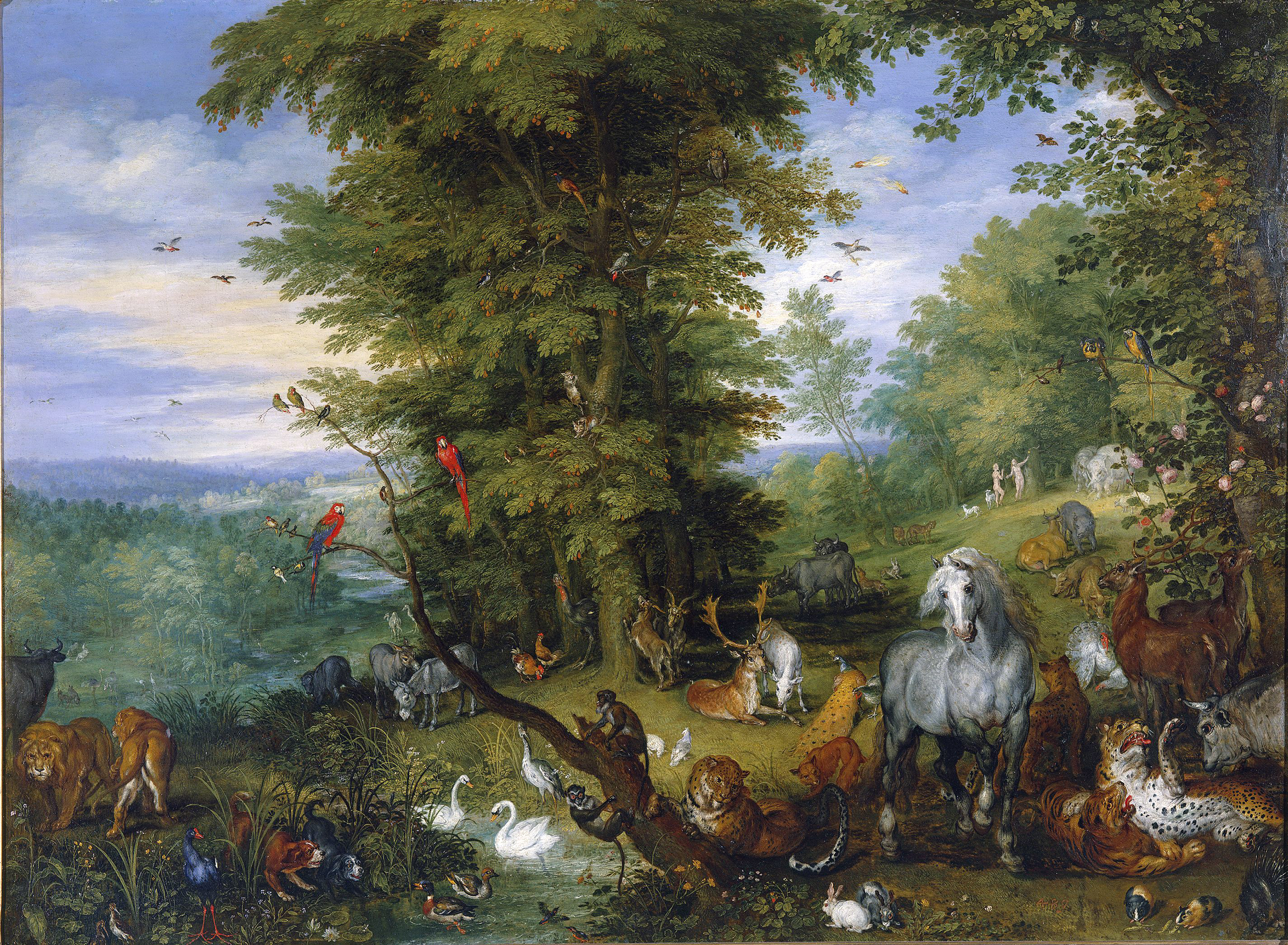
Jan Breughel, the Elder, ca. 1568-1625: The Garden of Eden, 1612. Brueghel masterfully fills the foreground of the scene with the abundance, happiness, and beauty of newly created life, and then skillfully draws our eyes toward the two tiny figures in the background ominously reaching for the fruit of the Tree of Knowledge.

An Old Testament KnoWhy for Gospel Doctrine Lesson 4: “Because of My Transgression My Eyes Are Opened” (Moses 4; 5:1–15; 6:48-62) (JBOTL04A), 15 January 2018

Question: The scriptures say that Eve was “beguiled” by Satan when she partook of the forbidden fruit. But Latter-day Saints believe she made the right choice. How can both statements be true?

Summary: Some people paint Eve in a negative light, blaming her for bringing sin into the world. This is not the view of the Latter-day Saints. We emphasize her wisdom and perceptiveness, and see her actions in the Garden of Eden as a positive step forward in the divine plan. We teach that she did not commit a sin in taking the fruit of the Tree of Knowledge and honor her lifelong faithfulness. However, a few have taken this view to an unreasonable extreme, arguing that, for various reasons, she was not actually “beguiled” by Satan in her decision to eat the forbidden fruit. On the one hand, some believe that Satan was entirely truthful when he spoke to Eve. On the other hand, others teach or imply that regardless of what Satan did or said, Eve made the right choice with full understanding of the situation. These beliefs are based on honest intent, but are all mistaken. Scripture exposes how Satan used a series of clever tactics to mislead Eve, how God’s wisdom prevailed, and how Eve became a symbol of Wisdom itself.

The full article may be found at the Interpreter Foundation website: KnoWhy OTL04A — Did Satan Actually Deceive Eve?

For a video supplement to this lesson, see “The Tree of Knowledge as the Veil of the Sanctuary” on the FairMormon YouTube channel: https://www.youtube.com/watch?v=K-B1FeOcTZ8

Filed Under: Bible, Book of Moses, Doctrine, LDS Scriptures, Lesson Aids, Questions, Temples, Women Tagged With: Adam, Eve, Garden of Eden, Gospel Doctrine: Old Testament, Joseph Smith Translation

Did Moses Write the Book of Genesis? (Old Testament Gospel Doctrine 3B)

January 19, 2018 by Jeffrey M. Bradshaw

Joseph Mallord William Turner, 1775-1851: Light and Color: The Morning After the Deluge (Goethe’s Theory) — Moses Writing the Book of Genesis, 1843

 An Old Testament KnoWhy for Gospel Doctrine Lesson 3B: The Creation (Moses 1:27-42; 2-3) (JBOTL03B), 11 January 2018

Question: LDS teachings and scripture clearly imply that Moses learned of the Creation and the Fall in vision and was told to write what he saw. However, most modern scholars find evidence that the book of Genesis as we have it today was produced at a much later date than Moses could have lived. Can these views be reconciled?

Summary: Scholars have assembled impressive evidence that the first five books of the Bible were compiled in their current form at a relatively late date from multiple, overlapping sources of varying perspectives — and almost certainly with differing degrees of inspiration. This idea should not trouble believing readers of the Book of Mormon, who know that inspired editors wove separate, overlapping records covering many hundreds of years into a single work of scripture. In addition, the idea that Moses may not have written all that is attributed to him firsthand is not incompatible with the belief that he, along with other major Old Testament figures, were actual historical persons. Many of the Bible’s sources may go back to authentic traditions (whether oral or written) that are associated with figures such as Moses as authorities, even if they were not the direct authors. As a further witness of the reality of these figures, we have accounts of the Prophet having seen many of them personally. Moreover, we have the same witness within the Joseph Smith’s Bible translation efforts, the Book of Mormon, the book of Abraham, and several revelations in the Doctrine and Covenants. We are fortunate both to know that these lengthy additions to the record of the Old Testament are authentic reports of events originally experienced by ancient prophets and that they were also directly translated in our day by a modern prophet.

The full article may be found at the Interpreter Foundation website: KnoWhy OTL03B — Did Moses Write the Book of Genesis?

Filed Under: Bible, Book of Mormon, Book of Moses, Joseph Smith, LDS History, LDS Scriptures, Lesson Aids, Questions Tagged With: Bible Authorship, Documentary Hypothesis, Gospel Doctrine: Old Testament, Historicity, Joseph Smith Translation, Moses

What Can the Architecture of Israelite Temples Teach Us About Creation and the Garden of Eden? (Old Testament Gospel Doctrine 3A)

January 19, 2018 by Jeffrey M. Bradshaw

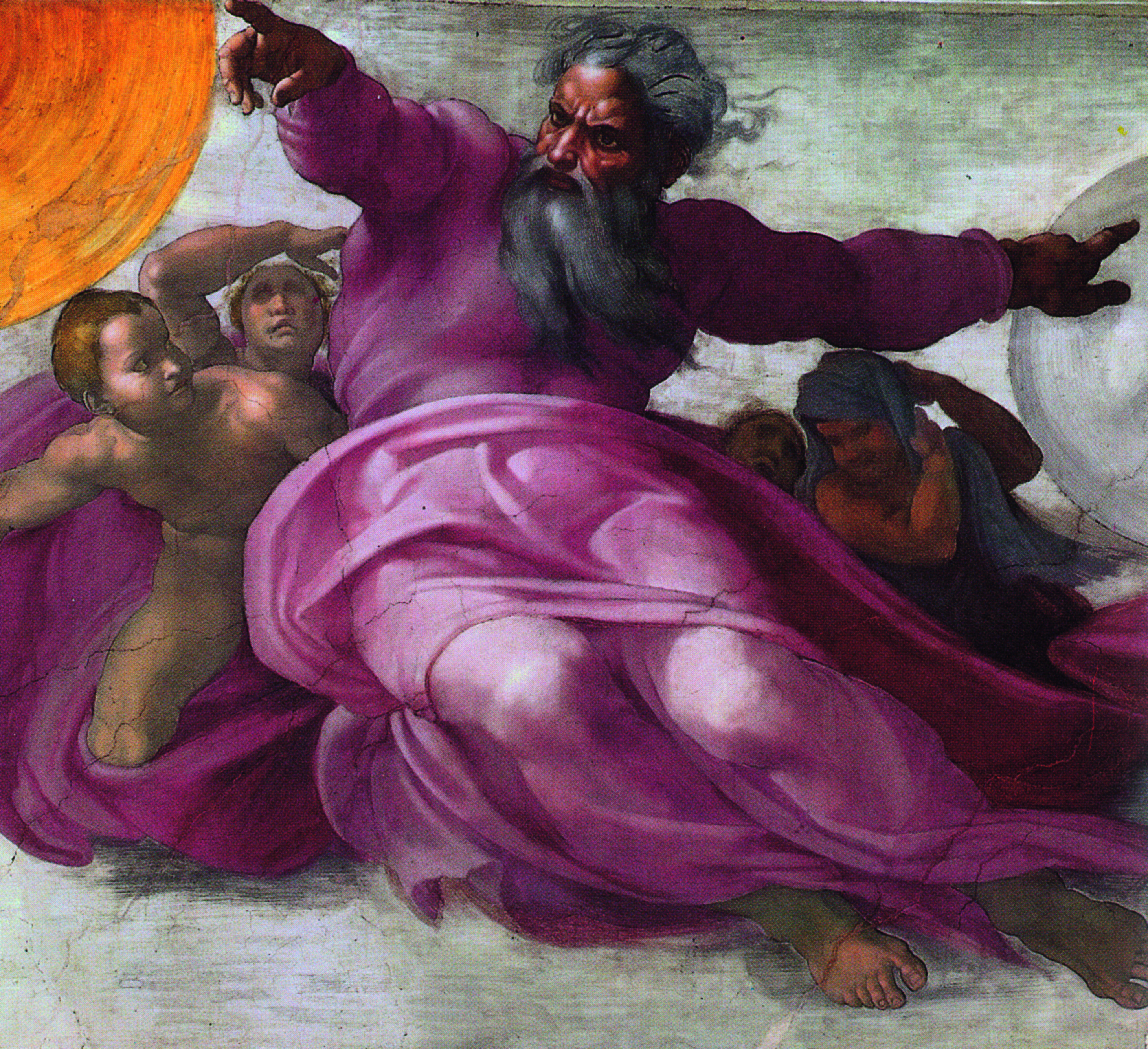
Michelangelo, 1475-1564: Creation of the Sun and Moon, 1511

An Old Testament KnoWhy for Gospel Doctrine Lesson 3: The Creation (Moses 1:27-42; 2-3) (JBOTL03A), 8 January 2018

Question: In reading the description of the seven days of Creation and the layout of the Garden of Eden, there seems to be more than meets the eye. What insights can be gained about these things from understanding the architecture of the Israelite temples?

Summary: The descriptions of the days of creation in Genesis and the book of Moses differ from those found in the book of Abraham and in modern temples. In contrast to the latter accounts, the narratives in Genesis and the book of Moses seem to have been deliberately shaped to highlight resemblances between the creation of the universe and the architecture of the Tabernacle and later Israelite temples. Understanding these parallels helps explain why, for example, in seeming contradiction to scientific understanding, the description of the creation of the sun and moon appears after, rather than before, the creation of light and of the earth. Careful study also reveals that not only the Creation, but also the Garden of Eden provided a model for the architecture of the temple.

The full article may be found at the Interpreter Foundation website: KnoWhy OTL03A — What Can the Architecture of Israelite Temples Teach Us About Creation and the Garden of Eden?

Filed Under: Bible, Book of Moses, LDS Scriptures, Lesson Aids, Questions, Science, Temples Tagged With: Creation, Garden of Eden, Gospel Doctrine: Old Testament, Investiture Panel of Mari, Joseph Smith Translation

What Was the Nature of Satan’s Premortal Proposal? (Old Testament Gospel Doctrine 2A)

January 19, 2018 by Jeffrey M. Bradshaw

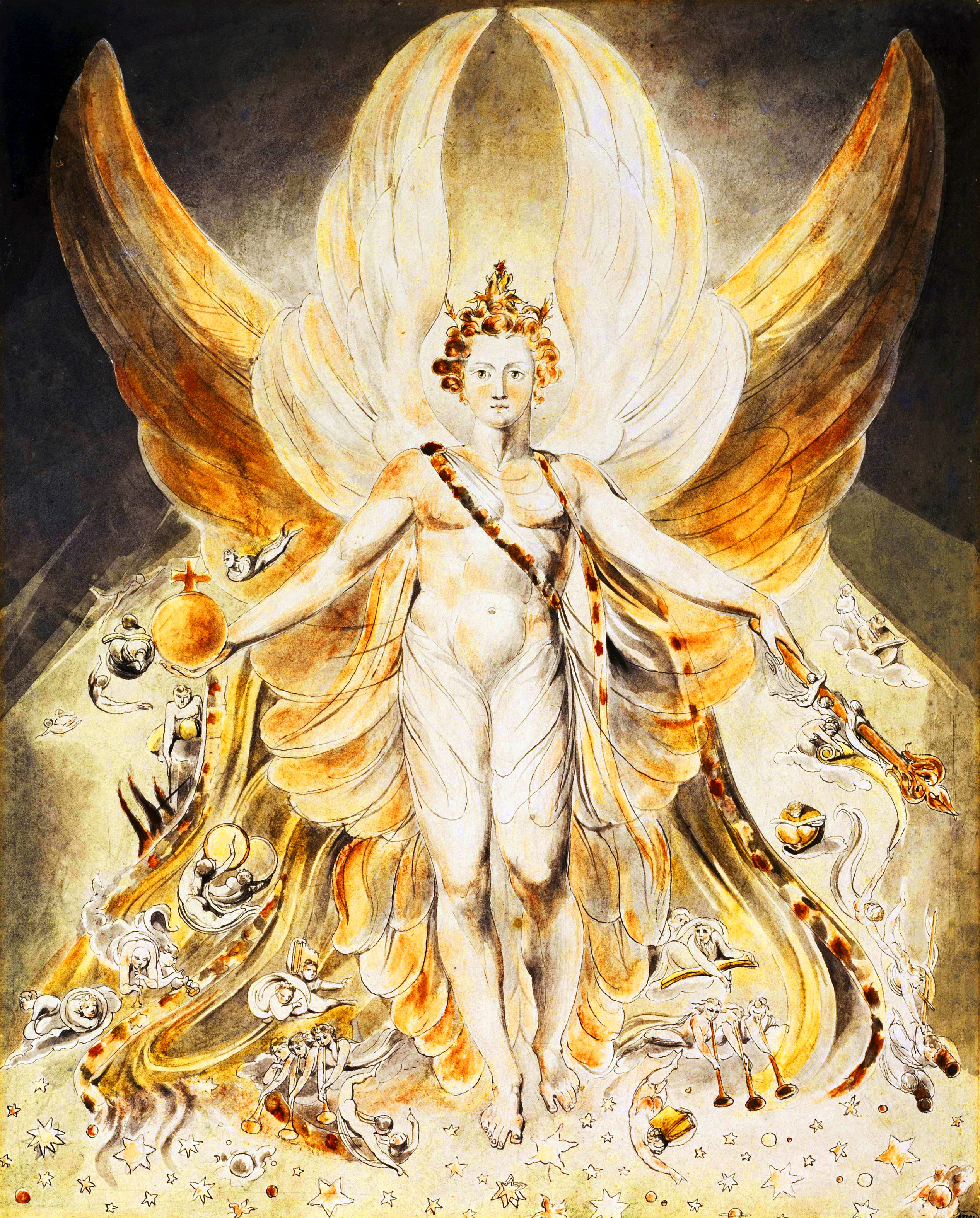
William Blake, 1757-1827: Satan in His Original Glory, ca. 1805. To highlight Lucifer’s perversity, Blake has conspicuously reversed the hands in which the emblems of British monarchy are normally held. Satan’s stubborn nonconformity in this image symbolizes his intent to reverse the order of heaven.

KnoWhy for Personal Study of Gospel Doctrine Lesson 2: “Thou Wast Chosen Before Thou Wast Born” (Abraham 3; Moses 4:1-4) (JBOTL02A), 6 January 2018

Question: What was the nature of Satan’s proposal to “redeem all mankind”? How did he intend to “destroy the agency of man”? Was his proposal feasible?

Summary: It is often assumed that the gist of Satan’s premortal proposal was that he would “‘save’ all of the Father’s children by forcing each to obey the Father’s law in all things.” In light of what the Book of Mormon teaches and Joseph Smith’s statements on the subject, these assumptions should not be taken for granted. Closer study offers a more likely alternative: namely that Satan put forth a proposal to “save … people in their sins,” notably including the sons of perdition. Moreover, in the Book of Mormon, Satan’s proposal to “destroy the agency of man” is not described as an impossible attempt to force people to obey but rather as a scheme to prevent humankind from experiencing a mortal probation after the Fall.

The full article may be found at the Interpreter Foundation website: KnoWhy OTL02A — What Was the Nature of Satan’s Premortal Proposal?

Filed Under: Bible, Book of Abraham, Book of Mormon, Book of Moses, LDS Scriptures, Lesson Aids, Questions Tagged With: Agency, Council in Heaven, Gospel Doctrine: Old Testament, Lucifer, Preexistence, Premortal Life, Satan

Why Did Moses Seem to Repeat the Same Experience Twice in His Vision? (Old Testament Gospel Doctrine 1A)

January 19, 2018 by Jeffrey M. Bradshaw

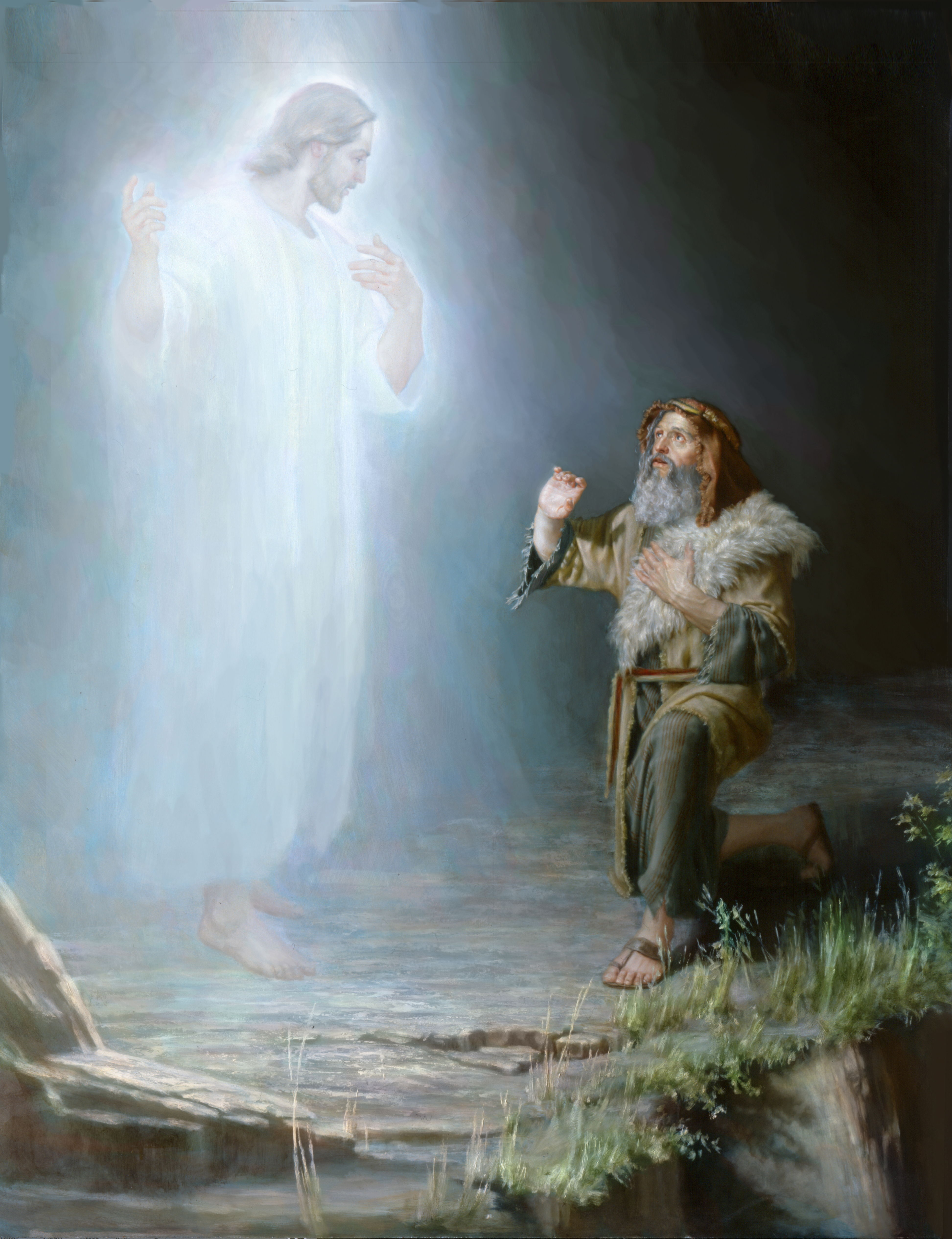
Joseph Brickey: Moses Seeing Jehovah, 1998

KnoWhy 01A for Personal Study of Gospel Doctrine Lesson 1: “This Is My Work and My Glory” (Moses 1) (JBOTL01A), 6 January 2018

Question: At the beginning of the vision that appears in Moses 1 in the Pearl of Great Price, Moses saw the “world … and all the children of men” (Moses 1:8). Then, near the end of the vision, he seems to have experienced the same thing again when he saw the “earth, and … the inhabitants thereof” (Moses 1:27-29). Why is this so?

Summary: Careful study of Moses 1 and similar documents from the ancient world reveals that Moses’ experience was a tutorial on the plan of salvation from a personal perspective, including his departure from God’s presence in the beginning and his glorious return to that presence in the end through his faithfulness. In verse 8, early on in the vision, it appears that Moses saw the premortal world and all the spirits that God had created (compare Abraham 3:22-23). Later, in verses 27-29, he seems to have experienced a view from heaven of the mortal earth and all its inhabitants.

The full article may be found at the Interpreter Foundation website: http://interpreterfoundation.org/why-did-moses-seem-to-repeat-the-same-experience-twice-in-his-vision/


Filed Under: Bible, Book of Moses, Lesson Aids, Questions, Temples Tagged With: Apocalypse of Abraham, Gospel Doctrine: Old Testament, Heavenly Ascent, Joseph Smith Translation, Moses

Book Review: Approaching Antiquity: Joseph Smith and the Ancient World

May 22, 2016 by Trevor Holyoak

Available from the FairMormon Bookstore at 15% off

This book is from the 2013 BYU Church History Symposium, held March 7–8, 2013. The Church History Symposium is a nearly annual (there apparently wasn’t one held in 2015) event that draws speakers from places such as Brigham Young University, other universities, the LDS Church History Department, and often LDS general authorities as well. The book contains many of the papers that were presented, but unfortunately there are a few missing, such as Steven C. Harper’s presentation on masonry. However, that and most of the other papers that were given (including all but one that is in the book) are available to view here, although the video presentations are generally abbreviated versions of what is in the book.

The conference spanned two days. The first day was held at BYU and the second was at the Conference Center in Salt Lake City. I was only able to attend the first day, which is one of the reasons I was interested in this book. The keynote address was given by Richard L. Bushman, and it was very crowded, which left many of us without seats until after he was done (apparently there were many students that had come just to hear Bushman).

The preface of the book states that the theme for the conference came out of a professional development training trip taken by new faculty from the BYU departments of Ancient Scripture and Church History and Doctrine to church history sites in Palmyra, Kirtland, and Nauvoo. As they visited these sites, they “were impressed as the extraordinary range of Joseph’s encounters with antiquity became increasingly apparent” (page xiii) and “deeper reflection upon these issues convinced us that there was an important, dynamic, and under-explored relationship between Joseph Smith’s personal interactions with ancient material and many of his unfolding revelations” (page xiv). [Read more…] about Book Review: Approaching Antiquity: Joseph Smith and the Ancient World

Filed Under: Apologetics, Bible, Book of Abraham, Book of Mormon, Book of Moses, Book reviews, Early Christianity, Geography, Joseph Smith, LDS History, LDS Scriptures, Masonry

4th Watch 22: The High Cost of Resentment

March 24, 2016 by Ned Scarisbrick

https://media.blubrry.com/mormonfaircast/www.fairlatterdaysaints.org/wp-content/uploads/2016/03/4th-Watch-22-Pod.mp3

Podcast: Download (40.5MB)

Subscribe: RSS

4thWatch Small

4th Watch 22: The High Cost of Resentment

This podcast is a follow up to my previous one on the “false dichotomy of Truth.”  If you haven’t listened to it I suggest you do so because this will make more sense if you do.

Real truth or false truth…false truth?  How can a truth be false?  Well, that’s why you need to listen to my previous podcast.  It explains how “truth” can be manipulated to put forth an agenda that can distort and even completely misrepresent the original intent or understanding of just about anything.  Think, Dihydrogen Monoxide!

As always in my podcasts I tend to add many colorful alliterations that do not appear in the text of this blog.  Therefore one’s listening experience may differ from just reading the printed words.  J

What does this have to do with resentment?  Good question.  Resentments can arise from what we perceive to be the truth but then learn that we were deceived, cheated or betrayed in trusting whatever it is at the time. Now, when it comes to religion trust is paramount.  We’re talking about God here and not some misleading advertising for a new and improved product.

I saw a gas station sign that listed three types of gas.  Regular, Plus and “V” Power.  Plus?  What’s plus.  This is gasoline.  What are you going to put in it?  Dynamite?  V Power?  What the heck is V Power?  Is it better than H Power?  What about X Power?

Worse than gas grades that are less than clear I witnessed a car that had a really strange placard on its side that said “Blue Drive.”  Blue Drive?  What the #@ll is Blue Drive?  Is it better than Red Drive or Green Drive?  Wouldn’t White Drive be more clean and wholesome? What’s worse is what kind of gas do you put in a Blue Drive car? Plus or “V” Power?  The cloud of nebulous advertisements boggle the mind.

There are things in life more important than what kind of car you drive and what type of gas you fuel it with.  Resentments over such trivial illustrations are useless.  Someone’s always going to have the next deluxe XB-134 super thing.  So, let’s move on to something more important in life like religion and God.

Like I said before, trust is paramount and when we feel that trust has been violated, resentment can set in.  Bishop so and so did this or that.  Stake president “X” who my brother works for was caught doing…fill in the blank…I heard that Joseph Smith had lots of wives and some as young as fourteen.  Brigham Young said that…another fill in the blank from one of his un-prophet like utterances…the list is extensive for what we thought we knew but latter learn was not the “whole” truth.

At this point I would like to illustrate this concept with a personal experience.  A long time ago, in a Mormon colony far, far away I learned that Joseph Smith had in his possession several what we call today “Seer Stones.”  They were used by the prophet on various occasions to translate the word of God that would become the cannon of the Church or as we would say today.  The “Holy Scriptures.”  I saw these devices as some kind of mystical connection with God that allowed the one who was authorized to use the stones to come somehow into Gods presence and commune with the divine.  Some super engineered and crafted substance beyond our earthly experience and understood only by God himself.   Anybody else held this view of the “seer Stones?” Well, just recently the Church published an article in the Ensign magazine about the seer stone.  I’m providing this link if you would like to read it.  Yeah, so what?  Well, when I first looked at the picture I viewed it through the lens of my God created “super” stone.  As I continued looking at it I realized that it was just a rock.  It only took about fifteen to twenty seconds for my mind to adjust.  It took much longer for my heart and soul to adjust.  It’s a rock!

Sometimes our perceptions create our reality and my reality had to change when faced with this new information.   It can be painful.  Much like the stages of grief.  First is denial and were not talking about the river in Egypt.  Second, anger and this is where a lot of people stay when it comes to having their existing world view injured.  Next, bargaining.  Let’s make a deal here! Then depression.  How can I go on knowing that my previous view of “whatever” was a lie?  Lastly, acceptance.  Many people never get to acceptance because the past can’t be wrong.  It was cast in stone.  If it was cast in sand then how can we trust anything?  Ahhhhh…It’s this the all or nothing, black and white world view that can destroy you.

Let’ get back to the rock seer stone.  I still don’t like the fact that the seer stone is just a rock.  I want it to be something like the stone mentioned in the Book of Revelation 2:17

He that hath an ear, let him hear what the Spirit saith unto the churches; To him that overcometh will I give to eat of the hidden manna, and will give him a white stone, and in the stone a new name written, which no man knoweth saving he that receiveth it.

A heavenly secret stone?  Cool…but what if this is just a representation of a principle and not a “real” stone?  Not so cool.  My perception of heavenly things might need an adjustment in this case.  The little kid inside of me wants the super power stone to be real but the adult inside says, “It’s time to grow up and move beyond magic rocks.”

It’s been the worst day sense yesterday.  Doesn’t have to be though.  We can choose to let go of our past pre-conceived notions of how the world works and move forward.  Now, how do we do that?

Let’s look at an example from the scriptures.  Jacob in the Old Testament had twelve sons and his favorite was Joseph.  See Genesis chapter 37 for all the details.  In this account we learn that family issues can lead to serious resentment.  Joseph’s brothers conspired to kill him. Sounds like serious resentment to me.  What caused it?  Could be that they knew that their father favored Joseph over them.  Perhaps Joseph had an attitude about that and kept throwing it in their faces on a regular basis.  Well, it got to the point of “we need to kill him” for whatever reason.  They couldn’t go through with so they sold him into slavery and smeared blood all over this “special coat of many colors” and told their father that some beast/s had killed him and I presume carried off his body so there were no remains to morn and bury.

Time passed.  Joseph was sold in Egypt and put into the house of Potiphar who was said to the captain of the palace guard.  If you’re going to be a slave this might have not been a bad job.  He could have been sold to some garment maker who treated him, well…like a slave.

He did so well in Potiphar’s house that he put Joseph in charge of everything except of course Potiphar’s wife.  She had other ideas though.  She wanted him but he was not going to indulge her.  Guess what the consequences were for sleeping with the master’s wife?  DEATH!   Just like most things for a slave who did not behave properly.

When Joseph refused her things got ugly.  Remember the phrase? Hell hath no fury like a woman scorned.  That was Potiphar’s wife.  She accused Joseph of trying to force himself on her.  Potiphar knew better.  He wasn’t a stupid man.  You think this was the first time something like this happened?  I don’t think so.  He also knew the character of Joseph.  You think he would jeopardize his standing by doing something so foolish?  I don’t think so.  So, Brother Ned what makes you say this?  There is nothing in the text about this.  Your right but he was sent to jail instead of being executed which means to me that Potiphar knew the real story.  I also think he had a conversation with the head jailer about what kind of man Joseph was and to treat him accordingly.

Did they have different levels of jail back in the day? I would think so because Joseph was sent to the incarceration facility where the kings prisoners like the cupbearer and the baker were residing at the time.  The cupbearer and the baker had dreams they couldn’t understand.  Joseph inquired of the Lord and received interpretations for both of them.    The butler or cupbearer got his job back.  The baker?  Didn’t work out so well for him.  Standard penalty.  Death.

Joseph ask the cupbearer to remember him when he got his job back but he forgot Joseph.  Day after day.  Month after month.  No word from the palace.  At this point in Joseph’s life I wonder what his resentment level was.  His brothers tried to kill him but sold him into slavery instead.  Sent to jail for unjust reasons.  Another day.  Another month.  Another “year.”

Bricks of bitterness could have been built into walls of resentment so thick that nothing could break them down.  Didn’t happen that way though.  The Lord was with him.  Day after day. Month after month.  Year after year.  Then one day Pharaoh had a dream that no one could interpret.  The cupbearer then remembered Joseph and his ability to interpret dreams and mentioned it to his master.  Pharaoh had him cleaned up and brought before the court of Pharaoh’s judgment.  Pharaoh explained his dream and ask for the interpretation thereof.  Penalty for wrong interpretation?  Death.  No stress here.  What if he had allowed his resentment to cloud or interfere with his relationship with the Lord?  Didn’t happen though.

Interpretation of said dream? Seven years of plenty for Egypt and then seven years of drought / famine.  Save during the good years for the bad years to come.  Pharaoh was so impressed with this interpretation that he made Joseph second in command in all of Egypt.  Second only to Pharaoh himself.  Gave him the big house and a wife.  Things were looking up for this former slave.

During the good years under Joseph’s command stockpiles are created and then the famines hit.  The whole region is effected including Jacob’s family.  Jacob sends out some of his sons to go and buy some gain in Egypt.  What do you think Joseph’s first thoughts were when he saw his brothers?  I know what my first thoughts would have been.  Well, well, well, look who’s here.  If it isn’t my traitorous brothers groveling for food.  It’s payback time!  This could have been his first thoughts but if they were they didn’t last that long.  Long story short.  The whole family was brought to Egypt and they lived happily ever after.  Maybe.  The part I would like to focus on is not told in the scriptures.  Are you listening?  Say Amen…what was Jacob’s reaction when he learned the truth of how Joseph wound up in Egypt?  We don’t know that story.  How would you react?  I don’t think it’s possible to heal that level of pain without the Lord.  I would venture to say that the healing process did not happen overnight.  Like most things in life serious injuries to both body and spirit takes time to heal.

Some time ago I worked at a Christian radio station and was “forced” to listen to the programing.  Day after day.  Week after week and month after month.  It was a great hobby job were I learned much about the differences in protestant theological teachings.  I also had Christian music implanted into my system as part of this broadcasting experience.  Yeah, so what?  We’re not interested in Brother Ned’s history with apostate associates. Well, you just might be after listening to this song.  It was done in 1984 by a group known as “White Heart.”  The title of the song is seventy times seven.  Its message has never gone away.  It has lasted for over two thousand years.  Tell me if its fits.

What about today and our injuries? Proverbs 18:19, A brother offended is harder to be won than a strong city: and their contentions are like the bars of a castle.  It is easy to become offended.  Personal experience.  Been there.  Done that.  Got lots of T-shirts to prove it.  In some circumstances frustration, anger and throwing a fit are standard and average responses but we don’t have to hold on to them.  Over time we can let go.  Do you really want to carry around bricks of bitterness?  Rhetorical question of course but how many bricks do you have in your backpack right now?  What would happen if you made the choice to lay them down? A lighter load in life perhaps.  Better health?

Forgiveness is the key.  We can choose to let go.  The more you practice it the easier it becomes just like most things in life.  When you first start to let go you will be surprised how fast those bricks jumps right back into your bag.  Just lay it down again and walk away.  This time it will run after you and start complaining because of abandonment.  Again, you have the right to choose what you will hold onto in life.  The more you let it go the longer it takes to wind its way back until it no longer catches up with you.

Now, most things in life are NOT deliberate attempts to get you like the story of Joseph in Egypt.  His brothers were out to get him and they almost succeeded. It appears that they repented of the evil they had done and Joseph forgave them.  Probably didn’t happen as an event but took place over time.  We can do the same “if” we want to.  This is something you really have to want to do because Satan wants you to hold on to every brick of resentment you can carry.   Put those bricks back!  They deserve your bitterness…whoever they or it is at the time.  How much do you want to suffer and for how long?  Less suffering and shorter time is good for me.  How about you?

In the Church this brick holding resentment can become real painful.  Again, personal experience.  I was deceived!  I was…fill in the blank.  I don’t doubt the experience or your pain.  What I want to do is help you let go of the pain.  This may even require the help of professional counselors but let me be extremely clear here.  It can be done, over time.

I keep going back to the story of how much time it took for Jacob to get over his resentment concerning his own sons.  What if his sons had not repented?  Oh, that would been a bad day or a lifetime for Jacob.  Still the choice would have still been there for him.  Hold on to the resentment or let it go.  I would think that if they had not repented his resentment would have turned into sadness and that sadness would have given rise to the possibility of his son’s future repentance.  That would have given him hope.  Isn’t that what we want?  Hope for the future.

The day will come when all things will be made right.  That day is not here yet but we are on the way to it “if” we choose.   Romans 8:28, And we know that all things work together for good to them that love God, to them who are the called according to His purpose.  So what is His purpose?  The gospel message is clear on this one.  To bring to pass the immortality and eternal life of man.  Moses 1:39.  But how does resentment fit into this purpose?  It is our choice.  The moral choice to forgive.  I think sometimes what we want in life is mercy for ourselves and justice for just about everyone else.  That sound about right? But I just can’t let go! (forget me stick clip).  Perhaps you could use the “forget me stick” to break up the bricks of bitterness that build the walls of resentment. You could turn you back on them.  Walk away.  Whatever imagery works best for you. This moral choice to give up our resentment can and will free us from continued suffering in this life and the life to come.  Hold on to it and it will follow us into the next life where the suffering will continue until we choose to give it up and receive God’s grace.

I would like to close with the words of brother Dieter F. Uchtdorf.  Second counselor in the First Presidency of the Church of Jesus Christ of Latter-day Saints.

“Each of us is under a divinely spoken obligation to reach out with pardon and mercy and to forgive one another. There is a great need for this Christ like attribute in our families, in our marriages, in our wards and stakes, in our communities, and in our nations.  We will receive the joy of forgiveness in our own lives when we are willing to extend that joy freely to others. Lip service is not enough. We need to purge our hearts and minds of feelings and thoughts of bitterness and let the light and the love of Christ enter in. As a result, the Spirit of the Lord will fill our souls with the joy accompanying divine peace of conscience.”  ― Dieter F. Uchtdorf

The views and opinions expressed in this podcast are the sole responsibility of the speaker and may not represent those of the Church of Jesus Christ of Latter-day Saints or that of FairMormon.


Filed Under: Apologetics, Book of Moses, Doctrine, General, Hosts, Joseph Smith, LDS Scriptures, Mormon Voices, Ned Scarisbrick, Podcast Tagged With: Resentment

“Taking the Stories of Primeval History Seriously”: A Review of In God’s Image and Likeness 2

January 26, 2014 by Stephen Smoot

giml2
You’re just a few clicks away from owning this excellent book! So what are you waiting for?

[Cross posted from Ploni Almoni: Mr. So-and-So’s Mormon Blog.]

The Book of Moses in the Pearl of Great Price has been the attention of considerable Latter-day Saint scholarship. Beginning with the pioneering work of Hugh Nibley, much work has been done on understanding the history, nature, and teachings of the Book of Moses.[1] Next to Nibley, Jeffrey M. Bradshaw stands out as one of the giants among Latter-day Saint scholars who have looked carefully at the Book of Moses. In his excellent 2010 commentary In God’s Image and Likeness Bradshaw delved deep into the text of the first half of the Book of Moses to unlock fresh insights and provide intriguing links between the Book of Moses with the temple and other ancient Near Eastern texts and traditions.[2]

However, Bradshaw’s first book only covered up to Moses 6. So then what about the rest of the Book of Moses, including the accounts of Enoch and Noah? With David J. Larsen as a co-author, Bradshaw has now completed his commentary on the Book of Moses with In God’s Image and Likeness 2: Enoch, Noah, and the Tower of Babel, co-published by the Interpreter Foundation and Eborn Books.

If one could summarize the purpose of this sequel, it would have to be that Bradshaw and Larsen are “taking the stories of the primeval history seriously” (p. 4) and attempting to show the richness, beauty, and power of these accounts.

Given their status as targets of humor and caricature, the well-worn stories of Adam, Eve, and Noah are sometimes difficult to take seriously. However, a thoughtful examination of the scriptural record of these characters will reveal not simply tales of “piety or inspiring adventures” but rather carefully crafted narratives from a highly sophisticated culture that preserve “deep memories” of revealed understanding. We do an injustice both to these marvelous records and to ourselves when we fail to pursue an appreciation of scripture beyond the initial level of cartoon cut-outs inculcated upon the minds of young children. (pp. 4–5, internal notes removed)

Bradshaw and Larsen pick up exactly where In God’s Image and Likeness finished. They begin by discussing how the Book of Moses presents the prophet Enoch, and compare the Book of Moses’ depiction of Enoch with the depiction of him found in a corpus of pseudepigraphal Enochic literature. Their discussion of Enoch both compares and contrasts the Book of Moses with the pseudepigraphal texts that bear Enoch’s name, and Bradshaw and Larsen are careful not to engage in the sort of parallelomania that one could easily fall into when comparing the Book of Moses with this literature.[3] 

After their discussion of Enoch, Bradshaw and Larsen then comment on Noah, the ark, and the flood. They discuss the events preceding and following the flood, in addition to the flood itself. Besides doctrinal discussions, their commentary on the flood also tactfully includes a brief discussion of how to reconcile the flood account with evidence from geological science that strongly contradicts belief in a global catastrophic flood. Instead, Bradshaw and Larsen posit the likelihood of a local flood that was possibly mythologized in the Genesis account to carry specific theological significance and symbolism (esp. pp. 267–271). This symbolism is actually quite interesting, as Bradshaw and Larsen point out that the Genesis flood symbolically throws the earth back into its pre-created chaotic state, when the waters of chaos reigned before the formation of the earth (see Genesis 1:1–3; cf. Abraham 4:1–2). With the emergence of a new earth from out of the waters of the flood, the account presents Noah as a type of Adam (pp. 256–259, 267, 277–279).

Finally, Bradshaw and Larsen include a discussion of the Tower of Babel. Bradshaw and Larsen begin by helpfully providing the Mesopotamian background to the Tower of Babel pericope (pp. 382–388). They also (rightly) urge caution about reading too much into the account of the confounding of languages that contradicts scriptural and scientific evidence (pp. 398–402).

Of course, as might be expected in a tome covering the Book of Moses and Genesis, Bradshaw and Larsen make no small effort to draw our attention to the many links between these stories and the temple. There are simply too many wonderful insights concerning the temple in this book for me to fully describe in this review. Suffice it to say that nobody can walk away from reading this book without coming to more fully appreciate the importance and centrality of the temple and temple symbolism in the scriptures, including in the stories of Enoch, Noah, and the Tower of Babel.

In addition to their commentary on the text, Bradshaw and Larsen include what they term “Gleanings,” or reproductions of quotes by various General Authorities or scholars on topics relating to the subject being discussed in each chapter. Bradshaw and Larsen also provide numerous paintings, photos, and charts to help the reader visualize the stories they’re reading. In this regard, In God’s Image and Likeness 2 follows in the steps of its predecessor, which also stands out for its wonderful artistic reproductions.

There wasn’t much that I found in this book to criticize, and there was only one part that I really disagreed with. In their commentary on the story involving Noah and his sons in Genesis 9, Bradshaw and Larsen speculate that Noah didn’t actually get drunk from the wine that he made from a vineyard he had planted (Genesis 9:20–21), but had participated in “a ritual drinking of wine” that preceded a vision (p. 300). They base this argument on a statement attributed to Joseph Smith and an excerpt from the Genesis Apocryphon. The evidence presented by Bradshaw and Larsen is, however, tenuous. First, the statement attributed to Joseph Smith that Noah “was not drunk, but in a vision” is late and thirdhand.[4] A contemporary (and preferably firsthand) statement on this by the Prophet would be stronger evidence for their claim. Second, their appeal to the Genesis Apocryphon, while interesting, doesn’t do much to mitigate against the plain reading of the text in Genesis–––Noah got a little too carried away with his wine. It would seem that the author of the Genesis Apocryphon was trying to do the same thing that Bradshaw and Larsen are doing, that is, exonerate Noah from any wrongdoing.

Likewise, Bradshaw and Larsen’s speculation that the “sin of Ham” was that Noah’s son “was neither qualified nor authorized to enter a place of divine glory” (p. 305) is also tenuous. Their evidence, while also interesting, is not definitive, and is also derived in part from their reading of later biblical and pseudepigraphal texts and drawing parallels with the pericope in Genesis 9. While they’re reading of Genesis 9 is plausible, it is far from certain.

But my hesitancy to agree with Bradshaw and Larsen on this point doesn’t severely detract from my overall appreciation for the effort and thoughtfulness that they put into this marvelous book. In the end, I wholeheartedly agree with this statement made by Bradshaw and Larsen at the beginning of their impressive volume.

The acceptance of the book of Moses as part of the LDS scriptural canon and, more generally, the premise that the Joseph Smith Translation of the Bible may contain something more than naïve personal speculations on passages that perplexed the Prophet has not only been grounds for amusement for many non-Mormons but also has drawn criticism from some within the tradition of the Restoration. . . . It is our firm witness that the book of Moses is a priceless prophetic reworking of the book of Genesis, made with painstaking effort under divine direction. Although neither “complete” nor “inerrant,” it is a text of inestimable value that should be one of the centerpieces of our gospel study. (pp. 17–18)

To that end, any Latter-day Saint interested in an informative and engaging scriptural commentary on the Book of Moses would greatly benefit from both volumes 1 and 2 of In God’s Image and Likeness.

[The book can be purchased at the FairMormon Bookstore or amazon.com.]

Addendum: Jeffrey Bradshaw has responded to my brief comments on Genesis 9. My review here was meant to be quick and limited, so I may not have done justice to Bradshaw and Larsen’s argument. Below are Bradshaw’s comments.

David and I qualify our explorations of an alternative interpretation of Genesis 9 as an “admittedly tentative” effort to “account for its many anomalies.” Many other respected scholars have remarked on the odd inconsistency of the Noah portrayed in Genesis 8 and Genesis 9, leading to conclusions such as that of Gordon Wenham that “the two traditions are completely incompatible and must be of independent origin.” In addition, it might be helpful to readers if you could note that the purported statement of Joseph Smith is not a completely isolated phenomenon. For example, drawing their conclusions from the Hebrew text of Genesis 9 alone (i.e., not considering the Genesis Apocryphon), Koler and Greenspahn concur with the opinion that Noah was enwrapped in a vision while in the tent, and that Ham’s sin was looking at Noah while the latter was in the course of revelation.[5]

Notes

[1]: See Hugh Nibley, Enoch the Prophet, The Collected Works of Hugh Nibley: Volume 2 (Provo, Utah: Foundation for Ancient Research and Mormon Studies, 1986).

[2]: Jeffrey M. Bradshaw, In God’s Image and Likeness: Ancient and Modern Perspectives on the Book of Moses (Salt Lake City, Utah: Eborn Books, 2010). See also Jeffrey M. Bradshaw, Temple Themes in the Book of Moses (Salt Lake City, Utah: Eborn Books, 2010); Temple Themes in the Oath and Covenant of the Priesthood (Salt Lake City, Utah: Eborn Books, 2012). Bradshaw has published numerous articles and has presented at a number of symposia on various Latter-day Saint scriptural topics. For a complete look at his publications and presentations, see here.

[3]: For those unaware of or otherwise unfamiliar with the corpus of Enochic pseudepigrapha, my good friend Colby Townsend provides an overview of this literature in an appendix.

[4]: Bradshaw and Larsen (p. 300, n. 35) cite Charles Walker’s 1881 diary entry of a conversation he had with William Allen where Allen attributed the quote to Joseph Smith.

[5]: E-mail from Jeffrey Bradshaw to Stephen Smoot, sent on January 27, 2014.

Filed Under: Book of Moses, Book reviews, LDS Scriptures Tagged With: Book of Moses, David J. Larsen, Enoch, In God's Image and Likeness, In God's Image and Likeness 2, Jeffrey M. Bradshaw, Noah, Pearl of Great Price, Tower of Babel

  • « Go to Previous Page
  • Page 1
  • Interim pages omitted …
  • Page 4
  • Page 5
  • Page 6
  • Page 7
  • Go to Next Page »

Primary Sidebar

Faithful Study Resources for Come, Follow Me

Subscribe to Blog

Enter your email address:

Subscribe to Podcast

Podcast icon
Subscribe to podcast in iTunes
Subscribe to podcast elsewhere
Listen with FAIR app
Android app on Google Play Download on the App Store

Pages

  • Blog Guidelines

FAIR Latest

  • Blessed Are the Peacemakers
  • Come, Follow Me with FAIR – Moses 7 – Part 2 – Autumn Dickson
  • Come, Follow Me with FAIR – Moses 7 – Jennifer Roach Lees
  • Come, Follow Me with FAIR – Moses 7 – Part 1 – Autumn Dickson
  • Look to God and Live 

Blog Categories

Recent Comments

  • Darci Larson on Adorned with the Virtue of Temperance
  • Kathleen Chin on Forsake Not Your Own Mercy
  • Daniel Peterson on In Memoriam: Sarah Allen
  • Matt on In Memoriam: Sarah Allen
  • Jerry Allred on Come, Follow Me with FAIR – Moses 1; Abraham 3 – Jennifer Roach Lees

Archives

Follow Us

  • Facebook
  • Twitter
  • iTunes
  • YouTube
Android app on Google Play Download on the App Store

Footer

FairMormon Logo

FAIR is a non-profit organization dedicated to providing well-documented answers to criticisms of the doctrine, practice, and history of The Church of Jesus Christ of Latter-day Saints.

Donate to FAIR

We are a volunteer organization. We invite you to give back.

Donate Now

Site Footer