• Skip to primary navigation
  • Skip to main content
  • Skip to primary sidebar
  • Skip to footer

FAIR

  • Find Answers
  • Blog
  • Media & Apps
  • Conference
  • Bookstore
  • Archive
  • About
  • Get Involved
  • Search

LDS Scriptures

Balancing Secular and Faith-Based Scripture Study

May 16, 2013 by Mike Ash

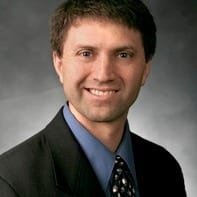
Ash (newer) PictureAnyone who owns a pendulum powered clock—such as many grandfather or wall hanging clocks—knows that the regulation of the pendulum needs to be tweaked in order for the clock to keep accurate time. On the bottom of the pendulum is an adjusting nut that raises and lowers the “bob” (the disc-shaped weight that makes the pendulum swing from side to side).

If the bob is raised too high, the swing-angle of the pendulum will be too narrow and the clock will run too fast. If the bob is lowered too far, the swing-angle will be too wide and the clock will run too slowly. With a bit of experience, some tweaking, and another timepiece for comparison, the adjusting nut can correctly set the swing to ensure reasonably accurate time.

Our approach to the scriptures should also find a balance between how literally we accept what was recorded by past generations and how modern scholarship understands those past generation in light of history and science. Without balance, our spiritual growth may be stifled or our testimonies could even be put at potential risk.

 Rejecting the Secular

As noted in a previous installment, Latter-day Saints should not take an inerrantist view to the scriptures. We know that prophets are fallible men with divine callings and that scriptures contain mistakes. If we take a literalist view on everything that we read in the scriptures we set ourselves up for potential testimony damage if we come to realize that the best scholarship—both inside and outside of the Church—argues that a strictly literal reading is untenable.

Revealed religion has almost nothing to say about the physics of the world, and little about its history either. As Galileo said, quoting one of the pope’s cardinals, the scriptures “teach us how one goes to heaven, not how the heavens go.”[i]

Science can tell us little or nothing about the meaning of life but speaks volumes about the physics and history of this planet and people. While we may assume that the scriptures speak on scientific issues this assumption is typically not warranted (with a few exceptions).

Most of our scriptures were written in pre-scientific times and incorporate not only the pre-critical assumptions of those who recorded the scriptures but sometimes include fanciful narratives to convey divine principals. Joseph Fielding Smith once wrote:

“Even the most devout and sincere believers in the Bible realize that it is, like most any other book, filled with metaphor, simile, allegory, and parable, which no intelligent person could be compelled to accept in a literal sense. …

“The Lord has not taken from those who believe in his word the power of reason. He expects every man who takes his “yoke” upon him to have common sense enough to accept a figure of speech in its proper setting, and to understand that the holy scriptures are replete with allegorical stories, faith-building parables, and artistic speech. …”[ii]

“Despite divine inspiration,” notes LDS scholar Stephen Robinson, “the biblical text is not uninfluenced by human language and not immune to negative influences from its human environment, and there is no guarantee that the revelations given to ancient prophets have been perfectly preserved…. Thus, critical study of the Bible is warranted to help allow for, and suggest corrections of, human errors of formulation, transmission, translation, and interpretation of the ancient records.”[iii]

In my opinion, one of the most revealing scriptures for helping us understand how God communicates with His children is found in D&C 1:24:

“Behold, I am God and have spoken it; these commandments are of me, and were given unto my servants in their weakness, after the manner of their language, that they might come to understanding.”

I’ll discuss this point in greater depth later in this series, and will return to it repeatedly because of its importance. Whether Heavenly Father speaks to you or me, or to prophets, or to those who recorded or transmitted scripture, all humans are only able to understand those communications from within their own worldviews (our “language”) which would include vocabulary, culture, and even preconceived (perhaps even erroneous) ideas about science, the universe, physics, other people, and so on.

By applying the tools of scholarship and science to our scripture studies, we can better recognize how ancient peoples would have understood revelations in the context of their own particular worldviews.

Since the days of Joseph Smith, many leaders have suggested that our scripture study include not only prayer and personal reflection, but scholarly tools as well. Joseph, for instance, studied Hebrew and organized the School of the Prophets so he, and other Church leaders, could utilize the scholarship in his day to learn more about the ancient prophets.

LDS Apostle, Elder John A. Widtsoe likewise wrote:

“In the field of modern thought the so-called higher criticism of the Bible has played an important part. The careful examination of the Bible in the light of our best knowledge of history, languages and literary form, has brought to light many facts not sensed by the ordinary reader of the Scriptures. Based upon the facts thus gathered, scholars have in the usual manner of science proceeded to make inferences, some of considerable, others of low probability of truth… To Latter-day Saints there can be no objection to the careful and critical study of the scriptures, ancient or modern, provided only that it be an honest study—a search for truth….”[iv]

Rejecting the Literal

Relying solely on secular interpretations of scriptural events presents its own set of problems. A strictly secular approach would deny the Resurrection, miracles, and divine communication from on high. Science currently tells us that such things don’t happen. Claims of the miraculous—including healings, raising the dead, and the visitation from angels or long-deceased prophets, must be taken on faith.

Approaching the scriptures from a strictly secular perspective also takes a superficial approach to the purpose of scriptures.  While scholarship can more accurately tell us about the people who wrote the scriptures and how their stories would have been understood in ancient contexts, it cannot reveal the deeper meaning of those records—those verses that speak to our souls and impel us to change our hearts and desires to align with God.

“With minor exceptions,” notes Robinson, the Bible is “…not to be treated in an ultimately naturalistic manner. God’s participation is seen to be significant both in the events themselves and in the process of their being recorded. His activity is thus one of the effects to be reckoned with in interpreting the events and in understanding the texts that record them.”[v]

God had a purpose when He inspired biblical authors to record scripture and impelled dedicated followers to preserve the scriptures for future generations. Despite the fact that divinely revealed doctrine can be draped in a mantel of fallible human narrative and imperfect worldviews, the spiritual messages can nevertheless touch the souls of those who study the scriptures with the companionship of the Holy Ghost.

The scriptures not only act as a witness to God’s dealings with mankind, but they also testify to the divinity of the Savior and the reality of the Atonement. Elder David A. Bednar suggests three reasons why we should study the scriptures: Because of our covenants, because of our need for direction, and as a prerequisite for personal revelation.[vi]

Per the sacramental prayers, when we renew our covenants, we are asked to “always remember” Christ. We can facilitate this remembrance by studying the scriptures.

Elder Bednar notes that in Alma 37 we are taught that “personal prayer and scripture study provide direction in our lives just as the Liahona provided guidance to Lehi and his family in the wilderness.”

Lastly, and most importantly, scripture has the power to transform our hearts and minds so we can receive personal revelation. If we invite the Holy Ghost into our lives as we pray and study the scriptures, immersing ourselves in the scriptures helps open that conduit for personal communication with our Heavenly Father.

My personal approach to the scriptures is to find a balance between the secular approach and the faith-approach. A secular approach attempts to harmonize what scriptural records claim and what we know about history, physics, and the ancient world. It can not only shed light on our scripture study, but it can make sense of some scriptural references that do not accord with science, archaeology, or the historical record.

A faith-based approach to scriptures that accepts some literal interpretations of specific events (such as the Resurrection) brings meaning to my life, helps guide me, helps open the door to personal revelation and teaches me that some things must be taken on faith in spite of current scientific knowledge.

This balancing point will undoubtedly vary with each individual and may shift from time to time based on moments of secular or spiritual insight. Some readers may find my balancing point to be too liberal; perhaps for others, too conservative. In subsequent articles I will try to show how I arrive at my current position and how I find balance and enlightenment by harmonizing the two.

* This article also appeared in Meridian Magazine.

[i] Quoted in www.oratoriosanfilippo.org/galileo-baronio-english.pdf

[ii] Joseph Fielding Smith, Doctrines of Salvation, 3 (SLC: Bookcraft, 1956): 188-190.

[iii] Stephen E. Robinson, “Bible Scholarship,” Encyclopedia of Mormonism

[iv] John A. Widtsoe, In Search of Truth: Comments on the Gospel and Modern Thought (Salt Lake City: Deseret Book, 1930), 81-82,.

[v] Robinson, “Bible Scholarship.”

[vi] David A. Bednar, “Understanding the Importance of Scripture Study,”.

Filed Under: LDS Scriptures

Mormon FAIR-Cast 139: The Book of Abraham and the Prophetic Power of Joseph Smith

April 3, 2013 by SteveDensleyJr

https://media.blubrry.com/mormonfaircast/www.fairlatterdaysaints.org/wp-content/uploads/2013/03/Religion-Today-for-Sunday-January-2.mp3

Podcast: Download (9.1MB)

Subscribe: RSS

Now that we have some of the papyrus that was in the possession of Joseph Smith when he translated the Book of Abraham, can it be demonstrated that Joseph Smith is a fraud? In this episode of Religion Today, which originally aired on KSL Radio on January 27, 2013, Martin Tanner responds to this question and discusses some of the ways in which the Book of Abraham actually provides evidence of the prophetic calling of Joseph Smith.

This recording was used by permission of KSL Radio and does not necessarily represent the views of The Church of Jesus Christ of Latter-day Saints or of FAIR.

Filed Under: Book of Abraham, Podcast

Reverend Spalding Strikes Again: A Response to Internet Criticism of Kerry Muhlestein’s Book of Abraham Videos

March 6, 2013 by FAIR Staff

Administrator’s note: The following is the result of a combined effort by many FAIR volunteers, all of whom made substantive contributions, and so is posted here under the group authorship “FAIR Staff.” Also, some of the individuals discussed below are either anonymous or pseudonymous; because we do not even know their genders in some cases, all references to these individuals will use masculine pronouns (“he,” “his,” “him) for the sake of brevity.

Critics on a particularly hostile Internet message board have been celebrating over e-mail responses to some YouTube videos of LDS Egyptologist Kerry Muhlestein. In the videos Dr. Muhlestein commented on some matters related to the Book of Abraham. The e-mails are from Egyptologists at UCLA (where Muhlestein earned his PhD). These scholars were solicited for their views by being sent the following e-mail from a critic on the message board:

Dr. Muhlenstein [sic] has recently been in a series of videos where he discusses his recent research on these papyrus fragments. His conclusions about the veracity of [Joseph] Smith’s translation of these papyri, their related facsimiles, and the explicit connection between the ancient biblical figure Abraham, and the ancient Egyptian book of the Dead, are contrary to what I thought the scholarly consensus was.[1]

Unfortunately, the e-mailer set up a straw man from the beginning: The videos are said to be “on these papyrus fragments,” meaning the Joseph Smith Papyri. He then goes on to speak about “[Muhlestein’s] conclusions about the veracity of Smith’s translations of these papyri.” Actually, Muhlestein says the papyri are not the source of the Book of Abraham (see note 13). Much of what Muhlestein talks about in the videos—such as various traditions about Abraham, the so-called Kirtland Egyptian Papers, and so forth—are not really related to the Joseph Smith Papyri at all, or even Egyptology proper. Two videos do focus on the facsimiles, of which only Facsimile 1 could be said to be related to the papyri that we have in our possession.

The e-mailer then asks if the Egyptologists“could help [him] understand how non-LDS Egyptologists view the Joseph Smith papyri, his translation of the accompanying facsimiles, and how valid the claims that Muhlenstein [sic] has been making in his recent videos are.”

The three responses from the solicited Egyptologists are reproduced below. [Read more…] about Reverend Spalding Strikes Again: A Response to Internet Criticism of Kerry Muhlestein’s Book of Abraham Videos

Filed Under: Anti-Mormon critics, Book of Abraham, LDS Scriptures

Subtle . . . and Significant! Our New 2013 Edition of the Scriptures Address Controversies

March 5, 2013 by John Lynch

On Friday, March 1st, the Church announced the immediate availability in digital format of a new edition of scriptures in English that incorporates changes, updates, and improvements over the 1981 edition that has served Church members for 32 years. On its website, the Church stated that the reason for the updates was to take advantage of the need to replace the printing master plates in use since 1979 and 1981 by making corrections and updates.

Such changes to scriptures are not new.  The most significant changes in recent history were made to the 1981 print edition, which included updated chapter headings, an enhanced Bible Dictionary, a more comprehensive index, cross-referenced footnotes, pronunciation guides, improved and updated maps, as well as a few changes of substance that added clarity to scripture readings. [Read more…] about Subtle . . . and Significant! Our New 2013 Edition of the Scriptures Address Controversies

Filed Under: Book of Mormon, LDS Scriptures, Polygamy, Racial Issues

New Verse-by-Verse Resource on the Book of Mormon

October 29, 2012 by Neal Rappleye

One of our objectives at FAIR is to provide access to quality research on Latter-day Saint topics that is useful for the average Saint in their everyday study of the scriptures. To that end, as a new part of our FAIR Study Aids project, we have developed a verse-by-verse research index on the Book of Mormon. This can be accessed online, here:

http://en.fairmormon.org/FAIR_Study_Aids/Book_of_Mormon_Resources_by_chapter_and_verse

Here, what we have done is we have gone through hundreds of articles, essays, and research papers and cataloged them under the chapter and verse for which its contents are most relevant (in many cases, articles can be found under more than one scripture reference). See the page on Jacob, for example. There is also a page for research related to the introduction, history of its coming forth, and general themes that run throughout the book. In some cases, books and chapters also have “overview” materials available.

Our aim is make it easy for someone going through the scriptures to find research on what they are reading now. For example, if you are currently reading in Helaman 3, you can come to that section of the index and find several articles that are relevant to things going on in that chapter. In breaking things down by verse, we hope that someone who has a question while reading, say, Mosiah 17:13 will be able to find resources which help answer their questions quickly and easily.

It is far from complete or comprehensive at this point. It is a work in progress,  but you can help! If you know any articles that are not there, please send them our way along what passage(s) you think it would best be cataloged under and we will add it to the index. Or, if you read an article that is on there and felt it applied to a different verse that it is not listed under, let us know and we will make the change.

We hope that this will prove a valuable resource in both your regular gospel study and in finding answers to concerns and criticisms raised against the Book of Mormon. With time, we may expand this to the other Standard Works.

Filed Under: Book of Mormon, LDS Scriptures, Lesson Aids, News from FAIR

Mormon FAIR-Cast 108: Jeffrey Bradshaw on Temple Themes in the Scriptures

September 26, 2012 by SteveDensleyJr

https://media.blubrry.com/mormonfaircast/www.fairlatterdaysaints.org/wp-content/uploads/2012/09/2012-0718-JEFFORY-BRADSHAW-Ancient-C1.mp3

Podcast: Download (20.8MB)

Subscribe: RSS

Dr. Jeffrey Bradshaw discusses his book, Temple Themes in the Book of Moses as well as some examples of temple worship among early Christians, and the Jews. He also touches on the Book of Enoch, the Council in Heaven and ancient temple architecture.

Jeffrey M. Bradshaw (Ph.D., Cognitive Science, University of Washington) is a Senior Research Scientist at the Florida Institute for Human and Machine Cognition (IHMC) in Pensacola, Florida. Formerly, he led research groups at The Boeing Company and the Fred Hutchinson Cancer Research Center. He has authored hundreds of research articles and edited several volumes on topics relating to human and machine intelligence and interaction. Jeff was a missionary in the Belgium-Brussels mission, and has since served in a variety of teaching and leadership capacities including early-morning seminary teacher, bishop, high councilor, counselor in a stake presidency, stake executive secretary and temple ordinance worker. He and his wife Kathleen are the parents of four children.

Dr. Bradshaw has published a number of books addressing temples themes in the scriptures including “In God’s Image and Likeness,” “Temple Themes in the Book of Moses,” and “Temple Themes in the Oath and Covenant of the Priesthood.” Each is available for purchase at the FAIR Bookstore, here.

Dr. Bradshaw also gave a presentation at the Temple on Mount Zion conference in Provo, Utah on September 23, 2012 regarding temple symbolism in the story of Noah’s ark, and is available for viewing on YouTube.

This recording is posted here by permission of K-Talk Radio. The opinions expressed in this interview do not necessarily represent the views of FAIR or The Church of Jesus Christ of Latter-day Saints.

Filed Under: Book of Moses, Podcast, Temples

The Book of Abraham and Continuing Scholarship: Ask the Right Questions and Keep Looking

August 21, 2012 by Stephen Smoot

The Book of Abraham continues to be a hotly debated book. Critics of and apologists for the Book of Abraham continue to sound forth their judgments on the fraudulence or authenticity of this controversial scriptural work. There does not seem to be any end in sight for this controversy. With the survival of some of Joseph Smith’s Egyptian papyri – ostensibly the source of the Book of Abraham – critics have, in the words of Hugh Nibley, been “endlessly dinning into the ears of the public that what was written on that small and battered strip of papyrus prove[s] beyond a doubt that Joseph Smith [is] a fraud because he thought it contained the Book of Abraham, whereas it contains nothing of the sort.”[1] The most recent salvo aimed at thrashing Joseph Smith’s interpretation of these documents comes in the form of a respected Egyptologist publishing his highly critical material with a press known for being, at times, extremely hostile towards Mormon orthodoxy. This Egyptologist’s conclusion? “Except for those willfully blind… the case is closed.”[2]

That seems to be it for the poor Mormons.

Well, maybe not.

[Read more…] about The Book of Abraham and Continuing Scholarship: Ask the Right Questions and Keep Looking

Filed Under: Apologetics, Book of Abraham, LDS Scriptures, Science Tagged With: Book of Abraham, criticisms, critics, evidence, Joseph Smith Papyri

Mormon FAIR-Cast 101: Dan Peterson takes questions

August 8, 2012 by SteveDensleyJr

https://media.blubrry.com/mormonfaircast/www.fairlatterdaysaints.org/wp-content/uploads/2012/08/2012-0731-DAN-PETERSON-ANTI-MORMON-A.mp3

Podcast: Download (38.3MB)

Subscribe: RSS

Dan Peterson takes questions from callers who both support and oppose the Church on this live interview with Mills Crenshaw that appeared on K-Talk radio on July 31, 2012, in Salt Lake City, Utah. Brother Peterson answers questions about the Book of Abraham and a variety of questions about the Book of Mormon, including ones pertaining to DNA studies, Mesoamerican and Near-Eastern archaeology, and Joseph Smith’s production of the Book of Mormon.

A native of southern California, Daniel C. Peterson received a bachelor’s degree in Greek and philosophy from Brigham Young University (BYU) and, after several years of study in Jerusalem and Cairo, earned his Ph.D. in Near Eastern Languages and Cultures from the University of California at Los Angeles (UCLA). Dr. Peterson is a professor of Islamic Studies and Arabic at BYU and founder and the editor-in-chief of the University’s Middle Eastern Texts Initiative (METI). He is a past chairman of the board of the Foundation for Ancient Research and Mormon Studies (FARMS) and, until very recently, served as Director of Advancement for its successor organization, the Neal A. Maxwell Institute for Religious Scholarship. From 1988, when he founded it, through mid-June of 2012, he edited the FARMS Review, which was renamed the Mormon Studies Review in late 2011. He is the author of several books and numerous articles on Islamic and Latter-day Saint topics, including a biography of the Prophet Muhammad (Eerdmans, 2007). A former bishop, Dr. Peterson served in the Switzerland Zürich Mission, and, for approximately eight years, on the Gospel Doctrine writing committee for The Church of Jesus Christ of Latter-day Saints. He currently serves as a Gospel Doctrine teacher in his home ward. He is married to the former Deborah Stephens, of Lakewood, Colorado, and they are the parents of three sons.

This recording is posted here by permission of K-Talk Radio. The opinions expressed in this interview do not necessarily represent the views of FAIR or The Church of Jesus Christ of Latter-day Saints.

Filed Under: Anti-Mormon critics, Apologetics, Book of Abraham, Book of Mormon, FAIR Conference, Podcast

Okay, let’s go over this again…

May 1, 2012 by Mike Parker

An inquiry came to FAIR’s “Ask the Apologist” service this morning, asking for help with the following claim on the Wikipedia article “Linguistics and the Book of Mormon”:

Richard Packham has pointed out that several Biblical Hebrew names, including Aaron, Ephraim, and Levi are listed as Jaredites in the Book of Ether. He argues that these are anachronisms, since the Jaredites are supposed to have originated from the time of the Tower of Babel, and did not speak Hebrew.

Perennial ex-Mormon gadfly Richard Packham apparently fails to understand that the Book of Mormon is a translation, and translations render ancient words — including names — into modern forms that didn’t exist at the time.

[Read more…] about Okay, let’s go over this again…

Filed Under: Anti-Mormon critics, Book of Mormon, Joseph Smith, LDS Scriptures

Dispelling the Myth of the “Curse of Cain”

February 28, 2012 by Mike Parker

In connection with Mitt Romney’s Mormon faith, the priesthood ban is getting a lot of attention from the media again.

The most recent turn comes from The Washington Post, where reporter Jason Horowitz interviews Darius Gray and other black Latter-day Saints about their experience with and feelings about the ban. Searching for a theological explanation for the ban, Horowitz contacted BYU associate professor Randy Bott. Horowitz paraphrases Bott:

According to Mormon scriptures, the descendants of Cain, who slew his brother Abel, “were black.” One of Cain’s descendants was Egyptus, a woman Mormons believe was the namesake of Egypt. She married Ham, whose descendants were themselves cursed and, in the view of many Mormons, barred from the priesthood by his father, Noah. Bott points to the Mormon holy text, the Book of Abraham, as suggesting that all of the descendents of Ham and Egyptus were thus black and barred from the priesthood.

Professor Bott’s explanation is an example of how doctrinal folklore continues to be taught by well-meaning members of the Church. Ironically, the dubious “folk doctrine” in question is no longer even relevant, since it was created to explain a Church policy that was reversed nearly thirty-four years ago. [Read more…] about Dispelling the Myth of the “Curse of Cain”

Filed Under: Book of Abraham, LDS Scriptures, News stories, Politics, Racial Issues

  • « Go to Previous Page
  • Go to page 1
  • Interim pages omitted …
  • Go to page 29
  • Go to page 30
  • Go to page 31
  • Go to page 32
  • Go to page 33
  • Go to page 34
  • Go to Next Page »

Primary Sidebar

Faithful Study Resources for Come, Follow Me

Subscribe to Blog

Enter your email address:

Subscribe to Podcast

Podcast icon
Subscribe to podcast in iTunes
Subscribe to podcast elsewhere
Listen with FAIR app
Android app on Google Play Download on the App Store

Pages

  • Blog Guidelines

FAIR Latest

  • Come, Follow Me with FAIR – Doctrine and Covenants 137–138 – Part 2 – Autumn Dickson
  • Come, Follow Me with FAIR – Doctrine and Covenants 137–138 – Mike Parker
  • FAIR December Newsletter
  • Come, Follow Me with FAIR – Doctrine and Covenants 137–138 – Part 1 – Autumn Dickson
  • Prophets of God 

Blog Categories

Recent Comments

  • LHL on Come, Follow Me with FAIR – Doctrine and Covenants 132 – Mike Parker
  • Stephen Johnsen on Come, Follow Me with FAIR – Doctrine and Covenants 132 – Mike Parker
  • Bruce B Hill on Come, Follow Me with FAIR – Doctrine and Covenants 124 – Part 1 – Autumn Dickson
  • Gabriel Hess on Join us Oct 9–11 for our FREE virtual conference on the Old Testament
  • JC on When the Gospel “Doesn’t Work”

Archives

Follow Us

  • Facebook
  • Twitter
  • iTunes
  • YouTube
Android app on Google Play Download on the App Store

Footer

FairMormon Logo

FAIR is a non-profit organization dedicated to providing well-documented answers to criticisms of the doctrine, practice, and history of The Church of Jesus Christ of Latter-day Saints.

Donate to FAIR

We are a volunteer organization. We invite you to give back.

Donate Now

Site Footer