• Skip to primary navigation
  • Skip to main content
  • Skip to primary sidebar
  • Skip to footer

FAIR

  • Find Answers
  • Blog
  • Media & Apps
  • Conference
  • Bookstore
  • Archive
  • About
  • Get Involved
  • Search

Marriage

“Abound in Hope” (Stories of the Saints in the DR Congo Part 6)

October 14, 2018 by Jeffrey M. Bradshaw

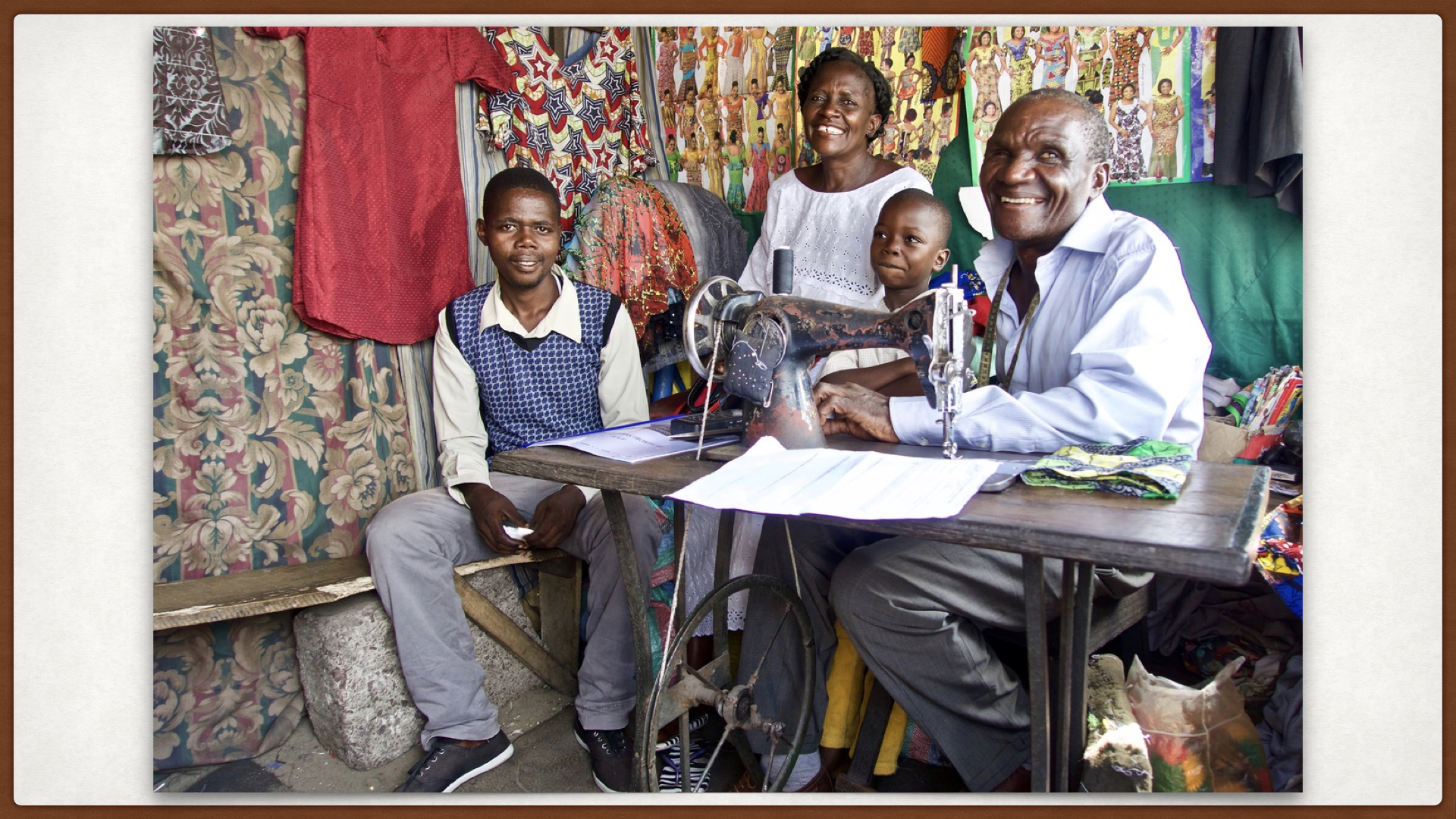
Family of Luvualu Mwinza David and Ndotoni Josephine

Author’s note: This series shares six stories about members of The Church of Jesus Christ of Latter-day Saints from the Democratic Republic of the Congo. Each story is framed in the context of a Christlike attribute. This article with examples of hope is an adapted and expanded from part 6 of a presentation given at the FairMormon 2018 Conference.

This story is fascinating account of joy, but even more so one of hope. Luvualu Mwinza David, a skilled tailor of men’s and women’s clothing, is totally blind in both eyes. The Lord gave Him hope by multiplying his talents, finding a fitting companion, introducing him to the Church, and giving him a firm assurance in the promise of eternal life.

The video version of the entire FairMormon presentation is available on the FairMormon YouTube channel at https://www.youtube.com/watch?v=nJl9FvLKmjw

The article relating to this story can be found at the Interpreter Foundation website: “Abound in Hope” — Stories of the Saints in the DR Congo, Part 6

If you would like to watch the other presentations from the 2018 FairMormon Conference, you can still purchase video streaming.

Filed Under: Conversion, Marriage, Power of Testimony Tagged With: Adversity, Athanase Ngandu, Blindness, Church History, Disabilities, DR Congo, Ephraim Zola, hope, joy, Luvualu Mwinza David, Maguy Meta Kadima, Ndotoni Josephine, Nephi Kaluwa, Self-Reliance, Tailor

Some 2018 FairMormon Conference Transcripts Now Available

October 8, 2018 by Trevor Holyoak

Our volunteers have been very busy transcribing the presentations from the conference held in August. The following transcripts are now available:

  • Taunalyn Rutherford, “For We Shall See Him as He Is”: Understanding Mormon Women in India
  • Brad Wilcox, “Have You Been Saved By Grace?” How Do We Respond?
  • Randall Spackman, Chronological Structure and Symbolism in the Small Plates of Nephi (a handout is also available)
  • Elder Kevin W. Pearson, A Sacred and Imperative Duty
  • Daniel Peterson, Apologetics: What, Why and How?

The transcripts for the remaining presentations will be posted here when they are available.

You can also still order the video streaming so you can watch the presentations on your computer, mobile device, or Roku.

Filed Under: Anti-Mormon critics, Apologetics, Book of Mormon, Doctrine, FAIR Conference, LDS Culture, Marriage, News from FAIR, Questions, Resources, Testimonies, Women

Part 2 of 2: Why Is the Story of David and Bathsheba Significant? (Gospel Doctrine Lesson 24B)

June 30, 2018 by Jeffrey M. Bradshaw

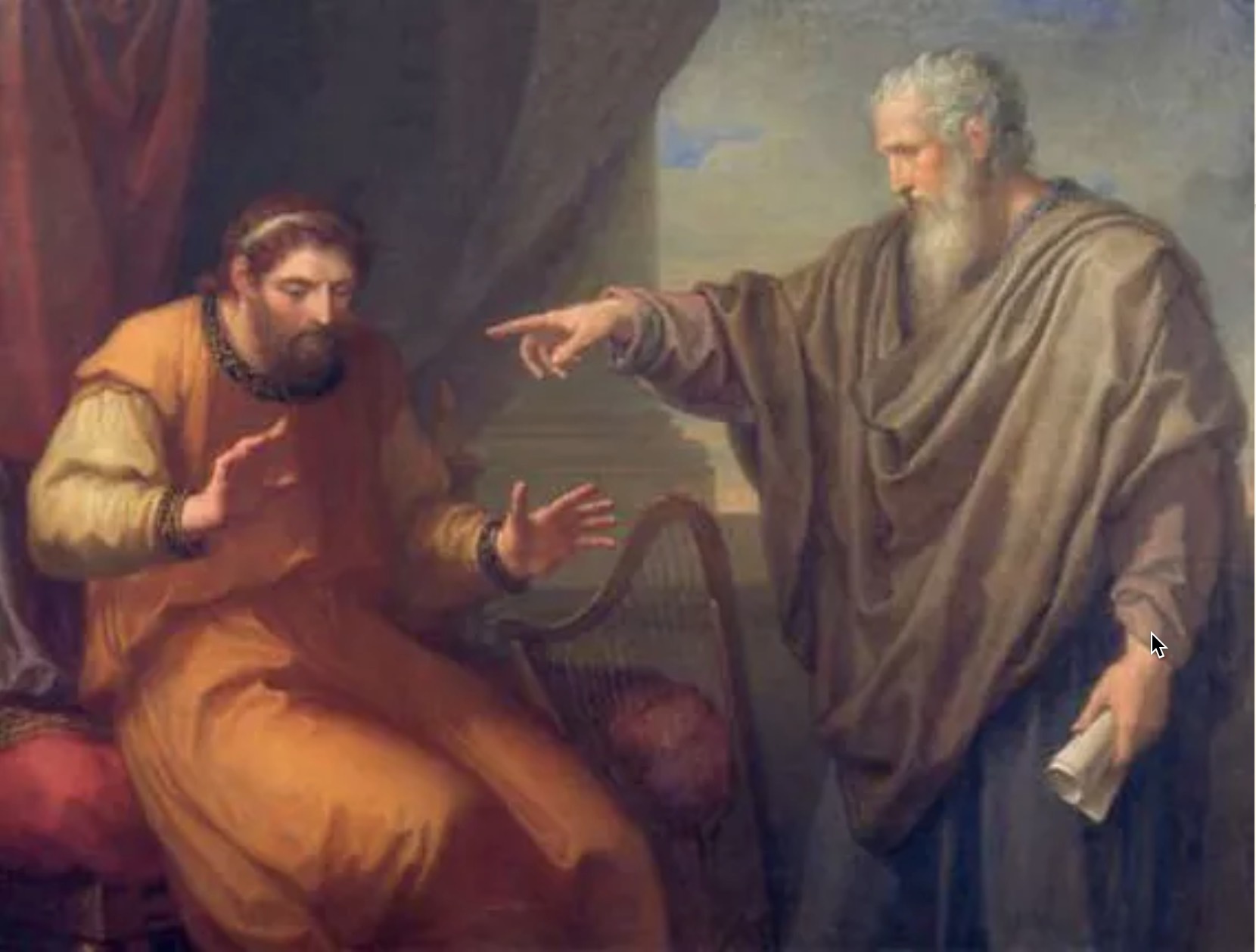
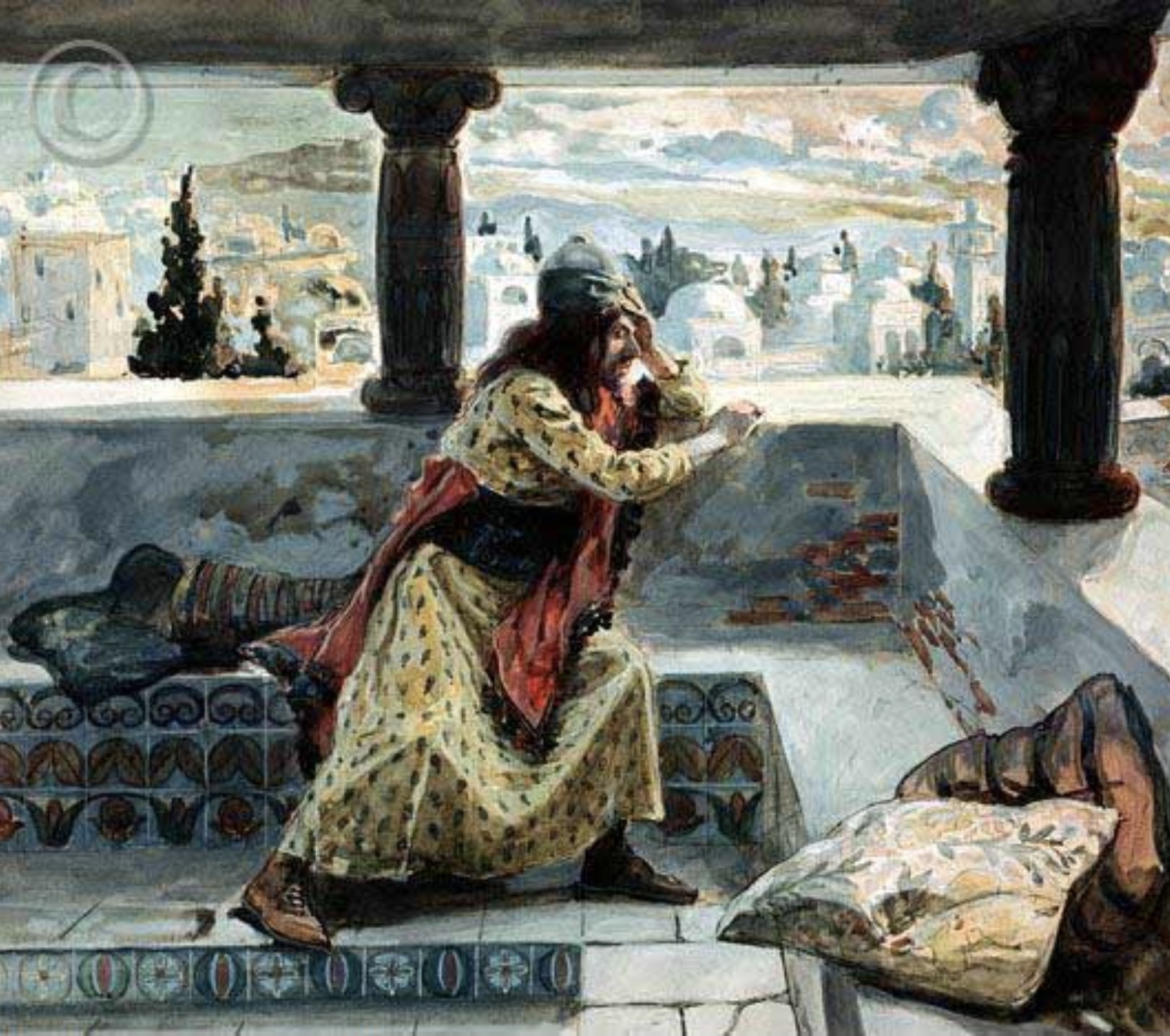
Angelika Kauffmann: “Thou Art the Man!”


An Old Testament KnoWhy relating to the reading assignment for Gospel Doctrine Lesson 24: “Create in Me a Clean Heart” (2 Samuel 11-12; Psalm 51) (JBOTL24B)

This article continues a detailed commentary begun in article JBOTL24A on 2 Samuel 11-12, the story of the fall of David. Robert Alter summarizes this tragic story as follows:

The Book of Samuel is one of those rare masterworks that … evinces an unblinking and abidingly instructive knowingness about man as a political animal in all his contradictions and venality and in all his susceptibility to the brutalization and the seductions of exercising power. And yet, David is more than a probing representation of the ambiguities of political power. He is also an affecting and troubling image of human destiny as husband and father and as a man moving from youth to prime to the decrepitude of old age. The great pivotal moment of the whole story in this regard is when he turns to his perplexed courtiers, after putting aside the trappings of mourning he had assumed for his ailing infant son, now dead, and says, ‘I am going to him. He will not come back to me.’ These … words … have no conceivable political motive[; they] give us a glimpse into his inwardness, revealing his sense of naked vulnerability to the inexorable mortality that is the fate of all humankind. For the rest of the story, we see David’s weakness and his bonds of intimate attachment in fluctuating conflict with the imperatives of power that drive him as a king surrounded by potential enemies and betrayers.

The full article may be found at the Interpreter Foundation website: KnoWhy OTL24B — Why Is the Story of David and Bathsheba Significant? (Part 2 of 2)


Filed Under: Bible, Chastity, Doctrine, Lesson Aids, Marriage, Polygamy, Questions, Resources, Women Tagged With: 2 Samuel, Adultery, Bathsheba, David, Gospel Doctrine: Old Testament, Murder, repentance, Unpardonable Sin

Part 1 of 2: Why Is the Story of David and Bathsheba Significant? (Gospel Doctrine Lesson 24A)

June 28, 2018 by Jeffrey M. Bradshaw

James Tissot: David Sees Bathsheba from the Roof

An Old Testament KnoWhy relating to the reading assignment for Gospel Doctrine Lesson 24: “Create in Me a Clean Heart” (2 Samuel 11-12; Psalm 51) (JBOTL24A)

Question: Why is the story of David and Bathsheba significant?

Summary: Chapters 11 and 12 of 2 Samuel are among the treasures of scripture. There are several reasons for their importance:

  • Historically, these chapters constitute the turning point that marks the end of the rise and the beginning of the fall of the house of David;
  • Doctrinally, the setting provides a context for discussions of the consequences of adultery and murder, and of abuses stemming from David and Solomon’s often politically motivated taking of “many wives and concubines”;
  • As a literary composition, we can experience and appreciate how an inspired and skilled author selectively presents details with incredible focus and economy of expression, thus revealing with exceptional clarity the central messages of the story;
  • As a tragic personal account of the steps leading to temptation and damning sin, we can draw moral lessons that can fortify and protect us against similar mistakes.

Because of the incredible richness of this account, it is best discussed verse by verse. Before entering into detailed commentary, three questions relating to the story will be discussed as background.

The full article may be found at the Interpreter Foundation website: KnoWhy OTL24A — Why Is the Story of David and Bathsheba Significant? (Part 1 of 2)

Filed Under: Bible, Chastity, Doctrine, Lesson Aids, Marriage, Polygamy, Questions, Resources, Women Tagged With: Adultery, Bathsheba, David, Gospel Doctrine: Old Testament, Murder, repentance, Unpardonable Sin

How Does the Book of Ruth Provide a Model for Marriage? (Gospel Doctrine Lesson 20A)

May 25, 2018 by Jeffrey M. Bradshaw

Ruth and Boaz on the Threshing Floor

An Old Testament KnoWhy relating to the reading assignment for Gospel Doctrine Lesson 20: “All the City … Doth Know That Thou Art a Virtuous Woman” (Ruth; 1 Samuel 1) (JBOTL20A)

Question: How does the book of Ruth provide a model for marriage?

Summary: According to an insightful presentation by Catholic Bible scholar Gary A. Anderson included in this week’s article, the book of Ruth establishes a model for marriage in three ways: “1. the love of God for Israel as a lens with which to examine the love between a husband and wife; 2. the relationship of the married couple to the larger network of family relations – marriage is not just an arrangement between two individuals; and 3. The necessary and non-negotiable linkage of conjugal love and procreation.” In making his arguments for Ruth as a biblical model of marriage, Anderson goes further, revealing selected temple themes that that are key to understanding the role of Boaz as a redeemer. Careful study of Ruth will reveal that its story of redemption concerns not only a family but also all of Israel, past and future.

The full article may be found at the Interpreter Foundation website: KnoWhy OTL20A — How Does the Book of Ruth Provide a Model for Marriage?

Filed Under: Bible, Chastity, Conversion, Doctrine, Lesson Aids, Marriage, Questions, Resources, Temples, Women Tagged With: Gospel Doctrine: Old Testament, Redeemer, Ruth

Was Adam Meant to “Rule Over” or “Rule With” Eve? (Old Testament Gospel Doctrine 4B)

January 19, 2018 by Jeffrey M. Bradshaw

Eugène Delaplanche, 1836-1890: Eve, After Transgression, 1869. Photograph copyright by Jeffrey M. Bradshaw. In this poignant sculpture, the vacant, tearless eyes and agonized posture of the solitary figure bespeak the depths of Eve’s utter hopelessness immediately after her transgression.

An Old Testament KnoWhy for Gospel Doctrine Lesson 4: “Because of My Transgression My Eyes Are Opened” (Moses 4; 5:1–15; 6:48-62) (JBOTL04B). See the link to the video supplement to this lesson at the end of the article under “Further Reading.”

Question: After the Fall, God told Eve: “thy desire shall be to thy husband, and he shall rule over thee.” However, some say that the words “rule over” should be translated “rule with.” Which translation is correct?

Summary: A modern English translation makes the meaning of this difficult phrase clear: “You will want to control your husband, but he will dominate you.” Looking at the verse in context, it is evident that the Lord is not telling the couple how they should treat each other, but rather describing a tragic tendency in mortal marriages that they must avoid. As further evidence for this interpretation, note that the same Hebrew terms for “desire” and “rule” that describe a relationship of competition and rancor will later reappear in God’s warning to Cain: “Satan desireth to have thee; … And thou shalt rule over him.” In an honest effort to make sense of the troubling English translation of “rule over” in the King James Version, some have suggested that it should be read instead as “rule with.” Unfortunately, the “rule with” translation does not hold up under scholarly scrutiny. For example, in her BYU Masters Thesis, RoseAnn Benson argued conclusively that the “rule with” translation should be abandoned. In every occurrence of the underlying Hebrew she examined the phrase is best understood as “rule over,” as when a king rules over his subjects. This further confirms the idea that the verse is describing broken marriage relationships that would become a common tendency in the fallen world, with each spouse contending to “rule over” the other. It’s obvious that God did not intend Adam and Eve’s marriage to work that way. Instead, as the Proclamation on the Family explains, “fathers and mothers” — both then and now — “are obligated to help one another as equal partners.”

The full article may be found at the Interpreter Foundation website: KnoWhy OTL04B — Was Adam Meant to “Rule Over” or “Rule With” Eve?

For a video supplement to this lesson, see “The Tree of Knowledge as the Veil of the Sanctuary” on the FairMormon YouTube channel: https://www.youtube.com/watch?v=K-B1FeOcTZ8

Filed Under: Bible, Doctrine, Lesson Aids, Marriage, Questions, Temples, Women Tagged With: Adam, Eve, Garden of Eden, Gospel Doctrine: Old Testament, Joseph Smith Translation

Why Build Temples?

October 18, 2016 by FAIR Staff

The Lima Peru Temple

This week, critics of the Church of Jesus Christ of Latter-Day Saints have again been opining online on the extravagant furnishings inside LDS temples. The implication being that this is a dreadful waste of money on expensive edifices when the funds could be spent on assisting the poor. A first glance, this complaint appears reasonable. Why indeed should so much funds be devoted to building temples rather than to poverty relief?

We all know that poverty relief consists of two types, handling out bread and fishes, that can sustain a man and his family for a few days, or handing out a fishing pole and seeds, together with instructions on how to catch fish and grow grain, that will sustain the man and his family for months and years to come.

Fresh water is flowing for the first time to villages in Indonesia.

The Church does both of the above kinds of relief, in the form of emergency assistance, or in such wonderful programs as the Perpetual Education Fund. But there is another form of assistance that vastly exceeds either of these types. In countries like Peru (or Ghana, or many other places), the Church has built temples, to which any member holding a recommend may attend, no matter what his or her social status may be.

Inside the temple, no one can tell who is the Peruvian peasant or who is the banker from Lima. All are alike (even in dress), and all are treated the same.

Can you imagine what this does to the self-esteem of that Peruvian peasant (or, indeed, to the viewpoint of the banker)? The temple is the Great Leveler, and unlike the Marxist ideal where everyone is supposed to be leveled down to the proletariat, it levels everyone up, to become kings and queens.

No amount of poverty relief, no matter how lavishly dispensed, could possibly achieve such a remarkable outcome. When viewed from this angle, the amount the Church spends on temple construction could be considered more effective than any other outlay.

All this, even before considering the religious aspects of this work (ie, that God commanded it, or that temples are an essential element in LDS theology in the work of salvation for all mankind).

But this is not just an LDS theme. In my opinion, religious edifices have always elicited such responses. The great cathedrals of Europe were built at great expense, by the elite of society, but also with the enthusiastic participation of the lower classes, who saw these structures as their own. (This adoration does not extend to secular buildings, btw. When I toured Versailles back in 1991, my first thought was “Now I know why they had the French Revolution.”) The theme also holds true in non-Christian societies. The Great Buddha of Nara, constructed in the 8th century when Nara was the capital of Japan, was a project that encompassed all layers of society (it included raising a wooden structure to house the statue that is the largest purely wooden building in the world), and it is an awe-inspiring sight even now, more than 1200 years later.

Celestial Room in the Accra Ghana Temple

And, of course, in the LDS context (as in the above non-LDS examples), the temples must be built of the highest quality materials possible. This serves to cement the leveling-up effect. Even the Church’s outlays for the downtown shopping mall in Salt Lake City, which has elicited such scorn from critics, is a part of this same effort, by upgrading the environment around the Salt Lake Temple (and Conference Center), so that members visiting from faraway places can feel safe and secure.

This entry was posted in Temples on 17 November 2014 by David Farnsworth

Filed Under: Anti-Mormon critics, Apologetics, Marriage, Temples Tagged With: LDS Temples, Peru

Book Review: The Joseph Smith Papers: Documents Volume 4, April 1834 – September 1835

July 3, 2016 by Trevor Holyoak

Available from the FairMormon bookstore at 20% off

This is the fourth in a projected twelve volumes in the Documents series of the Joseph Smith Papers. The Documents series is the core of the JSP project, containing documents that Joseph Smith was personally involved in producing in chronological order. The documents in the book are also available online, but the annotations and introductions – which are very valuable in understanding the documents – are not put online until 18 months after each volume is published.

The main events covered in this volume are Zion’s Camp; the publication of the first edition of the Doctrine and Covenants; financial difficulties (particularly those related to publishing and the building of the Kirtland Temple); the formation and operation of the Kirtland high council; the call of Joseph Smith, Sr., to patriarch, and the calling of 12 apostles; and the beginning of the writing of the early history of the church.

The main body of the book consists of documents directly involving Joseph Smith, and then there are a series of appendices with documents for which Joseph Smith’s involvement is questionable. Such documents include the first Lecture on Faith, “Letter to the Saints Scattered Abroad”, “Statement on Marriage”, “Declaration on Government and Law”, and patriarchal blessings given to Joseph Smith Sr. and Lucy Mack Smith, Hyrum Smith, Samuel Smith, and William Smith. [Read more…] about Book Review: The Joseph Smith Papers: Documents Volume 4, April 1834 – September 1835

Filed Under: Book of Mormon, Book reviews, Joseph Smith, LDS History, Marriage, Polygamy, Women

Book Review: The First Fifty Years of Relief Society: Key Documents in Latter-day Saint Women’s History

May 18, 2016 by Trevor Holyoak

Available from the FairMormon Bookstore at 15% off

This is the first publication from The Church Historian’s Press other than the Joseph Smith Papers. It is a collection of documents brought together for the first time that cover the first fifty years of the Relief Society, starting in Nauvoo, restarting in Utah, and then spreading throughout LDS settlements as far away as Canada. The book format and production procedures (transcription, verification, etc.) are very similar to how the Joseph Smith Papers are being done, and at least some of the staff (including editor Matthew J. Grow) are involved in both. And as with the JSP project, much of the book is available for free online. It is accessible at https://www.churchhistorianspress.org/the-first-fifty-years-of-relief-society

The book contains a general table of contents, then a Detailed Contents listing each document, followed by a list of illustrations, a general introduction, and a description of the editorial method. The main section is split into four parts, covering the time periods of 1830 and 1942 to 1845, then 1854 to 1866, 1867 to 1879, and finally 1880 to 1892. The end matter contains reference material including lists of the different Relief Society, Young Ladies’ Mutual Improvement Association, and Primary Association presidencies from 1842 to 1892, a biographical directory, works cited, acknowledgments, and then a pretty thorough index spanning 50 pages.

The main feature of this book is the Nauvoo Relief Society Minute Book, which was kept by Eliza R. Snow and then brought to Utah by her, where it was used in getting the Relief Society going again. This is the first time it has appeared in print, although it was included in the Selected Collections DVD set published in 2002, and more recently has been included in the online documents for the JSP project. Among other things, it has the only sermons given by Joseph Smith to the women of the church.

In one of these sermons, on April 28, 1842, Joseph Smith addressed speaking in tongues and administering to the sick: [Read more…] about Book Review: The First Fifty Years of Relief Society: Key Documents in Latter-day Saint Women’s History

Filed Under: Apologetics, Book reviews, Gender Issues, Joseph Smith, LDS History, Marriage, Polygamy, Women

Front Page News Review Podcast #9 – Week of May 24th, 2015

May 28, 2015 by NickGalieti

https://media.blubrry.com/mormonfaircast/www.fairlatterdaysaints.org/wp-content/uploads/2015/05/FrontPage9.mp3

Podcast: Download (34.6MB)

Subscribe: RSS

FairMormon’s Front Page News Review is a podcast where we provide context and analysis of the past week’s media coverage of Mormons and the LDS church. Hosted by Nick Galieti and manager of the FairMormon Front Page news service, Cassandra Hedelius.

What we present is not to be understood as being the official position of FairMormon or The Church of Jesus Christ of Latter-day Saints. We speak for ourselves, and sometimes not even then.

This week’s news stories:

http://www.laobserved.com/archive/2015/05/mormon_temple_finally_emb.php

http://www.sltrib.com/news/2538827-155/boy-scouts-leader-says-ban-on

http://www.pewresearch.org/fact-tank/2015/05/22/mormons-more-likely-to-marry-have-more-children-than-other-u-s-religious-groups/

DON’T FORGET! Get your Early-Bird FairMormon Conference Tickets now!

On August 6 & 7 we will be having our FairMormon conference at the Utah Valley Convention center.

To register click here http://www.fairmormon.org/perspectives/fair-conferences/conf15a and scroll down the the conference registration.

Speakers this year include Margaret Barker, Ed Pinegar, Stephen Webb , Brant Gardner, Ron Dennis, Brittany Chapman, David Larsen, Jim Gordon, Laura Hales, Cassandra Hedelius, Paul Reeve, and, Dan Peterson.

Topics include:

History and Historicity in the Book of Mormon

Faith and Scholarship

How to help young Latter-day Saints

Why Mormon materialism matters

Joseph Smith Polygamy

Challenges to church legitimacy

And more.

We have both Mormon and non-Mormon scholars this year speaking about Mormon topics, so this conference is one that you don’t want to miss.

Sign up at this link: http://www.fairmormon.org/perspectives/fair-conferences/conf15a

Facebook page hit 3,300 likes.

Plug FairMormon Front Page, signup at fairmormon.orgFairMormon-FrontPageNewsReview-Logo

Filed Under: FAIR Conference, Fair Mormon Front Page News Review, Homosexuality, Hosts, Marriage, News stories, Nick Galieti, Podcast Tagged With: Boy Scouts, LA Temple

  • « Go to Previous Page
  • Go to page 1
  • Interim pages omitted …
  • Go to page 3
  • Go to page 4
  • Go to page 5
  • Go to page 6
  • Go to Next Page »

Primary Sidebar

Faithful Study Resources for Come, Follow Me

Subscribe to Blog

Enter your email address:

Subscribe to Podcast

Podcast icon
Subscribe to podcast in iTunes
Subscribe to podcast elsewhere
Listen with FAIR app
Android app on Google Play Download on the App Store

Pages

  • Blog Guidelines

FAIR Latest

  • Come, Follow Me with FAIR – Doctrine and Covenants 137–138 – Part 2 – Autumn Dickson
  • Come, Follow Me with FAIR – Doctrine and Covenants 137–138 – Mike Parker
  • FAIR December Newsletter
  • Come, Follow Me with FAIR – Doctrine and Covenants 137–138 – Part 1 – Autumn Dickson
  • Prophets of God 

Blog Categories

Recent Comments

  • LHL on Come, Follow Me with FAIR – Doctrine and Covenants 132 – Mike Parker
  • Stephen Johnsen on Come, Follow Me with FAIR – Doctrine and Covenants 132 – Mike Parker
  • Bruce B Hill on Come, Follow Me with FAIR – Doctrine and Covenants 124 – Part 1 – Autumn Dickson
  • Gabriel Hess on Join us Oct 9–11 for our FREE virtual conference on the Old Testament
  • JC on When the Gospel “Doesn’t Work”

Archives

Follow Us

  • Facebook
  • Twitter
  • iTunes
  • YouTube
Android app on Google Play Download on the App Store

Footer

FairMormon Logo

FAIR is a non-profit organization dedicated to providing well-documented answers to criticisms of the doctrine, practice, and history of The Church of Jesus Christ of Latter-day Saints.

Donate to FAIR

We are a volunteer organization. We invite you to give back.

Donate Now

Site Footer