• Skip to primary navigation
  • Skip to main content
  • Skip to primary sidebar
  • Skip to footer

FAIR

  • Find Answers
  • Blog
  • Media & Apps
  • Conference
  • Bookstore
  • Archive
  • About
  • Get Involved
  • Search

Nick Galieti

Church History as a Missionary Tool with Casey Griffiths

June 11, 2018 by NickGalieti

https://media.blubrry.com/mormonfaircast/www.fairlatterdaysaints.org/wp-content/uploads/2018/06/LMC-Casey-Griffiths-FairMormon.mp3

Podcast: Download (51.8MB)

Subscribe: RSS

Casey Paul Griffiths - LDS MissionCast
BYU professor of church history Casey Paul Griffiths discusses the 100 most important events in Latter-day Saint history at his Education Week class.

Welcome to a select episode of the LDS MissionCast right here on FairMormon. This episode is hosted by Nick Galieti. The guest on this podcast is Casey Griffiths a professor from BYU, and one of the contributing authors to the book, What You Don’t Know about the 100 Most Important Events in Church History. We discuss the importance of knowing the history of the church and how our unique history can be used as a proselyting tool.

After that interview we have a funny segment from Shawn Rapier from the Latter-day Lives podcast. Shawn interviews a hilarious comedian, Steve Soelberg, who tells a funny story from his mission when he was…shall we say, caught in an awkward moment.

Music for this episode comes from Anne Britt. You can find her beautiful piano arrangements and this music on her site, http://annebrittmusic.com.


What you don't know about the 100 most important events in church history

Make sure to check out the full interview with Steve Soelberg on Shawn’s podcast, Latter-day Lives. 

Shawn Rapier and Steve Soelberg

Thank you for listening to the LDS MissionCast. You can reach out to LDS MissionCast on their Facebook, Twitter, or Instagram pages.
Filed Under: LDS History, Nick Galieti, Podcast Tagged With: Church History, Missionary

Race and the LDS Church – What do we know, and how do we teach it?

May 28, 2018 by NickGalieti

http://media.blubrry.com/mormonfaircast/ldsmissioncast.com/wp-content/uploads/2018/05/FairMormon-RaceAndTheLDSChurch.mp3

Podcast: Download (67.3MB)

Subscribe: RSS

Russell Stevenson Mormon Scholar
Russell Stevenson – Author of “For The Cause of Righteousness: A Global History of Blacks and Mormonism, 1830-2013

The LDS MissionCast is a podcast designed to educate and inspire in the great cause of Missionary Work. This episode is all about Race and the LDS Church. Some of the episodes of the LDS MissionCast feature content for those preparing to serve a full-time mission, some episodes are directed towards those that have returned home, or are wanting to be more inspired in member-missionary work. Episodes like this one are unique in that we occasionally need to take the time to learn the gospel, to learn our history better, so that we can better members of the church, and better ministers to those around us.

On June 1st, 2018 there will be a celebration in the conference center in Salt Lake City, to celebrate the 40th anniversary of the 1978 revelation on the Priesthood, or Official Declaration #2. This topic is often referred to as being the “Priesthood Ban.” In an effort to explain or even justify this policy, it is common for members of the church to say things about this issue that are either wrong, possibly hurtful, incorrect, you name it. So we will spend some time in this episode learning the history, and coming to some understanding of this often controversial topic.

The scholar for this episode, Russell Stevenson, has dedicated years of his life to the study and understanding of the issues surrounding Race and the LDS Church. He talks about how his mission experience inspired this work, and informs much of what he does in his academic studies.

For further reference, please refer to the Race and the Priesthood essay at LDS.org


LDS MissionCast Podcast for Mormon Missionaries

Filed Under: Apologetics, LDS Culture, LDS History, Nick Galieti, Podcast, Racial Issues Tagged With: Church History, Elijah Ables, Mormon, priesthood, priesthood ban, race

Intro to Islam with Daniel Peterson

May 20, 2018 by NickGalieti

https://media.blubrry.com/mormonfaircast/www.ldsmissioncast.com/wp-content/uploads/2018/05/FairMormon-LDSMissionCast-Intro-to-Islam.mp3

Podcast: Download (44.2MB)

Subscribe: RSS

Dan-Peterson-and-Nick-Galieti-LDS-MissionCast
Daniel Peterson and Nick Galieti with LDS Mission Cast

FairMormon would like to introduce to our podcast audience a new podcast called LDS MissionCast. This podcast is produced and hosted by Nick Galieti. The LDS MissionCast is designed to educate and inspire in missionary work. This could include those preparing to leave, those that have come home from full-time mission service, or member missionaries. One could make the case that missionary work is the underlying effort fueling apologetics. Part of missionary work is answering critical questions about the Church of Jesus Christ of Latter-day Saints; part of apologetics is helping to defend the doctrines to build faith and bring people unto Christ–these two efforts are two sides of the same coin.

We all have the opportunity to interact with people all over the world and discuss our faith with them, but we may not always be as conversant with gospel principles or in answering controversial subjects as we might like. For that matter we may not always understand the culture or religions of those we call our neighbors. This is where LDS MissionCast comes in.

FairMormon is sharing select episodes of the LDS MissionCast in our podcast feed. From time to time, as episodes fit the mission and purpose of FairMormon, we will share them with our podcast audience.

This first episode is an interview with Daniel C. Peterson on what missionaries and members should know about Islam (Intro to Islam – What Members and Missionaries need to know). As a professor at BYU for Islamic Studies, Dan Peterson shares his years of expertise in this matter. Islam is a rich and sometimes controversial faith tradition–one of the largest in the world. It is not uncommon for members of the LDS Church to have a neighbor who is Muslim, and one of the best ways to build bridges of fellowship is to know more about their history and some of the differences and similarities between our two faiths.

LDS MissionCast Podcast for Mormon Missionaries

Filed Under: Interfaith Dialogue, Nick Galieti, Podcast Tagged With: Islam, Missionary, Muslim

RiseUp Podcast – The Choice of Discipleship

August 7, 2015 by NickGalieti

https://media.blubrry.com/mormonfaircast/www.fairlatterdaysaints.org/wp-content/uploads/2015/08/RiseUp-TheChoiceOfDiscipleship.mp3

Podcast: Download (36.0MB)

Subscribe: RSS

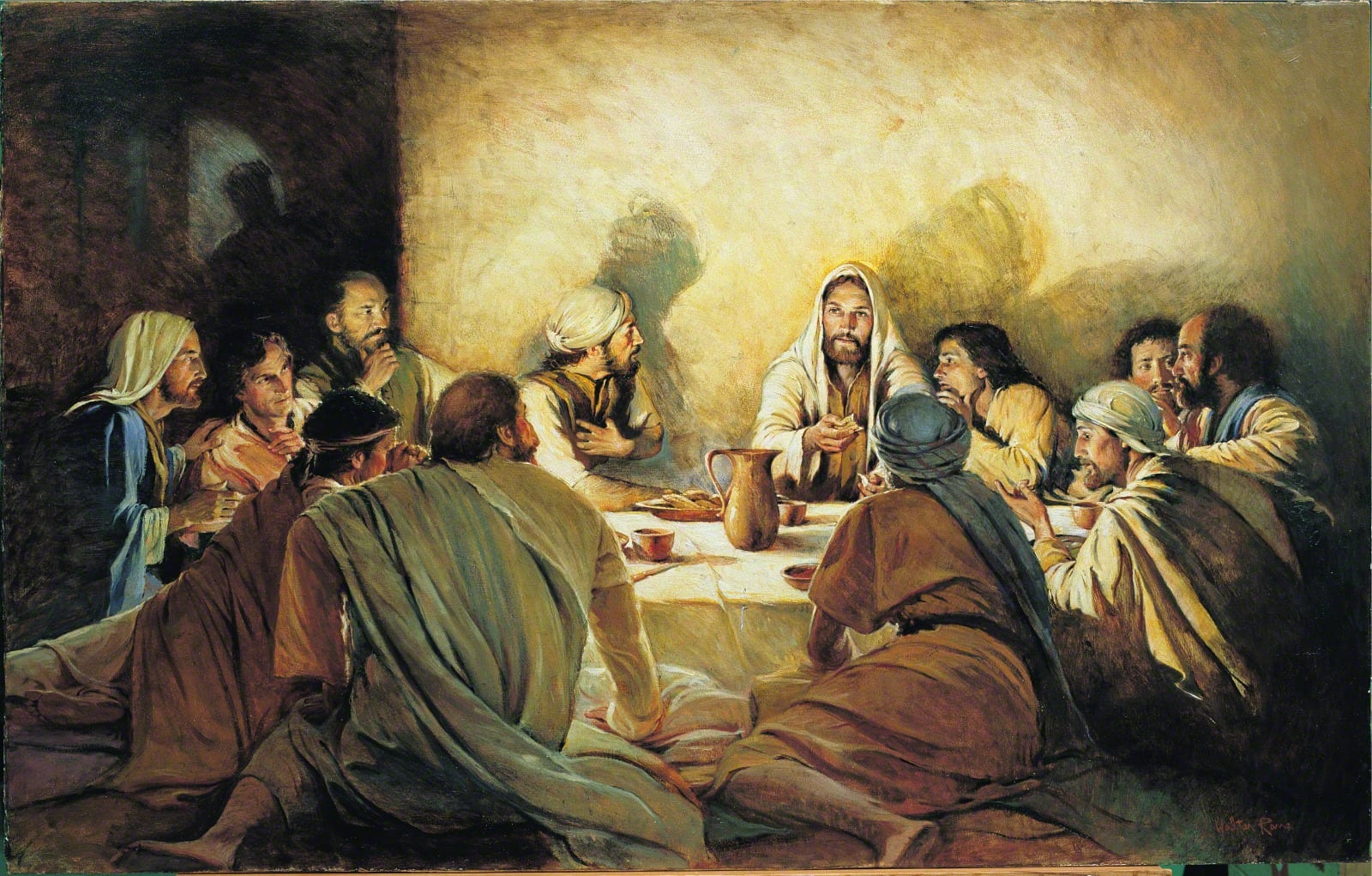
Last_supperSome of the greatest questions that we have in life don’t arise from an unknown piece of information, rather the choices we make in the direction of our lives. There is one choice that is so fundamental that it requires both ernest study, and a lifetime of reappraisal and recommitment to that choice. I speak of the choice of discipleship.

A disciple is a title given to followers of Jesus Christ. President James E. Faust defined discipleship this way in the October 2006 General Conference:

“The word for disciple and the word for discipline both come from the same Latin root—discipulus, which means pupil. It emphasizes practice or exercise. Self-discipline and self-control are consistent and permanent characteristics of the followers of Jesus, as exemplified by Peter, James, and John, who indeed “forsook all, and followed him.” The disciples of Christ receive a call to not only forsake the pursuit of worldly things but to carry the cross daily. To carry the cross means to follow His commandments and to build up His Church on the earth. It also means self-mastery.”

In D&C 41:5 God defines further what He considers to be a disciple, “He that receiveth my law and doeth it, the same is my disciple; and he that saith he receiveth it and doeth it not, the same is not my disciple, and shall be cast out from among you.”

In other scriptures are additional ways to describe the acts and therefore the character of a disciple. Sometimes this is further emphasized by stating behaviors that distinguish an individual as lacking the characteristics of a disciple. D&C 45:32 addresses the disciples choice to be steadfast and to be found doing the right things, in the right place, at the right time, “But my disciples shall stand in holy places, and shall not be moved; but among the wicked, men shall lift up their voices and curse God and die.”

D&C 52:40 addresses the need to love and care for our neighbors, “And remember in all things the poor and the needy, the sick and the afflicted, for he that doeth not these things, the same is not my disciple.”

D&C 103:27-28 speaks to the level of commitment that a disciple must have to the commandments and principles of Jesus Christ and His gospel, “Let no man be afraid to lay down his life for my sake; for whoso layeth down his life for my sake shall find it again. And whoso is not willing to lay down his life for my sake is not my disciple.”

President James E. Faust also taught this the same October 2006 General Conference talk:

What is discipleship? It is primarily obedience to the Savior. Discipleship includes many things. It is chastity. It is tithing. It is family home evening. It is keeping all the commandments. It is forsaking anything that is not good for us. Everything in life has a price. Considering the Savior’s great promise for peace in this life and eternal life in the life to come, discipleship is a price worth paying. It is a price we cannot afford not to pay. By measure, the requirements of discipleship are much, much less than the promised blessings.”

As stated before, the choice of discipleship is a two part choice. First one must study and come to know the life of a disciple. The second is to remain true to that commitment and to that lifestyle unceasingly. The best source for studying the life of a disciple is to study the life of Jesus Christ. He is the example of who a disciple can and should become, and it is in His teachings that we learn how to act as he would act. A disciple must choose to follow the Savior’s example and teachings.

When a person is baptized into the church, this acts as a formal declaration of discipleship. Elder Daniel L. Johnson of the Seventy said this in the October 2012 General Conference:

“Those of us who have entered into the waters of baptism and received the gift of the Holy Ghost have covenanted that we are willing to take upon ourselves the name of Jesus Christ, or in other words, we declare ourselves to be disciples of the Lord. We renew that covenant each week as we partake of the sacrament, and we demonstrate that discipleship by the way that we live.”

Those of who have been baptized have made the choice of discipleship, but we have also promised to always keep true to that commitment. This choice does not come with an exist strategy, vacation days, or an expiration date. President Dieter F. Uchtdorf said this in the April 2014 General Conference, “Being a disciple of Jesus Christ is not an effort of once a week or once a day. It is an effort of once and for all.”

When placed up against physical or spiritual trials, maybe even those where we question our faith, or waver in our commitments due to feeling a sense of being overwhelmed, the choice to continue in discipleship can seem especially difficult.

When a person comes across a troubling piece of history, or social pressures to accept a lifestyle or practice that is contrary to gospel standards, one may begin to question that choice of discipleship. Other times we observe challenges in our life that are more situational, such as a loss of job, the death of a loved one, or pressing issues like experiencing same sex attraction, gender confusion, or mental health issues like depression or anxiety, and wonder if God is real, or even ask “for what evil am I being punished?” Another question that is commonly asked is, “Why should I be so committed to something that is hard to understand, or seems to conflict with what I now know?” I too, have had moments where I questioned my commitments in light of certain trials of faith, or due to the choices others have made that have had an adverse impact on my dedication.

In those times I try to remind myself that I am not alone in these feelings. Even the Savior’s chosen Apostles in the old world, often called disciples in the scriptures, had periods of wavering commitment.

Jeffrey R. Holland gave a powerful lesson in the October 2012 General Conference entitled The First Great Commandment. I encourage a weekly study of that talk as part of our sacrament preparation. In that talk Elder Holland recounts the story of Peter and the other disciples being called, ministering for three years with the Savior, then going back to fishing-back to their previous life. I offer this story because within its text is the key to self-appraising our level of commitment, but also the methods to finding the desire to re-ignite that commitment time and time again.

“There is almost no group in history for whom I have more sympathy than I have for the eleven remaining Apostles immediately following the death of the Savior of the world. I think we sometimes forget just how inexperienced they still were and how totally dependent upon Jesus they had of necessity been. To them He had said, “Have I been so long time with you, and yet hast thou not known me … ?”

But, of course, to them He hadn’t been with them nearly long enough. Three years isn’t long to call an entire Quorum of Twelve Apostles from a handful of new converts, purge from them the error of old ways, teach them the wonders of the gospel of Jesus Christ, and then leave them to carry on the work until they too were killed. Quite a staggering prospect for a group of newly ordained elders.

Especially the part about being left alone. Repeatedly Jesus had tried to tell them He was not going to remain physically present with them, but they either could not or would not comprehend such a wrenching thought. Mark writes:

“He taught his disciples, and said unto them, The Son of man is delivered into the hands of men, and they shall kill him; and after that he is killed, he shall rise the third day. “But they understood not that saying, and were afraid to ask him.”

Then, after such a short time to learn and even less time to prepare, the unthinkable happened, the unbelievable was true. Their Lord and Master, their Counselor and King, was crucified. His mortal ministry was over, and the struggling little Church He had established seemed doomed to scorn and destined for extinction. His Apostles did witness Him in His resurrected state, but that only added to their bewilderment. As they surely must have wondered, “What do we do now?” they turned for an answer to Peter, the senior Apostle.

Here I ask your indulgence as I take some nonscriptural liberty in my portrayal of this exchange. In effect, Peter said to his associates: “Brethren, it has been a glorious three years. None of us could have imagined such a few short months ago the miracles we have seen and the divinity we have enjoyed. We have talked with, prayed with, and labored with the very Son of God Himself. We have walked with Him and wept with Him, and on the night of that horrible ending, no one wept more bitterly than I. But that is over. He has finished His work, and He has risen from the tomb. He has worked out His salvation and ours. So you ask, ‘What do we do now?’ I don’t know more to tell you than to return to your former life, rejoicing. I intend to ‘go a fishing.’” And at least six of the ten other remaining Apostles said in agreement, “We also go with thee.” John, who was one of them, writes, “They went forth, and entered into a ship immediately.”

But, alas, the fishing wasn’t very good. Their first night back on the lake, they caught nothing—not a single fish. With the first rays of dawn, they disappointedly turned toward the shore, where they saw in the distance a figure who called out to them, “Children, have you caught anything?” Glumly these Apostles-turned-again-fishermen gave the answer no fisherman wants to give. “We have caught nothing,” they muttered, and to add insult to injury, they were being called “children.”

“Cast the net on the right side of the ship, and ye shall find,” the stranger calls out—and with those simple words, recognition begins to flood over them. Just three years earlier these very men had been fishing on this very sea. On that occasion too they had “toiled all the night, and [had] taken nothing,” the scripture says. But a fellow Galilean on the shore had called out to them to let down their nets, and they drew “a great multitude of fishes,” enough that their nets broke, the catch filling two boats so heavily they had begun to sink.

Now it was happening again. These “children,” as they were rightly called, eagerly lowered their net, and “they were not able to draw it for the multitude of fishes.” John said the obvious: “It is the Lord.” And over the edge of the boat, the irrepressible Peter leaped.

After a joyful reunion with the resurrected Jesus, Peter had an exchange with the Savior that I consider the crucial turning point of the apostolic ministry generally and certainly for Peter personally, moving this great rock of a man to a majestic life of devoted service and leadership. Looking at their battered little boats, their frayed nets, and a stunning pile of 153 fish, Jesus said to His senior Apostle, “Peter, do you love me more than you love all this?” Peter said, “Yea, Lord; thou knowest that I love thee.”

The Savior responds to that reply but continues to look into the eyes of His disciple and says again, “Peter, do you love me?” Undoubtedly confused a bit by the repetition of the question, the great fisherman answers a second time, “Yea, Lord; thou knowest that I love thee.”

The Savior again gives a brief response, but with relentless scrutiny He asks for the third time, “Peter, do you love me?” By now surely Peter is feeling truly uncomfortable. Perhaps there is in his heart the memory of only a few days earlier when he had been asked another question three times and he had answered equally emphatically—but in the negative. Or perhaps he began to wonder if he misunderstood the Master Teacher’s question. Or perhaps he was searching his heart, seeking honest confirmation of the answer he had given so readily, almost automatically. Whatever his feelings, Peter said for the third time, “Lord, … thou knowest that I love thee.”

To which Jesus responded (and here again I acknowledge my nonscriptural elaboration), perhaps saying something like: “Then Peter, why are you here? Why are we back on this same shore, by these same nets, having this same conversation? Wasn’t it obvious then and isn’t it obvious now that if I want fish, I can get fish? What I need, Peter, are disciples—and I need them forever. I need someone to feed my sheep and save my lambs. I need someone to preach my gospel and defend my faith. I need someone who loves me, truly, truly loves me, and loves what our Father in Heaven has commissioned me to do. Ours is not a feeble message. It is not a fleeting task. It is not hapless; it is not hopeless; it is not to be consigned to the ash heap of history. It is the work of Almighty God, and it is to change the world. So, Peter, for the second and presumably the last time, I am asking you to leave all this and to go teach and testify, labor and serve loyally until the day in which they will do to you exactly what they did to me.”

Then, turning to all the Apostles, He might well have said something like: “Were you as foolhardy as the scribes and Pharisees? As Herod and Pilate? Did you, like they, think that this work could be killed simply by killing me? Did you, like they, think the cross and the nails and the tomb were the end of it all and each could blissfully go back to being whatever you were before? Children, did not my life and my love touch your hearts more deeply than this?”

My beloved brothers and sisters, I am not certain just what our experience will be on Judgment Day, but I will be very surprised if at some point in that conversation, God does not ask us exactly what Christ asked Peter: “Did you love me?” I think He will want to know if in our very mortal, very inadequate, and sometimes childish grasp of things, did we at least understand one commandment, the first and greatest commandment of them all—“Thou shalt love the Lord thy God with all thy heart, and with all thy soul, and with all thy strength, and with all thy mind.” And if at such a moment we can stammer out, “Yea, Lord, thou knowest that I love thee,” then He may remind us that the crowning characteristic of love is always loyalty.

“If ye love me, keep my commandments,” Jesus said. So we have neighbors to bless, children to protect, the poor to lift up, and the truth to defend. We have wrongs to make right, truths to share, and good to do. In short, we have a life of devoted discipleship to give in demonstrating our love of the Lord. We can’t quit and we can’t go back.”

If you want answers to questions about historical events, if you want answers on who to marry, if you want answers on wether or not to go or even stay on a mission, remembering and recommitting to your choice of discipleship will put you back in a mindset to feel and recognize the spirit. It is that spirit that will guide you into truth and will guide you to an exalted life. If we can answer that now famous question, “Do you love me?” with a “yes, I do love thee Lord,” we can feel of His love, we can be open to the promptings of the spirit, and we can find answers to difficult questions we may face. In essence we can feel peace. I have felt that peace in my own life and I can testify that this is true. I do love the Lord, and that choice to love the Lord is the choice of discipleship.

FairMormon-Rise-Up-iTunes-logo

Filed Under: Conversion, Faith Crisis, General, Hosts, Nick Galieti, Podcast, Power of Testimony, RiseUp, Youth Tagged With: commitment, discipleship

RiseUp Podcast – Spiritual Calculators

July 24, 2015 by NickGalieti

https://media.blubrry.com/mormonfaircast/www.fairlatterdaysaints.org/wp-content/uploads/2015/07/RiseUp-SpiritualCalculator.mp3

Podcast: Download (15.0MB)

Subscribe: RSS

chMP900314189[1]This podcast is all about helping people find answers to spiritual and doctrinal questions. And I asked myself, how do I go about getting the right answer, as opposed to just SOME answer. If life were a math problem is there a calculator?

When a child is first introduced to basic mathematics, such 1+1=2, that individual is being taught the power of reason to come up with answers. For years many have assumed that this basic equation is correct, and in basic mathematical terms, it is and always will be correct. But in reality, even this simple equation can be questioned to the point that the answer may cause someone to even doubt their assumption that 1+1 may equals 2.

For example, one apple, plus one orange, does not equal two apples, or two oranges. That simple redefinition of what is being added may cause someone to think that even the simplest of equations don’t make sense anymore. What a shocking realization! Oh no, now what? Is the rest of math wrong? If 1+1 doesn’t always equal 2, I guess the universe is a random and chaotic existence that has no order, and no meaning. Call it a math crisis, right?

Some have called mathematics, the absolute truth. That is because 1 + 1 should always equal 2. However, as was just demonstrated, depending on how you view the equation, you can come up with a very different answer. One might even ask, “Is there an absolute truth after all?” It seems that even math has nuances to it making even something as simple as 1+1 may not always appear as equaling 2.

However, when this equation is stripped of it’s redefinition of being one apple and one orange, the equation becomes true again. 1+1=2 is true when we are dealing with simple numbers. When the numbers are what they are supposed to be, a numerical value, the math works.

In the Church of Jesus Christ of Latter-day Saints, members, and even church leaders, will speak of the doctrines and teaching of the Church as being the fullness of the gospel, the gospel is TRUE! There are those that view the gospel, or the Church and its doctrines, as simple 1+1=2 kind of thinking, and there are those who see it in grand complexity, but still know that even complex equations have a true answer. Then there are those who question that simplicity, they look for ways for that approach to appear flawed, incomplete, or incorrect. In an effort to do this, certain redefinitions take place, certain inferences or qualifiers can be attached to those things which are simple, in an effort to disprove even the simplest or fundamental of assumptions.

What then is the source of truth, how can we “prove” truth?

Calculators are an interesting device. Calculators are used in various forms as a way to assist the mind in coming to a mathematical answer. They are not swayed by hypotheticals, they are not influenced by false assumptions. Inside a calculator are the answers to a near infinite possibility of equations.

In High School, as students begin to venture in to more complex equations, the students may use scientific calculators. When entering this world of more complex mathematical equations many of the buttons on a scientific calculator have little to no meaning. As one learns the functions behind the various buttons, (cos, tan, x2, etc.) you also need to learn the order in which those buttons can be employed in order for the equation to come to the right answer. One must also learn things like the “order of operations” or the order in which the various equations need to be approached in order for the correct answer to come out. Trying to find the answer without using the order of operations will likely give you a vastly different answer than just going through an equation from left to right.

When I first learned about these things I thought, “How dumb! Why does math have to be so complicated, why do we have to remember all these rules and orders…” Then I asked the same question that so many seem to ask, “When am I ever going to use this in my real life?”

Well, here goes one application with math to be used in real life, and it has very little to do with math, directly. Think of this as a metaphor. Call it the “Parable of the Solar Powered Scientific Calculator” if you will. I won’t take the time to apply the metaphor, that’s up to you and hopefully the spirit. But listen with your spiritual ears.

Math is about finding answers. For many, the quest for discipleship, or even a higher spirituality is also about finding answers. Just like in math there is a source for all spiritual truth, a source that, when employed correctly, can help us find answers to the questions for which we seek an answer. But just like a math problem, we need to understand some basic principles of operation before we can get the correct answer. We need to ask the calculator the right equation. And just because we think we are using all the tools we have, doesn’t mean that the answer that we read on the little screen is the correct answer.

It is not uncommon to push the wrong button, or skip a step, or do something out of the order of operations. When this happens it is not the calculators fault for getting the wrong answer, it is user error that is likely to blame. That doesn’t mean a person is stupid, it just means give it another go and try something else. For me I have to write down every step of the equation as I go through it, even when using a calculator. Because the in between calculations that some algebraic equations would present, open up an exponential set of opportunities to miscalculate. Also I typically need to go back and check (and sometimes re-check) the answer that I ended up with just to make sure. I rarely take the first answer as the final answer. I would go back through each step after I came to an answer to make extra sure that I did each step in order and that I did each step correctly. If even one part of the equation was off, it would likely throw off the entire process and I would come to a vastly different answer than the right one.

That is the also the hard thing about math. You often come to an answer, but that doesn’t mean it is the right answer. Rarely do you get the dreaded “Big E” that comes up on the calculator where you know you have made a serious error. Most of the time, you do get a numerical value, but just because it is a number doesn’t mean it is the right number. Double check each step of the equation and make sure that step was completed correctly, write it down, and proceed through each step, in order.

I also have to tell myself that than no matter how many times I come to the wrong answer, it doesn’t automatically become the right answer. I have to remind myself, I am not inventing math, I am not creating new logic, I am learning the principles of math that are unchanging and applying them to the equation to get the right answer. With math we are not afforded the flexibility of going with the number we feel is right.

If you were anything like me in high school, the math book could have words explaining how an equation was done, but that didn’t mean I understood how to do the math. A teacher was often far more effective in explaining what each step meant, why each step was important, and so on. Good teachers helped math books make sense. Over time I could see the value in learning statistics, geometry, and yes, even in algebra.

In time, and with some help from others who know math far better than myself, I learned how to answer mathematical questions. I had great teachers, I had a scientific calculator, but I needed one more thing. I needed light to give power to my calculator. Every now and then, my solar powered calculator would need to be in the presence of light in order to charge it’s battery. Without that light, it didn’t matter how much I pushed those buttons I would not get an answer.

Ultimately, I learned to trust my teachers, I learned that a calculator was a powerful tool, but a tool that needed to be used and understood in the way it was intended. Eventually I would learn the right answer.

FairMormon-Rise-Up-iTunes-logo

Filed Under: Nick Galieti, Podcast, RiseUp Tagged With: finding answers

Articles of Faith – Sustaining the Brethren – Interview with Duane Boyce

July 14, 2015 by NickGalieti

https://media.blubrry.com/mormonfaircast/www.fairlatterdaysaints.org/wp-content/uploads/2015/07/AOF-DuaneBoyce-SustainingTheBrethren.mp3

Podcast: Download (48.5MB)

Subscribe: RSS

duane-boyceDuane Boyce received his academic training in psychology, philosophy, and the clinical treatment of families. He received a PhD from Brigham Young University and conducted his postdoctoral study in developmental psychology at Harvard University. He was a member of the Moral Studies Group at Brigham Young University (BYU) and served on the faculty there before becoming vice president of a steel company headquartered in St. Louis, Missouri. He is a founding partner of the Arbinger Institute, a worldwide management consulting and educational firm, and is the coauthor of four books. He has published academic essays on scriptural topics in BYU Studies, The FARMS Review, Religious Educator, and the Journal of the Book of Mormon and Other Restoration Scripture. He is also the author of the book, Even Unto Bloodshed: A Latter-day Saint Perspective on War (Kofford, 2015). Among other callings, he has served as a bishop and a stake president. He is the author of an article in The Interpreter entitled, “Sustaining the Brethren.”

Questions addressed in this interview:

In your article you call sustaining the brethren a “vital topic.” What about sustaining the brethren is vital?

This is a part of the making and keeping of sacred covenants within the church. Is there a distinction between sustaining the brethren, and sustaining our local leaders as it relates to these covenants?

When we raise our right arm to the square, is that a sort of covenant renewal? Almost sacramental in that regard?

Your article sets up an interesting paradigm where you discuss the differences between God’s character and humankind’s character and the vast differences that currently rest in chasm between the two. Could you please lay out that foundation for the rest of our discussion on sustaining the brethren?

For some this may sound a little like a forwarding of the “sheep” mentality, we should just do what they leaders tell us because God is telling them, and God is smarter, therefore let’s just be sheep to what they say. I don’t think that is what you are saying, but I can see how that position would be the conclusion some could come to with this paradigm. How would you respond to that position?

When it comes to sustaining the brethren, what is the difference (as you see it) between following the words of the combined Quorum of the Twelve and the First Presidency, as opposed to statements made by individuals within those council’s?

I want to now address some common criticisms that come up with respect to sustaining the brethren, and have you offer a few approaches to these criticisms:

There are waves of discord, disagreement, or discontent that seem to crash against the Church at different times and in slightly different ways. One that I have observed over the past five to seven years or so, is the idea that is clothed in the notion that the general church membership has a role or a place to be an advocate of systemic change to doctrines or practices in the church—and that this perspective allows a person to remain in a faithful position. How does that reconcile with the concepts that you present in your article on sustaining the brethren? Can one be an advocate for systemic change, and sustain the brethren at the same time?

There is a quote that you give from Elder Dallin H. Oaks that I love. It is an interesting perspective because critics of this idea of sustaining brethren at all, or even those who find it difficult to place their faith in the hands of leaders, forget that we are all operating in mortal capacities. The quote reads: “Revelations from God … are not constant. We believe in continuing revelation, not continuous revelation. We are often left to work out problems without the dictation or specific direction of the Spirit. That is part of the experience we must have in mortality. Fortunately, we are never out of our Savior’s sight, and if our judgment leads us into actions beyond the limits of what is permissible and if we are listening … the Lord will restrain us by the promptings of His Spirit.” How does this quote lay a solid foundation for sustaining the brethren while also giving room for their mortal fallibility?

Sustaining the brethren seems to be a great deal about the issue of trust. We are placing our trust in individuals who are hopefully placing their trust in God. Because we are dealing with eternal salvation, this trust is not an issue that should be taken lightly. So, how then do you, in your article make recommendations on how to navigate this issue moving forward?

Duane Boyce is the author of an article in The Interpreter entitled, “Sustaining the Brethren” as well as the book, Even Unto Bloodshed: A Latter-day Saint Perspective on War (Kofford, 2015).

Filed Under: Articles of Faith, Hosts, Nick Galieti, Podcast, Prophets Tagged With: Apostles, covenants, Prophets, Sustaining

RiseUp Podcast: Acquainted with Grief – Interview with Misty Nielson

June 25, 2015 by NickGalieti

https://media.blubrry.com/mormonfaircast/www.fairlatterdaysaints.org/wp-content/uploads/2015/06/RiseUp-MistyNielson.mp3

Podcast: Download (79.8MB)

Subscribe: RSS

Every now and then you hear the story of an individual that is able to demonstrate incredible faith, and endurance, that is as uncommon as is their life experience. That is the case with Misty Nielson. Her story shows the importance of family, just perhaps not in the way you may think.
3
Misty Nielson is 34 years old and a Mother to 5. Married for 16 years, she is a convert to the church, and the only member in her family.
She grew up in an abusive home, and was abandoned by both biological parents, only to be adopted into a home that was also abusive. She moved out when I was 16, was legally emancipated and joined the church when she was 17. Following her baptism she used the last of her money to move out west to Utah.
After married her husband Andrew, they have since had 5 children -One of which died shortly after childbirth.
After the death of that child, Misty did not attend church for a period of time. During her absence from church, I was prompted to start a business, called Baby Boards – where she creates memorial pieces for other women who have lost children.
After years of not attending she decided to come back to full activity At the beginning of 2013, and received a temple recommend after being without one for 10 years.
Her husband now has schizophrenia and is unable to participate in church because church is a trigger for him. Misty considers Andrew’s continued support, in spite of this condition, to be a huge blessing – – he wants to be with them, but cannot.
If that were not enough struggle in her life, one of their children also has mental illness – an anxiety disorder and OCD. In all this, Misty and her family have drawn closer to the Lord with a greater appreciation of what it means to have a Christ centered family. Misty also is well acquainted with the challenges that face individuals who do not attend church for one reason or another as they seek to return back to activity in the Church of Jesus Christ of Latter-day Saints.
FairMormon-Rise-Up-iTunes-logo

Filed Under: Faith Crisis, Hosts, Nick Galieti, Podcast, Power of Testimony, RiseUp, Women Tagged With: child abuse, loosing children, miscarriage

RiseUp Podcast – Doubt Your Doubts – Interview with Chad Conrad

June 17, 2015 by NickGalieti

https://media.blubrry.com/mormonfaircast/www.fairlatterdaysaints.org/wp-content/uploads/2015/06/RiseUp-ChadConrad-DoubtYourDoubts.mp3

Podcast: Download (32.8MB)

Subscribe: RSS

1668-2007-thickbox“Doubt Your Doubts” by Chad Conrad is an eye-opening read that will help readers strengthen their faith, confront controversial topics and find relevant answers to everyday life. The book addresses hot-button questions, such as “Why don’t women hold the priesthood?” and “How should we deal with homosexuality?” Readers’ toughest gospel questions can become testimony-builders with this timely and informative book.

To purchase a copy of Doubt Your Doubts, buy it at a discount through the FairMormon Bookstore.
FairMormon-Rise-Up-iTunes-logo

Filed Under: Apologetics, Hosts, Nick Galieti, Podcast, RiseUp Tagged With: critical questions, difficult questions, youth

Articles of Faith: Inside the Mind of an Inactive Member

June 15, 2015 by NickGalieti

https://media.blubrry.com/mormonfaircast/www.fairlatterdaysaints.org/wp-content/uploads/2015/06/AOF-LaurieWhite-InsidetheMindofanInActiveMember.mp3

Podcast: Download (42.9MB)

Subscribe: RSS

Profile_Facebook_2-25-12Laurie White is a mother of four and grandmother of ten in Sacramento, California.She often writes as Tudie Rose. She writes a weekly column for LDS Blogs at http://ldsblogs.com/.

She blogs as Laurie White about spiritual things (Thoroughly Mormon) at http://thoroughlymormon.wordpress.com/ She has written articles for Meridian Magazine and Familius. She comes on today to talk about an article she wrote for the Mormon Women Stand blog entitled, “Inside the Mind of An Inactive Member.”

Filed Under: Articles of Faith, Hosts, LDS Culture, Nick Galieti, Podcast Tagged With: home teaching, inactive, less active, minister, visiting teaching

Front Page News Review Podcast #9 – Week of May 24th, 2015

May 28, 2015 by NickGalieti

https://media.blubrry.com/mormonfaircast/www.fairlatterdaysaints.org/wp-content/uploads/2015/05/FrontPage9.mp3

Podcast: Download (34.6MB)

Subscribe: RSS

FairMormon’s Front Page News Review is a podcast where we provide context and analysis of the past week’s media coverage of Mormons and the LDS church. Hosted by Nick Galieti and manager of the FairMormon Front Page news service, Cassandra Hedelius.

What we present is not to be understood as being the official position of FairMormon or The Church of Jesus Christ of Latter-day Saints. We speak for ourselves, and sometimes not even then.

This week’s news stories:

http://www.laobserved.com/archive/2015/05/mormon_temple_finally_emb.php

http://www.sltrib.com/news/2538827-155/boy-scouts-leader-says-ban-on

http://www.pewresearch.org/fact-tank/2015/05/22/mormons-more-likely-to-marry-have-more-children-than-other-u-s-religious-groups/

DON’T FORGET! Get your Early-Bird FairMormon Conference Tickets now!

On August 6 & 7 we will be having our FairMormon conference at the Utah Valley Convention center.

To register click here http://www.fairmormon.org/perspectives/fair-conferences/conf15a and scroll down the the conference registration.

Speakers this year include Margaret Barker, Ed Pinegar, Stephen Webb , Brant Gardner, Ron Dennis, Brittany Chapman, David Larsen, Jim Gordon, Laura Hales, Cassandra Hedelius, Paul Reeve, and, Dan Peterson.

Topics include:

History and Historicity in the Book of Mormon

Faith and Scholarship

How to help young Latter-day Saints

Why Mormon materialism matters

Joseph Smith Polygamy

Challenges to church legitimacy

And more.

We have both Mormon and non-Mormon scholars this year speaking about Mormon topics, so this conference is one that you don’t want to miss.

Sign up at this link: http://www.fairmormon.org/perspectives/fair-conferences/conf15a

Facebook page hit 3,300 likes.

Plug FairMormon Front Page, signup at fairmormon.orgFairMormon-FrontPageNewsReview-Logo

Filed Under: FAIR Conference, Fair Mormon Front Page News Review, Homosexuality, Hosts, Marriage, News stories, Nick Galieti, Podcast Tagged With: Boy Scouts, LA Temple

  • « Go to Previous Page
  • Go to page 1
  • Go to page 2
  • Go to page 3
  • Go to page 4
  • Interim pages omitted …
  • Go to page 7
  • Go to Next Page »

Primary Sidebar

Faithful Study Resources for Come, Follow Me

Subscribe to Blog

Enter your email address:

Subscribe to Podcast

Podcast icon
Subscribe to podcast in iTunes
Subscribe to podcast elsewhere
Listen with FAIR app
Android app on Google Play Download on the App Store

Pages

  • Blog Guidelines

FAIR Latest

  • Come, Follow Me with FAIR – Doctrine and Covenants 137–138 – Part 2 – Autumn Dickson
  • Come, Follow Me with FAIR – Doctrine and Covenants 137–138 – Mike Parker
  • FAIR December Newsletter
  • Come, Follow Me with FAIR – Doctrine and Covenants 137–138 – Part 1 – Autumn Dickson
  • Prophets of God 

Blog Categories

Recent Comments

  • LHL on Come, Follow Me with FAIR – Doctrine and Covenants 132 – Mike Parker
  • Stephen Johnsen on Come, Follow Me with FAIR – Doctrine and Covenants 132 – Mike Parker
  • Bruce B Hill on Come, Follow Me with FAIR – Doctrine and Covenants 124 – Part 1 – Autumn Dickson
  • Gabriel Hess on Join us Oct 9–11 for our FREE virtual conference on the Old Testament
  • JC on When the Gospel “Doesn’t Work”

Archives

Follow Us

  • Facebook
  • Twitter
  • iTunes
  • YouTube
Android app on Google Play Download on the App Store

Footer

FairMormon Logo

FAIR is a non-profit organization dedicated to providing well-documented answers to criticisms of the doctrine, practice, and history of The Church of Jesus Christ of Latter-day Saints.

Donate to FAIR

We are a volunteer organization. We invite you to give back.

Donate Now

Site Footer