• Skip to primary navigation
  • Skip to main content
  • Skip to primary sidebar
  • Skip to footer

FAIR

  • Find Answers
  • Blog
  • Media & Apps
  • Conference
  • Bookstore
  • Archive
  • About
  • Get Involved
  • Search

Polygamy

Mormon FAIR-Cast 90: Mormons on the BBC

May 30, 2012 by SteveDensleyJr

https://media.blubrry.com/mormonfaircast/www.fairlatterdaysaints.org/wp-content/uploads/2012/05/World-Have-Your-Say.mp3

Podcast: Download (17.2MB)

Subscribe: RSS

This episode of the BBC World Service program, World Have Your Say, features members of the Church of Jesus Christ of Latter-day Saints.

The five-member panel answers questions from listeners from all over the world, including: Whether Mormons want to be recognized as a mainstream religion? What part of the Mormon faith is influenced by the Bible, and what part is influenced by the culture of its founders? Why is polygamy stereotypically linked to Mormonism? Would Mitt Romney be expected to spread the Mormon faith as a president? Why are Mormons secretive? Why are they not as open as other churches? What effect will the past ban on ordaining African Americans to the priesthood have on Mitt Romney’s ability to win over minority voters? What is the purpose of temples? What has generated the rapid spread of Mormonism? What would Christ think of a religion that teaches that it is the only true church? What is the Mormon view on the separation of church and state? What is it like to be a female member of the Church and a member of the Relief Society, the largest women’s organization in the world?

This program is posted here by permission of the BBC. The opinions expressed in this podcast do not necessarily represent the opinions of FAIR or of The Church of Jesus Christ of Latter-day Saint.

Filed Under: Podcast, Politics, Polygamy, Racial Issues, Temples, Women

Review: No Weapon Shall Prosper: New Light on Sensitive Issues

May 29, 2012 by Trevor Holyoak

Review of No Weapon Shall Prosper: New Light on Sensitive Issues
Edited by Robert L. Millett
Published by BYU Religious Studies Center and Deseret Book, 2011

Rather than focusing primarily on the methods commonly used by critics as other recent books of this genre do (such as Michael Ash’s Shaken Faith Syndrome, which I also highly recommend), this book contains essays that address some of the most common issues that are used to attack the faith of members of The Church of Jesus Christ of Latter-day Saints. It is intended to help the reader gain a better understanding of these topics in a faith-promoting, but scholarly and honest environment, against the flood of misinformation available online today. Indeed, the editor notes that “The Internet is filled with thousands of pages of anti-Mormon polemic, and it is extremely difficult for people to receive an honest and fair appraisal of Mormonism without significant effort on their part” (page viii).

Besides those by the editor, Robert L. Millett, the book contains contributions by Daniel L. Belnap, J. Spencer Fluhman, Steven C. Harper, Brian M. Hauglid, Daniel K. Judd, Kerry Muhlestein, Ugo A. Perego, Brent L. Top, and John W. Welch. They are split into four categories: Restored Christianity, Latter-day Saint Church History, Scriptural Perspectives, and Doctrinal Teachings. The topics include what it means to be a Christian, the various accounts of the First Vision, the Smiths’ involvement in money-digging and the supernatural, the Kinderhook plates, Joseph Smith’s youngest plural wife, DNA and the Book of Mormon, the Book of Abraham, and Jesus Christ and salvation, among many others. Many of the topics are written by experts in the area – for example, a population geneticist discusses DNA and the Book of Mormon, two Egyptologists discuss the Book of Abraham, and an editor of the Joseph Smith Papers tackles the subject of multiple versions of the First Vision. I would like to concentrate on a few topics of particular interest to me in order to give an idea of the overall book.

Kent P. Jackson’s cleverly titled “Are Christians Christians?” discusses what it means to be a Christian from the point of view of mainstream Christianity and where it came from. He examines statements from the Presbyterian and Methodist churches that declare us to be unchristian. He explains why their definition is unbiblical, and happily admits that we should not be included in it. “We, of all people, should not be offended that other churches consider our baptisms invalid and do not recognize the authority of our priesthood holders to officiate in their ordinances. Since the first days of our church’s history, we have denied the validity of the authority and ordinances of all other churches (see D&C 22). We concede that we are not members of the historic Christian church that includes our Catholic, Orthodox, and Protestant brothers and sisters. But to consider us not Christians on issues of belief is another matter” (page 55). He then goes on to explain that our definition of the word Christian is scriptural (although we have no official statement of such), and that by that definition we would also include those of other faiths previously mentioned.

Steven C. Harper, an editor of the Joseph Smith Papers, wrote about the accounts of Joseph Smith’s First Vision, saying it “may be the best documented theophany (vision of God) in history.” He finds the five different known accounts in eight statements (plus contemporary hearsay) to be “rich documentation” and “a good reason to believe him” rather than being evidence of an inconsistent and evolving story as others contend. (Page 63.) He describes how Fawn Brodie and Wesley Walters shaped the criticisms that are popular today, and did not reconsider their interpretations even when new evidence against them came to light. He points out that “those who share the skeptics’ assumptions will likely arrive at the same conclusions as the skeptics. But those who are open to the possibility that Joseph told the truth can discover other meanings from the same facts” (page 71).

Ugo A. Perego, who holds a PhD in genetics and biomolecular sciences, handles the question of whether DNA proves or disproves the Book of Mormon. He goes into great detail explaining how DNA is used in research, the current theories about migrations into the Americas, and describes the various theories for and against the Book of Mormon based on available DNA evidence. He points out the problems with each of these theories (such as evidence showing up in the wrong time period, wrong assumptions being used, and misunderstandings of the limitations of DNA research) and arrives at the conclusion that DNA evidence can neither be used to prove nor disprove that the people in the Book of Mormon actually existed. (In fact, he points out that it can’t even be used to prove that Jesus existed.) He says that “I find no difficulties in reconciling my scientific passion about Native American history with my religious beliefs. I am not looking for a personal testimony of the Book of Mormon in the double helix. …Anyone using DNA to ascertain the accuracy of historical events of a religious nature – which require instead a component of faith – will be sorely disappointed” (page 208).

One of the essays on the Book of Abraham is by Kerry Muhlestein, who has a PhD in Egyptology from UCLA. He begins by explaining how he got interested in the Book of Abraham, and why Egyptologists outside the church dismiss it. He also found that many members of the church who struggle with the issues involved with the Book of Abraham aren’t looking for an excuse to leave the church, but have “encountered well-written (though not necessarily well-documented or researched) arguments…and did not know how to answer the questions posed by these arguments.” He found that those publishing critical information are generally unaware that it is “based on incorrect information and bad assumptions. They are misled by the mistakes, lies, and trash put out by a few, and they unwittingly pass the information along without really looking into their sources” (page 219).

He then goes on to debunk some of the misinformation, such as the idea that there was no human sacrifice in ancient Egypt. He also found that one of the words supposedly made up by Joseph Smith (Olishem) has been discovered in two ancient texts. He discovered that Egyptians had access to biblical stories by 200 BC (which was the right time period for the papyri), and were particularly interested in Abraham. He presented this information to a conference put on by the Russian Academy of Science and received positive reviews. He talks about evidence that what we actually have possession of today was a very small part of what Joseph had, and gives reasons why it likely was not the source of the Book of Abraham, other than Facsimile 1. He also briefly discusses the mystery of the Kirtland Egyptian Papers, which were not likely to have been used in the translation process, as some critics have claimed. Another important point he makes is that “written by his own hand, upon papyrus” does not mean that the actual papyrus we have was written by the hand of Abraham, but that it is a copy of the original that Abraham would have written on much earlier. He also devotes several pages to Facsimile 1, pointing out many evidences (and some possible theories) for the authenticity of the interpretations provided by Joseph Smith.

Overall, I thought the book was quite good, although some essays were better than others. Some of the more doctrinal ones, in particular, presented a few points as given that not all members would agree on. But such is the nature of Mormonism. The book could be used to answer questions for oneself, to help a member friend or an investigator, or for inoculation against misinformation and half-truths encountered in a hostile environment. It would be useful reading for those preparing to serve a mission, for families, and for any individual interested in learning more about these issues or defending the church.

This book is available at the FAIR bookstore here.

Filed Under: Apologetics, Book of Mormon, Book reviews, Doctrine, Early Christianity, Joseph Smith, LDS History, Polygamy, Science

Mormon FAIR-Cast 85: Foundations of fundamentalist polygamy

April 26, 2012 by SteveDensleyJr

https://media.blubrry.com/mormonfaircast/www.fairlatterdaysaints.org/wp-content/uploads/2012/03/Religion-Today-for-Sunday-February.mp3

Podcast: Download (9.2MB)

Subscribe: RSS

What is the connection between some of the modern polygamist groups and the Church of Jesus Christ of Latter-day Saints? In this episode of Religion Today that originally aired on February 26, 2012, Martin Tanner discusses the arguments used by some fundamentalist groups to justify their practice of polygamy, and why these arguments are inconsistent with the modern doctrine of the Church of Jesus Christ of Latter-day Saints.

This recording was used by permission of KSL Radio and does not necessarily represent the views of The Church of Jesus Christ of Latter-day Saints or of FAIR.

Filed Under: Podcast, Polygamy

FAIR Examination 9: Polygamy as an Abrahamic Sacrifice–Dr. Valerie Hudson

February 15, 2012 by SteveDensleyJr

https://media.blubrry.com/mormonfaircast/www.fairlatterdaysaints.org/wp-content/uploads/2012/02/Valerie-Hudson-final.mp3

Podcast: Download (27.6MB)

Subscribe: RSS

The Book of Mormon condemns polygamy, and calls it abominable. Modern leaders of the Church have condemned the practice. In light of this, what are we to make of the ancient practice of polygamy and of the practice of polygamy by early Mormons? Does the Book of Mormon contradict the Doctrine & Covenants? What of polygamy in the next life? Is polygamy necessary to exaltation? If polygamy is legalized in the United States, will the Church reinstitute polygamy? In this episode of FAIR Examination, Dr. Valerie M. Hudson shares her thoughts on these and other questions.

While Dr. Hudson was a professor of political science at Brigham Young University, she was listed as one of the “100 Top Global Thinkers of 2009” by Foreign Policy Magazine. In January 2012, she became a Professor and George H.W. Bush Chair in the Bush School of Government and Public Service at Texas A&M University, teaching in the masters of international affairs program. More of her views on polygamy, women and the priesthood, and other women’s issues are discussed in the book Women in Eternity, Women in Zion that she co-authored with Alma Don Sorenson.

For further information on polygamy, see the FAIR Wiki article posted here.

The opinions expressed in this podcast do not necessarily represent the opinions of the Church of Jesus Christ of Latter-day Saints, or of FAIR.

Filed Under: Podcast, Polygamy

Best of FAIR 12: Everything You Always Wanted to Know About Plural Marriage* (*but were afraid to ask)

October 19, 2011 by Gregory Smith

https://media.blubrry.com/mormonfaircast/www.fairlatterdaysaints.org/wp-content/uploads/2011/09/Everything-you-always-wanted-to-know-about-plural-marriage.mp3

Podcast: Download (28.7MB)

Subscribe: RSS


Greg Smith examines the anti-Mormon charge raised against Joseph Smith that he was lecherous from an early age and that this is somehow the psychological or psychiatric or pathological background to plural marriage.

The text of Dr. Smith’s address can be found at Fairlds.org. The listener should be aware that there are helpful notes in the written version that help provide clarifications and corrections to some comments that appear in the oral presentation. For example, a question from the audience stated that Richard Bushman believes polygamy was a faulty revelation. However, FAIR contacted Dr. Bushman and he clarified that, while he believes that section 132 is complex and difficult to interpret in our time, he has never said that it was a faulty revelation. Similarly, Todd Compton denied that he would have used the word “mistake” to describe the practice of polygamy.

Greg Smith studied physiology and English at the University of Alberta, but escaped into medical school before earning his degree. He then did his medical residency in Montréal, Québec, learning all the medical vocabulary and all the French Canadian slang that he didn’t learn during his LDS mission to Paris, France. He is now an old-style country doctor in rural Alberta with interests in internal medicine and psychiatry. A clinical preceptor for residents and medical students, he has been repeatedly honored for excellence in clinical teaching.

A member of FAIR since 2005, Greg helps manage the FAIR wiki. Due to his research interest in plural marriage, he has spoken to the Miller-Eccles study group and been published in the FARMS Review on this and other topics. With twelve years of classical piano training, he is a life-long audiophile and owns far too many MP3 files. He lives happily with his one indulgent wife, three children, and four cats.

Filed Under: Podcast, Polygamy

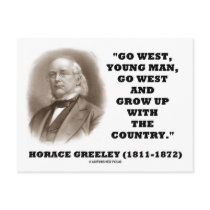
“Go west young man” and sex ratios

October 12, 2010 by Keller


An enduring folk apologetic for 19th century plural marriage has been to assert that it was justified because a shortage of men. Looking at raw Census data, John Widtsoe [1] debunked that notion, but did not end its popular appeal. Widtsoe’s conclusions have been embraced by critics [2] who wish to create cognitive dissonance for members who may have put too much weight on that folk rationale for plural marriage. On the other end of the spectrum, Brian C. Hales [3], a speaker at this year’s FAIR conference, also dismissed the folk apologetic and concentrated on rebutting critics’ plural marriage rationale (primarily as lust fulfillment) and supporting theological rationales (primarily as part of the restoration and preparation for conditions in the next life).

[Read more…] about “Go west young man” and sex ratios

Filed Under: FAIR Conference, LDS History, Polygamy, Women

2010 FAIR Conference Review

August 10, 2010 by Trevor Holyoak


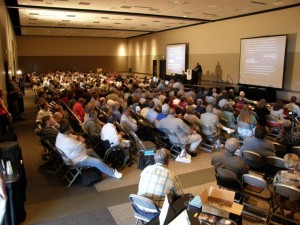
We had another great conference this year, with 350 people attending in person, and about 50 listening online. We were treated to 15 presentations and also had the opportunity to socialize, browse the bookstore, and bid in a silent auction. Tanya Spackman received the John Taylor Defender of the Faith award for her work on Mormon Scholars Testify. You can view photos of the conference at the FAIR Facebook page.

William Schryver’s presentation on the Kirtland Egyptian Papers received some press before the conference, and did not disappoint. You can view it here. (A browser plug-in may be required.)

There have been articles about many of the presentations published in Mormon Times, Deseret News, and LDS Church News:

  • FAIR conference: Same-sex marriage and the role of religion
  • FAIR conference: Secret Mormon codes and Egyptian papers
  • FAIR conference: LDS doctrine clear on divinity of one God
  • FAIR conference: ‘Gender equality is the brick of Zion,’ speaker says
  • FAIR conference: What if the U.S. president were a Mormon?
  • FAIR conference: Joseph Smith’s discovery of ancient patterns
  • FAIR Conference: Roper’s take on Book of Mormon geography
  • Mormons need to work to increase favor
  • FAIR conference: Defend the Book of Mormon by studying names, origins
  • Nibley editor says scholar was bolstered by research
  • ‘Be Ready’ to Defend Faith

Transcripts will be posted at http://www.fairlds.org when they are ready. MP3s and DVDs will be made available for purchase at the FAIR bookstore.

Filed Under: Book of Mormon, Doctrine, FAIR Conference, LDS History, LDS Scriptures, News stories, Politics, Polygamy, Women

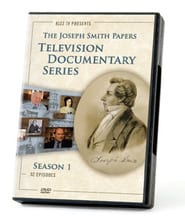
Review: The Joseph Smith Papers Television Documentary Series, Season 1 (DVD Set)

June 22, 2010 by Trevor Holyoak

Those of us in Utah were treated, beginning near the end of 2007, to a TV series created by and aired on Larry H. Miller-owned KJZZ TV about the Joseph Smith Papers Project. It began with a pilot episode (“A Television Forward”), followed by a regular weekly schedule that started in early 2008, showing a new episode each Sunday night followed by a repeat of the previous week’s episode.

People outside of Utah, upon hearing about it, immediately began wondering when (or even if) they would have a chance to see the series. It was quickly ascertained that KJZZ would not be providing it for viewing on their web site as some hoped, but eventually BYUTV picked it up. Today, season 1 can be watched on BYUTV and Utah viewers can see season 2 (now in reruns) on KJZZ. And now (as of 2009), season 1 is available on a 7 disc DVD set from Deseret Book.

The set contains 52 episodes, numbered from 0 to 51, which are about one half hour each, except for number 0 which was the longer pilot that was aired ahead of time. A booklet is included that gives a brief summary of each episode and lists the contributing scholars, along with an index. Unfortunately, it does not state which DVDs contain which episodes, so I ended up noting that myself in my copy. Each DVD contains a message at the beginning apologizing that the sound and video quality are not always perfect, but the one big drawback of this set is a total lack of closed captions. Anyone that can’t hear will not be able to watch it, and even for those of us who are able to hear, it would have been nice to be able to read what is being said at times, particularly when trying to take notes.

Season 1 is filmed at historic sites as well as in a studio, using visual aids ranging from photographs, to paintings, to the actual writings of Joseph Smith and others. It includes interviews with scholars such as Ronald Barney, Richard Bushman, Steven Harper, Richard Turley, Richard Anderson, Larry Porter, Milton Backman, Robin Jensen, Jeffrey Walker, Jill Derr, Royal Skousen, Mark Staker, Dean Jessee, Carol Madsen, and many others.

In the pilot episode, Ronald Esplin (managing editor of The Joseph Smith Papers) said, “I think in today’s world, every Latter-day Saint will encounter things about Joseph Smith they didn’t know before. We have an informational overload – informational access – that has never been available before, and to the degree that Latter-day Saints are left only with what they learn at Pioneer Day, they are going to be vulnerable, because there is so much more to learn. And I think it’s very important that we come to a true understanding of our history, and of our people, that involves dealing with all the issues, and dealing with all the personalities, and doing it broadly so that we understand our own heritage, and then we will not be overturned by some new little fact that we didn’t have room for in our scheme, because we prepared ourselves to look at the whole picture.”

Many of the other episodes in the series are spent giving us this understanding, beginning with familiarizing us with early 19th century America and Joseph Smith’s heritage and local environment, and then going through many of the events in Joseph’s life and the history of the church, and then his death and the aftermath. A good job was done in many areas where the church has been accused by critics of hiding information. For example, the different versions of the First Vision are discussed, and there is a very good history and explanation given of the Book of Abraham and associated papyri.

However, one weakness that stuck out to me was that the discussion of plural marriage was not as thorough as it might have been. The host, Glenn Rawson, was kind enough to answer my question about that: “Our discussion of Plural marriage was limited of necessity. We could only say what we could prove by reliable documentation and only a small portion of that. It was the first in-depth broadcast statement on the subject of plural marriage that had been done under Church auspices. We tried to be careful and circumspect.” Indeed, it is significant that plural marriage was discussed to the depth that it was.

There are a couple of episodes devoted to a roundtable discussion featuring members of the Papers staff explaining what the project is all about, and the significance for members and nonmembers alike. There is an episode about the medical aspects of Joseph’s leg operation. Separate episodes are devoted to the revelations and sermons of Joseph Smith, respectively. There are also episodes covering Joseph’s encounters with the law.

To give an example of some interesting points covered in a typical episode, in episode 7 (“The Coming Forth of the Book of Mormon”) we are told that in the early 20th century, a farmer filled in the depression on the hill where the plates had been stored, because he was tired of people coming on his land to see it. It is pointed out that those who knew Joseph best believed him the most. And we are told that Joseph said he could see anything through seer stones.

There is much to learn about the history of the Church up through the 1840s, and this DVD set does a good job of helping to provide a foundation for more in-depth learning, and “to look at the whole picture.” It also helps the viewer have a better understanding of some of what is being published as part of the Joseph Smith Papers. This set would be excellent for use in Family Home Evening, as well as for personal study. Season 2 will also be out on DVD shortly, which Rawson told me covers some of the potentially troubling issues more thoroughly, and he also mentioned that season 3, entitled “History of the Saints: Gathering to the West” will begin airing on KSL and KIDK (Idaho Falls) TV the weekend of General Conference in October.

Filed Under: Book of Mormon, Book reviews, LDS History, LDS Scriptures, Polygamy

FAIR Podcast, Episode 1: Gregory L. Smith

May 26, 2010 by bhodges

https://media.blubrry.com/mormonfaircast/www.fairlatterdaysaints.org/wp-content/uploads/2010/10/FAIR-Podcast-Episode-1-Greg-Smith-05152010.mp3

Podcast: Download (35.5MB)

Subscribe: RSS

Gregory L. Smith discusses apologetics, plural marriage, and maintaining faith in the face of difficult questions in this first episode of the new FAIR Podcast with host Blair Hodges. Latter-day Saints who struggle with difficult historical information about the Church will be interested in his reaction to difficult subjects including plural marriage.

Smith received a medical degree (after also studying physiology and English) at the University of Alberta. He completed his medical residency in Montréal, Québec before becoming an “old-style country doctor” in rural Alberta. His interests include internal medicine and psychiatry.

Previously, Smith has spoken to the Miller-Eccles study group on the topic of plural marriage. He’s also published several articles in the FARMS Review and edited countless FAIRwiki pages. His 2009 FAIR Conference presentation, “Everything You Always Wanted to Know About Plural Marriage* (*but were afraid to ask),” can be read here.

Questions about this episode and ideas for future episodes can be emailed to [email protected].

Download:

To download, right click this link and select “Save link as.” The episode is also now available on iTunes.

Runtime:

38:45

Support FAIR:

FAIR relies on contributions from readers and listeners. To help support FAIR, make a donation today.

Filed Under: LDS History, News from FAIR, Polygamy, Women

Gospel Principles Chapter 10: Scriptures

May 11, 2010 by Trevor Holyoak

This week’s lesson is on the scriptures. As you can imagine, there are numerous articles available from FAIR that relate to this chapter. In most cases, rather than providing links to individual articles, I will simply make reference within each part to relevant pages from the FAIR Topical Guide on our main web site, as well as the Topical Guide on our wiki site. This week I will also take the opportunity to highlight presentations from past FAIR conferences that go along with each topic. (And if you enjoy reading the conference presentations, you are invited to join us this year on August 5 and 6.)

As a reminder, “If you have been called to teach a quorum or class using [the Gospel Principles] book, do not substitute outside materials, however interesting they may be. Stay true to the scriptures and the words in the book. As appropriate, use personal experiences and articles from Church magazines to supplement the lessons.” (“Introduction,” Gospel Principles, (2009), pg. 3.) The resources provided here are not meant to replace or supplement the prescribed lesson material, but are for use in personal study and to help provide background knowledge for answering any issues that may arise in class.

The Scriptures Are Available to Us Today
Open canon vs. closed canon
Supposed contradictions in the scriptures
The Mistakes of Men: Can the Scriptures be Error-Free?

The Bible
The Corruption of Scripture in the Second Century
As Far as it is Translated Correctly: The Problem of Tampering with the Word of God in the Transmission and Translation of the New Testament
FAIR wiki
FAIR Topical Guide

The Book of Mormon
Joseph the Seer—or Why Did He Translate With a Rock in His Hat?
Science and the Book of Mormon
Mormon’s Editorial Method and Meta-Message
A Real People, Time, and Place: Contextualizing the Book of Mormon
A Social History of the Early Nephites
The Gadianton Robbers in Mormon’s Theological History: Their Structural Role and Plausible Identification
Changes in the Book of Mormon
Nephi’s Neighbors: Book of Mormon Peoples and Pre-Columbian Populations
The Children of Lehi: DNA and the Book of Mormon
DNA and the Book of Mormon
Monotheism, Messiah, and Mormon’s Book
The Case for Historicity: Discerning the Book of Mormon’s Production Culture
Explaining Away the Book of Mormon Witnesses
Debating the Foundations of Mormonism: The Book of Mormon and Archaeology
The Protean Joseph Smith
Arabia and the Book of Mormon
FAIR wiki
FAIR Topical Guide

The Doctrine and Covenants
I Don’t Have a Testimony of the History of the Church
Dispelling the Black Myth
Everything You Always Wanted to Know About Plural Marriage* (*but were afraid to ask)
The Reliability of Mormon History Produced by the LDS Church
FAIR Topical Guide – Blacks and the Priesthood
FAIR wiki – Blacks and the Priesthood
FAIR wiki – Polygamy
FAIR Topical Guide – Polygamy
FAIR wiki – Doctrine and Covenants
FAIR Topical Guide – Doctrine and Covenants

The Pearl of Great Price
Revised or Unaltered? Joseph Smith’s Foundational Stories
Book of Abraham 201: Papyri, Revelation, and Modern Egyptology
The Larger Issue
The Message of the Joseph Smith Translation: A Walk in the Garden
Adam in Ancient Texts and the Restoration
FAIR wiki – First Vision
FAIR Topical Guide – First Vision
FAIR wiki – Pearl of Great Price
FAIR Topical Guide – Pearl of Great Price

Words of Our Living Prophets
Statements by Church leaders
Revelation after Joseph Smith
Journal of Discourses
FAIR Topical Guide

Studying the Scriptures
The Impact of Mormon Critics on LDS Scholarship
The Fallacy of Fundamentalist Assumptions
“Uh oh!” to “Ah ha!” in Apologetics: 20/20 Foresight for a Faithful Future in Defending the Church
Spiritual Experiences as the Basis for Belief and Commitment
“Believest thou…?”: Faith, Cognitive Dissonance, and the Psychology of Religious Experience
What I Learned about Life, the Church, and the Cosmos from Hugh Nibley

Filed Under: Book of Mormon, Doctrine, FAIR Conference, LDS History, LDS Scriptures, Lesson Aids, Polygamy, Racial Issues

  • « Go to Previous Page
  • Go to page 1
  • Interim pages omitted …
  • Go to page 6
  • Go to page 7
  • Go to page 8
  • Go to page 9
  • Go to Next Page »

Primary Sidebar

Faithful Study Resources for Come, Follow Me

Subscribe to Blog

Enter your email address:

Subscribe to Podcast

Podcast icon
Subscribe to podcast in iTunes
Subscribe to podcast elsewhere
Listen with FAIR app
Android app on Google Play Download on the App Store

Pages

  • Blog Guidelines

FAIR Latest

  • Come, Follow Me with FAIR – The Family: A Proclamation to the World – Part 1 – Autumn Dickson
  • The Eternal Gift of Testimony
  • Come, Follow Me with FAIR – The Articles of Faith and Official Declarations 1 and 2 – Part 2 – Autumn Dickson
  • Come, Follow Me with FAIR – The Articles of Faith and Official Declarations 1 and 2 – Part 1 – Autumn Dickson
  • The Lord Is Hastening His Work

Blog Categories

Recent Comments

  • Nalo on Come, Follow Me with FAIR – The Articles of Faith and Official Declarations 1 and 2 – Part 2 – Autumn Dickson
  • Diana on Come, Follow Me with FAIR – Doctrine and Covenants 132 – Mike Parker
  • JC on The Lord Is Hastening His Work
  • LHL on Come, Follow Me with FAIR – Doctrine and Covenants 132 – Mike Parker
  • Stephen Johnsen on Come, Follow Me with FAIR – Doctrine and Covenants 132 – Mike Parker

Archives

Follow Us

  • Facebook
  • Twitter
  • iTunes
  • YouTube
Android app on Google Play Download on the App Store

Footer

FairMormon Logo

FAIR is a non-profit organization dedicated to providing well-documented answers to criticisms of the doctrine, practice, and history of The Church of Jesus Christ of Latter-day Saints.

Donate to FAIR

We are a volunteer organization. We invite you to give back.

Donate Now

Site Footer