• Skip to primary navigation
  • Skip to main content
  • Skip to primary sidebar
  • Skip to footer

FAIR

  • Find Answers
  • Blog
  • Media & Apps
  • Conference
  • Bookstore
  • Archive
  • About
  • Get Involved
  • Search

Women

Book Review: “Women at Church: Magnifying LDS Women’s Local Impact”

August 25, 2014 by S. Hales Swift

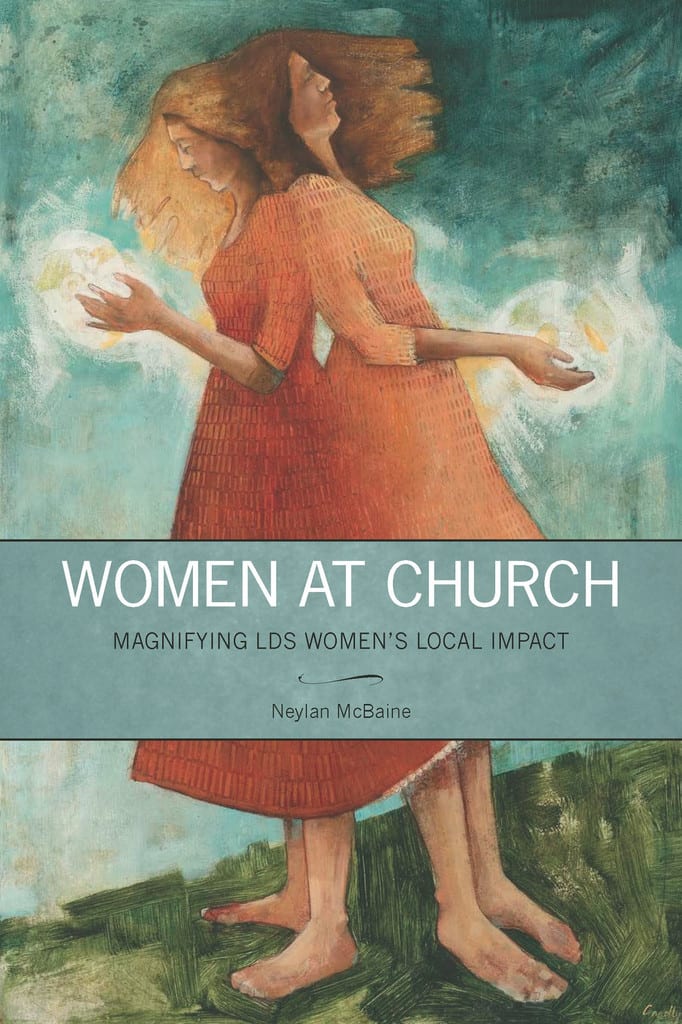
McBaine_Women_1024x102410614220_10152602861189764_2459171662055093934_n


Neylan McBaine is one of several notable and thoughtful participants in the conversation that has been taking place about the roles and situation of women in The Church of Jesus Christ of Latter-day Saints. Her soon-to-be-released book, Women at Church: Magnifying LDS Women’s Local Impact, is both a tremendous synopsis of that conversation for those who are still trying to get a handle on its many facets and a valuable and constructive contribution in its own right. Sister McBaine is the founder of the Mormon Women Project, which collects stories of LDS women for the purpose of celebrating and highlighting their lives, accomplishments, and contributions, a worthy goal in a church that celebrates that which is of good report and praiseworthy, but also a worthy goal for one interested in better understanding the human condition.

Her book draws upon a wide variety of sources. I saw mention of most of the major discussants, a host of more minor ones, and many individual women and men who shared their experiences navigating the labyrinth of gender relations in the relative privacy of their own lives. Apart from merely having a large pool of sources from which to draw experience and wisdom, this book also accomplishes a measure of balance. The author explains both sides of many of the issues in LDS gender relations in terms proponents of each position will likely relate to. Thus people with a variety of opinions will be both informed and challenged by this book. The author also presents some challenging perspectives. Not all of her anecdotes end well. But this also plays the important role of highlighting the real human lives and souls that are at stake in the effort to live our religion in a truly thoughtful, inclusive, and Christ-like manner. Though the book contains a number of stories that are necessarily sorrowful, the book maintains a genuinely hopeful tone of focused optimism. This is not a book that should leave people depressed or hopeless, but instead give them perspective and ideas for how to improve.

For me personally, this book succeeded in accomplishing several important things. It helped me understand some of the more common or characteristic sources of frustration. It convinced me that having sisters more visible is important for spiritual reasons beyond any worldly arguments that may exist for it. And it helped reinforce my confidence that our leaders are working to improve these situations, and that there is significant scope for us to work for better relationships within the scope of our own stakes, wards, and branches.

Why is it important for women (or any sort of person, really) to be visible to others? In reading this book, a few reasons become apparent. One that the author brings up is that the process of creation necessarily involves models. When God created the earth, those creations were “spiritually, before they were naturally upon the face of the earth.” And it makes sense for us to desire models to use to form our own worlds as well. Jesus, who also famously counseled that we should do our alms in secret, commanded the disciples to “let your light so shine before this people, that they may see your good works and glorify your Father who is in heaven” (3 Nephi 12:16). While on the surface these two directives appear to be at variance, the principle appears to be that we are not rewarded of God for self-aggrandizement and seeking the praise of the world, but we nevertheless help to glorify God when our example teaches others how to succeed in living in accordance with His plan. Not every woman’s path will look the same, and it is important to have women who represent the variety of possible righteous lives visible so that others seeking to find a righteous example upon which to pattern a faithful life in their own circumstances can have the undergirding benefit of an example. The life of faith is one of challenges, but challenges that need not be encountered alone and without a map.

Turning attention to some of the means the author proposes for providing female role models, one of the most encouraging points she brings up is the fact that many of the practices that could be adopted to provide visibility to women on a local scale are already being modeled by our general leaders. She notes the recent deliberate inclusion of women auxiliary leaders in prominent positions in the seating arrangements for General Conference, as well as their inclusion in the Conference Ensign center sheets showing general leaders. Of particular interest in this last conference is a talk by Linda S. Reeves dealing with protecting the home from pornography. This talk sets a strong example of a general leader speaking to the whole church, just as one giving a talk in sacrament meeting (who likely holds some particular stewardship in the ward) speaks by default to the whole group rather than only those who they are assigned to serve in some particular capacity. This was further driven home by her choosing to address what has traditionally been thought of as a male problem, though participation by either gender is thoroughly unfortunate.

This idea of leaders speaking to the needs of the whole church rather than just one particular subset of it is further amplified in the council setting. In a ward council, the sisters who preside over the auxiliary organizations are asked to share their insights and inspiration on all matters that come before the council. The inspiration of these sister leaders is then able to benefit the entire ward body. When all functions properly, input from sisters functions on an equal footing with input from the brothers in the ward. This practice has likewise been modeled at the general level. Sister Eubank’s recent FairMormon talk included her recounting of her experiences with councils that made sure they heard and understood her insights before proceeding. Properly conducted ward councils have received strong encouragement from Elder Ballard, who has been counseling leaders to properly harness the full potential of their Ward Councils for 20 years. The more these councils fulfill their full potential, the more our sisters are able to fulfill theirs.

Neylan McBaine also discusses the great latitude that local leaders have to solve problems of visibility and recognition on the local level. She emphasizes the importance of spiritual creativity by leaders in the process. She discusses a number of approaches that have been taken with baby blessings to make sure the mother was recognized, while still keeping within the bounds of church policies. One of several discussed was inviting the mother to sit on the stand at the meeting where the blessing occurred so that she had a good view of the ordinance and so that she could be seen and receive the recognition of the congregation. A number of other good approaches were discussed. The key really does seem to be in spiritual creativity, and a willingness to explore ways to include and recognize the real and significant contributions and accomplishments of women. There is enough space within the church policies for these things to happen, if people are willing to experiment a bit, be patient with one another, and withhold judgment.

Another area where she identified possibilities for women to contribute is the sacrament. Apparently, (something I was less aware of before reading this book) women have historically provided bread for the sacrament, and any way you look at it, purchasing Wonder Bread is an assignment not strictly necessitating priesthood authority. Reading the beautiful account of a sister who prepared the sacramental bread, I couldn’t help recalling that the bread represented the flesh of the savior, and that, indeed, that flesh was molded and formed and prepared by a woman. Inviting then the Lord’s handmaids to provide the bread might even enhance the meaning of the ordinance and at the same time highlight one of the most uniquely key and feminine contributions to the salvific history of the human family.

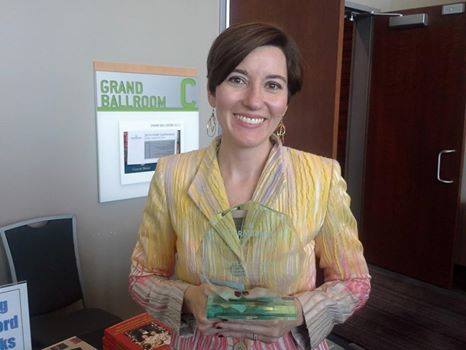
The insights shared in this review are a very small sampling of what one person got out of a remarkably thoughtful book. Anyone that would like to get up to date on the conversation about women in the Church of Jesus Christ should locate a copy of it immediately. I’d loan you mine (with a deposit), but I am but one man with but one copy. If you’d like, though, this is important enough of a book that we have them available for preorder at the FairMormon bookstore at a bit of a discount. The author was kind enough to personalize my copy while I was at the FairMormon Conference, where she received the FairMormon Award of Excellence. She wrote, “With hope in the future.” This book gives me a lot of reasons for hope.

Filed Under: Gender Issues, Women

Best of Fair 17: Sharon Eubank – This is a Woman’s Church”

August 12, 2014 by NickGalieti

https://media.blubrry.com/mormonfaircast/www.fairlatterdaysaints.org/wp-content/uploads/2014/08/BestOfFair-SharonEubank-2014FairMormonConference.mp3

Podcast: Download (70.6MB)

Subscribe: RSS

tumblr_m0jaoahzzF1qgi30vo1_r7_500Best of Fair Podcast episodes feature great presentations from FairMormon conferences, and Sharon Eubank’s presentation is no exception. We are grateful for her comments and perspective. This audio comes from her presentation at the 2014 FairMormon conference entitled, “This is a Woman’s Church.”

For the transcription of her presentation, please click here.

You can purchase access to video streaming of all the conference presentations at the FairMormon Bookstore.

Note: The audio presented in this podcast is “cleaned up” from the original video. So feedback issues and other noise previously present should be reduced if not unnoticeable. Other audio artifacts might be present, for this we apologize.

Filed Under: Podcast, Women Tagged With: Women and Priesthood

“This is a Woman’s Church”

August 9, 2014 by Trevor Holyoak


Sharon Eubank’s presentation, given on August 8 at the 2014 FairMormon Conference, received the rare honor of a standing ovation. The transcript can be viewed here.

You can purchase access to the rest of the conference videos at the FairMormon Bookstore.


Sharon Eubank was born in Redding, California, to Mark and Jean Eubank. She received a bachelor’s degree in English from Brigham Young University and served as a full-time missionary for the Church of Jesus Christ of Latter-day Saints in the Finland Helsinki mission. Her career includes working as a legislative aide in the U.S. Senate for 4 years and owning a retail education store in Provo, Utah, for 7 years.

Since 1998, she has been employed by the Church in the Welfare Department. She helped to establish 17 international LDS employment offices Africa and Europe. For five years she directed the humanitarian wheelchair program expanding its scope to 50,000 individual donations each year and implementing World Health Organization training standards.

In 2008 Sharon became regional director of the LDS Charities for the Middle East Africa North area where she oversaw humanitarian work with active country offices in Egypt, Syria, Lebanon, Afghanistan, Jordan, and Morocco. She also served on the Relief Society general board during Sister Julie B. Beck’s administration until April 2012.

Currently, Sharon is the director of LDS Charities, the humanitarian organization of the Church of Jesus Christ of Latter-day Saints.

Filed Under: Apologetics, Doctrine, FAIR Conference, Gender Issues, LDS Culture, News from FAIR, Politics, pornography, Women

Articles of Faith 12: David L. Paulsen: A Mother There – A Survey of Historical Teachings about Mother In Heaven

August 3, 2014 by NickGalieti

https://media.blubrry.com/mormonfaircast/www.fairlatterdaysaints.org/wp-content/uploads/2014/08/AOF-DavidPaulsen-HeavenlyMother.mp3

Podcast: Download (38.0MB)

Subscribe: RSS


David-Paulsen-BYUDavid L. Paulsen received an associates degree from Snow College in English in 1957, a bachelors degree from BYU in Political Science in 1961 (in which he was BYU’s valedictorian), a JD from the University of Chicago Law School in 1964, and a Ph.D. in philosophy from the University of Michigan in 1975, with emphasis in the philosophy of religion. His doctoral dissertation, entitled The Comparative Coherency of Mormon (Finitistic) and Classical Theism, was said by two philosophers critical of LDS theology to be “by far the most detailed and comprehensive defense of Mormon theism.”


He is the author of an article in BYU Studies entitled: “A Mother There” A Survey of Historical Teachings about Mother in Heaven. Paulsen is married to Audrey Lucille Leer and has six children and eleven grandchildren. Recently returned from a mission with his wife to Iceland, welcome David L. Paulsen.


Questions and topics addressed in this interview:


Among your other articles is one that address an subject that is enigmatic for some, perhaps a rational conclusion for others. That is the subject and being of Heavenly Mother. We should give credit where credit is due. You had a research partner on this. Who is it, and what did they contribute?


“Penned in 1845 by Sister Eliza R. Snow (who would later serve as the Relief Society general president from December 18, 1867–December 5, 1887), these lines from our beloved hymn “O My Father” are perhaps the best-known reference in Latter-day Saint literature to a Mother in Heaven. Written and published within months of Joseph Smith’s death, these and other lines give considerable evidence that the Prophet taught of a Mother in Heaven, even if he did so only implicitly or restrictively to certain limited audiences.”

What is the earliest text that we have that mentions a heavenly mother, even if it is apocryphal?


Has anyone ever claimed to have had a vision of her?


There is a teaching that I have heard, and that is that we are not supposed to talk about our Heavenly Mother. It is too sacred to talk about. Where did that come from, and is there any substance to that concept? You refer to this in your article about, ““sacred” censorship.”

What might the warnings be with regard to a discussion of God Mother, or Heavenly Mother? Would worship be inappropriate and if so, why? Is she part of the Godhead?

As the song, Oh My Father, alludes, there has been a longing in the undercurrents of mormon thought for a connection to the feminine divine. How much of what we read is actual doctrine, official teachings of the church, vs. the longings and educated statements regarding who Heavenly Mother is, or if she exists?

There is also a notion that because God the Father and God the Mother are so unified that there is no need for distinction in holy writ or in our discourse as you cannot speak of one without speaking of the other. From what you have studied is our Heavenly Parents this androgynous concept of deity the dominant idea, or are there still some elements of individuality that each possess uniquely, but it is there combined effort that we experience?


The question arises with regard to Heavenly Mother’s involvement in our daily lives. The following is quote from President Harold B. Lee :

“Sometimes we think the whole job is up to us, forgetful that there are loved ones beyond our sight who are thinking about us and our children. We forget that we have a Heavenly Father and a Heavenly Mother who are even more concerned, probably, than our earthly father and mother, and that influences from beyond are constantly working to try to help us when we do all we can.”


Elder Glenn L. Pace (First Quorum of the Seventy, October 3, 1992–October 2, 2010) at a 2010 BYU devotional: “Sisters, I testify that when you stand in front of your heavenly parents in those royal courts on high and you look into Her eyes and behold Her countenance, any question you ever had about the role of women in the kingdom will evaporate into the rich celestial air, because at that moment you will see standing directly in front of you, your divine nature and destiny.”


David L. Paulsen and Martin Pulido are the authors of “A Mother There” A Survey of Historical Teachings about Mother in Heaven.


Links from the episode:

Joseph Smith and The Problem of Evil – BYU Devotional

Are Christian’s Mormon?

Joseph Smith Challenges the Theological World

Filed Under: Articles of Faith, Hosts, Nick Galieti, Podcast, Women Tagged With: Heavenly Mother, The Feminine Devine

Mormon Fair cast 257: Hannah Smith and religious liberty today

July 27, 2014 by Ned Scarisbrick

https://media.blubrry.com/mormonfaircast/www.fairlatterdaysaints.org/wp-content/uploads/2014/07/Religion-Today-for-Sunday-July-27.mp3

Podcast: Download (18.2MB)

Subscribe: RSS

Hannah-Smith-at-the-LDS-International-SocietyMartinTannerMartin Tanner who is the host of “Religion Today” on KSL FM 102.7 and AM 1160 interviews Hannah Smith who is senior counsel for the “Becket Fund for Religious Liberty.”  In this episode Hannah Smith discusses the “Hobby Lobby” case that was recently decided by the Supreme Court of the United States and the implications of that decision on religious liberty among other  issues.  Hannah Smith will also be a contributing  speaker at this years annual FairMormon conference in Provo Utah.

This broadcast originally aired on the 27th of July 2014.

The views and opinions expressed in this podcast may not represent those of the Church of Jesus Christ of Latter-day Saints or that of FairMormon


Filed Under: Apologetics, Doctrine, Evidences, FAIR Conference, Interfaith Dialogue, LDS Culture, Mormon Voices, Podcast, Politics, Women

Articles of Faith 10: S. Matthew Stearmer – A Reflection on the Cultural Construction of Sexual “Needs”

July 21, 2014 by NickGalieti

https://media.blubrry.com/mormonfaircast/www.fairlatterdaysaints.org/wp-content/uploads/2014/07/AOF-MattStearmer-ReflectiononCulturalConstructsofSexualNeeds.mp3

Podcast: Download (41.8MB)

Subscribe: RSS

stearmer_picMatt Stearmer is a Ph.D. Candidate of Sociology at The Ohio State University. His academic interests include social movements, gender, networks, public health and religion. His work has appeared in the Journal of Peace Research, and in a book titled Sex and World Peace. He currently serves as the first councilor in the Young Men’s Presidency. He and his partner Janille have four children ages 5-16. He is the author of an article entitled, A Reflection on the Cultural Construction of Sexual “Needs” in the journal SquareTwo found at SquareTwo.org Welcome S. Matthew Stearmer.

Questions addressed in the interview:

Your article is quite possibly one of the most potentially volatile mixes of topics; sex, and religion. Throw in politics and you will probably have a perfect recipe for social conflict cocktail. Let’s try and ease into a bit by maybe first addressing why sex in a religious or faith based context is either difficult or even contentious at times?

In your article you open with, “Recently, the topic of male sexuality, responsibility and faithfulness came up in a discussion among several LDS friends and co-workers.” First of all, I am glad to hear that even after this conversation you are still referring to them as friends and co-workers, not enemies….if one were to be a the proverbial fly on the wall in that discussion what would we have heard? What were some of the opinions that were injected in that conversation?

Is there a doctrine on this subject of marital intimacy? Responsibility of sex in the marriage? Your article asserts the following: “The central aim of the doctrine of the Restored Gospel is unity. Anything that divides us and creates hierarchy, especially between spouses, must be renounced for the evil it is.”

Your article presents another good quote, “The goal from a gospel perspective is not more sex, but more unity. Intimate sexual relationships between a husband and wife may be one means of getting there, but it is not the locus of the unified relationship.” The article makes the assumption, and there are probably statistics to make this a well founded assumption, that men see sex as a need, and women see responsibility as filling that need, as something to give up to their husbands. This paradigm, according to your article, leads to disunity. The next assumption, and maybe I am reading this wrong, is that this condition is far more universal than many may notice, even in temple sealed LDS marriages.

You give one such example of a couple who came to you for some counseling on the matter. Could you share that example?

There are three points that you feel is critical to having a healthy relationship, but one that actually falls in line with doctrinal precepts. Let’s go through those three:

– The first, sex is not intimacy.

– Second, even in marriage, sex does not necessarily lead to unity.

– Third, a focus on who “needed” what, and who did or did not get what they felt they “needed” from their spouse sexually, would have been an unnecessary, confusing, and further damaging approach to the problem being faced.

When one ventures into calling sex a spiritual or sacred thing, that can sometimes be a bit off putting, maybe even a mischaracterization. Here again, you face the idea head on with the article by making an assertion that placing sex as a “need” in a marriage is spiritually damning. How are these things connected?

This is even tied further to the idea that people who have committed sexual sins, either in or out of marriage covenants, seek to establish an excuse for their actions because sex was a need that was not being met.

This same idea is actually tied back to the Oath and Covenant of the Priesthood. How is that?

S. Matthew Stearmer is author of the article A Reflection on the Cultural Construction of Sexual “Needs” in the journal SquareTwo found at SquareTwo.org Thank you for coming on.


Filed Under: Articles of Faith, Hosts, Nick Galieti, Podcast, Women Tagged With: Marriage, oath and covenant, sexual relations

Mormon Fair-cast 244: FairMormon Conference 2014

July 8, 2014 by Ned Scarisbrick

https://media.blubrry.com/mormonfaircast/www.fairlatterdaysaints.org/wp-content/uploads/2014/07/MTSDDP7_6_141.mp3

Podcast: Download (18.0MB)

Subscribe: RSS

33480_1612609000660_2667876_nDanPetersonMartin Tanner who is the host of “Religion Today” on KSL FM 102.7 and AM 1160 interviews Steve Densley who is the executive vice-president of FairMormon and Daniel Peterson, Ph.D. who is a prominent Mormon apologist and professor of Islamic Studies and Arabic in the Department of Asian and Near Eastern Languages at Brigham Young University about the upcoming FairMormon conference that will be held in Provo Utah on the 7th and 8th of August this year. Tickets can be purchased here.

This broadcast originally aired on the 6th of July 2014.

The views and opinions expressed in this podcast may not represent those of the Church of Jesus Christ of Latter-day Saints or that of FairMormon.


Filed Under: Anti-Mormon critics, Apologetics, Bible, Book of Mormon, Conversion, Doctrine, Early Christianity, Evidences, FAIR Conference, Faith Crisis, First Vision, Gender Issues, General, Joseph Smith, Mormon Voices, News from FAIR, Podcast, Polygamy, Power of Testimony, Racial Issues, Science, Women

What is God Thinking? Reflections on Mormon Women and the Priesthood

July 7, 2014 by FAIR Staff

Sister Missionaries serving in Berlin Germany. (Photo from LDS.org.)
Sister missionaries serving in the Germany Berlin Mission. (Photo from LDS.org.)

[This is a guest post from Deborah Rowley, a Latter-day Saint woman sharing her perspective on the subject of women and the priesthood. These comments are Deborah’s alone, and do not necessarily reflect the official position of FairMormon or The Church of Jesus Christ of Latter-day Saints..]

I am a woman. I am also a member of The Church of Jesus Christ of Latter-day Saints. I am aware of the events surrounding Kate Kelly, her excommunication, and the Ordain Woman movement. Many people both inside and outside the Church have been asking questions like, “What are the leaders of the church thinking?” or “What is Kate Kelly’s bishop thinking?” Those on the other side of the controversy are asking, “What is Kate Kelly thinking?” or “What are the members of Ordain Women thinking?” While these are good questions, I think they’re the wrong ones. No one in the swirling social media frenzy surrounding this situation is asking the right question.

Here is the right question, “What is God thinking?” I know how that must sound. Just stay with me for a second. Let’s just assume that the priesthood leaders at the head of the Church are telling the truth. They have said that only God makes this decision about who holds the priesthood. And they have told us that God said, “Not women.” That answer may change in the future but for now, the answer is no. You may not believe that those men are speaking for God and that is your right. But I do. My faith depends on it. Otherwise the leaders of my church are lying. If they are lying, why would I want to be part of their organization or hold the priesthood anyway? Let’s just assume for the sake of argument that they are telling the truth and that God said no. That is where my question comes in.

The right question is, “What is God thinking?” Einstein famously said that he wanted to know God’s thoughts. I am no Einstein but I think I know my Heavenly Father well enough to know what he is not thinking. He is not thinking that his daughters are undeserving or unworthy. He is not thinking that his daughters couldn’t do the job as well as his sons. He is not thinking that he loves his daughters less than his sons or that he values their growth and development less than that of his sons. He is not thinking that he wants to drive women away from his church or hold them down or keep them subservient. I am confident that God is not thinking those things.

So what could be God thinking? I don’t want to be struck by lightning for the presumption of thinking like God or for God, but I really like that question. As I’ve pondered that question sincerely, I’ve come up with several answers that make sense to me. They may not make sense to you, but below are three possible reasons that I came up with. (God is not in the habit of letting me read his mind so feel free to take this with a grain of salt if you want.)

I started my thought process by acknowledging that God thinks in the big picture. He looks at the long term and can see perfectly how thumping that one domino will set in motion a stream of events that we cannot even begin to see. God knows the consequences down the road that are hidden to us with our limited perspective. Can he see that what seems like one positive to us right now would result in even bigger negatives in the long run? What could those negatives be?

First, perhaps God is saying no because he is protecting his youngest and most innocent children and wants to safeguard a mother’s very limited time in the home. Second, perhaps God is saying no because he is concerned about the growing distortion in our understanding of men and women’s unique roles. Perhaps giving the priesthood to women would further blur the distinction between men and women and jeopardize our Father’s plan for all his children. Third, perhaps God is saying no because he is aware of negative consequences to his sons.

Many boys are struggling in a world of violence, pornography and fatherless families. Perhaps this decision would further marginalize boys which in turn would negatively impact their wives, mothers, sisters, and daughters. You may agree or disagree with my three points and that is just fine. I am not trying to argue my points as definitive answers because I don’t know what God thinks. But I think it is very probable that he has different purposes and reasons that I wouldn’t even understand if he were to try to verbalize them to me. Nevertheless, it has helped me to think of some reasons that make sense to me. You could do the same. Why do you think God would be saying no?

Whatever the reason, I trust God. I trust that he has my best interests at heart, that he loves me and is thinking continually of my needs. He knows what those needs are and how to fulfill them far better than I do. He knows how to fulfill them better than a group of women activists or a group of priesthood leaders. I do believe that God is behind this decision and I trust him. I believe that conscientious leaders have prayed to him to know if now is the time and God said no. I don’t speak for God, but his prophets do. You don’t get too far in reading the Bible before realizing that the prophets’ words are never popular. Why should that change in our modern day?

The unpopularity of their teachings should confirm rather than discount their validity. I do not see denying women the priesthood as hurtful to women. I do not see this decision as holding women back. Why would a loving God purposefully hurt his daughters? From where I sit, I see women in the church thriving and continuing to grow and progress without the priesthood. I see powerful women who lead with strength and purpose, who express their views openly and honestly. I have never been asked to shut up or sit down. Quite the contrary. I have been asked time and time again to step up and speak up. I feel nothing but respect from my priesthood leaders and I admire and respect them in return.

I will continue to give my all to the religion that I believe in. I love being a woman in the Church. I believe it is the place where I can reach my fullest and highest potential and where I can most fully develop a relationship with God and with his Son Jesus Christ. One day I will know God’s thoughts and I will see how this decision fits into his eternal plan. For now, I will not tell God what to think or what to do. I will trust him and exercise my faith.

Filed Under: Gender Issues, Women

Articles of Faith 4: Valerie Hudson on the Current Discourse on Women and the Priesthood by Ballard, Dew, and Oaks

May 26, 2014 by NickGalieti

https://media.blubrry.com/mormonfaircast/www.fairlatterdaysaints.org/wp-content/uploads/2014/05/AOF-ValerieHudson-DiscourseOnWomen.mp3

Podcast: Download (37.2MB)

Subscribe: RSS

VMHudsonDr. Valerie Hudson joined the faculty of Texas A&M University at the Bush School in 2012 as the George Bush Chair. She is considered an expert on international security and foreign policy analysis, she received her PhD in political science at The Ohio State University. Prior to going to Texas A&M she taught at Brigham Young University.   In 2009, Foreign Policy named her one of the top 100 Most Influential Global Thinkers. Dr. Hudson developed a nation-by-nation database on women (http://womanstats.org) that triggered both academic and policy interest including use by both the US Senate Foreign Relations Committee and various agencies of the United Nations.   Her research and teaching experience is also complemented by three major teaching awards and numerous research awards. She is a founding editorial board member of Foreign Policy Analysis, and also serves on the editorial boards of Politics and Gender and International Studies Review. More information can be found on her website, http://vmrhudson.org.   She comes to us today under the nome de plume V.H. Cassler to discuss her article in the 7th Volume of the online journal SqaureTwo found at SquareTwo.org. Welcome VH!   Some of the questions Valerie Hudson answers are:   Valerie Hudson’s article is a sort of time capsule or cultural snapshot of the current discourse in the LDS world about the roles of women, women in the priesthood, ordain women, etc. Valerie is a self proclaimed feminist which is a designation that has become a very vague concept in some respects. There are different waves of feminism, there are different implications on what being a feminist implies. Valerie says she is a Mormon BECAUSE is a feminist. How can one define themself as a feminist and how does that dovetail with Mormonism.   A brief introduction as to what that Journal is and what people can expect to find there.   In her book- Women in Eternity, Women in Zion she explore the idea of separating doctrine from culturally accepted precepts. This theme is also addressed in your article in SquareTwo. The article is entitled Zion in Her Beauty Rises: Current Discourse on Women and the Priesthood by Ballard, Dew, and Oaks. To start out you address some of the previously held cultural approaches to the discourse on the role of women in Mormon Culture and doctrine. What are some of those past cultural positions that were held by some?   There is a change in the discourse since the 21st century began on the issues of women in the church. General Authorities seem to be more assertive with the doctrines of gender equality. Valerie’s article focuses on recent statements from Elder M. Russell Ballard, Sheri Dew, and Elder Dallin H. Oaks. She gives a brief synopsis of each of these statements.   There have been other statements on this issue, so why these three sources, why not just one?   There is a temptation when it comes to issues such as gender and where there seems to be some changes in the way things are either viewed and/or operate, to make a chicken and egg kind of argument. That is to give the distinction that the change came because of the protest or pressure of men and women, vs. divine authority. What merit is there in even considering the source of the change? Does it matter? Can’t divine authority be given based on the petition of God’s children?   Valerie Hudson concludes with a beautiful and intriguing statement, “I agree with [Sheri] Dew when she predicts that, “the kingdom of God will change overnight” for the better when we move to higher ground on these questions.” The questions here being those surrounding gender roles and doctrines in the LDS Church. Valerie elaborates further on how this is the case?   Valerie Hudson, or V.H. Cassler, is the author of a the article Zion in Her Beauty Rises:
Current Discourse on Women and the Priesthood by Ballard, Dew, and Oaks that can be found in Vol. 7 of the online Journal SqaureTwo found at SquareTwo.org

Filed Under: Articles of Faith, Gender Issues, Hosts, LDS Culture, Nick Galieti, Podcast, Women Tagged With: Gender Issues, Ordain Women, women and the priesthood

Articles of Faith 3: Craig L. Foster on Polygamy and its relationship to the LDS Church

May 19, 2014 by NickGalieti

https://media.blubrry.com/mormonfaircast/www.fairlatterdaysaints.org/wp-content/uploads/2014/05/AOF-CraigFoster-3.mp3

Podcast: Download (54.0MB)

Subscribe: RSS

Craig L. FosterPrior to graduating from BYU, Craig L. Foster served as a missionary in Belguim and France. Craig L. Foster earned a Bachelors degree in history and MLIS (or Masters of Library and Information Science) at BYU. He is also an accredited genealogist and works as a research consultant at the Family History Library in Salt Lake City. He has published books and articles on various aspects of Mormon History. Some of his writings on Mormon History discuss the history and theology of plural marriage within the context of Mormonism. Craig is also on the editorial board of the John Whitmer Historical Association Journal. Craig is the author of the article: Separated but not Divorced: The LDS Church’s Uncomfortable Relationship with its Polygamous Past found in the Interpreter: Journal of Mormon Scripture


Filed Under: Articles of Faith, Hosts, Joseph Smith, LDS History, Nick Galieti, Podcast, Polygamy, Women Tagged With: Craig L. Foster, D&C 132, polygamous wives, Polygamy

  • « Go to Previous Page
  • Page 1
  • Interim pages omitted …
  • Page 7
  • Page 8
  • Page 9
  • Page 10
  • Page 11
  • Go to Next Page »

Primary Sidebar

Faithful Study Resources for Come, Follow Me

Subscribe to Blog

Enter your email address:

Subscribe to Podcast

Podcast icon
Subscribe to podcast in iTunes
Subscribe to podcast elsewhere
Listen with FAIR app
Android app on Google Play Download on the App Store

Pages

  • Blog Guidelines

FAIR Latest

  • Come, Follow Me with FAIR – 1 Kings 12–13; 17–22 – Jennifer Roach Lees
  • Come, Follow Me with FAIR – 1 Kings 12–13; 17–22 – Part 1 – Autumn Dickson
  • Eternal Marriage Is an Eternal Journey 
  • Come, Follow Me with FAIR – 2 Samuel 11–12; 1 Kings 3; 6–9; 11 – Part 2 – Autumn Dickson
  • Come, Follow Me with FAIR – 2 Samuel 11–12; 1 Kings 3; 6–9; 11 – Jennifer Roach Lees

Blog Categories

Recent Comments

  • Kayla S. on Come, Follow Me with FAIR – 1 Kings 12–13; 17–22 – Part 1 – Autumn Dickson
  • Caleb on Come, Follow Me with FAIR – 1 Kings 12–13; 17–22 – Part 1 – Autumn Dickson
  • Dawn on Come, Follow Me with FAIR – 1 Kings 12–13; 17–22 – Part 1 – Autumn Dickson
  • Trevor Holyoak on Tithing—Putting God First 
  • Marisol on Tithing—Putting God First 

Archives

Follow Us

  • Facebook
  • Twitter
  • iTunes
  • YouTube
Android app on Google Play Download on the App Store

Footer

FairMormon Logo

FAIR is a non-profit organization dedicated to providing well-documented answers to criticisms of the doctrine, practice, and history of The Church of Jesus Christ of Latter-day Saints.

Donate to FAIR

We are a volunteer organization. We invite you to give back.

Donate Now

Site Footer