• Skip to primary navigation
  • Skip to main content
  • Skip to primary sidebar
  • Skip to footer

FAIR

  • Find Answers
  • Blog
  • Media & Apps
  • Conference
  • Bookstore
  • Archive
  • About
  • Get Involved
  • Search

NickGalieti

Articles of Faith Podcast: Syntax and Book of Mormon Authorship – Interview with Stanford Carmack

March 30, 2015 by NickGalieti

https://media.blubrry.com/mormonfaircast/www.fairlatterdaysaints.org/wp-content/uploads/2015/03/AOF-StanfordCarmack-BOM-Syntax.mp3

Podcast: Download (55.9MB)

Subscribe: RSS
stanford-carmackStanford Carmack has a linguistics and a law degree from Stanford University, as well as a doctorate in Hispanic Languages and Literature from the University of California, Santa Barbara, specializing in historical syntax. In the past he has had articles published on Georgian verb morphology and object–participle agreement in Old Spanish and Old Catalan. He currently researches Book of Mormon syntax as it relates to Early Modern English and contributes, by means of textual analysis, to volume 3 of Royal Skousen’s Book of Mormon critical text project.

Articles referenced in this interview:

The Implications of Past-Tense Syntax in the Book of Mormon

A Look at Some “Nonstandard” Book of Mormon Grammar

What Command Syntax Tells Us About Book of Mormon Authorship

Questions addressed in this interview:

The work that you do feels like forensic work, like something a coroner is doing to look back on the evidence that is before them and come to certain conclusions about what took place. Like a coroner would be able to tell the difference in the type of cut on a body and come to some conclusion about the type of blade that was used, or the skill with which the individual that made the cut demonstrated in the wound, etc. You seem to have the ability to look at an ancient text and see more than simply a group of letters that form a word, but the skill and education of the person that used it, the origins of the word, and from that you can come to certain conclusions. Is that an appropriate comparison?

You have written three articles in The Interpreter, to date, I am sure there will be more to come, but they all have to do with this rich analysis of the grammar and syntax of the Book of Mormon text. There are some criticisms of the Book of Mormon text that have been used by critics for years, what are some of those criticisms?

Did your effort in this regard come from wanting to give answers to the critics, or did you want to find answers for yourself to the critics questions and figured you would share your findings with others?

In your most recent article you make the statement that “Syntax resists manipulation” Meaning what with respect to its use in Book of Mormon authorship?

Let’s start with the first one that you did entitled A Look at Some “Nonstandard” Book of Mormon Grammar.” What were your findings with respect to what specific criticisms?

The next article was “What Command Syntax Tells Us About Book of Mormon Authorship.” This paper focuses on the use of one verb, COMMAND. It might seem a bit pf an overstatment to some, but how can the use of one word contribute to so as to either condemn or vindicate the claims to divine authorship of the Book of Mormon?

Your latest article is a bit of a heavy read, but it is quite impressive in that regard. The article is entitled, “The Implications of Past-Tense Syntax in the Book of Mormon.” Here again is an analysis of the text with respect to assumptions that the Book of Mormon simply copies or borrows from Biblical Texts.

Filed Under: Articles of Faith, Book of Mormon, Hosts, Joseph Smith, LDS Scriptures, Nick Galieti, Podcast Tagged With: Book of Mormon Critical Text Project, syntax

RiseUp Podcast – Freetown Movie – Interview with Garrett Batty and Melissa Larson

March 24, 2015 by NickGalieti

https://media.blubrry.com/mormonfaircast/www.fairlatterdaysaints.org/wp-content/uploads/2015/03/RiseUp-Freetown.mp3

Podcast: Download (58.8MB)

Subscribe: RSS

Click here to find showings of Freetown at a theater near you.


Films have an impact on how we view the world. But in some cases, films have an impact on the way the world views us. Freetown is the latest film from Garrett Batty, the director of The Sarratov Approach, With this film, the film makers wanted to help the world to see the power of faith with the story of young missionaries in Africa who had to trust in God, and teach the gospel, while their lives were being threatened in the midst of a bloody civil war.

In this episode of RiseUp, we interview Writer and Director Garrett Batty about his work with the film, why he included topics like race and the priesthood, as well as the impact films like this can have on the way individuals throughout the world and their perception of The Church of Jesus Christ of Latter-day Saints. We also interview Melissa Larson, the screenwriter of the film about what it meant to take a real life story of faith and hardship and translate that to the big screen.

FairMormon-Rise-Up-iTunes-logo

Filed Under: Hosts, Nick Galieti, Podcast, RiseUp Tagged With: Africa, film, Freetown, Ghana, movie, race and the priesthood, Racial Issues

Articles of Faith Podcast: In The Gospel, Faith Must Come First – Interview with Taylor Halverson

March 23, 2015 by NickGalieti

https://media.blubrry.com/mormonfaircast/www.fairlatterdaysaints.org/wp-content/uploads/2015/03/AOF-TaylorHalvorson-FaithFirst.mp3

Podcast: Download (41.4MB)

Subscribe: RSS

taylor-halverson-60Bio: Dr. Taylor Halverson received a B.A. from Brigham Young University in Ancient Near Eastern Studies in 1997, an M.A. in Biblical Studies from Yale University in 2001 and an M.S. in Instructional Technology from Indiana University in 2004. He completed Ph.D.s in Instructional Technology and Judaism & Christianity in Antiquity—both from Indiana University in 2006.

Dr. Halverson currently works at BYU full-time at the Center for Teaching and Learning. He is also the founder and co-chair of the Creativity, Innovation, and Design group, acting associate director of the Rollins Center for Entrepreneurship and Technology, and has taught a variety of courses at BYU including: “Old Testament,” “Book of Mormon,” “History of Creativity,” “Innovation Lab: The Design Thinking Experience,” and “Illuminating the Scriptures: Designing Innovative Scripture Study Tools.” Dr. Halverson is a contributor to the popular LDS Bible Videos project and the LDS Scripture Citation Index site and a columnist for the Deseret News. He and his wife Lisa lead travel tours to Israel, the Mediterranean, and Mesoamerica.

Questions addressed in the interview:

In preparation for this interview I went to TaylorHalverson.com, and in reading over the many things you are involved in, various chair positions at BYU, a tour guide for LDS themed travel, writer of multiple text books, articles for various publications and media outlets, this may seem like a judgmental question, and it is not meant to be, but where do you find to study the scriptures, and give time to your own personal faith development?

You are multi-lingual, Spanish, Biblical Hebrew, Greek, and a slew of others considered secondary languages. How has learning and knowing multiple languages changed your approach to learning the scriptures?

The article you wrote for the Deseret News, addresses a challenge or at least a shift in approach that we have seen with the world at large, and that is an evidence first approach. Disbelieve until proven logically true. At first, it seems like this is a prudent approach, but you call it difficult if not outright outlandish. Could you expound on that conclusion?

This relates to an exchange you had while attending Yale as follows:

Yale student: Where is the original Book of Mormon today? Where are the gold plates?

Taylor: They are gone.

Yale student: What do you mean that the original plates are gone?

Taylor: When Joseph Smith completed the translation of the gold plates into the Book of Mormon, he returned the plates to the angel Moroni. So we no longer have access to them. All that remains is Joseph Smith’s translation of the plates.

Yale student: I mean no disrespect, but this sounds both incredible and convenient for the story of the Book of Mormon. (Remember that the word “incredible” means unbelievable.) We have no way of source checking Joseph Smith’s story because the plates he claims to have worked with are no longer available. How can anyone even believe Joseph Smith or the Book of Mormon?

Taylor: Great questions. I have several questions for you.

Yale student: Sure.

Taylor: Are you a Christian?

Yale student: Yes.

Taylor: Do you believe in the bodily resurrection of Jesus Christ?

Yale student: Of course. That is the fundamental foundation of Christianity! Without the belief in the bodily resurrection of Jesus Christ there is nothing for Christianity.

Taylor: OK, then show me Jesus’ body.

Yale student: (Pausing to think with dawning comprehension) Oh, I see.

Taylor: What is more implausible: That someone claims to have translated a book and now the original book is missing, or that a physically dead body is now alive again? Just as Christians throughout the centuries have exercised faith in the claim that Jesus Christ died and rose again, so too members of The Church of Jesus Christ of Latter-day Saints exercise faith in that original claim as well as in the claim that God has brought forth additional scriptural witnesses, such as the Book of Mormon, for the life and mission of Jesus Christ

Sometimes people find themselves in a faith crisis, not simply a position of unknowing something, but that they feel they know something that has caused some cognitive dissonance. How does faith apply to someone in this intellectually conflicted position?

The article title asserts that faith must come first, that it is a matter of approaching spiritual matters with faith first. What tends to be the end result if faith comes second, or third or somewhere down the line?

This idea that we wait to act till we have knowledge is the opposite of what you inject at the end of your article, “As we act in faith, our knowledge increases and our views enlarge.” What sorts of things can we ONLY learn through faith as opposed to traditional empirical learning models?

Taylor Halverson is the author of the article In the Gospel, Faith Must Come First published by the Deseret News.

Filed Under: Articles of Faith, Faith Crisis, Hosts, Nick Galieti, Podcast Tagged With: faith, Faith Crisis, gospel

Front Page News Review Podcast #6

March 16, 2015 by NickGalieti

https://media.blubrry.com/mormonfaircast/www.fairlatterdaysaints.org/wp-content/uploads/2015/03/FrontPage6.mp3

Podcast: Download (36.7MB)

Subscribe: RSS

FairMormon’s Front Page News Review is a show that provides context and analysis of the past week’s media coverage of Mormons and the LDS church. Hosted by Nick Galieti manager of the FairMormon Front Page news service, Cassandra Hedelius.

We hope this will be an edifying and entertaining experience. What we present is not to be understood as being the official position of FairMormon or The Church of Jesus Christ of Latter-day Saints. We speak for ourselves, and sometimes not even then.

Past weeks Top Stories:

http://www.thedailybeast.com/articles/2015/03/13/a-great-utah-compromise-on-lgbt-equality-there-s-no-such-thing.html

http://www.msnbc.com/msnbc/utah-legislature-passes-mormon-backed-lgbt-nondiscrimination-law

http://www.reuters.com/article/2015/03/11/us-usa-mormons-excommunication-idUSKBN0M705920150311

http://www.sltrib.com/home/2229999-155/new-mormon-mission-how-to-teach

http://www.mcclatchydc.com/2015/03/07/258998/water-grab-pits-las-vegas-against.html

Facebook page hit 3,000 likes.

Plug FairMormon Front Page, signup at fairmormon.org

Filed Under: Fair Mormon Front Page News Review, Hosts, News from FAIR, News stories, Nick Galieti, Podcast Tagged With: John Dehlin, Legislation, LGBT

Rise Up Podcast – What Is Your Mission in Life?

March 11, 2015 by NickGalieti

https://media.blubrry.com/mormonfaircast/www.fairlatterdaysaints.org/wp-content/uploads/2015/03/RiseUp-WhatsYourMission.mp3

Podcast: Download (29.9MB)

Subscribe: RSS

Rise Up is a show for the youth and young adults looking for answers and encouragement to the difficult and critical questions that some may face about the doctrines, teachings, and culture of The Church of Jesus Christ of Latter-day Saints. This episode is presented by Nick Galieti and uses portions of two devotionals from Patricia Holland, and Elder John H. Groberg, both given at BYU in 1989 and 1979 respectively.

What is your mission in life?

Some difficult questions about the Church arise from critics. While other difficult questions come from just living life. This week we approach the difficult question, “What is my mission in life?”

With this question comes several other, let’s call them “sub-questions,” that we often ask at the same time. “What job should I get?” “Where should I go to school?” “Is this a person I should date or marry?” Maybe even, “Is this Church true, or is the Book of Mormon true, and if so, then what?”

Because each individual is given the gift of agency, or the ability to spend the time we have been given in this life for what we choose, it would seem like a good idea that we use that agency in the best possible way. For that same reason, discovering and determining our mission and purpose in life is all the more intimidating.

I want to share with you some thoughts that I hope will reinforce the importance of finding our mission. Not because I want to make the question all the more intimidating, but because I think that the more we realize just how important the decision is, the more we will come to understand that because of this high priority, God has put in place all that is needed for us to discover our mission, but also to succeed in that mission. Knowing how important this is to God, may help us have more confidence to approach Him in prayer, knowing He is anxious to bless us with this knowledge.

As with the all the quotes that I share, I will leave you the link for to the full presentation for the posting of this episode at blog.fairmormon.org, so that you can spend time researching the main source, as well as the context in which the quote is given.

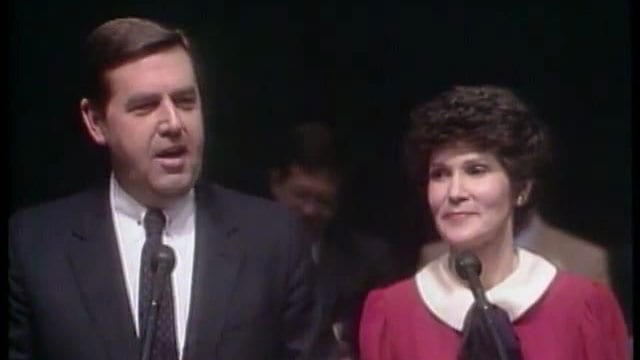
To start off, I want to share some parts of a presentation given by Sister Patricia Holland at a BYU devotional entitled Filling the Measure of Your Creation given back in 1989 when her husband, Jeffrey R. Holland was president of the University. She said the following:

YPDEV-1-45_LargeAll of us face those questions about our role, our purpose, our course in life—and we face them long after we are children. I visit with enough of you (and I remember our own university years well enough) to know that many of you, perhaps most of you, have occasions when you feel off-balance or defeated—at least temporarily. And we ask, ‘What will I be, when will I graduate, whom will I marry, what is my future, how will I make a living, can I make a contribution?”—in short, “What can I be?”

Take heart if you are still asking yourselves such questions, because we all do. I do. We should concern ourselves with our fundamental purposes in life. Surely every philosopher past and present agrees that, important as they are, food and shelter are not enough. We want to know what’s next. Where is the meaning? What is my purpose?

When asking these questions, I have found it extremely reassuring to remember that one of the most important and fundamental truths taught in the scriptures and in the temple is that “Every living thing shall fill the measure of its creation.”

Every one of us has been designed with a divine role and mission in mind. I believe that if our desires and works are directed toward what our heavenly parents have intended us to be, we will come to feel our part in their plan. We will recognize the “full measure of our creation,” and nothing will give us more holy peace.

I once read a wonderful analogy of the limitations our present perspective imposes on us. The message was that in the ongoing process of creation—our creation and the creation of all that surrounds us—our heavenly parents are preparing a lovely tapestry with exquisite colors and patterns and hues. They are doing so lovingly and carefully and masterfully. And each of us is playing a part—our part—in the creation of that magnificent, eternal piece of art.

But in doing so we have to remember that it is very difficult for us to assess our own contributions accurately. We see the rich burgundy of a neighboring thread and think, “That’s the color I want to be.” Then we admire yet another’s soft, restful blue or beige and think, “No, those are better colors than mine.” But in all of this we don’t see our work the way God sees it, nor do we realize that others are wishing they had our color or position or texture in the tapestry—even as we are longing for theirs.

Perhaps most important of all to remember is that through most of the creative period we are confined to the limited view of the underside of the tapestry where things can seem particularly jumbled and muddled and unclear. If nothing really makes very much sense from that point of view, it is because we are still in process and unfinished. But our heavenly parents have the view from the top, and one day we will know what they know—that every part of the artistic whole is equal in importance and balance and beauty. They know our purpose and potential, and they have given us the perfect chance to make the perfect contribution in this divine design.

This is where faith comes in: learning to trust God to guide our lives in such a way that we will actually get a to a point where our greatest potential is realized. While this may seem scary and even intimidating at times, starting with a simple desire to know our mission and purpose in life is huge step in the right direction. Sister Holland continues in talking about the importance of starting with the right desire.

The Lord. has promised us in D&C 12:7 that the only qualification required to be a part of this magnificent plan is to “have desires to bring forth and establish this work.”

Yea, whosoever will thrust in his sickle and reap, the same is called of God.

Therefore, if you will ask of me you shall receive; if you will knock it shall be opened unto you. [D&C 14:4–5]

Sometimes in our sowing and reaping and sifting, it may seem that God says “no” or “not now” or “I don’t think so” when what we want for him to say—what we wish our tapestry to receive—is an affirmative “yes” or “certainly, right now” or “of course it can be yours.” I want you to know that in my life when I have had disappointments and delays, I have lived long enough to see that if I continue to knock with unshakable faith and persist in My patience—waiting upon the Lord and his calendar—I have discovered that the Lord’s “no’s” are merely preludes to an even greater “yes.”

I have a five year old daughter who is incredibly headstrong and is very determined to get what she wants, when she wants it. But she is also learning that asking Mom and Dad the right way increases her chances of getting what she wants when she wants it. But, just as we may find with our earthly parents, our Heavenly Parents know what is best for us and when is the best time for us to get experience those blessings. In the times in my life when I have sought to find answers to prayers, wether they be prayers for answers to questions about gospel topics, or for what to do with my life, I forget that answers come in a couple different ways. They can be a yes, do that. They can be no, don’t do that, or they can be a not yet. That answer, “not yet.” is probably the hardest for me to get because when that answer comes I feel as if I have to guess as to when that answer turns into a yes. To further complicate things, sometimes, the answer that was a “not yet” can turn into a “not anymore-it is no longer the right thing to pursue.” I can echo Sister Holland’s statement, the Lord’s “no’s” are merely preludes to an even greater “yes.”

Because of this, the quest to discover what is our mission in life, is an ongoing and repeated effort. Elder John H. Groberg gave a really good presentation at BYU back in 1979 entitled, “What Is Your Mission?” He also talked about the importance of finding our mission, and implied the importance of re-discovering or reconnecting with our divine work over and over again throughout our lives. He ushers in this process of discovery with this quote:

Groberg,JohnH-bw“Let me begin by asking you a very simple question. The question is this: What is your mission? You might think, “Well, I served in Japan,” or “I served in Virginia,” or wherever, and that is fine; but it is not what I am asking. I mean—what is your mission now? What is your mission in life? What does God expect you to accomplish during your sojourn here upon the earth? And, are you doing it?

I hope that in the next few moments, with the help of the Spirit of the Lord, we can all realize, if we have not realized it before, or, if we have known it, reaffirm in our lives the importance of at least three things: first, that God, our Father in Heaven, does have a specific mission for all of us to fulfill and perform while we are here upon this earth; second, that we can, here and now in this life, discover what that mission is; and third, that with His help we can fulfill that mission and know and have assurance—here and now in this life—that we are doing that which is pleasing to our Father in Heaven. These are all very important concepts; and they are all true.

If we do not know what our mission is, if we are not sure, if we are uncertain as to whether we are in fact fulfilling it, or if we do not have the positive assurance in our lives that our actions and our performance are pleasing to our Father in Heaven, then it does not really matter what else we are spending our time doing—it is not as important as finding out what we should be doing and having the assurance that we are doing it. Or to put it another way, if we are really interested in doing our Father’s will we had better pay the price—whatever price is necessary. We had better pray however fervently, study the scriptures and listen to the Brethren however intently we need to, or in short do whatever is required so that we can have the assurance that we are doing what our Father in Heaven wants us to do—that we are moving in the general area of the mission he has for us to perform. Obviously, that mission will be different for each of us.”

I want to share my testimony that God can and does reveal His will for our lives to individuals all over the world. I know that he has done that for me in my life at different times. I have also witnessed that people will encounter trials, they may even experience trials of their faith, that will cause them to question their life path. Others may be searching for an answer to other difficult questions, and feel that they are not able to find answers to those questions or overcome those trials. When this happens some feel that the option to give up, to stop trying to live gospel standards, is their best option given the circumstances.

Others may even consider that they must not be loved of God, or that maybe there is no God because he is being silent in their lives. I have felt similarly in some trials that I have experienced and in its own way those feelings can be very scary. When this happens some come to a decision that much of what they believed in their life prior to that is either a lie, or some kind of wasted effort. However, the level of doubt I felt during those times of trial, has been exceeded by the level of assurance and peace that I know feel after having heard the voice of the Lord confirm to me, my life’s mission.

There are things that need to take place in order for us to be receptive to God’s voice, to the influence of our Divine Parents. We need to first, have the willingness mentioned earlier, a willingness to not just want an answer, but, as Moroni put it in Moroni 10:3-5, we must listen to God’s voice with real intent. In this case, real intent is not just really wanting to know, but really wanting to follow the answer that is given. Only doing what God wants if it matches what we want is not obedience, nor is it wise. I can say with surety, that God lives, and that he does guide us back to him if we are willing to follow the path that he will place in front of us, regardless of the challenge that may lie in that path.

Next, look to the unique talents with which the Lord has blessed you. Look at who you are, and the experiences you have, no matter how tragic they may appear. These experiences can be utilized in the work of blessing others, and bringing comfort to those who stand in need—to bring others unto Christ.

For some, our purpose may have little to do with career, or education. For some it might be that, for a time, God may need us to simply be there for someone else. To be a disciple of Christ, to be a comfort to those who stand in need of comfort. This is not a diminished calling, or mission in life. We don’t have to be famous, we don’t have to be rich, sometimes the opposite is what the Lord has in place for us at any given time. The answers are different for each person, therefore, it is important that each person spend time in prayer and meditation to discover what the Lord has in store for each individual. Consequently, this also makes it difficult to pass judgement on the choices of others. This is also why we should not rush the process of coming to know our mission in life. The answers will come. They may not come right away, but they will assuredly come to all who seek with real intent. God is not a revelation vending machine. We don’t just pay a price and get the revelation as soon as we ask for it.

There is much more to consider with this subject, so I would recommend listening to the full talks from both Sister Holland and Elder Groberg as those talks will offer additional insights in this effort to find your mission in life, and to live in such a way so as to fulfill it. For now, Sister Holland shares these thoughts with which we will conclude.

When my daughter, Mary, was just a small child, she was asked to perform for a PTA talent contest. This is her experience exactly as she wrote it in her seven-year-old script.

“I was practicing the piano one day, and it made me cry because it was so bad. Then I decided to practice ballet, and it made me cry more; it was bad, too. So then I decided to draw a picture because I knew I could do that good, but it was horrid. Of course it made me cry.

“Then my little three-year-old brother came up, and I said, ‘Duffy, what can I be? What can I be? I can’t be a piano player or an artist or a ballet girl. What can I be?’ He came up to me and whispered, ‘You can be my sister.’”

In an important moment, those five simple words changed the perspective and comforted the heart of a very anxious child. Life became better right on the spot, and as always, tomorrow was a brighter day.

The Lord uses us because of our unique personalities and differences rather than in spite of them. He needs all of us, with all our blemishes and weaknesses and limitations.

So what can I be? What can I be? We can be what heavenly parents designed us and intend us and help us to be. How does one fill the measure of his or her creation? We do so by thrusting in a sickle and reaping with all our strength—and by rejoicing in our uniqueness and our difference. To be all that you can be, your only assignment is (1) to cherish your course and savor your own distinctiveness, (2) to shut out conflicting voices and listen to the voice within, which is God telling you who you are and what you will be, and (3) to free yourself from the love of profession, position, or the approval of men by remembering that what God really wants us to be is someone’s sister, someone’s brother, and someone’s friend.

I bear my testimony that each of you has a purpose. It is different, it is distinct, it is divine. God lives. God loves you. And I do, too. I say this in the name of Jesus Christ. Amen.

FairMormon-Rise-Up-iTunes-logo

Filed Under: Hosts, Podcast, RiseUp, Youth Tagged With: ask questions of god, difficult questions, Find your mission, finding answers, prayer

Articles of Faith podcast: Big Ocean Women – Interview with Carolina Allen

March 2, 2015 by NickGalieti

https://media.blubrry.com/mormonfaircast/www.fairlatterdaysaints.org/wp-content/uploads/2015/02/AOF-BigOceanWomen-Oart1.mp3

Podcast: Download (47.6MB)

Subscribe: RSS

Big Ocean Women - FairMormon InterviewCarolina Allen is a Brazilian native and US immigrant. She is a 2nd generation member of the church. A Philosophy major from U of U. She is now happily married to Dr. Kawika Allen, a professor of counseling psychology at BYU.


Her UN bio stayed that she Speaks, English, Spanish, Portuguese. She has an interracial family with 5 kid. She Loves community and family, homeschooling, sports, the outdoors, and is a soccer player and avid Brazil fan. The bio concludes with stating that she is an activist and grass roots founder. In this episode Carolina talks about her organization Big Ocean Women and their efforts to be a voice for motherhood, her own brand and philosophy of feminism, and the defense of morality and traditional marriage on a world wide stage. For more information visit bigoceanwomen.com


Filed Under: Articles of Faith, Hosts, Interfaith Dialogue, Marriage, Nick Galieti, Podcast, Women Tagged With: morality, motherhood, Traditional Marriage, United Nations, Women of Faith

Best of Fair 18 – Mike Parker: The Challenge and Choice of Faith

February 28, 2015 by NickGalieti

https://media.blubrry.com/mormonfaircast/www.fairlatterdaysaints.org/wp-content/uploads/2015/02/Best-of-Fair-Mike-Parker-in-St.-George.mp3

Podcast: Download (71.0MB)

Subscribe: RSS

mike-parkerThis the best of FairMormon on the Mormon Fair-cast. This presentation was given by FairMormon volunteer, Mike Parker at the Tabernacle in St. George Utah on February 27th, 2015. The title of the presentation is “The Challenge and Choice of Faith.”

Filed Under: Best of Fair, Podcast Tagged With: choice, FairMormon, faith

Front Page News Review Show #5

February 26, 2015 by NickGalieti

https://media.blubrry.com/mormonfaircast/www.fairlatterdaysaints.org/wp-content/uploads/2015/02/FrontPage5.mp3

Podcast: Download (37.5MB)

Subscribe: RSS

FairMormon’s Front Page News Review is a show designed to provide context and analysis of the past week’s media coverage of Mormons and the LDS church. The show is co-hosted Nick Galieti with Cassandra Hedelius (via the internet).

We hope this will be an edifying and entertaining experience. What we present is not to be understood as being the official position of FairMormon or The Church of Jesus Christ of Latter-day Saints. We speak for ourselves, and sometimes not even then.

Top stories from this last week’s news:

http://www.deseretnews.com/article/865622777/Officer-in-parade-controversy-speaks-out-on-religious-liberty.html?pg=all

http://www.roanoke.com/news/virginia/southern-virginia-university-to-work-on-policy-after-gay-student/article_9bc6e37a-b22d-514b-a9ed-916e6baf9b5b.html

http://www.al.com/living/index.ssf/2015/02/mormons_hand_out_2400_copies_o.html

http://www.slate.com/blogs/the_slatest/2015/02/19/isis_is_islamic_but_obama_is_right_not_to_describe_it_that_way.html

http://www.christiantoday.com/article/utah.knocks.bible.belt.off.top.spot.in.us.churchgoing.thanks.to.mormons/48473.htm

Plug FairMormon Front Page, signup at fairmormon.org

Filed Under: Fair Mormon Front Page News Review, News stories, Nick Galieti, Podcast Tagged With: Mormon News

RiseUp Podcast: What I Learned In My First Year With FairMormon

February 25, 2015 by NickGalieti

https://media.blubrry.com/mormonfaircast/www.fairlatterdaysaints.org/wp-content/uploads/2015/02/RiseUp-10ThingsILearnedMyFirstYearAtFairMormon.mp3

Podcast: Download (17.6MB)

Subscribe: RSS

NGFairMormon is an organization that seeks to offer faithful answers to difficult or critical questions about The Church of Jesus Christ of Latter-day Saints (also known as LDS Church or Mormon Church). FairMormon does this through an effort called apologetics, which comes from the greek word aplogia—which sounds like someone is apologizing or are saying sorry for something. The origin of term really speaks to the effort to defend one’s position or beliefs. This can be done through scholarship, it can be done by people simply being a voice in defense of elements of culture, doctrines, and other activities. When it comes to the Church of Jesus Christ of Latter-day Saints, FairMormon and its volunteers are engaged in apologetics in the sense that we seek to defend the Church, its positions, and its doctrines using reason, research, and scholarship.

FairMormon has a wikipedia style database with answers to critics, to specific questions about church doctrines and history, and so on. There is also a blog that features book reviews, articles, and podcasts or on demand radio style programming with interviews, and other information that falls under the heading of apologetics. That’s where I come in to this whole thing—podcasting.

My official registration as a volunteer at FairMormon began on February 18th 2014. In the year prior to becoming a volunteer, I had entered the world of podcasting with my show, The Good Word Podcast, where I interviewed LDS (Mormon) authors and writers about their various works. In the course of producing and hosting that show, I had been given the opportunity to interview Michael R. Ash about his book Shaken Faith Syndrome, published by FairMormon.

The episode/interview was recorded then went live on the Internet some time later. In the time before the interview, and in between recording the interview and it being made public, I did some research on the organization and was impressed with the mission and purpose of FairMormon. After having a wonderful lunch meeting with Steve Densley the Executive Vice-President of FairMormon, I was brought on board as manager of the FairMormon podcasting effort.

Since that time I have produced, hosted, or supervised the production, of 5 different on going shows with over 100 total podcast episodes, and started the FairMormon Internet Radio Station. More importantly I have been introduced to and acquainted with some notable individuals, learned some important truths (as well as some falsehoods), and become more aware of issues surrounding the day to day experience many have with The Church of Jesus Christ of Latter-day Saints. I have learned a great deal about my own abilities to manage time (producing that many shows as a volunteer is no easy task), but I have also learned other things that have added to my faith. While not everything I have learned I would put into the category of “constructive” or “true,” because I know these things, I can better know truth when I read, hear, or see it.

While I have learned far more than 10 things during this first year with FairMormon, they can fit into some categories or general principles. Each learning experience I have had, supports my choice to be a part of this apologetic effort. So here are the 10 main things that I have learned (or had confirmed) in my first year of volunteering at FairMormon:

1) We are all children of God our Eternal Father and that The Church of Jesus Christ of Latter-day Saints is lead by His Son Jesus Christ. God has called a Prophet and Apostles to lead this church, to bless the lives of those who have ears to hear.

2) Joseph Smith Jr., while a fallible man subject to the same conditions and purposes of a mortal experience, was, by the Grace of God, given the authority to restore the Kingdom of God to the Earth. Through the Church that Joseph Smith Jr. helped establish, all mankind may be granted the opportunity to return to God’s presence renewed, and eventually perfected as well as find lasting peace in this life and in the life to come.

3) FairMormon is not the true church (or a church at all), it is not lead by a prophet, but is filled with volunteers that seek to defend and build up the Church through their best efforts in scholarship, reason, and with whatever talents the Lord has blessed them. These volunteers are fine people who have, at times, become a verbal dartboard by those who disagree with the Church, its leaders, or its teachings.

4) Many people feel an emotional and spiritual pain when encountering doubts about their faith. This pain can be severe and ought not to be ignored or marginalized.

5) Having doubts does not equal having questions. Doubts are questions without accepted answers. Doubts can quickly grow into disagreement if given the wrong “fertilizer.” With the presence and love of an all-knowing God, there is no question that does not have an answer. If given time, patience, and faith, all questions can be answered. The answers require work, study, faith, and trust to obtain. When the answer comes from God, that answer will build faith in Him, and in his Church.

6) There are individuals in this world who have perpetuated the need for organizations like FairMormon. Some of these individuals are quite gifted, and charismatic in their efforts to discourage belief or conviction of a divine Church, its leaders, or its teachings. Much of the rhetoric of such critics are filled with a volatile cocktail of hurt and anger that resonates with those who are experiencing the pains that come with doubt.

7) My impression is that over the last 10-20 years, more critical questions or aggressive posturing against the church has come from those disaffected with the church, in other words those from within, than from those outside of the church’s membership.

8) One never knows the influence for good that they may have as they are “about doing good.” I have received emails, friend requests, and other in-person compliments and expressions of gratitude with the work that I have been doing with FairMormon than I would have expected. We are all capable of doing more good than we currently realize. As Bonnie Parkinson once offered as sound Christian advice, “never suppress a generous thought,” I would add, never suppress a generous act. (BYU Devotional, Personal Ministry: Sacred and Precious – 13 February, 2007)

9) Volunteering for FairMormon is a generous act.

10) On occasion I wonder why I have dedicated so much time and effort to a cause and an organization that at times seems to have more critics than supporters, but I do not regret it. I feel that I have made a positive contribution to a theology, a community, and a church and cause that I believe, in such a way that can have a profound ripple effect across the globe—for good.

I am grateful for the opportunity I have had to help people through their trials of faith, and to personally have an enlarged perspective on my faith as well as the many ways that God works through individuals to bring out his righteous purposes. I am grateful that the Lord has seen fit to bless me with enough talent and opportunities to be a part of this effort.

Nick Galieti – 2015

FairMormon-Rise-Up-iTunes-logo

Filed Under: Apologetics, Hosts, Nick Galieti, Podcast, RiseUp, Youth Tagged With: apologetics, Volunteer

RiseUp Podcast: Modesty

February 18, 2015 by NickGalieti

https://media.blubrry.com/mormonfaircast/www.fairlatterdaysaints.org/wp-content/uploads/2015/02/RiseUp-Modesty.mp3

Podcast: Download (15.5MB)

Subscribe: RSS

Modesty is a challenging subject for both youth and adults to wrap their heads around, especially considering the constant challenges to gospel standards from society. That is why it is important to hear from those who deal with this issue on a daily basis, and have overcome some of the struggles associated with staying true to those standards.


We are happy to introduce a new voice on the RiseUp podcast. Now a freshman in college, Katelyn has lived across the United States. In this episode she addresses the topic of modesty with some stories from her own life.

FairMormon-Rise-Up-iTunes-logo

Filed Under: Podcast, RiseUp Tagged With: Modesty, youth

  • « Go to Previous Page
  • Go to page 1
  • Go to page 2
  • Go to page 3
  • Go to page 4
  • Go to page 5
  • Go to page 6
  • Interim pages omitted …
  • Go to page 10
  • Go to Next Page »

Primary Sidebar

Faithful Study Resources for Come, Follow Me

Subscribe to Blog

Enter your email address:

Subscribe to Podcast

Podcast icon
Subscribe to podcast in iTunes
Subscribe to podcast elsewhere
Listen with FAIR app
Android app on Google Play Download on the App Store

Pages

  • Blog Guidelines

FAIR Latest

  • Come, Follow Me with FAIR – Doctrine and Covenants 137–138 – Part 2 – Autumn Dickson
  • Come, Follow Me with FAIR – Doctrine and Covenants 137–138 – Mike Parker
  • FAIR December Newsletter
  • Come, Follow Me with FAIR – Doctrine and Covenants 137–138 – Part 1 – Autumn Dickson
  • Prophets of God 

Blog Categories

Recent Comments

  • LHL on Come, Follow Me with FAIR – Doctrine and Covenants 132 – Mike Parker
  • Stephen Johnsen on Come, Follow Me with FAIR – Doctrine and Covenants 132 – Mike Parker
  • Bruce B Hill on Come, Follow Me with FAIR – Doctrine and Covenants 124 – Part 1 – Autumn Dickson
  • Gabriel Hess on Join us Oct 9–11 for our FREE virtual conference on the Old Testament
  • JC on When the Gospel “Doesn’t Work”

Archives

Follow Us

  • Facebook
  • Twitter
  • iTunes
  • YouTube
Android app on Google Play Download on the App Store

Footer

FairMormon Logo

FAIR is a non-profit organization dedicated to providing well-documented answers to criticisms of the doctrine, practice, and history of The Church of Jesus Christ of Latter-day Saints.

Donate to FAIR

We are a volunteer organization. We invite you to give back.

Donate Now

Site Footer