• Skip to primary navigation
  • Skip to main content
  • Skip to primary sidebar
  • Skip to footer

FAIR

  • Find Answers
  • Blog
  • Media & Apps
  • Conference
  • Bookstore
  • Archive
  • About
  • Get Involved
  • Search

Scott Gordon

What if People with Red Hair Were Denied the Priesthood?

September 25, 2017 by Scott Gordon

Scott Gordon as a red-haired boy

Note – From the mid-1840s until 1978 people of African descent were generally not allowed to have the priesthood or attend the temple in the LDS Church. (Attending the temple is different from going to Church in the LDS faith.) This is in spite of prior practices and temple rules that said they could. Since the primary difference between people with African roots and people with northern European roots is skin color, what if the situation were reversed? This post tries to use humor to address this serious issue. This should not be taken as evidence that the author considers anything about the topic of racism or priesthood to be less than serious. This role reversal is designed to make us think about the issue in a different light.

I was born a redhead. Yes, I’ve “blonded” out a bit as I’ve aged, but both of my daughters were born with deep red hair. So, I know all about red heads. Sometimes we are also known as “gingers.”

While the red hair can attract attention, it isn’t the red hair that is the issue for me. It is the redheads’ skin color. Let me explain.

People with red hair have very fair skin coloring. We have almost no melanin in our skin.  Melanin is the substance that makes skin darker. I joke with my kids that our skin is so transparent that we can see the blood rushing beneath it.  I often look with jealously at my Hispanic or black friends who have such beautiful, uniform skin tones. My skin is reddish and blotchy with a few dots called freckles. In high school I was constantly asked, “Are you blushing?” “No, I just walked up a few stairs, thank you very much.”

A redhead’s skin is very sensitive to sunlight. You may notice if you go walking with a redhead, they sometimes seem to jump from shadow to shadow. We all avoid sunlight. When we read a Twilight novel, we understand how the vampires feel—the sun is not our friend! I often take out my SPF 50 sunscreen and slather it on before I will go out into the sun. It is supposed to allow me to stay in the sun 50 times longer than usual. For me – let’s see now — 50 times what I can usually stay in the sun for without getting a sunburn…that would be……ummm, doing the math here…carry the one…….Hmmm……about 7 and a half minutes before I start to burn.

“But, you are just ‘white’!” you may say. No, my wife is white. Her family comes from Norway and Sweden. She is white. Blindingly white. Her skin looks different than mine. She is white with white and yellow undertones. My ‘white’ is blotchy reddish-white, just like most other redheads. She can go out in the sun. She can lie on the beach. She can go swimming. If I go out in the sun, I will burn. If I lie on the beach, I will burn.  If I go swimming, I will burn.  I tell my students my goal in life is to walk from my office to my car without getting a sunburn.

That said, it isn’t all bad having redhead skin. My skin tone is GREAT for collecting vitamin D in a fogbank. And when I visit Scotland, I have to wear my coat anyway – so it’s not a liability.

My daughter teaches in first grade. She has very red hair. One of her students, whose family came from Africa, was having difficulties with one teacher. We will call this six-year-old student Jamal (not his real name). When asked about it, he said, “She just don’t like me. She’s white and white people don’t like black people like me.” My daughter responded, “That’s not true, Jamal. I’m white and I like you.” “No, Miss Gordon. You’re not white,” responded Jamal. “You’re PINK!” Even a six-year-old can see the difference.

The difference between people we label as “black” and people like me is how much melanin is in our skin. The more melanin, the darker the skin tone. I don’t have very much melanin, so that is why I am the color I am. Some of you may say, “But there are other differences besides skin color!” Yeah, that’s true – my hair is red and theirs is black. But again, that is simply caused by the amount of melanin. My hair is straight and theirs is curly. True. But, my wife’s hair is very curly, and she has family members whose hair would look right at home on someone of African descent (except that they are blond). As for other traits, you can find a wide variety of looks throughout both the white and black communities. In other words, there is as much diversity within each community as there is between the two communities.

So, here’s a thought exercise: What would happen if The Church announced that there was a ban on redheads having the priesthood?

What if it was melanin-deficient people who couldn’t get the priesthood, while melanin-rich people could? What if Gingers went thought a period of slavery because of our skin color? What if we were discriminated against during the 1950s and not allowed to eat in certain places, get certain jobs, use certain bathrooms, or ride in a taxi with someone who had more melanin then we do?

I can just image the conversations in the ward.

“Oh look, a red-haired girl just moved into the ward. Finally, someone you can date!”

“Can you help me with my Northern European History class? You know all that stuff, right?”

“Can I touch your hair? I’ve never seen red hair before. Does it feel different?”

“I was doing family history work last week and was horrified to find out that some red-haired genes got in there somehow. Old great-grandad or grandma must have been cavorting with the field help!”

Yeah, those would be terrible conversations. And yet, I have heard all of those comments from church members.

“But, it isn’t skin color. It’s lineage!” you cry.  So let’s talk about lineage a bit. There are those who believe there is a tie between redheads and Neanderthals.[1] Neanderthals are in the redhead’s linage. Apparently, Neanderthals had red hair, and some Neanderthal genes are found in northern Europeans. They know there was interbreeding between Homo Sapiens and Neanderthals.[2] They just are not sure if the red hair trait came from the Neanderthal, or if it developed independently. If Neanderthal man had red hair along with the red-hair skin tones, it would explain one of the great scientific mysteries of why the Neanderthals died out: obviously, the sun came out!

More evidence of having a different lineage is studies that show “people with red hair need larger doses of anesthesia and are often resistant to local pain blockers.”[3]  My first response to this information is “Well, duh! We are used to pain because we walk around sunburned all the time.” But, it turns out it has more to do with our genes.[4] Just ask any operating room nurse or OB nurse how comfortable they feel when a redhead comes in. I have been told by several nurses that if there is going to be a problem, it will probably be with the redhead. So, we are a bit different from other people. Whether this comes from our homegrown genes, or from Neanderthal genes, it certainly shows that our lineage might be different from others—we are demonstrably different than other people. If something is to be restricted based on lineage, it could just as easily be restricted against us redheads.

It’s important to think about what it would be like if the shoe were on the other foot. I often hear the refrain, “The Levites were the only ones who had the priesthood at the time of Jesus. So that was a priesthood restriction just like the blacks being restricted in modern times.”

That situation is totally different. With the Levites, only one group held the priesthood and nobody else did. With the modern priesthood restriction, everybody had the priesthood except for one group.

Think of it this way. Everyone understands that in sports there needs to be a team captain to communicate effectively. But, that is totally different than everyone being allowed to play the game except for one player who is forced to sit on the bench. Our brothers and sisters of African descent were forced to sit on the bench. How would that make you feel?

“But, the priesthood ban was a long time ago. What do you want me to do about it?”

I first recommend reading this short article on LDS.org on Race and the Priesthood. https://www.lds.org/topics/race-and-the-priesthood?lang=eng

Secondly, if someone asks if Mormon were racists, the correct answer – the only possible answer — is yes. There is no need to get defensive about it. Of course they were! By modern standards, everyone who came through that period would be considered racist today. It is, however, unfair to judge them harshly for their views. It was what they were taught. It was the norm. They did the best they could. Using modern standards, even Abraham Lincoln would be considered racist by many. Additionally, racism doesn’t only exist in the United States. It is a world-wide issue of us vs. them. Skin color has simply been used as an easy identifier of “them.”

Racism has always been with us. Our better selves understand that we need to move beyond that. If someone asks if there was racism in the church, simply say “Sure, and we are trying to repent!”

Third, if someone then asks, how could we have had a prophet if we had such a racist policy? Think about this: if you think that prophets don’t work in a world filled with prejudice and racism, you need to go back and reread the Bible and Book of Mormon. Think of the Samaritans, the Lamanites, the people of Nineveh, and the Philistines. God only gives us what we are willing to accept. It is up to us to try to become more like him.

Many members of the Church believe the ban came from God, or at least that God used the ban for a wise purpose. These positions are speculative. No written revelation has been found that explains the priesthood and temple ban. Some quote scriptures to justify the ban, but historically those scriptures were pulled in as explanations after the ban was already in effect.

Why was there the ban? We don’t know. I can make an educated guess, but my guess would be as valid as your guess—and just as speculative.

Instead of guessing and speculating, let’s simply reach out to each other and embrace one another as brothers and sisters—even redheads! Let’s acknowledge that racism exists and has existed even within the Church. Let’s not nit-pick over how much melanin we have in our skin. Does it really matter? Do you differentiate between your blond children your brown-haired children and your red-haired children? Is there a difference between them?

No, I don’t think so either.

Now please hand me my hat and sunscreen. I have to go outside again.


[1] Red hair a legacy of Neanderthal man http://www.dhamurian.org.au/anthropology/neanderthal1.html

[2] http://humanorigins.si.edu/evidence/genetics/ancient-dna-and-neanderthals/interbreeding

[3] https://well.blogs.nytimes.com/2009/08/06/the-pain-of-being-a-redhead/

[4] http://healthland.time.com/2010/12/10/why-surgeons-dread-red-heads/


Filed Under: Perspective, Prophets, Racial Issues

Of Testimonies and Twelve Year Olds

June 18, 2017 by Scott Gordon

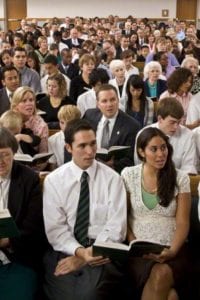
Members sitting in Sacrament Meeting
Members in Sacrament Meeting. Picture source: https://www.lds.org/media-library/images/sacrament-meeting-578251?lang=eng

Recently, a video has been on social media about a 12 year old young woman speaking in a testimony meeting about being gay. This is being promoted as a heartfelt moment of tenderness, only to be ruined by the bad stake leader, who happened to be on the stand that day, who asked her to sit down. The mom writes, “…this stake member chose to hurt my child, I don’t know his reasons.”[1]

So, let’s put this in context.

UNDERSTANDING LDS CHURCH MEETINGS

Each Sunday, Mormons meet together. Our most sacred meeting is called “Sacrament Meeting.” According to the Church Handbook of Instructions, 18.2.2, it says:

Each sacrament meeting should be a spiritual experience in which members of the Church renew their covenants by partaking of the sacrament. Other purposes of sacrament meeting are to worship, provide gospel instruction, perform ordinances, conduct ward business, and strengthen faith and testimony.[2]

In instructions given to Church leaders we read:

…bishoprics and branch presidencies need to plan sacrament meetings thoughtfully in order to keep the meetings focused on the Lord and His Atonement, His example, and the doctrines of the gospel.[3]

One Sunday each month, members have a special Sacrament meeting called “Fast and Testimony” meeting. Prior to attending the meeting, members typically go without eating two meals. This fasting is to put themselves into a spiritual frame of mind of worship. Usually, members take the money saved from fasting and put it towards feeding the poor. As part of that meeting, after the sacrament (Communion), “the conducting brother bears a brief testimony. He then invites members to bear brief, heartfelt testimonies of the Savior, His teachings, and the Restoration.”[4]

These testimonies are not speeches or talks. They are not pre-written. They are not a time of advocacy. They are short, extemporaneously expressed, heartfelt feelings about the Gospel of Jesus Christ and how we have been strengthened by it. On lds.org it says:

A testimony is a spiritual witness given by the Holy Ghost. The foundation of a testimony is the knowledge that Heavenly Father lives and loves His children; that Jesus Christ lives, that He is the Son of God, and that He carried out the infinite Atonement; that Joseph Smith is the prophet of God who was called to restore the gospel; that The Church of Jesus Christ of Latter-day Saints is the Savior’s true Church on the earth; and that the Church is led by a living prophet today. With this foundation, a testimony grows to include all principles of the gospel. [5]

With this in mind, let’s look at this incident.

THE EVENT

From her mother, we learn that Savannah has been struggling recently. Her Dad and 4 siblings attend church regularly, while her mom stays home with “our oldest”. From context, that appears to be Savannah. Savannah was the one who wanted to do this. She had been pushing her parents on this for several months. Her mother says:

She wanted to be herself in front of them, see if church would be a place to accept her, and to speak up in case there was another LGBT person in the congregation that needed to hear they weren’t alone.

So, Savannah invited several of her friends to come hear her, and they recorded the event.[6] Several in the Ex Mormon community, including the guy who sneaks into Temples to record people, are now pushing hard to get this incident promoted to all of the press outlets and on social media.[7]

As this girl’s parents know, Fast and Testimony meeting isn’t a place for giving speeches, which is what she did. She had her speech all written out and read it from the pulpit. I wish her parents had talked with her more about appropriate forums and venues. This isn’t about whether a girl is struggling with her sexuality, or about how a Church leader handled it. This is a clear case of hijacking a meeting, promoting false teachings, and exploiting a child’s inexperience to create a media event. Savannah was likely allowed to say much more from the pulpit than an adult would have been allowed to say.

Her testimony starts out fine.

Hi, my name is Savannah, and I want to share my testimony with you.
I believe I am the child of Heavenly parents.
I don’t know if they talk to us, but I feel in my heart that they made me and that they love me.
I believe that I was made the way I am, all parts of me, by my Heavenly Parents.
They did not mess up when they gave me brown eyes, or when I was born bald. They did not mess up when they gave me freckles, or when they made me to be gay.

That part is fine. Even mentioning her sexuality, could be seen as appropriate within a testimony given during Fast and Testimony meeting. Next, in an actual testimony, you would expect something about how some life event, has helped her to grow spiritually. But, Savannah doesn’t do that. She goes on advocating for her position by saying:

“No part of me is a mistake.”

“I do not choose to be this way and it is not a fad.”

“I know I am not a horrible sinner for being who I am.”

“I know I can have all of these things as a lesbian and be happy.”

“I believe that if God is there, he knows I am perfect just the way I am and would never ask me to live my life alone or with someone I am not attracted to.”

In the middle of her speech she says, “I believe God would tell me if I was wrong.”

Well, as members of The Church of Jesus Christ of Latter-day Saints we believe he did exactly that. We do not believe she is a “horrible sinner” for being who she is, but you will find our teachings on family and relationships clearly stated in the document titled “The Family, a Proclamation to the World.”[8] This is a fundamental belief of our faith. In essence, she is saying that she doesn’t trust the teachings of Jesus Christ given through our prophets today.

THE EXIT NARRATIVE

While talking about the love of God, which we can all agree with, her speech was calling out the beliefs of the Church of Jesus Christ of Latter-day Saints as false. It follows the pattern of a typical exit narrative which reads, I used to believe the Church is true, but now I find joy and happiness outside of Church teachings. I hope you will give up your false beliefs and follow me. Anyone advocating that from the pulpit should be asked to step down, even if they are twelve years old.

HEAVENLY FATHER’S PLAN

Savannah is correct in stating that we are all unique. We are all born with various talents and gifts. We are all born with passions and desires. We are all born with weaknesses and frailties.

Heavenly Father’s plan is to have us learn to overcome our weaknesses and frailties. It is to control our passions and desires. It is to develop our talents and gifts. He gave us a set of guidelines called commandments that will give us the greatest amount of happiness in mortality and eternal life. The question is if we believe and trust Him.

None of us are perfect just the way we are. That is a child’s point of view. All of us have difficulties. Many of us do have to live our lives alone. It is one of life’s many challenges.

THE FUTURE

I wish Savannah the best no matter what her future choices might be. I hope that her parents, step in to de-escalate this event. Every child needs to be allowed to grow. I think of those young people I know who thought they were gay when they were 12 or 13, and are now in happy heterosexual relationships. I care for one of them very much. I would hate to have had her in the headlines while she was deciding which direction her life might go.

After Savannah spoke, the Church leader conducting stood up and repeated the uplifting and true statements that Savannah made. There was no harsh language. There was no condemnation. There was no negative judgement. There was no lack of support for Savannah as a daughter of God. What occurred was a stake leader protecting the purpose of the Sacrament meeting and refocusing it on the Gospel of Jesus Christ. This was simply a case of inappropriate venue and advocacy.


[1] https://www.reddit.com/r/exmormon/comments/6a31bl/did_anyone_hear_about_the_12yo_girl_whose_mic_was/

[2] https://www.lds.org/handbook/handbook-2-administering-the-church/meetings-in-the-church/18.2.1?lang=eng#182

[3] https://www.lds.org/ensign/2004/08/worshiping-at-sacrament-meeting?lang=eng&_r=1

[4] https://www.lds.org/ensign/2004/08/worshiping-at-sacrament-meeting?lang=eng&_r=1

[5] https://www.lds.org/topics/testimony?lang=eng

[6] Recording our worship service in the chapel is against church policy. But, being guests, they likely didn’t know that, or didn’t care.

[7] He stated on Reddit, “I offered to edit and distribute the video as well as promote the hell out of it. I’ve spent at least 40 hours in the past ten days editing and promoting the video to every media contact I’ve made (and a lot of new ones).”

[8] https://www.lds.org/topics/family-proclamation?lang=eng&old=true

Filed Under: Homosexuality Tagged With: Family, homosexuality, youth

Attacking the LDS Church’s Tax Exempt Status

January 19, 2017 by Scott Gordon

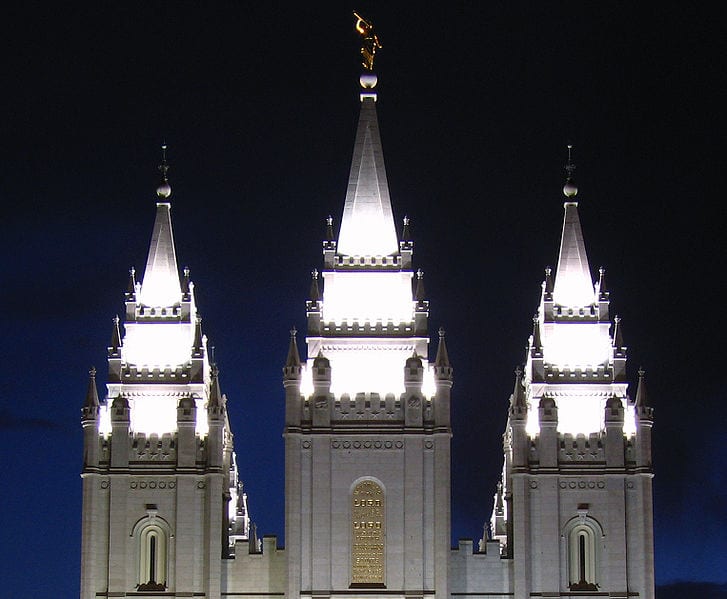
LDS Salt Lake City Temple
Photo from https://commons.wikimedia.org/wiki/File:Salt_Lake_Temple_spires.jpg

LGBT political advocate Fred Karger has threatened to file a complaint against the “Mormon Church,” otherwise known as The Church of Jesus Christ of Latter-day Saints, with the IRS once he uncovers the Church’s “vast business holdings and all of the secret political activities.”[1]  He hopes to get the tax exempt status of the Church revoked.[2] To assist with this, he has launched a TV ad campaign and has put up a new Website looking for tips and documents that will support his cause.

So, as I understand it, once he finds evidence of a crime—because he is sure there has been a crime, he will act on it and report the Church to the IRS, which he is sure will revoke the Church’s tax exempt status.

This sounds a lot like when he accused the Church of election fraud in 2008. The Church filed some of its reports with the State of California using the wrong forms. They gave the State the correct amount of in-kind donations, but in the last two weeks of the election failed to put it on the daily form that is required.

To be clear, they told the State the correct number, but just put in on the wrong form, which had a different due date.[3]

Even though the state law in question specifically states it doesn’t deal with election fraud[4]; even though the Church corrected the paperwork and paid their fine for late notification; even though the State of California recognized that the instructions were not clear so they changed them after this incident, it didn’t stop Fred Karger from crying fraud. In an article in the Huffington Post he claimed,

“The FPPC prosecuted the Church, and after an 18 month investigation, found the Mormon Church guilty on 13 counts of election fraud. The Church plead guilty and paid a fine.”[5]

This isn’t even possible because the FPPC does not deal with election fraud and specificially says so on its Website.[6] To put it another way, if it involves the FPPC, it isn’t election fraud. If it were election fraud, it would go to Investigative Services in the Secretary of State’s office, which it didn’t in this case.

For a more in depth discussion on this, see http://www.mormonnewsroom.org/article/background-information-on-the-fppcs-enforcement-process

If you want more discussion on Prop 8 and Mormons, see http://en.fairmormon.org/Mormonism_and_politics/California_Proposition_8

Since that time Fred Karger seems to be looking for other avenues to punish the Church. This Mormon tips ad campaign seems to be his new project.

In reading the comment section of articles about Fred’s new project, I have seen quite a bit of confusion from others regarding politics and a church’s tax exempt status.

So let’s review the information about politics and all tax exempt organizations including churches.

All tax exempt organizations, including churches, are allowed to be politically active.

For those that missed it, let me repeat that. All tax exempt organizations, including churches, are allowed to be politically active.

Some tax exempt organizations even have political lobbying as one of their main activities. Think of organizations like the Sierra Club, the NRA, Planned Parenthood, AARP, GLAD, National Association for Transgender Rights, and even Americans United for the Separation of Church and State. Lobbying is a big part of their purpose for existing. Can you imagine the uproar if the NRA or Sierra Club were not allowed to be politically involved?

So long as they qualify under the IRS substantial part test, it is legal to be political. The substantial part test maintains an organization cannot spend a substantial part of its total budget on political activities. While it is unclear what “substantial part” means, most organizations use a 20% rule of thumb.[7] The Church of Jesus Christ of Latter-day Saints is an international organization with millions of members. Given the Church’s low level of political involvement, even Barry Lynn, executive director of Americans United for the Separation of Church and State, the leading advocacy organization on the issue, does not see any risk of the LDS Church violating this rule.[8]

What churches and other 501(c)3 organizations are not allowed to do is engage in political campaigning for a particular candidate.[9] There has been some recent controversy on this. More on that later. First let’s talk about the tax exempt nature of churches.

The Supreme Court debated this issue in 1970. In Walz v. Tax Commission of the City of New York, the Supreme Court ruled 7-1 the tax exemption for churches is fair because tax exemption is a benefit not solely given to religious groups, but includes groups like schools and nonprofits. They made the following findings:

  1. The First Amendment tolerates neither governmentally established religion nor governmental interference with religion. Pp. 667-672.
  2. The legislative purpose of tax exemptions is not aimed at establishing, sponsoring, or supporting religion. Pp. 672-674.
  3. The tax exemption creates only a minimal and remote involvement between church and state, far less than taxation of churches would entail, and it restricts the fiscal relationship between them, thus tending to complement and reinforce the desired separation insulating each from the other. Pp. 674-676.
  4. Freedom from taxation for two centuries has not led to an established church or religion, and, on the contrary, has helped to guarantee the free exercise of all forms of religious belief. Pp. 676-680.[10]

Chief Justice Burger even addressed the common complaint that churches should only be tax exempt as they feed the poor and do other good works. He wrote:

We find it unnecessary to justify the tax exemption on the social welfare services or “good works” that some churches perform for parishioners and others — family counseling, aid to the elderly and the infirm, and to children. Churches vary substantially in the scope of such services; programs expand or contract according to resources and need. As public-sponsored programs enlarge, private aid from the church sector may diminish. The extent of social services may vary, depending on whether the church serves an urban or rural, a rich or poor constituency. To give emphasis to so variable an aspect of the work of religious bodies would introduce an element of governmental evaluation and standards as to the worth of particular social welfare programs, thus producing a kind of continuing day-to-day relationship which the policy of neutrality seeks to minimize. Hence, the use of a social welfare yardstick as a significant element to qualify for tax exemption could conceivably give rise to confrontations that could escalate to constitutional dimensions.[11]

Now let’s look at the restrictions. As I already said, churches and other tax exempt organizations may not campaign for a particular candidate. But, the ban on churches supporting candidates is not as old as, and is less settled than, the tax exempt status of churches. In 1954, then Senator Lyndon B. Johnson of Texas put forward a new law that made it so tax exempt organizations could not support specific political candidates. This not only affected churches, but all 501(c)3 non-profit organizations. There have been several recently who have lobbied for a repeal of this law claiming it violates the first amendment. Many believe that it was put forward in retaliation for the support a non-religious non-profit organization that gave support to Johnson’s political opponent.[12] There has been some recent discussion as to whether the law is constitutional, but it has already survived several court challenges and is unlikely to change.

To summarize:

All non-profit organizations including churches are allowed to be politically involved. Under current law, the only two restrictions they have are:

  1. They can’t publicly support a political candidate.
  2. They can’t spend a substantial part of their budget on politics. This is currently interpreted to mean spending more than 20% of their total budget. Total budget includes everything they do.

Other than those two restrictions, they are free to support or oppose any political cause they please. This can be national, state, or local politics and is not limited to items of a religious nature.

Finally, there is one more claim that Mr. Fred Karger makes on his Website that we need to address. He states:

The Mormon Church’s business holdings, estimated to be nearly $1 trillion, are run as tax free enterprises owned outright by the Church. Thus the Mormon Church does not likely pay any federal, state or local taxes on its profits from all its holdings.

This is simply false. In 1991 April General conference, Gordon B. Hinckley said the following:

I repeat, the combined income from all of these business interests is relatively small and would not keep the Church going for longer than a very brief period. I add, also, that these commercial properties are tax-paying entities who meet their tax obligations under the laws of the areas where they are located.

Again, all such commercial properties are taxed under the government entities where they are located. Not only do they pay property taxes, but also income taxes on any profits. So it is with all of the commercial operations of the Church.[13]

To summarize:

  1. Churches can legally be involved in elections and political issues involving gay marriage, marijuana use, euthanasia, housing, gun control, missile defense, global warming, taxes, zoning changes, school bonds, or any other issues they desire. Demands for revoking tax exempt status shows a lack of understanding of the law.
  2. Churches, under the Johnson Amendment law, may not campaign for a particular candidate. There is controversy over the legality of this law, but it has been upheld in more than one court decision.
  3. The Supreme Court has ruled that churches are not to be judged for tax exemption based on feeding the poor or doing other good works. That would create a situation of government monitoring churches, create excessive entanglement, and would violate the constitution.
  4. The Church of Jesus Christ of Latter-day Saints pays taxes on all of its commercial properties such as Deseret Book, Bonneville International Corporation, and Utah Property Management Associates. This includes property taxes and income taxes.
  5. Fred Karger, the person heading up this campaign to strip the Church of its tax exempt status by soliciting questionably obtained documents, does not have a good track record for understanding the law, or representing what it means.

There is no risk of The Church of Jesus Christ of Latter-day Saints (aka The Mormon Church) losing tax exempt status no matter what political cause it may engage in. Political speech is all constitutionally protected. This issue has already gone to the Supreme Court and they have ruled on it. This recent campaign by Fred Karger is nothing more than Don Quixote attacking windmills.

—————————————————————————————————————–

[1] Quote from Fred’s recent Television commercial which is airing in Utah this month.

[2] http://www.sltrib.com/home/4690644-155/lgbt-activist-plans-ad-blitz-targeting

[3] http://www.mormonnewsroom.org/article/statement-regarding-fppc-settlement

[4] http://www.fppc.ca.gov/enforcement/file-a-complaint.html

[5] http://www.huffingtonpost.com/fred-karger/mormon-church-bleeding-me_b_8299882.html

[6] http://www.fppc.ca.gov/enforcement/file-a-complaint.html

[7] http://www.nolo.com/legal-encyclopedia/how-much-lobbying-can-nonprofit-do.html

[8] http://www.sfgate.com/bayarea/article/Tax-exempt-benefit-disputed-in-Prop-8-campaign-3183401.php

[9] https://www.nolo.com/legal-encyclopedia/limits-political-campaigning-501c3-nonprofits-29982.html

[10] https://www.law.cornell.edu/supremecourt/text/397/664

[11] https://www.law.cornell.edu/supremecourt/text/397/664 Page 674

[12] http://www.politifact.com/truth-o-meter/statements/2016/jul/22/donald-trump/donald-trump-correct-lyndon-johnson-passed-legisla/

[13] https://www.lds.org/general-conference/1991/04/the-state-of-the-church?lang=eng

Filed Under: Anti-Mormon critics

Charity Never Faileth

July 18, 2016 by Scott Gordon

And now abideth faith, hope, charity, these three; but the greatest of these is charity[1]

Last month, I had the pleasure of meeting with members in Norway, Sweden, and Scotland. I met with members who had strong testimonies, members who were struggling, and members who no longer believe. It was a wonderful experience, and I enjoyed every minute of it. Ok, almost every minute. There were some moments of being a bit uncomfortable in a discussion or two. But, by and large, I really enjoyed it.

With that in mind, I would like to tell you about my interaction with some of the Saints in Scotland. I loved my time in the Nordic countries as well, but I can only talk about one thing at a time. In Scotland, I met with three different stakes. I was really impressed that all of the stake presidents were kind and really cared about all of their people. They loved them. That came across strongly in their words and actions.

In two of the stakes, the Stake presidents had me meet with members who had concerns about the Church. [2]

Now, first of all, it is difficult to put a label on these members. We love to put labels on people. We routinely talk about active and less-active members in our wards. We sometimes even talk about faithful, or less faithful. I have heard labels such as disaffected, discouraged, or in extreme cases disloyal. I don’t think any of those labels apply perfectly to the individuals that I met with, and certainly the word disloyal would not apply at all. The best label I could have would be brothers and sisters in the Gospel who have concerns. Yes, some of them no longer attend church, but all of them wanted things to be better.

In my first meeting, I was one-on-one with a member who attends church but has questions.[3] He had spent significant time reading most of the Websites that FairMormon spends time responding to. In other words, they were Websites that I wouldn’t recommend for people who are interested in becoming and remaining faithful. But, the man was a lovely man. A wonderful man. A man whom I hope I can now count as my friend. His questions were not a burden or a problem. He wanted answers. He had been unable to find them. He had read some responses, but didn’t find them all persuasive. This made him concerned. He saw value in the Church, and value in FairMormon. He saw value in his family attending church. He made helpful suggestions.  We left with him giving me a list of concerns and me promising to read them all carefully. At this point, I have been really busy catching up at work, but I have read some of them and intend to read and examine all of them.

In the second meeting I walked in and found 15 to 20 (I didn’t count) people sitting there, most of them having significant questions about the Church. While things were a bit tense at first, after we got to know each other better, it became more of an exchange of experiences. Things became much more relaxed. As we were talking, I saw that these were good people. Salt-of-the-earth people. People who I would truly value and cherish. Let me put it this way, if I were sitting at a ward dinner, and one of these people came to sit down next to me, I would be really happy. If I saw them before they saw me, I would invite them over. I would love to have them at my house for dinner. If they ever come to Northern California, the invitation stands open. They were honest and sincere. They had legitimate concerns that they had not been able to reconcile, partly because, in my opinion, they fully embraced the outside narrative and discounted the faithful narrative. But, they had reasons for doing so. Did I convince anyone? I doubt it. That wasn’t really the point. I hope that by the time I left they became a little more trusting of the sources that promote the positive narrative, and a little more skeptical of the sources that promote the negative narrative. For my part, I know that I became more sympathetic to their concerns.

Think about this. They had concerns about the Church. Some of them don’t attend any more. The stake president had called and invited them to this meeting at the Church building and they came. They showed up! If I were in their position, I’m not sure I would have done the same.

Sometimes in our discourse about the truth claims of the Church, we forget that there are real people on the other side of the issue. In a recent blog post about online discussions Sean Blanda writes:[4]

It’s a preference to see the Other Side as a cardboard cutout, and not the complicated individual human beings that they actually are.

I see this happening on both sides.

The active (faithful, believing, true blue, whatever) members see the questioning (disaffected, discouraged, less active, whatever) members as attacking them personally when they raise questions about the fundamental truth claims of their belief. I believe some of this comes from a fear that we might not be able to answer the questions, or that there is no answer to the questions. This means we sometimes lash out in an attempt to silence them.

The questioning members, on the other hand, see this wall of silence from people who don’t want to hear their questions. Conversations, attempts to connect, and attempts to correct from the non-questioning (fully believing) side are sometimes seen in a less than charitable light. Let’s face it, many members have not studied the issues, and often their attempts to answer the questions are simply incorrect. Those sincere, but unsatisfying answers are seen as manipulative and misleading. Other times, for those who have completely left, their leaving experience was so painful that they feel justified in giving a little payback. I have been on the receiving end of that on more than one occasion.

I have seen some very hurtful things. The blogger Sean Blanda further writes:

Over time, this morphs into a subconscious belief that we and our friends are the sane ones and that there’s a crazy “Other Side” that must be laughed at — an Other Side that just doesn’t “get it,” and is clearly not as intelligent as “us.” But this holier-than-thou social media behavior is counterproductive, it’s self-aggrandizement at the cost of actual nuanced discourse and if we want to consider online discourse productive, we need to move past this.[5]

This is the message I would like to get across. We need to have charity for each other. We need to see others as our brothers and sisters – whether you or they remain in the Church or not. No matter which side you are on. Based on their experiences and information, the “Other side” is being rational. Those that leave are not evil, and those that stay are not “Living in a bubble.”[6] Charity never faileth. Let’s try to put that into practice.

[1] . 1 Corinthians 13:13

[2] I would like to talk about all three stakes, but I have to limit this to get through the post. You don’t want to have to read a post the length of War and Peace.

[3] In the interest of full disclose my wife and the Stake President were there as well. But, the two of us did most of the talking.

[4] https://medium.com/@SeanBlanda/the-other-side-is-not-dumb-2670c1294063#.d50kq3cjm

[5] ibid

[6] It would be difficult to portray me, or other FairMormon volunteers, as living in a bubble as we have read all of the criticisms that are out there. I have been reading anti Mormon literature since I was 14 years old. A few of my non-Mormon friends have tried to convert me. FairMormon gets multiple questions every day. Through long experience, I have learned to be skeptical of the less faithful narrative.


Picture of Scott Gordon
Scott Gordon

Scott Gordon is president of FairMormon.

Picture at the top of the blog is from Glamis Castle in Scotland. Source:Rev Stan (Flickr: Glamis Castle) [CC BY 2.0 (http://creativecommons.org/licenses/by/2.0)], via Wikimedia Commons

Filed Under: Apologetics

Three Mormon Myths About Blacks and the Priesthood

February 25, 2012 by Scott Gordon

February is black history month. Many white members of The Church will say “who cares?” or “good for them!” or even “aren’t they over that yet?” and move on about their daily tasks. That’s unwise. With the presidential election in full swing, our faith and our history of race relations has come under the spotlight of public scrutiny and the intensity will continue to grow. As that happens, I am hopeful that we as members are educated to move the discussion forward instead of saying things that are harmful to the Church and hurtful to many of our members. [Read more…] about Three Mormon Myths About Blacks and the Priesthood

Filed Under: Book of Abraham, Book of Moses, LDS Culture, LDS History, Racial Issues

Baptism for the Dead and the Jews

February 25, 2012 by Scott Gordon

There has been an outpouring of outrage over several Jewish names that have been entered into the Church’s family history database. The level of outrage is sometimes difficult for us as Mormons to comprehend. We believe this is an act of love and compassion. Asking us not to do baptisms is akin to being asked not to love someone.

But, upon deeper reflection, I have come to a better understanding of what they may be feeling. There is a long history of forced conversions of Jews. Especially during the time of Nazi Germany, many Jews turned to their Christian neighbors to help save their families. Their children were often baptized to hide their background. Try to imagine turning our children over to the Southern Baptists for baptism, knowing that they would be forced to turn away from our faith. It would be a very difficult event for us. [Read more…] about Baptism for the Dead and the Jews

Filed Under: Interfaith Dialogue, News stories

Northwest College and LDS student recruitment

April 12, 2010 by Scott Gordon

Recently there has been some commotion about a recruiting letter to LDS at Northwest College in Powell Wyoming. You can read about it in the Billings Gazette here and here.

Working at a college myself, I recognize that some of the issue has nothing to do with Mormons but was a way to express displeasure with the College President who happens to be LDS. Nevertheless, the comments as represented in the press,  certainly pose some troubling questions. Is it a violation of state law to send recruiting material to students if those students belong to a religious organization? Did some faculty and students use this opportunity to vent their anti-Mormon feelings? Does this now create a hostile educational environment for LDS students at Northwest College? Is Northwest College showing intolerance toward the LDS?
[Read more…] about Northwest College and LDS student recruitment

Filed Under: News stories

May FAIR Journal

June 5, 2009 by Scott Gordon

===================================================================

THE FAIR JOURNAL                                              May 2009

———————————————————————-

The Foundation for Apologetic Information and Research

———————————————————————-

Apologetics: The branch of theology that is concerned with

defending or proving the truth of Christian doctrines. (The

American Heritage Dictionary of the English Language, Fourth

Edition, 2000.)

INSIDE THE JOURNAL

———————————————————————-

* MESSAGE FROM THE PRESIDENT. The FAIR Conference is fast

approaching! It is time to register.
[Read more…] about May FAIR Journal

Filed Under: News from FAIR

FAIR Puts Together Prop 8 Information Page

November 19, 2008 by Scott Gordon

The Foundation for Apologetic Information and Research (FAIR) launched a new webpage about The Church of Jesus Christ of Latter-day Saints (Mormon) and California Proposition 8. The passage of California Proposition 8 during the November 2008 election has generated a number of criticisms of the LDS Church regarding a variety of issues including the separation of church and state, accusations of bigotry, and the rights of a non-profit organization to participate in the democratic process. This page documents the events leading up to and resulting from the effort to pass California Proposition 8 as they relate to Latter-day Saints. Your comments on the webpage are welcome.

Filed Under: News from FAIR, Politics

Post Prop 8 election blues

November 8, 2008 by Scott Gordon

It is interesting to see the reaction against Mormons now that the election is over. There are protests at the Temples, a chapel in Orangevale was vandalized, and a boycott on Utah has been called.

During the election, there was even an anti-Mormon commercial that shows Mormon Missionaries invading a home and pawing through women’s underwear to find a marriage certificate to tear up.

Some have commented that the ex-Mormon community has used the cover of the election to strike some blows against the Church.

On the positive side, Church Leaders in other faiths have come out in our defense.

I thought one of the more interesting ant-Mormon rants came from actress-comedian Rosanne Barr.

[Read more…] about Post Prop 8 election blues

Filed Under: Anti-Mormon critics, News stories, Politics Tagged With: Add new tag

  • « Go to Previous Page
  • Go to page 1
  • Go to page 2
  • Go to page 3
  • Go to Next Page »

Primary Sidebar

Faithful Study Resources for Come, Follow Me

Subscribe to Blog

Enter your email address:

Subscribe to Podcast

Podcast icon
Subscribe to podcast in iTunes
Subscribe to podcast elsewhere
Listen with FAIR app
Android app on Google Play Download on the App Store

Pages

  • Blog Guidelines

FAIR Latest

  • Come, Follow Me with FAIR – Doctrine and Covenants 137–138 – Part 2 – Autumn Dickson
  • Come, Follow Me with FAIR – Doctrine and Covenants 137–138 – Mike Parker
  • FAIR December Newsletter
  • Come, Follow Me with FAIR – Doctrine and Covenants 137–138 – Part 1 – Autumn Dickson
  • Prophets of God 

Blog Categories

Recent Comments

  • LHL on Come, Follow Me with FAIR – Doctrine and Covenants 132 – Mike Parker
  • Stephen Johnsen on Come, Follow Me with FAIR – Doctrine and Covenants 132 – Mike Parker
  • Bruce B Hill on Come, Follow Me with FAIR – Doctrine and Covenants 124 – Part 1 – Autumn Dickson
  • Gabriel Hess on Join us Oct 9–11 for our FREE virtual conference on the Old Testament
  • JC on When the Gospel “Doesn’t Work”

Archives

Follow Us

  • Facebook
  • Twitter
  • iTunes
  • YouTube
Android app on Google Play Download on the App Store

Footer

FairMormon Logo

FAIR is a non-profit organization dedicated to providing well-documented answers to criticisms of the doctrine, practice, and history of The Church of Jesus Christ of Latter-day Saints.

Donate to FAIR

We are a volunteer organization. We invite you to give back.

Donate Now

Site Footer