• Skip to primary navigation
  • Skip to main content
  • Skip to primary sidebar
  • Skip to footer

FAIR

  • Find Answers
  • Blog
  • Media & Apps
  • Conference
  • Bookstore
  • Archive
  • About
  • Get Involved
  • Search

Family

Anger Without A Cause? – President Oaks and a False Narrative

December 18, 2018 by FAIR Staff


The debate surrounding LGBT issues is one high in emotion and passion, with all sides having strongly held beliefs and entrenched views. Often, the flash point of these debates revolves around the religious beliefs of those who question the morality of LGBT behavior. The Church of Jesus Christ of Latter-day Saints is no exception to this rule, being one of the more conservative religions when it comes to this topic. One church leader in particular has himself become a lightning rod on the subject.

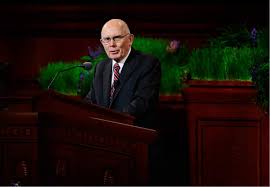
“Harmful rhetoric” and “discrimination” were alleged to have been a part of President Dallin H. Oaks’ recent General Conference talk entitled Truth and the Plan. These claims were made by Lori Davis, a Board Member of a group called Mama Dragons, a group whose stated purpose is to provide support for Mormon and former Mormon mothers of LGBT children. A brief review of social media and other contemporary news articles will quickly demonstrate that the Mama Dragons were not alone in their feelings that some wrong was committed by Elder Oaks. Others actually implied that people may have to call a crisis line following the talk. Such drastic condemnation would certainly lead the reasonable reader to ask what horrible thing President Oaks said to possibly elicit such a strong response.

Unfortunately, despite the strong rhetoric, many who made the condemning statements on social media and elsewhere failed to cite what words were actually offensive. General indignation seemed to be sufficient for those people. Some, fortunately, were more specific. I’d like to look at several of them, and analyze what they might tell us about this issue, how those from different viewpoints are approaching it, and what we can learn from it. [Read more…] about Anger Without A Cause? – President Oaks and a False Narrative

Filed Under: Uncategorized Tagged With: apologetics, Family, Gospel Doctrine: Old Testament, Gospel topics, homosexuality, Marriage, same-sex marriage, sames sex attraction, youth

Is the Spirit of Elijah a Healing Power in Addition to Being a Sealing Power? (Gospel Doctrine Lesson 28A)

August 7, 2018 by Jeffrey M. Bradshaw

Elijah Slays a Priest of Baal, Mount Carmel, Israel. Photograph by Jeffrey M. Bradshaw, 9 May 2014

An Old Testament KnoWhy relating to the reading assignment for Gospel Doctrine Lesson 28: “After the Fire a Still Small Voice (1 Kings 17-19) (JBOTL28A)


Question:Is there more to the “Spirit of Elijah” than the formal work of family history and temple ordinances for sealing?

Summary:The keys restored by Elijah were not given simply to enable priesthood ordinances to be performed with authority. In the performance of family history work and sealing ordinances, estranged family members may be brought together through the love and forgiveness that should accompany that service.


The full article may be found at the Interpreter Foundation website: KnoWhy OTL28A — Is the Spirit of Elijah a Healing Power in Addition to Being a Sealing Power?

Filed Under: Bible, Lesson Aids, Questions, Resources, Temples Tagged With: 1 Kings, 2 Kings, Carlfred Broderick, child abuse, Elijah, Family, Forgiveness, Gospel Doctrine: Old Testament, Healing, Sealing, Truman G. Madsen

Of Testimonies and Twelve Year Olds

June 18, 2017 by Scott Gordon

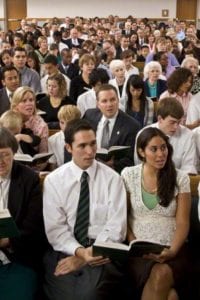
Members sitting in Sacrament Meeting
Members in Sacrament Meeting. Picture source: https://www.lds.org/media-library/images/sacrament-meeting-578251?lang=eng

Recently, a video has been on social media about a 12 year old young woman speaking in a testimony meeting about being gay. This is being promoted as a heartfelt moment of tenderness, only to be ruined by the bad stake leader, who happened to be on the stand that day, who asked her to sit down. The mom writes, “…this stake member chose to hurt my child, I don’t know his reasons.”[1]

So, let’s put this in context.

UNDERSTANDING LDS CHURCH MEETINGS

Each Sunday, Mormons meet together. Our most sacred meeting is called “Sacrament Meeting.” According to the Church Handbook of Instructions, 18.2.2, it says:

Each sacrament meeting should be a spiritual experience in which members of the Church renew their covenants by partaking of the sacrament. Other purposes of sacrament meeting are to worship, provide gospel instruction, perform ordinances, conduct ward business, and strengthen faith and testimony.[2]

In instructions given to Church leaders we read:

…bishoprics and branch presidencies need to plan sacrament meetings thoughtfully in order to keep the meetings focused on the Lord and His Atonement, His example, and the doctrines of the gospel.[3]

One Sunday each month, members have a special Sacrament meeting called “Fast and Testimony” meeting. Prior to attending the meeting, members typically go without eating two meals. This fasting is to put themselves into a spiritual frame of mind of worship. Usually, members take the money saved from fasting and put it towards feeding the poor. As part of that meeting, after the sacrament (Communion), “the conducting brother bears a brief testimony. He then invites members to bear brief, heartfelt testimonies of the Savior, His teachings, and the Restoration.”[4]

These testimonies are not speeches or talks. They are not pre-written. They are not a time of advocacy. They are short, extemporaneously expressed, heartfelt feelings about the Gospel of Jesus Christ and how we have been strengthened by it. On lds.org it says:

A testimony is a spiritual witness given by the Holy Ghost. The foundation of a testimony is the knowledge that Heavenly Father lives and loves His children; that Jesus Christ lives, that He is the Son of God, and that He carried out the infinite Atonement; that Joseph Smith is the prophet of God who was called to restore the gospel; that The Church of Jesus Christ of Latter-day Saints is the Savior’s true Church on the earth; and that the Church is led by a living prophet today. With this foundation, a testimony grows to include all principles of the gospel. [5]

With this in mind, let’s look at this incident.

THE EVENT

From her mother, we learn that Savannah has been struggling recently. Her Dad and 4 siblings attend church regularly, while her mom stays home with “our oldest”. From context, that appears to be Savannah. Savannah was the one who wanted to do this. She had been pushing her parents on this for several months. Her mother says:

She wanted to be herself in front of them, see if church would be a place to accept her, and to speak up in case there was another LGBT person in the congregation that needed to hear they weren’t alone.

So, Savannah invited several of her friends to come hear her, and they recorded the event.[6] Several in the Ex Mormon community, including the guy who sneaks into Temples to record people, are now pushing hard to get this incident promoted to all of the press outlets and on social media.[7]

As this girl’s parents know, Fast and Testimony meeting isn’t a place for giving speeches, which is what she did. She had her speech all written out and read it from the pulpit. I wish her parents had talked with her more about appropriate forums and venues. This isn’t about whether a girl is struggling with her sexuality, or about how a Church leader handled it. This is a clear case of hijacking a meeting, promoting false teachings, and exploiting a child’s inexperience to create a media event. Savannah was likely allowed to say much more from the pulpit than an adult would have been allowed to say.

Her testimony starts out fine.

Hi, my name is Savannah, and I want to share my testimony with you.
I believe I am the child of Heavenly parents.
I don’t know if they talk to us, but I feel in my heart that they made me and that they love me.
I believe that I was made the way I am, all parts of me, by my Heavenly Parents.
They did not mess up when they gave me brown eyes, or when I was born bald. They did not mess up when they gave me freckles, or when they made me to be gay.

That part is fine. Even mentioning her sexuality, could be seen as appropriate within a testimony given during Fast and Testimony meeting. Next, in an actual testimony, you would expect something about how some life event, has helped her to grow spiritually. But, Savannah doesn’t do that. She goes on advocating for her position by saying:

“No part of me is a mistake.”

“I do not choose to be this way and it is not a fad.”

“I know I am not a horrible sinner for being who I am.”

“I know I can have all of these things as a lesbian and be happy.”

“I believe that if God is there, he knows I am perfect just the way I am and would never ask me to live my life alone or with someone I am not attracted to.”

In the middle of her speech she says, “I believe God would tell me if I was wrong.”

Well, as members of The Church of Jesus Christ of Latter-day Saints we believe he did exactly that. We do not believe she is a “horrible sinner” for being who she is, but you will find our teachings on family and relationships clearly stated in the document titled “The Family, a Proclamation to the World.”[8] This is a fundamental belief of our faith. In essence, she is saying that she doesn’t trust the teachings of Jesus Christ given through our prophets today.

THE EXIT NARRATIVE

While talking about the love of God, which we can all agree with, her speech was calling out the beliefs of the Church of Jesus Christ of Latter-day Saints as false. It follows the pattern of a typical exit narrative which reads, I used to believe the Church is true, but now I find joy and happiness outside of Church teachings. I hope you will give up your false beliefs and follow me. Anyone advocating that from the pulpit should be asked to step down, even if they are twelve years old.

HEAVENLY FATHER’S PLAN

Savannah is correct in stating that we are all unique. We are all born with various talents and gifts. We are all born with passions and desires. We are all born with weaknesses and frailties.

Heavenly Father’s plan is to have us learn to overcome our weaknesses and frailties. It is to control our passions and desires. It is to develop our talents and gifts. He gave us a set of guidelines called commandments that will give us the greatest amount of happiness in mortality and eternal life. The question is if we believe and trust Him.

None of us are perfect just the way we are. That is a child’s point of view. All of us have difficulties. Many of us do have to live our lives alone. It is one of life’s many challenges.

THE FUTURE

I wish Savannah the best no matter what her future choices might be. I hope that her parents, step in to de-escalate this event. Every child needs to be allowed to grow. I think of those young people I know who thought they were gay when they were 12 or 13, and are now in happy heterosexual relationships. I care for one of them very much. I would hate to have had her in the headlines while she was deciding which direction her life might go.

After Savannah spoke, the Church leader conducting stood up and repeated the uplifting and true statements that Savannah made. There was no harsh language. There was no condemnation. There was no negative judgement. There was no lack of support for Savannah as a daughter of God. What occurred was a stake leader protecting the purpose of the Sacrament meeting and refocusing it on the Gospel of Jesus Christ. This was simply a case of inappropriate venue and advocacy.


[1] https://www.reddit.com/r/exmormon/comments/6a31bl/did_anyone_hear_about_the_12yo_girl_whose_mic_was/

[2] https://www.lds.org/handbook/handbook-2-administering-the-church/meetings-in-the-church/18.2.1?lang=eng#182

[3] https://www.lds.org/ensign/2004/08/worshiping-at-sacrament-meeting?lang=eng&_r=1

[4] https://www.lds.org/ensign/2004/08/worshiping-at-sacrament-meeting?lang=eng&_r=1

[5] https://www.lds.org/topics/testimony?lang=eng

[6] Recording our worship service in the chapel is against church policy. But, being guests, they likely didn’t know that, or didn’t care.

[7] He stated on Reddit, “I offered to edit and distribute the video as well as promote the hell out of it. I’ve spent at least 40 hours in the past ten days editing and promoting the video to every media contact I’ve made (and a lot of new ones).”

[8] https://www.lds.org/topics/family-proclamation?lang=eng&old=true

Filed Under: Homosexuality Tagged With: Family, homosexuality, youth

Best of FairMormon: April 2015 General Conference – An Apologetic Review (Part 2 – Sunday Sessions & Women’s Session)

April 19, 2015 by NickGalieti

https://media.blubrry.com/mormonfaircast/www.fairlatterdaysaints.org/wp-content/uploads/2015/04/2015-General-Conference-Sunday-Sessions.mp3

Podcast: Download (89.3MB)

Subscribe: RSS

about-general-conf-interior-2012-03

April 2015 General Conference featured presenters from the presiding quorums and general officers of The Church of Jesus Christ of Latter-day Saints. In this podcast, volunteers from FairMormon discuss the issues and quotes from selected talks through an apologetic perspective.

Panelists in this episode are Steve Densley, and Cassandra Hedelius (via telephone); moderated by Nick Galieti. In this episode, Part 2, the panel reviews the General Conference sessions that were broadcast on Sunday Morning, Sunday Afternoon, and The General Women’s Session.

Click here for a listing of all the General Conference Presentations from LDS.org

Part 1 of the 2015 FairMormon General Conference Review click here.


Filed Under: Apologetics, Articles of Faith, Best of Fair, General Conference, Hosts, Nick Galieti, Podcast, Politics, RiseUp Tagged With: 2015, Family, General Conference, Grace

Best of FairMormon: April 2015 General Conference – An Apologetic Review (Part 1 – Saturday Sessions)

April 8, 2015 by NickGalieti

https://media.blubrry.com/mormonfaircast/www.fairlatterdaysaints.org/wp-content/uploads/2015/04/2015-General-Conference-Saturday-Sessions.mp3

Podcast: Download (96.3MB)

Subscribe: RSS

about-general-conf-interior-2012-03April 2015 General Conference featured presenters from the presiding quorums and general officers of The Church of Jesus Christ of Latter-day Saints. In this podcast, volunteers from FairMormon discuss the issues and quotes from selected talks through an apologetic perspective.

Panelists in this episode are Laura Hales, Stephen Smoot, and Neal Rappleye; moderated by Nick Galieti. In this episode, Part 1, the panel reviews the General Conference sessions that were broadcast on Saturday Morning, Saturday Afternoon, and The General Priesthood Session.

Click here for a listing of all the General Conference Presentations from LDS.org


Filed Under: Apologetics, Best of Fair, General Conference, Nick Galieti, Podcast, RiseUp Tagged With: doubt, Family, General Conference

RiseUp Podcast: President Eyring Defending Marriage at Vatican Colloquium

November 19, 2014 by NickGalieti

https://media.blubrry.com/mormonfaircast/www.fairlatterdaysaints.org/wp-content/uploads/2014/11/RiseUp-PresEyringAtVatican.mp3

Podcast: Download (24.5MB)

Subscribe: RSS

EyringHB_1Apr10President Eyring of the First Presidency of the Church of Jesus Christ of Latter-day Saints was invited to speak at a gathering at the Vatican-The headquarters for the Catholic Church worldwide—Think of it as the Salt Lake City of the Catholic Church..sort of….

(Here is a link to the Church’s press release and world report video on the gathering)

This gathering featured religious leaders from all over the world and from a variety of denominations. In some cases this gathering was called Humanum, in others the gathering was simply referred to the Colloquium.

The website for the event states this as the purpose of the gathering:

The Complementarity of Man and Woman: An International Colloquium is a gathering of leaders and scholars from many religions across the globe, to examine and propose anew the beauty of the relationship between the man and the woman, in order to support and reinvigorate marriage and family life for the flourishing of human society.

Witnesses will draw from the wisdom of their religious tradition and cultural experience as they attest to the power and vitality of the complementary union of man and woman. It is hoped that the colloquium be a catalyst for creative language and projects, as well as for global solidarity, in the work
 of strengthening the nuptial relationship, both for the good of the spouses themselves and for the good of all who depend upon them.

The Colloquium is sponsored by the Congregation for the Doctrine of the Faith and co-sponsored by the Pontifical Council for the Family, the Pontifical Council for Interreligious Dialogue, and
 the Pontifical Council for the Promotion of Christian Unity.

In short, the Catholic church put on a meeting of religious leaders from across the world to talk about and defend the family unit, but more specifically, marriage between a man and a woman. His presentation was about 13 minutes long. This was an important presentation for a few reasons that I can see, but there may be even more.

It was important because historically, such a connection between the LDS Church and the Catholic church was not such an open door. I personally consider this to be a tremendous act of kindness and christian fellowship on the part of the Catholic church to invite President Eyring, but also for President Eyring to attend.

This was also significant in light of the various perspectives and direction the laws of many nations throughout the world have taken with respect to legalizing same-sex marriage. Sometimes we might feel like a small minority of people who believe that marriage should be only between man and woman legally and lawfully married. This event stands to show that some of the largest and most well respected faith traditions in the world can be unified in our defense of God’s moral standard regardless of where some in the world advocate.

President Eyring stood as a prime example of what it means to defend our faith to all the world. He is an apostle and hopefully you will sense the nature of his calling coming through in the message he was sharing. He spoke with authority, and with purpose. While this particular environment was not considered hostile, other engagements between the communities of some of these faiths have not always been so kind to the LDS Church. President Eyring, without fear and without reservation bore his testimony of God our Father, Jesus his divine Son and our Savior, and of the central role of eternal marriage in the plan of Salvation. His example of both missionary work and being one to stand and defend the faith is a powerful example to the membership.

Additionally, this became a message to the larger audience of people that may have misconceptions about the LDS views on marriage in a polygamous sense. While not a direct part of his message, it should be clear that a top leader of the faith has 1 wife. The relationship of current church practice with regard to polygamy is still in question with many people in spite of a tremendous amount of transparency on the part of the church with regards to this issue.

His message is a call for a renascence or a rebirth of happy marriages. While many of you listening to this are young adults, and probably not married or even engaged, marriage is a topic that is something you should be educated on in order to either put your life in order, or know what it means to seek for and work towards having a happy marriage. When that time comes to get married, or what qualities you are to look for is a topic for another time. However, as you listen to President Eyring’s message, you may hear some important advice as you move on in life towards that goal.

So, I am going to play for you parts of the presentation, but I would encourage you to watch the presentation in its entirety.

Filed Under: Marriage, Podcast, RiseUp Tagged With: Family, Marriage, President Eyring, Vatican

The Lives of Mormon Women


Am I an Apologist After All?

I am not sure that I belong at a conference on apologetics for the Church. When Scott Gordon invited me to give this talk last year, I was here because my husband Richard was speaking. I asked him what topic he had in mind. He said he would like a strong defense of polygamy. But I didn’t want to do that.

I don’t think of myself as an apologist at all:

  • I think I look at the facts unflinchingly and say what they mean or suggest.
  • I do not think we do ourselves or anyone else a favor when we try to make the church look any better than it is.

We come off best when we present ourselves as simple Christians who try to live good lives and keep trying even when we don’t succeed. We have wonderful things to share, our community of loving friends, our excellent programs, our access to personal revelation, our belief that our prayers are answered, our moderate way of life, our teachings that promise future improvement and eternal life and those are the things that we should emphasize.

Contemporary Mormonism and the View from Outside

In any case, when Scott Gordon reopened the question in March of this year, he suggested a different topic, something related to LDS women. That’s a topic I like to talk about. I appreciate the opportunity that this invitation gives me to speak to you.

I wrote about women in my new book Contemporary Mormonism where I try to look unflinchingly at the situation and to tell the honest truth. But what I think I say, is not what people hear.

When I submitted the manuscript, the man at the press who asked me to write the book said that it was much too favorable to the Church. I reworked the manuscript for a cooler tone, dealt with the hot issues without emotion and was temperate and descriptive rather than judgmental. So I was interested to read the following review on Amazon.com.

Reframed Because of Bias

Firstly, I have to say, I did not finish this book–not because of lack of interest or time, but because it was much too biased a work to read. The author clearly states she is a Mormon and will use personal experiences and church doctrine in her book, but just saying that doesn’t make it OK. . . . I think there is a difference between using stories from one’s own personal life and just outwardly promoting a cause.

For the most part, she is an apologist, especially concerning women and gays (for the latter, she says, “the seeds of tolerance are growing”–who is she kidding here???). I thought this book would offer a somewhat-objective viewpoint on, believe it or not, contemporary Mormonism–all I got was one of their TV commercials that trick you into watching until the end… but in print form.

However, there were some instances wherein I learned a few things that cleared up a few misconceptions I myself had about Mormon thought. It was surprising to see the scale of converts they have each year. (A statistic which the author never failed to mention to show what a great religion Mormonism is becoming!) All in all, it’s an easy read, but not a worthy one.

So, who am I? Am I an apologist after all? People would be surprised.

People Are Different

As one of my stake presidents used to say, “The most important thing I’ve learned is that people are different.” People respond differently to the same material.

I see us in the church, and in this room ranging along a very broad spectrum of opinion, divided by small degrees of difference. And maybe none of them, none of you, are like me. People are different.

I’m a lifelong active member of the Church, one who knows about the Church by study, by work, and by observation. I’ve watched the Church for good parts of two centuries now. I’ve lived in lots of states, attended many wards, know many Mormons.

I love the Church, I am a product of it. Everything I ever needed to know, I learned at Church.

But, as all of you apologists know, there is a wide gap between what people expect to hear from insiders and outsiders. I am an insider, and I tried to speak to outsiders and be understood.

I want us to be able to interact with the real world, to have them see us as real people. While I hoped I could bridge the gap, the gulf is still a brook too broad for leaping.

All this is to say that you may very well disagree with me. What I am going to do is to talk about some of the issues for women in LDS life, but without the sentimentality that usually goes with those descriptions.

Where Do Latter-day Saint Women Stand?

Just where do the women of the Church stand, those self-sacrificing purveyors of service, that silent majority, that crowd that can never be considered a quorum. Is there a female LDS world?

In this day, it is notable that the Church’s leadership at every level is male. Meetings are run by men in dark suits. As men are recruited, encouraged, refined, groomed, tested, they become strong leaders.

In this churchly kingdom, men are essential. Deep devotion and faithfulness bind men to the Church. During difficult years, as students with heavy obligations, still building careers, with families of young children, men serve as bishops, spending time they cannot spare.

The Church and Male Leadership

There is no question that this socialization program of scouts, priesthood, missions, education, marriage, and church service is a great success for our men.

The pool of seasoned, well-trained, loyal, reliable male leaders in our church is astounding, bottomless, an endless supply of leaders ready to answer any call and to serve wherever asked. The Church is pro-male, but it is not anti female.

Women, too, serve in the Church. Tending to be faithful anyway, women are men’s equals in spirituality, intellect, efficiency, human relations, and hard work.

The Church produces strong, capable women who like men serve despite other heavy obligations. But the Church doesn’t have to work so hard with the women as with the men and so they don’t. Faithful women do not get the encouragement, the recognition or the appreciation that men do.

Women and Priesthood

Men hold priesthood, while women do not. Women, even those in high leadership, ultimately answer to men while Protestant Churches–and at least one branch of Mormonism, the Community of Christ–level gender differences.

There are many explanations why. When I once specifically asked President Kimball why, he said because that’s the way we do it.

I like the folklore that has arisen to explain the disparity. Some Mormons say the priesthood is necessary to make the men equal to women.

Others say that keeping the priesthood a men-only club is a good idea because if the women, who are able to do it all, could do it all, the men would recede. Without duties of their own, short of setting up tables and chairs, men might stay home and watch football.

“Can You Imagine If They Ran the Church?”

One convert described this dynamic.

“I’ve never seen such active, liberated women as in the church. I’ve never been to any other church where women spoke equally with the men. I think it is good that the men have a separate priesthood and the women aren’t permitted to participate in it. That must sound strange because I am a feminist. . . . Look how the women run Relief Society. Can you imagine if they ran the church? The men would be totally out of a job.

Power and Influence for Mormon Women

Without autonomy, women would seem to have little power in this religion. But what is power in religion? Leadership seems important, but many religions, certainly ours, have stressed the humble vineyard worker as the powerful position. The greatest of all is the servant of all.

A New York Times Magazine illustrated this apparent paradox in an issue highlighting Doba Levin, the wife of a Lubavitcher rabbi and the mother of fourteen children. A reader objected to featuring her as a religious exemplar because she was subordinate to her husband, had no independent status, and lived a premodern life. Her activities, the writer said, were clearly circumscribed.

Another correspondent concluded the opposite, noting that as the mother and guide of many, Levin was, in terms of moral independence, powerful indeed.2 This question of where power lies is significant for Mormon women who wield uncelebrated influence.

Is it therefore insignificant or diminished? Should women, apparently not important in modern terms, sue for influence? Should they deny their ambitions? Can women deal with this puzzle?

Mormon Women and Changing American Culture

A chronological consideration of the post-World War II years reads that the Mormons led the return to American domesticity and suburbia. But as the nation moved toward a liberal counter-culture in the Sixties, threatening traditional roles, the Church perpetuated a conservative ideal.

The Church “correlated” autonomous women’s leadership roles under the priesthood. Mormon women, who follow but lag behind national trends, faced a divided culture. In the 50s they had been ideal American women. By the 70s, some felt left behind.

Many women relished their roles in the traditional Church, while a vocal, progressive minority felt ostracized, lamenting the disparity between the LDS female past and present.

Looking to the LDS Female Past

This minority, hoping to expand the sphere of Mormon women beyond the home, looked to the Church’s past for models. As many know, Mormon women got the franchise in 1870, long before U.S. women did. Women’s advocates Susan B. Anthony and Elizabeth Cady Stanton visited in Utah, rallying Mormon women around them.

Utah women voted from 1870 until 1887 when legislation disfranchised all Church members and all females, but Mormons have used this short progressive experiment as evidence of male liberality towards women.

Nineteenth-century male leaders encouraged Mormon women to get education, and Utah had a high percentage of early female doctors. Mormon women worked outside the home, encouraged by Brigham Young who said in 1869,

We believe that women are useful, not only to sweep houses, wash dishes, make beds and raise babies, but they should stand behind the counter, study law or physic, or become good bookkeepers and be able to do the business in any counting house, and all this to enlarge their sphere of usefulness for the benefit of society at large. In following these things they but answer the design of their creation.3

Women’s Roles and Organizational Power

LDS women expected this traditional reliance on women’s talents to continue, and were disappointed when male leaders in the 1970s and 80s suggested a contracted role.

Today most women are likely so busy with their families and congregational duties that they do not think about their limited access to organizational power. They may not notice that their voices are absent at the higher levels.

But the institutional changes in the Church have increased priesthood powers and decreased all female responsibilities. Women have lost visibility and are scarcely involved in areas where they had been prominent: welfare, leadership training, publishing, policy setting.

Whereas LDS women had once assumed many responsibilities, running women’s, children’s, and many social and cultural activities, they found themselves by the 1970s without autonomy, just when other American women were pressing for more social influence.

Separate but Equal Gender Roles

There have been some accommodations to the changed role of LDS women in recent years. These include an annual women’s meeting and some female speakers at General Conference. And those talks are always good.

The official stance is that gender roles are separate but equal, and that woman’s place is in the home. Many women are content in the home, but others have felt patronized by this rhetoric, pointing out that the equation of priesthood with motherhood is asymmetrical, leaving out fatherhood, and is, furthermore, not scriptural.4

This gender relationship means that male leaders direct women in their lives, assuming they know how women feel, think, and should behave.

Is There an LDS Female World?

So is there an LDS female world? Yes, despite all there are still remnants of the days when women gathered together for prayer-meeting sewing circles, when they saved grain, nursed the sick, put on their bazaars and dance festivals. Female camaraderie and leadership bloomed.

But now that our cultural and relief society programs have been simplified we have to reach hard for those close relationships. We find them in the auxiliary presidency meetings, sometimes in enrichment mini-classes, in special committees, on social occasions. Visiting teaching is a great help when it works.

We all need to work on ways of connecting with our sisters. We should work at preserving the female world. If we lose our female LDS world, we will have lost a lot.

Should Women Take Their Lives Seriously?

Issue the next. Should women take their lives seriously? How does the church play into that?

Is the self sacrifice motif for women so strong that no interest and care should be taken about their own lives? We have to doubt that. We come alone into this world and we leave it alone: we are responsible for what we make of our lives.

Yet because we think of ourselves as spokes in the family wheel, we often tend to ignore our individual destinies. The most unfortunate result is that too many women in the church live passive lives.

We cannot afford to do that. We have talents to multiply.

Action Must Be Taken

We must pray for direction and then take risks. We have to launch out into the world.

My own observation is that it is not as important to find the right thing to do, which may not exist, as it is to do something. Action must be taken.

We are told that we are to get education, and fortunately there is no end to that. But when I was a young woman, there was a feeling that single women should wait quietly for their celestial partners, their CP’s, that they could be nothing but wives.

In those days there was also a feeling that older women and mothers with children had no business having special interests outside home or church work.

When the husband of a friend was asked how he could allow his wife, the mother of several small children, to be working toward a master’s degree, he responded laconically, “It’s cheaper than therapy.”

“Limitless Is Your Potential”

In one of his recent talks, Pres. Hinckley told the church’s twelve- to eighteen-year-old girls to “study your options. Pray to the Lord earnestly for direction. Then pursue your course with resolution. The whole gamut of human endeavor is now open to women.”

“You are creatures of divinity, for you are daughters of the Almighty. Limitless is your potential. Magnificent is your future, if you will take control of it.” He encouraged the girls to “find purpose in your life.”

He described meeting an LDS nurse who was raising three children while working. “There is such a demand for people with her skills that she can do almost anything she pleases,” he said. **”She is the kind of woman of whom you might dream as you look to the future, an educated, expert, loyal woman.”**5

Times have changed.

Education and Opportunity for Older Women

Older women are encouraged, too, after meeting family responsibilities. Jessica T. Healy Ellsworth, featured in the Church News, dreamed of becoming a doctor. Married in 1975, she began college when her youngest child entered junior high and medical school when he turned eighteen.

She served her medical residency at age forty-seven. It was less demanding than being the mother of three. She did not regret the delay, having avoided the guilty struggle between medicine and motherhood.

Her husband sold his business to move with her to medical school and moved again for her residency. “She supported me when I was going to school,” he said.

Mrs. Ellsworth said that mothers, used to losing sleep, had good years left. **”If I could do it over again I would do it exactly the same way.”**6

Going to School Has Always Been My Solution

Going to school has always been my solution.

  • I did not want to leave my children to work and I needed something to think about while I rocked the cradle.
  • I could take courses because my husband was a professor and we were always near a university.
  • I was not that brilliant a student, but I was willing to suffer the humiliations and the miseries, and there were many, of being a student again for that exposure to the wisdom of the ages and the sense that I was making some progress.
  • I felt that going to school was legitimate because in an emergency, I could miss class or hand in a paper late. No one would suffer but me. If I had been employed, I would have suffered terrible conflicts of responsibility.

Keeping Interests Outside the Home

School was vital for me for many years; it gave me an escape, as well as something to escape from. School made housework a pleasure. I was glad to make cookies or sew Easter dresses or read stories. All those things became more precious and desirable.

To have interests outside of childcare or housework doesn’t necessarily mean being a career woman. There is lots of space between being a devoted stay-at-home mom and being an executive in a Fortune 500 company.

Mothers are encouraged by the church to raise their own children, but a woman has years before and after children, and even hours during children when she can read or write something. We don’t have to milk our cows, stoke our coal stoves, or spin our wool unless we want to.

Even with many children there is time for choices and compromises. What do we choose to do besides what is required?

As a lazy daughter of another age, I still marvel that women think they find freedom in working rather than staying at home with their children where they have free time and some control over how to spend it.

But I have come to believe that a woman should never give up on her outside interests, no matter how weary she is or how pruned her life seems to be during the heavy years of childcare. She should keep one foot in her own life.

Marriage, Family, and Single Women in the Church

It is true that we hear an awful lot about family and marriage in our church. There is no question that this is hard on the single women who have very little choice in our society about whether to be married or not.

But I look at the blitz about families as a defensive strategy. The Church preaches home, marriage, and family, not because they are the norm, but because they are the rapidly diminishing ideal.

The nuclear family with the breadwinner father, the stay at home mother and the children, now accounts for less than a quarter of the population in the US.

Our leaders stress family life because they are all too aware of casual divorce and abusive relationships, as well as extensive singlehood. I think that these talks are for the benefit of the males who have not yet managed to get with the program.

Unfortunately the burden of all this talk about righteous family life comes down on the heads of our single sisters, who listen harder and are more obedient anyway, who feel themselves judged and found wanting for not being married.

But I think we keep stressing traditional family life because we are not succeeding.

“Let’s Have Some Benign Neglect”

In the congregations in New York City, there are many beautiful, charming, intelligent, amazingly talented single women doing good things, taking their lives seriously.

But at church every Sunday they hear lessons that talk of the glories of marriage. We have to recognize that these exceptions are becoming the mainstream.

The world is changing and so is the Church. What is to be done about this? I say let’s have some benign neglect, some blindness to the marital state.

Single women will have to solve their problems individually, by making a strong connection with our heavenly father as working parts of the kingdom of heaven. But, it would help if everyone in the ward was treated as an individual.

In NYC I have a single RS president. A recent stake president of the primary was an unmarried woman. They have serious church jobs.

Women Need Meaningful Church Opportunities

But in our new organization, there are not enough good jobs to go around, certainly not for women. We need imagination to create new positions, jobs with teeth and interest.

I’ve been making up my own church jobs for years now. We need to help the Church help us to live vital lives.

I can see this phenomenon over a wide span because of my own family experience. My mother and grandmother and myself have all found a home, a cause, a platform, willing helpers, a family in the church.

Our women have built their lives on church work, my grandmother on genealogy, my mother on music, much of which they devised themselves.

Taking Women’s Lives Seriously

But I am also interested in new organization. How about a single women’s ward, operating as a Relief Society with just a couple of priests to come in to fix the sacrament.

We’ve had widows’ wards for years, why not some never-married ones? Women could easily manage their own organizations with administration, teaching, visiting, good works, and social lives.

There would be many opportunities for friendship as well as meaningful church work. Women need encouragement and church opportunities to take their lives seriously.

What is the role of feminism in the Church?

Peggy Fletcher Stack, the religion editor of the Salt Lake Tribune, wrote a piece a couple of years ago about feminism. She asked me what I thought, and I said that feminism was dead, that the word itself had become so frightening that the movement was now moribund, extinguished. That was strong talk.

There are still many old self-described LDS feminists around. Feminism has not been stamped out, but it has certainly gone underground.

Groups of sisters continue to meet outside of Church networks, providing some strength to a female LDS world. They gather for discussion and activity. Some have retreats or revivals.

But this movement is of no danger to the Church. It’s not going anywhere. It is mostly mutual comfort for those who feel excluded in some way.

A Definition of Feminism

I am a feminist myself, and I doubt that many people would disagree with my definition of feminism, that the talents of women should be developed for the benefit of their communities, their church, their families and themselves.

And so defined, our sprawling Relief Society organization, with a chapter in each congregation, is a feminist organization. Mormon women find emotional support and personal and spiritual growth there.

The Relief Society, even in its curtailed form, provides a network for us to know, teach, and befriend each other.

In Relief Society we are encouraged to exercise that most important feminist strategy, reaching beyond our patriarchal structure to a personal relationship with deity through which we can discover our own personal revelation and destinies.

A Global Sisterhood

The general Relief Society aims to be accepting and inclusive. Church-wide Relief Society leaders preach the creation of a “global sisterhood” among their four million members, all of whom “feel loved by God.”

They want LDS women to “stop being judged for working or staying at home, being single, divorced or childless.” They want women to feel “valued and supported and bolstered” in life, not alienated and alone, to have an **”eternal perspective.”**7

I’d like to see more of this acceptance of women by women. I’d like to see women feel free to say the things they think and feel in RS classes and not be hushed or silenced when they deviate from the accepted script.

Relief Society should be where we can share our pain honestly as well as our joy and testimonies.

Service and Judgment

Relief Society sisters get a lot of encouragement to serve others. I am not too keen on service myself. I like working with people, showing concern for other people, sharing similar interests.

When we go serve others, we often become superior and condescending. We hear reports of people not living up to our standards. “Oh my dear, you would never believe the state they live in.” We switch from being helpful to being judgmental.

I once heard of three eminent sisters who made a solemn pact that in case of accident or trouble, they would race to each other’s houses and clean them up before the Relief Society could get there.

  • I don’t want someone to come in and throw out my treasured items.
  • I don’t want anyone to scrub my floors.

The only person allowed to scrub my floors is my husband.

Relief Society and Single Women

Despite Relief Society’s universal message, it does not speak to everyone. One young single woman reported,

“Most things in the church are geared toward families. People give talks about families and family home evening. That’s why Relief Society and I never clicked. The lessons would be on health habits for your children or disciplining your children.

I don’t think there’s too much emphasis on families, but they could put a little more on individuals. I’m not in the mainstream. When you’re single you have to accept that in our church you’re going to hear a lot about families.”8

Single women felt greater inclusion after Sheri Dew entered the general presidency of the Relief Society in the 1990s. Dew’s charismatic talks rallied singles to the organization as never before.

Dew taught that a successful career woman, self-supporting and devoted to the Church, while questioning her single state and thwarted motherhood in public speeches, could spin her remarks by redefining her categories, regarding all women, even those who had borne no children, as natural mothers.

“Motherhood is more than bearing children, it is the essence of who we are as women.” Some of us, then, must simply find other ways to mother.9

Mormon Women as Feminists

Defining every woman as a mother is a matter of style. Women who are in tune with this preferred style can justify most behaviors.

So, Mormon women are strong and effective. They are great achievers in education and professional life and do the lion’s share of Church work.

Mormon women, feminists all, exercise leadership roles in the community and in business, developing their talents.

What can women hope for from the church?

We should come to church to worship, sing, take the sacrament and renew our covenants. Everything after that is gravy.

We do want to help the leadership make the best use of female talent for building the kingdom. Women know what they can do and can sometimes help the leaders to see that, if they suggest in the right tone of voice. Again, the benefit of the proper style.

Women should realize that the Church is a great enabler, not a hindrance. The Church provides a wonderfully welcoming arena for working out our own ideas and building our talents as we seek for and follow our own revelation.

We Must Have Dreams and Follow Them

As women, we must have dreams and follow them. We must stuff our heads with knowledge. If there is anything we really, really want to do, we have to figure out a way to do it What is the proof of the pudding, our reward for supporting the cause?: access to divine channels, contentment, productivity, continuity, connection, significance, and best of all, a crowded funeral and a great send-off.

That is not to say that improvements in the women’s sphere could not be made. Just for starters, here are a few.

  • A better program for girls that compares in quality to boys’ programs.
  • Better facilities and meeting times for our neglected young mothers.
  • Let’s divide Relief Society classes by age, as priesthood classes are.
  • Let’s have calls to engage in civic work.
  • Let’s return to our roots and have additional cultural programs.
  • And finally, let’s work toward a broader view.

The Issues for LDS Women

So those are my issues today. The need for an LDS female world, the need to take our lives seriously, the recognition that we are all feminists, and need to be help create our own Church lives.

While I was working on this talk, the international head of the YWCA visited Salt Lake. As I read about her views, I was struck by how insular, how middle-class, how pedestrian the concerns I have been talking about seemed.

She stressed the problems of women and families around the world including violence, teen pregnancy, HIV-aids and poverty.

Women as Instruments for Good

As Musimbi Kanyoro toured the Church’s Welfare Square, Family Library and Humanitarian Center, she said she was impressed by the Church’s efforts to provide emergency services to those around the world, but said the real solution was to end wars and violence.

Her thoughts confirmed my own predilection toward pacificism. How can we help the people of the world if we promote the terrible warfare that is going on today?

Like the Relief Society leaders she said, “Every woman has the potential to be a leader.” and “Good leaders have the potential to change lives and better society.”

This is advice that we could well take to heart. We must act in our communities and in the world, trying to make ourselves instruments for good.

LDS women have done much good in the past and will continue to be agents for good in the future.

Notes

  • Susan Buhler Taber, Mormon Lives: A Year in the Elkton Ward (Urbana: University of Illinois Press, 1993), 321.
  • Anne Lapidus Lerner and Corrine Coakley, “Keeper of the Flame,” New York Times Magazine, Sept. 30, 2001; original article, Samantha M. Shapiro, “Keeper of the Flame: The Paradox of the Rabbi’s Wife,” New York Times Magazine, 9 Sept. 2001, 127-131.
  • Brigham Young, Journal of Discourses, 13:61 (18 July 1869).
  • Sonja Farnsworth, “Mormonism’s Odd Couple: The Motherhood-Priesthood Connection,” in Women and Authority: Re-emerging Mormon Feminism , ed. Maxine Hanks (Salt Lake City: Signature Books, 1992), 299-311.
  • Julie A. Dockstader, “‘Limitless is your potential, magnificent is your future,'” Church News, 31 March 2001.
  • Sarah Jane Weaver, “First she was a mother, now she is a doctor, too: Her children are her greatest accomplishments,” Church News, 9 Sept. 2000.
  • Peggy Fletcher Stack, “LDS’ Parkin Wants ‘Global Sisterhood,'” Salt Lake Tribune, 5 October 2002.
  • Taber, Mormon Lives, 73.
  • Catherine Reese Newton, “Every Woman is a Mother Says Sister Dew,” Salt Lake Tribune, 30 Sept. 2001.

Primary Sidebar

Faithful Study Resources for Come, Follow Me

Subscribe to Blog

Enter your email address:

Subscribe to Podcast

Podcast icon
Subscribe to podcast in iTunes
Subscribe to podcast elsewhere
Listen with FAIR app
Android app on Google Play Download on the App Store

Pages

  • Blog Guidelines

FAIR Latest

  • All Who Have Endured Valiantly
  • Come, Follow Me with FAIR – Psalms 49–51; 61–66; 69–72; 77–78; 85–86 – Part 2 – Autumn Dickson
  • Come, Follow Me with FAIR – Psalms 49–51; 61–66; 69–72; 77–78; 85–86 – Jennifer Roach Lees
  • Come, Follow Me with FAIR – Psalms 49–51; 61–66; 69–72; 77–78; 85–86 – Part 1 – Autumn Dickson
  • Ministering— “That Ye Love One Another; as I Have Loved You”

Blog Categories

Recent Comments

  • Katrina on In memory of Chandler “Chuck” Hendry
  • Nancy Farmer on Come, Follow Me with FAIR – Psalms 49–51; 61–66; 69–72; 77–78; 85–86 – Part 1 – Autumn Dickson
  • Nicko De Leon on In memory of Chandler “Chuck” Hendry
  • Becky Matson on In memory of Chandler “Chuck” Hendry
  • Dianna Powell on No One Walks Alone 

Archives

Follow Us

  • Facebook
  • Twitter
  • iTunes
  • YouTube
Android app on Google Play Download on the App Store

Footer

FairMormon Logo

FAIR is a non-profit organization dedicated to providing well-documented answers to criticisms of the doctrine, practice, and history of The Church of Jesus Christ of Latter-day Saints.

Donate to FAIR

We are a volunteer organization. We invite you to give back.

Donate Now

Site Footer