• Skip to primary navigation
  • Skip to main content
  • Skip to primary sidebar
  • Skip to footer

FAIR

  • Find Answers
  • Blog
  • Media & Apps
  • Conference
  • Bookstore
  • Archive
  • About
  • Get Involved
  • Search

Anti-Mormon critics

Some 2018 FairMormon Conference Transcripts Now Available

October 8, 2018 by Trevor Holyoak

Our volunteers have been very busy transcribing the presentations from the conference held in August. The following transcripts are now available:

  • Taunalyn Rutherford, “For We Shall See Him as He Is”: Understanding Mormon Women in India
  • Brad Wilcox, “Have You Been Saved By Grace?” How Do We Respond?
  • Randall Spackman, Chronological Structure and Symbolism in the Small Plates of Nephi (a handout is also available)
  • Elder Kevin W. Pearson, A Sacred and Imperative Duty
  • Daniel Peterson, Apologetics: What, Why and How?

The transcripts for the remaining presentations will be posted here when they are available.

You can also still order the video streaming so you can watch the presentations on your computer, mobile device, or Roku.

Filed Under: Anti-Mormon critics, Apologetics, Book of Mormon, Doctrine, FAIR Conference, LDS Culture, Marriage, News from FAIR, Questions, Resources, Testimonies, Women

FairMormon Conference Podcast #15 – Scott Gordon, “Mormon Temples and Freemasonry”

October 2, 2018 by Trevor Holyoak

https://media.blubrry.com/mormonfaircast/www.fairlatterdaysaints.org/wp-content/uploads/2018/10/Scott-Gordon.mp3

Podcast: Download (84.9MB)

Subscribe: RSS

This podcast series features past FairMormon Conference presentations. This episode is a presentation from 2017. If you would like to watch the presentations from the conference we had earlier this year, you can still purchase video streaming.

Scott Gordon, Mormon Temples and Freemasonry

Transcript available here.

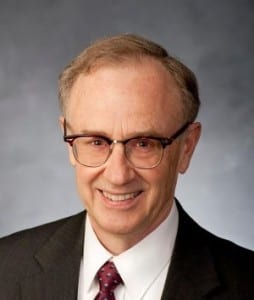
Scott Gordon is president of FairMormon and as such has been a writer of several articles and a speaker at firesides. He has a master’s degree in Business Administration from Brigham Young University with a bachelor’s in Organizational Communication. He has held many Church callings, including Bishop, and currently serves as the Ward Mission Leader. He is married to Sheri Farnsworth Gordon and has five children.
Audio and Video Copyright © 2017 The Foundation for Apologetic Information and Research, Inc. Any reproduction or transcription of this material without prior express written permission is prohibited.

Filed Under: Anti-Mormon critics, Bible, Book of Mormon, FAIR Conference, FairMormon Conference, Joseph Smith, LDS History, Masonry, Podcast, Prophets, Temples

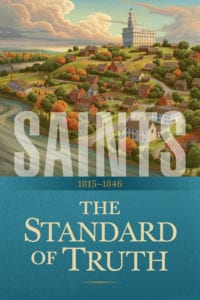
Book Review: Saints: The Story of the Church of Jesus Christ in the Latter Days, Volume 1: The Standard of Truth 1815-1846

September 17, 2018 by Trevor Holyoak

Available from the FairMormon bookstore

One of the tactics that critics have used recently to try to destroy faith is to describe a lesser known event in church history in a way that is intended to shock the reader. By sensationalizing and removing it from its context, and often even misrepresenting what actually happened, the victim is left feeling betrayed by the Church, thinking they have been lied to or that the Church has been hiding or whitewashing its history. Sadly, much of this history has been available (though perhaps not readily accessible), but not emphasized in the curriculum that is taught, requiring independent study, which has not been happening as much in recent generations.

The Church has recognized this problem and is producing a solution. The first volume of a projected four-volume series has now been published in 14 languages and is available in paperback and e-book, as well as online text and audiobook formats. It is written in an easy to understand style, which although entirely factual, draws you in like a novel. This was done intentionally by having literary writers on the project, not just historians. For those who want more information, there are extensive footnotes that point you to online resources, including both in-depth essays and videos, as well as original documents from the Joseph Smith Papers.

The book begins with a message from the First Presidency and a preface explaining the purpose of the series. The body of the book continues, contained in four parts, which are broken up by historic periods. There are also maps, but no other illustrations beyond the small ornaments at the head of each chapter. The back of the book has Notes, a Note on Sources, Sources Cited, Acknowledgements, and a fairly good 15-page Index.

The first volume covers the period preceding the First Vision up to two years after the death of Joseph Smith, when the Saints were able to receive the endowment in the Nauvoo Temple. It covers nearly every criticism and puts them in their proper context, where they can be more easily understood. It concentrates on telling stories of the actual men and women involved, rather than just the institutional church, as previous official histories produced by the Church have done. The result is a detailed history of the Church that includes the sensitive issues while building faith, which already has some critics worried that their work will become irrelevant.

An example is the story of how the Word of Wisdom was received: [Read more…] about Book Review: Saints: The Story of the Church of Jesus Christ in the Latter Days, Volume 1: The Standard of Truth 1815-1846

Filed Under: Anti-Mormon critics, Book of Mormon, Book reviews, First Vision, Joseph Smith, LDS History, Masonry, Polygamy, Temples

Celebrating Two New Books in the Book of Mormon Critical Text Project: The Nature of the Original Language of the Book of Mormon

September 12, 2018 by FAIR Staff

Royal Skousen

On Tuesday, September 25, at 7 p.m., BYU Professor Royal Skousen will speak on the just-published The Nature of the Original Language, parts 3 and 4 of volume 3 of the Book of Mormon Critical Text Project. The lecture will include additional commentary by Stanford Carmack, Skousen’s collaborator in authoring and researching these two new books.

The presentation is free and open to the public. It will be held in the Assembly Hall of the Hinckley Center at Brigham Young University, Provo, Utah. Parking is available after 6 p.m. in the large lot east of the Hinckley Center (Lot 16).

The lecture will be videotaped and made available in the weeks following the presentation. The event is sponsored by BYU Studies and the Interpreter Foundation. For further information, contact BYU Studies (801-422-6691 or [email protected]).

The two new books are now available for purchase from BYU Studies, the joint publisher of these books, along with the Foundation for Ancient Research and Mormon Studies (FARMS).

The Nature of the Original Language (NOL) continues the analysis of the Book of Mormon [Read more…] about Celebrating Two New Books in the Book of Mormon Critical Text Project: The Nature of the Original Language of the Book of Mormon

Filed Under: Anti-Mormon critics, Apologetics, Book of Mormon, Evidences, Joseph Smith, LDS History, News stories

10 Questions with Dennis B. Horne

May 20, 2018 by Trevor Holyoak

Cross-posted from From the Desk of Kurt Manwaring

I recently had the privilege to interview Dennis B. Horne.

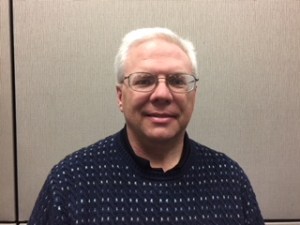
Horne is the author of many books, including Bruce R. McConkie: Highlights from his Life and Teachings, Latter Leaves in the Life of Lorenzo Snow, I Know He Lives: How 13 Special Witnesses Came to Know Christ, and Determining Doctrine. A Reference Guide For Evaluating Doctrinal Truth.

Dennis B. Horne, Photo provided by Dennis Horne.

Kurt Manwaring: Welcome! Before we begin, could you tell us a little bit about yourself and how you first got interested in writing about religious topics?

I am an independent researcher and author. I grew up in Bountiful, Utah, and served a mission to Independence Missouri. I obtained my bachelors from Weber State University in Communications with an emphasis in broadcasting. I spent some ten years, off and on, working for two local Salt Lake City television stations before I went to work for the LDS Church twenty years ago. I have two wonderful wives (one of them deceased and on the other side of the veil for the last twelve years) and three daughters.

The spark of interest I felt for church history and doctrine when I attended Seminary grew into a roaring fire while I served a mission. That is where I first heard the other missionaries speak so respectfully and reverently of Elder Bruce R. McConkie’s teachings and testimony. He had passed away just a few weeks before I graduated from high school, and I had not had the sense to pay attention to his final famous (April 1985) General Conference address at the time he delivered it. Following my mission, and on the side while pursuing my degree, I voraciously consumed Elder McConkie’s writings and those of the other great doctrinal thinkers and authorities of the Church. I even became a small-time collector of Mormon books when I could afford it. I began assembling my own files, filled with talks and articles related to church history and doctrine. These books and files became my main interest outside of gaining my secular education. Fortunately, I came under the influence of two knowledgeable and wise CES men, who gave me invaluable counsel in how to approach my gospel and historical studies: what to feast on; what to be wary of and why; what to study for proper perspective, and where to find the purest and sweetest doctrine.

These formative years in my twenties helped me avoid a serious crisis of faith, such as what has become something of a fad today. During the decade of the 1990s I felt, rightly or wrongly, that I might become knowledgeable enough to begin considering the possibility of doing some writing. I loved good Mormon books and soon developed the desire to contribute to the field myself. How little I knew how difficult that would be.

Kurt Manwaring: What do you do for work and what is your writing schedule like? [Read more…] about 10 Questions with Dennis B. Horne

Filed Under: Anti-Mormon critics, Apologetics, Chastity, Doctrine, Faith Crisis, First Vision, Homosexuality, LDS History, Perspective, Prophets, Questions, Resources, Temples, Testimonies Tagged With: Dennis B Horne

The Coming Revolution of Virtual Missionaries: Review of Books by Greg Trimble

May 3, 2018 by Trevor Holyoak

Available from the FairMormon Bookstore at 15% off

If I remember correctly, I first came across Greg Trimble’s blog by seeing his post “Quit Acting Like Christ Was Accepting of Everyone and Everything” shared by a friend on Facebook, apparently some time in 2014. I liked it enough that I shared it in a few places as well. He has since written a bunch of other posts that have also been shared widely, so most LDS people online are probably familiar with his name.

In the last year, Trimble has started publishing books. His first one, Dads Who Stay and Fight: How to Be a Hero to Your Family, showed up on Audible’s website, so I thought I’d give it a listen. It is a book about being a good father written by a young father, so it does have its weak spots. A lot of the chapters could have used fewer stories and more concrete examples. But there were some really good ones that made the whole thing worthwhile, in particular the ones on marriage, technology, and protecting your family from worldly influences.

A few months ago, I saw that he had published another book, The Coming Revolution Inside of Mormonism. I was curious enough about the title that I wanted to take a look at it, and I requested a review copy. When it arrived, it was accompanied by The Virtual Missionary: The Power of Your Digital Testimony, which had also recently been published. Since then, The Coming Revolution Inside of Mormonism has been retitled to The Cultural Evolution Inside of Mormonism, apparently because the original title had caused a lot of confusion. In order to avoid confusion here, I will refer to the book by its new title (and assume that none of the actual content has changed). [Read more…] about The Coming Revolution of Virtual Missionaries: Review of Books by Greg Trimble

Filed Under: Anti-Mormon critics, Apologetics, Atheism, Book of Mormon, Book reviews, Conversion, Doctrine, Faith Crisis, Interfaith Dialogue, Joseph Smith, LDS Culture, LDS History, Polygamy, Power of Testimony, Prophets, Questions, Resources, Temples, Testimonies Tagged With: blog, blogging, book review, digital missionary, Greg Trimble, Trevor Holyoak

FairMormon Conference Podcast #4 – Daniel Peterson, “What Difference Does It Make?”

March 19, 2018 by Trevor Holyoak

https://media.blubrry.com/mormonfaircast/www.fairlatterdaysaints.org/wp-content/uploads/2018/03/Dan-Peterson.mp3

Podcast: Download (97.2MB)

Subscribe: RSS

This podcast series features a FairMormon Conference presentation each month. If you would prefer to watch the videos, they can still be purchased here for the 2017 conference. Older conference presentation videos are available on our YouTube channel and FairMormon TV for Roku, Amazon Fire TV, and Android TV.

Daniel Peterson, What Difference Does It Make?

Video and transcript available here.

Daniel C. Peterson

A native of southern California, Daniel C. Peterson received a bachelor’s degree in Greek and philosophy from Brigham Young University (BYU) and, after several years of study in Jerusalem and Cairo, earned his Ph.D. in Near Eastern Languages and Cultures from the University of California at Los Angeles (UCLA). Dr. Peterson is a professor of Islamic Studies and Arabic at BYU, where he has taught Arabic language and literature at all levels, Islamic philosophy, Islamic culture and civilization, Islamic religion, the Qur’an, the introductory and senior “capstone” courses for Middle Eastern Studies majors, and various other occasional specialized classes. He is the author of several books and numerous articles on Islamic and Latter-day Saint topics–including a biography entitled Muhammad: Prophet of God (Eerdmans, 2007)—and has lectured across the United States, in Europe, Australia, and New Zealand, and at various Islamic universities in the Near East and Asia. He served in the Switzerland Zürich Mission (1972-1974), and, for approximately eight years, on the Gospel Doctrine writing committee for The Church of Jesus Christ of Latter-day Saints. He also presided for a time as the bishop of a singles ward adjacent to Utah Valley University. Dr. Peterson is married to the former Deborah Stephens, of Lakewood, Colorado, and they are the parents of three sons.

Filed Under: Anti-Mormon critics, Apologetics, Atheism, Doctrine, Evidences, FAIR Conference, FairMormon Conference, Faith Crisis, LDS Culture, Perspective, Podcast, Suicide, Testimonies

East Coast Ignorance, or Using an Emotional Event for Another Anti-Mormon Hit Piece?

January 11, 2018 by Scott Gordon


President Thomas Spencer Monson (August 21, 1927 – January 2, 2018).


On January 3, the New York Times published the obituary for Thomas S. Monson, You can find that obituary piece here: https://www.nytimes.com/2018/01/03/obituaries/thomas-monson-dies.html. The piece was written by the Pulitzer Prize winning journalist Robert D. McFadden. I am sure that Mr. McFadden is an excellent journalist. This is what the New York Times says about him:

Robert D. McFadden is a senior writer on the Obituaries desk of The New York Times and the winner of the 1996 Pulitzer Prize for spot news reporting. He has covered many of New York’s major news stories in his more than 30 years as a reporter and rewrite man for the paper, and has earned a reputation as one of the finest rewrite men in the business.[1]

But, members of The Church of Jesus Christ of Latter-day Saints have been pretty upset about the tone of the obituary. Comments have been made that Fidel Castro and Hugh Hefner were painted in a better light than President Thomas Monson who dedicated his life to serving others. There have been numerous blog posts, Facebook posts, and articles discussing this. One example can be found in The Atlantic here: https://www.theatlantic.com/politics/archive/2018/01/mormon-prophet/549773/.

The outrage over the obituary is strong enough that on January 8, the obituary editor put out an explanation defending the article here: https://www.nytimes.com/2018/01/08/reader-center/thomas-monson-obituary.html. One can argue if the explanation helped or hurt their cause. The editor talks about covering the public Monson and not the private one. The public Thomas Monson was a man of service, not one of great controversy. Perhaps they are just not informed? That’s not a good position to take for a newspaper.

The New York Times is in the business of selling newspapers and selling advertising. While we all hope they treat a good man fairly, they have the right to take whatever tone they wish. Being a newspaper man before he became a Church official, I’m sure President Monson appreciates that. So, I will leave matters of tone for others to debate.

What I will address is the accuracy of the writing. I know the New York Times is concerned about accurate news reporting, and there are some serious factual errors in this story that should be corrected.

Here they are in the order they appear, not necessarily in order of importance.

  1. “Many Mormons faced sanctions for joining online forums questioning church positions on women’s roles.”

I am not aware of ANY Mormons who have faced sanctions for joining an online forum or for questioning the Church positions on women’s roles. They will need to give examples. We have thousands, and probably millions of members who belong to many forums. We have members who are advocates of women rights and roles who are faithful members. I know some who work in the Church Office Building. I know members who hold differing views on women’s roles, homosexuality, and many political and social issues. Kate Kelly is cited in the article—perhaps the author thinks she is an example of this, but Kate Kelly was not excommunicated for joining a forum or even questioning the Church’s positions. There is a difference between questioning and actively campaigning against the Church and its teachings. Kate Kelly did the latter.

  1. “As the 16th president of the Latter-day Saints, succeeding Gordon B. Hinckley, Mr. Monson faced another test when church members, increasingly scouring online sources, found apparent contradictions between historical records and church teachings, which the church regards as God-given and literally true.”

Perhaps I am nit-picking on this one, but I take some umbrage with the idea that since Gordon B. Hinckley apparent contradictions have been found. The Church has an exceptional history department and there are numerous conferences on Church history – including the FairMormon conference. We have been discussing these topics for years. Additionally, we aren’t fundamentalist evangelicals in that every doctrine and practice is directly from God. This would be especially true with items related to history and science which are full of discovery. Yes, we have divinely inspired teachings, but they typically don’t have anything to do with history.

  1. “Some critics, including the website OnceDelivered.net, which identified itself as an expression of the Baptist faith, said the Latter-day Saints church had previously contended that Smith had been happily married to only one woman, and said the new teaching had used Scripture to “address the inconvenient truth of Smith’s polygamy.””

There are two issues here: First, one has to question why the New York Times reporter sought out a Website that states, “Mormonism fits a classic definition of a cult” and “So, is Mormonism a cult? According to our definition, yes.” Most LDS would rightfully classify OnceDelivered.net to be an anti-Mormon Website. There are many Websites out there that attack Mormonism with little understanding of what we actually teach and believe. It seems odd that the New York Times would be quoting from one for an obituary.

Secondly, the claim that the Church of Jesus Christ of Latter-day Saints (the term Latter-day Saints church would be incorrect and is offensive to most Mormons which underscores the lack of source reliability) previously contended that Joseph Smith was married to only one woman is incorrect. Yes, there are critics who have falsely made that claim, but the idea of plural marriage is taught by Joseph Smith and is part of our scripture in Doctrine and Covenants section 132 which can be found online at https://www.lds.org/scriptures/dc-testament/dc/132. That section was written in July 1843. Another activity you can try is to go to the Official Church Website LDS.org and type “Plural Marriage” into the search box. Many of those articles listed were written prior to Thomas S. Monson becoming prophet. There are many books that talk about this. One of our FairMormon volunteers stated he has 40 – 50 books on his shelf that discuss this topic. It was one of the main topics of the Reed Smoot Hearings in congress from 1904 – 1907. There is no new teaching on this. Ask most New Yorkers if early Mormons practiced polygamy and they would say yes. Many probably believe we still do. To say that we taught otherwise would be unbelievable.

  1. “In recent years, the church allowed historians access to church documents and records to a remarkable degree. Some published their findings online and in printed volumes, although they were usually vetted by church leaders.”

Having worked extensively with Church historians and independent historians, I have NEVER heard of Church leaders vetting anything except what is posted on the official Church Website to represent their position. Just the opposite is true. The Joseph Smith Papers are being published in their entirety on the Church Website. I have had complete freedom to publish anything without any vetting or oversight. There are LDS History conferences that are attended by Church Historians and many controversial and difficult topics are addressed. FairMormon has a conference every year where we talk about Church history. No one has ever vetted our talks.

The New York Times Obituary on President Thomas S. Monson needs a retraction and a rewrite. I’m sure the Times is interested in accuracy. Not correcting the record looks mean spirited, or ignorant. Neither of those positions is something that most newspapers aspire to be.


Scott Gordon serves as President of FairMormon, a non-profit corporation staffed by volunteers dedicated to helping members deal with issues raised by critics of the LDS faith. He has an MBA from Brigham Young University, and a BA in Organizational Communications from Brigham Young University. He is currently an instructor of business and technology at Shasta College in Redding, California. Scott has held many positions in The Church of Jesus Christ of Latter-day Saints including serving as a bishop for six years. He currently serves as Ward Mission Leader. He is married and has five children.


Filed Under: Anti-Mormon critics, LDS History, Uncategorized Tagged With: FairMormon, Politics, prophet, Scott Gordon, Thomas S. Monson

Attacking the LDS Church’s Tax Exempt Status

January 19, 2017 by Scott Gordon

LDS Salt Lake City Temple
Photo from https://commons.wikimedia.org/wiki/File:Salt_Lake_Temple_spires.jpg

LGBT political advocate Fred Karger has threatened to file a complaint against the “Mormon Church,” otherwise known as The Church of Jesus Christ of Latter-day Saints, with the IRS once he uncovers the Church’s “vast business holdings and all of the secret political activities.”[1]  He hopes to get the tax exempt status of the Church revoked.[2] To assist with this, he has launched a TV ad campaign and has put up a new Website looking for tips and documents that will support his cause.

So, as I understand it, once he finds evidence of a crime—because he is sure there has been a crime, he will act on it and report the Church to the IRS, which he is sure will revoke the Church’s tax exempt status.

This sounds a lot like when he accused the Church of election fraud in 2008. The Church filed some of its reports with the State of California using the wrong forms. They gave the State the correct amount of in-kind donations, but in the last two weeks of the election failed to put it on the daily form that is required.

To be clear, they told the State the correct number, but just put in on the wrong form, which had a different due date.[3]

Even though the state law in question specifically states it doesn’t deal with election fraud[4]; even though the Church corrected the paperwork and paid their fine for late notification; even though the State of California recognized that the instructions were not clear so they changed them after this incident, it didn’t stop Fred Karger from crying fraud. In an article in the Huffington Post he claimed,

“The FPPC prosecuted the Church, and after an 18 month investigation, found the Mormon Church guilty on 13 counts of election fraud. The Church plead guilty and paid a fine.”[5]

This isn’t even possible because the FPPC does not deal with election fraud and specificially says so on its Website.[6] To put it another way, if it involves the FPPC, it isn’t election fraud. If it were election fraud, it would go to Investigative Services in the Secretary of State’s office, which it didn’t in this case.

For a more in depth discussion on this, see http://www.mormonnewsroom.org/article/background-information-on-the-fppcs-enforcement-process

If you want more discussion on Prop 8 and Mormons, see http://en.fairmormon.org/Mormonism_and_politics/California_Proposition_8

Since that time Fred Karger seems to be looking for other avenues to punish the Church. This Mormon tips ad campaign seems to be his new project.

In reading the comment section of articles about Fred’s new project, I have seen quite a bit of confusion from others regarding politics and a church’s tax exempt status.

So let’s review the information about politics and all tax exempt organizations including churches.

All tax exempt organizations, including churches, are allowed to be politically active.

For those that missed it, let me repeat that. All tax exempt organizations, including churches, are allowed to be politically active.

Some tax exempt organizations even have political lobbying as one of their main activities. Think of organizations like the Sierra Club, the NRA, Planned Parenthood, AARP, GLAD, National Association for Transgender Rights, and even Americans United for the Separation of Church and State. Lobbying is a big part of their purpose for existing. Can you imagine the uproar if the NRA or Sierra Club were not allowed to be politically involved?

So long as they qualify under the IRS substantial part test, it is legal to be political. The substantial part test maintains an organization cannot spend a substantial part of its total budget on political activities. While it is unclear what “substantial part” means, most organizations use a 20% rule of thumb.[7] The Church of Jesus Christ of Latter-day Saints is an international organization with millions of members. Given the Church’s low level of political involvement, even Barry Lynn, executive director of Americans United for the Separation of Church and State, the leading advocacy organization on the issue, does not see any risk of the LDS Church violating this rule.[8]

What churches and other 501(c)3 organizations are not allowed to do is engage in political campaigning for a particular candidate.[9] There has been some recent controversy on this. More on that later. First let’s talk about the tax exempt nature of churches.

The Supreme Court debated this issue in 1970. In Walz v. Tax Commission of the City of New York, the Supreme Court ruled 7-1 the tax exemption for churches is fair because tax exemption is a benefit not solely given to religious groups, but includes groups like schools and nonprofits. They made the following findings:

  1. The First Amendment tolerates neither governmentally established religion nor governmental interference with religion. Pp. 667-672.
  2. The legislative purpose of tax exemptions is not aimed at establishing, sponsoring, or supporting religion. Pp. 672-674.
  3. The tax exemption creates only a minimal and remote involvement between church and state, far less than taxation of churches would entail, and it restricts the fiscal relationship between them, thus tending to complement and reinforce the desired separation insulating each from the other. Pp. 674-676.
  4. Freedom from taxation for two centuries has not led to an established church or religion, and, on the contrary, has helped to guarantee the free exercise of all forms of religious belief. Pp. 676-680.[10]

Chief Justice Burger even addressed the common complaint that churches should only be tax exempt as they feed the poor and do other good works. He wrote:

We find it unnecessary to justify the tax exemption on the social welfare services or “good works” that some churches perform for parishioners and others — family counseling, aid to the elderly and the infirm, and to children. Churches vary substantially in the scope of such services; programs expand or contract according to resources and need. As public-sponsored programs enlarge, private aid from the church sector may diminish. The extent of social services may vary, depending on whether the church serves an urban or rural, a rich or poor constituency. To give emphasis to so variable an aspect of the work of religious bodies would introduce an element of governmental evaluation and standards as to the worth of particular social welfare programs, thus producing a kind of continuing day-to-day relationship which the policy of neutrality seeks to minimize. Hence, the use of a social welfare yardstick as a significant element to qualify for tax exemption could conceivably give rise to confrontations that could escalate to constitutional dimensions.[11]

Now let’s look at the restrictions. As I already said, churches and other tax exempt organizations may not campaign for a particular candidate. But, the ban on churches supporting candidates is not as old as, and is less settled than, the tax exempt status of churches. In 1954, then Senator Lyndon B. Johnson of Texas put forward a new law that made it so tax exempt organizations could not support specific political candidates. This not only affected churches, but all 501(c)3 non-profit organizations. There have been several recently who have lobbied for a repeal of this law claiming it violates the first amendment. Many believe that it was put forward in retaliation for the support a non-religious non-profit organization that gave support to Johnson’s political opponent.[12] There has been some recent discussion as to whether the law is constitutional, but it has already survived several court challenges and is unlikely to change.

To summarize:

All non-profit organizations including churches are allowed to be politically involved. Under current law, the only two restrictions they have are:

  1. They can’t publicly support a political candidate.
  2. They can’t spend a substantial part of their budget on politics. This is currently interpreted to mean spending more than 20% of their total budget. Total budget includes everything they do.

Other than those two restrictions, they are free to support or oppose any political cause they please. This can be national, state, or local politics and is not limited to items of a religious nature.

Finally, there is one more claim that Mr. Fred Karger makes on his Website that we need to address. He states:

The Mormon Church’s business holdings, estimated to be nearly $1 trillion, are run as tax free enterprises owned outright by the Church. Thus the Mormon Church does not likely pay any federal, state or local taxes on its profits from all its holdings.

This is simply false. In 1991 April General conference, Gordon B. Hinckley said the following:

I repeat, the combined income from all of these business interests is relatively small and would not keep the Church going for longer than a very brief period. I add, also, that these commercial properties are tax-paying entities who meet their tax obligations under the laws of the areas where they are located.

Again, all such commercial properties are taxed under the government entities where they are located. Not only do they pay property taxes, but also income taxes on any profits. So it is with all of the commercial operations of the Church.[13]

To summarize:

  1. Churches can legally be involved in elections and political issues involving gay marriage, marijuana use, euthanasia, housing, gun control, missile defense, global warming, taxes, zoning changes, school bonds, or any other issues they desire. Demands for revoking tax exempt status shows a lack of understanding of the law.
  2. Churches, under the Johnson Amendment law, may not campaign for a particular candidate. There is controversy over the legality of this law, but it has been upheld in more than one court decision.
  3. The Supreme Court has ruled that churches are not to be judged for tax exemption based on feeding the poor or doing other good works. That would create a situation of government monitoring churches, create excessive entanglement, and would violate the constitution.
  4. The Church of Jesus Christ of Latter-day Saints pays taxes on all of its commercial properties such as Deseret Book, Bonneville International Corporation, and Utah Property Management Associates. This includes property taxes and income taxes.
  5. Fred Karger, the person heading up this campaign to strip the Church of its tax exempt status by soliciting questionably obtained documents, does not have a good track record for understanding the law, or representing what it means.

There is no risk of The Church of Jesus Christ of Latter-day Saints (aka The Mormon Church) losing tax exempt status no matter what political cause it may engage in. Political speech is all constitutionally protected. This issue has already gone to the Supreme Court and they have ruled on it. This recent campaign by Fred Karger is nothing more than Don Quixote attacking windmills.

—————————————————————————————————————–

[1] Quote from Fred’s recent Television commercial which is airing in Utah this month.

[2] http://www.sltrib.com/home/4690644-155/lgbt-activist-plans-ad-blitz-targeting

[3] http://www.mormonnewsroom.org/article/statement-regarding-fppc-settlement

[4] http://www.fppc.ca.gov/enforcement/file-a-complaint.html

[5] http://www.huffingtonpost.com/fred-karger/mormon-church-bleeding-me_b_8299882.html

[6] http://www.fppc.ca.gov/enforcement/file-a-complaint.html

[7] http://www.nolo.com/legal-encyclopedia/how-much-lobbying-can-nonprofit-do.html

[8] http://www.sfgate.com/bayarea/article/Tax-exempt-benefit-disputed-in-Prop-8-campaign-3183401.php

[9] https://www.nolo.com/legal-encyclopedia/limits-political-campaigning-501c3-nonprofits-29982.html

[10] https://www.law.cornell.edu/supremecourt/text/397/664

[11] https://www.law.cornell.edu/supremecourt/text/397/664 Page 674

[12] http://www.politifact.com/truth-o-meter/statements/2016/jul/22/donald-trump/donald-trump-correct-lyndon-johnson-passed-legisla/

[13] https://www.lds.org/general-conference/1991/04/the-state-of-the-church?lang=eng

Filed Under: Anti-Mormon critics

The Joseph Smith Papers: Administrative Records: Council of Fifty, Minutes, March 1844-January 1846

December 13, 2016 by Trevor Holyoak

[For more information on the Council of Fifty, see Matthew J. Grow’s 2016 FairMormon Conference presentation.]

In September 2013, it was announced that the minutes from the Council of Fifty would be published as part of the Joseph Smith Papers project. This was significant because they had not been available for research, and so most of what was known of the council had been gleaned from journal entries of members and rumors spread by publications such as the Nauvoo Expositor, which were repeated over the years by each generation of critics. Besides being able to put these hyperbolic claims to rest, we now have new information about what happened during the Nauvoo period, and some new statements made by Joseph Smith and other early members of the Church.

The Council of Fifty was a secret organization formed in Nauvoo, made up of the leaders of the Church, as well as other men, including some nonmembers, with Joseph Smith at the head. Their purpose was to do civil business, separate from the ecclesiastical business done elsewhere. Under Joseph Smith, the three major functions involved Joseph’s presidential campaign, planning a “theodemocracy [that] would protect liberty and freedom ‘for the benefit of ALL’” [page xxxvi], and to find a place of refuge away from the government of the United States, which had failed them.

After the death of Joseph Smith the council was reconvened under Brigham Young, and dealt with the repeal of the Nauvoo charter, completing the temple, and finding a new place to settle. It was later reconvened in 1848, after settling in Salt Lake City, and functioned off and on until 1885. This book contains the minutes through January, 1846, and there are currently no plans to publish the rest, which would be beyond the scope of the Joseph Smith Papers. [Read more…] about The Joseph Smith Papers: Administrative Records: Council of Fifty, Minutes, March 1844-January 1846

Filed Under: Anti-Mormon critics, Book reviews, FAIR Conference, Joseph Smith, LDS History, Politics, Temples

  • « Go to Previous Page
  • Go to page 1
  • Interim pages omitted …
  • Go to page 14
  • Go to page 15
  • Go to page 16
  • Go to page 17
  • Go to page 18
  • Interim pages omitted …
  • Go to page 32
  • Go to Next Page »

Primary Sidebar

Faithful Study Resources for Come, Follow Me

Subscribe to Blog

Enter your email address:

Subscribe to Podcast

Podcast icon
Subscribe to podcast in iTunes
Subscribe to podcast elsewhere
Listen with FAIR app
Android app on Google Play Download on the App Store

Pages

  • Blog Guidelines

FAIR Latest

  • Come, Follow Me with FAIR – Doctrine and Covenants 137–138 – Part 2 – Autumn Dickson
  • Come, Follow Me with FAIR – Doctrine and Covenants 137–138 – Mike Parker
  • FAIR December Newsletter
  • Come, Follow Me with FAIR – Doctrine and Covenants 137–138 – Part 1 – Autumn Dickson
  • Prophets of God 

Blog Categories

Recent Comments

  • LHL on Come, Follow Me with FAIR – Doctrine and Covenants 132 – Mike Parker
  • Stephen Johnsen on Come, Follow Me with FAIR – Doctrine and Covenants 132 – Mike Parker
  • Bruce B Hill on Come, Follow Me with FAIR – Doctrine and Covenants 124 – Part 1 – Autumn Dickson
  • Gabriel Hess on Join us Oct 9–11 for our FREE virtual conference on the Old Testament
  • JC on When the Gospel “Doesn’t Work”

Archives

Follow Us

  • Facebook
  • Twitter
  • iTunes
  • YouTube
Android app on Google Play Download on the App Store

Footer

FairMormon Logo

FAIR is a non-profit organization dedicated to providing well-documented answers to criticisms of the doctrine, practice, and history of The Church of Jesus Christ of Latter-day Saints.

Donate to FAIR

We are a volunteer organization. We invite you to give back.

Donate Now

Site Footer