• Skip to primary navigation
  • Skip to main content
  • Skip to primary sidebar
  • Skip to footer

FAIR

  • Find Answers
  • Blog
  • Media & Apps
  • Conference
  • Bookstore
  • Archive
  • About
  • Get Involved
  • Search

Anti-Mormon critics

Fair Issues 60: Nephi, Laban and the brass plates

July 12, 2014 by Ned Scarisbrick

https://media.blubrry.com/mormonfaircast/www.fairlatterdaysaints.org/wp-content/uploads/2014/07/Fair-Issues-60-Pod.mp3

Podcast: Download (8.3MB)

Subscribe: RSS

MAWhile encamped in the Valley of Lemuel, Lehi sent his sons back to Jerusalem to obtain their own religious record – the “plates of brass.”  In this podcast Mike Ash discusses this event as recorded in the Book of Mormon along with recently discovered  evidences  that parallel such statements as “Laban and his fifty.”

The full text of this article can be found at Deseret News online.

Brother Ash is author of the book Shaken Faith Syndrome: Strengthening One’s Testimony in the Face of Criticism and Doubt, as well as the book, of Faith and Reason: 80 Evidences Supporting the Prophet Joseph Smith. Both books are available for purchase online through the FairMormon Bookstore. Tell your friends about the Mormon Fair-Cast. Share a link on your Facebook page and help increase the popularity of the Mormon Fair-Cast by subscribing to this podcast in iTunes, and by rating it and writing a review.

The views and opinions expressed in the podcast may not reflect those of the Church of Jesus Christ of Latter-day Saints or that of FairMormon


Filed Under: Anti-Mormon critics, Apologetics, Book of Mormon, Conversion, Doctrine, Evidences, FAIR Conference, Faith Crisis, Joseph Smith, Michael R. Ash, Mormon Voices, Podcast

Mormon Fair-cast 244: FairMormon Conference 2014

July 8, 2014 by Ned Scarisbrick

https://media.blubrry.com/mormonfaircast/www.fairlatterdaysaints.org/wp-content/uploads/2014/07/MTSDDP7_6_141.mp3

Podcast: Download (18.0MB)

Subscribe: RSS

33480_1612609000660_2667876_nDanPetersonMartin Tanner who is the host of “Religion Today” on KSL FM 102.7 and AM 1160 interviews Steve Densley who is the executive vice-president of FairMormon and Daniel Peterson, Ph.D. who is a prominent Mormon apologist and professor of Islamic Studies and Arabic in the Department of Asian and Near Eastern Languages at Brigham Young University about the upcoming FairMormon conference that will be held in Provo Utah on the 7th and 8th of August this year. Tickets can be purchased here.

This broadcast originally aired on the 6th of July 2014.

The views and opinions expressed in this podcast may not represent those of the Church of Jesus Christ of Latter-day Saints or that of FairMormon.

 

Filed Under: Anti-Mormon critics, Apologetics, Bible, Book of Mormon, Conversion, Doctrine, Early Christianity, Evidences, FAIR Conference, Faith Crisis, First Vision, Gender Issues, General, Joseph Smith, Mormon Voices, News from FAIR, Podcast, Polygamy, Power of Testimony, Racial Issues, Science, Women

Mormon Fair-Cast 243: Barry R. Bickmore, “Restoring the Ancient Church”

July 6, 2014 by Ned Scarisbrick

https://media.blubrry.com/mormonfaircast/www.fairlatterdaysaints.org/wp-content/uploads/2014/07/Martin-Tanner-Craig-Foster-30214.mp3

Podcast: Download (17.2MB)

Subscribe: RSS

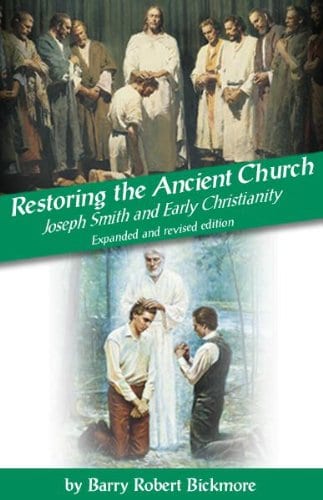
Barry R. BickmoreBarry R. Bickmore Restoring the Ancient Church 2nd EditionMartin Tanner who is the host of “Religion Today” on KSL FM 102.7 and AM 1160 interviews  Barry R. Bickmore  about his book “Restoring the Ancient Church: Joseph Smith and Early Christianity.”  In this interview brother Bickmore relates how the teachings of the early Church are reflected in the Church of Jesus Christ of Latter-day Saints.

Professor Bickmore will be appearing at this year’s FairMormon Conference on August 7 & 8 at the Utah Valley Convention Center in Provo, Utah. For more information and to purchase tickets, click here.

In the second half of his show Martin Tanner interviews Craig Foster about his second book on Mormon polygamy.  “The Persistence of Polygamy: From Joseph Smith Martyrdom to the First Manifesto, 1844 – 1890.

Both book are available from the FairMormon Bookstore:

Restoring the Ancient Church: Joseph Smith and Early Christianity.

The Persistence of Polygamy From Joseph Smith Martyrdom to the First Manifesto 1844 – 1890

This broadcast originally aired on the 2nd of March 2014.

The views and opinions expressed in this podcast may not represent those of the Church of Jesus Christ of Latter-day Saints or that of FairMormon.

Filed Under: Anti-Mormon critics, Apologetics, Bible, Book reviews, Doctrine, Early Christianity, Evidences, FAIR Conference, Faith Crisis, General, LDS History, Mormon Voices, Podcast, Polygamy, Power of Testimony

Fair Issues 59: To Arabs, valleys, not mountains, the symbol of permanence

July 5, 2014 by Ned Scarisbrick

https://media.blubrry.com/mormonfaircast/www.fairlatterdaysaints.org/wp-content/uploads/2014/07/Fair-Issues-59-Pod1.mp3

Podcast: Download (7.9MB)

Subscribe: RSS

MAAs we discussed in the last installment of this series the Lehites’ first semi permanent encampment was called the river of “Laman” and the valley of “Lemuel.”  In this podcast Michael Ash explains how the terms used to describe these locations are in keeping with tradition at the time they took place.

The full text of this article can be found at Deseret News online.

Brother Ash is author of the book Shaken Faith Syndrome: Strengthening One’s Testimony in the Face of Criticism and Doubt, as well as the book, of Faith and Reason: 80 Evidences Supporting the Prophet Joseph Smith. Both books are available for purchase online through the FairMormon Bookstore. Tell your friends about the Mormon Fair-Cast. Share a link on your Facebook page and help increase the popularity of the Mormon Fair-Cast by subscribing to this podcast in iTunes, and by rating it and writing a review.

The views and opinions expressed in the podcast may not reflect those of the Church of Jesus Christ of Latter-day Saints or that of FairMormo


Filed Under: Anti-Mormon critics, Apologetics, Book of Mormon, Evidences, FAIR Conference, Faith Crisis, General, Geography, Michael R. Ash, Mormon Voices, Podcast, Power of Testimony

Fair Issues 57: Lehi’s ancient Arabic poetry

June 28, 2014 by Ned Scarisbrick

https://media.blubrry.com/mormonfaircast/www.fairlatterdaysaints.org/wp-content/uploads/2014/06/Fair-Issues-57-Pod.mp3

Podcast: Download (6.6MB)

Subscribe: RSS

MAIn this podcast brother Ash discusses how in Lehi’s world it was customary among Arabs to rename any new territory they encountered with their own names.  It was therefore appropriate for Lehi to name a river and a valley after his two eldest sons.  This form of culture was unknown during the days of Jacksonian-era Americans like Joseph Smith.

The full text of this article can be found at Deseret News online.

Brother Ash is author of the book Shaken Faith Syndrome: Strengthening One’s Testimony in the Face of Criticism and Doubt, as well as the book, of Faith and Reason: 80 Evidences Supporting the Prophet Joseph Smith. Both books are available for purchase online through the FairMormon Bookstore. Tell your friends about the Mormon Fair-Cast. Share a link on your Facebook page and help increase the popularity of the Mormon Fair-Cast by subscribing to this podcast in iTunes, and by rating it and writing a review.

The views and opinions expressed in the podcast may not reflect those of the Church of Jesus Christ of Latter-day Saints or that of FairMormo


Filed Under: Anti-Mormon critics, Apologetics, Book of Mormon, Conversion, Evidences, Faith Crisis, General, Hosts, Joseph Smith, Michael R. Ash, Mormon Voices, Ned Scarisbrick, Podcast, Power of Testimony

Fair Issues 56: Nephi, Joseph Smith and biblical motifs

June 21, 2014 by Ned Scarisbrick

https://media.blubrry.com/mormonfaircast/www.fairlatterdaysaints.org/wp-content/uploads/2014/06/Fair-Issues-56-Pod.mp3

Podcast: Download (7.2MB)

Subscribe: RSS

MAIn this podcast Michael R. Ash discusses the parallels between the wilderness accounts in the Bible and those found in the Book of Mormon.  LDS researcher Ben McGuire offers a perspective from his article “Nephi and Goliath: A Case Study of Literary Allusion in the Book of Mormon.”  Blake Ostler also contributes a case study in what is called “The Throne-Theophany and Prophetic Commission in 1 Nephi: A Form-Critical Analysis.”

The full text of this article can be found at Deseret News online.

Brother Ash is author of the book Shaken Faith Syndrome: Strengthening One’s Testimony in the Face of Criticism and Doubt, as well as the book, of Faith and Reason: 80 Evidences Supporting the Prophet Joseph Smith. Both books are available for purchase online through the FairMormon Bookstore. Tell your friends about the Mormon Fair-Cast. Share a link on your Facebook page and help increase the popularity of the Mormon Fair-Cast by subscribing to this podcast in iTunes, and by rating it and writing a review.

The views and opinions expressed in the podcast may not reflect those of the Church of Jesus Christ of Latter-day Saints or that of FairMormo

Filed Under: Anti-Mormon critics, Apologetics, Bible, Book of Mormon, Conversion, Evidences, Faith Crisis, General, Hosts, Michael R. Ash, Mormon Voices, Ned Scarisbrick, Podcast, Power of Testimony

Why Church Discipline?

June 12, 2014 by SteveDensleyJr

In our increasingly diverse and tolerant society, it can be quite jarring to hear about individuals who are being threatened with excommunication from a church. In order to better understand the disciplinary process of the Church of Jesus Christ of Latter-day Saints, it is helpful to understand the way in which Church disciplinary action is viewed by the leaders of the Church.

Past President Gordon B. Hinckley made this relevant comment to the New York Times in 1994:

“Every individual in the church is free to think as he pleases,” …. “But when an individual speaks openly and actively and takes measures to enlist others in opposition to the church and its programs and doctrines, then we feel there is cause for action.” …. “There’s a great spirit of tolerance in our church,” Mr. Hinckley said, adding that church officials maintained “an earnest desire to work with” excommunicated Mormons and bring them back into the fold.”

More recently, the Church issued a statement in this regard, which reads, in part:

Sometimes members’ actions contradict Church doctrine and lead others astray. While uncommon, some members in effect choose to take themselves out of the Church by actively teaching and publicly attempting to change doctrine to comply with their personal beliefs. This saddens leaders and fellow members. In these rare cases, local leaders have the responsibility to clarify false teachings and prevent other members from being misled. Decisions are made by local leaders and not directed or coordinated by Church headquarters.

It may also be helpful in this particular instance to refer to a statement that was issued by the Church in 1994, which reads, in part:

It is difficult to explain Church disciplinary action to representatives of the media. Considerations of confidentiality restrain public comment by Church leaders in such private matters.

We have the responsibility to preserve the doctrinal purity of the Church. We are united in this objective. The Prophet Joseph Smith taught an eternal principle when he explained: “That man who rises up to condemn others, finding fault with the Church, saying that they are out of the way, while he himself is righteous, then know assuredly, that that man is in the high road to apostasy.” (Teachings of the Prophet Joseph Smith, p. 67).

The statement continued:

The longstanding policy of Church discipline is outlined in the Doctrine and Covenants: “We believe that all religious societies have a right to deal with their members … according to the rules and regulations of such societies; provided that such dealings be for fellowship and good standing; … They can only excommunicate them from their society, and withdraw from them their fellowship.” (D&C 134:10.)

Faithful members of the Church can distinguish between mere differences of opinion and those activities formally defined as apostasy. Apostasy refers to Church members who: “1, repeatedly act in clear, open and deliberate public opposition to the Church or its leaders; or 2, persist in teaching as Church doctrine information that is not Church doctrine after being corrected by their bishops or higher authority; or 3, continue to follow the teachings of apostate cults (such as those that advocate plural marriage) after being corrected by their bishops or higher authority.” (General Handbook of Instructions, 10-3.)

Finally, this article from the Encyclopedia of Mormonism sheds further light on apostasy in general and has this to say about a member who has been excommunicated for apostasy:

LDS scriptures establish a loving and hopeful attitude toward apostates. Latter-day Saints are strongly counseled to love those who have left the faith, and to encourage, plead, and work with those who have strayed, inviting “the lost sheep” back to the fold (Luke 15:3-7). Of the wayward, the resurrected Savior taught, “Ye shall not cast him out of your…places of worship, for unto such shall ye continue to minister; for ye know not but what they will return and repent, and come unto me with full purpose of heart, and I shall heal them; and ye shall be the means of bringing salvation unto them” (3 Ne. 18:32). The desire to return is motivated by the reality of repentance enabled by the Atonement of Jesus Christ. “He who has repented of his sins, the same is forgiven, and I, the Lord, remember them no more. By this ye may know if a man repenteth of his sins-behold, he will confess them and forsake them” (D&C 58:42-43).

For a more in-depth discussion of the purposes of Church discipline and the way in which it is administered, the Church has published this article.

Interested parties may also benefit from reading this article Elder M. Russell Ballard, of the Quorum of the Twelve, who addressed these issues in a 1990 article entitled “A Chance to Start Over: Church Disciplinary Councils and the Restoration of Blessings.”

Filed Under: Anti-Mormon critics, News stories

Articles of Faith 5: Kevin Christensen on Inevitable Consequences of the Different Investigative Approaches of Jeremy Runnells and Jeff Lindsay

June 2, 2014 by NickGalieti

https://media.blubrry.com/mormonfaircast/www.fairlatterdaysaints.org/wp-content/uploads/2014/06/AOF-Episode5-KevinChristensen.mp3

Podcast: Download (56.3MB)

Subscribe: RSS

kevin-christensenKevin Christensen has been a technical writer since 1984, He has a Bachelors in English from San Jose State University.  He has published articles in Dialogue, Sunstone, the FARMS Review of Books, the Journal of Book of Mormon Studies, Insights, the Meridian Magazine, including his article in the Interpreter: A Journal of Mormon Scripture entitled Eye of the Beholder, Law of the Harvest: Observations on the Inevitable Consequences of the Different Investigative Approaches of Jeremy Runnells and Jeff Lindsay. Kevin comes to us today by phone to discuss that article. (The article is not yet public-visit The Interpreter website to find the text when available.)

Some questions from the interview:

Some of your prior articles for the Interpreter have been dealing with Temple Mysticism and temple theology with an emphasis on the works of Margret Barker, a Methodist who seems to be making her way into the minds of some LDS scholars. This article that you have coming out in the Interpreter has very little if anything to do with such a topic; what brought about the shift in topic?

The title of the article is perhaps a bit verbose so I guess it serves as both the abstract and the title, it is Eye of the Beholder, Law of the Harvest: Observations on the Inevitable Consequences of the Different Investigative Approaches of Jeremy Runnells and Jeff Lindsay. Without knowing the two individuals Jeremy Runnels and Jeff Lindsay the article might be of a diminished value. Why don’t you give a summary of who these two men are and why they are the subjects or case studies of your article?

In a recent devotional at BYU Idaho, Elder D. Todd Christoferson invited the audience to have patience when doing investigation of the history of the church, and its teachings. In some ways it seems as if the subtext of that statement is that if you stop half way you will inevitably find yourself in a faith crisis. The only way to a faithful conclusion is to be diligent in learning by study and by faith. You insert a theory on just such a thing with your article, what is that hypothesis?

You put on a sort of spiritual doctor or maybe even a spiritual mathematician kind of hat as you write this article. I won’t call it an autopsy or audit of Jeremy Runnells spiritual journey, but rather an analysis or a diagnosis of how one comes to negative conclusions about the LDS faith. There is even an equation that you employ to describe this process, can you explain those two, let’s call them, equations?

I want to read a paragraph from your article as an introduction to my next question: “The familiar fable of Henny Penny (also known as Chicken Little) makes a related point. In the fable, a chicken interprets the fall of an acorn as evidence that “The sky is falling!” Another interpretation of exactly the same event would be that “The sky is not falling, but just an acorn. No big deal. No crisis. Acorns fall from oak trees all the time. It’s natural and to be expected.” Another character in the more cautionary versions of the fable, Foxy Loxy, sees not a crisis, or a non-event, but an opportunity to exploit fear and ignorance for his own gain. Same data. Different interpretation. The information does not speak for itself, but must be interpreted within an informational context and a conceptual framework.” This echo’s your title, the Eye of the Beholder. How we see things greatly informs our decisions. This is perhaps not that new a concept for some, but what is happening in the subtext of that statement is putting the onus on one’s spirituality and the way they take their spiritual path is their own fault. In other words Chicken Little’s interpretation of the sky falling is not the acorns fault. Nor is it the tree’s fault. These things just happen naturally. How them does this play into viewing the Jeremy Runnels of the world? For that matter, the Jeff Lindsay’s as well?

You pose the question or the situation, “what are we to do with the issue of perfection, meaning perfection of translation, etc.” That was an opening critique of the CES Letter, and that ends up being a pivotal start in determining Runnells mindset. How so?

When it comes to some of the arguments against latter-day Saint teachings, there is often a complaint about a given topic, such as prophets, but rarely offers an alternative definition. It is not so much that these individuals think that they are right, but that others are wrong.

You continue to go down the row, not necessarily point by point, but you do give some feedback on the faults of the Runnels argument. We don’t need to go into details about each one, but perhaps you could give a listing of some of the other topics that you address in Runnells argument.

You have a phrase in this article that is mentioned with respect to concerns that are raised about scientific issues, here is the quote, “I learned long ago to pay as much attention to the networks of assumptions involved as to the observations which are then fitted into that network.” Expand on that for a minute if you could.

I want to give an encapsulated example of the many issues you address and how you address them. So, I wanted to take on an issue that I am becoming more and more confused by, and that is the issues surrounding the Book of Abraham as a Smoking Gun argument. Let’s consider for a moment that I know nothing of this issue, take me from the beginning of this segment of the article and walk me through how you approach it. You start off by giving Runnell’s claims, “Of all of the issues, the Book of Abraham is the issue that has both fascinated and disturbed me the most. It is the issue that I’ve spent the most time researching on because it offers a real insight into Joseph’s modus operandi as well as Joseph’s claim of being a translator. It is the smoking gun that has completely obliterated my testimony of Joseph Smith and his claims.” That is a heavy indictment indeed. But why is this statement in and of itself quite telling as to what has gone into his research?

There is so much that this over 30 page article goes into, but the end goal of the article is to raise the question, “Why is it that when Jeff Lindsay studied these issues does his faith expand, and Runnells faith shatter? How can two individuals study the same issues and come to complete opposite conclusions?

If you could give one or two pieces of advice for the individual who is approaching various gospel subjects and is facing the junction of heading towards the Runnells conclusion or the Lindsay conclusions? Why is your approach the best approach?

Filed Under: Anti-Mormon critics, Apologetics, Articles of Faith, Book of Abraham, Hosts, Nick Galieti, Podcast Tagged With: anti-Mormonism, Book of Abraham, CES Letter, Jeremy Runnells

Putting Together an Awful Story

May 21, 2014 by Stephen Smoot

picard-facepalm2An anonymous author* writing at the MorningStar Post blog “had an awful time putting [a] story together” on “the number of Latter Day Saints [sic] that are actually considered active,” and that Mormons are, per the title of the post, allegedly “leaving their religion in record numbers around the world.” (Link) What is the cause of this dire situation for the Church, and why was it so awful for the author to write on it? According to the article, which quotes an unnamed “high-ranking leader in Salt Lake City,” it is because “of unprecedented scrutiny of our doctrines and beliefs and stemming from the white washing of our own history, and the rise of social media sites where members and potential converts can learn of our hidden problems.”

This claim has been made before on many websites critical of The Church of Jesus Christ of Latter-day Saints. It is a common trope for critics to say that the Church is nearing extinction because of the supposedly damning real history of Mormonism it has been hiding from its unsuspecting members. Instead of revisiting these claims in general, I want to focus specifically on the content of the blog post published by the MorningStar Post. To put it bluntly, and very charitably, the article is highly problematic. The author’s use of anonymous sources is extremely questionable, and both factual errors and blatant plagiarism also plague the article. In short, the article makes totally dubious and unsubstantiated claims about both LDS Church hierarchy and Mormon history. [Read more…] about Putting Together an Awful Story

Filed Under: Anti-Mormon critics Tagged With: Faith Crisis, Gospel topics, Joseph Smith, magic, Marlin K. Jensen, Mormon history, seer stones, Steven E. Snow

Coping with the “Big List” of Attacks on the LDS Faith

May 20, 2014 by Jeff Lindsay

One of the challenges in defending one’s faith is coping with critics who use the “Big List” technique in their attack. This involves throwing out numerous arguments to create the impression of an overwhelming barrage that decimates the faith in question (see the related post, “If Only 10% of These Charges Are True…“). The Big List is loaded with barbed questions that weren’t written in search of a real answer. If there is a good defense to the arguments raised at first, never mind, there are many more to be launched in different directions.

As with many topics in fields like history, science, and religion, the issues raised in Big List attacks are often complex and may require exploring abundant details to answer questions properly. Even for those who are prepared to answer questions on a wide variety of topics, the time it takes to lay a foundation and properly answer a question can be taken by the instantly impatient critics as an admission of weakness and confirmation that they are right, and then it’s time to move on to the next attack and the next. If reasonable answers are promptly provided for some attacks, or if the alleged weakness on further examination actually proves to be evidence in favor of the faithful position, the response can be ignored as new attacks from the Big List are hurled out.

This doesn’t just happen in anti-Mormon attacks. Attacks on many other faiths use the same approach. Interesting, attacks on some aspects of modern science by religious fundamentalists or young earth Creationists also may rely on the Big List approach, much to the exasperation of scientists who know there are good answers to the attacks, but often may not be able to adequately deal with the barrage of questions from critics not really interested in the answers. Some scientists call the tactic the “Gish Gallop” after Duane Gish, a Creationist noted for hurling numerous brief arguments to overwhelm opponents in debates on evolution.

One interesting recent example is discussed by famous science blogger PZ Myers in the post, “No! Not the list of stumpers again!” at Pharyngula. Myers writes:

There’s a common tactic used by creationists, and I’ve encountered it over and over again. It’s a form of the Gish Gallop: present the wicked evolutionist with a long list of assertions, questions, and non sequiturs, and if they answer with “I don’t know” to any of them, declare victory. It’s easy. We say “I don’t know” a lot.

Jack Chick’s Big Daddy tract is a version of the creationist list, and contains a fair amount of fantasy as well. You know what they believe will happen: they’ll ask that one question that the scientist can’t answer, and then they’ll have an epiphany, a revelation, and realize that all their science is a lie, at which time they’ll resign from their university position and join a good bible-believin’ church.

It happens to me all the time, too. At one talk I gave, there was a woman at the door who had printed a 5-page, single-spaced list of questions, and she was telling everyone going in to ask me to answer them — I invited her to come in and listen to the talk and ask them herself, and she ran away. I’ve had a Canadian creationist do the same thing, and then I talked to him for several hours in the hallway after the talk. He seemed stunned and angry that I actually had answers for most of his questions. I have been confronted by people with questions (more like ignorant assertions) about biology, who once I’ve answered them and reveal that I’m a biologist, switch to asking me about geology and the Big Bang, to get me into a corner where I’d have to say, “I don’t know.”

This approach, often launched by some of the same religious folks who like to denounce The Church of Jesus Christ of Latter-day Saints, is painfully familiar to me.

By the way, for the record, I believe in God and believe that He is the Creator, yet believe that science and religion will ultimately be compatible when properly understood. I have no problem with the earth being billions of years old and with evolutionary tools being part of God’s toolkit for preparing a planet like ours for the miraculous spectrum of life that we have here. While I disagree with the arguments used by many Creationists, as one who loves science, I definitely believe that the majesty of the cosmos and the many intricacies of life cannot be reasonably explained as mere accidents, but are evidences of a remarkably clever and artistic Creator. So while I do not share some of PZ Myers views, I can relate well to the frustration of being hit with Big List attacks from religious critics not really interested in understanding or dialog.

One of my first experiences in helping to teach the Gospel after graduating from school and taking my first job in Appleton, Wisconsin involved a young college student, a new LDS convert, who had been given volumes of anti-Mormon literature by her former pastor. She came in with a stack of books, relying especially upon a thick tome published by a popular anti-Mormon organization. She asked one pointed question after another, all of which turned out to have reasonable answers, in my opinion, that we were able to offer on the spot. We dealt with them one at a time, turning to answers from the scriptures, when appropriate, or making points based on logic or other sources of information.

After about 40 minutes of this, she grew impatient and said something like, “Look, maybe you’ve got answers for the questions I’ve raised, but there are hundreds more arguments in this book. How can the Church be true when there are so many arguments against it?”

I said that it’s easy to make arguments against anything. I reminded her of the days of early Christianity when there were numerous false witnesses against Christ, when there were paid witnesses who said that the tomb had been raided by Christians to fake the Resurrection, when all the elite religious leaders of the Jews spoke against Christ, and when the whole Roman world seemed to speak against Christ and the Christians. There were volumes and volumes of arguments against the Church back then, too. “If you were living them, how could you see past the massive arguments and recognize the divinity of the Son of God and the truth of Christianity?”

Unwilling to acknowledge the importance of a spiritual witness, she returned to her anti-Mormon books. I pointed out that while we had examined only a few of the arguments, the ones she had raised had reasonable answers, and some even demonstrated a lack of integrity on the part of the authors. Her answer surprised me: “I don’t care. Even if only 10% of that book is true, that’s enough to prove the Church is false.”

Ah, the fallacy of the Big List, a key tool in the Adversary’s arsenal. Impress them with shear volume, wear them out with endless attacks, and many will succumb, overwhelmed by the image and impression of strength.

A few years ago I received a letter from a former LDS member explaining why he and his wife were leaving the Church. In that letter, he acknowledged that there may be “excuses” to deal with each anti-Mormon argument when taken individually, but that taken together as a whole, the case against the Church is overwhelming. He then listed a barrage of arguments, mentioning DNA and the Book of Mormon, anachronisms, 4,000 changes in the Book of Mormon, racism, polygamy, the Temple and masonry, etc. — problems that each can be dealt with if one takes the time to understand the issues and examines the assumptions behind them. Even then, one must be willing to recognize that there always will be some gaps in our understanding and that no amount of evidence and study will remove the need for faith or replace the power of a witness from the Holy Ghost. But in many cases, there are answers, sometimes powerful answers that turn apparent weaknesses in the Book of Mormon, for example, into strong evidence for authenticity. Such insights do not come from a superficial glance at the text and related literature. Sadly, he became another victim of the fallacy of the Big List.

There are tough arguments, indeed. DNA and the Book of Mormon is an example of this. For a meaningful understanding of the issues, one must identify assumptions and evaluate information from a variety of perspectives. In so doing, one can come away with a better understanding of what the Book of Mormon is and what it is not. But the Adversary would have us just fold based upon a superficial examination: “Wow, there’s no obvious Jewish DNA in the Americas. End of story!”

To help those coping with Big List issues, I’ve begin compiling my own list of recommended reading for students of the LDS religion. I hope it will be helpful to some. I’m not saying that you have to read this list before you leave the Church (or join it), but if you’re willing to look at answers and evidences, it might be a great place to start.

The Gospel is true, and the Book of Mormon is a divine, authentic book of scripture, in spite of whatever mountains of books and brochures against it the enemy can mount. And Jesus is the Son of God, no matter how many false witnesses and PhD’s and celebrities take a stand against Him. It’s not about who can shout the loudest and longest, but Whose gentle voice we listen for amidst the senseless shouting of men.

*Cross posted from Mormanity.

Filed Under: Anti-Mormon critics, Apologetics Tagged With: anti-Mormonism, DNA and the Book of Mormon, Mormon history

  • « Go to Previous Page
  • Go to page 1
  • Interim pages omitted …
  • Go to page 19
  • Go to page 20
  • Go to page 21
  • Go to page 22
  • Go to page 23
  • Interim pages omitted …
  • Go to page 32
  • Go to Next Page »

Primary Sidebar

Faithful Study Resources for Come, Follow Me

Subscribe to Blog

Enter your email address:

Subscribe to Podcast

Podcast icon
Subscribe to podcast in iTunes
Subscribe to podcast elsewhere
Listen with FAIR app
Android app on Google Play Download on the App Store

Pages

  • Blog Guidelines

FAIR Latest

  • Come, Follow Me with FAIR – Doctrine and Covenants 137–138 – Part 2 – Autumn Dickson
  • Come, Follow Me with FAIR – Doctrine and Covenants 137–138 – Mike Parker
  • FAIR December Newsletter
  • Come, Follow Me with FAIR – Doctrine and Covenants 137–138 – Part 1 – Autumn Dickson
  • Prophets of God 

Blog Categories

Recent Comments

  • LHL on Come, Follow Me with FAIR – Doctrine and Covenants 132 – Mike Parker
  • Stephen Johnsen on Come, Follow Me with FAIR – Doctrine and Covenants 132 – Mike Parker
  • Bruce B Hill on Come, Follow Me with FAIR – Doctrine and Covenants 124 – Part 1 – Autumn Dickson
  • Gabriel Hess on Join us Oct 9–11 for our FREE virtual conference on the Old Testament
  • JC on When the Gospel “Doesn’t Work”

Archives

Follow Us

  • Facebook
  • Twitter
  • iTunes
  • YouTube
Android app on Google Play Download on the App Store

Footer

FairMormon Logo

FAIR is a non-profit organization dedicated to providing well-documented answers to criticisms of the doctrine, practice, and history of The Church of Jesus Christ of Latter-day Saints.

Donate to FAIR

We are a volunteer organization. We invite you to give back.

Donate Now

Site Footer