• Skip to primary navigation
  • Skip to main content
  • Skip to primary sidebar
  • Skip to footer

FAIR

  • Find Answers
  • Blog
  • Media & Apps
  • Conference
  • Bookstore
  • Archive
  • About
  • Get Involved
  • Search

Apologetics

Best of FairMormon: April 2015 General Conference – An Apologetic Review (Part 1 – Saturday Sessions)

April 8, 2015 by NickGalieti

https://media.blubrry.com/mormonfaircast/www.fairlatterdaysaints.org/wp-content/uploads/2015/04/2015-General-Conference-Saturday-Sessions.mp3

Podcast: Download (96.3MB)

Subscribe: RSS

about-general-conf-interior-2012-03April 2015 General Conference featured presenters from the presiding quorums and general officers of The Church of Jesus Christ of Latter-day Saints. In this podcast, volunteers from FairMormon discuss the issues and quotes from selected talks through an apologetic perspective.

Panelists in this episode are Laura Hales, Stephen Smoot, and Neal Rappleye; moderated by Nick Galieti. In this episode, Part 1, the panel reviews the General Conference sessions that were broadcast on Saturday Morning, Saturday Afternoon, and The General Priesthood Session.

Click here for a listing of all the General Conference Presentations from LDS.org


Filed Under: Apologetics, Best of Fair, General Conference, Nick Galieti, Podcast, RiseUp Tagged With: doubt, Family, General Conference

A Response to Kristy Money’s Salt Lake Tribune Op-Ed

April 6, 2015 by russellwades

The LDS doctrine of
“The same revelation that Money wants us to ignore also provides the proof text that gives Latter-day Saint couples hope for an eternal union and companionship.”

By Russell Stevenson

In Kristy Money’s recent op-ed for the Salt Lake Tribune, she urges seminary teachers and parents to “ignore [the] lesson altogether” on Doctrine and Covenants 132—which includes a discussion of the rationales undergirding Joseph Smith’s practice of polygamy. By calling for seminary teachers to ignore section 132, Money would have us silence the teaching of an important aspect of Latter-day Saint history. While section 132 has often raised difficulties for even the most committed of Latter-day Saints, the best solution to these anxieties is not increased ignorance but education, knowledge, and understanding.

Over the past decade, faithful Latter-day Saint historians—men and women who have spent years in the archives—have made venerable strides in creating the kind of faith community that can bear rigorous inquiries into its own past and appreciate its own relationship to broader political contexts. Johann von Goethe warned that “those who cannot draw conclusions/From three thousand years of learning/Stay naïve in dark confusions” and go “day to day undiscerning.”[1] For a people as historically conscious as the Latter-day Saints, Goethe’s poetic injunction holds no less true in matters of the past two centuries.

The study of history ought not be a discipline given to validating our assumptions or even our lived experiences; it demands constant vigilance to ensure that we are not projecting onto the primary sources what we want them to say. When we do, we are not pursuing history but crafting mythologies and perpetuating morality tales, useful though they may be. Immanuel Kant’s quip functions in reverse as well: simply because an interpretation is useful does not mean that it is true.[2]

Money urges seminary teachers to “simply teach that Joseph Smith began practicing polygamy in the early 1830s,” that they should “teach the facts without the spin.” Serious historical inquiries demand that we seek to capture a sense for the man or woman’s values and motivations whether the subject of study are activists such as Harvey Milk and Jane Addams, dictators such as Adolf Hitler and Joseph Stalin, or religious figures such as Mary Baker Eddy and Joseph Smith. Omitting Joseph Smith’s conviction in his own divinely-sanctioned mission does not present the kind of candid history that I assume Money wants to see. How can one seriously broach the historical Joseph Smith without acknowledging that he believed himself to be a Prophet, the very mouthpiece of God? “This is eternal lives,” he dictated in regards to the polygamy doctrine, “to know the only wise and true God, and Jesus Christ, whom he hath sent.” Joseph Smith enjoined readers to “receive ye, therefore, my law.” Transparency demands that educators of all stripes not merely state that Joseph Smith practiced polygamy but also, explore why he did as well.

Moreover, the same revelation that Money wants us to ignore also provides the proof text that gives Latter-day Saint couples hope for an eternal union and companionship. Whether one wishes to embrace or dismiss the doctrine of eternal marriage, it is undeniable that the Latter-day Saint marriage ritual and its foundational text provide peace, comfort, and fulfillment to couples across the globe. Surely, Money recognizes the kind of emotional pain that would come as a result.

I share Money’s desires to eradicate environments that foster justifications for sexual exploitation. And the best weapons against these evils are not ignorance and taboo but awareness and candor. Latter-day Saints must seek out their history on the grassroots level; then and only then, can the Mormon community hope to make meaning of their rich, courageous, troubling, and inspiring past.

[1]: Albrecht Schone, “Faust—today,” in Hans Schulte, John Noyes, and Pia Kleber, Goethe’s Faust: Theatre of Modernity (Cambridge: Cambridge University Press, 2011), 18–19.

[2]: In his Lectures on Logic, Immanuel Kant said that “many things can be true and still useful to man. Not all truth is useful.” See Immanuel Kant, Lectures on Logic, trans. J. Michael Young (Cambridge: Cambridge University Press, 2004), 43.

Russell Stevenson is the author of For the Cause of Righteousness: A Global History of Blacks and Mormonism, 1830-2013.

Filed Under: Apologetics, Polygamy

4th Watch: My Testimony

April 4, 2015 by Ned Scarisbrick

https://media.blubrry.com/mormonfaircast/www.fairlatterdaysaints.org/wp-content/uploads/2015/04/Easter-Testimony.mp3

Podcast: Download (14.3MB)

Subscribe: RSS

4thWatch SmallBrother Nick Galieti, the podcast manager for FairMormon, asked for our personal testimony as a special gift this Easter. I responded that it would be an honor. Testimonies are often given in LDS sacrament meetings on a local level to a few hundred; but as a podcaster I get the privilege to share my testimony to many thousands. It is indeed a true honor that I take seriously. There are places in the world today where any public expression of religious belief is met with ridicule and government suppression. With such a privilege comes responsibility and I would like to start my testimony with the words of Elder Holland. In the October 2014 conference of the Church of Jesus Christ of Latter-day Saints he said this in reference to the forth mission of the Church: To care for the poor and needy.

In what would be the most startling moment of His early ministry, Jesus stood up in His home synagogue in Nazareth and read these words prophesied by Isaiah and recorded in the Gospel of Luke: “The Spirit of the Lord is upon me, because he hath anointed me to preach the gospel to the poor; he hath sent me to heal the brokenhearted, to preach deliverance to the captives, and … set at liberty them that are bruised.”

Thus, the Savior made the first public announcement of His messianic ministry. But this verse also made clear that on the way to His ultimate atoning sacrifice and Resurrection, Jesus’ first and foremost messianic duty would be to bless the poor, including the poor in spirit.

From the beginning of His ministry, Jesus loved the impoverished and the disadvantaged in an extraordinary way. He was born into the home of two of them and grew up among many more of them. We don’t know all the details of His temporal life, but He once said, “Foxes have holes, and … birds … have nests; but the Son of man hath not where to lay his head.” Apparently the Creator of heaven and earth “and all things that in them are” was, at least in His adult life, homeless.

Down through history, poverty has been one of humankind’s greatest and most widespread challenges. Its obvious toll is usually physical, but the spiritual and emotional damage it can bring may be even more debilitating. In any case, the great Redeemer has issued no more persistent call than for us to join Him in lifting this burden from the people. As Jehovah, He said He would judge the house of Israel harshly because “the spoil of the [needy] is in your houses.”

“What mean ye,” He cried, “that ye beat my people to pieces, and grind the faces of the poor?”

The writer of Proverbs would make the matter piercingly clear: “He that oppresseth the poor reproacheth his Maker,” and “whoso stoppeth his ears at the cry of the poor … shall [also] cry himself, but shall not be heard.”

In our day, the restored Church of Jesus Christ had not yet seen its first anniversary when the Lord commanded the members to “look to the poor and … needy, and administer to their relief that they shall not suffer.” Note the imperative tone of that passage—“they shall not suffer.” That is language God uses when He means business.

I agree with Elder Holland. When the Lord uses this type of language, He means business. In the book of James chapter 1 verse 27, pure religion is defined: “Pure religion and undefiled before God the Father is this, to visit the fatherless and widows in their affliction, and to keep himself unspotted from the world.” As members of the Lord’s Church we have a sacred responsibility to succor the weak, lift up the hands which hang down, and strengthen the feeble knees as recorded in the 81st section of the Doctrine and Covenants. It is my testimony the Lord stands ready to receive all those who come until Him. He is the great healer. The perfect physician and His Church is committed to performing this great commission. In Jeremiah 29:11 we read. “For I know the plans1 I have for you, declares the LORD, plans to prosper2 you and not to harm you, plans to give you hope and a future.” This hope is found in the gospel of Jesus Christ and I for one stand ready at all times and in all places to give an answer to everyone who asks me a reason for the hope that is in me with kindness and patience for those with whom I witness and respect and reverence for almighty God. (1 Peter 3:15.)

Personally, I honor the 56 men who signed the Declaration of Independence concerning these penned words: “[W]ith a firm reliance on the protection of divine providence we mutually pledge to each other our lives, our fortunes and our sacred honor.” I can say with full purpose of heart that I pledge my life, whatever fortune I may have and my sacred honor to the Father of Heaven and Earth and His Son the Lord Jesus Christ and the Holy Spirit for Their purpose and glory. We read in Romans 8:16 that “the Spirit itself bears witness with our spirit, that we are the children of God.” It is to him that we need look for our purpose and hope in this life and the life to come. I so testify in the name of Jesus Christ. Amen.

As always the views and opinions expressed in this podcast may not represent those of the Church of Jesus Christ of Latter-day Saints or that of FairMormon.

Filed Under: Apologetics, Conversion, Doctrine, Evidences, Faith Crisis, General, General Conference, Hosts, Ned Scarisbrick, Podcast, Power of Testimony Tagged With: Building a Testimony

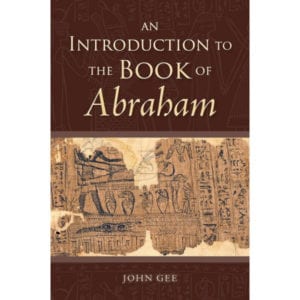
Admission and Omission: What Is the Church’s Position on the Book of Abraham?

March 26, 2015 by Stephen Smoot

“Printing Plates of Facsimiles of Papyrus Drawings, Nauvoo, IL, early 1842” (http://josephsmithpapers.org)

[This post originally appeared at Ploni Almoni.]

In his March 2015 letter to the First Presidency of The Church of Jesus Christ of Latter-day Saints appealing his excommunication, John Dehlin claims there has been a “recent admission” on the part of the Church “that the Book of Abraham is not a translation of the Egyptian papyrus, as Joseph Smith claimed that it was.” Dehlin quotes the Church’s 2014 Gospel Topics essay “Translation and Historicity of the Book of Abraham” to wit:

None of the characters on the papyrus fragments mentioned Abraham’s name or any of the events recorded in the book of Abraham. Mormon and non-Mormon Egyptologists agree that the characters on the fragments do not match the translation given in the book of Abraham, though there is not unanimity, even among non-Mormon scholars, about the proper interpretation of the vignettes on these fragments. Scholars have identified the papyrus fragments as parts of standard funerary texts that were deposited with mummified bodies. These fragments date to between the third century B.C.E. and the first century C.E., long after Abraham lived.

Dehlin raises this point again later in his letter. One of the many “disturbing facts” he “stumbled upon” in his studies is that “by the LDS Church’s own admission, the Book of Abraham is not a translation of the Egyptian papyrus.” This, among other things, Dehlin says, was “deeply disturbing and destabilizing for [him].”

Dehlin’s allies Nadine R. Hansen and Kate Kelly also raise this point in the same letter. “The Church’s own essays openly and truthfully acknowledge this difficulty,” they write, “by stating, ‘None of the characters on the papyrus fragments mentioned Abraham’s name or any of the events recorded in the book of Abraham.'” Consequently, “While the Church may continue to maintain that the Book of Abraham is inspired, canonical writing, but it must do so while acknowledging that Joseph Smith’s early statement that it is Abraham’s writings, ‘by his own hand upon the papyrus,’ is not factbased.” (On this last point, see my article here.)

These authors are not alone in claiming the Church has made this “recent admission” about the Book of Abraham. Jeremy Runnells, in his anti-Mormon screed known conventionally as the CES Letter, remarks, “The Church conceded in its July 2014 Translation and Historicity of the Book of Abraham essay that Joseph’s translations of the papyri and the facsimiles do not match what’s in the Book of Abraham.”

With these statements from Dehlin and Runnells in mind, let’s take a closer look at what the Gospel Topics essay actually says about the Book of Abraham.

I. The nature of the surviving papyri fragments. On this matter, the Gospel Topics essay matter-of-factly states that the surviving papyri fragments do not contain the Book of Abraham. “Scholars have identified the papyrus fragments as parts of standard funerary texts that were deposited with mummified bodies. These fragments date to between the third century B.C.E. and the first century C.E., long after Abraham lived.” However, this is by no means a “recent” admission or concession by the Church. In fact, what these authors fail to inform their readers is that the Church immediately identified the Joseph Smith Papyri fragments as copies of funerary texts when it received them from the Metropolitan Museum of Art in 1967. In the January 1968 issue of the Improvement Era, the Church identified the recovered fragments as “conventional . . . Egyptian funerary texts, which were commonly buried with Egyptian mummies.” The Church has reaffirmed this simple fact in subsequent publications.

  • “Mormon Media” (1975): “Brother Nibley marshals a considerable array of talents in fulfilling the second and major purpose of the book, which is to discuss the meaning of the Joseph Smith papyri. Identifying Joseph Smith Papyri X and XI with the Egyptian Book of Breathings becomes a point of departure for Brother Nibley, rather than, as with other scholars, a final pronouncement.”
  • “I Have a Question” (1976): “Q: Are the three facsimiles related to each other? A: Definitely, by all being attached to one and the same document, namely, the Joseph Smith Papyri X and XI, which contain a text of the Egyptian Book of Breathings. Facsimile No. 1 is followed immediately on its left-hand margin by Joseph Smith Papyrus XI, which begins the Book of Breathings. Someone cut them apart, but the fibre edges of their two margins still match neatly. Facsimile No. 1 thus serves as a sort of frontispiece.”
  • “I Have a Question” (1988): “[Facsimile 1] can be connected with several of the other papyri fragments that relate to the text of an ancient Egyptian religious document known as the “Book of Sensen” or “Book of Breathings.”. . .  [F]rom paleographic and historical considerations, the Book of Breathings papyrus can reliably be dated to around A.D. 60—much too late for Abraham to have written it. Of course, it could be a copy—or a copy of a copy—of the original written by Abraham. However, a second problem arises when one compares the text of the book of Abraham with a translation of the Book of Breathings; they clearly are not the same.”
  • “Book of Abraham: Facsimiles From the Book of Abraham” (1992): “Only for Facsimile 1 is the original document known to be extant. Comparisons of the papyrus fragments as well as the hieroglyphic text accompanying this drawing demonstrate that it formed a part of an Egyptian religious text known as the Book of Breathings. Based on paleographic and historical evidence, this text can be reliably dated to about the first century A.D. Since reference is made to this illustration in the book of Abraham (Abr. 1:12), many have concluded that the Book of Breathings must be the text that the Prophet Joseph Smith used in his translation. Because the Book of Breathings is clearly not the book of Abraham, critics claim this is conclusive evidence that Joseph Smith was unable to translate the ancient documents.”
  • “News From Antiquity” (1994): “[Critics of the Church] point to the fragments of the Joseph Smith papyri that we now possess and claim that since the contents of these papyri bear little obvious relationship to the book of Abraham, the book is a fraud.”
  • The Pearl of Great Price Student Manual (2000): “In 1966 eleven fragments of papyri once possessed by the Prophet Joseph Smith were discovered in the Metropolitan Museum of Art in New York City. They were given to the Church and have been analyzed by scholars who date them between about 100  B.C.and A.D. 100.” (Note: this was republished in 2013 in the Church’s Doctrine and Covenants and Church History Seminary Teacher Manual.)
  • Church History In The Fulness Of Times Student Manual (2003): “In 1967 eleven fragments of the Joseph Smith papyri were rediscovered by Doctor Aziz S. Atiya, in the New York Metropolitan Museum of Art. Studies of them have confirmed that they are mainly ancient Egyptian funerary texts of the sort commonly buried with royalty and nobility and designed to guide them through their eternal journeyings. This has renewed the question about the connection between the records and the book of Abraham.”

One might quibble here or there with the wording of these passages. For example, the Pearl of Great Price Student Manual mentions the late date of the papyri, but doesn’t explicitly mention that the papyri are fragments from the Book of Breathings and the Book of the Dead. Nevertheless, when these sources are combined, the basic point cannot be negated: the Church has straightforwardly taught that the surviving papyri fragments do not contain the Book of Abraham, but instead contain late copies of Egyptian funerary texts. Dehlin and Runnells are misleading their readers by claiming this “admission” is recent, or has just now been recognized by the Church in the 2014 Gospel Topics essay. In fact, the Church has acknowledged this fact since at least 1968.

II. On why the Book of Abraham is not contained in the surviving papyri. Dehlin and Runnells both conspicuously fail to alert their readers to the part of the Gospel Topics essay on the Book of Abraham that explicitly addresses reasons why the Book of Abraham text was not recovered in the surviving papyri fragments. The essay clearly identifies at least two potential reasons. “It is likely futile to assess Joseph’s ability to translate papyri when we now have only a fraction of the papyri he had in his possession,” the essay notes. “Eyewitnesses spoke of ‘a long roll’ or multiple ‘rolls’ of papyrus. Since only fragments survive, it is likely that much of the papyri accessible to Joseph when he translated the book of Abraham is not among these fragments. The loss of a significant portion of the papyri means the relationship of the papyri to the published text cannot be settled conclusively by reference to the papyri.” In other words, the essay clearly recognizes the so-called “missing papyrus theory” as a possible explanation for why the surviving fragments don’t match the Book of Abraham.

The essay also mentions the so-called “catalyst theory” for the Book of Abraham as another possible explanation.

Alternatively, Joseph’s study of the papyri may have led to a revelation about key events and teachings in the life of Abraham, much as he had earlier received a revelation about the life of Moses while studying the Bible. This view assumes a broader definition of the words translator and translation. According to this view, Joseph’s translation was not a literal rendering of the papyri as a conventional translation would be. Rather, the physical artifacts provided an occasion for meditation, reflection, and revelation. They catalyzed a process whereby God gave to Joseph Smith a revelation about the life of Abraham, even if that revelation did not directly correlate to the characters on the papyri.

From this we see that Dehlin and Runnels have misled their readers by selectively presenting what the Gospel Topics essay claims about the relationship between the papyri and the Book of Abraham.

III. What about Elder Holland’s BBC Interview? Although not explicitly mentioned by Dehlin in his letter to the First Presidency (although it is mentioned and, not surprisingly, distorted by Runnells), it is worth quickly looking at Elder Jeffrey R. Holland’s remarks on the Book of Abraham made in a 2012 interview with BBC reporter John Sweeney. When Sweeney pressed Elder Holland on the matter of the translation of the Book of Abraham, Elder Holland responded, “[W]hat got translated got translated into the word of God; the vehicle for that I do not understand.” What does this statement reveal? First, notice carefully that Elder Holland calls the Book of Abraham a “translation.” He also calls it the “word of God.” So Elder Holland, it appears, both accepts the Book of Abraham as an authentic “translation” and as inspired scripture. Second, notice that Elder Holland simply remarks that he doesn’t know the mechanism (“vehicle”) of the translation of the Book of Abraham. In other words, he doesn’t know precisely how the translation was performed. This is different from how Runnells and others have characterized Elder Holland’s remarks. Due to some obviously heavy editing of the original footage into what became the broadcasted program, it is impossible to know precisely what, if anything, Elder Holland said in addition by way of clarification. Notwithstanding, at the risk of speaking on behalf of Elder Holland, I believe it is safe to assume that he merely meant he didn’t know the precise nature of the translation (e.g. “missing papyrus,” “catalyst,” or something else), and wasn’t obfuscating in some way about the Church’s position.

IV. The Facsimiles. Dehlin and Runnells also omit the Gospel Topics essay’s comments on the interpretation of the facsimiles. The essay explains,

Of course, the fragments do not have to be as old as Abraham for the book of Abraham and its illustrations to be authentic. Ancient records are often transmitted as copies or as copies of copies. The record of Abraham could have been edited or redacted by later writers much as the Book of Mormon prophet-historians Mormon and Moroni revised the writings of earlier peoples. Moreover, documents initially composed for one context can be repackaged for another context or purpose. Illustrations once connected with Abraham could have either drifted or been dislodged from their original context and reinterpreted hundreds of years later in terms of burial practices in a later period of Egyptian history. The opposite could also be true: illustrations with no clear connection to Abraham anciently could, by revelation, shed light on the life and teachings of this prophetic figure.

The essay therefore provides an explanation for why images illustrating the Book of Abraham could’ve ended up attached to an Egyptian funerary text, and why there is otherwise disjunction between Joseph Smith’s interpretation of the facsimiles and Egyptologists’ interpretations. In fact, the essay goes on to further explain, “Some have assumed that the hieroglyphs adjacent to and surrounding facsimile 1 must be a source for the text of the book of Abraham. But this claim rests on the assumption that a vignette and its adjacent text must be associated in meaning. In fact, it was not uncommon for ancient Egyptian vignettes to be placed some distance from their associated commentary.” Thus, in order to fully appreciate the Church’s explanation of the facsimiles, one needs to keep this commentary in mind. To omit it is to ultimately distort a critical aspect of the Church’s apologia for the Book of Abraham.

V. The 2013 edition of the Pearl of Great Price. Before concluding, it is worth highlighting the changes made to the 2013 edition of the Pearl of Great Price. The pre-2013 edition of the Pearl of Great Price identified the text as “[a] translation from some Egyptian papyri that came into the hands of Joseph Smith in 1835, containing writings of the patriarch Abraham.” By comparison, the 2013 edition characterizes the Book of Abraham as “an inspired translation of the writings of Abraham. Joseph Smith began the translation in 1835 after obtaining some Egyptian papyri.” Some have argued that this is another admission by the Church that the Book of Abraham isn’t really a translation. This seems unlikely, however, since the 2013 edition still retains the (slightly modified) header that has accompanied the Book of Abraham since its 1842 publication: “A Translation of some ancient Records that have fallen into our hands from the catacombs of Egypt. The writings of Abraham while he was in Egypt, called the Book of Abraham, written by his own hand, upon papyrus.” If the Church really was ceding ground on the Book of Abraham as a translation, one has to wonder why they left in this rather explicate superscript to the text.

Another overlooked change in the 2013 edition of the Pearl of Great Price comes at the beginning of the introductory page. The pre-2013 edition explains that “[t]hese items [i.e. the contents of the Pearl of Great Price] were produced by the Prophet Joseph Smith and were published in the Church periodicals of his day.” The 2013 edition, however, reads, “These items were translated and produced by the Prophet Joseph Smith, and most were published in the Church periodicals of his day.” Notice here the word “translated” was deliberately added in reference to the materials found in the Pearl of Great Price, which would presumably include the Book of Abraham. Thus, far from backing away from the Book of Abraham as being a translation of some sort, the Church, it could be argued, has in recent years actually reinforced an understanding of the Book of Abraham as a “translation.” The new edition of the Pearl of Great Price simply affirms that the Book of Abraham is an “inspired translation of the writings of Abraham,” while omitting details of the exact process, which remains up for debate.

In conclusion, one would do well to eschew the mishandled and misleading presentations of the Church’s position on the Book of Abraham offered by Dehlin and Runnells. The 2014 Gospel Topics essay hasn’t “conceded” or “admitted” anything about the Book of Abraham. The contents of the essay have, by and large, been circulating in both Church materials and other Mormon publications for decades. On the other hand, Dehlin and Runnells have omitted important material that helps us better understand this remarkable scriptural work.

Filed Under: Apologetics, Book of Abraham, LDS Scriptures

4th Watch 19: Why are Mormons prejudiced?

March 12, 2015 by Ned Scarisbrick

https://media.blubrry.com/mormonfaircast/www.fairlatterdaysaints.org/wp-content/uploads/2015/03/4th-Watch-19-Pod.mp3

Podcast: Download (36.8MB)

Subscribe: RSS

4thWatch SmallLike all human begins we have our own personal preferences about everything in life.  There are things, people, ideas and places that we may like and prefer that others dislike that have nothing to do with being prejudiced.  When it comes to real prejudice we need to define what we are talking about.

In this podcast Brother Scarisbrick relates how our understanding of different times and cultural norms can change as we gain further light and knowledge.

As always the views and opinions expressed in the podcast may not reflect or represent those of the Church of Jesus Christ of Latter-day Saints or that of FairMormon.

Filed Under: Anti-Mormon critics, Apologetics, Chastity, Conversion, Doctrine, Evidences, Faith Crisis, General, Hosts, LDS Culture, Marriage, Ned Scarisbrick, Philosophy, Podcast, Politics, pornography, Power of Testimony, Racial Issues Tagged With: predjudice

Lending Clarity to Confusion: A Response to Kirk Van Allen’s “D&C 132: A Revelation of Men, Not God”

March 9, 2015 by Brian Hales

temple_night2By Brian and Laura Hales

The Church of Jesus Christ of Latter-day Saints has generally not addressed the practice of plural marriage, but increased attention on the subject apparently prompted the Church to release several essays on the topic last year. The postings created a frenzy in the media with coverage by major national newspapers, television news, and countless blogs. While the essays were unexpectedly candid, they did not seem to assuage all of the concerns of members as evidenced by the questions and concerns that continue to be expressed. On February 2, 2015, Kirk Van Allen posted a blog titled, “D&C 132: A Revelation of Men, Not God.” In it, he brings up some valid questions, which have previously been voiced by members and non-members in their quest to try and understand this “strange doctrine.” However, he also advances arguments that seem to superficially examine the topic without taking into account important theological and historical contexts. Since this essay is traversing the blogosphere and stirring up a whirlwind, an alternative view of his assertions seems useful.

Lending Clarity to Confusion: A Response to Kirk Van Allen’s “D&C 132: A Revelation of Men, Not God”

Filed Under: Apologetics, LDS History, Polygamy

Fair Issues 82: The errors of Holley’s map

March 8, 2015 by Ned Scarisbrick

https://media.blubrry.com/mormonfaircast/www.fairlatterdaysaints.org/wp-content/uploads/2015/03/Fair-Issues-82-Pod.mp3

Podcast: Download (11.7MB)

Subscribe: RSS

MAIn this podcast brother Ash talks about the basic Great Lakes model for the Book of Mormon geography as proposed by Vernal Holley, an LDS critic.

The full text of this article can be found at Deseret News online.

Brother Ash is author of the book Shaken Faith Syndrome: Strengthening One’s Testimony in the Face of Criticism and Doubt, as well as the book, of Faith and Reason: 80 Evidences Supporting the Prophet Joseph Smith. Both books are available for purchase online through the FairMormon Bookstore. Tell your friends about the Mormon Fair-Cast. Share a link on your Facebook page and help increase the popularity of the Mormon Fair-Cast by subscribing to this podcast in iTunes, and by rating it and writing a review.

The views and opinions expressed in the podcast may not reflect those of the Church of Jesus Christ of Latter-day Saints or that of FairMormon


Filed Under: Anti-Mormon critics, Apologetics, Book of Mormon, Evidences, Fair Issues, First Vision, General, Geography, Hosts, Joseph Smith, Michael R. Ash, Ned Scarisbrick, Podcast Tagged With: Book of Mormon Geography

Two New Articles: “When Doubts and Questions Arise” and “Answers to Common Questions”

March 6, 2015 by Stephen Smoot

youth-talking-students-821922-gallery[This post originally appeared as two separate blog posts at Ploni Almoni–Mr. So and So’s Mormon Blog. The two posts are redacted here for convenience.] 

“When Doubts and Questions Arise”

Hot off the press is the March 2015 Ensign.

Adam Kotter gets it right with his comments on how to healthily respond to a faith crisis:

“When Doubts and Questions Arise”

Incidentally, I just read these words from Elder John A. Widtsoe this evening.

Doubt of the right kind–––that is, honest questioning–––leads to faith. Such doubt impels men to inquiry which always opens the door to truth. The scientist in his laboratory, the explorer in distant parts, the prayerful man upon his knees–––these and all inquirers like them find truth. They learn some things that are known, others are not. They cease to doubt. . . . On the other hand, the stagnant doubter, one content with himself, unwilling to make the effort, to pay the price of discovery, inevitably reaches unbelief and miry darkness. His doubts grow like poisonous mushrooms in the dim shadows of his mental and spiritual chambers. At last, blind like the mole in his borrow, he usually substitutes ridicule for reason, and indolence for labor.

(John A. Widtsoe, “Is It Wrong to Doubt?” in Science and Your Faith in God [Salt Lake City: Bookcraft, 1958], 241.)

While I’m at it, here are also some sage words from Joseph F. Merrill.

In these days there are so many false teachings, so much propaganda, so much shallowness and insincerity, so many appeals to self-interest by ambitious demagogues and others, that it behooves the truth-seeker to investigate all proposals and appeals that come to him in order that he may act wisely.

(Joseph F. Merrill, “The Dynamic God of Science,” in Science and Your Faith in God, 117.)

A key to successfully navigating a faith crisis is to never assume that you know enough about the topic you’re struggling with. If it’s plural marriage, the Book of Abraham, Book of Mormon historicity, or other issues in Church history, you can never study too much, but you can always study too little. In my experience, many individuals who resign their Church membership over these and other issues often do so after giving up too easily on the apologetic responses to the criticism, or not even knowing the responses in the first place! In many instances they read the critical material but don’t go any further. Or, if they are aware of the apologetic response, they often get it secondhand from critics who are, in reality, presenting little more than a straw man version of the apologetic response that distorts the real argument. (Exhibit A: the apparent inability of the denizens of the Ex-Mormon Subreddit to understand, much less accurately summarize, John A. Sorenson’s suggestion that “horse” served as a Nephite loan-shift for the indigenous American tapir. This, incidentally, has led to a bizarre obsession on the part of these ex-Mormons with the tapir that exhibits an amusing ignorance on their part.)

In short, to paraphrase Werner Heisenberg, “The first gulp from the glass of Mormon history will turn you into an ex-Mormon, but at the bottom of the glass faith in Joseph Smith’s divine calling is waiting for you.”

–––––––––––––––––––

“Answers to Common Questions”

If I may be perfectly frank, I have been disappointed in the quality of many of the articles printed in the Church’s magazines as of late. While I read the Ensign and the New Era every month, mostly to stay current on what’s trending in Mormon discourse, I usually find myself skimming over most articles. Rarely do I find articles that are substantive or that grab my attention. To my delight, the March 2015 New Era, the Church’s magazine for youth, does have one intriguing article that I thought would be worth highlighting.

Here are some “common questions” that an unnamed author the New Era thought important to provide brief responses to. Keep in mind that, per the New Era‘s primary readership, these are the sorts of questions more likely to be encountered by the Church’s youth (perhaps, for example, while walking down the hall in an American high school).

1. Why do you have other scriptures? Isn’t the Bible enough?

2. Mormon men have lots of wives, right?

3. Why are Mormons against gay people?

4. Are you really Christians or more like a cult?

5. Why does it matter what church you belong to? Doesn’t God love everyone?

6. Doesn’t scientific evidence prove that the Book of Mormon couldn’t possibly be true?

7. What happens in your temples, and why are you so secretive about it?

8. Why does your church send out young men and women to be missionaries?

9. Why don’t you believe in having sexual relationships until you’re married?

10. Do you all just blindly obey whatever you’re told?

11. How can you be sure what you believe is true?

I will encourage my readers to go see for themselves the answers provided to these questions. I do, however, wish to highlight a few remarks.

Concerning whether scientific evidence disproves the Book of Mormon, the article states:

The scientific evidence we have cannot prove or disprove the Book of Mormon. Archaeological or genetic research in the Americas, for instance, is ongoing and often raises more questions than it answers. So to draw absolute conclusions from it about the Book of Mormon (either for it or against it) is usually a bit of a stretch—and quite risky, since new evidence often comes along that refutes old conclusions.

This is, actually, a very astute and reasonable reply. Having taken at least three different archaeology classes in my undergraduate program, I have learned that making positive claims about the past based on negative evidence is a rather problematic. I have encountered, on a number of occasions, the useful adage “the absence of evidence is not evidence of absence” in my reading of mainstream archaeology textbooks and papers. I have also encountered many wise and seasoned archaeologists warn against attempting to make a case for something on negative evidence. It’s a methodological pitfall that, unfortunately, many unwittingly seem to fall into.

Similarly, given what the archaeologist Mark Alan Wright has indicated about the excavation of pre-Columbian Mesoamerica, we can appreciate that this sentiment is doubly true for the Book of Mormon.

Because of the extraordinarily diverse cultural landscape and the challenges of interpreting the archaeological record, scholars debate the precise chronologies, spheres of influence, and cultural boundaries of Mesoamerica. Literally thousands of archaeological sites dot the Mesoamerican landscape, the vast majority of which we know virtually nothing about, other than their locations. In the Maya area alone are approximately six thousand known sites, of which fewer than fifty have undergone systematic archaeological excavation.

. . .

Thanks to advances in satellite imaging, we have been able to identify over 6,000 sites in the Maya area alone, each composed of dozens, if not hundreds, of buildings. Of these thousands of known sites, each is unique in one way or another. From those polities whose artistic programs and hieroglyphic inscriptions have survived the ravages of time, we have discovered that each city worshipped its own unique pantheon of gods, typically a blending of pancultural deities with locally significant patron gods.

(Mark Alan Wright, “The Cultural Tapestry of Mesoamerica,” Journal of the Book of Mormon and Other Restoration Scripture 22/2 [2013]: 4, 21; online here.)

Moving on, the article then comments:

But more important, attacks against the Book of Mormon on scientific grounds are usually based on faulty assumptions about what the book claims to be. For instance, it does not claim to be a record of the ancestors of all of the native peoples across the entire Western Hemisphere, nor does it claim that the people described in it were the first or only people inhabiting the area described in it. And yet, many scientific criticisms seem to assume that the book claims exactly these things.

Again, this is an excellent point. As Hugh Nibley wryly observed in 1967, “The normal way of dealing with the Book of Mormon ‘scientifically’ has been first to attribute to the Book of Mormon something it did not say, and then to refute the claim by scientific statements that have not been proven.” (Since Cumorah, 2nd ed. [Provo: FARMS, 1981], 214.)

Furthermore, this comment from the New Era is keeping in line with the Church’s recent Gospel Topics essay on the Book of Mormon and DNA studies:

The Book of Mormon provides little direct information about cultural contact between the peoples it describes and others who may have lived nearby. Consequently, most early Latter-day Saints assumed that Near Easterners or West Asians like Jared, Lehi, Mulek, and their companions were the first or the largest or even the only groups to settle the Americas. Building upon this assumption, critics insist that the Book of Mormon does not allow for the presence of other large populations in the Americas and that, therefore, Near Eastern DNA should be easily identifiable among modern native groups.

The Book of Mormon itself, however, does not claim that the peoples it describes were either the predominant or the exclusive inhabitants of the lands they occupied. In fact, cultural and demographic clues in its text hint at the presence of other groups. At the April 1929 general conference, President Anthony W. Ivins of the First Presidency cautioned: “We must be careful in the conclusions that we reach. The Book of Mormon … does not tell us that there was no one here before them [the peoples it describes]. It does not tell us that people did not come after.”

So, to give credit where credit is due, I appreciate that the New Era published this brief article. I appreciate it whenever the Church attempts to introduce a little bit of critical thinking into its curriculum besides merely faith-promoting material. I hope that more articles such as this one are published in future issues of the Church’s magazines. It can only help better prepare Church members to give their apologia for the hope that is within them (1 Peter 3:15).

Filed Under: Apologetics, Faith Crisis

How to be Comfortable Not Knowing

March 5, 2015 by Laura Hales


Square-pink-glass-plate

[This piece originally appeared at LDS.net and is reposted here with permission.]

unmatched-china-plates
My mother collected unmatched china plates because she couldn’t afford a set of china.

My mother is a dish-collector of sorts. Due to the large size of our family and her limited budget, her treasure hunts mainly consisted of browsing the neighborhood yard sales. There wasn’t a matching set of dishes in our cupboard but rather a collection of others’ surplus that became my mother’s gems.

One evening a close friend stopped by while we were eating dinner. He noted the pink plate and mentioned that it was valuable, and I shouldn’t be eating on it. And with that, my days of elegant dining ended.

After a careful washing, my dish was placed in the china cabinet with others deserving such honor. My mother took our friend’s proclamation at face value; the dish was far too precious to be used as a child’s dinner plate.

I can’t say I ever felt the same way about our friend. At dinner as I looked down at a plate that was not as lovely as the one to which I was accustomed, I resented the unsolicited comments on the value of our dinnerware. Looking at the plate in the china cabinet didn’t give me nearly the same pleasure as actually using it had.

About ten years ago my mother gave me the pink plate. “Here,” she said, “I saved this for you.” For the first time as an adult, I closely inspected the beloved plate. There were no markings identifying a manufacturer, which would aid in revealing its origins.

“So,” I asked my mother, “Why did our friend think this plate was so valuable?” She responded by describing features with which I was already familiar: “It is made of pink glass, and it is etched with those pretty flowers.”

With the tools available to me on the Internet, I decided to do a little research of my own. After checking several sources, I found I could purchase a set of five new dishes pretty much identical to the one I now housed in my cupboard for about ten dollars. The dish had intrinsic value, but its monetary value was nominal.

My mother had taken her friend’s declaration without entertaining an ounce of skepticism despite the fact he had no special training in evaluating the quality of dinnerware. She accepted what she heard as truth simply because it had been uttered, was plausible, and was even enticing. Perhaps the dish really was worth a bit of money.

Accepting Truth

A bit of skepticism is not a bad thing. After all, it is through questioning that the greatest discoveries are often made. Earnest truth seeking often encourages us to question that which we are told, which results in acquiring more complete and accurate information. It is unfortunate our society often conditions us to do the opposite.

Instilled at a young age to accept words spoken from those with the stamp of authority, we become accustomed to generally trusting that which others promote as truth. This authority is often established by a cursory examination of the fact giver’s credentials, such as age, profession, personal relationship, and ecclesiastical position.

This is not to say that our society has conditioned us to be consistently duped. Most justifiably consider a textbook a more accurate source of information than a grocery store tabloid magazine. But how many times have we unquestionably taken as truth the word of tour guides—certainly they have been briefed; accepted some gossip about a neighbor—after all their husbands work together; or a lecture in a Social Studies class—that master’s degree in history must account for something. It seems the bar for establishing a source of authority may be too low at times.

Searching-online
Not all online information is reliable. How can we judge what is true?

This social conditioning is especially detrimental with the advent of the Internet. Anyone can say anything at any time, but it doesn’t mean it is true. And with a click of the mouse, that information is made available to the world. The more the information is accessed, the more credence is attributed to it, creating what I refer to as the “Search Engine Fallacy.” A source is assumed authoritative simply because it has been frequently viewed.

Wisdom from Antiquity

There is an oft-repeated quote by Aristotle declaring: “It is the mark of an educated mind to be able to entertain a thought without accepting it.” In our quest for truth, it may be wise to ponder an idea without immediately accepting it. Instead weigh the facts carefully before making a decision and explore the reasoning behind a conclusion.

The flip side of this statement is true as well. It is important to consider an opinion before dismissing it entirely. Even arguments that result in faulty conclusions usually contain some bit of truth. One may entertain a thought that is alien to one’s normal way of thinking and after careful study and contemplation find it worthy of embracing.

This quote urges truth seekers to approach ideas with an open mind and weigh their merits carefully through study and examination; trying best to understand the concepts, but in the end, there is no need to agree with them.

Authentic vs. Counterfeit

This quote, which is easily found on the Internet, has been used in numerous blogs, college papers, and inspirational speeches over the years. A simple search on a popular Internet engine will result in hundreds of hits. It is a great quote: pithy, thought provoking, and easily understood. But I am not confident Aristotle actually coined the phrase. In fact, I am pretty sure he did not; if Aristotle always wrote so clearly, philosophy classes might be more popular.

Neomachaian-Ethics-by-Aristotle
Aristotle’s real quote was more complex than we think.

The closest reference to a quote by Aristotle resembling this familiar rendition is found in his book Nicomachean Ethics: “It is the mark of an educated man to look for precision in each class of things just so far as the nature of the subject admits; it is evidently equally foolish to accept probable reasoning from a mathematician and to demand from a rhetorician scientific proofs.”

The essence of the quote is similar to its twentieth-century update, but the subtle differences impart nuances of meaning much deeper than its counterfeit cousin. Both quotes are worthy of contemplation, but only one is authentic and is in truth the voice of Aristotle.

Comparing the two quotes brings forth meaning in the authentic that is lost in the condensation. Aristotle urges one to “look for precision in each class of things just so far as the nature of the subject admits.” Constraints such as lack of historical data and insufficiencies in scientific knowledge limit our ability to determine the nature of truth, but these resources and others ought to be exhausted before accepting the accuracy of any conclusions.

Accepting Uncertainty and Determining Truth

But unless a thing is witnessed, can its reality ever be established with certainty? And if another has not had that same witness, can they assuredly take another’s word as a witness?

Aristotle brings up a second point that addresses these questions of uncertainty and where to turn for resolution: “it is evidently equally foolish to accept probable reasoning from a mathematician and to demand from a rhetorician scientific proofs.”

mormon-prayer6
Spiritual truths are best discovered by spiritual means.

Similarly, those things that are historical are best obtained from personally studying history and the work of historians; those things that are spiritual are best obtained through spiritual means, whether that be through study of secular and religious sources, prayer, spiritual gifts, or slowly over time.

Truth seekers will undoubtedly encounter information with which they are either unfamiliar or uncomfortable. I encourage them to test Aristotle’s authentic dictate. For those things which are disconcerting, study them out “with precision . . . so far as the nature of the subject admits,” and only after doing so, make a decision whether to accept or reject them as truth.

When we accept as truth that which is proposed by another without seeking a knowledge of that truth ourselves, we not only risk exiling a cherished dish to the china cabinet but also perpetuating falsehoods by relying on words simply put forth rather than words that represent truth.


Filed Under: Apologetics, Faith Crisis

The Folly of LDS Church Financial Transparency

February 26, 2015 by FAIR Staff

[This article originally appeared at Tim’s Accounting and is reposted here with the author’s permission.]

By Tim Gordon

The first person that I baptized on my mission was one of the coolest people I’ve ever met, who we’ll call Tomas here so I don’t have to use his real name or keep on calling him “that one guy.” Tomas told me stories of his youth spent in the White City of Mexico (Puerta Vallarta), dancing on the beach and listening to the up-and-coming band Maná. And, amazingly enough, I even understood some of what he said, despite still barely grasping Spanish.

When my companion and I started on the lesson of tithing, I was a little hesitant to teach it. I hadn’t had much experience in the field at that point (two weeks, tops), but I’d seen enough to know that the people we taught were amount the poorest I’d ever met in the US. Add to that the stories Tomas told us about financial burden he faced in bringing his wife across the border, I was worried about his reaction to a lesson asking for a commitment of 10% of meager his income.

Turns out I had no cause for concern. “I’ve always paid tithing,” he said, “even when I didn’t know which church to join. I figure, the Lord commands me to pay tithing. If the people who take my tithing spend it wrong, it’ll be them who’ll be punished, not me.”

[Read more…] about The Folly of LDS Church Financial Transparency

Filed Under: Apologetics, General

  • « Go to Previous Page
  • Go to page 1
  • Interim pages omitted …
  • Go to page 25
  • Go to page 26
  • Go to page 27
  • Go to page 28
  • Go to page 29
  • Interim pages omitted …
  • Go to page 46
  • Go to Next Page »

Primary Sidebar

Faithful Study Resources for Come, Follow Me

Subscribe to Blog

Enter your email address:

Subscribe to Podcast

Podcast icon
Subscribe to podcast in iTunes
Subscribe to podcast elsewhere
Listen with FAIR app
Android app on Google Play Download on the App Store

Pages

  • Blog Guidelines

FAIR Latest

  • The Lord Is Hastening His Work
  • Come, Follow Me with FAIR – Doctrine and Covenants 137–138 – Part 2 – Autumn Dickson
  • Come, Follow Me with FAIR – Doctrine and Covenants 137–138 – Mike Parker
  • FAIR December Newsletter
  • Come, Follow Me with FAIR – Doctrine and Covenants 137–138 – Part 1 – Autumn Dickson

Blog Categories

Recent Comments

  • JC on The Lord Is Hastening His Work
  • LHL on Come, Follow Me with FAIR – Doctrine and Covenants 132 – Mike Parker
  • Stephen Johnsen on Come, Follow Me with FAIR – Doctrine and Covenants 132 – Mike Parker
  • Bruce B Hill on Come, Follow Me with FAIR – Doctrine and Covenants 124 – Part 1 – Autumn Dickson
  • Gabriel Hess on Join us Oct 9–11 for our FREE virtual conference on the Old Testament

Archives

Follow Us

  • Facebook
  • Twitter
  • iTunes
  • YouTube
Android app on Google Play Download on the App Store

Footer

FairMormon Logo

FAIR is a non-profit organization dedicated to providing well-documented answers to criticisms of the doctrine, practice, and history of The Church of Jesus Christ of Latter-day Saints.

Donate to FAIR

We are a volunteer organization. We invite you to give back.

Donate Now

Site Footer