• Skip to primary navigation
  • Skip to main content
  • Skip to primary sidebar
  • Skip to footer

FAIR

  • Find Answers
  • Blog
  • Media & Apps
  • Conference
  • Bookstore
  • Archive
  • About
  • Get Involved
  • Search

General

Truth, Subjectivity, and History

August 24, 2014 by FAIR Staff

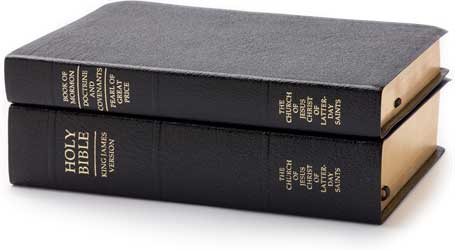
scripture-study-243080-galleryWritten by Stephen Trayner

I was recently drawn into a fascinating discussion of truth and history. I have always loved history. In part, my love of history led to my study of political science and a career in law. A recent online post I read started with an invitation to learn the history of The Church of Jesus Christ of Latter-day Saints. I have read posts of others questioning, “How can a person can be active in The Church of Jesus Christ of Latter-day Saints in view of the history of the Church and the different beliefs held and practiced by the Church?”

I have spent the majority of my life investigating, researching, sorting through, and evaluating “facts.” John Adams stated, “Facts are stubborn things; and whatever may be our wishes, our inclinations, or the dictates of our passion, they cannot alter the state of facts and evidence.” I too have found facts, including historical facts, to be stubborn things. It has been my professional experience that witnesses to events sometimes misperceive, mis-recall, and even misstate facts for a variety of reasons. I have seen witnesses testify under oath inconsistently with one another, both claiming to have seen and recalled an event. Likewise, I have had witnesses, who after the passage of time, recall events memorialized in photographs and contemporary documents in a manner inconsistent with that unquestioned photographic and documentary proof.

The philosopher Voltaire assailed history as being “a pack of lies we play upon the dead.” While Voltaire’s view may be extreme, it is clear that an element of subjectivity is inherent in investigating and retelling history. Subjectivity may also play a role in our study of history, despite the reader/investigator’s best intentions and desires. The student of history may unconsciously allow the present to influence his or her knowledge or interpretation of past historical events. (An interesting article on the problem of bias in the study of history can be found online.)

Knowing the inherent limitations in the recording (and studying) of the history, including the true and unbiased context in which past events may have occurred, religious scholarship and discipleship often require consideration of and sifting through potentially contravening and contradictory evidence. To find eternal truths, especially historical religious truths, the seeker or disciple must turn to the Author of truth, knowing that He will give knowledge to all men liberally in response to the proper exercise of faith and study.

The seeker of eternal truths soon understands that His ways are not necessarily our ways, nor our thoughts, His thoughts. At times, we may struggle to understand how a loving God could send floods to cover the earth, plagues to afflict the disobedient, direct His chosen leaders to take multiple wives, or order the death of evil men. At times, we may struggle to understand how the use of spittle could restore the sight of one who was blind (Mark 8:22–25), how Jordan’s waters could heal the leper (2 Kings 5), or how the mere touch of the hem of His garment could heal the infirm (Matthew 9:20–22). We may even struggle to understand the importance of His teaching to Thomas, “blessed are they that have not seen, and yet have believed” (John 20:29). Faith is often born as we ”learn to walk to the edge of the light, and then a few steps into the darkness; then the light will appear and show the way before you” (source). He encourages us to “dispute not” in part because we often do not receive a witness of the truth until after the trial of our faith (Ether 12:6). Having spent a lifetime in search of religious truth based upon facts and the Spirit, I think it is fair to say that the Church and faithful third parties have provided well researched and scholarly responses to each of the matters currently in discussion and debate. History is not to be feared. History can and does build faith.

The Church in recent months has addressed a number of doctrinal and historical issues raised in recent years concerning variety of topics largely by those openly opposed to the Church. The Church’s responses are found in its “Gospel Topics” website. While detractors may choose to assert that such statements are evidence of a “cover up,” others may rightfully assert that such official statements are merely the result of a need to address clear and unequivocal falsehoods which have been raised and disseminated against the Church on a broad scale due to the influence of the Internet.

Some may ask, “Why would God allow such claims to be so prevalent in our day? Why would God allow His work to be opposed by such vocal and persistent voices of dissent and doubt?” I think there are reasons for this. As darkness approaches and as dissenting voices ring out, we must turn to Him for understanding and truth. Ultimately a testimony of the restored gospel of Jesus Christ comes down to one’s testimony and conversion born of the Holy Ghost. The Savior’s ministry was notable for open and fierce opposition to Him personally as well as His teachings. The Lord’s people and His servants have always been the object of false persecution and claims. His ways were not the ways of the people of His day. His teachings were not well accepted by the masses. Some even questioned his history. Many asked, “Is not this the carpenter, the son of Mary, the brother of James, and Joses, and of Juda, and Simon? and are not his sisters here with us? And they were offended at him” (Mark 6:3).

Such opposing forces led directly to His crucifixion and the persecution of His early church, its teachings, its leaders, and its members. The world soon fell into a great apostasy and spiritual darkness. The world rejected the Light of the world. I testify that the ensuing darkness was not dispelled until the spring of 1820 when He answered a young boy’s prayer and the work of the restoration of His truths, priesthood authority, and Church commenced anew. That boy, Joseph Smith, became God’s prophet. Even after the restoration of His gospel in these modern days, similar forces continue to oppose God’s truths, Church, and people.

Faith is a personal matter between God and each and every one of His children. I choose to believe. I have felt His spirit bear witness to my soul of the truthfulness of my beliefs. I know His Son lives and is my Redeemer. His truths set me free each day. I pray for those who stumble in darkness, those whose faith and light may be weak, and those whose faith once bright has faltered. I pray for those who choose not to believe. They are my brothers and sisters.
I bear my witness that The Church of Jesus Christ of Latter-day Saints is God’s kingdom here on earth and is led by a living prophet. Christ stands at the head of His Church today. His invitation to all to come unto Him has not and will not change.

I close with the words of one of His modern day Apostles, which I know to be true. Elder Russell M. Nelson said, “Even more amazing than modern technology is our opportunity to access information directly from heaven, without hardware, software, or monthly service fees. It is one of the most marvelous gifts the Lord has offered to mortals. It is His generous invitation to ‘ask, and it shall be given you; seek, and ye shall find; knock, and it shall be opened unto you.'”

This timeless offer of personal revelation is extended to all of His children. It almost sounds too good to be true. But it is true!
Filed Under: Apologetics, Faith Crisis, General

4th Watch 16: A Broken Vessel – What is clinical depression?

August 21, 2014 by Ned Scarisbrick

https://media.blubrry.com/mormonfaircast/www.fairlatterdaysaints.org/wp-content/uploads/2014/08/4th-Watch-Pocast-16.mp3

Podcast: Download (17.7MB)

Subscribe: RSS

4thWatch SmallBrother Ned returns to his podcast after recovering from what he refers to as “minor heart surgery.”  In this episode he talks about how our health, both physical and mental can affect our understanding of the gospel of Jesus Christ and our relationships.  Having lived with clinical depression for most of his adult life he is well acquainted with this affection and the suffering this serious condition can cause.

In the October 2013 general conference of the Church of Jesus Christ of Latter-day saints brother Jeffery R. Holland of the quorum of the twelve apostles gave a talk titled “Like a broken Vessel.”  Brother Scarisbrick bases much of this podcast on Elder Holland’s counsel given in this talk and the hope we have in God’s eternal love for all His children.

A basic explanation of cognitive behavioral therapy as talked about in this podcast can be found here.

As always the views and opinions expressed in this podcast may not reflect those of the Church of Jesus Christ of Latter-day Saints or that or FairMormon.


Filed Under: Faith Crisis, General, Hosts, LDS Culture, Mormon Voices, Ned Scarisbrick, Podcast, Science

Mormon Fair cast 264: Letters to a Young Mormon

August 14, 2014 by Ned Scarisbrick

https://media.blubrry.com/mormonfaircast/www.fairlatterdaysaints.org/wp-content/uploads/2014/08/Adam-Miller.mp3

Podcast: Download (20.2MB)

Subscribe: RSS

Adam S. MillerAdam S. Miller who is a professor of philosophy at Collin College in McKinney, Texas and associated with the Maxwell Institute of the Brigham Young University is the author the book “Letters to a Young Mormon.”  In this podcast Ned Scarisbrick interviews Adam Miller about this book and the impact it has on the rising generation.

“Letters to a Young Mormon frustrated me. Not that I didn’t like it, because I enjoyed it immensely. No, it frustrated me because I only wish I had had such a book to read when I was a 1960s teenager with racing mind and hormones. And perhaps more poignantly, I wish it had been available when my children were passing through those difficult and impressionable years. Letters to a Young Mormon is both tender and gentle, and at the same time provocative and intellectually stimulating. Its disarming honesty is only surpassed by the significance of its messages. I recommend it wholeheartedly, for young and old.”
–Robert L. Millet, Professor of Religious Education, Brigham Young University

This book is available at the FairMormon bookstore here.

The views and opinions expressed in the podcast may not reflect those of the Church of Jesus Christ of Latter-day Saints or that of FairMormon.

Filed Under: Apologetics, Book reviews, Doctrine, Evidences, Faith Crisis, General, Hosts, LDS Culture, Mormon Voices, Ned Scarisbrick, Podcast, Power of Testimony

A Word on a “Liberal” vs. a “Conservative” Understanding of Scripture

July 29, 2014 by FAIR Staff

scriptures[By David Larsen, cross posted with slight alterations from Heavenly Ascents.]

I recently saw a blog post by Dr. William Hamblin that responded to a Round-Table panel on the topic: “Is Scripture Relevant.” I had not initially seen this discussion, so I am grateful to the two bloggers referenced for posting their thoughts. I have since gone back and watched the panel discussion and came away with sentiments similar to Dr. Hamblin’s. I didn’t feel that the panelists really addressed or answered that question. As I have strong feelings on this topic, I thought I would share a few comments.

As Dr. Hamblin also suggested, some of the ideas presented in the discussion can be boiled down to, at least in part, the differences between a liberal versus a conservative understanding of what scripture is and how it functions in a community.

The LDS understanding of scripture can appear, for those on the outside looking in, to be very complex. Most Mormons could legitimately be described as having both a liberal and a conservative view of scripture. For many of my protestant/evangelical friends and colleagues, our dismissal of the idea of sola scriptura (i.e., the Bible is the inspired word of God and as such is of higher authority than tradition or ecclesiastical authority), or of scriptural inerrancy is a very liberal position. For some, like Catholics, Anglicans, and Methodists, our position, in this regard, is perhaps not so radical (although our acceptance of additional scripture beyond the Bible is).

As I went through my graduate degrees in theology and Biblical Studies, I had many discussions with troubled evangelical students whose world seemed to be crashing down around them because in class after class they were presented with evidence that the process of the scriptural canon coming together was a rather messy one and that there are many conflicting manuscripts, apparent contradictions, and human errors that entered into that process. Some expressed to me that they had lost their faith or were in the process of losing it, because of these revelations (if you pardon the pun). They wondered how I was able to get through my studies without feeling so shaken. I would tell that my Mormon faith taught and prepared me to accept a view of scripture that allowed for errancy — the fallible hand of human beings in the transmission of the inerrant word of God. It is one of our articles of faith that “we believe the Bible to be the Word of God, as far as it is translated [or ‘transmitted’] correctly.” But for many of my Christian friends, this is an unacceptably liberal position.

As I listened to some of the comments made at this recent panel discussion, including in the Q&A period, I found some ideas expressed that, in my opinion, would be “unacceptably liberal” in the minds of most Latter-day Saints. In the interest of brevity, I will focus on a few specific responses to a question that concerned the difference between scripture and literature in a more general sense. I realize that in doing this, I am taking these responses out of their full context, but I hope that I am not misrepresenting the speakers’ intended meaning. I don’t mention the presenters’ names because my purpose is not to criticize them personally nor their research in general, but simply to discuss these particular ideas.

One of the presenters responded by saying: “What is the difference between a prophet and a poet? I’m not sure.”

Another stated: “I don’t think there is a rigid distinction between literature and scripture. Scripture is precisely that — anything has the potential to be scripture if it helps you deepen your relationship to the divine world.” He went on to explain (this is my summary) that basically any literature that helps a community bond together and access deity as they understand it should be considered scripture.

Now this is a liberal view of scripture in a different sense than what I explained above. In this regard, most Latter-day Saints’ view of scripture would be comparatively conservative. For most Mormons, including myself, this is a much more broad definition of scripture than we would be willing to accept or use. As Bill Hamblin explains in his post, this view defines as scripture whatever a community accepts or believes scripture to be. He goes on to define how he sees scripture, a view with which I think most Latter-day Saints would agree:

This perspective ignores that scripture is scripture because of something in its nature and essence, not in our response to it. It is and remains scripture even if no one believes in it. Scripture is a manifestation of God to humans that humans can accept or reject. But human rejection of scripture does not change its scriptural nature; that comes from God. Scripture is scripture whether we believe it or not.

Hamblin’s response speaks to the difference between what we could call a liberal, sociological, or secular view of what scripture is and what most believers understand scripture to be. The former seems to side-step the question of the objective reality of God — a real Being who speaks to mankind — and the question of whether God can actually speak to mankind. Instead, it sees scripture as something subjective that becomes “the word of God” only to the extent that a particular community imagines it to be such. Although this view makes understanding the diversity of religious beliefs and the proliferation of sacred texts throughout the world and throughout history easier, this perspective is not sufficient (in my view), to explain what many Latter-day Saints have experienced with the Word of God.

Again, speaking for “most Latter-day Saints,” we view the Word of God as directly inspired by Deity. Although we acknowledge that this Word is filtered by the inspired man/woman of God through his/her mortal mind and human language, and that these factors must always be taken into account, the idea that there is an essential core of direct divine communication cannot be denied or dismissed.

Our belief in and loyalty to the Word of God that has been revealed to us is ultimately based on our testimony that those who delivered that message were indeed called, elected, and inspired by God and entrusted with his divine communication. If we do not believe this about an individual, then we are not obligated to accept their word as divinely inspired. However, as Dr. Hamblin argued, this does not change the fact that either God did speak to them or He did not.

Based on this distinction, there may be elements in the books that we generally acknowledge as Scripture that may not, in fact, be divinely inspired by God.  As the belief states, we accept, for example, the Bible “as far as it is translated correctly.” This exception provides for some ambiguity as to what exactly we should accept to be the actual word of God and what is erroneously transmitted as such. However, this obstacle is largely alleviated by the LDS belief in modern revelation. Unlike the Protestant reliance on sola scriptura, which, as I discussed above, can be frustrated by the realization that the process of the transmission of scripture is indeed imperfect, Latter-day Saints have another, more immediate source of authoritative communication with God — the living oracle.

In the first section of our modern scriptures, the Doctrine and Covenants, we are informed, in no uncertain terms, that the word of the Lord is the same whether it comes from His own mouth or by the voice of his living servants (D&C 1:38).

Furthermore, in D&C 18:34–36, the Saints are specifically instructed to not consider his revealed word as the words “of men nor of man.” Another way of saying this is that the words of a prophet are most emphatically not the same as the words of a poet. Scripture is not the same as literature in general. Not simply “anything” has the potential to be scripture, in a true sense. As Jesus Christ himself states through his prophet:

34 These words are not of men nor of man, but of me; wherefore, you shall testify they are of me and not of man;

35 For it is my voice which speaketh them unto you; for they are given by my Spirit unto you, and by my power you can read them one to another; and save it were by my power you could not have them;

36 Wherefore, you can testify that you have heard my voice, and know my words.

These divine pronouncements do not accord with the liberal definition of scripture that I have discussed here. So, in this sense, most believing Latter-day Saints have a conservative view regarding what scripture is. When we begin to argue that the Scriptures are not what they claim to be or that they are something other than what they claim to be, we begin to tread on unstable ground.

A case in point is a discussion that I had not long ago with a colleague from the Community of Christ church (formerly known as The Reorganized Church of Jesus Christ of Latter-day Saints). The Community of Christ is largely recognized as a more liberal branch of the Restorationist movement — one that has aligned itself much more closely with “mainstream” Protestantism than has the LDS Church. As a side note, I have found that some Latter-day Saints that describe themselves as liberal tend to idealize or sympathize with the Community of Christ church to varying degrees and for various reasons (see this blog post). As I was saying, in this conversation I had with the colleague of mine from the Community of Christ, he was explaining to me the liberal position that many in their church now take towards the status of the Book of Mormon as scripture — or what it means to accept the book as “scripture.” Although their church officially accepts the Book of Mormon as part of their scriptural canon, the definition of what that actually means varies.

Starting from the highest levels of their ecclesiastical hierarchy, it has become popular to see the book from a more subjective understanding of scripture than the conservative position I have described. Many (but not all) have called into question the historicity of the Book of Mormon and this seems to correlate with a diminishing of its estimation as the Word of God when compared to the Bible. My colleague informed me that belief in the Book of Mormon is now seen as optional among many members and that in many new Community of Christ congregations that are being opened up in areas such as Africa, ministers are not even mentioning the book as part of their scriptural canon.

I am not trying to make a direct correlation with the type of thoughts expressed by the panelists in this Round-Table discussion and the direction the Community of Christ has taken with their understanding of the scriptures of the Restoration. I again acknowledge that I have merely taken a few statements from a longer discussion and that these statements likely do not represent the presenters’ full perspective regarding scripture. However, I do feel that it is very important to privilege what we know to be the Word of God over other types of literature — including what other civilizations have understood or considered to be scripture. Again, this distinction comes from the authority we afford to the persons that we consider today to be prophets, seers, and revelators, from the time of Joseph Smith to the present day. If we consider them to be called and inspired by God, then what they say (when inspired by the Holy Ghost) is scripture and what they designate as scripture is such.

I will close with another passage from modern scripture:

D&C 68:4 And whatsoever they shall speak when moved upon by the Holy Ghost shall be scripture, shall be the will of the Lord, shall be the mind of the Lord, shall be the word of the Lord, shall be the voice of the Lord, and the power of God unto salvation.

Filed Under: General, LDS Scriptures

Mormon Fair Cast 252: Scott Gordon and the histroy of FairMormon plus the Joseph Smith papers

July 20, 2014 by Ned Scarisbrick

https://media.blubrry.com/mormonfaircast/www.fairlatterdaysaints.org/wp-content/uploads/2014/07/MT_SG_Fair_JS-papers.mp3

Podcast: Download (18.0MB)

Subscribe: RSS

Scott GordonMartinTannerMartin Tanner who is the host of “Religion Today” on KSL FM 102.7 and AM 1160 interviews Scott Gordon who is the president of FairMormon on the upcoming annual conference of FairMormon on the 7th and 8th of August.  Brother Gordon talks about some of the speakers and the subjects that will be covered during this conference.

In the second section of this episode brother Tanner discusses  the Joseph Smith papers and the detail that is available on this subject.  The Joseph Smith papers is one of the many topics that will be addressed during the FairMormon conference this year.


This broadcast originally aired on the 20th of July 2014.

The views and opinions expressed in this podcast may not represent those of the Church of Jesus Christ of Latter-day Saints or that of FairMormon.


Filed Under: Anti-Mormon critics, Apologetics, Evidences, FAIR Conference, General, LDS Culture, Mormon Voices, Podcast, Power of Testimony

Mormon Fair-cast 248: FairMormon conference and the Book of Job

July 15, 2014 by Ned Scarisbrick

https://media.blubrry.com/mormonfaircast/www.fairlatterdaysaints.org/wp-content/uploads/2014/07/MT-Fair_Promo_7.13.14.mp3

Podcast: Download (18.8MB)

Subscribe: RSS

Utah-Valley-Convention-Center-300x177MartinTannerMartin Tanner who is the host of “Religion Today” on KSL FM 102.7 and AM 1160  recommends the annual FairMormon conference held this year in Provo Utah in the Utah Valley Convention Center on the 7th and 8th of August as a valuable tool providing the answers and information you need to faithfully deal with the criticisms leveled against the Church and the gospel.

In the second section of this podcast brother Tanner relates how the book of Job in the Old Testament parallels the teachings of Joseph Smith regarding the our pre-mortal life when the foundations of the world were made.

This broadcast originally aired on the 13th of July 2014.

The views and opinions expressed in this podcast may not represent those of the Church of Jesus Christ of Latter-day Saints or that of FairMormon.

Filed Under: Anti-Mormon critics, Apologetics, Bible, Conversion, Doctrine, Evidences, FAIR Conference, Faith Crisis, General, Joseph Smith, Podcast

Mormon Fair-cast 244: FairMormon Conference 2014

July 8, 2014 by Ned Scarisbrick

https://media.blubrry.com/mormonfaircast/www.fairlatterdaysaints.org/wp-content/uploads/2014/07/MTSDDP7_6_141.mp3

Podcast: Download (18.0MB)

Subscribe: RSS

33480_1612609000660_2667876_nDanPetersonMartin Tanner who is the host of “Religion Today” on KSL FM 102.7 and AM 1160 interviews Steve Densley who is the executive vice-president of FairMormon and Daniel Peterson, Ph.D. who is a prominent Mormon apologist and professor of Islamic Studies and Arabic in the Department of Asian and Near Eastern Languages at Brigham Young University about the upcoming FairMormon conference that will be held in Provo Utah on the 7th and 8th of August this year. Tickets can be purchased here.

This broadcast originally aired on the 6th of July 2014.

The views and opinions expressed in this podcast may not represent those of the Church of Jesus Christ of Latter-day Saints or that of FairMormon.


Filed Under: Anti-Mormon critics, Apologetics, Bible, Book of Mormon, Conversion, Doctrine, Early Christianity, Evidences, FAIR Conference, Faith Crisis, First Vision, Gender Issues, General, Joseph Smith, Mormon Voices, News from FAIR, Podcast, Polygamy, Power of Testimony, Racial Issues, Science, Women

Mormon Fair-Cast 243: Barry R. Bickmore, “Restoring the Ancient Church”

July 6, 2014 by Ned Scarisbrick

https://media.blubrry.com/mormonfaircast/www.fairlatterdaysaints.org/wp-content/uploads/2014/07/Martin-Tanner-Craig-Foster-30214.mp3

Podcast: Download (17.2MB)

Subscribe: RSS

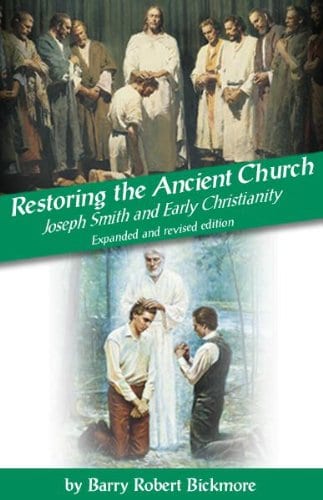
Barry R. BickmoreBarry R. Bickmore Restoring the Ancient Church 2nd EditionMartin Tanner who is the host of “Religion Today” on KSL FM 102.7 and AM 1160 interviews  Barry R. Bickmore  about his book “Restoring the Ancient Church: Joseph Smith and Early Christianity.”  In this interview brother Bickmore relates how the teachings of the early Church are reflected in the Church of Jesus Christ of Latter-day Saints.

Professor Bickmore will be appearing at this year’s FairMormon Conference on August 7 & 8 at the Utah Valley Convention Center in Provo, Utah. For more information and to purchase tickets, click here.

In the second half of his show Martin Tanner interviews Craig Foster about his second book on Mormon polygamy.  “The Persistence of Polygamy: From Joseph Smith Martyrdom to the First Manifesto, 1844 – 1890.

Both book are available from the FairMormon Bookstore:

Restoring the Ancient Church: Joseph Smith and Early Christianity.

The Persistence of Polygamy From Joseph Smith Martyrdom to the First Manifesto 1844 – 1890

This broadcast originally aired on the 2nd of March 2014.

The views and opinions expressed in this podcast may not represent those of the Church of Jesus Christ of Latter-day Saints or that of FairMormon.

Filed Under: Anti-Mormon critics, Apologetics, Bible, Book reviews, Doctrine, Early Christianity, Evidences, FAIR Conference, Faith Crisis, General, LDS History, Mormon Voices, Podcast, Polygamy, Power of Testimony

Fair Issues 59: To Arabs, valleys, not mountains, the symbol of permanence

July 5, 2014 by Ned Scarisbrick

https://media.blubrry.com/mormonfaircast/www.fairlatterdaysaints.org/wp-content/uploads/2014/07/Fair-Issues-59-Pod1.mp3

Podcast: Download (7.9MB)

Subscribe: RSS

MAAs we discussed in the last installment of this series the Lehites’ first semi permanent encampment was called the river of “Laman” and the valley of “Lemuel.”  In this podcast Michael Ash explains how the terms used to describe these locations are in keeping with tradition at the time they took place.

The full text of this article can be found at Deseret News online.

Brother Ash is author of the book Shaken Faith Syndrome: Strengthening One’s Testimony in the Face of Criticism and Doubt, as well as the book, of Faith and Reason: 80 Evidences Supporting the Prophet Joseph Smith. Both books are available for purchase online through the FairMormon Bookstore. Tell your friends about the Mormon Fair-Cast. Share a link on your Facebook page and help increase the popularity of the Mormon Fair-Cast by subscribing to this podcast in iTunes, and by rating it and writing a review.

The views and opinions expressed in the podcast may not reflect those of the Church of Jesus Christ of Latter-day Saints or that of FairMormo


Filed Under: Anti-Mormon critics, Apologetics, Book of Mormon, Evidences, FAIR Conference, Faith Crisis, General, Geography, Michael R. Ash, Mormon Voices, Podcast, Power of Testimony

The People’s Democratic Church of Jesus Christ

July 2, 2014 by Craig Schindler

Members of the Church of Jesus Christ of Latter-day Saints entertain a belief that our leaders are human. We expect them to speak for a perfect God and to deliver a perfect doctrine yesterday, today and forever. We are perfectly fine with that. But we still claim to believe that our leaders are human. This only gets complicated when they do something human. Or when they don’t. Or when we’re not sure.

Since ancient times those who have led the Lord’s church have been stretched between the Lord’s high hopes for his children and the children’s lesser goals for themselves. The leaders have a generally fine record with this balancing act, but it has caused some curious adaptations. Consider some of the theological detritus: “curse of Cain,” the occasional extermination of several villages, polygamy, withholding “gentiles” from the fold; all the ‘weird’ things from the past.

Even a casual reading of the Scriptures shows that our un-changing God changes quite often. This should not greatly disturb those whose spiritual foundation is rock solid. The tectonic changes are too slow in most cases to be perceptible. But sometimes there is a tremor; and sometimes it is earth-shaking. Founded on our faith, we try to hang on.

There are two ways to fall off a rock: forward or backward. Either the Church has lost all credibility because of some change and we slide fundamentally off the back of the rock, or the Church has failed to change with the reality of the times, and we leap forward, liberating ourselves from that stodgy stumbling stone. It doesn’t matter which way one leaves–––the net result is the same.

A firm testimony of the divine direction of the Church sustains the member in the Church; it also helps the member sustain the leader in the Church. A weaker testimony causes fibrillation of faith. A member might reason: “God (or God’s appointed leader) has changed things in the past, so this-or-that issue may change today.” But this is a dangerous bit of reasoning. Whereas we are required to put our shoulder to the wheel and push along, those who anxiously forecast the divine vicissitudes are often the first to steady the ark against all those who have not yet heard the latest social buzz phrase, and are still “pushing along.” If we did not have social activists in the Church, then how would the Lord know what the issue-du-jour is?

I will refer to these collective (but, for now undefined) social doctrines as the Gospel New Age Theologies, or gnats, if you can swallow such a bad pun. They buzz about. They annoy. In large groups they can make an irritating noise. But pretending to strain at their issues is often just bad acting.

Some things have changed in this dispensation. When I was young (way back in the middle of the former century), there was a socially awkward practice of withholding the priesthood to those men of African heritage. But we were consistently consoled with a promise that the day would come when that restriction would be lifted. We knew that this was a practice that would change. Then in 1978 it changed and we were happy.

I have yet to hear any leader of the Church say that we can someday expect radical change to certain other issues-du-jour. No one has said that the Lord has promised to fill the Elders Quorum with our Sisters at some point in the future, so why are some members anxiously prognosticating? No one has prophesied that the restriction contra gay marriage/sealing in the temple will one day be lifted, so why do some members call out publicly to the Lord, trying to awaken him to this issue? We knew some things were going to change, but we have no reason to extrapolate any other type of change. And we have no authority to bug the Lord for any change we think appropriate for our modern age.

Some things change. Some things have changed back and forth. Some things have never changed. Some things probably never will. But then, who am I to know? After all, it’s not my Church. So I continue to sustain our perfect leader, and his imperfect emissaries.

Filed Under: General

  • « Go to Previous Page
  • Go to page 1
  • Interim pages omitted …
  • Go to page 6
  • Go to page 7
  • Go to page 8
  • Go to page 9
  • Go to page 10
  • Interim pages omitted …
  • Go to page 13
  • Go to Next Page »

Primary Sidebar

Faithful Study Resources for Come, Follow Me

Subscribe to Blog

Enter your email address:

Subscribe to Podcast

Podcast icon
Subscribe to podcast in iTunes
Subscribe to podcast elsewhere
Listen with FAIR app
Android app on Google Play Download on the App Store

Pages

  • Blog Guidelines

FAIR Latest

  • Come, Follow Me with FAIR – Doctrine and Covenants 137–138 – Part 2 – Autumn Dickson
  • Come, Follow Me with FAIR – Doctrine and Covenants 137–138 – Mike Parker
  • FAIR December Newsletter
  • Come, Follow Me with FAIR – Doctrine and Covenants 137–138 – Part 1 – Autumn Dickson
  • Prophets of God 

Blog Categories

Recent Comments

  • LHL on Come, Follow Me with FAIR – Doctrine and Covenants 132 – Mike Parker
  • Stephen Johnsen on Come, Follow Me with FAIR – Doctrine and Covenants 132 – Mike Parker
  • Bruce B Hill on Come, Follow Me with FAIR – Doctrine and Covenants 124 – Part 1 – Autumn Dickson
  • Gabriel Hess on Join us Oct 9–11 for our FREE virtual conference on the Old Testament
  • JC on When the Gospel “Doesn’t Work”

Archives

Follow Us

  • Facebook
  • Twitter
  • iTunes
  • YouTube
Android app on Google Play Download on the App Store

Footer

FairMormon Logo

FAIR is a non-profit organization dedicated to providing well-documented answers to criticisms of the doctrine, practice, and history of The Church of Jesus Christ of Latter-day Saints.

Donate to FAIR

We are a volunteer organization. We invite you to give back.

Donate Now

Site Footer