• Skip to primary navigation
  • Skip to main content
  • Skip to primary sidebar
  • Skip to footer

FAIR

  • Find Answers
  • Blog
  • Media & Apps
  • Conference
  • Bookstore
  • Archive
  • About
  • Get Involved
  • Search

Blog

Analysis of Textual Variants Now Available Online FREE

October 20, 2014 by Neal Rappleye

[Cross-posted from Studio et Quoque Fide.]

I was born in Colorado Springs, Colorado in May of 1987. A year later, in Provo, Utah, Royal Skousen took over the FARMS-sponsored Book of Mormon Critical Text Project (CTP from this point on). For the last quarter-century and some change, Skousen has been dedicated to that project, while I have just been living a rather ordinary and unaccomplished life. Frankly, I cannot personally imagine what it would be like to spend what is essentially my entire lifetime (up to this point) with a dedicated focus to a single topic of study. Yet that is exactly what Skousen has done. And anyone who has even lightly pursued the fruits of his labors can only stand in appreciative awe at the breadth and depth of Skousen’s work.

Skousen himself has given the background history to the project. The fruits of the CTP finally began to published in 2001, starting with the ultra-violate photographs and transcriptions of the extent fragments of the original manuscript (plus relevant background commentary on the history of the OM, paper type and size, parts of the Book of Mormon extant, the scribes based on handwriting analysis, etc.), and a two-volume set of the same for the printer’s manuscript. These were already important and significant contributions to Book of Mormon scholarship. Never before had the two earliest extent versions of the Book of Mormon been both published in full and studied so thoroughly. But that was only the tip of the iceberg.

The next step was the monumental effort to study each and every variant in the text from these two manuscripts and 20 different print editions from 1830 to 1981. Between all these editions, Skousen documented over 100,000 changes, which he then analyzed carefully to determine which reading is most likely the original. (Unsurprisingly, earlier readings tend to be favored over later ones.) This analysis was published between 2004–2009, and spanned across 6 different volumes of 650–720 pages each, for a total of 4060 pages! Called Analysis of Textual Variants of the Book of Mormon (ATV), it was indeed a monumental effort.

To some, this might all seem pretty over-the-top—who needs such extensive study of every change in the Book of Mormon? I would argue, and I think Skousen would agree, that as the foundational text of our faith—the “keystone of our religion,” in the words of Joseph Smith—knowing the precise language of the text in its original form is of utmost importance. It is, after all, declared the word of God in Article of Faith 8.  Still, I can imagine that most people do not need all the thorough analysis involved here. So can Skounsen, which is why he made the ultimate fruit of his analysis—simply the text of the Book of Mormon in what is most likely its earliest form—available in a single volume, without all the extra analysis, called The Book of Mormon: The Earliest Text, published by Yale University Press in 2009.

While Yale’s Earliest Text edition of the Book of Mormon will serve most needs, anyone who wishes to engage serious study of the Book of Mormon—academic or otherwise—will no doubt find that at times, having the extend analysis would be helpful. This is especially so if one is making academic arguments, or even merely personal meditations on the text, which hinge on specifics of vocabulary and grammar. Yet, the monumental size of the ATV has naturally made it costly—$300 for the whole set—and difficult to access to. Until now. As of October 7, 2014, the entire ATV was made freely available online via the Interpreter Foundation.

Dr. Skousen and Interpreter are to be commended for making this landmark in Book of Mormon scholarship widely accessible any and all Book of Mormon students, from the most erudite scholars of the text, to average members of the church who would simply like to get closer to the text of the Book of Mormon as God revealed it to Joseph Smith. In doing so, they have rendered for the Latter-day Saints and the community of scholars who study Mormonism a great service. I would encourage every Latter-day Saint to explore it and get familiar with the ATV and learn to use it, at least occasionally, in their study of the Book of Mormon.

Filed Under: Book of Mormon, Book reviews

Articles of Faith 16: Margaret Blair Young – The Heart of Africa and The Welcome Table

October 20, 2014 by NickGalieti

https://media.blubrry.com/mormonfaircast/www.fairlatterdaysaints.org/wp-content/uploads/2014/10/AOF-MargaretBlairYoung.mp3

Podcast: Download (56.7MB)

Subscribe: RSS

Margaret-Blair-Young-150x150Margaret Blair Young was raised in the Church and learned the standard Mormon clichés and customary phrases of a Mormon testimony. As a child, she could imitate the strokes and expressions of Mormonism well, in time she came to understand these were expressions of an immature, inexperienced faith. Time propelled her further into the faith. In time she began to be immersed in more controversial areas of LDS history: race issues and the priesthood restriction, keeping those of African lineage from receiving the priesthood or temple blessings for over a century. She wrote three books and made two documentaries on these subjects with Darius Gray, a black man who joined the Church in 1964, fourteen years before the restriction was lifted.

Margaret Blair Young is the past president of the Association for Mormon Letters and has published eight books—novels and short stories. Three of these were co-authored with Darius Gray and give the history of Black Latter-day Saints. She and Gray also made the documentary Nobody Knows: The Untold Story of Black Mormons. She has written six encyclopedia articles and other scholarly papers on Blacks in the western USA, and particularly on Black Mormons. She used to teach creative writing at BYU but now travels the world in her off time.

Questions addressed during the interview:

You just got back from Africa. Where were you and what were you doing there?

How is the church doing in Africa? What is it like on a day to day basis?

What are some of the difficult questions or situations for which the African Saints are seeking answers or solutions?

There is an article on your blog through patheos, The Welcome Table, the article is entitled Developing Spiritual Taste. In your world travels and in your film directing efforts on church related themes, you have no doubt encountered critics or at least statements that seem to be critical of at least perceptions of church doctrines and culture. You even address the motivation for the article, at least in part, by offering this brief anecdote: When I was in my late twenties, someone said to me, “You’re too smart to be a Mormon.” Clearly, I’m not. But the picture of Mormonism this person had in mind does not represent the kind of Mormonism I live.” What is the kind of Mormonism that you live, the kind that you layout in this article?

You talk about, in your Mormon Scholars Testify Page, a story where your husband once gave you a priesthood blessing during a particularly trying moment. He said these words: “I bless you that your memories will be sanctified as the larger picture unfolds, and you will view all of the difficulties and trials you’re enduring now with gratitude and love.”This is the blessing of perspective. It illuminates not only my personal history, but the hard historical episodes of my religion. What has that blessing meant in your research into as you put it, the more controversial parts of Mormon History?

Margaret Blair Young is the author of several titles as well as director and producer of several documentaries on the history of Black members of the Church of Jesus Christ of Latter-day Saints.

Click here for more information on Margaret Blair Young’s upcoming Film Project, The Heart of Africa.

Click here to read from Margaret Blair Young’s entries at Patheos under the heading, The Welcome Table.

Filed Under: Articles of Faith, Faith Crisis, Hosts, Nick Galieti, Podcast, Racial Issues Tagged With: Blacks and the Priesthood, Faith Crisis

Fair Issues 71: Were there transoceanic voyages in ancient times?

October 19, 2014 by Ned Scarisbrick

https://media.blubrry.com/mormonfaircast/www.fairlatterdaysaints.org/wp-content/uploads/2014/10/Fair-Issues-71-Pod.mp3

Podcast: Download (11.3MB)

Subscribe: RSS

MAWhile LDS scholars agree with non-LDS scholars that the New World was populated primarily by humans who traversed the Bering Strait thousands of years ago, a growing number of non-LDS scholars agree with LDS scholars that there was transoceanic contact between the Old World and the New Worlds in ancient times.

In the podcast brother Ash explores the evidences for cultural, linguistic and botanical discoveries that confirm such voyages did take place in both directions between the 7th millennium B.C. and the European age of discovery.

The full text of this article can be found at Deseret News online.

Brother Ash is author of the book Shaken Faith Syndrome: Strengthening One’s Testimony in the Face of Criticism and Doubt, as well as the book, of Faith and Reason: 80 Evidences Supporting the Prophet Joseph Smith. Both books are available for purchase online through the FairMormon Bookstore. Tell your friends about the Mormon Fair-Cast. Share a link on your Facebook page and help increase the popularity of the Mormon Fair-Cast by subscribing to this podcast in iTunes, and by rating it and writing a review.

The views and opinions expressed in the podcast may not reflect those of the Church of Jesus Christ of Latter-day Saints or that of FairMormon
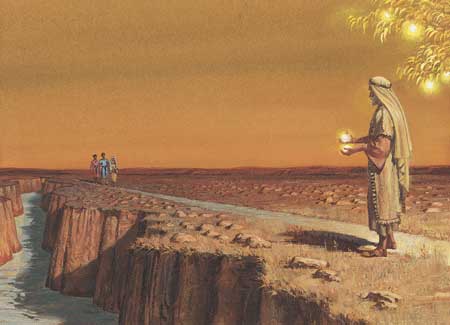
 

Filed Under: Anti-Mormon critics, Book of Mormon, Evidences, Faith Crisis, General, Geography, Hosts, LDS History, Michael R. Ash, Mormon Voices, Ned Scarisbrick, Podcast, Power of Testimony

4th Watch 17: A Broken Vessel – What is anxiety and PTSD?

October 18, 2014 by Ned Scarisbrick

https://media.blubrry.com/mormonfaircast/www.fairlatterdaysaints.org/wp-content/uploads/2014/10/4th-Watch-17-Pod.mp3

Podcast: Download (32.4MB)

Subscribe: RSS

4thWatch SmallIn the last podcast I talked about depression and now add anxiety and PTSD will be added to the mix of mental and emotional issues we may have to deal with in this life.

These issues can cause cognitive dissonance in our relationship with the Lord and His Church and create unintended consequences from our perceptions of world.  We often don’t see the world the way it is.  We see it more as we are.  If we are viewing our life as full of danger and threats it may be because we have experienced events in our lives that foster those feelings.

In this podcast we look at possible causes of anxiety and post traumatic stress and the counsel we have received from Elder Jeffery R. Holland of the counsel of the twelve apostles.

The book “When Bad Things Happen to Good People” by Harold S. Kushner along with other books he has written is available here.

As always the views and opinions expressed in this podcast may not reflect those of the Church of Jesus Christ of Latter-day Saints or that or FairMormon


Filed Under: Anti-Mormon critics, Apologetics, Conversion, Doctrine, Evidences, Faith Crisis, General, Hosts, Joseph Smith, LDS Culture, Mormon Voices, Philosophy, Podcast

Faith and Reason 24: Unknown Arabia

October 16, 2014 by FAIR Staff

https://media.blubrry.com/mormonfaircast/www.fairlatterdaysaints.org/wp-content/uploads/2014/10/Evidence-28.mp3

Podcast: Download (4.7MB)

Subscribe: RSS


From the book: Of Faith and Reason: 80 Evidences Supporting the Prophet Joseph Smith

By Michael R. Ash

How easy would it have been for a young man in 1830 to write a novel about the ancient Old World and have it stand up to scrutiny nearly two hundred years later? When Joseph Smith translated the Book of Mormon the best scholars of his day knew little about the ancient world in which the Lehites traveled through southern Arabia. The few bits of information available were generally wrong and almost consistently described Arabia as a barren wasteland. According to some authors, Arabia was so hot that animals were roasted on the plains and birds in midair. The southern coast of Arabia was thought to be dismal and barren –nothing but rocky wall. It was said that not even a blade of grass could be grown along the coastline. If Joseph had written the Book of Mormon with information sponged from his environment, he would have turned to the so-called experts of his day. So inaccurate were the experts of 1830 America, however, that if Joseph has sponged their information he would have produced a book filled with errors.

Michael R. Ash is the author of: Of Faith and Reason: 80 Evidences Supporting The Prophet Joseph Smith. He is the owner and operator of MormonFortress.com and is on the management team for FairMormon. He has been published in Sunstone, Dialogue: A Journal of Mormon Thought, the Maxwell Institute’s FARMS Review, and is the author of Shaken Faith Syndrome: Strengthening One’s Testimony in the Face of Criticism and Doubt.  He and his wife live in Ogden, Utah, and have three daughters.

Julianne Dehlin Hatton  is a broadcast journalist living in Louisville, Kentucky. She has worked as a News Director at an NPR affiliate, Radio and Television Host, and Airborne Traffic Reporter. She graduated with an MSSc from the Maxwell School of Citizenship and Public Affairs at Syracuse University in 2008. Julianne and her husband Thomas are the parents of four children.

Music for Faith and Reason is provided by Arthur Hatton.

Filed Under: Uncategorized

Mormon Fair-cast 297: #5, Is the Bible an authentic source of truth?

October 16, 2014 by Ned Scarisbrick

https://media.blubrry.com/mormonfaircast/www.fairlatterdaysaints.org/wp-content/uploads/2014/10/KT_AUTH-OF-BIBLE_5_POD.mp3

Podcast: Download (22.0MB)

Subscribe: RSS

i-believe-podcast-karen-239x300In this fifth of nine podcasts with D.M Johnson, we’ll examine the various methods historians use when studying ancient texts. D.M. and I address the following methods:

  • Multiple attestation: having multiple ancient sources talking about the same event

  • Early attestation: having an ancient source or sources that date close to the time an event is thought to have happened

  • Disinterested testimony: having a source from a writer who was completely detached and unbiased

  • The criterion of dissimilarity: when a historical figure does something against the social norms of his/her time period

  • The principle of embarrassment: when something embarrassing or incriminating is recorded about a historical person

  • Enemy attestation: when an enemy of a cause or group writes something about that cause or group

We’ll talk about each of these methods and how using them with the Bible can help give us confidence that it is true.

Click here to view the complete transcript.

This series of podcasts were produced by the “I Believe” podcast group. They are used by permission of Karen Trifiletti the author of this work.

As always the view and opinions expressed in this podcast may not represent those of the Church of Jesus Christ of Latter-day Saint or that of FairMormon

Filed Under: Apologetics, Bible, Conversion, Doctrine, Early Christianity, Evidences, Faith Crisis, General, Mormon Voices, Podcast, Power of Testimony

Fair Issues 70: What was Nephi’s ship like?

October 12, 2014 by Ned Scarisbrick

https://media.blubrry.com/mormonfaircast/www.fairlatterdaysaints.org/wp-content/uploads/2014/10/Fair-Issues-70-Pod.mp3

Podcast: Download (6.9MB)

Subscribe: RSS

MABrother Ash discusses how Nephi was instructed to build a ship to take his family to their new land.  The ship was not to be built “after the manner of men” but according to the Lord’s instructions.  There are few clues in the text as to what this ship may have looked like but several types are explored in this episode.

The full text of this article can be found at Deseret News online.

Brother Ash is author of the book Shaken Faith Syndrome: Strengthening One’s Testimony in the Face of Criticism and Doubt, as well as the book, of Faith and Reason: 80 Evidences Supporting the Prophet Joseph Smith. Both books are available for purchase online through the FairMormon Bookstore. Tell your friends about the Mormon Fair-Cast. Share a link on your Facebook page and help increase the popularity of the Mormon Fair-Cast by subscribing to this podcast in iTunes, and by rating it and writing a review.

The views and opinions expressed in the podcast may not reflect those of the Church of Jesus Christ of Latter-day Saints or that of FairMormon


Filed Under: Anti-Mormon critics, Apologetics, Book of Mormon, Evidences, Faith Crisis, General, Geography, Hosts, Joseph Smith, Michael R. Ash, Mormon Voices, Ned Scarisbrick, Podcast, Power of Testimony

“Meet the Mormons” Hits its Mark

October 12, 2014 by SteveDensleyJr

Meet the Mormons

I don’t often like documentaries. And I don’t usually look forward to seeing Church films. I felt compelled to see “Meet the Mormons” probably for the same reasons I feel compelled to vote. Not because I really believe that my vote will be the one to put my candidate in office, but because I feel a civic (in this case, religious) responsibility to lend my support to a cause in which I believe. But although I was skeptical of how much I would enjoy the film, I was pleasantly surprised, and even moved, by “Meet the Mormons.” However, perhaps predictably, the movie critics have not been very supportive.

As I’m writing this, “Meet the Mormons” has tanked at a zero percent on Rotten Tomatoes. (Interestingly, out of 2,599 ratings, it has a 91% positive score from audiences.) Every reviewer from the New York Times to the Salt Lake Tribune agrees that this movie is simply an extended infomercial: A “slick” production that does not confront the more “controversial aspects” of the religion’s past.

It seems that when a movie critic is forced to acknowledge that a movie has high production value with great music and gorgeous cinematography, but the critic does not want to give a positive review, he will say that the movie is “slick.”

The only real criticism of the movie is that it does not go into more depth into the history, doctrine and practices of the Mormons. The critics seem especially put out that the Mormon Church has not produced a documentary about how racist, homophobic and paternalistic the Church is. However, to criticize “Meet the Mormons” for not being a stark expose of Mormonism seems a bit like criticizing “The Godfather” for not having enough song and dance numbers; or criticizing a “Fast & Furious” movie for not providing enough thoughtful social commentary. It is criticizing a movie for not being something it did not purport to be.

This is “Meet the Mormons.” It is not “Mormon Doctrine 101” and not “Mormonism Exposed!” It is intended merely to be an introduction to a handful of diverse individuals who are Mormons who have interesting stories, and who give the audience a good idea of what Mormons are like. And as a Mormon, this introduction felt authentic to me. I did not feel like these people were pretending to be something they were not. Although there were some aspects of their lives that were unique and unusual, they were very much like Mormons with whom I associate every day.

Of course, when you first meet someone, they typically put their best foot forward. You may or may not have a good first impression, but, unless you are naïve, you don’t believe that you are able to glimpse deep inside the soul of the person from a first meeting. And you would not be shocked or offended if they did not share all of their faults in that first meeting. Nevertheless, you would hope to feel that the person you are meeting is being genuine. And if after a first meeting, you are interested in learning more, the introduction has probably been successful.

The common theme among movie reviewers is not that the movie failed in its method of presentation. But that the movie left them wanting to learn more. The reviewers seemed uniformly impressed with the people they met. They simply wanted more to know more about them, how they lived and what they believed. Rather than a sign of failure, it seems to me that for a movie that purports only to be an introduction, this is a sign of success.

Filed Under: LDS Culture

Faith and Reason 23: Killing Laban and the Oath of Zoram

October 10, 2014 by FAIR Staff

https://media.blubrry.com/mormonfaircast/www.fairlatterdaysaints.org/wp-content/uploads/2014/10/Evidence-27.mp3

Podcast: Download (8.0MB)

Subscribe: RSS


From the book: Of Faith and Reason: 80 Evidences Supporting the Prophet Joseph Smith

by Michael R. Ash

After Nephi killed Laban, he donned the governor’s robes and went to the treasury disguised as Laban, where he tricked Laban’s servant Zoram into acquiring the brass plates. When Zoram discovered that Nephi was not Laban, Nephi gripped Zoram and swore into his ear, “as the Lord liveth, and as I live” that he would spare Zoram’s life if he would only listen (1 Nephi 4:32). Upon hearing this simple phrase, Zoram followed Nephi without further problems.

Among the desert people, an oath is the one thing which is held as most sacred. Arabs generally will not break an oath, even if their lives are in jeopardy. Nearly all Arabs –whether Nomad or city dweller– believed that oaths were sacred and served as powerful covenants between two parties. The most binding oaths were those sworn by the life of something. As Dr. Hugh Nibley explains, “The only oath more awful than ‘by my life’ is the wa hayat Allah, ‘by the life of God,’ or ‘as the Lord liveth,’ the Arab equivalent of the ancient Hebrew hai Elohim.

Michael R. Ash is the author of: Of Faith and Reason: 80 Evidences Supporting The Prophet Joseph Smith. He is the owner and operator of MormonFortress.com and is on the management team for FairMormon. He has been published in Sunstone, Dialogue: A Journal of Mormon Thought, the Maxwell Institute’s FARMS Review, and is the author of Shaken Faith Syndrome: Strengthening One’s Testimony in the Face of Criticism and Doubt.  He and his wife live in Ogden, Utah, and have three daughters.

Julianne Dehlin Hatton  is a broadcast journalist living in Louisville, Kentucky. She has worked as a News Director at an NPR affiliate, Radio and Television Host, and Airborne Traffic Reporter. She graduated with an MSSc from the Maxwell School of Citizenship and Public Affairs at Syracuse University in 2008. Julianne and her husband Thomas are the parents of four children.

Music for Faith and Reason is provided by Arthur Hatton.

Filed Under: Uncategorized

Mormon Fair-cast 294: #4, Is the Bible an authentic source of truth?

October 9, 2014 by Ned Scarisbrick

https://media.blubrry.com/mormonfaircast/www.fairlatterdaysaints.org/wp-content/uploads/2014/10/KT_AUTH-Of-BIBLE_4-Pod.mp3

Podcast: Download (17.4MB)

Subscribe: RSS

i-believe-podcast-karen-239x300This is the 4th in a series of 9 interviews, D.M. Johnson, author and Bible scholar, and I discuss the archaeological evidence for the Bible. We’ll discuss the following archaeological evidence:

  • The Dead Sea Scrolls

  • Ossuaries and inscriptions which corroborate Biblical figures

  • Archaeological sites, including the Western Wailing Wall, the Parthenon, and Mars Hill

  • The Cyrus Cylinder

  • Clay cuneiform tablets from ancient Mesopotamia

Once again, our discussion invites you to consider the evidences supporting the Bible.

We also invite you to read the Bible for yourself, because in addition to these physical evidences of its historicity, you can also obtain a spiritual witness from God concerning its truthfulness.

Click here to view the complete transcript.

This series of podcasts were produced by the “I Believe” podcast group. They are used by permission of Karen Trifiletti the author of this work.

As always the view and opinions expressed in this podcast may not represent those of the Church of Jesus Christ of Latter-day Saint or that of FairMormon


Filed Under: Apologetics, Bible, Conversion, Dead Sea Scrolls, Doctrine, Early Christianity, FAIR Conference, Faith Crisis, General, Mormon Voices, Philosophy, Podcast, Power of Testimony

  • « Go to Previous Page
  • Go to page 1
  • Interim pages omitted …
  • Go to page 129
  • Go to page 130
  • Go to page 131
  • Go to page 132
  • Go to page 133
  • Interim pages omitted …
  • Go to page 201
  • Go to Next Page »

Primary Sidebar

Faithful Study Resources for Come, Follow Me

Subscribe to Blog

Enter your email address:

Subscribe to Podcast

Podcast icon
Subscribe to podcast in iTunes
Subscribe to podcast elsewhere
Listen with FAIR app
Android app on Google Play Download on the App Store

Pages

  • Blog Guidelines

FAIR Latest

  • Come, Follow Me with FAIR – The Articles of Faith and Official Declarations 1 and 2 – Part 1 – Autumn Dickson
  • The Lord Is Hastening His Work
  • Come, Follow Me with FAIR – Doctrine and Covenants 137–138 – Part 2 – Autumn Dickson
  • Come, Follow Me with FAIR – Doctrine and Covenants 137–138 – Mike Parker
  • FAIR December Newsletter

Blog Categories

Recent Comments

  • Diana on Come, Follow Me with FAIR – Doctrine and Covenants 132 – Mike Parker
  • JC on The Lord Is Hastening His Work
  • LHL on Come, Follow Me with FAIR – Doctrine and Covenants 132 – Mike Parker
  • Stephen Johnsen on Come, Follow Me with FAIR – Doctrine and Covenants 132 – Mike Parker
  • Bruce B Hill on Come, Follow Me with FAIR – Doctrine and Covenants 124 – Part 1 – Autumn Dickson

Archives

Follow Us

  • Facebook
  • Twitter
  • iTunes
  • YouTube
Android app on Google Play Download on the App Store

Footer

FairMormon Logo

FAIR is a non-profit organization dedicated to providing well-documented answers to criticisms of the doctrine, practice, and history of The Church of Jesus Christ of Latter-day Saints.

Donate to FAIR

We are a volunteer organization. We invite you to give back.

Donate Now

Site Footer