• Skip to primary navigation
  • Skip to main content
  • Skip to primary sidebar
  • Skip to footer

FAIR

  • Find Answers
  • Blog
  • Media & Apps
  • Conference
  • Bookstore
  • Archive
  • About
  • Get Involved
  • Search

Blog

Fair Issues 66: Was Nephi’s bow made of steel?

September 14, 2014 by Ned Scarisbrick

https://media.blubrry.com/mormonfaircast/www.fairlatterdaysaints.org/wp-content/uploads/2014/09/Fair-Issues-66-Pod.mp3

Podcast: Download (6.9MB)

Subscribe: RSS

MACritics have been quick to point out that a “steel” bow in Nephi’s day is anachronistic – carbonized steel is not believed to have existed in Nephi’s day so this proves that Joseph smith was a fraud.

In this podcast Brother Ash talks about how the Bible mentions “steel” bows and Dr. William Hamblin (an expert in ancient Near Eastern history) explains that “the metal is apparently called ‘steel’ in the KJV because bronze is ‘steeled’ (strengthened) copper through alloying it with tin or through some other process.”

The full text of this article can be found at Deseret News online.

Brother Ash is author of the book Shaken Faith Syndrome: Strengthening One’s Testimony in the Face of Criticism and Doubt, as well as the book, of Faith and Reason: 80 Evidences Supporting the Prophet Joseph Smith. Both books are available for purchase online through the FairMormon Bookstore. Tell your friends about the Mormon Fair-Cast. Share a link on your Facebook page and help increase the popularity of the Mormon Fair-Cast by subscribing to this podcast in iTunes, and by rating it and writing a review.

The views and opinions expressed in the podcast may not reflect those of the Church of Jesus Christ of Latter-day Saints or that of FairMormon


Filed Under: Apologetics, Bible, Book of Mormon, Evidences, First Vision, General, Hosts, Joseph Smith, Michael R. Ash, Mormon Voices, Ned Scarisbrick, Podcast, Power of Testimony

Disconnect between Doctrine and Practice of Equality

September 13, 2014 by FAIR Staff

McBaine_Women_1024x1024[The following is an excerpt from Neylan McBaine’s new book Women at Church: Magnifying LDS Women’s Local Impact. It is reposted here with permission of the author and Greg Kofford Books.] 

In my August 2012 FairMormon conference talk, one of the most challenging points that I made is that I feel we do ourselves a disservice as Mormons—when communicating both to external audiences and internal audiences—when we continually assert that men and women are “equal” in our Church. While this may have made some listeners and readers squirm, almost all of the personal responses I received on this point expressed relief. It seems that while we feel confident in our doctrinal belief that men and women have the same worth in the sight of God, we feel uncomfortable doing the cognitive leaps required to claim that men and women are equal in our practice.

The questions seem to be: If we believe in equality, do we have an obligation to practice equality? And if we practice equality, what does that look like? These questions arise in our cultural consciousness because they are the same questions that American society has been wrestling with since the day we declared independence from Great Britain. It was literally “self-evident” to the founders of our country that all people are created equal. How that belief in equality actually translated into a practice of equality was a discussion that shaped the very foundation of our country: for our founders, practicing equality initially demanded that white settlers in America should have the same taxation and representation as their brothers in England. And from the first moments of the country’s founding, debate also raged over whether the equality the new Americans had fought to achieve extended to people of all races. Throughout the nineteenth and twentieth centuries, Americans asked themselves questions similar to those we had at our founding: What does equality look like? How do we practice it? What terms do we draw as a society to determine what opportunities, resources, and experiences are equal? How do our institutions support those terms? [Read more…] about Disconnect between Doctrine and Practice of Equality

Filed Under: Gender Issues, Women

Faith and Reason 19: Deseret and Bees

September 11, 2014 by FAIR Staff

https://media.blubrry.com/mormonfaircast/www.fairlatterdaysaints.org/wp-content/uploads/2014/09/Evidence-22.mp3

Podcast: Download (4.7MB)

Subscribe: RSS


From the book: Of Faith and Reason: 80 Evidences Supporting the Prophet Joseph Smith

by Michael R. Ash

And they did also carry with them deseret, which, by interpretation, is a honey bee; and thus they did carry with them swarms of bees, and all manner of that which was upon the face of the land, seeds of every kind – Ether 2:3 in the Book of Mormon

In the Book of Mormon we find that the Jaredite word deseret means “honeybee”. Years ago, Dr. Hugh Nibley observed that the word deseret “or something very close to it, enjoyed a position of ritual prominence” among the early Egyptians and they associated the word with a symbol of the bee. He explained, “We know that the bee sign was not always written down, but in its place the picture of the Red Crown… If we do not know the original name of the bee, we do know the name of this Red Crown –the name it bore when it was substituted for the bee. The name was dsrt (the vowels are not known, but we can be sure they were all short”).

Michael R. Ash is the author of: Of Faith and Reason: 80 Evidences Supporting The Prophet Joseph Smith. He is the owner and operator of MormonFortress.com and is on the management team for FairMormon. He has been published in Sunstone, Dialogue: A Journal of Mormon Thought, the Maxwell Institute’s FARMS Review, and is the author of Shaken Faith Syndrome: Strengthening One’s Testimony in the Face of Criticism and Doubt.  He and his wife live in Ogden, Utah, and have three daughters.

Julianne Dehlin Hatton  is a broadcast journalist living in Louisville, Kentucky. She has worked as a News Director at an NPR affiliate, Radio and Television Host, and Airborne Traffic Reporter. She graduated with an MSSc from the Maxwell School of Citizenship and Public Affairs at Syracuse University in 2008. Julianne and her husband Thomas are the parents of four children.

Music for Faith and Reason is provided by Arthur Hatton.

Filed Under: Uncategorized

RiseUp Podcast – Polygamy and Joseph Smith

September 11, 2014 by NickGalieti

https://media.blubrry.com/mormonfaircast/www.fairlatterdaysaints.org/wp-content/uploads/2014/09/AOF-Polygamy.mp3

Podcast: Download (29.9MB)

Subscribe: RSS

Joseph_Smith_first_vision_stained_glassDr. Greg L Smith practices medicine near his home in Canada. Aside from medicine, Brother Smith studies the history and doctrine of polygamy. If you have questions, Greg Smith has answers.

Did Joseph Smith Practice Polygamy or Plural Marriage?
Did he marry other men’s wives?
Did he marry under age girls?
Did he force women to marry him?
These questions and more are answered in this episode of RiseUp.

RiseUp is a podcast for young adults in Seminary and Institute who are looking for answers to difficult or critical questions about the LDS (Mormon) Church, and the courage to share those answers with others.

Filed Under: Podcast, RiseUp Tagged With: Joseph Smith, Polygamy

Mormon FairCast Book Review: Women At Church by Neylan McBaine

September 8, 2014 by NickGalieti

https://media.blubrry.com/mormonfaircast/www.fairlatterdaysaints.org/wp-content/uploads/2014/09/MormonFairCast-NeylandMcBaine-WomenAtChurch.mp3

Podcast: Download (71.8MB)

Subscribe: RSS

Neylan McBain Interview - FairMomronNeylan McBaine grew up a member of the Church of Jesus Christ of Latter-day Saints (Mormon) in New York City and attended Yale University. She has been published in Newsweek, Dialogue: A Journal of Mormon Thought, Segullah, Meridian Magazine, and the Washington Post to name a few.

Neylan is the founder and editor-in-chief of The Mormon Women Project, a continuously expanding library of interviews with LDS women found at www.mormonwomen.com.

Neylan is the author of a collection of personal essays — How to Be a Twenty-First Century Pioneer Woman (2008) — as well as Sisters Abroad: Interviews from the Mormon Women Project (2013). She lives with her husband and three young daughters in Utah.

Questions:

Your bio speaks volumes about your passions to support and place a spotlight on Mormon Women. When did your first feel the sparks of this passion?

I actually wanted to start with the cover of the book. Aside from it being warm and fuzzy paper, easy to hold in your hand as you read, the artwork is also quite gripping. I don’t always have much to say about the covers, but I love the painting on the cover of your book. Could you describe it and how the cover actually speaks well to the theme of your book?

This theme of feminism has a wardrobe of interpretations that attempt to clothe a given message. Because there are so many different versions of feminism, could you please take a minute to describe your own interpretation of feminism, and how you frame your self in reference to it?

Your opening sentence is as clear a thesis as I have read however, “This book is predicated on a single belief: that there is much more we can do to see, hear, and include women in the church.” As I read it I wonder about one word in that sentence, the word “much” there is much more we can do to see, hear, and include women in the church. How bold, italicized, and underlined did you want the reader to read into the word “much?”

It is your clear assumption that women are not being heard, and in this same first chapter where you state that a good portion of your book is going to talk about the problem: that some women are feeling neglected, overlooked, and silenced in their church experiences. Is it that these women are feeling neglected and overlooked and silenced by men? By other women? Both?

You address the issue of hurt, of pain, that women are feeling. There are multiple accounts of this happening throughout the church. In a recent interview Terryl and Fiona Givens talked about their new book, The Crucible of Doubt. In that book they talk about the utility of suffering, of trials and tests. They consider these as part of the experience of worshiping deity. Then I read your book and I read about the primary effort to alleviating the hurt. For those that might see these two and feel that both offer some truth they may also seem paradoxical. How then do you define the place, utility, or role of hurt?

You call for greater empathy from general church membership with those who struggle or have hurt. The Savior called for the same thing in his day, and one could argue that seeking for greater charity is the cause of all who wish to be considered disciples of Christ. Discipleship, for men or women, tends to operate on a metaphorical scale where there is a balance of helping others being in ratio to others helping themselves. In reading your book, there is a clear indication that you feel that the church has not done enough to help women or to reach out to embrace women’s voices. What then is that balance as you see it?

We believe in a church of continuing revelation, a living church, one that should not fight flat out the idea of change. But that belief is also tempered by understanding from which changes are to come, and why they come. The first half of your book is meant to lay out the case that there is a need for change. The second part offers some perspectives and examples on how changes can come. How then are we to first acknowledge the need, in a faithful way, without doing so in attacking the system or those who are doing their best to administer the gospel with limited capacities?

In going through part 1 of the book you spend a lot of time talking about the deep need for change on these issues. It can be uncomfortable to sit with that material. While Part 2 of the book is example after of example of how people have enacted changes locally, things that people have done to adopt more equality. This is more a fulfillment of D&C 58:27 where people are being anxiously engaged in a good cause. What are some of those examples

Filed Under: Gender Issues, Hosts, Nick Galieti, Podcast, Women Tagged With: Neylan McBain, Women At Church

Fair Issues 65: Tracing the Lehites journey through the wilderness

September 7, 2014 by Ned Scarisbrick

https://media.blubrry.com/mormonfaircast/www.fairlatterdaysaints.org/wp-content/uploads/2014/09/Fair-Issue-Issures-65-Pod.mp3

Podcast: Download (7.0MB)

Subscribe: RSS

MAWhen we examine the territory likely traversed by the Lehites we find an interesting match for the Book of Mormons Shazer.  Wadi Agharr is about 60 miles southeast from the likely location of the Valley of Lemuel and is described by non-LDS scholars as an oasis more than 15 miles long.

In this podcast brother Ash relates how the Frankincense Trail may have provided the fertile valley in this area with surrounding mountains that presented the best hunting opportunities along the trail.

The full text of this article can be found at Deseret News online.

Brother Ash is author of the book Shaken Faith Syndrome: Strengthening One’s Testimony in the Face of Criticism and Doubt, as well as the book, of Faith and Reason: 80 Evidences Supporting the Prophet Joseph Smith. Both books are available for purchase online through the FairMormon Bookstore. Tell your friends about the Mormon Fair-Cast. Share a link on your Facebook page and help increase the popularity of the Mormon Fair-Cast by subscribing to this podcast in iTunes, and by rating it and writing a review.

The views and opinions expressed in the podcast may not reflect those of the Church of Jesus Christ of Latter-day Saints or that of FairMormon


Filed Under: Anti-Mormon critics, Book of Mormon, Conversion, Evidences, Faith Crisis, General, Geography, Hosts, Joseph Smith, Michael R. Ash, Mormon Voices, Ned Scarisbrick, Podcast, Power of Testimony

RiseUp Podcast: Defend Your Beliefs Game Show

September 3, 2014 by NickGalieti

https://media.blubrry.com/mormonfaircast/www.fairlatterdaysaints.org/wp-content/uploads/2014/09/RiseUp-DefendYourBeliefs-GameShow.mp3

Podcast: Download (33.3MB)

Subscribe: RSS

RiseUp is a show geared towards Young Adults in seeking to find answers to questions about LDS (Mormon) culture and doctrine. But the podcast is also meant to provide help, courage, and direction for those wanting to defend their beliefs and testimony.

In this episode of RiseUp, host Nick Galieti uses a metaphorical game show to introduce the challenge of defending our beliefs and in providing answers, as well as the importance of establishing a strong testimony to be an anchor when such challenges arise.

Using the article, The Do’s and Don’ts of Defending Your Beliefs by David A. Edwards (posted on LDS.org) we learn some fundamental approaches to the challenge of finding courage to defend our beliefs with friends and neighbors.

Filed Under: Podcast, RiseUp Tagged With: Defending Your Belief's, The Do's and Don'ts of Defending Your Belief's, Thomas S. Monson

Mormon FairCast-Book Review: The Crucible of Doubt: Reflections on the Quest For Faith by Terryl and Fiona Givens

September 1, 2014 by NickGalieti

https://media.blubrry.com/mormonfaircast/www.fairlatterdaysaints.org/wp-content/uploads/2014/09/MormonFairCast-CrucibleofDoubt.mp3

Podcast: Download (52.8MB)

Subscribe: RSS


Terryl and Fiona GivensTerryl Givens holds the James A. Bostwick chair of English and is Professor of Literature and Religion at the University of Richmond and the author of several books. His writing has been praised by the new York Times as “provocative reading” and includes the most recent title, When Souls Had Wings, a history of the idea of pre-mortal life in Western Thought.


Fiona Givens is a retired modern language teacher with undergraduate degree’s in French and German and a graduate degree in European History. She is now an independent scholar who has published in several journals and reviews in Mormon studies, including the Journal of Mormon History, Exponent II, and LDS Living.


Terryl and Fiona are the grandparents of five, and parents of six. Welcome Terrly and Fiona Givens. They co-authored the book The Crucible of Doubt: Reflections on the Quest For Faith published by Deseret Book.


Questions addressed in this interview:


With two authors to a title I am always a bit curious as to who wrote what, or how that process took place. So how did that process take place?


This book is entitled The Crucible of Doubt and subtitled, Reflections on the Question for Faith. You have written on having doubts or experiencing what has been termed a faith crisis, would you call yourselves doubt scholars?


Now another word for crucible is trial, so the title itself implies that you approach having doubts or questions about LDS beliefs is a trial, but what makes these doubts such a trial? Why can’t they simply be viewed as a natural occurrence and something to address in some sense of normalcy rather than a “trial?”


While the book is primarily a devotional text, there does seem to have an apologetic subtext to it in that it helps the reader to reframe themselves with respect to the LDS Theology is such a way that questions are more answerable. What that part of the intent in your writing or did it simply speak to me that way?


Some introductions to books are superfluous. Your’s does not fit in that category, in fact, I would venture to say that if you skip over the introduction to the book, you will miss a good bit of the remainder of the text. That introduction starts out with a profound analogy using James Mossman’s front door in Scotland. Please help me to not sound so random in my reference. Please explain that story.


What are some of the common “wrong questions” that we encounter in current discourse?


The book continues to give an appraisal on the value of reason or in another sense the place of scientific information as the foundation upon which reason is based. Your argument sounds a little like a literature professor seeking to give more weight to their subject of scholarship.\


Let’s talk for a minute about the role of suffering.


It is the position of some today that questioning certain teachings, or even publicly advocating for things that shake up the norm is the act of an apostate, while others praise their actions as bringing people to a higher plane of Christianity through their advocacy. The next chapter of your book The Crucible of Doubt, deals with this idea and is entitled On Provocation and Peace: Of Life’s Fundamental Incompleteness. So is Christianity. What then is the role of questioning, of even experiencing a gospel that shakes us to our very core?


The Role and Function of the Church, a chapter that walks a line that few have articulated the way you have. There are those that feel that the church is the answer to all problems, and others that feel that church is the cause of all their problems. In order to talk about this concept we need to first put out your definition of religion, and your definition of church—then if you could go into what is the role of true religion and a true church in our spiritual journey?


Much has been talked about with the role of grace and works. A quote from your book comes from the German theologian Dietrich Bonhoffer, “cheap grace is the mortal enemy of the church” and one version of cheap grace is “baptism without discipline of community.” As we are talking about the disciples journey through doubt to greater faith and spirituality, what then do you attribute the role of ordinances and spiritual ritual in the overcoming of doubts?


There is a progression in your material as you address various paradigms that some have adopted, The Use and Abuse of Scripture, The Perils of Hero Worship, another interesting chapter is the Mormon’s and Monopolies chapters, and I am going to go ahead and leave those sections as a tease to go get the book, but these chapters lead in some ways to this idea of Spiritual Self-sufficiency, subtitled, Find Your Watering Place. What does Spiritual Self-sufficiency look like?


Let’s conclude with the articulation of what just might be at the heart of true faith, and that is the risk it presents. There is this quote, “The question may remain, how does one lock onto the propositional assertions of a restored gospel that is also laden with claims about gold plates and the Book of Abraham and a male priesthood and a polygamous past and a thousand other details we may find difficult? One might consider that the contingencies of history and culture and the human element will always constitute the garment in which God’s word and will are clothed. And one might refuse to allow our desire for the perfect to be the enemy of the present good. Finally we might ask ourselves, with the early disciples, “to whom [else] shall we go?” The Worst risk such a life of faith entails is not that such a life might be wrong—but that it might be incomprehensible to those unprepared to take such a risk.” It then goes to assert that to be faithful or to be a Christian disciple (that is my word not yours) that to live in faith is to live in such a way that one’s life would not make sense if God did not exist.”


Terryl and Fiona Givens are the co-authors of The Crucible of Doubt: Reflections on the Quest for Faith. Available now through Deseret Book at Deseret Book.com and other LDS retailers.


Filed Under: Faith Crisis, Hosts, Nick Galieti, Podcast Tagged With: doubt, Faith Crisis, Terryl and Fiona Givens

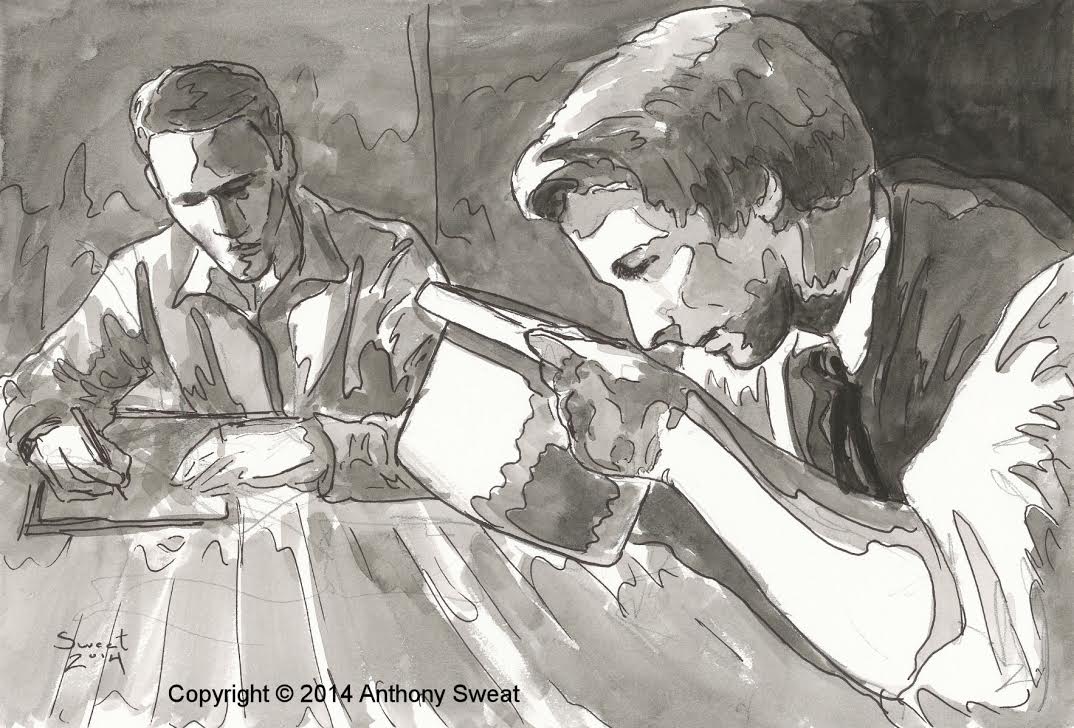
Interpreting the Abraham Facsimiles

September 1, 2014 by FAIR Staff

Abraham

By Kerry Muhlestein

Many people often ask about how Joseph Smith’s explanations of the Facsimiles compares to those of Egyptologists. This is a question worth asking. As with all things regarding history, symbolism, and interpretations, those who want a simple answer will find themselves unsatisfied with an accurate answer. Sadly, many times people opt for simple answers in order to avoid the messy, complicated situations of which history is made. Here we will not delve into all the complexities, but we will at least consider enough factors to answer the question accurately.

First, we must be clear that we do not know for sure that Joseph Smith authored the explanations of the facsimiles that were printed in the Times and Seasons, (on the acquisition of the papyri and publication of the Book of Abraham, see column 2,) which eventually became part of the Pearl of Great Price. While we do not know if Joseph Smith is the original author of these interpretations, we know he participated in preparing the published interpretations and gave editorial approval to them.

To continue reading this article, please visit the Meridian Magazine website.

Filed Under: Apologetics, Book of Abraham

Fair Issues 64: What was the Liahona?

August 31, 2014 by Ned Scarisbrick

https://media.blubrry.com/mormonfaircast/www.fairlatterdaysaints.org/wp-content/uploads/2014/08/Fair-Issues-Pod-64.mp3

Podcast: Download (7.4MB)

Subscribe: RSS

MADr. Hugh Nibley has observed, the word “compass” has two basic meanings; 1) to move together – always referring to a pair of things in motion; 2) to enclose, embrace, step completely, circle or round.  This second definition refers to the motion of making a circle. Either way, the “compass” could correctly refer to the Liahona because of it’s round (ball) shape or the motion of the arrows.

In this podcast Michael R. Ash relates the workings of the Liahona as prepared by the Lord for Lehi’s family as they pursued their journey to the promised land.

The full text of this article can be found at Deseret News online.

Brother Ash is author of the book Shaken Faith Syndrome: Strengthening One’s Testimony in the Face of Criticism and Doubt, as well as the book, of Faith and Reason: 80 Evidences Supporting the Prophet Joseph Smith. Both books are available for purchase online through the FairMormon Bookstore. Tell your friends about the Mormon Fair-Cast. Share a link on your Facebook page and help increase the popularity of the Mormon Fair-Cast by subscribing to this podcast in iTunes, and by rating it and writing a review.

The views and opinions expressed in the podcast may not reflect those of the Church of Jesus Christ of Latter-day Saints or that of FairMormon


Filed Under: Anti-Mormon critics, Apologetics, Bible, Book of Mormon, Conversion, Evidences, Faith Crisis, General, Hosts, Joseph Smith, Michael R. Ash, Mormon Voices, Ned Scarisbrick, Podcast, Power of Testimony

  • « Go to Previous Page
  • Go to page 1
  • Interim pages omitted …
  • Go to page 132
  • Go to page 133
  • Go to page 134
  • Go to page 135
  • Go to page 136
  • Interim pages omitted …
  • Go to page 201
  • Go to Next Page »

Primary Sidebar

Faithful Study Resources for Come, Follow Me

Subscribe to Blog

Enter your email address:

Subscribe to Podcast

Podcast icon
Subscribe to podcast in iTunes
Subscribe to podcast elsewhere
Listen with FAIR app
Android app on Google Play Download on the App Store

Pages

  • Blog Guidelines

FAIR Latest

  • Come, Follow Me with FAIR – The Articles of Faith and Official Declarations 1 and 2 – Part 1 – Autumn Dickson
  • The Lord Is Hastening His Work
  • Come, Follow Me with FAIR – Doctrine and Covenants 137–138 – Part 2 – Autumn Dickson
  • Come, Follow Me with FAIR – Doctrine and Covenants 137–138 – Mike Parker
  • FAIR December Newsletter

Blog Categories

Recent Comments

  • Diana on Come, Follow Me with FAIR – Doctrine and Covenants 132 – Mike Parker
  • JC on The Lord Is Hastening His Work
  • LHL on Come, Follow Me with FAIR – Doctrine and Covenants 132 – Mike Parker
  • Stephen Johnsen on Come, Follow Me with FAIR – Doctrine and Covenants 132 – Mike Parker
  • Bruce B Hill on Come, Follow Me with FAIR – Doctrine and Covenants 124 – Part 1 – Autumn Dickson

Archives

Follow Us

  • Facebook
  • Twitter
  • iTunes
  • YouTube
Android app on Google Play Download on the App Store

Footer

FairMormon Logo

FAIR is a non-profit organization dedicated to providing well-documented answers to criticisms of the doctrine, practice, and history of The Church of Jesus Christ of Latter-day Saints.

Donate to FAIR

We are a volunteer organization. We invite you to give back.

Donate Now

Site Footer