• Skip to primary navigation
  • Skip to main content
  • Skip to primary sidebar
  • Skip to footer

FAIR

  • Find Answers
  • Blog
  • Media & Apps
  • Conference
  • Bookstore
  • Archive
  • About
  • Get Involved
  • Search

Blog

“This is a Woman’s Church”

August 9, 2014 by Trevor Holyoak


Sharon Eubank’s presentation, given on August 8 at the 2014 FairMormon Conference, received the rare honor of a standing ovation. The transcript can be viewed here.

You can purchase access to the rest of the conference videos at the FairMormon Bookstore.


Sharon Eubank was born in Redding, California, to Mark and Jean Eubank. She received a bachelor’s degree in English from Brigham Young University and served as a full-time missionary for the Church of Jesus Christ of Latter-day Saints in the Finland Helsinki mission. Her career includes working as a legislative aide in the U.S. Senate for 4 years and owning a retail education store in Provo, Utah, for 7 years.

Since 1998, she has been employed by the Church in the Welfare Department. She helped to establish 17 international LDS employment offices Africa and Europe. For five years she directed the humanitarian wheelchair program expanding its scope to 50,000 individual donations each year and implementing World Health Organization training standards.

In 2008 Sharon became regional director of the LDS Charities for the Middle East Africa North area where she oversaw humanitarian work with active country offices in Egypt, Syria, Lebanon, Afghanistan, Jordan, and Morocco. She also served on the Relief Society general board during Sister Julie B. Beck’s administration until April 2012.

Currently, Sharon is the director of LDS Charities, the humanitarian organization of the Church of Jesus Christ of Latter-day Saints.

Filed Under: Apologetics, Doctrine, FAIR Conference, Gender Issues, LDS Culture, News from FAIR, Politics, pornography, Women

Faith and Reason 15: The “Rent” Garment, Part 1

August 7, 2014 by FAIR Staff

https://media.blubrry.com/mormonfaircast/www.fairlatterdaysaints.org/wp-content/uploads/2014/08/Evidence-14.mp3

Podcast: Download (4.5MB)

Subscribe: RSS

From the book: Of Faith and Reason: 80 Evidences Supporting the Prophet Joseph Smith

By Michael R. Ash

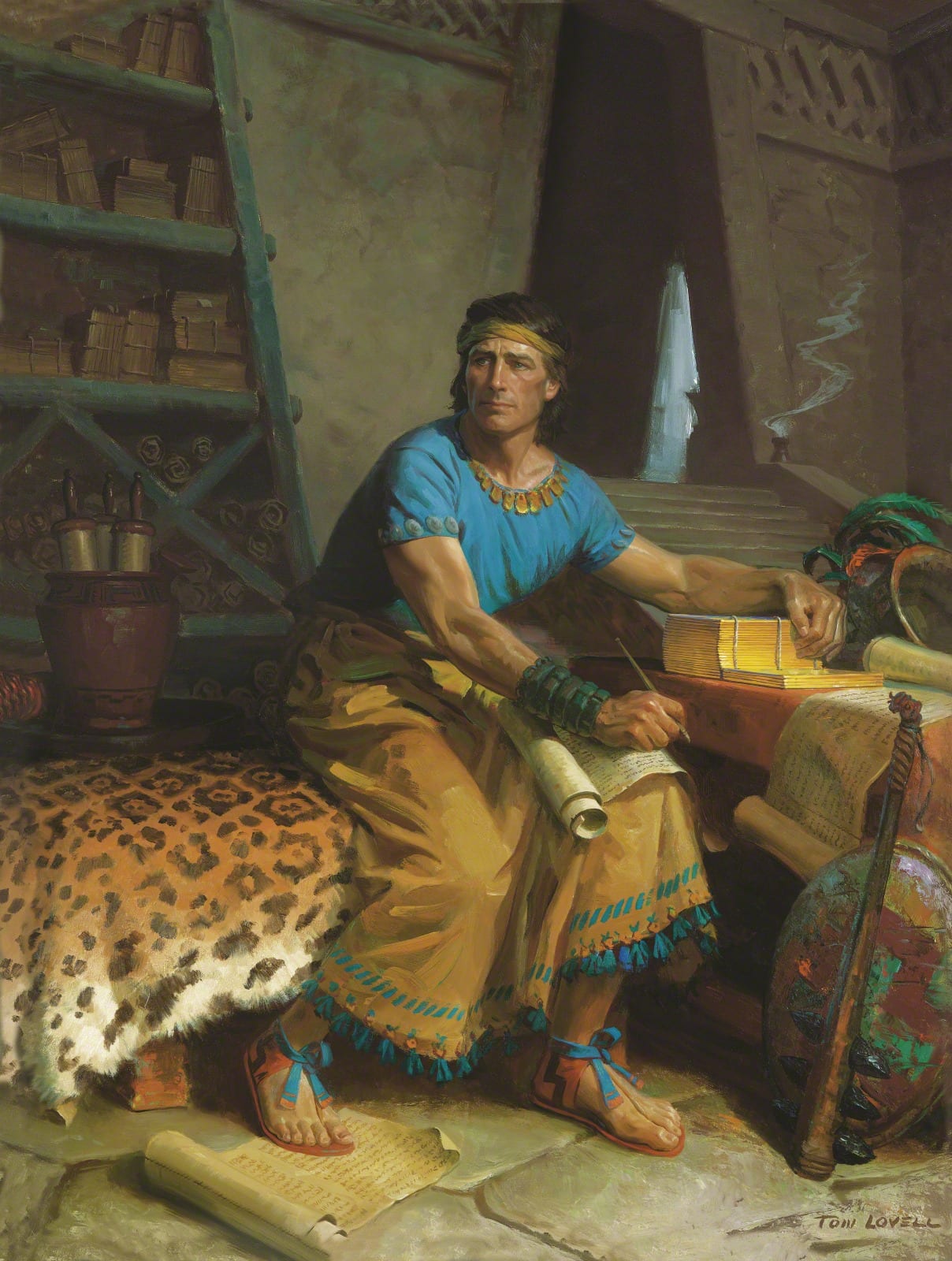
In Alma 46 we read that Captain Moroni made a “banner of liberty” from his rent coat. In the original edition of the Book of Mormon we read: “And when Moroni had said these words, he went forth among the people, waving the rent of his garment in the air, that all might see the writing which he had wrote upon the rent, and crying with a loud voice…” (italics added).

For clarification and to improve the grammar, the current edition of the Book of Mormon reads: And when Moroni had said these words, he went forth among the people, waving the rent part of his garment in the air, that all might see the writing which he had written upon the rent part, and crying with a loud voice…” (Alma 46:19; italics added).

Critics have laughed at the original version for more than a century. To them, this was one more proof that the unsophisticated Joseph Smith wrote –rather than translated –the Book of Mormon. How can a “rent” be written upon?

In Hebrew, the word qera’ –which is translated as a noun for a “rent part” –derives from the Hebrew qara’ which is the verb form and means “he rent, tore”. This word also translates in a manner that makes “rent” a noun –just as we find in Alma 46.

Michael R. Ash is the author of: Of Faith and Reason: 80 Evidences Supporting The Prophet Joseph Smith. He is the owner and operator of MormonFortress.com and is on the management team for FairMormon. He has been published in Sunstone, Dialogue: A Journal of Mormon Thought, the Maxwell Institute’s FARMS Review, and is the author of Shaken Faith Syndrome: Strengthening One’s Testimony in the Face of Criticism and Doubt. He and his wife live in Ogden, Utah, and have three daughters.

Julianne Dehlin Hatton  is a broadcast journalist living in Louisville, Kentucky. She has worked as a News Director at an NPR affiliate, Radio and Television Host, and Airborne Traffic Reporter. She graduated with an MSSc from the Maxwell School of Citizenship and Public Affairs at Syracuse University in 2008. Julianne and her husband Thomas are the parents of four children.

Music for Faith and Reason is provided by Arthur Hatton.


Filed Under: Uncategorized

Faulty Assumptions about the Book of Abraham

August 7, 2014 by FAIR Staff

Abraham

[Written by Kerry Muhlestein]

As was mentioned in the last column (link to column here), it was almost universally assumed that all of the papyri Joseph Smith had once owned had been destroyed in the Great Chicago Fire of 1871. Thus many were surprised when the papyri surfaced in 1967. One of the papyri fragments contained the drawing which was the original source of Facsimile One. This papyrus drew the most immediate interest.[i]

Part of the reason this fragment drew so much attention was because of the possibilities it suggested. It seemed that perhaps we could now test Joseph Smith’s revelatory abilities. Many members of the LDS Church assumed that the text on the papyri which surrounded the original of Facsimile One was the source of the Book of Abraham.

This may give them to chance to demonstrate Joseph Smith’s prophetic abilities. Anti-Mormons also assumed that the text adjacent to that drawing was the source of the Book of Abraham and were excited about the opportunity to disprove Joseph Smith’s prophetic abilities.[ii] Sadly, neither of these groups took the time to carefully and rigorously examine their assumptions. Thus, when the text was translated and we learned that it was a fairly common Egyptian funerary document called the Book of Breathings, many felt that they could now demonstrate that Joseph Smith was not an inspired translator.

[To continue reading this article, please visit the Meridian Magazine website by following this link.]

Filed Under: Book of Abraham, LDS Scriptures

Eborn Books Author Presentation: “What Did Joseph Smith Know about LDS Temple Ordinances by 1836?”

August 6, 2014 by FAIR Staff

Jeffrey M. Bradshaw
Jeffrey M. Bradshaw

Directly after the FairMormon Conference on Friday, Jeffrey M. Bradshaw will be presenting at Eborn Books in Salt Lake City on the topic “What Did Joseph Smith Know about LDS Temple Ordinances by 1836?” The details of the presentation are below.

FRIDAY, AUGUST 8, 7 PM–8:30 PM + Q&A.

Jeffrey M. Bradshaw will be giving a presentation at Eborn Books this coming Friday, August 8, in Salt Lake City. His topic is “What Did Joseph Smith Know about LDS Temple Ordinances by 1836?”

It is increasingly apparent that Joseph Smith’s early revelations and teachings evince a detailed understanding of concepts relating to temple worship. In this presentation, I will summarize precedents for LDS temple ordinances, both in antiquity and in the revelations and teachings of Joseph Smith through 1836. I will focus on three major items: 1. the backbone of narrative and covenants that relate to the liturgy of the LDS temple endowment, as revealed in 1830-1831; 2. prominent priesthood symbols associated with temple-related concepts for which we have evidence going back as far as 1826; and 3. the full sequence of blessings associated with the oath and covenant of the priesthood, given in 1832. In discussing these matters, I will be respectful of the sacred nature of LDS temple ordinances.

Bradshaw is the author of several books including the very popular and well-selling masterpiece IN GOD’S IMAGE AND LIKENESS – Enoch, Noah and the Tower of Babel.

Due to the tremendous amount of wonderful material collected by Brother Bradshaw, the presentation is expected to last an hour and a half, with Q&A afterwards.

Date: 8 August 2014, 7:00 PM
Place: 254 S. Main Street, Salt Lake City, UT 84101

About the Author:

Bradshaw and his wife Kathleen are the parents of four children. He is an active member of LDS Church). He was a missionary in France and Belgium from 1975–1977, and has since returned with his family twice to live in France: once from 1993-1994 as part of a Fulbright fellowship and a second time from 2005-2006 as a sabbatical in the aftermath of Hurricane Ivan. Among other publications on LDS temples and the ancient Near East, he published two highly-acclaimed commentaries on the Book of Moses: In God’s Image and Likeness 1: Ancient and Modern Perspectives on the Book of Moses, which covers Moses 1-6:12, and In God’s Image and Likeness 2: Enoch, Noah, and the Tower of Babel, which covers the story recounted in Moses 6:13-8:30. He is a regular contributor to Meridian Magazine and currently maintains a blog entitled “Temple Themes in the Scriptures”. He is a vice president for The Interpreter Foundation and a member of the Advisory Board for the Academy for Temple Studies. Bradshaw has served twice as a bishop in The Church of Jesus Christ of Latter-day Saints, and currently serves as a counselor in the stake presidency of the Pensacola Florida Stake. He is also the author of Temple Themes in the Book of Moses and Temple Themes in the Oath and Covenant of the Priesthood. He has also contributed articles in BYU Studies and other publications.

Bret & Cindy Eborn
Eborn Books
254 S. Main St., Salt Lake City, UT 84101
801-359-0460

Eborn Books in Salt Lake City
Eborn Books in Salt Lake City.

Filed Under: News from FAIR, Temples

FairMormon Volunteers on Drive Time Radio Program

August 5, 2014 by FAIR Staff

neal-rappleye
Neal Rappleye
stephen-smoot2
Stephen Smoot

Two FairMormon volunteers, Neal Rappleye and Stephen Smoot, appeared on Mills Crenshaw’s radio program Drive Time on August 5, 2014. They discussed the upcoming FairMormon conference and took questions from callers on a number of topics. For further information on the upcoming FairMormon conference, visit our conference webpage at this link.

https://www.fairmormon.org/wp-content/uploads/2014/08/2014-0805-NEAL-RAPPLEYE-and-STEPHEN-SMOOT-of-FAIR-MORMON-Blog.mp3

(The segment of the show with Rappleye and Smoot runs until 01:52:20.)

Filed Under: Uncategorized

“There Began to be Lyings Sent Forth among the People”: The Message of Jeremy Runnells

August 4, 2014 by Brian Hales

Brian Hales
Brian Hales

[This post was originally written by Brian Hales and is cross posted from his blog at Joseph Smith’s Polygamy.]

The Book of Mormon prophet Samuel prophesied that five years from the time of his preaching, Christ would be born, and “a new star [would] arise” in their heavens (Hel. 14:5). As predicted, the star arose, which might have validated Samuel as a true prophet in the eyes of the people. Instead, “it came to pass that from this time forth there began to be lyings sent forth among the people, by Satan, to harden their hearts, to the intent that they might not believe in those signs and wonders which they had seen” (3 Ne. 1:22).

The sending forth of “lyings” is not a new phenomenon. It began with the first generation of this earth: “And Adam and Eve blessed the name of God, and they made all things known unto their sons and their daughters. And Satan came among them, saying: I am also a son of God; and he commanded them, saying: Believe it not; and they believed it not” (Moses 5:12–13).

Recently Jeremy Runnells wrote two articles, “Letter to a CES Director: Why I Lost My Testimony” and “Debunking FAIR’s Debunking,” where he outlines his reasons for his current disbelief. I analyzed his statements regarding plural marriage in a short essay entitled “Jeremy Runnells—the New Expert on Joseph Smith’s Polygamy?” There I examine his primary claims and methodology, of which I am quite critical. Jeremy responded on a blog:

Hales is not a scholar. He’s an anesthesiologist who hired Don Bradley to do his research for him. He then wrote 3 books using his employee’s homework.

Author? Sure. Apologist? Yes. Amateur? Yes. Scholar? No. He’s an apologist disguising himself as a scholar. The real scholars in the field of polygamy have issues with many of Hales’ conclusions and interpretations.

Anyone with big bucks and writing skills can do what Brian did. All you have to do is hire guys like Don Bradley to do all the work for you and then you throw the stuff in a nice hardcover book with your name on it.

I never claimed to be a scholar or expert or that my letter is an academic paper. This is the false assumption that Brian makes in his hit piece.

I wrote in response:

Runnells is correct that I am an amateur historian. I do not have a PhD in history and so will never be a professional historian. In fact, I tell people my books are part of my “full anesthesia services.”

It is true that Don Bradley did most of the field research. In addition, he contributed to the overall interpretations in the book, but I alone am responsible for what is written. Don was living with my family at the time [I was writing and compiling] and we had so many conversations regarding the evidences, that I ultimately listed him as an assistant, a title he clearly deserved. For clarification, I did all the writing, except for a few excerpts from emails Don sent to me that are all plainly identified and footnoted. Don did a great job and I’m grateful for his help. The three volumes could not have been written without his contribution. . . .

Over the past few years I’ve tried to view every known document dealing with polygamy. As a consequence of that effort, my belief in Joseph as a true prophet, a reluctant polygamist, and a man who tried sincerely to live his teachings, has been strengthened. It is quite a different story than the fraud, hypocrite, and adulterer portrayed by Jeremy. I believe that when all of the evidence is available, Joseph does just fine.

At this point, perhaps a primary concern is Jeremy’s admission that his Letter to a CES Director was not an “academic paper,” and he is not “a scholar or expert.” It seems he is saying he has not really researched the accuracy of the things he has published on the Internet. If his writings on plural marriage are any indication, then it is obvious to me that he has not. In addition, if scholarship is not the primary goal, then what motivates Jeremy Runnells to expend so much energy portraying Joseph Smith as a false prophet?

Throughout history, opposition has always accompanied the expansion of truth (see 2 Nephi 2:11). Christ told his disciples: “It must needs be that offences come; but woe to that man by whom the offence cometh!” (Matthew 18:7). Jeremy Runnells reflects confidence in his interpretations and satisfaction in his aggressive antagonism of the Church and its teachings. He is obviously entitled to his own opinions and to believe whatever voices he chooses to believe. However, it may be possible to see in him and in his actions, a process as old as Adam and as predictable as the sunset turning into the blackness of night.

Elder Neal A. Maxwell’s observed in 1996:

Church members will live in this wheat-and-tares situation until the Millennium. Some real tares even masquerade as wheat, including the few eager individuals who lecture the rest of us about Church doctrines in which they no longer believe. They criticize the use of Church resources to which they no longer contribute. They condescendingly seek to counsel the Brethren whom they no longer sustain. Confrontive, except of themselves, of course, they leave the Church, but they cannot leave the Church alone. Like the throng on the ramparts of the “great and spacious building,” they are intensely and busily preoccupied, pointing fingers of scorn at the steadfast iron-rodders (1 Ne. 8:26–28, 33). Considering their ceaseless preoccupation, one wonders, “Is there no diversionary activity available to them, especially in such a large building—like a bowling alley?” Perhaps in their mockings and beneath the stir are repressed doubts of their doubts. In any case, given the perils of popularity, Brigham Young advised that this “people must be kept where the finger of scorn can be pointed at them.”[1]

When lyings gain traction in the media, sometimes due to the efforts of individuals like Jeremy, Latter-day Saints are saddened, but not surprised.

[1]: Neal A. Maxwell, “Becometh as a Child,” Ensign, May 1996, accessed July 29, 2014, https://www.lds.org/ensign/1996/05/becometh-as-a-child?lang=eng.

Filed Under: Polygamy

Articles of Faith 12: David L. Paulsen: A Mother There – A Survey of Historical Teachings about Mother In Heaven

August 3, 2014 by NickGalieti

https://media.blubrry.com/mormonfaircast/www.fairlatterdaysaints.org/wp-content/uploads/2014/08/AOF-DavidPaulsen-HeavenlyMother.mp3

Podcast: Download (38.0MB)

Subscribe: RSS


David-Paulsen-BYUDavid L. Paulsen received an associates degree from Snow College in English in 1957, a bachelors degree from BYU in Political Science in 1961 (in which he was BYU’s valedictorian), a JD from the University of Chicago Law School in 1964, and a Ph.D. in philosophy from the University of Michigan in 1975, with emphasis in the philosophy of religion. His doctoral dissertation, entitled The Comparative Coherency of Mormon (Finitistic) and Classical Theism, was said by two philosophers critical of LDS theology to be “by far the most detailed and comprehensive defense of Mormon theism.”


He is the author of an article in BYU Studies entitled: “A Mother There” A Survey of Historical Teachings about Mother in Heaven. Paulsen is married to Audrey Lucille Leer and has six children and eleven grandchildren. Recently returned from a mission with his wife to Iceland, welcome David L. Paulsen.


Questions and topics addressed in this interview:


Among your other articles is one that address an subject that is enigmatic for some, perhaps a rational conclusion for others. That is the subject and being of Heavenly Mother. We should give credit where credit is due. You had a research partner on this. Who is it, and what did they contribute?


“Penned in 1845 by Sister Eliza R. Snow (who would later serve as the Relief Society general president from December 18, 1867–December 5, 1887), these lines from our beloved hymn “O My Father” are perhaps the best-known reference in Latter-day Saint literature to a Mother in Heaven. Written and published within months of Joseph Smith’s death, these and other lines give considerable evidence that the Prophet taught of a Mother in Heaven, even if he did so only implicitly or restrictively to certain limited audiences.”

What is the earliest text that we have that mentions a heavenly mother, even if it is apocryphal?


Has anyone ever claimed to have had a vision of her?


There is a teaching that I have heard, and that is that we are not supposed to talk about our Heavenly Mother. It is too sacred to talk about. Where did that come from, and is there any substance to that concept? You refer to this in your article about, ““sacred” censorship.”

What might the warnings be with regard to a discussion of God Mother, or Heavenly Mother? Would worship be inappropriate and if so, why? Is she part of the Godhead?

As the song, Oh My Father, alludes, there has been a longing in the undercurrents of mormon thought for a connection to the feminine divine. How much of what we read is actual doctrine, official teachings of the church, vs. the longings and educated statements regarding who Heavenly Mother is, or if she exists?

There is also a notion that because God the Father and God the Mother are so unified that there is no need for distinction in holy writ or in our discourse as you cannot speak of one without speaking of the other. From what you have studied is our Heavenly Parents this androgynous concept of deity the dominant idea, or are there still some elements of individuality that each possess uniquely, but it is there combined effort that we experience?


The question arises with regard to Heavenly Mother’s involvement in our daily lives. The following is quote from President Harold B. Lee :

“Sometimes we think the whole job is up to us, forgetful that there are loved ones beyond our sight who are thinking about us and our children. We forget that we have a Heavenly Father and a Heavenly Mother who are even more concerned, probably, than our earthly father and mother, and that influences from beyond are constantly working to try to help us when we do all we can.”


Elder Glenn L. Pace (First Quorum of the Seventy, October 3, 1992–October 2, 2010) at a 2010 BYU devotional: “Sisters, I testify that when you stand in front of your heavenly parents in those royal courts on high and you look into Her eyes and behold Her countenance, any question you ever had about the role of women in the kingdom will evaporate into the rich celestial air, because at that moment you will see standing directly in front of you, your divine nature and destiny.”


David L. Paulsen and Martin Pulido are the authors of “A Mother There” A Survey of Historical Teachings about Mother in Heaven.


Links from the episode:

Joseph Smith and The Problem of Evil – BYU Devotional

Are Christian’s Mormon?

Joseph Smith Challenges the Theological World

Filed Under: Articles of Faith, Hosts, Nick Galieti, Podcast, Women Tagged With: Heavenly Mother, The Feminine Devine

Faith and Reason 14: Chiasmus in The Book of Mormon

August 2, 2014 by FAIR Staff

https://media.blubrry.com/mormonfaircast/www.fairlatterdaysaints.org/wp-content/uploads/2014/08/Evidence-11.mp3

Podcast: Download (10.0MB)

Subscribe: RSS

From the book: Of Faith and Reason: 80 Evidences Supporting the Prophet Joseph Smith

by Michael R. Ash

Chiasmus was practically unknown in the United States when the Book of Mormon was published. However, if by chance, Joseph Smith had some sort of scholarly knowledge unavailable to the typical frontiersman, how did he find time –during the seventy or so days of translating –to create such complex chiastic structures? The presence of chiasmus in the Book of Mormon lends support to the claim that the book is based on an authentic ancient text.

Michael R. Ash is the author of: Of Faith and Reason: 80 Evidences Supporting The Prophet Joseph Smith. He is the owner and operator of MormonFortress.com and is on the management team for FairMormon. He has been published in Sunstone, Dialogue: A Journal of Mormon Thought, the Maxwell Institute’s FARMS Review, and is the author of Shaken Faith Syndrome: Strengthening One’s Testimony in the Face of Criticism and Doubt. He and his wife live in Ogden, Utah, and have three daughters.

Julianne Dehlin Hatton  is a broadcast journalist living in Louisville, Kentucky. She has worked as a News Director at an NPR affiliate, Radio and Television Host, and Airborne Traffic Reporter. She graduated with an MSSc from the Maxwell School of Citizenship and Public Affairs at Syracuse University in 2008. Julianne and her husband Thomas are the parents of four children.

Music for Faith and Reason is provided by Arthur Hatton.


Filed Under: Uncategorized

“We Believe All That God Has Revealed”

August 1, 2014 by FAIR Staff

joseph-smith-receiving-revelation-mehr-83089-gallery

[This blog post was written by guest contributor Brandon Habermeyer, a BYU graduate in philosophy and film studies.]

I remember hearing a quote in my institute class from the late Hugh Nibley, who is reported to have said something along the lines of, “In order to be a good Latter-day Saint you need to have an infinite capacity for boredom.” This quote, I think, humorously holds some truth, but for certain reasons that I think it shouldn’t be true. Put differently, true, honest discipleship does not afford us the chance to ever get bored. And the reason for that, I believe, is found in the reflective margins of the ninth article of faith, which will be the basis of this post today.

“We believe all that God has revealed, all that He does now reveal, and we believe that He will yet reveal many great and important things pertaining to the Kingdom of God” (Article of Faith 9). For me this article of faith reveals one of the more fascinating paradoxes of Mormonism. We believe in continuing revelation. Because we believe in continuing revelation it seems that we cannot have a theology that is any more than provisional, or temporary, because to claim otherwise is to claim that we’ve reached a plateau, a conceptual end, a spiritual license to cease from asking, knocking, and seeking. To claim that our doctrine, in other words, is absolute and immune to change, has no need for further clarification and articulation, and represents the final, inalterable word of God seems to establish what in sectarian language we call a “creed.” And creeds, by their very nature, cannot be trumped by further light and knowledge. From the perspective of the Prophet Joseph Smith, creeds were not looked favorably upon. Joseph taught, “The creeds set up stakes and say, ‘Hitherto shalt thou come, and no further,’ which I cannot subscribe to.”[1] A few months before the Prophet had similarly expressed, “I want the liberty of believing as I please; it feels so good not to be trammeled.”[2]

Our founding prophet believed that creeds fixed limits on human ingenuity and closed the doors for truth and further light and knowledge to spring from any source, regardless the label. The astounding paradox here, however, is that even Joseph would soon come to learn that this sort of untrammeled, unbounded freedom that he wanted the Saints to experience and enjoy had to be regulated and ordered within a community of restraints, lest it spin wildly out of control. We can bring to mind here several examples from church history.

Take, for example, the extravagant behavior of people possessed by spirits at the camp meetings that Joseph attended. These were people who exhibited uncontrolled, pseudo-spiritual emotions, believing themselves in possession of divine revelation, yet were neither edifying nor enlightening to those participating.[3] Another example we can consider is Hiram Page, who, like Joseph, was also receiving revelations from a seer stone, yet, according the historical account, was receiving revelations that “were entirely at variance with the order of God’s house, as laid down in the New Testament, as well as in our late revelations.”[4]

Suddenly Joseph was faced with a very challenging question. He wanted at one point for everyone to voice scripture and see God. Though without procedures, without order, leadership or law, the question would remain how he could avoid the pitfalls of other charismatic religions that did not circumscribe boundaries for human expression. And would differences of opinions about what counts as divine revelation oblige him to then tolerate a diversity of views indefinitely? Well, according to Joseph the answer was no. There had to be a single spokesmen divinely appointed whose amplification of authority at the center would in turn amplify and energize the authority of the entire congregation.

And that is a wonderfully fascinating and unique paradox to consider, because while the structure of the church from an outsider’s perspective may look like tyranny or despotism, from an insider’s perspective it looks like ordered benevolence—the kind that means to empower each of us individually, as well as collectively. To get a taste for how rich this paradox is, consider a passage from Richard Bushman, a reputable and faithful church historian.

Revelation meant freedom to Joseph, freedom to expand his mind through time and space, seeking truth wherever it might be. But [Joseph also had] a desire for order [to] balance the freeing impulse. By licensing his followers to speak with the Holy Ghost, he risked having the whole movement spin out of control. Against the centrifugal force of individual revelation, Joseph continually organized and regulated. Though he was the chief visionary of the age, he showed little sympathy for the extravagant behavior of people possessed by spirits. He preferred edification and orderly worship to the uncontrolled emotions of the camp meeting…[This] balance between freedom and control makes it difficult to keep Mormonism in focus. Was it authoritarian or anarchic, disciplined or unbounded?[5]

That is a really good question because it addresses the tension of our want for an open canon, and by implication continued revelation, yet also our need for stakes, order and authority, all which can be seen in the Prophet, as he was often torn between the impulse to obliterate the creeds yet also sanction them within a legalistic vocabulary of authority, priesthood, laws, and ordinances. These outward manifestations, which are believed to be eternal and unchanging, are what give our religion its pulse, its structure, its feelings of safety and superiority, but they can also be great stumbling blocks for those who may have suffered abuse of authority in the setting of organized religion.

I would like to shift gears a bit and focus on the tension inherent in revealed religion and what it implies for how we as members of the church interpret revealed doctrine in the light of our continual need to clarify and expound what has already been given. And I would like to provide some suggestions on how we can be anxiously engaged in this latter-day work by performing what is probably the most oft repeated phrase in the New Testament; “to ask, knock, and seek” revelation for ourselves, as well as our families.

Towards the end of his life the Prophet lamented, “I have tried for a number of years to get the minds of the Saints prepared to receive the things of God, but we frequently see some of them . . . fly to pieces like glass as soon as anything comes that is contrary to their traditions.”[6] Something that really astounds me about this quote is to consider Joseph’s audience. He’s speaking specifically about members of the church who, because of their “traditions,” or perhaps rigid posture towards interpreting doctrine, immediately “fly to pieces like glass” whenever new revelation, new articulation, or new clarification is given to what has already been established. I think there’s some truth to that. I think sometimes we, as members of the Church, are perhaps too comfortable in our traditions. But we should be careful about unconsciously settling into inherited, even popular, traditions, at it was President Harold B. Lee who taught that one of the functions of the Church is “to comfort the afflicted and to afflict the comforted.”[7]

I’ve had friends of mine tell me that because we live in the “dispensation of the fullness of times,” and that because we belong to “the only true and living church upon the face of the whole earth” (D&C 1:30), that this must unequivocally mean that our quest for truth and understanding has come to an end. They’ve said things to me like, “We have it all right here in the standard works,” an attitude that seems to say: “A Quad! A Quad! We have got a Quad, and there cannot be any more Quad.” This is somewhat of an ironic attitude because, as Bushman points out, “The Book of Mormon . . . prepares the way for itself by ridiculing those who think the Bible is sufficient.”[8] But it also warns against anyone who restricts God in the present from speaking anywhere and anytime, even if His voice at times appears to go against the grain of rigid orthodoxy (2 Nephi 29).

Elder Neal A. Maxwell warned that “such members move out a few hundred yards from the entrance of the straight and narrow path . . . thinking, ‘Well, this is all there is to it’; and they end up living far below their possibilities.”[9] The belief that our search for truth can come to an end because we think we already possess all the truths pertinent to our salvation is, I believe, one of the more subtle attitudes that lulls us into the mistaken belief that “all is well in Zion.” It is to incorrectly believe: (1) that we already understand fully what has been given, and (2) that we need not educate ourselves beyond the standard works, despite the Lord’s mandate to “seek out the best books” and to “seek learning, even by study and also by faith” (D&C 88:70, 74, 77-80).

This pacified attitude has been rightfully called “the myth of the unruffled Mormon,” which Frances Menlove describes as follows:

This myth [of the unruffled Mormon is] simply the commonly held picture of the Mormon as a complete, integrated personality, untroubled by the doubts and uncertainties that plague the Protestant and oblivious to the painful searching and probing of the non-believer. The Mormon is taught from Primary on up that he, unlike his non-Mormon friends, knows with absolute certainty the answers to the [thorniest] problems of existence, that in fact his search has come to an end, and that his main task in life is to present these truths to others so that they too may end their quests.[10]

I think there is enough scriptural precedent for us to be suspect of this attitude. I’ve mentioned two here already, specifically how the Lord’s calls us to “seek learning, even by study and also by faith,” or otherwise to “seek out the best books words of wisdom . . . that we may be instructed more perfectly in theory, in principle, in doctrine . . . in all things that pertain unto the kingdom of God . . . of things both in heaven and in the earth . . . things which have been, things which are at home, things which are abroad . . . a knowledge also of countries and kingdoms—that ye may be prepared in all things when I shall send you again to magnify the calling whereunto I have called you” (D&C 88:70, 74, 77–80).

Surely, then, if we are to be prepared to serve in the Church at our highest capacity, we have our work cut out for us! And while we are in possession of distinctive and sacred truths, we should never feel as though we’ve arrived at a spiritual plateau, or that we’ve figured everything out, or that we should be afraid to ask questions—even tough ones. For me personally, I believe we should study and teach truths in our lessons that are in harmony with gospel principles, even if those truths sometime fall outside of the purview of the standard works or correlated materials. I take my lead here from Joseph Smith, who taught that “one of the grand fundamental principles of Mormonism is to receive truth, let it come from where it may.”[11] The Latter-day Saints, the Prophet insisted, should be “ready to believe [and teach] all true principles that exist,” regardless the source.[12] Brigham Young further confirmed this principle when he taught, “Mormonism embraces every principle [of truth], for time and all eternity. No matter who has it. If the infidel has got truth it belongs to Mormonism. . . . Such a plan incorporates every system of true doctrine . . . whether it be ecclesiastical, moral, philosophical, or civil . . . [and it is our duty] to gather up all the truths . . . wherever they may be found in every nation, kindred, tongue and people, and to bring [them] to Zion.”[13]

Imagine, then, these two principles at play in our gospel doctrine, priesthood and relief society classes: (1) that we be not afraid to ask, knock, and seek after revelation found in “the best books” and in “words of wisdom,” whether secular or non-secular, insomuch that we, like Nephi, can liken the message within a gospel framework in order to augment what has already been established in the standard works. As Eugene England taught, “The whole point of our message to the world is to add, to provide, on the basis of modern, [personal] revelation, additional, clarifying concepts, new witnesses that will increase and expand others’ faith in Christ.”[14] (2) To never believe that the final interpretation, or final clarification has been given on what has been revealed. For, as Elder Bruce R. McConkie has taught, “The last word has not been spoken on any subject,” doctrine included, and “there are more things we do not know about the doctrines of salvation than there are things we do know.”[15]

I am therefore very much of the persuasion of B. H. Roberts, who said that the very fact that the Church insists on continuing revelation means that we will not merely be content to accept as true whatever is printed in a book or delivered from a pulpit. As Elder Roberts says, we “will not be content with merely repeating some of [Mormonism’s] truths, but will develop its truths; and enlarge it by that development. . . . [We will] depart from mere repetition [and] will cast [the doctrines of Mormonism] into new formulas; cooperating in the works of the Spirit, until they help give to the truths received a more forceful expression, and carry it beyond the earlier and cruder stages of its development.”[16]

One thing that is very exciting for me about these ideas is that we live in a church that encourages us to tenaciously seek after revelation. And while there certainly has been irresponsible speculation done in the name of such continued revelation, and while we should be alerted against pursuing things that the apostle Paul called “vain deceit” (Colossians 2:8), there are, on the other hand, many mysteries, which the scriptures call “the mystery of godliness” (cf. 1 Timothy 3:16; D&C 19:10), which are the deeper, richer things of our existence that I suspect the Prophet had in mind when he charged us to “go on to perfection and search deeper and deeper into the mysteries of Godliness.”[17]

I would like to close by sharing my own testimony on this path towards deeper meaning, deeper revelation, both for myself and also for my family. There are many that know me who will be the first to admit that my approach and methodology to studying and teaching the gospel isn’t always the most orthodox. I can be challenging at times, but hopefully my challenges have been served in a faith-promoting context. And while some reading this may not agree with every jot and tittle with what I’ve expressed, I hope you know that I am deeply committed to the gospel of Jesus Christ. It is everything to me—as my wife can attest to you, it is basically the only thing that I know how to speak passionately about. And that passion has come from years of allowing the Holy Ghost to be my companion.

Jesus Christ is my Savior, but not in some nebulous, far-reaching way. The essence that I would project in His ideal personhood would be the same essence that has saved me from a life of boredom and has showed me that boredom is nothing more than a lack of imagination to keep things real and relevant. That same essence, of Spirit, has opened my mind and helped me see truth and goodness in unlikely sources, some of which others have considered uncomfortable and perhaps dangerous, but which for me has been part of what Terryl Givens calls the exhilarating “process, the ongoing, dynamic engagement, the exploring, questing, and provoking dialectical encounter with tradition, with boundaries, and with normative thinking.”[18] All of which encapsulates the charge made by the Prophet Joseph that if we wish to commune with God, and commune with Him intimately and truthfully, our minds must then inevitably “stretch as high as the utmost Heavens, and search into and contemplate the lowest considerations of the darkest abyss, and expand upon the broad considerations of eternal expanse.”[19]

Notes

[1] Andrew F. Ehat and Lyndon W. Cook, ed., The Words of Joseph Smith (Provo, UT: Religious Studies Center, 1980), 256. The spelling, punctuation, and grammar of the primary sources quoted here have been standardized for readability.

[2] Ehat and Cook, Words of Joseph Smith, 184.

[3] See generally Mark Lyman Staker, Hearken, O Ye People: The Historical Setting of Joseph Smith’s Ohio Revelations (Salt Lake City, UT: Greg Kofford Books, 2009), 71–91.

[4] Joseph Smith, History, circa June 1839–circa 1841 [Draft 2], 54, online at http://josephsmithpapers.org/paperSummary/history-circa-june-1839-circa-1841-draft-2?p=60 (Accessed July 20, 2014).

[5] Richard Bushman, Joseph Smith: Rough Stone Rolling (New York, N. Y.: Alfred A. Knopf, 2005), 285.

[6] Ehat and Cook, Words of Joseph Smith, 319.

[7] Harold B. Lee, “The Message,” New Era, January 1971, 6.

[8] Bushman, Rough Stone Rolling, 101.

[9] Neal A. Maxwell, Men and Women of Christ (Salt Lake City, UT: Bookcraft, 1991), 2–3.

[10] Frances Lee Menlove, “The Challenge of Honesty,” Dialogue: A Journal of Mormon Thought 1/1 (1966): 46.

[11] Ehat and Cook, Words of Joseph Smith, 229.

[12] History of The Church of Jesus Christ of Latter-day Saints, ed. B. H. Roberts (Salt Lake City: Deseret Book, 1971), 5:215.

[13] Brigham Young, “Building the Temple—Mormonism Embraces All Truth,” in Journal of Discourses, 11:375.

[14] Eugene England, “What it Means to be a Mormon Christian,” in Dialogues With Myself: Personal Essays on Mormon Experience (Midvale, Utah: Orion Books, 1984), 180.

[15] Bruce R. McConkie, “A New Commandment: Save Thyself and Thy Kindred!” Ensign, August 1976, 11.

[16] B. H. Roberts, “Book of Mormon Translation,” Improvement Era 9, no. 9 (July 1906): 713.

[17] Ehat and Cook, Words of Joseph Smith, 366.

[18] Terryl L. Givens, “Joseph Smith: Prophecy, Process, and Plentitude,” in The Worlds of Joseph Smith: A Bicentennial Conference at the Library of Congress, ed. John W. Welch (Provo, UT: BYU Studies, 2006), 59.

[19] Joseph Smith, Letter to the Church and Edward Partridge, 20 March 1839, online at http://josephsmithpapers.org/paperSummary/letter-to-the-church-and-edward-partridge-20-march-1839?p=12 (Accessed July 20, 2014).

Filed Under: Uncategorized

How we got the Book of Abraham

July 31, 2014 by FAIR Staff

Papyrus Joseph Smith I, containing the original illustration of facsimile 1 from the Book of Abraham.

[This article was written by Kerry Muhlestein and originally posted at Meridian Magazine. An excerpt is reposted here with permission.]

When Napoleon invaded Egypt he opened it up to a wave of Western exploration that the country had never known. Soon after his defeat there, many European countries sent consuls to Egypt with one major goal: bring back amazing antiquities—and that is exactly what they did.

The man who oversaw Egypt on behalf of the Ottoman Empire, Mohammed Ali, was eager to seek Western European help in modernizing his country. He, and most Muslims of the time, also viewed the ancient Egyptian monuments as relics of abominable paganism. So he was happy to trade monuments for modernization, and a flood of artifacts flowed from Egypt into European museums, creating the foundation for some of the greatest museums of the world, such as the British Museum, the Louvre, and the Berlin Museum.[i] In one of the most interesting twists of history, this movement of artifacts would bring the Book of Abraham to Joseph Smith.

Many people have questions about the Book of Abraham. It is an interesting, yet complex subject.[ii] In order to help people find answers to these questions, I will write a series of columns, each addressing a separate subject. In these essays I will attempt to be fully forthcoming and transparent, honestly talking about the answers we have, the mistakes we have made, the incorrect assumptions people have long believed, and the answers we don’t have.

This first column will only be a history of the papyri. Other subjects, such as the source of the Book of Abraham, the interpretations of the Facsimiles, the Kirtland Egyptian Papers, etc., will follow in future columns. These columns will not be heavily footnoted. They are instead designed to be read quickly by the lay reader, the honest seeker for truth, and to have just enough notes to point people who want more to places where they can read further. The story is interesting and complex enough to fill more than one volume of books, but here we give a more condensed version.[iii]

[To continue reading this article, please visit the Meridian Magazine website link above.]

Filed Under: Book of Abraham

  • « Go to Previous Page
  • Go to page 1
  • Interim pages omitted …
  • Go to page 136
  • Go to page 137
  • Go to page 138
  • Go to page 139
  • Go to page 140
  • Interim pages omitted …
  • Go to page 202
  • Go to Next Page »

Primary Sidebar

Faithful Study Resources for Come, Follow Me

Subscribe to Blog

Enter your email address:

Subscribe to Podcast

Podcast icon
Subscribe to podcast in iTunes
Subscribe to podcast elsewhere
Listen with FAIR app
Android app on Google Play Download on the App Store

Pages

  • Blog Guidelines

FAIR Latest

  • Come, Follow Me with FAIR – Introduction to the Old Testament – Jennifer Roach Lees
  • Come, Follow Me with FAIR – Introduction to the Old Testament – Part 1 – Autumn Dickson
  • The Lord Looketh on the Heart
  • Come, Follow Me with FAIR – Christmas – Part 2 – Autumn Dickson
  • Other Bible Translations

Blog Categories

Recent Comments

  • STW on Come, Follow Me with FAIR – Introduction to the Old Testament – Part 1 – Autumn Dickson
  • Mary Louise Miner on Prophets of God 
  • Trevor Holyoak on Join us Oct 9–11 for our FREE virtual conference on the Old Testament
  • Nalo on Come, Follow Me with FAIR – The Articles of Faith and Official Declarations 1 and 2 – Part 2 – Autumn Dickson
  • Diana on Come, Follow Me with FAIR – Doctrine and Covenants 132 – Mike Parker

Archives

Follow Us

  • Facebook
  • Twitter
  • iTunes
  • YouTube
Android app on Google Play Download on the App Store

Footer

FairMormon Logo

FAIR is a non-profit organization dedicated to providing well-documented answers to criticisms of the doctrine, practice, and history of The Church of Jesus Christ of Latter-day Saints.

Donate to FAIR

We are a volunteer organization. We invite you to give back.

Donate Now

Site Footer