Part 39: CES Letter Testimony/Spiritual Witness Questions [Section C]
by Sarah Allen
When you look over this section of the CES Letter, one of the most common threads is arrogance. Jeremy talks about it, ironically saying how arrogant it is to deny the spiritual experiences of others while simultaneously denying that anyone’s spiritual experiences mean anything at all. He also makes broad generalizations about the hearts and minds of the members of the Church, and then attacks the arrogance his own straw man superimposed on those hearts and minds.
More than that, though, this section of the Letter is permeated with its own kind of arrogance. Brushing off the valid, physical experiences of millions of people as unreliable and unimportant is arrogant. Twisting the words of Apostles of the Lord into pretzels in order to imply they said something they didn’t is arrogant. Questioning the purpose and methods of a member of the Godhead, then declaring God Himself as being inefficient, takes an astounding amount of arrogance. In fact, I don’t think it’s even possible to have more arrogance than to believe that you know better than God does.
That kind of pride can be corrosive. If unchecked, it erodes your ability to feel the Spirit to the point where you can’t feel it anymore. It warps your mind and leads you to make terrible decisions. And all the while, you feel as though you’re the one who’s in the right. Everyone else needs you to rescue them. That’s the face he puts on the CES Letter, one of trying to save others from the Church. And in this section, Jeremy’s trying to “rescue” you from God’s way of communicating with His children. He’s trying to “save” you from returning home to live with God.
Please stand strong against his urgings. Remember, it’s not the Holy Ghost telling you not to pray and to turn away from God.
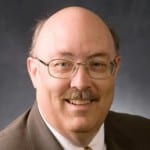 Daniel C. Peterson (PhD, UCLA) is a professor of Islamic studies and Arabic at Brigham Young University and founder of the university’s Middle Eastern Texts Initiative. He has published and spoken extensively on both Islamic and Mormon subjects. Formerly chairman of the board of the Foundation for Ancient Research and Mormon Studies (FARMS) and an officer, editor, and author for its successor organization, the Neal A. Maxwell Institute for Religious Scholarship, his professional work as an Arabist focuses on the Qur’an and on Islamic philosophical theology. He is the author, among other things, of a biography entitled
 Rebekah Clark is co-author of the book Thinking Women: A Timeline of Suffrage in Utah and works as a historian for Better Days, a nonprofit public history organization dedicated to expanding education about Utah women’s history. She holds a law degree from the J. Reuben Clark Law School at Brigham Young University, studied as a visiting student at Harvard Law School, and practiced law in Boston for four years. She graduated with a degree in American History and Literature from Harvard University, where her honors thesis focused on Utah women’s activism in the national suffrage movement. She has worked at the LDS Church History Department and taught as an online adjunct faculty member at BYU-Idaho. Her work has appeared in journals such as the Utah State Historical Quarterly, the Journal of Mormon History, BYU Studies, Pioneer Magazine, and BYU Law Review and in podcasts by the National Conference of State Legislatures, the Church News, What’s Her Name, Zion Art Society, and the Maxwell Institute for Religious Scholarship. In addition to her work with Better Days, she currently serves on the board of the Mormon Women’s History Initiative Team. Rebekah lives in Highland with her husband Andrew and their five children.