• Skip to primary navigation
  • Skip to main content
  • Skip to primary sidebar
  • Skip to footer

FAIR

  • Find Answers
  • Blog
  • Media & Apps
  • Conference
  • Bookstore
  • Archive
  • About
  • Get Involved
  • Search

Book of Mormon

Book Review: Approaching Antiquity: Joseph Smith and the Ancient World

May 22, 2016 by Trevor Holyoak

Available from the FairMormon Bookstore at 15% off

This book is from the 2013 BYU Church History Symposium, held March 7–8, 2013. The Church History Symposium is a nearly annual (there apparently wasn’t one held in 2015) event that draws speakers from places such as Brigham Young University, other universities, the LDS Church History Department, and often LDS general authorities as well. The book contains many of the papers that were presented, but unfortunately there are a few missing, such as Steven C. Harper’s presentation on masonry. However, that and most of the other papers that were given (including all but one that is in the book) are available to view here, although the video presentations are generally abbreviated versions of what is in the book.

The conference spanned two days. The first day was held at BYU and the second was at the Conference Center in Salt Lake City. I was only able to attend the first day, which is one of the reasons I was interested in this book. The keynote address was given by Richard L. Bushman, and it was very crowded, which left many of us without seats until after he was done (apparently there were many students that had come just to hear Bushman).

The preface of the book states that the theme for the conference came out of a professional development training trip taken by new faculty from the BYU departments of Ancient Scripture and Church History and Doctrine to church history sites in Palmyra, Kirtland, and Nauvoo. As they visited these sites, they “were impressed as the extraordinary range of Joseph’s encounters with antiquity became increasingly apparent” (page xiii) and “deeper reflection upon these issues convinced us that there was an important, dynamic, and under-explored relationship between Joseph Smith’s personal interactions with ancient material and many of his unfolding revelations” (page xiv). [Read more…] about Book Review: Approaching Antiquity: Joseph Smith and the Ancient World

Filed Under: Apologetics, Bible, Book of Abraham, Book of Mormon, Book of Moses, Book reviews, Early Christianity, Geography, Joseph Smith, LDS History, LDS Scriptures, Masonry

Fair Issues 100: Evidence versus proof

May 15, 2016 by Ned Scarisbrick

https://media.blubrry.com/mormonfaircast/www.fairlatterdaysaints.org/wp-content/uploads/2016/05/Fair-Issues-100-Pod.mp3

Podcast: Download (11.8MB)

Subscribe: RSS

Ash (newer) PictureIn this installment brother Ash explains the differences between what we consider as evidence versus proof in religious matters.

The full text of this article can be found at Deseret News online.

Brother Ash is author of the book Shaken Faith Syndrome: Strengthening One’s Testimony in the Face of Criticism and Doubt, as well as the book, of Faith and Reason: 80 Evidences Supporting the Prophet Joseph Smith. Both books are available for purchase online through the FairMormon Bookstore. Tell your friends about the Mormon Fair-Cast. Share a link on your Facebook page and help increase the popularity of the Mormon Fair-Cast by subscribing to this podcast in iTunes, and by rating it and writing a review.

The views and opinions expressed in the podcast may not reflect those of the Church of Jesus Christ of Latter-day Saints or that of FairMormon


Filed Under: Anti-Mormon critics, Apologetics, Book of Mormon, Evidences, Fair Issues, Faith Crisis, General, Hosts, Joseph Smith, Michael R. Ash, Ned Scarisbrick, Podcast, Power of Testimony Tagged With: Book of Mormon evidences

Fair Issues 97: Proof is in the eye of the Beholder

April 17, 2016 by Ned Scarisbrick

https://media.blubrry.com/mormonfaircast/www.fairlatterdaysaints.org/wp-content/uploads/2016/04/Fair-Issues-97-Pod.mp3

Podcast: Download (11.6MB)

Subscribe: RSS

Ash (newer) PictureIn this instalment brother Ash sets for forth evidences, proofs and faith concerning the Book of Mormon archaeology.

The full text of this article can be found at Deseret News online.

Brother Ash is author of the book Shaken Faith Syndrome: Strengthening One’s Testimony in the Face of Criticism and Doubt, as well as the book, of Faith and Reason: 80 Evidences Supporting the Prophet Joseph Smith. Both books are available for purchase online through the FairMormon Bookstore. Tell your friends about the Mormon Fair-Cast. Share a link on your Facebook page and help increase the popularity of the Mormon Fair-Cast by subscribing to this podcast in iTunes, and by rating it and writing a review.

The views and opinions expressed in the podcast may not reflect those of the Church of Jesus Christ of Latter-day Saints or that of FairMormon


Filed Under: Anti-Mormon critics, Apologetics, Book of Mormon, Evidences, Fair Issues, General, Hosts, Joseph Smith, Michael R. Ash, Ned Scarisbrick, Podcast, Prophets Tagged With: Book of Mormon evidences

Additional Witnesses of the Coming Forth and Content of the Book of Mormon

April 15, 2016 by Trevor Holyoak

[Cross posted from Truth Will Prevail.]

By Dennis B. Horne

As Joseph Smith was dictating the translation of the Book of Mormon to Oliver Cowdery, they learned that the gold plates were to “be hid from the eyes of the world” in general. platesNevertheless “three witnesses” would be enabled to view the book or plates “by the power of God” in addition to Joseph—“him to whom the book shall be delivered.” These three witnesses would then “testify to the truth of the book and the things therein” (2 Nephi 27:12; see also Ether 5:2-4 and D&C 5:11, 15).

It is well known that Oliver Cowdery, David Whitmer, and Martin Harris were granted the privilege of becoming these three designated special witnesses (see D&C 17, including section intoduction). Their signed statement of solemn testimony has been printed with each edition of the Book of Mormon.

Further, the prophecies of the Book of Mormon indicated that “none other[s]” would be able to view it, “save it be a few according to the will of God,” and that the purpose of these others would be “to bear testimony of his word unto the children of men”—the world. This would allow the prophets and saints of the Book of Mormon to “speak as if it were from the dead” (2 Nephi 27:23).

These “few” others are generally thought of as the “eight witnesses,” and include members of the Whitmer and Smith families that helped Joseph by providing board and room and financial assistance.[1] The testimony of these eight, who saw, hefted, and closely examined the gold plates, is also printed in the Book of Mormon: “[Joseph Smith] has shown unto us the plates of which hath been spoken, which have the appearance of gold; and as many of the leaves as the said Smith has translated we did handle with our hands; and we also saw the engravings thereon, all of which has the appearance of ancient work.” And, “we have seen and hefted, and know of a surety that the said Smith has got the plates of which we have spoken.”
[Read more…] about Additional Witnesses of the Coming Forth and Content of the Book of Mormon

Filed Under: Book of Mormon, Joseph Smith, LDS History

“I Glory in my Jesus”: How Nephi Helps Us Grow Closer to the Savior

March 27, 2016 by Neal Rappleye

Christ's hands 

Today, Christians around the world celebrate the single greatest event in world history. The Son of God, the Great Creator of Heaven and Earth, condescended below all things, suffered for our sins, died on our behalf, and then three days later, He rose from the grave, giving life and hope to us all: He lives, and because of Him, we all shall live. Nothing can be said to inspire greater hope than those immortal words: “He is not here: for he is risen” (Matthew 28:6).

Like many others, I fear my own words are woefully inadequate to articulate my deepest feelings toward my Savior and Redeemer. Nephi, too, felt that his words were inadequate (2 Nephi 33:1), and yet few testimonies stir my soul greater than his powerful declaration toward the close of his record: “I glory in plainness; I glory in truth; I glory in my Jesus, for he hath redeemed my soul from hell” (2 Nephi 33:6).

Book of Mormon Central recently highlighted Nephi’s farewell testimony of Christ.

“Nephi’s account is brimming with the significance of Jesus Christ and his mission, affirmed through prophetic testimony, parental teaching, scriptural witnesses, and profound spiritual experiences.” Accordingly, Nephi “gives sincere followers of Christ everywhere a model of spiritual behavior to follow in seeking to gain, build, or strengthen their own relationships with Jesus Christ.”

Nephi’s knowledge of the Savior came in at least four different ways:

(1) Prophetic testimony;

(2) Parental teaching;

(3) Scriptural witnesses; and

(4) Personal spiritual experiences.

Let’s explore each of these in Nephi’s record and consider what we learn about the Savior in each instance.

Prophetic Testimony

The life and mission of Christ was understood by many prophets, many hundreds of years before His coming. While some scholarship is just starting to recognize an awareness of a divine Son-Redeemer figure in ancient Israelite theology, the Book of Mormon has long affirmed that pre-Christian prophets bore witness of the Savior.

Nephi records both Lehi and Jacob bearing prophetic witness of the Messiah. To the people of Jerusalem, Lehi had prophesied “plainly of the coming of a Messiah, and also the redemption of the world” (1 Nephi 1:19). As a prophet, Lehi had witnessed in vivid detail several events in the Savior’s life (see 1 Nephi 10:4–12). To the people of Nephi, Jacob taught the plan of salvation and the central role of the Atonement in that plan. He revealed the name of Christ to the people, and taught by revelation about the Savior’s mission.

Just as God had prophets teaching of Christ in the ancient cities of Nephi and Jerusalem, so there are prophets today who bear witness of Jesus Christ. Next week, we will gather together as Latter-day Saints throughout the world to hear them bear their special witness. Let’s follow the example of Nephi and cherish and learn from their testimonies.

Parental Teaching

Lehi, of course, was not only the prophet at the time, but he was Nephi’s father. He was acting in his paternal role when he gather this family together and taught them about how, due to the effects of the Fall, all must come unto the Messiah with a broken heart and contrite spirit. In the wake of his father’s passing, Nephi lamented over his personal shortcomings, but also affirmed his dependence of the Savior: “O Lord, I have trusted in thee, and I will trust in thee forever” (2 Nephi 4:34). Lehi and Sariah, faithfully taking their family in the wilderness upon the Lord’s command, are the ones who modeled that trust in the Lord for Nephi to learn.

Just like Lehi and Sariah, parents today have a personal responsibility to teach their children about Jesus Christ and his Gospel. Less often talked about, but equally important, children today have the responsibility to learn from their parents. May we all, in our roles either as parents or children (or, for many, both) teach and learn and better come to know the Savior within the family setting.

Scriptural Witnesses

There can be little question that Nephi was a diligent student of the scriptures. He risked life and limb to recover a copy of scriptural works from Laban in Jerusalem, and his entire record is laced with quotations of scripture. He draws on the writings of several prophets to describe Christ’s atoning death (1 Nephi 19:10–12). Nephi used Psalm 24 to teach about what must be done to come into the presence of Christ and to recognize Him as the Messiah.

Of course, everyone is familiar with Nephi’s extensive use of Isaiah. Nephi explicitly used Isaiah as a witness of Christ. In Isaiah’s writings, Nephi could discern prophetic descriptions of the Savior’s birth, divine titles, and ministry, and rejection by the people. A sweeping vision of the Redeemer’s mortal life and ultimate redeeming work guided Nephi’s selection and interpretation of Isaiah.

Just as Nephi and Isaiah’s words work together to bear witness of the redemptive mission of Jesus Christ, so do the entire Bible and Book of Mormon work together. Latter-day Saints are blessed today with the testimony of two nations that Jesus is the Christ, rather than just one. Like Nephi did with the brass plates, we can draw closer to the Lord and Savior as we read and ponder the teachings of Christ found in the scriptures we have.

Personal Spiritual Experiences

Nephi had his own sacred experiences that taught him about the importance of the Savior. While pondering on Lehi’s vision of a tree, Nephi received his own revelation wherein he learned the meaning of the tree and its connection to the birth of Jesus Christ. The vision also taught Nephi firsthand about the life, baptism, and death of the Son of God (see 1 Nephi 11). Later in life, as Nephi reflected on the Savior’s baptism, he came a greater understanding of why Jesus was baptized, and conversed with the Father and the Son about the doctrine of Christ.

Such personal spiritual experiences, which all of God’s children are entitled to, are more important than the witness of parents and prophets. But as Nephi’s experience teaches us, it is the teachings of prophets, parents, and scripture that serve as the springboard to personal testimony. Diligent study and application of the scriptures, teachings of modern prophets, and parental council often will generate spiritual experiences to cherish and use as building blocks to personal testimony.

The temple also plays an important role in providing a sacred space where these kinds of experiences can be had. The high mountain Nephi is carried to in 1 Nephi 11 is representative of the temple. After arriving in the New World, Nephi has his people build a temple shortly before he begins writing his account.

Coming into the Presence of the Lord

Although we are using Nephi as an example, we should keep in mind that ultimately, this is not about Nephi. It is about Jesus Christ and coming closer to Him. Nephi’s entire account is ultimately about guiding the reader into the presence of Christ. When Nephi talks about “speak[ing] with the tongue of angels,” Book of Mormon Central has proposed that, “Ultimately Nephi [is] invit[ing] all his readers to find the way to enter into the presence of the Lord and to participate in the divine council as one of the ‘angels.’”

Nephi drew on all the variety of sources—his father’s prophetic call, Isaiah’s scriptural writings, and his own personal revelation on a high mountain top—in order to ultimately drive this point home; and the way to get there is through the temple.

This Easter, as you reflect on what the Savior has done for you and consider how you can draw closer to Him, remember the example set by Nephi, and join with him. Just as he does, glory in Jesus Christ, the Redeemer, who has saved your soul from death and hell!

Neal Rappleye is a Research Project Manager for Book of Mormon Central. He blogs on Latter-day Saint topics at http://www.studioetquoquefide.com/

Filed Under: Book of Mormon, Early Christianity Tagged With: Book of Mormon, Easter, FairMormon, Jesus Christ, Resurrection

Nephi and Isaiah: Some Suggestions for Study

March 13, 2016 by Neal Rappleye

Isaiah

We have all experienced it. Newly committed to the read through the Book of Mormon, we eagerly start with the familiar words, “I, Nephi, having been born …,” and the reading seems to be going well. And then they come. The dreaded “Isaiah chapters.” These chapters are dense, difficult, and demanding.

You are tempted to just skip over them, but they wouldn’t be there if they weren’t important, right? Nephi “delights” in Isaiah’s words (2 Nephi 11:2), and the Savior himself declares them “great” (3 Nephi 23:1), but for you they are more like “great and dreadful.” How can you get more out of the Isaiah chapters?

Book of Mormon Central has been churning out KnoWhys—short insights into some detail in the Book of Mormon—at an astonishingly rapid rate, and the for the last few weeks they have zeroed in on the Isaiah chapters. With more than a dozen KnoWhys on Nephi and Isaiah, these provide a diverse set of tools to aid in your personal study. The Isaiah KnoWhys from Book of Mormon Central generally take four different approaches to the Isaiah chapters in 2 Nephi, each of which can provide a framework for further individual study of Isaiah.

Likening Isaiah

One approach Nephi uses is likening. Book of Mormon Central offers several insights into what Nephi might have meant by this. For example, when Nephi first quotes from Isaiah in 1 Nephi 20–21, he says that he “did liken all scriptures unto” his family (1 Nephi 19:23). But have you ever thought about how he likened them? What connections did he see between Isaiah 48–49 and his family’s experience? Book of Mormon Central suggests several possibilities, but they are far from exhaustive. Perhaps the next time you study these chapters you could ponder how Nephi saw his own experiences within those chapters.

Nephi also promised to “liken” Isaiah 2–14 Isaiah to his people (2 Nephi 11:2). So how did Nephi apply these parts of Isaiah to his followers and their situation? Book of Mormon Central offers a couple of examples. Perhaps he understood the temple they had just built to be “the house of the Lord,” prophesied of in Isaiah 2, just as modern prophets apply it to the Salt Lake temple today. Likewise, Nephi could have easily seen native peoples that the Lehites had interacted with as fulfilling several of the Gentiles’ roles in Isaiah’s writings. What are some other ways these chapters in Isaiah could be applied to Nephi’s people in the New World?

The Nephite Prophetic View

To get ready for studying Isaiah 2–14 in 2 Nephi 12–24, Book of Mormon Central introduced a 4-stage framework based on Nephi’s vision in 1 Nephi 11–14:

  • Stage 1: Christ’s coming (1 Nephi 11);

  • Stage 2: his rejection and the scattering of the Jews (1 Nephi 12);

  • Stage 3: the day of the Gentiles (1 Nephi 13); and

  • Stage 4: the restoration of Israel and the ultimate victory of good over evil (1 Nephi 14).

This same framework can be applied to other places where Nephi uses Isaiah, like 1 Nephi 19–22, 2 Nephi 6–10, and Nephi’s interpretations in 2 Nephi 25–30. This can prove a useful lens through which to read these Isaiah chapters, looking for each of these stages in Isaiah 2–14.

To make it more interesting, though, you can not only look for these themes, but also compare Isaiah’s words with Nephi’s in 1 Nephi 11–14. Book of Mormon Central, for example, compares Nephi’s vision in 1 Nephi 11 with Isaiah’s prophecies quoted in 2 Nephi 12–24, and get illuminating results. They also explored ways each of the other three stages are manifest in Isaiah’s writings and how they compare with Nephi’s own prophetic visions.

In each instance, Book of Mormon Central is only just scratching the surface. There is a lot more to explore for each of these stages. The “Nephite Prophetic View” can thus be employed productively by anybody seeking to get more out of these Isaiah chapters. And with each one, it starts to become clear that Nephi deeply identified with Isaiah. No wonder Nephi went to pains to include Isaiah as one of his three witnesses of the Messiah. In marvelous poetic fashion, Isaiah described many of the same things Nephi had witnessed in vision. How could Isaiah not resonate with Nephi?

Nephi’s Keys

Another approach to these chapters is to consider the “keys” Nephi offers in 2 Nephi 25. Once again, Book of Mormon Central helpfully outlines this lens of study:

  1. Understand the “manner of prophesying among the Jews” (v. 1)

  2. Do not do “works of darkness” or “doings of abominations” (v. 2)

  3. Be filled with the spirit of prophecy (v. 4)

  4. Be familiar with the regions around Jerusalem (v. 6)

  5. Live during the days that the prophecies of Isaiah are fulfilled (v. 7)

As an example of how this can enhance our study of Isaiah, Book of Mormon Central applies key 1 to a phrase found through Isaiah 2–14—“for all this his anger is not turned away, but his hand is stretched out still”—to show how understanding ancient Israelite thought changes how we read this passage. What other insights await us if apply Nephi’s keys while reading Isaiah?

Latter-day Application

Finally, Nephi invites his latter-day readers to “liken” the scriptures themselves as well (2 Nephi 11:8). Nephi himself provides some Latter-day applications. He likens Isaiah 49 to the latter-day (1 Nephi 22:6–14), for instance, and Book of Mormon Central argues that given such an application, Joseph Smith could be understood as the “servant” in Isaiah 49:1–6. How can the rest of the chapter be applied to the latter-day Restoration?

Isaiah 11 also seems to be applied to Joseph Smith and the Book of Mormon, if not by Nephi, at least by Moroni. Nephi’s most extensive application to the Latter-days, however, is his appropriation of Isaiah 29. Book of Mormon Central proposes that 2 Nephi 27 should not be read as Nephi quoting Isaiah 29, something Nephi never claims to be doing throughout 2 Nephi 25–30. Instead, he is applying and adapting the Isaiah’s words to his own vision of the coming forth of the Book of Mormon.

Nephi had seen the Restoration and coming forth the Book of Mormon in vision (1 Nephi 13:32–42). When Nephi read about “a book that is sealed,” taken by men to “one that is learned, saying, Read this, I pray thee,” and then subsequently taken to “him that is not learned” (Isaiah 29:11–12), he found apt words to adopt in describing certain events which would unfold in the life of Joseph Smith (2 Nephi 27:15–19).

While this is not only one way to approach the relationship between Isaiah 29 and 2 Nephi 26–27, it opens up interesting ways to study how Nephi is personally interacting with Isaiah. Have you tried reading the two prophecies side by side to see what Nephi is doing?

Conclusion: Delighting in the Great Words of Isaiah

Today there is a rich array of tools for Latter-day Saints to use in better understanding Isaiah, and what his writings are doing in the Book of Mormon. The recent slew of KnoWhys from Book of Mormon Central provides us with a number of different paths to follow for enriching study of Isaiah’s “great” words (3 Nephi 23:1). The application of several approaches to Isaiah derived from Nephi’s own words illuminates Isaiah’s writings in wonderful ways and begins to shed light on why Nephi “delighted” (2 Nephi 11:2) in the words of this great Israelite poet and prophet.

Neal Rappleye is a Research Project Manager for Book of Mormon Central. He blogs on Latter-day Saint topics at http://www.studioetquoquefide.com/


Filed Under: Book of Mormon Tagged With: apologetics, Book of Mormon, Isaiah

Fair Issues 96: Mapping Book of Mormon Lands

March 6, 2016 by Ned Scarisbrick

https://media.blubrry.com/mormonfaircast/www.fairlatterdaysaints.org/wp-content/uploads/2016/03/Fair-Issues-96-Pod.mp3

Podcast: Download (12.5MB)

Subscribe: RSS

Ash (newer) PictureIn this episode brother Ash relates how modern mapping may differ from ancient techniques used to define location and direction.

As Dr. Lawrence Poulsen points out, in most ancient languages, the words translated into English as “east” nearly always refer to the rising of the sun, while “west” refers to setting of the sun.

“The concept of direction in ancient cultures was centered on the movement of the sun, in particular its movement relative to the individual’s location.  This is an (egocentric: person centered) rather than a geocentric (earth centered) view of direction.  In other words, it is based on personal orientation rather than on contemporary global map orientation.”

The full text of this article can be found at Deseret News online.

Brother Ash is author of the book Shaken Faith Syndrome: Strengthening One’s Testimony in the Face of Criticism and Doubt, as well as the book, of Faith and Reason: 80 Evidences Supporting the Prophet Joseph Smith. Both books are available for purchase online through the FairMormon Bookstore. Tell your friends about the Mormon Fair-Cast. Share a link on your Facebook page and help increase the popularity of the Mormon Fair-Cast by subscribing to this podcast in iTunes, and by rating it and writing a review.

The views and opinions expressed in the podcast may not reflect those of the Church of Jesus Christ of Latter-day Saints or that of FairMormon


Filed Under: Book of Mormon, Evidences, Fair Issues, General, Geography, Hosts, Michael R. Ash, Ned Scarisbrick, Podcast Tagged With: Book of Mormon Geography

Lehi’s Lasting Legacy

February 29, 2016 by Neal Rappleye

Tree

Nephi tells us that his father, Lehi, kept a record (1 Nephi 1:17). That record is lost to history, but nonetheless his legacy lives on. His son recorded a number of his most profound prophecies and visions. These include his prophetic call vision, powerful poetic declarations to his two oldest sons while encamped in an Arabian wadi, his moving dream about the tree of life, and his prophecies about the Messiah.

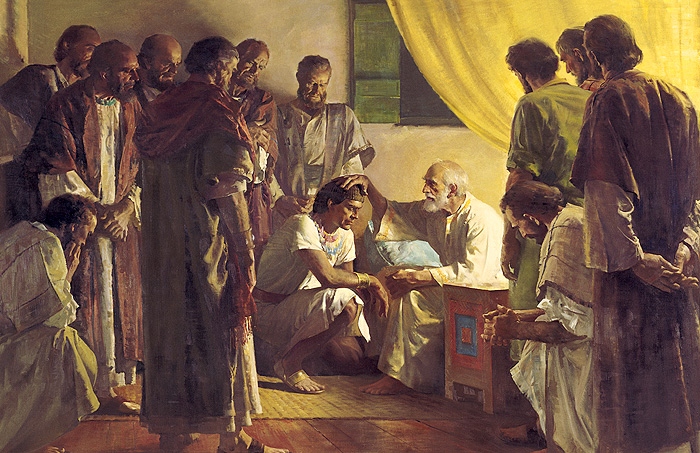
Lehi’s legacy was solidified by the testament he left behind. While nearing his death, Lehi called together his posterity, warned them of temptations, taught them to live righteously, blessed them, and related prophecies (2 Nephi 1–4). Book of Mormon Central has dubbed this the “Testament of Lehi” because it has all the characteristics found in the Jewish testamentary literature. Book of Mormon Central also comments on the legacy this creates for Lehi:

It provides an example for fathers and patriarchs today. The tradition, initially but briefly present in Genesis 49, was not maintained and developed only by the Jews after their return to Jerusalem in the Second Temple period but was called upon extensively and effectively by Lehi in the sixth century BC. Building from there, later prophets in the Book of Mormon followed Lehi’s example, as Alma does in Alma 36–42 and Helaman does in Helaman 5:5–13. Latter-day Saint fathers today also follow these patriarchal examples as they bless, instruct, exhort, and testify to their children and grandchildren.

Some of Lehi’s most influential teachings were given as part of his testament. For instance, drawing on the imagery of the Psalms, Lehi taught about the importance of offering the Lord your broken heart and contrite spirit. Of this teaching, Book of Mormon Central pointed out, “This presents an important lesson for modern Book of Mormon readers. No matter what sacrifice we offer to the Lord—be it our time, our talents, etc.—if this is not done with the true sacrifice of our hearts and spirits, then it cannot be fully acceptable to the Lord.”

It is also as part of his testament that Lehi gave his epic discourse on the Fall. Drawing from the hints found in the Old Testament and Israelite temple traditions, Lehi provided the most complete teaching on the Fall presently on record. According to Book of Mormon Central,

Lehi’s teaching was the foundation for several other important sermons in the Book of Mormon by Alma, Amulek, and others, and continues to be the foundation upon which we build when we teach the Fall today.

Nephi’s love for Isaiah may have come from Lehi, since Lehi appears to be drawing on Isaiah 14:12 when he describes Satan. Isaiah 14 is drawing on a rich ancient Near Eastern mythos of a fallen deity, and like he does with the Fall, Lehi expands on Isaiah’s use to provide a fuller view of the Adversary. Indeed, Lehi seems well versed in the great literature of his day and time, as he poetically describes death in a way the resonates not only with the much later Shakespeare, but also with ancient Egyptian, Mesopotamian, Canaanite, and Israelite motifs.

Drawing on both the literary form and the language of the Psalms, Nephi lamented after his father passed away. Nephi, however, was not the only one of Lehi’s sons who was profoundly impacted by their father’s influence. In his first sermon recorded in the Book of Mormon, Jacob taught many of the same doctrines Lehi had taught to him. As Book of Mormon Central puts it,

Tracing Jacob’s understanding of the plan back one generation earlier, it appears that his inspired summation carried forth the influence of his father’s instructions to him in 2 Nephi 2. Although Lehi never called it a “plan,” he taught these same doctrines in his final blessing to Jacob.

Comparing the two also illuminates which doctrines both Lehi and Jacob most related to:

Though they taught the same doctrines, Lehi’s emphasis was focused more on the fall, opposition, and the agency afforded to all to choose between good and evil. Jacob, meanwhile, put more emphasis on the atonement, resurrection, and the eternal outcome from choosing either righteousness or filthiness.

Jacob also shows an awareness of Israelite and ancient Near Eastern conceptions of death. Given that Jacob was born in the wilderness and was still very young when the family arrived in the promised land, this knowledge surely came to him through his father’s teachings.

Given the reverence both Nephi and Jacob had for Lehi, it may seem odd that Nephi summoned Isaiah to act as a third witness of the Redeemer alongside Nephi and Jacob. Lehi had already born witness of Christ, multiple times (1 Nephi 1:19; 1 Nephi 10; 2 Nephi 2). Yet, this may actually be one of the most powerful reflections of Nephi’s love for his father.

Lehi was believed to be a false prophet by both the Jews at Jerusalem and also his two oldest sons, Laman and Lemuel. The penalty for false prophecy was death, and Laman and Lemuel try to kill him multiple times. Biblical law required two or three witnesses (Deuteronomy 19:15) to testify in a trail. As such, coming on the heels of Lehi’s passing, and the division of Nephi from his brothers, 2 Nephi 6–30, recording the testimonies of Nephi’s three witnesses—Jacob, Isaiah, and Nephi—could be read as the Apology of Lehi.

That is, it is Nephi’s defense of Lehi as a true prophet, marshalling the biblically required three witnesses to verify Lehi’s own prophecies about the Messiah. This would explain why Lehi himself was not considered one of the witnesses—he was the defendant. If this is correct, then it would speak powerfully to the legacy of Lehi, as nearly all of 2 Nephi would be dedicated to him in some capacity.

In either case, there is no denying the abundant legacy of Lehi left behind by his sons.

Neal Rappleye is a Research Project Manager for Book of Mormon Central. He blogs on Latter-day Saint topics at http://www.studioetquoquefide.com/

Filed Under: Book of Mormon, LDS Scriptures Tagged With: apologetics, Book of Mormon, FairMormon, Lehi, Prophets

Fair Issues 95: A Journey across the “narrow neck”

February 28, 2016 by Ned Scarisbrick

https://media.blubrry.com/mormonfaircast/www.fairlatterdaysaints.org/wp-content/uploads/2016/02/Fair-Issue-95-Pod.mp3

Podcast: Download (18.6MB)

Subscribe: RSS

Ash (newer) PictureIn this episode brother Ash offers several explanations and illustrations for what could be considered the “narrow neck” of land in the Book of Mormon.

The full text of this article can be found at Deseret News online.

Brother Ash is author of the book Shaken Faith Syndrome: Strengthening One’s Testimony in the Face of Criticism and Doubt, as well as the book, of Faith and Reason: 80 Evidences Supporting the Prophet Joseph Smith. Both books are available for purchase online through the FairMormon Bookstore. Tell your friends about the Mormon Fair-Cast. Share a link on your Facebook page and help increase the popularity of the Mormon Fair-Cast by subscribing to this podcast in iTunes, and by rating it and writing a review.

The views and opinions expressed in the podcast may not reflect those of the Church of Jesus Christ of Latter-day Saints or that of FairMormon


Filed Under: Apologetics, Book of Mormon, Evidences, Fair Issues, General, Geography, Hosts, Michael R. Ash, Ned Scarisbrick, Podcast Tagged With: Book of Mormon Geography, narrow neck of land

Book Review: “The Coming Forth of the Book of Mormon: A Marvelous Work and a Wonder”

January 19, 2016 by Trevor Holyoak

The Coming Forth of the Book of Mormon: A Marvelous Work and a Wonder
Available from the FairMormon Bookstore at 15% off
This book contains the papers from the 44th Annual Brigham Young University Sidney B. Sperry Symposium, held in October, 2015. The Sperry Symposium is held annually, and draws most of its speakers from the Church Educational System. Each year’s theme is usually based on the book of scripture that will be studied by LDS adults in the coming year, and this volume fits right in with this year’s Gospel Doctrine study of the Book of Mormon.

The first paper in the book is by Elder Merrill J. Bateman. He gave the keynote speech on “The Coming Forth of Plain and Precious Truths.” He describes many aspects of the gospel that may be only vaguely mentioned in the Bible, but for which we learn much more from the Book of Mormon. Some examples are the plan of salvation, the premortal life, the fall of Adam, the atonement and resurrection, and specific doctrines taught by Christ.

[Read more…] about Book Review: “The Coming Forth of the Book of Mormon: A Marvelous Work and a Wonder”

Filed Under: Apologetics, Book of Mormon, Book reviews, Doctrine, Evidences, Joseph Smith, LDS History, LDS Scriptures, Lesson Aids, Prophets

  • « Go to Previous Page
  • Go to page 1
  • Interim pages omitted …
  • Go to page 28
  • Go to page 29
  • Go to page 30
  • Go to page 31
  • Go to page 32
  • Interim pages omitted …
  • Go to page 49
  • Go to Next Page »

Primary Sidebar

Faithful Study Resources for Come, Follow Me

Subscribe to Blog

Enter your email address:

Subscribe to Podcast

Podcast icon
Subscribe to podcast in iTunes
Subscribe to podcast elsewhere
Listen with FAIR app
Android app on Google Play Download on the App Store

Pages

  • Blog Guidelines

FAIR Latest

  • Come, Follow Me with FAIR – The Family: A Proclamation to the World – Part 2 – Autumn Dickson
  • Come, Follow Me with FAIR – The Family: A Proclamation to the World – Part 1 – Autumn Dickson
  • The Eternal Gift of Testimony
  • Come, Follow Me with FAIR – The Articles of Faith and Official Declarations 1 and 2 – Part 2 – Autumn Dickson
  • Come, Follow Me with FAIR – The Articles of Faith and Official Declarations 1 and 2 – Part 1 – Autumn Dickson

Blog Categories

Recent Comments

  • lyrics to song on Come, Follow Me with FAIR – The Articles of Faith and Official Declarations 1 and 2 – Part 2 – Autumn Dickson
  • Nalo on Come, Follow Me with FAIR – The Articles of Faith and Official Declarations 1 and 2 – Part 2 – Autumn Dickson
  • Diana on Come, Follow Me with FAIR – Doctrine and Covenants 132 – Mike Parker
  • JC on The Lord Is Hastening His Work
  • LHL on Come, Follow Me with FAIR – Doctrine and Covenants 132 – Mike Parker

Archives

Follow Us

  • Facebook
  • Twitter
  • iTunes
  • YouTube
Android app on Google Play Download on the App Store

Footer

FairMormon Logo

FAIR is a non-profit organization dedicated to providing well-documented answers to criticisms of the doctrine, practice, and history of The Church of Jesus Christ of Latter-day Saints.

Donate to FAIR

We are a volunteer organization. We invite you to give back.

Donate Now

Site Footer