• Skip to primary navigation
  • Skip to main content
  • Skip to primary sidebar
  • Skip to footer

FAIR

  • Find Answers
  • Blog
  • Media & Apps
  • Conference
  • Bookstore
  • Archive
  • About
  • Get Involved
  • Search

LDS History

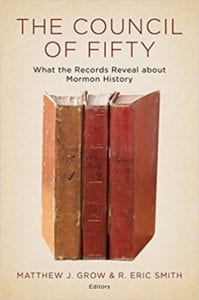
Book Review: The Council of Fifty: What the Records Reveal about Mormon History

September 4, 2017 by Trevor Holyoak

Publisher: Religious Studies Center, Brigham Young University
Editors: Matthew J. Grow & R. Eric Smith
Date Available: September 4, 2017
Number of Pages: 201
Binding: Hardcover
ISBN-13: 978-1-9443-9421-9
Price: $21.99

On October 3, 2016, the Joseph Smith Papers Project published a volume called Administrative Records: Council of Fifty, Minutes, March 1844-January 1846 (reviewed and explained here). It is a massive tome of around 800 pages containing information that had never before been published or studied. It contains many insights that help fill in gaps in Mormon history during this period. The Council of Fifty: What the Records Reveal about Mormon History is an introduction to some of those insights, or it can also serve as a summary of them for those that would rather not peruse the vast source material.

This book contains 15 chapters, each of which is a separate paper written by historians (many of which have worked on the Joseph Smith Project) such as Richard Bushman, Richard Turley, Patrick Mason, Gerrit Dirkmaat, Matthew Grow, Matthew Godfrey, Richard Bennett, Jedediah Rogers, and Paul Reeve. Like a sacrament meeting where each speaker is given the same topic, there is some overlap among many of the papers, yet each writer brings their own perspective and expertise. [Read more…] about Book Review: The Council of Fifty: What the Records Reveal about Mormon History

Filed Under: Book reviews, FAIR Conference, Joseph Smith, LDS History, Prophets, Temples

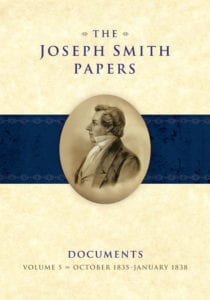
Book Review: The Joseph Smith Papers: Documents Volume 5: October 1835 – January 1838

May 15, 2017 by Trevor Holyoak

Publisher: The Church Historian’s Press
Date Available: May 15, 2017
Number of Pages: 768
Binding: Hardcover
ISBN-13: 978-1629723129
Price: $54.95

(Page numbers are from an Advance Review Copy, and may be different in the published version.)

This volume covers an interesting period of Joseph Smith’s life that includes the finishing and dedication of the Kirtland Temple and the associated visions, work on the Book of Abraham, the Kirtland Safety Society, and persecution and apostasy. Some of the documents included are from Joseph Smith’s journals, and so have already been published in Journals, Volume 1:1832-1839. Others are from Minute Book 1, archival collections, periodicals, other peoples’ diaries, legal records, etc. There are no journals available covering April 1836 to January 1838, so some of the best contemporary sources were chosen to try to fill things in.

The book starts with the usual material for this series, including a timeline of Joseph Smith’s life, maps, an explanation of the Joseph Smith Papers Project, a volume introduction, and an explanation of the editorial method. The book is then divided into seven parts, based on time periods. There is an appendix with blessings to Don Carlos Smith, Oliver Cowdery, Frederick G. Williams, and Sidney Rigdon. And then there is the usual reference material with source notes, a chronology, geographical directory and maps, pedigree chart, biographical directory, organizational charts, essay on sources, works cited, a cross-reference with the Doctrine and Covenants, index, etc. At the very back is a note about resources available on the Joseph Smith Papers website that relate to the series as well as this particular book.

Most of the first and second chapters of the Book of Abraham are included as “Book of Abraham Manuscript, circa Early June – circa November 1835-A [Abraham 1:4-2:6].” There is a historical introduction that explains how the papyri were obtained and what is known about the translation, as well as the publication in Times and Seasons. A footnote points out that “Though a notice printed in the 1 February 1843 issue of the Times and Seasons suggested that JS would publish ‘further extracts’ from the Book of Abraham, there is no documentary evidence that other extracts were produced. All extant manuscripts generated by JS and his associates during their study of the Egyptian papyri, dated circa 1835 to circa 1842, are available at the Joseph Smith Papers website, josephsmithpapers.org.” (page 77) [Read more…] about Book Review: The Joseph Smith Papers: Documents Volume 5: October 1835 – January 1838

Filed Under: Book of Abraham, Book reviews, Joseph Smith, LDS History, Temples

Book Review: What You Don’t Know About the 100 Most Important Events in Church History

April 19, 2017 by Trevor Holyoak


Authors: Casey Paul Griffiths, Susan Easton Black, Mary Jane Woodger
Publisher: Deseret Book
Genre: Nonfiction
Year Published: 2017
Number of Pages: 336
Binding: Paperback
ISBN: 978-1629722467
Price: $22.99

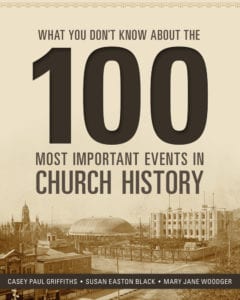
I really don’t like the title of this book. It is the sort of title that is often referred to as “clickbait,” to get people to read an online article. It is also an insult to the reader’s intelligence for an author to assume what they don’t know. The preface indicates that the authors are at least somewhat aware of this, and begins almost with an apology, admitting that “such lists present an excuse for sensationalized writing and shallow analysis.” However, it goes on to explain that the book was inspired by another book called “The 100 Most Important Events in Christian History,” and that such lists “can impel a person to think critically about events, stories, and people.” Casey Griffiths decided to create a list for the history of the Latter-day Saints, enlisting the help of Mary Jane Woodger and Susan Easton Black. They also received assistance from their colleagues at BYU and used resources such as the Joseph Smith Papers.

The book is a large format paperback, printed on fairly cheap-feeling paper. There are small photographs accompanying each of the 100 short (mostly 2 to 3 pages) chapters, but they are all black and white and sadly most are not very high quality, possibly due to the paper used. This might have made a good coffee table book in a different format, but I suppose it’s more likely to be read in this form.

The book lists the events in chronological order. Many should be quite well known, in which case they have tried to include lesser known information. For instance, for the First Vision (event number 1), they include details from multiple accounts from Joseph Smith and his contemporaries, concluding by noting that “the details are less significant than the central message of the reality of God the Father and his Son Jesus Christ and of the Savior’s infinite atonement. President Henry B. Eyring said that the First Vision ‘represents that moment when Joseph learned there was a way for the power of the Atonement of Jesus Christ to be unlocked fully. Because of what Joseph saw and what began at this moment, the Savior was able, through this great and valiant servant and through others that He sent, to restore power and privilege. That power and privilege allows us, and all who will live, to have the benefits of Jesus Christ’s Atonement work in our lives’” (page 3). [Read more…] about Book Review: What You Don’t Know About the 100 Most Important Events in Church History

Filed Under: Apologetics, Bible, Book of Mormon, Book reviews, First Vision, Joseph Smith, LDS History, LDS Scriptures, Polygamy, Prophets, Temples, Women

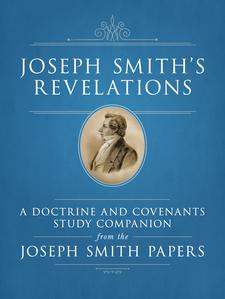
Book Review: Joseph Smith’s Revelations: A Doctrine and Covenants Study Companion from the Joseph Smith Papers

March 30, 2017 by Trevor Holyoak

This book is part of the Joseph Smith Papers Project, but it’s different than the other volumes that have been produced. It combines the previously published canonized revelations and their accompanying contextual material and puts them in the same order as the current LDS edition of the Doctrine & Covenants, also adding verse numbers for ease of reading. The result provides a very interesting way to read this book of scripture.

I have to admit I was initially disappointed to find that this is only available as an e-book. But it turns out there is a reason for this. It currently only contains content up through 1835 (and one thing from 1838) at this point. But as work on the Joseph Smith Papers Project progresses, updates to the e-book are promised. My guess is that they also realized this would be a great resource for this year’s Sunday School curriculum and were able to put it together quickly as an e-book. And they took advantage of the ability to link to the JSP website to provide access to higher resolution charts and further information in many places.

As with all the JSP books, the introductory material includes lists of illustrations and maps, an introduction and statement of editorial procedures, and a timeline of Joseph Smith’s life. It also includes a chronology of texts in today’s edition of the D&C and a correspondence chart to the JSP volumes. The introduction from Revelations and Translations, Volume 1: Manuscript Revelation Books is included as an appendix, as is the introduction to Revelations and Translations, Volume 2: Published Revelations.
[Read more…] about Book Review: Joseph Smith’s Revelations: A Doctrine and Covenants Study Companion from the Joseph Smith Papers

Filed Under: Book reviews, Joseph Smith, LDS History, LDS Scriptures

The Joseph Smith Papers: Administrative Records: Council of Fifty, Minutes, March 1844-January 1846

December 13, 2016 by Trevor Holyoak

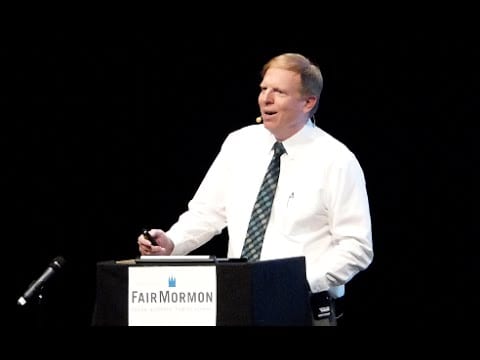
[For more information on the Council of Fifty, see Matthew J. Grow’s 2016 FairMormon Conference presentation.]

In September 2013, it was announced that the minutes from the Council of Fifty would be published as part of the Joseph Smith Papers project. This was significant because they had not been available for research, and so most of what was known of the council had been gleaned from journal entries of members and rumors spread by publications such as the Nauvoo Expositor, which were repeated over the years by each generation of critics. Besides being able to put these hyperbolic claims to rest, we now have new information about what happened during the Nauvoo period, and some new statements made by Joseph Smith and other early members of the Church.

The Council of Fifty was a secret organization formed in Nauvoo, made up of the leaders of the Church, as well as other men, including some nonmembers, with Joseph Smith at the head. Their purpose was to do civil business, separate from the ecclesiastical business done elsewhere. Under Joseph Smith, the three major functions involved Joseph’s presidential campaign, planning a “theodemocracy [that] would protect liberty and freedom ‘for the benefit of ALL’” [page xxxvi], and to find a place of refuge away from the government of the United States, which had failed them.

After the death of Joseph Smith the council was reconvened under Brigham Young, and dealt with the repeal of the Nauvoo charter, completing the temple, and finding a new place to settle. It was later reconvened in 1848, after settling in Salt Lake City, and functioned off and on until 1885. This book contains the minutes through January, 1846, and there are currently no plans to publish the rest, which would be beyond the scope of the Joseph Smith Papers. [Read more…] about The Joseph Smith Papers: Administrative Records: Council of Fifty, Minutes, March 1844-January 1846

Filed Under: Anti-Mormon critics, Book reviews, FAIR Conference, Joseph Smith, LDS History, Politics, Temples

Book Review: Joseph Smith’s Seer Stones

November 21, 2016 by Trevor Holyoak

Joseph Smith's Seer Stones
Available from the FAIR Bookstore

In September 2015, photographs of one of Joseph Smith’s seer stones were published in the Joseph Smith Papers: Revelations and Translations: Volume 3.To go along with this, an article was published in the October 2015 Ensign [1] that gave a brief overview of seers, seer stones, and the translation of the Book of Mormon, and also included one of the photographs. This was significant because prior to that, it had been unseen, locked away in the First Presidency’s vault. As it turns out, there were many that were unaware that a seer stone had been used in the translation of the Book of Mormon, and for some this caused some surprise and confusion.

This book goes much further than the Ensign article to “provide a friendly introduction to seer stones,” as well as to “provid[e] an introduction to the historical sources in an accessible style for Latter-day Saints and others.” [2] In doing so, they include sources both friendly and unfriendly to the church (but unfortunately do not always differentiate between them for readers that may not be familiar with some of them). This is an important book in that it is the first fully devoted to the topic.

The introduction talks about “Mormon Paradigm Shifts.” This is for those that were taken by surprise to find out about seer stones, in spite of a multitude of references in church literature throughout the years. “With so many Latter-day Saint scholars acknowledging and studying Joseph Smith’s use of seer stones, it is clear that the Church has not been hiding this information. And yet, as with many historically specific topics, without direct references provided in Church teaching materials and curriculum, the average Latter-day Saint would not necessarily encounter the seer stones in the course of their devotional study. …That is why the latest appearance of the topic in the October 2015 Ensign (and Liahona) was so important: it underscores how, even while keeping a sacred relic private, the Church continues to be open about the miraculous process of the translation of the Book of Mormon.” [3] [Read more…] about Book Review: Joseph Smith’s Seer Stones

Filed Under: Book of Mormon, Book reviews, Joseph Smith, LDS History

Courtroom Analogy

November 3, 2016 by Keller

Guest post by Paul Brooks from The Reasonable Mormon

Not guilty vs innocent


Since the organization of the Church in 1830, some form of the question “Is the Church true?” has been prevalent among proponents and detractors alike. While much can be said to directly answer the question, much can also be said about nature of the question itself. This post demonstrates why believing the Church is “not true,” or not believing the Church is “true,” does not necessarily mean believing the Church is “false” or worthy of abandoning faith.

Imagine the following fictional conversation between two critics of the Church we shall call Simon and Peter:

Simon: I’ve just been speaking with a friend who asked me to provide a good argument that the LDS Church is false.

Peter: Oh right, how did you get on?

Simon: I couldn’t do it. Everything I raised was contended with good counter evidence, many that I hadn’t heard before.

Peter: OK, so what now?

Simon: Well there isn’t one reason to think it’s false so I guess it’s true. I’m going to start attending each week.

Now this doesn’t usually happen and it’s obvious that something is wrong. Just because Simon couldn’t demonstrate the LDS Church was false, it doesn’t necessarily mean he should believe that the Church is true. We would rightfully expect Simon to be troubled by his experience but not to start attending Sunday services.

But look what happens when we flip this on its head, now imagine two believing members of the Church in a similar conversation:

 Simon: I’ve just been speaking with a friend who asked me to provide a good argument that the LDS Church is true.

 Peter: Oh right, how did you get on?

 Simon: I couldn’t do it. Everything I raised, was contended with good counter evidence, many that I hadn’t heard before.

 Peter: OK, so what now?

 Simon: Well there isn’t one reason to think it’s true so I guess it’s false. I’m going to stop attending each week.

Again, something is wrong but we do see this in our own experience. Sadly this is an argument from ignorance, which is a logical fallacy and occurs when something is believed to be false simply because it has not been shown to be true (or vice versa).

So let’s explore a little more why this is a problem.

In everyday language we use the words “not true” and “false” interchangeably, but they are actually distinct. Usually the distinction doesn’t get us into trouble, but in this situation it may prove highly problematic. Imagine risking eternal salvation based on an error in logic!

The key point to remember is that something that is “not true,” is not necessarily “false.” This would constitute a false dichotomy, meaning that only two options are presented but in reality there are more than two options available. The condition “not true” is a negation of “true,” but also encompasses other conditions in addition to “false.”  

To put it another way:

  • Something “true” is clearly “not false”, but something that is “not true” is not necessarily “false” – for example it may be unknown or nonsensical
  • Something “false” is clearly “not true”, but something that is “not false” is not necessarily “true” – for example again, it may be unknown or nonsensical

This principle is demonstrated in a courtroom, where a case is presented to the judge and the jury for them to evaluate whether the person accused is “guilty” or “not guilty.” This is done by setting a threshold for guilt, such as “beyond reasonable doubt.” In the context of a courtroom, it is important to note:

  • The judge and jury are not deciding between “guilty” and “innocent.” They are looking to see if there is enough evidence to consider them “guilty,” or else consider them “not guilty.”
  • If the person is found to be “not guilty” they are not found to be “innocent,” they were already presumed innocent as a matter of principle before the hearing. It would require another case to evaluate the evidence as to whether the person is actually “innocent” or “not innocent.”
  • A person could theoretically be found “not guilty” and then found “not innocent!”  

Usually faithful members of the Church when called upon to give reasons or an argument that the Church is true, in addition to a spiritual witness, might include things such as:

  • The visions of Joseph Smith
  • The hundreds of statements by the Book of Mormon witnesses
  • The complexity and beauty of the Book of Mormon

However after reading material that challenges these reasons, members may feel they are left without any compelling reason or argument and potentially doubt their own experience of the Spirit. Even if they previously had many reasons for belief, if each one fails then a problem arises. As atheist-turned-deist Anthony Flew once said:

“If one leaky bucket will not hold water there is no reason to think that ten can” (1)

So what should be remembered if you no longer feel you have a compelling or sufficient reason to believe that the Church is true?

The first thing to remember is that your threshold for truth is naturally subjective. Regarding levels of confidence, John Welch has observed:

How much evidence do we need in order to draw a certain conclusion? Answering this question is another choice that combines and bridges faith and evidence.

…a survey conducted in the Eastern District of New York among ten federal judges determined that the phrase “beyond a reasonable doubt” ranged from 76 percent to 95 percent certainty (although most were on the high end of this range). “Clear and convincing evidence” covered from 60 percent to 75 percent. Obviously, a degree of subjectivity is again involved in deciding what level of certitude should be required or has been achieved in a given case.

…In a religious setting, no arbiter prescribes or defines the level of evidence that will sustain a healthy faith. All individuals must set for themselves the levels of proof that they will require… Few people realize how much rides on their personal choice in these matters and that their answer necessarily originates in the domain of faith. (2)

The second thing to remember is that two people can fully agree on the evidence but come to different conclusions based on their assumptions and expectations of what a true Church would look like. From a Church historian’s perspective, Davis Bitton has said:

What’s potentially damaging or challenging to faith depends entirely, I think, on one’s expectations, and not necessarily history. Any kind of experience can be shattering to faith if the expectation is such that one is not prepared for the experience.

…One moves into the land of history, so to speak, and finds shattering incongruities which can be devastating to faith. But the problem is with the expectation, not with the history (3).

The third and most important thing to remember is that irrespective of your level of confidence and your expectations, no longer believing the Church is true is not the same as believing the Church is false (remember the courtroom analogy of “not guilty” and “innocent”). Flip the question around and see if you believe that the Church is false. To say that the Church is false, is a positive statement that carries a rather heavy burden of proof.

If you believe the Church is false, then this would most likely include the Book of Mormon too. You would need to believe there is a good explanation for:

  • How Joseph obtained physical gold plates that weighed around 60 pounds, with the appearance of gold and engravings on both sides
  • How Joseph was able to dictate the complex narrative of the Book of Mormon while looking into a hat without any divine intervention
  • How the Book of Mormon contains different specialist areas (horticulture, seasons of warfare, Bedouin poetry etc) without being an actual ancient record
  • Why the book is full of hebraisms that were not even realized or noticed when it was written
  • How there are multiple writing styles implying multiple authors, which were only noticed by computer power
  • Why none of the witnesses ever recanted their testimonies

With the above in mind, it would be difficult to honestly conclude the Book of Mormon is false. Dan Peterson at the FairMormon conference in 2016 said that:

…the alternative explanations just don’t work and they get more and more complex and it’s just too much for me, and so I’ve said sometimes that I simply don’t have the faith to disbelieve Joseph Smith’s story. I just can’t get there. I can’t do it. And I’ve tried. I’ve really tried… (4).

Again, from Church historian Davis Bitton:

Let’s get one thing clear. There is nothing in church history that leads inevitably to the conclusion that the church is false. There is nothing that requires the conclusion that Joseph Smith was a fraud. How can I say this with such confidence? For the simple reason that the Latter-day Saint historians who know the most about our church history have been and are faithful, committed members of the church. More precisely, there are faithful Latter-day Saint historians who know as much about this subject as any anti-Mormon or anyone who writes on the subject from an outside perspective. In fact, with few exceptions, they know much, much more. They have not been blown away. They have not gnashed their teeth and abandoned their faith. To repeat, they have found nothing that forces the extreme conclusion our enemies like to promote (5).

This consideration could very likely put the person in a limbo period, and in terms of the courtroom analogy, somewhere between “not guilty” and “not innocent.”

As shown above, no longer believing the Church is true, is not concluding the Church is false or necessarily worthy of abandoning faith. In the same way a critic would still need a positive reason to believe the Church is true, a member should still need a positive reason to believe the Church is false.

In many cases, potential reasons for believing the Church is false are based on our own expectations of God or the Church, such as “A true Church would not allow (or be permitted to allow) XYZ to happen, but XYZ did happen.” When we examine our assumptions and expectations, we may see that some are quite questionable. Even our opinion of sufficient conditions for the Church being false may be questionable.

In summary, if there are things you have come across which challenge your testimony, it is likely that there are still things to come across which would strengthen your testimony, such as over 200 KnoWhys from Book of Mormon Central or 80 evidences supporting the Prophet Joseph Smith from Michael R. Ash.

Ultimately faith is a choice and we can choose to be faithful, or choose not to be faithful, to the light that we have been given, remembering the promise that:

…he that receiveth light, and continueth in God, receiveth more light; and that light groweth brighter and brighter until the perfect day. (D&C 50:24)

Further reading

I Don’t Have a Testimony of the History of the Church

Recommended reading – Positive evidence for Mormonism

References

1. Antony G. N. Flew, God and Philosophy (London, 1966), 63.

2. John Welch. 2016. The Power of Evidence in the Nurturing of Faith. [ONLINE] Available at:http://publications.mi.byu.edu/fullscreen/?pub=1082&index=4. [Accessed 21 October 2016].

3. Davis Bitton. 2004. I Don’t Have a Testimony of the History of the Church. [ONLINE] Available at:http://publications.mi.byu.edu/publications/review/16/2/S00017-5176ad2f5804e17Bitton.pdf. [Accessed 24 October 2016].

4. Daniel Peterson. 2016. The Logic Tree of Life, or, Why I Can’t Manage to Disbelieve. [ONLINE] Available at: http://www.fairmormon.org/perspectives/fair-conferences/2016-fairmormon-conference/logic-tree-life. [Accessed 19 October 2016].

5. Davis Bitton. 2004. I Don’t Have a Testimony of the History of the Church. [ONLINE] Available at:http://publications.mi.byu.edu/publications/review/16/2/S00017-5176ad2f5804e17Bitton.pdf. [Accessed 24 October 2016].

Filed Under: Evidences, LDS History, Philosophy, Power of Testimony

Book Review: A Reason for Faith: Navigating LDS Doctrine & Church History

September 16, 2016 by Trevor Holyoak

Available from the FairMormon bookstore at 20% off

In the prologue of A Reason for Faith, the editor, Laura Hales, lays out the purpose of the book. Members of the church sometimes come across new information in an unfriendly setting that damages their faith. This book is a compilation of articles about many of the topics that are not often discussed in a church or family setting, and can be difficult to understand. They are laid out by scholars in an honest but faithful manner, and while they can’t possibly cover the topics completely in the amount of space given, they are meant to be a springboard for further study where necessary.

The first chapter is by Richard Bushman, on “Joseph Smith and Money Digging.” He recounts the history of scholarship in this area, where it was originally denied by those inside the church due to being based on accounts thought to be unreliable published by critics of the church. As he began his own research, he found evidence that convinced him that Joseph was indeed involved with folk magic and seer stones, and that these things were too common in the 19th century to invalidate Joseph’s prophetic claims or be scandalous. [Read more…] about Book Review: A Reason for Faith: Navigating LDS Doctrine & Church History

Filed Under: Apologetics, Bible, Book of Abraham, Book of Mormon, Book reviews, Chastity, DNA, Faith Crisis, Gender Issues, Homosexuality, Joseph Smith, LDS History, LDS Scriptures, Masonry, Polygamy, Prophets, Racial Issues, Science, Temples, Women

Book Review: The Joseph Smith Papers: Documents Volume 4, April 1834 – September 1835

July 3, 2016 by Trevor Holyoak

Available from the FairMormon bookstore at 20% off

This is the fourth in a projected twelve volumes in the Documents series of the Joseph Smith Papers. The Documents series is the core of the JSP project, containing documents that Joseph Smith was personally involved in producing in chronological order. The documents in the book are also available online, but the annotations and introductions – which are very valuable in understanding the documents – are not put online until 18 months after each volume is published.

The main events covered in this volume are Zion’s Camp; the publication of the first edition of the Doctrine and Covenants; financial difficulties (particularly those related to publishing and the building of the Kirtland Temple); the formation and operation of the Kirtland high council; the call of Joseph Smith, Sr., to patriarch, and the calling of 12 apostles; and the beginning of the writing of the early history of the church.

The main body of the book consists of documents directly involving Joseph Smith, and then there are a series of appendices with documents for which Joseph Smith’s involvement is questionable. Such documents include the first Lecture on Faith, “Letter to the Saints Scattered Abroad”, “Statement on Marriage”, “Declaration on Government and Law”, and patriarchal blessings given to Joseph Smith Sr. and Lucy Mack Smith, Hyrum Smith, Samuel Smith, and William Smith. [Read more…] about Book Review: The Joseph Smith Papers: Documents Volume 4, April 1834 – September 1835

Filed Under: Book of Mormon, Book reviews, Joseph Smith, LDS History, Marriage, Polygamy, Women

Faith and Reason 74: Degrees of Glory

June 25, 2016 by FAIR Staff

https://media.blubrry.com/mormonfaircast/www.fairlatterdaysaints.org/wp-content/uploads/2016/06/Degrees-of-Glory-2016-1.mp3

Podcast: Download (9.8MB)

Subscribe: RSS

From the book: Of Faith and Reason: 80 Evidences Supporting the Prophet Joseph Smith

by Michael Ash

Christ spoke of many mansions (John 14:2) and Paul compared the difference between the glory of the sun, moon, and stars with the different glory of those at the resurrection. Richard Anderson explains, “[Paul] sometimes wrote ‘heaven’ of the place where God dwells, but he used ‘heavens’ twice as much. Paul normally used the plural, even though the King James Version sometimes writes the singular for the Greek plural. For Paul, Christ is exalted ‘far above the heavens’ (Ephesians 4:10). If Christ is literally ‘higher than the heavens’ (Hebrews 7:26), he is in the highest heaven.

Michael R. Ash is the author of: Of Faith and Reason: 80 Evidences Supporting The Prophet Joseph Smith. He is the owner and operator of MormonFortress.com and is on the management team for FairMormon. He has been published in Sunstone, Dialogue: A Journal of Mormon Thought, the Maxwell Institute’s FARMS Review, and is the author of Shaken Faith Syndrome: Strengthening One’s Testimony in the Face of Criticism and Doubt. He and his wife live in Ogden, Utah, and have three daughters.

Julianne Dehlin Hatton has worked as a News Director at an NPR affiliate, News Anchor, and Airborne Traffic Reporter. She graduated with an MSSc from the Maxwell School of Citizenship and Public Affairs at Syracuse University in 2008. Julianne and her husband Thomas are the parents of four children.

Music for Faith and Reason is provided by Arthur Hatton.

Filed Under: Faith and Reason, Julianne Dehlin Hatton, LDS History Tagged With: Faith and Reason, Joseph Smith, Julianne Dehlin Hatton, Michael R. Ash, Podcast

  • « Go to Previous Page
  • Go to page 1
  • Interim pages omitted …
  • Go to page 33
  • Go to page 34
  • Go to page 35
  • Go to page 36
  • Go to page 37
  • Interim pages omitted …
  • Go to page 45
  • Go to Next Page »

Primary Sidebar

Faithful Study Resources for Come, Follow Me

Subscribe to Blog

Enter your email address:

Subscribe to Podcast

Podcast icon
Subscribe to podcast in iTunes
Subscribe to podcast elsewhere
Listen with FAIR app
Android app on Google Play Download on the App Store

Pages

  • Blog Guidelines

FAIR Latest

  • Come, Follow Me with FAIR – Doctrine and Covenants 137–138 – Part 2 – Autumn Dickson
  • Come, Follow Me with FAIR – Doctrine and Covenants 137–138 – Mike Parker
  • FAIR December Newsletter
  • Come, Follow Me with FAIR – Doctrine and Covenants 137–138 – Part 1 – Autumn Dickson
  • Prophets of God 

Blog Categories

Recent Comments

  • LHL on Come, Follow Me with FAIR – Doctrine and Covenants 132 – Mike Parker
  • Stephen Johnsen on Come, Follow Me with FAIR – Doctrine and Covenants 132 – Mike Parker
  • Bruce B Hill on Come, Follow Me with FAIR – Doctrine and Covenants 124 – Part 1 – Autumn Dickson
  • Gabriel Hess on Join us Oct 9–11 for our FREE virtual conference on the Old Testament
  • JC on When the Gospel “Doesn’t Work”

Archives

Follow Us

  • Facebook
  • Twitter
  • iTunes
  • YouTube
Android app on Google Play Download on the App Store

Footer

FairMormon Logo

FAIR is a non-profit organization dedicated to providing well-documented answers to criticisms of the doctrine, practice, and history of The Church of Jesus Christ of Latter-day Saints.

Donate to FAIR

We are a volunteer organization. We invite you to give back.

Donate Now

Site Footer