• Skip to primary navigation
  • Skip to main content
  • Skip to primary sidebar
  • Skip to footer

FAIR

  • Find Answers
  • Blog
  • Media & Apps
  • Conference
  • Bookstore
  • Archive
  • About
  • Get Involved
  • Search

LDS History

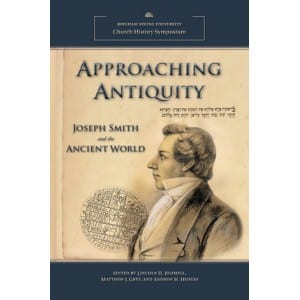
Book Review: Approaching Antiquity: Joseph Smith and the Ancient World

May 22, 2016 by Trevor Holyoak

Available from the FairMormon Bookstore at 15% off

This book is from the 2013 BYU Church History Symposium, held March 7–8, 2013. The Church History Symposium is a nearly annual (there apparently wasn’t one held in 2015) event that draws speakers from places such as Brigham Young University, other universities, the LDS Church History Department, and often LDS general authorities as well. The book contains many of the papers that were presented, but unfortunately there are a few missing, such as Steven C. Harper’s presentation on masonry. However, that and most of the other papers that were given (including all but one that is in the book) are available to view here, although the video presentations are generally abbreviated versions of what is in the book.

The conference spanned two days. The first day was held at BYU and the second was at the Conference Center in Salt Lake City. I was only able to attend the first day, which is one of the reasons I was interested in this book. The keynote address was given by Richard L. Bushman, and it was very crowded, which left many of us without seats until after he was done (apparently there were many students that had come just to hear Bushman).

The preface of the book states that the theme for the conference came out of a professional development training trip taken by new faculty from the BYU departments of Ancient Scripture and Church History and Doctrine to church history sites in Palmyra, Kirtland, and Nauvoo. As they visited these sites, they “were impressed as the extraordinary range of Joseph’s encounters with antiquity became increasingly apparent” (page xiii) and “deeper reflection upon these issues convinced us that there was an important, dynamic, and under-explored relationship between Joseph Smith’s personal interactions with ancient material and many of his unfolding revelations” (page xiv). [Read more…] about Book Review: Approaching Antiquity: Joseph Smith and the Ancient World

Filed Under: Apologetics, Bible, Book of Abraham, Book of Mormon, Book of Moses, Book reviews, Early Christianity, Geography, Joseph Smith, LDS History, LDS Scriptures, Masonry

Book Review: The First Fifty Years of Relief Society: Key Documents in Latter-day Saint Women’s History

May 18, 2016 by Trevor Holyoak

Available from the FairMormon Bookstore at 15% off

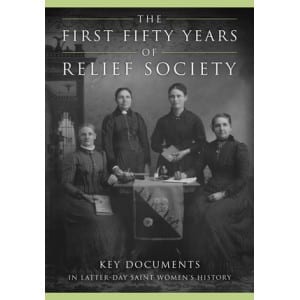
This is the first publication from The Church Historian’s Press other than the Joseph Smith Papers. It is a collection of documents brought together for the first time that cover the first fifty years of the Relief Society, starting in Nauvoo, restarting in Utah, and then spreading throughout LDS settlements as far away as Canada. The book format and production procedures (transcription, verification, etc.) are very similar to how the Joseph Smith Papers are being done, and at least some of the staff (including editor Matthew J. Grow) are involved in both. And as with the JSP project, much of the book is available for free online. It is accessible at https://www.churchhistorianspress.org/the-first-fifty-years-of-relief-society

The book contains a general table of contents, then a Detailed Contents listing each document, followed by a list of illustrations, a general introduction, and a description of the editorial method. The main section is split into four parts, covering the time periods of 1830 and 1942 to 1845, then 1854 to 1866, 1867 to 1879, and finally 1880 to 1892. The end matter contains reference material including lists of the different Relief Society, Young Ladies’ Mutual Improvement Association, and Primary Association presidencies from 1842 to 1892, a biographical directory, works cited, acknowledgments, and then a pretty thorough index spanning 50 pages.

The main feature of this book is the Nauvoo Relief Society Minute Book, which was kept by Eliza R. Snow and then brought to Utah by her, where it was used in getting the Relief Society going again. This is the first time it has appeared in print, although it was included in the Selected Collections DVD set published in 2002, and more recently has been included in the online documents for the JSP project. Among other things, it has the only sermons given by Joseph Smith to the women of the church.

In one of these sermons, on April 28, 1842, Joseph Smith addressed speaking in tongues and administering to the sick: [Read more…] about Book Review: The First Fifty Years of Relief Society: Key Documents in Latter-day Saint Women’s History

Filed Under: Apologetics, Book reviews, Gender Issues, Joseph Smith, LDS History, Marriage, Polygamy, Women

Additional Witnesses of the Coming Forth and Content of the Book of Mormon

April 15, 2016 by Trevor Holyoak

[Cross posted from Truth Will Prevail.]

By Dennis B. Horne

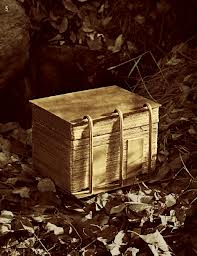
As Joseph Smith was dictating the translation of the Book of Mormon to Oliver Cowdery, they learned that the gold plates were to “be hid from the eyes of the world” in general. platesNevertheless “three witnesses” would be enabled to view the book or plates “by the power of God” in addition to Joseph—“him to whom the book shall be delivered.” These three witnesses would then “testify to the truth of the book and the things therein” (2 Nephi 27:12; see also Ether 5:2-4 and D&C 5:11, 15).


It is well known that Oliver Cowdery, David Whitmer, and Martin Harris were granted the privilege of becoming these three designated special witnesses (see D&C 17, including section intoduction). Their signed statement of solemn testimony has been printed with each edition of the Book of Mormon.

Further, the prophecies of the Book of Mormon indicated that “none other[s]” would be able to view it, “save it be a few according to the will of God,” and that the purpose of these others would be “to bear testimony of his word unto the children of men”—the world. This would allow the prophets and saints of the Book of Mormon to “speak as if it were from the dead” (2 Nephi 27:23).

These “few” others are generally thought of as the “eight witnesses,” and include members of the Whitmer and Smith families that helped Joseph by providing board and room and financial assistance.[1] The testimony of these eight, who saw, hefted, and closely examined the gold plates, is also printed in the Book of Mormon: “[Joseph Smith] has shown unto us the plates of which hath been spoken, which have the appearance of gold; and as many of the leaves as the said Smith has translated we did handle with our hands; and we also saw the engravings thereon, all of which has the appearance of ancient work.” And, “we have seen and hefted, and know of a surety that the said Smith has got the plates of which we have spoken.”
[Read more…] about Additional Witnesses of the Coming Forth and Content of the Book of Mormon

Filed Under: Book of Mormon, Joseph Smith, LDS History

Book Review: “The Joseph Smith Papers: Journals: Volume 3: May 1843 – June 1844”

January 24, 2016 by Trevor Holyoak

Available from the FairMormon Bookstore at 15% off
In 1992, the second volume of Dean C. Jesse’s “The Papers of Joseph Smith” was published, containing the journal entries of 1832-1842. Many of us waited for years for the third volume, which would cover the remainder of Joseph’s life, before finally finding out that Jesse’s work was being expanded into the Joseph Smith Papers Project. Finally, with the recent release of volume 3 of the Journals series, the journals have all been published.

The volume begins with a timeline of Joseph Smith’s life, maps, an introduction that outlines the events of the last year of a very busy life, and the usual explanation of the editorial method being used for the Joseph Smith Papers Project. It then contains the text of the journals followed by three appendixes which are relevant excerpts from journals kept by Willard Richards and William Clayton detailing Joseph Smith’s activities during this time period. There is also a section of reference materials containing things like a chronology, pedigree chart, glossary, and organizational charts of the church and Nauvoo. There is a full index of all three volumes in the Journals series. (Previous volumes didn’t contain an index due to this planned combined index, but individual indexes can be found online and were provided in print on request.) There are also photos scattered throughout of things like the actual journals, the Kinderhook plates, the first issue of the Nuavoo Neighbor, a list of marriages and sealings that was added at the end of one of the journals later, and the guns in the possession of Joseph and Hyrum Smith at Carthage Jail.

[Read more…] about Book Review: “The Joseph Smith Papers: Journals: Volume 3: May 1843 – June 1844”

Filed Under: Book reviews, Joseph Smith, LDS History, Polygamy, Prophets, Temples

Book Review: “The Coming Forth of the Book of Mormon: A Marvelous Work and a Wonder”

January 19, 2016 by Trevor Holyoak

The Coming Forth of the Book of Mormon: A Marvelous Work and a Wonder
Available from the FairMormon Bookstore at 15% off
This book contains the papers from the 44th Annual Brigham Young University Sidney B. Sperry Symposium, held in October, 2015. The Sperry Symposium is held annually, and draws most of its speakers from the Church Educational System. Each year’s theme is usually based on the book of scripture that will be studied by LDS adults in the coming year, and this volume fits right in with this year’s Gospel Doctrine study of the Book of Mormon.

The first paper in the book is by Elder Merrill J. Bateman. He gave the keynote speech on “The Coming Forth of Plain and Precious Truths.” He describes many aspects of the gospel that may be only vaguely mentioned in the Bible, but for which we learn much more from the Book of Mormon. Some examples are the plan of salvation, the premortal life, the fall of Adam, the atonement and resurrection, and specific doctrines taught by Christ.

[Read more…] about Book Review: “The Coming Forth of the Book of Mormon: A Marvelous Work and a Wonder”

Filed Under: Apologetics, Book of Mormon, Book reviews, Doctrine, Evidences, Joseph Smith, LDS History, LDS Scriptures, Lesson Aids, Prophets

A Simple Hypothesis on Book of Mormon Translation

August 24, 2015 by FAIR Staff

unnamedThis post originally appeared at Mormon Puzzle Pieces and is reposted here by permission with some revisions.

By Ryan Larsen

Translation is interwoven with the restored Gospel of Jesus Christ. Ancient prophets kept records containing a fullness of the Gospel which God preserved, hidden in the earth for many centuries, before making them known to a young Joseph Smith and providing Joseph with means to translate the records through the gift and power of God.

Questions arise concerning how Joseph Smith performed the translation. Specifically, people want to know whether the words in the Book of Mormon’s English translation should be attributed directly to God or to Joseph Smith. Critics and scholars alike have taken interest.

My own interest was recently sparked during an online discussion with a polite critic who claimed that David Whitmer’s description of Joseph Smith seeing English words appear while translating, which he would read out loud to his scribes, means that Mormons are locked into defending and believing that God Himself chose every word in the Book of Mormon. I explained to my critic friend why the question is more complicated than that, and he came to agree. So, I decided to share my ideas in hopes of broadening the general discussion. [Read more…] about A Simple Hypothesis on Book of Mormon Translation

Filed Under: Apologetics, Book of Mormon, LDS History

“By the Gift and Power of Art”

June 2, 2015 by FAIR Staff

Anthony_Sweat_Gift_and_Power_of_God_Scan_4mb
“By the Gift and Power of God” by Anthony Sweat.

Professor Anthony Sweat (an assistant professor of Church history and doctrine at Brigham Young University) and the Religious Studies Center at BYU have kindly allowed FairMormon to post an excerpt from the new volume From Darkness unto Light: Joseph Smith’s Translation and Publication of the Book of Mormon by Michael Hubbard MacKay and Gerrit J. Dirkmaat. (See these two blog posts here and here for more information on the book.) Professor Sweat wrote an appendix to the book discussing artistic depictions of the translation of the Book of Mormon, including his new piece “By the Gift and Power of God.” The appendix is posted below as a PDF file. Among other things, Professor Sweat explores the “language of art” and depictions of the translation of the Book of Mormon done by past and contemporary Latter-day Saint painters. He likewise discusses the significance of the Church’s commissioned artwork of the translation of the Book of Mormon and the artistic process behind his own piece.

From Darkness unto Light can be purchased in hardcover or eBook format from Deseret Book and the FairMormon Bookstore.

“By the Gift and Power of Art”

Filed Under: Book of Mormon, Joseph Smith, LDS History

The Restoration of the Church of Jesus Christ

May 28, 2015 by FAIR Staff

the-first-vision-82823-galleryThis post by FairMormon volunteer Jordan Latimer was originally delivered as a farewell address on May 24, 2015. Elder Latimer will begin his service as a missionary in the Oklahoma Tulsa Mission of The Church of Jesus Christ of Latter-day Saints in June 2015.

Early in the spring of 1820, a troubled young man named Joseph Smith retired to a grove near his home and prayed to God. He was unsure which of the churches of that day he should join. Kneeling down, he asked God to provide him with the answers he so earnestly desired. He desired his salvation and wanted to know which church would be able to grant it. His prayer was answered, and in quite an extraordinary manner. Two beings appeared to him, identifying themselves as Heavenly Father and Jesus Christ. Christ answered Joseph’s question, informing him that none of the churches of the day had the ability to provide him with what was necessary for salvation. He instructed him to join none of the churches, because the fullness of his gospel was to be restored in his lifetime. Little did Joseph know that it was through him that it would be restored.

This experience set in motion what we in The Church of Jesus Christ of Latter-day Saints call the Restoration.

After the death of the Christ’s apostles, the authority to perform priesthood ordinances was lost for centuries, and the world entered a state of apostasy. This apostasy had been prophesied by Paul in his 2nd epistle to the Thessalonians: “Let no man deceive you by any means: for that day [meaning the day of Christ’s return] shall not come, except there come a falling away first, and that man of sin be revealed, the son of perdition” (2 Thess. 2:3) Many early Christians probably didn’t expect this “falling away” to come so soon. Not only did the death of the apostles cause a loss of authority, it also led to unauthorized changes in doctrine and ordinances.

But his epistle to the Thessalonians is not the only place where prophecies of the coming apostasy can be found. When speaking to the elders at Ephesus, Paul said that after his departing, “grievous wolves [shall] enter in among you, not sparing the flock. Also of your own selves shall men arise, speaking perverse things, to draw away disciples after them” (Acts 20:29). He informed Timothy that “the time will come when they will not endure sound doctrine; but after their own lusts shall they heap to themselves teachers, having itching ears; And they shall turn away their ears from the truth, and shall be turned unto fables” (2 Tim. 4:3). Peter also prophesied of such corruption, saying that false teachers would “bring in damnable heresies, even denying the Lord that bought them, and bring upon themselves swift destruction. And many shall follow their pernicious ways; by reason of whom the way of truth shall be evil spoken of” (2 Pet. 2:1).

The death of the apostles resulted in the loss of the priesthood keys needed to perform saving ordinances. Also, because there was no prophet on the earth, revelation could no longer be received for all of Christ’s church. The pure doctrines of Christ began to be corrupted by the philosophies of men. Without the gift of the Holy Ghost, people struggled to determine the difference between truth and falsehood. The church that Christ established was ultimately lost.

Fortunately, the Lord planned to restore the gospel in the latter-days, prior to his coming. This restoration would usher in the last days and would be the final time that Christ would restore his church upon the earth. We know that Joseph Smith was the vessel through which truths were restored. A list of things restored may be helpful.

The Restoration restored the true nature of the relationship between Heavenly Father, his son Jesus Christ, and the Holy Ghost. In the 4th century A.D. the doctrine of the Trinity was first articulated. This blend of Greek philosophy and Christianity introduced a concept of God people have been trying to comprehend ever since. Joseph Smith restored knowledge of the true nature of the Godhead: that they are three separate beings, who are united in purpose. Joseph restored the concept that we are children of both a Heavenly Father and a Heavenly Mother. Jesus Christ is our brother, the first spirit-born of the Father, and the savior of the world. Both Heavenly Father and Jesus Christ have bodies of flesh and bone. The Holy Ghost is a personage of spirit, and its role is to comfort, testify of truth, and bestow gifts of the spirit. As Moroni said: “By the power of the Holy Ghost ye may know the truth of all things” (Moroni 10:5). The Restoration rejected the idea of Original Sin. Instead of the Fall being a grievous mistake by Adam and Eve, it was a necessary part of the plan of salvation for God’s children. Adam and Eve didn’t mess things up. They did what was necessary to move God’s plan forward. As the prophet Lehi said, “Adam fell that men might be. And men are, that they might have joy” (2 Nephi 2:25). And while most Christians believe that Eve, the mother of all living, failed, we know that she actually succeeded. Eve’s role in moving the plan forward is very significant. True to the title of “mother,” she made the choices necessary for mankind to exercise their powers of procreation and provide bodies for God’s spirit children. The role of righteous women cannot be dismissed when the true story of the Garden of Eden is realized.

The Restoration simplified and clarified the first principles and ordinances of the Gospel. These are listed in the 4th Article of Faith. “We believe that the first principles and ordinances of the Gospel are: first, Faith in the Lord Jesus Christ; second, Repentance; third, Baptism by immersion for the remission of sins; fourth, Laying on of hands for the gift of the Holy Ghost” (Article of Faith 4). While such concepts have always been a crucial part of Christianity, the LDS church provides this outline in its purest, simplest form. It also clarifies the manner in which baptism is to be performed. Immersion is required. This is symbolic of the death of the natural man, and the birth into sainthood.

The Restoration restored the power of the priesthood, and the authority to act in God’s name. All of the keys necessary for providing saving ordinances and of receiving revelation for God’s children now reside with our current prophet, President Thomas S. Monson. As the 5th Article of Faith says, “We believe that a man must be called of God, by prophecy, and by the laying on of hands by those who are in authority, to preach the Gospel and administer in the ordinances thereof” (Article of Faith 5). Through the priesthood power, we can be baptized, receive the Holy Ghost, be endowed, and be sealed to spouses and other family members in the House of the Lord.

Speaking of the House of the Lord, the Restoration restored the practice of building and worshiping in temples. In the temple, we can perform ordinances necessary for eternal life. The initiatory and the endowment ceremony are both ordinances that help qualify us for exaltation. They provide power from God, and help to protect us from the deception of the adversary. Such blessings are not only for the living, however. The temple allows and encourages work for the dead. How comforting this doctrine is, to know that the blessings of salvation can be provided to our ancestors who have passed on. It is a fulfillment of the words of Moroni, who said that the prophet Elijah “shall plant in the hearts of the children the promises made to the fathers, and the hearts of the children shall turn to their fathers. If it were not so, the whole earth would be utterly wasted at his coming” (Joseph Smith–History 1:39).

The Restoration produced the largest women’s organization in the world. The Relief Society is an essential element of the organization of the church. It has provided and will continue to provide countless hours of selfless service for the Lord’s church. The organization of the Church was not complete until the Relief Society was organized.

The Restoration presented additional scripture to support and clarify the word of God contained in the Bible. The Book of Mormon, Doctrine and Covenants, and the Pearl of Great Price provide inspiration and direction in a day full of deception. In particular, the translation of the Book of Mormon was essential to the establishment of truth, and it provides strong evidence for Joseph Smith’s prophetic authority, for only a man of God could bring forth such a text.

The Restoration provided a church that is self-reliant. The Church provides a powerful welfare system. This system includes ranches, orchards, vineyards, canneries, bakeries, meat and milk processing facilities, storehouses, and its own transportation and funding. The church also provides education, counseling, and addiction recovery for individuals inside and outside the church. There’s also Deseret Industries, which provides jobs for thousands of individuals. And, to top it all off, the Church has done extensive humanitarian work in over 178 countries and territories. This work includes clean water, vision care, food production, wheelchair projects, neonatal resuscitation training, emergency response, and a measles campaign. Such service is done to fulfill the promises of baptism “to bear one another’s burdens, that they may be light; to mourn with those that mourn; and [to] comfort those that stand in need of comfort” (Mosiah 18:9).

The Restoration added knowledge concerning the Atonement of Christ, the most significant event in the history of the world. Our teachings on the Atonement are reflected in the words of Alma: “And he will take upon him death, that he may loose the bands of death which bind his people; and he will take upon him their infirmities, that his bowels may be filled with mercy, according to the flesh, that he may know according to the flesh how to succor his people according to their infirmities. Now the Spirit knoweth all things; nevertheless the Son of God suffereth according to the flesh that he might take upon him the sins of his people, that he might blot out their transgressions according to the power of his deliverance” (Alma 7:12–13). The Lord descended below all things that we may ascend above all things. The power of Christ’s Atonement can change our minds, hearts, and desires, if we only turn to him and rely upon his grace. We know that works are required for salvation, and that we will be judged by them; but we also know that we are ultimately saved by the grace of God. As King Benjamin said, “If ye should serve him with all your whole souls yet ye would be unprofitable servants” (Mosiah 2:21). We are completely dependent upon Christ’s Atonement for our salvation.

The Restoration provided knowledge of our pre-mortal life. We learn of the council of the gods, where Heavenly Father introduced a plan for us to become like him. Jehovah volunteered to fulfill the plan, and the glory would be to the father. He said, “Father, thy will be done, and the glory be thine forever” (Moses 4:2). Such humility and selflessness was not to be found in Lucifer, who wanted it done a different way. He said, “I will be thy son, and I will redeem all mankind, that one soul shall not be lost, and surely I will do it; wherefore give me thine honor” (Moses 4:1). Jehovah was chosen, and Lucifer was cast out for seeking to destroy the agency of man and attempting to elevate himself above the Father. We are here on this earth because we chose the father and his plan. This life tests us on how we will use our agency. Will we use our agency to further the work of the Father, or will we use it to further the work of the Adversary? The choice is ours. Because we will slip up at times, the Lord has provided a Savior, Jesus Christ, to satisfy the demands of justice and forge the way back into his presence.

The Restoration explained elements of the post-mortal life as well. We know that when we die, our spirits enter the spirit world, which is divided into spirit prison and spirit paradise. In the words of Alma, “Then shall it come to pass, that the spirits of those who are righteous are received into a state of happiness, which is called paradise, a state of rest, a state of peace, where they shall rest from all their troubles and from all care, and sorrow. And then shall it come to pass, that the spirits of the wicked, yea, who are evil [shall be] in darkness, and a state of awful, fearful looking for the fiery indignation of the wrath of God upon them; thus they remain in this state, as well as the righteous in paradise, until the time of their resurrection” (Alma 40:12–13). Further light and knowledge was given to Joseph F. Smith in a vision. He saw that those in spirit prison would actually have a chance to accept Christ’s Atonement and begin living the gospel. Messengers from spirit paradise teach them. He said, “But behold, from among the righteous, he [meaning Jesus Christ] organized his forces and appointed messengers, clothed with power and authority, and commissioned them to go forth and carry the light of the gospel to them that were in darkness, even to all the spirits of men; and thus was the gospel preached to the dead” (Doctrine and Covenants 138:30).

The Restoration restored knowledge of the three kingdoms of glory. In 1832, Joseph Smith and Sidney Rigdon had a vision wherein they saw the three kingdoms of glory, with their respective inhabitants. The Celestial Kingdom will contain “they who received the testimony of Jesus, and believed on his name and were baptized after the manner of his burial, being buried in the water in his name” (D&C 76:51). The Terrestrial Kingdom will contain those “who received not the testimony of Jesus in the flesh, but afterwards received it. These are they who are honorable men of the earth, who were blinded by the craftiness of men” (D&C 76:74–75). The Telestial Kingdom will contain those that “received not the gospel of Christ, neither the testimony of Jesus” (D&C 76:82).

The Restoration provides more information on our potential exaltation and eternal life. Our inheritance isn’t merely a small cloud and a golden harp, to sing praises to God for all eternity. Christ revealed to Joseph a more profound reward for righteousness when he said, “He that receiveth me receiveth my Father; And he that receiveth my Father receiveth my Father’s kingdom; therefore all that my Father hath shall be given unto him” (D&C 84:37–38). How much does Heavenly Father, the creator of the universe and everything contained therein, have? A lot, to put it mildly. And all that he has is promised to us. We cannot fathom the blessings that the Father has prepared for us. As Paul said, “Eye hath not seen, nor ear heard, neither have entered into the heart of man, the things which God hath prepared for them that love him” (1 Corinthians 2:9). We do know one thing: that we shall receive the status of godhood. In the Doctrine and Covenants, Christ said, “And then shall the angels be crowned with the glory of his might, and the saints shall be filled with his glory, and receive their inheritance and be made equal with him” (Doctrine and Covenants 88:107). Christ also said, “Wherefore, as it is written, they [meaning the saints] are gods, even the sons of God. Wherefore, all things are theirs, whether life or death, or things present, or things to come, all are theirs and they are Christ’s, and Christ is God’s. And they shall overcome all things” (Doctrine and Covenants 76:58–60). As the primary song says, we truly are children of God.

There are many more teachings that the Restoration brought forth. Such truths can be found in Church publications and the scriptures. I encourage Church members of all ages to study the Restoration and feast upon the doctrine and principles that have been restored by the Lord. Follow the Lord’s counsel to “seek ye out of the best books words of wisdom, seek learning even by study and also by faith” (D&C 109:7). I promise that if you do, the Lord will testify of truth by the power of Holy Ghost.

Filed Under: Bible, Doctrine, Early Christianity, Joseph Smith, LDS History

Artwork of Joseph Smith Translating the Book of Mormon

April 30, 2015 by Stephen Smoot

Early this week I posted a brief notice for the book From Darkness unto Light: Joseph Smith’s Translation and Publication of the Book of Mormon. With permission from professor Anthony Sweat, the artist behind the new artwork depicting Joseph Smith’s translation of the Book of Mormon, the new pieces from the book are posted below.

Anthony_Sweat_Gift_and_Power_of_God_Scan_4mb

Anthony_Sweat_Translating_with_Martin

Anthony_Sweat_Translating_with_Emma

Anthony_Sweat_The_Seer_Stone

unnamed


Filed Under: Apologetics, Book of Mormon, LDS History

A Plea to Seminary Teachers and Parents

March 31, 2015 by Laura Hales

seminary-class-1112861-galleryOver the last several years, the LDS Church history department has become increasingly open about the Church’s history. This can be seen in the work made available by the Joseph Smith Paper’s Project and in the recent release of several milestone Gospel Topics essays, especially those on the practice of polygamy by members of the LDS Church during the nineteenth century.

In an unanticipated and exciting step in the right direction, the LDS Church has now decided to teach this information in seminary classes. Parents can view the lessons on D&C 132 and the discussion of Joseph Smith’s practice of polygamy on the lds.org website under seminary lessons here and temple-marriage-766624-galleryhere.

I urge parents to not only read the lessons but also discuss them together as a family. These lessons are carefully written to emphasize those aspects of the section dedicated to eternal marriage and can serve as a basic introduction to the early practice of polygamy in Nauvoo.

From these lessons, students will be taught about eternal marriage, the zenith doctrine of the Restoration. Then they will be taught that God commanded Joseph Smith to establish polygamy as part of the restitution of all things, he married many women, and it was a trial for both Joseph and Emma Smith. It was also a trial for other early polygamists who were reluctant to participate. Fortunately, this was a temporary commandment that was removed in 1890. These are not easy topics to discuss or understand, but avoiding them will not make them go away.

An Op Ed piece written by Kristy Money, a member of the Ordain Woman board, was published in the Salt Lake Tribune on Sunday, March 29, encouraging the boycott of these lessons by seminary teachers and parents. This seems like a step backwards if we want to be open about our past. In urging nonparticipation, she listed several concerns. Interestingly, what I read in the lessons was quite different from the references in Ms. Money’s essay.

Students will not be taught God commanded Joseph to marry teenagers, which is good because there is no evidence that he was ever commanded to marry teenaged brides, even though he did.

Students will not be taught that Joseph married women without Emma’s knowledge. Parents may, emma-hale-smith-155871-thumbnailhowever, want to discuss this with their children, as the LDS Gospel Topics essay on Nauvoo polygamy covers this concern.

The lesson does not teach that “if a man simply ‘desires a virgin,’ he has a God-given right to take her as a plural wife,” despite the opinion of his first wife. This is a simplified contortion of complicated doctrine, and it is best that students learn it as worded in the revelation instead of how it is interpreted from critics or spun on the Internet.

The lesson does not teach the only reason polygamy was practiced was to raise righteous seed. It is listed as one of the reasons “as part of the restitution of all things.” The Gospel Topics essays also mention it being a customized trial for the Saints of that time. Parents may want to discuss these other reasons with their children.

Ms. Money contends that “sexual predators have been using these rationalizations to seduce girls long before the church recently published them.” If this is the case, then, as parents, we need to do all we can to make sure our teenagers are properly informed of what the historical record showsportrait-family-941042-gallery regarding Joseph’s institution of polygamy and its limited practice, so they will not fall prey to such reprehensible acts out of ignorance. D&C 132 explicitly condemns sexual relations outside of the bounds of marriage.

The LDS Church is to be commended for their continual efforts to increase dialogue regarding challenging topics. As members, let’s own our genuine past and study our canonized scripture. Protecting our children includes teaching them truth, so when they encounter misinformation they can recognize it as error. As parents and their children discuss these deep doctrines and difficult aspects of history, they can move toward a better understanding of Joseph Smith’s practice of polygamy.

Laura Harris Hales is the mother of a seminary student and the co-author of Joseph Smith’s Polygamy: Toward a Better Understanding (Kofford Books, 2015).

Filed Under: Doctrine, LDS History, LDS Scriptures, Polygamy Tagged With: Doctrine and Covenants, Emma Smith, Joseph Smith, Kristy Money, Ordain Women, Polygamy, Section 132, seminary

  • « Go to Previous Page
  • Go to page 1
  • Interim pages omitted …
  • Go to page 34
  • Go to page 35
  • Go to page 36
  • Go to page 37
  • Go to page 38
  • Interim pages omitted …
  • Go to page 45
  • Go to Next Page »

Primary Sidebar

Faithful Study Resources for Come, Follow Me

Subscribe to Blog

Enter your email address:

Subscribe to Podcast

Podcast icon
Subscribe to podcast in iTunes
Subscribe to podcast elsewhere
Listen with FAIR app
Android app on Google Play Download on the App Store

Pages

  • Blog Guidelines

FAIR Latest

  • Come, Follow Me with FAIR – Doctrine and Covenants 137–138 – Part 2 – Autumn Dickson
  • Come, Follow Me with FAIR – Doctrine and Covenants 137–138 – Mike Parker
  • FAIR December Newsletter
  • Come, Follow Me with FAIR – Doctrine and Covenants 137–138 – Part 1 – Autumn Dickson
  • Prophets of God 

Blog Categories

Recent Comments

  • LHL on Come, Follow Me with FAIR – Doctrine and Covenants 132 – Mike Parker
  • Stephen Johnsen on Come, Follow Me with FAIR – Doctrine and Covenants 132 – Mike Parker
  • Bruce B Hill on Come, Follow Me with FAIR – Doctrine and Covenants 124 – Part 1 – Autumn Dickson
  • Gabriel Hess on Join us Oct 9–11 for our FREE virtual conference on the Old Testament
  • JC on When the Gospel “Doesn’t Work”

Archives

Follow Us

  • Facebook
  • Twitter
  • iTunes
  • YouTube
Android app on Google Play Download on the App Store

Footer

FairMormon Logo

FAIR is a non-profit organization dedicated to providing well-documented answers to criticisms of the doctrine, practice, and history of The Church of Jesus Christ of Latter-day Saints.

Donate to FAIR

We are a volunteer organization. We invite you to give back.

Donate Now

Site Footer