• Skip to primary navigation
  • Skip to main content
  • Skip to primary sidebar
  • Skip to footer

FAIR

  • Find Answers
  • Blog
  • Media & Apps
  • Conference
  • Bookstore
  • Archive
  • About
  • Get Involved
  • Search

LDS History

Lending Clarity to Confusion: A Response to Kirk Van Allen’s “D&C 132: A Revelation of Men, Not God”

March 9, 2015 by Brian Hales

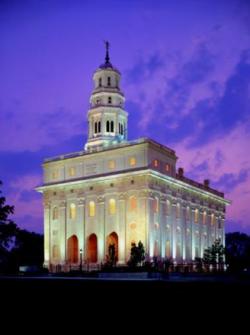
temple_night2By Brian and Laura Hales

The Church of Jesus Christ of Latter-day Saints has generally not addressed the practice of plural marriage, but increased attention on the subject apparently prompted the Church to release several essays on the topic last year. The postings created a frenzy in the media with coverage by major national newspapers, television news, and countless blogs. While the essays were unexpectedly candid, they did not seem to assuage all of the concerns of members as evidenced by the questions and concerns that continue to be expressed. On February 2, 2015, Kirk Van Allen posted a blog titled, “D&C 132: A Revelation of Men, Not God.” In it, he brings up some valid questions, which have previously been voiced by members and non-members in their quest to try and understand this “strange doctrine.” However, he also advances arguments that seem to superficially examine the topic without taking into account important theological and historical contexts. Since this essay is traversing the blogosphere and stirring up a whirlwind, an alternative view of his assertions seems useful.

Lending Clarity to Confusion: A Response to Kirk Van Allen’s “D&C 132: A Revelation of Men, Not God”

Filed Under: Apologetics, LDS History, Polygamy

Joseph Smith Papers, Documents Vol. 3: Review

December 1, 2014 by Stephen Smoot

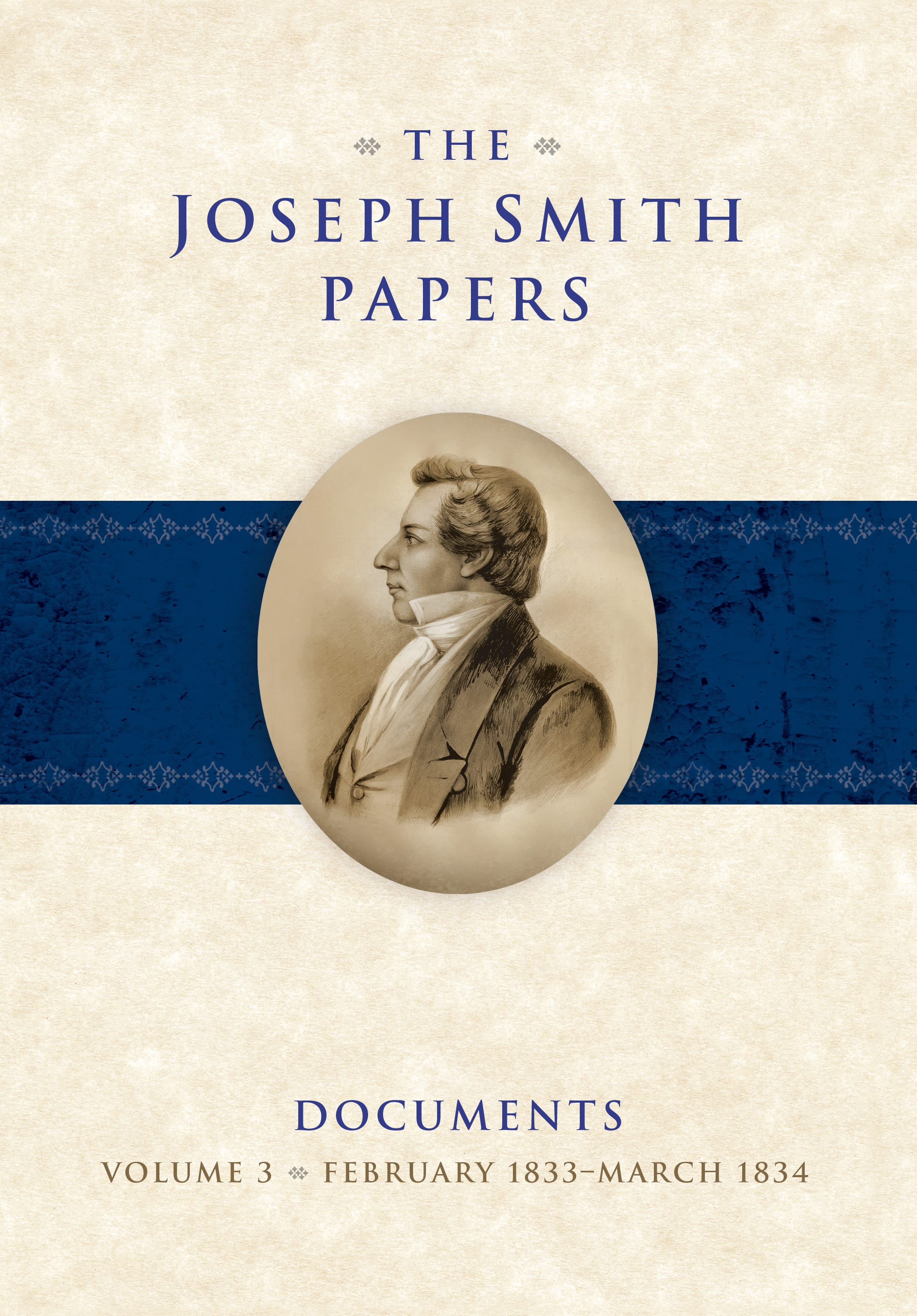
JSP Docs V3_CoverThe Joseph Smith Papers Project has recently released volume 3 of the Documents series, as announced on its newly designed and updated website. This new volume covers the years 1833–34 of Joseph Smith’s life and ministry, and is a rich collection of important primary source materials related to the Church in Kirtland, Ohio and Jackson County, Missouri during this time.

The new volume is edited by Gerrit J. Dirkmaat, Brent M. Rogers, Grant Underwood, Robert J. Woodford, and William G. Hartley. Alison Palmer is the leader editor on the editorial staff for this volume.

As the manager of the FairMormon blog, I was invited along with other bloggers to an event highlighting the release of the new volume and was graciously granted a review copy for this blog post.

According to Dirkmaat, there is “a great diversity of the types of documents in this volume.” Types of documents included in the new volume include letters, minutes, deeds, revelations, notes, and, for the first time in any volume of the Joseph Smith Papers, a transcription of architectural drawings for such things as the plat of the city of Zion and the Kirtland House of the Lord designs. Color images of the documents included in the new volume will be available on the Joseph Smith Papers website in the future.

Dirkmaat also discussed exciting documents in the new volume like the March 18, 1833 minutes of “an assembly of the high Priests” in Kirtland that collectively saw a “heavenly vision of the saviour and concourses of angels and many othe[r] thing[s].” The new volume also contains important documents relating to the violence inflicted against the Saints in Jackson County, Missouri, during the summer of 1833. This includes the July 29, 1833, letter of John Whitmer to Church leaders in Kirtland describing the violence in Jackson County and Joseph Smith’s reply written on August 18, 1833, entirely in his own hand. Brent Rogers described the significance of these texts. “The documents series is great because you see a chronological unfolding of Joseph Smith’s life,” Rogers explained. “You also learn about his contemporaries, including some lesser-known members and individuals.”

In addition to the new volume, the Joseph Smith Papers today launched a newly designed web site (linked above). With web traffic having tripled since the earlier website’s launch and a social media presence that includes over 50,000 followers on Facebook, the Joseph Smith Papers is gaining a significant presence online. The new website, besides having a refined search engine, features new photographs, both historic and modern, videos, chronologies, and other features. The new website has also been formatted for optimal tablet and phone usage.

Forthcoming volumes of the Joseph Smith Papers include the printer’s manuscript of the Book of Mormon (forthcoming Summer 2015) and the 3rd and final volume in the Journals series (forthcoming Fall 2015). The highly anticipated Council of Fifty minutes are planned to be released in Fall of 2016.

Filed Under: Joseph Smith, LDS History

Living with Fallibility

November 25, 2014 by FAIR Staff

[The following was written by James Faulconer at Patheos and is reposted here with his permission.]

Mormons have a joke that is so old it has become a cliché: Catholic doctrine is that the pope is infallible, but they don’t believe it; Mormon doctrine is that the prophet is fallible, but they don’t believe it.

Like many jokes and all clichés, that joke works because there is truth in it. The joke misunderstands the doctrine of papal infallibility, but it gets very close to the truth of the way many contemporary Mormons have thought about their leaders, not just the prophet. And for some the truth of that joke has become a tragedy.

The LDS Church’s recent postings on its history of polygamy (see here, here, and here) have caught many off guard. For a long time the Church has avoided and even covered over not only the particular facts about polygamy’s beginnings but sometimes even polygamy itself.

Frankly I understand the motive behind that avoidance: we don’t practice polygamy and haven’t for a long time, so let’s avoid talking about it so we can talk about more important things—like faith, repentance, baptism, the Gift of the Holy Ghost, and enduring to the end. But it is generally agreed that we made a mistake. That strategy has caused a lot of pain and doubt.

In spite of that, it is a mistake that I understand. As a young man I thought we should be more forthcoming about our history, but I’m not sure that had I been a leader at the time I would have done differently. Things looked different during the fifty-plus years that the Church was coming out of persecution and perceived persecution. Things looked different to people whose fathers and mothers, grandmothers and grandfathers, aunts and uncles had been expelled from Missouri and Illinois by force.

As Kristine Haglund points out, members of the LDS Church have lived in different circumstances, sometimes almost to the point of growing up in different churches. Some of us learned early on the things the Church is now writing about, so there is little new in the recent news. But not everyone did.

Many did not know about Joseph Smith’s practice of polygamy or about the difficulties that surrounded that practice. Even fewer, perhaps, knew about the complications of bringing plural marriage to a halt. And the institutional Church bears considerable responsibility for their ignorance.

Having known about the history of plural marriage, about issues with the Book of Abraham, and so on for a long time, I’m long past those things being trouble for me. That’s not to say that I don’t understand that they trouble others or why. It is to say that they are no challenge to my faith. I’m interested in the recently published materials, but not because of what they say or don’t say about the history of the LDS Church.

I hope that the new strategy of making our story public even when we find it difficult to explain will in the future help prevent the kinds of pain we see some people suffering now. But those documents are important to me because I also hope that they will help Latter-day Saints rethink what it means to recognize authority and to have a living prophet.

We have often been guilty of a kind of idolatry of our leaders, implicitly imputing the characteristics of God to them because we thought that is what it meant to be called by God. To my knowledge few of our leaders asked for our idolatry, but we fell into it anyway. Perhaps our new strategy will help us repent.

I hope that the recently published documents on LDS history will help us see that prophets don’t usually get definitive answers to their questions, and even when the answer is definitive, they don’t often, if ever, get definitive directions for how to put into practice what they have been told. Being called and inspired by God doesn’t remove the need to figure out what that calling and inspiration mean, nor does it remove the possibility that I will confuse my will and desires for those of God.

Prophets speak for God, but he leaves them their personality, humanity, talents—and weaknesses. As he said through Joseph Smith in 1831, revelation is ‘given unto my servants in their weakness, after the manner of their language’ (D&C 1:24). God can speak to us only where he finds us.

But if prophets are human too, how can I trust what they teach? Even if a prophet is onlyanother human being like the rest of us, it doesn’t follow that I ought not to trust him. Trust—in other words, faith—and doubt are not mutually exclusive. Trust requires uncertainty, and human agency requires uncertainty. In turn, uncertainty and human fallibility mean that, Christ excepted, even the most righteous or smartest or whatever-you-wish person will misunderstand and be wrong when he hears what God has to say or when he tries to do what he has been asked. Those who are less than such a maximally great person, which includes all of the prophets, will not only be wrong, they will sometimes even do wrong.

But I don’t believe that those called by God, whether a Primary President or the President of the LDS Church is only another human being. I believe that callings can be and usually are inspired, and I believe that inspiration means something. It means that the person called has access to inspiration about his or her calling that I don’t have.

That inspiration will almost always come as a feeling or intuition about needs or directions. It always requires that the person who receives it make decisions not only about what it means but how to implement what it suggests, and mistakes both of intellect and of will are always possible. But since I believe that those people are called and inspired, I am willing to allow what they say to have more authority over me than I would allow someone who is just another person like me.

How far am I willing to go with that? There can be no definitive answer. Obviously some could go so far as to violate the trust I’ve put in them. I know such a violation when I see it. But I give people I love and respect more room for mistakes than I do others. My children can do a lot more than can strangers before I lose faith in them. People whom I have had good experiences with previously also get extra leeway. And if I sincerely believe that a person has been called by God, I am willing to continue to trust them though I am aware of their failings.

Hans-Georg Gadamer has argued that to passively submit to someone’s edict is not to recognize authority at all. Instead it is to agree to tyranny. So recognizing someone as an authority and having faith in that person doesn’t mean following them blindly. Faith in an authority needs to be wide-eyed. But being wide-eyed doesn’t mean being unable to look beyond a person’s mistakes and even some wrongdoing. Within parameters that I cannot specify in advance, I can do what a leader asks even though I think he is mistaken, especially if I remember my own fallibility.

My hope is that the conversations the recently published materials create will help us learn that being called by God isn’t an either/or. It isn’t that either the person is called by God and never makes a mistake in their calling or he isn’t called by God at all. I hope we will begin to see the falsity of that dichotomy, that we will develop a more mature understanding of our relationship to those who lead us, one in which we neither idolize the prophets nor assume that their humanity means we ought to no longer follow them.

Filed Under: Apologetics, LDS History

Articles of Faith 20: Geoff Biddulph – Why Didn’t The Church Teach Me This Stuff?

November 17, 2014 by NickGalieti

https://media.blubrry.com/mormonfaircast/www.fairlatterdaysaints.org/wp-content/uploads/2014/11/AOF-GeoffBiddulph.mp3

Podcast: Download (53.8MB)

Subscribe: RSS

Geoff BiddulphGeoff Biddulph is a convert to the Church of just over 15 years. Before joining he read a lot of anti-Mormon literature. However, it was the Spirit that converted him and helped him be open to being baptized. Since then, Geoff has read the book of Mormon more than 10 times and have read the entire Bible at least five times. He has a large library of Church-related material from which he draws upon as he writes for the Millennial Star blog—where he has contributed for nearly a decade. He his wife Cindy were married in the Denver temple nearly 11 years ago and they now have five kids. He is joining us by phone today from Denver, CO. Geoff is here to talk about an article he wrote for the Millennial Star Blog entitled, “Why Didn’t the Church Teach Me This Stuff”

Questions:

During your time as an LDS blogger, how have you seen the “bloggernacle” as it is often referred to, the catalog of blogs who claim some voice in the Mormon Community, how have you seen it change during that time?

While we seek to focus on Articles that come from what would be considered more academic or scholarly, we do find articles from time to time that strike an apologetic tone and regardless of the level of scholarship, the argument presented can help those struggling to reframe their position in such a way that might help calm the stormy waters of a faith crisis. Your article entitled, Why Didn’t the Church Teach Me This Stuff, was released on November 12th, 2014. This was a response to a gospel topics essay that the Church released on Polygamy in the early church, specifically during the Kirtland and Nauvoo periods. If you could, for those that haven’t read the article, summarize what one might find in that piece, specifically the parts that have caused some stir in public discourse recently.

The Church released its gospel topics essay Around October 22nd. A google search just this morning showed a massive amount of news outlets posting articles just three days ago (from the date of this recording), so on November 11th there seemed to be this bump in interest, which makes me wonder what about this topic seems to be keeping this subject around so long?

Your article is in response to a strain of discourse that centers around some discontent or uneasiness with the Church’s release of this gospel topics article. What is that position and why did that strike as something that warranted a response?

You ask the question of the reader but I want to turn it back on you, Why didn’t the Church teach me this stuff?

It is a difficult position to respond to because you don’t want to demean what someone is feeling, that kind of hurt or shock is sometimes not so easily dismissed. So, how does your article serve to address that dissonance?

This may sound like a loaded question or one that is hard to answer in a short podcast, but if people are feeling that the church hid this from them, it begs the question, what is the role or responsibility the church has towards its members with respect to topics such as this? All the lurid details as you put it in your article?

The article concludes:

The Church did teach you stuff about even controversial topics. Perhaps you were distracted or didn’t pay attention or were not curious enough to explore on your own. You are ultimately responsible for your own learning, and you are responsible for how you respond to new information. That is what that whole “free agency” thing is all about.

Filed Under: Articles of Faith, Hosts, Joseph Smith, LDS History, Nick Galieti, Podcast, Polygamy Tagged With: Agency, blog, Polygamy

Fair Issues 72: How did the Book of Mormon people travel to the New World?

October 26, 2014 by Ned Scarisbrick

https://media.blubrry.com/mormonfaircast/www.fairlatterdaysaints.org/wp-content/uploads/2014/10/Fair-Issues-72-Pod.mp3

Podcast: Download (9.9MB)

Subscribe: RSS

MAIn this podcast brother Ash discusses how the Lehites weren’t the only Book of Mormon people to come from the Old to the New World.  The Mulekites (or people of Zarahemla) and the Jaredites (who preceded the Lehites) also begin their journeys from the Old World.  The next few issues will examine the world of the Jaredites and their journey to the New World.

The full text of this article can be found at Deseret News online.

Brother Ash is author of the book Shaken Faith Syndrome: Strengthening One’s Testimony in the Face of Criticism and Doubt, as well as the book, of Faith and Reason: 80 Evidences Supporting the Prophet Joseph Smith. Both books are available for purchase online through the FairMormon Bookstore. Tell your friends about the Mormon Fair-Cast. Share a link on your Facebook page and help increase the popularity of the Mormon Fair-Cast by subscribing to this podcast in iTunes, and by rating it and writing a review.

The views and opinions expressed in the podcast may not reflect those of the Church of Jesus Christ of Latter-day Saints or that of FairMormon


Filed Under: Anti-Mormon critics, Apologetics, Bible, Book of Mormon, Conversion, Evidences, Faith Crisis, General, Hosts, Joseph Smith, LDS History, Michael R. Ash, Mormon Voices, Ned Scarisbrick, Podcast, Power of Testimony, Science

Fair Issues 71: Were there transoceanic voyages in ancient times?

October 19, 2014 by Ned Scarisbrick

https://media.blubrry.com/mormonfaircast/www.fairlatterdaysaints.org/wp-content/uploads/2014/10/Fair-Issues-71-Pod.mp3

Podcast: Download (11.3MB)

Subscribe: RSS

MAWhile LDS scholars agree with non-LDS scholars that the New World was populated primarily by humans who traversed the Bering Strait thousands of years ago, a growing number of non-LDS scholars agree with LDS scholars that there was transoceanic contact between the Old World and the New Worlds in ancient times.

In the podcast brother Ash explores the evidences for cultural, linguistic and botanical discoveries that confirm such voyages did take place in both directions between the 7th millennium B.C. and the European age of discovery.

The full text of this article can be found at Deseret News online.

Brother Ash is author of the book Shaken Faith Syndrome: Strengthening One’s Testimony in the Face of Criticism and Doubt, as well as the book, of Faith and Reason: 80 Evidences Supporting the Prophet Joseph Smith. Both books are available for purchase online through the FairMormon Bookstore. Tell your friends about the Mormon Fair-Cast. Share a link on your Facebook page and help increase the popularity of the Mormon Fair-Cast by subscribing to this podcast in iTunes, and by rating it and writing a review.

The views and opinions expressed in the podcast may not reflect those of the Church of Jesus Christ of Latter-day Saints or that of FairMormon


Filed Under: Anti-Mormon critics, Book of Mormon, Evidences, Faith Crisis, General, Geography, Hosts, LDS History, Michael R. Ash, Mormon Voices, Ned Scarisbrick, Podcast, Power of Testimony

Fair Issues 69: Where is the land Bountiful?

October 5, 2014 by Ned Scarisbrick

https://media.blubrry.com/mormonfaircast/www.fairlatterdaysaints.org/wp-content/uploads/2014/10/Fair-Issues-69-Pod.mp3

Podcast: Download (7.0MB)

Subscribe: RSS

MAIn this podcast brother Ash discusses possible locations for the land Bountiful.

Current research supports the view presented in the Book of Mormon. In the southern Arabia country of Oman near the border of Yemen is a costal province known a Dhofar which has a fertile region – only a few miles wide – on the coast of the Arabian Sea.  This mountainous area covers more than 38,000 miles square miles and historically was the chief source of frankincense in the world.

The full text of this article can be found at Deseret News online.

Brother Ash is author of the book Shaken Faith Syndrome: Strengthening One’s Testimony in the Face of Criticism and Doubt, as well as the book, of Faith and Reason: 80 Evidences Supporting the Prophet Joseph Smith. Both books are available for purchase online through the FairMormon Bookstore. Tell your friends about the Mormon Fair-Cast. Share a link on your Facebook page and help increase the popularity of the Mormon Fair-Cast by subscribing to this podcast in iTunes, and by rating it and writing a review.

The views and opinions expressed in the podcast may not reflect those of the Church of Jesus Christ of Latter-day Saints or that of FairMormon


Filed Under: Anti-Mormon critics, Apologetics, Book of Mormon, Evidences, Faith Crisis, General, Geography, Hosts, Joseph Smith, LDS History, Michael R. Ash, Mormon Voices, Ned Scarisbrick, Podcast, Power of Testimony

Mormon Fair-Cast 243: Barry R. Bickmore, “Restoring the Ancient Church”

July 6, 2014 by Ned Scarisbrick

https://media.blubrry.com/mormonfaircast/www.fairlatterdaysaints.org/wp-content/uploads/2014/07/Martin-Tanner-Craig-Foster-30214.mp3

Podcast: Download (17.2MB)

Subscribe: RSS

Barry R. BickmoreBarry R. Bickmore Restoring the Ancient Church 2nd EditionMartin Tanner who is the host of “Religion Today” on KSL FM 102.7 and AM 1160 interviews  Barry R. Bickmore  about his book “Restoring the Ancient Church: Joseph Smith and Early Christianity.”  In this interview brother Bickmore relates how the teachings of the early Church are reflected in the Church of Jesus Christ of Latter-day Saints.

Professor Bickmore will be appearing at this year’s FairMormon Conference on August 7 & 8 at the Utah Valley Convention Center in Provo, Utah. For more information and to purchase tickets, click here.

In the second half of his show Martin Tanner interviews Craig Foster about his second book on Mormon polygamy.  “The Persistence of Polygamy: From Joseph Smith Martyrdom to the First Manifesto, 1844 – 1890.

Both book are available from the FairMormon Bookstore:

Restoring the Ancient Church: Joseph Smith and Early Christianity.

The Persistence of Polygamy From Joseph Smith Martyrdom to the First Manifesto 1844 – 1890

This broadcast originally aired on the 2nd of March 2014.

The views and opinions expressed in this podcast may not represent those of the Church of Jesus Christ of Latter-day Saints or that of FairMormon.

Filed Under: Anti-Mormon critics, Apologetics, Bible, Book reviews, Doctrine, Early Christianity, Evidences, FAIR Conference, Faith Crisis, General, LDS History, Mormon Voices, Podcast, Polygamy, Power of Testimony

What Is Apostasy?

June 23, 2014 by FAIR Staff

The following definition of “apostasy” was penned by Elder George Q. Cannon, a member of the Quorum of the Twelve Apostles and editor of the Deseret Evening News, in which paper the following was published on 3 November 1869.

Here Elder Cannon sets forth the difference between “honestly differing in opinion from the authorities of the Church” and “publishing those differences of opinion, and seeking by arguments, sophistry and special pleading to enforce them upon the people to produce division and strife.”

A copy of the original publication is available through the Utah Digital Newspapers Program. [Read more…] about What Is Apostasy?

Filed Under: Doctrine, Faith Crisis, LDS Culture, LDS History, News stories

Articles of Faith 3: Craig L. Foster on Polygamy and its relationship to the LDS Church

May 19, 2014 by NickGalieti

https://media.blubrry.com/mormonfaircast/www.fairlatterdaysaints.org/wp-content/uploads/2014/05/AOF-CraigFoster-3.mp3

Podcast: Download (54.0MB)

Subscribe: RSS

Craig L. FosterPrior to graduating from BYU, Craig L. Foster served as a missionary in Belguim and France. Craig L. Foster earned a Bachelors degree in history and MLIS (or Masters of Library and Information Science) at BYU. He is also an accredited genealogist and works as a research consultant at the Family History Library in Salt Lake City. He has published books and articles on various aspects of Mormon History. Some of his writings on Mormon History discuss the history and theology of plural marriage within the context of Mormonism. Craig is also on the editorial board of the John Whitmer Historical Association Journal. Craig is the author of the article: Separated but not Divorced: The LDS Church’s Uncomfortable Relationship with its Polygamous Past found in the Interpreter: Journal of Mormon Scripture


Filed Under: Articles of Faith, Hosts, Joseph Smith, LDS History, Nick Galieti, Podcast, Polygamy, Women Tagged With: Craig L. Foster, D&C 132, polygamous wives, Polygamy

  • « Go to Previous Page
  • Go to page 1
  • Interim pages omitted …
  • Go to page 35
  • Go to page 36
  • Go to page 37
  • Go to page 38
  • Go to page 39
  • Interim pages omitted …
  • Go to page 45
  • Go to Next Page »

Primary Sidebar

Faithful Study Resources for Come, Follow Me

Subscribe to Blog

Enter your email address:

Subscribe to Podcast

Podcast icon
Subscribe to podcast in iTunes
Subscribe to podcast elsewhere
Listen with FAIR app
Android app on Google Play Download on the App Store

Pages

  • Blog Guidelines

FAIR Latest

  • Come, Follow Me with FAIR – Doctrine and Covenants 137–138 – Part 2 – Autumn Dickson
  • Come, Follow Me with FAIR – Doctrine and Covenants 137–138 – Mike Parker
  • FAIR December Newsletter
  • Come, Follow Me with FAIR – Doctrine and Covenants 137–138 – Part 1 – Autumn Dickson
  • Prophets of God 

Blog Categories

Recent Comments

  • LHL on Come, Follow Me with FAIR – Doctrine and Covenants 132 – Mike Parker
  • Stephen Johnsen on Come, Follow Me with FAIR – Doctrine and Covenants 132 – Mike Parker
  • Bruce B Hill on Come, Follow Me with FAIR – Doctrine and Covenants 124 – Part 1 – Autumn Dickson
  • Gabriel Hess on Join us Oct 9–11 for our FREE virtual conference on the Old Testament
  • JC on When the Gospel “Doesn’t Work”

Archives

Follow Us

  • Facebook
  • Twitter
  • iTunes
  • YouTube
Android app on Google Play Download on the App Store

Footer

FairMormon Logo

FAIR is a non-profit organization dedicated to providing well-documented answers to criticisms of the doctrine, practice, and history of The Church of Jesus Christ of Latter-day Saints.

Donate to FAIR

We are a volunteer organization. We invite you to give back.

Donate Now

Site Footer