• Skip to primary navigation
  • Skip to main content
  • Skip to primary sidebar
  • Skip to footer

FAIR

  • Find Answers
  • Blog
  • Media & Apps
  • Conference
  • Bookstore
  • Archive
  • About
  • Get Involved
  • Search

Racial Issues

What if People with Red Hair Were Denied the Priesthood?

September 25, 2017 by Scott Gordon

Scott Gordon as a red-haired boy

Note – From the mid-1840s until 1978 people of African descent were generally not allowed to have the priesthood or attend the temple in the LDS Church. (Attending the temple is different from going to Church in the LDS faith.) This is in spite of prior practices and temple rules that said they could. Since the primary difference between people with African roots and people with northern European roots is skin color, what if the situation were reversed? This post tries to use humor to address this serious issue. This should not be taken as evidence that the author considers anything about the topic of racism or priesthood to be less than serious. This role reversal is designed to make us think about the issue in a different light.

I was born a redhead. Yes, I’ve “blonded” out a bit as I’ve aged, but both of my daughters were born with deep red hair. So, I know all about red heads. Sometimes we are also known as “gingers.”

While the red hair can attract attention, it isn’t the red hair that is the issue for me. It is the redheads’ skin color. Let me explain.

People with red hair have very fair skin coloring. We have almost no melanin in our skin.  Melanin is the substance that makes skin darker. I joke with my kids that our skin is so transparent that we can see the blood rushing beneath it.  I often look with jealously at my Hispanic or black friends who have such beautiful, uniform skin tones. My skin is reddish and blotchy with a few dots called freckles. In high school I was constantly asked, “Are you blushing?” “No, I just walked up a few stairs, thank you very much.”

A redhead’s skin is very sensitive to sunlight. You may notice if you go walking with a redhead, they sometimes seem to jump from shadow to shadow. We all avoid sunlight. When we read a Twilight novel, we understand how the vampires feel—the sun is not our friend! I often take out my SPF 50 sunscreen and slather it on before I will go out into the sun. It is supposed to allow me to stay in the sun 50 times longer than usual. For me – let’s see now — 50 times what I can usually stay in the sun for without getting a sunburn…that would be……ummm, doing the math here…carry the one…….Hmmm……about 7 and a half minutes before I start to burn.

“But, you are just ‘white’!” you may say. No, my wife is white. Her family comes from Norway and Sweden. She is white. Blindingly white. Her skin looks different than mine. She is white with white and yellow undertones. My ‘white’ is blotchy reddish-white, just like most other redheads. She can go out in the sun. She can lie on the beach. She can go swimming. If I go out in the sun, I will burn. If I lie on the beach, I will burn.  If I go swimming, I will burn.  I tell my students my goal in life is to walk from my office to my car without getting a sunburn.

That said, it isn’t all bad having redhead skin. My skin tone is GREAT for collecting vitamin D in a fogbank. And when I visit Scotland, I have to wear my coat anyway – so it’s not a liability.

My daughter teaches in first grade. She has very red hair. One of her students, whose family came from Africa, was having difficulties with one teacher. We will call this six-year-old student Jamal (not his real name). When asked about it, he said, “She just don’t like me. She’s white and white people don’t like black people like me.” My daughter responded, “That’s not true, Jamal. I’m white and I like you.” “No, Miss Gordon. You’re not white,” responded Jamal. “You’re PINK!” Even a six-year-old can see the difference.

The difference between people we label as “black” and people like me is how much melanin is in our skin. The more melanin, the darker the skin tone. I don’t have very much melanin, so that is why I am the color I am. Some of you may say, “But there are other differences besides skin color!” Yeah, that’s true – my hair is red and theirs is black. But again, that is simply caused by the amount of melanin. My hair is straight and theirs is curly. True. But, my wife’s hair is very curly, and she has family members whose hair would look right at home on someone of African descent (except that they are blond). As for other traits, you can find a wide variety of looks throughout both the white and black communities. In other words, there is as much diversity within each community as there is between the two communities.

So, here’s a thought exercise: What would happen if The Church announced that there was a ban on redheads having the priesthood?

What if it was melanin-deficient people who couldn’t get the priesthood, while melanin-rich people could? What if Gingers went thought a period of slavery because of our skin color? What if we were discriminated against during the 1950s and not allowed to eat in certain places, get certain jobs, use certain bathrooms, or ride in a taxi with someone who had more melanin then we do?

I can just image the conversations in the ward.

“Oh look, a red-haired girl just moved into the ward. Finally, someone you can date!”

“Can you help me with my Northern European History class? You know all that stuff, right?”

“Can I touch your hair? I’ve never seen red hair before. Does it feel different?”

“I was doing family history work last week and was horrified to find out that some red-haired genes got in there somehow. Old great-grandad or grandma must have been cavorting with the field help!”

Yeah, those would be terrible conversations. And yet, I have heard all of those comments from church members.

“But, it isn’t skin color. It’s lineage!” you cry.  So let’s talk about lineage a bit. There are those who believe there is a tie between redheads and Neanderthals.[1] Neanderthals are in the redhead’s linage. Apparently, Neanderthals had red hair, and some Neanderthal genes are found in northern Europeans. They know there was interbreeding between Homo Sapiens and Neanderthals.[2] They just are not sure if the red hair trait came from the Neanderthal, or if it developed independently. If Neanderthal man had red hair along with the red-hair skin tones, it would explain one of the great scientific mysteries of why the Neanderthals died out: obviously, the sun came out!

More evidence of having a different lineage is studies that show “people with red hair need larger doses of anesthesia and are often resistant to local pain blockers.”[3]  My first response to this information is “Well, duh! We are used to pain because we walk around sunburned all the time.” But, it turns out it has more to do with our genes.[4] Just ask any operating room nurse or OB nurse how comfortable they feel when a redhead comes in. I have been told by several nurses that if there is going to be a problem, it will probably be with the redhead. So, we are a bit different from other people. Whether this comes from our homegrown genes, or from Neanderthal genes, it certainly shows that our lineage might be different from others—we are demonstrably different than other people. If something is to be restricted based on lineage, it could just as easily be restricted against us redheads.

It’s important to think about what it would be like if the shoe were on the other foot. I often hear the refrain, “The Levites were the only ones who had the priesthood at the time of Jesus. So that was a priesthood restriction just like the blacks being restricted in modern times.”

That situation is totally different. With the Levites, only one group held the priesthood and nobody else did. With the modern priesthood restriction, everybody had the priesthood except for one group.

Think of it this way. Everyone understands that in sports there needs to be a team captain to communicate effectively. But, that is totally different than everyone being allowed to play the game except for one player who is forced to sit on the bench. Our brothers and sisters of African descent were forced to sit on the bench. How would that make you feel?

“But, the priesthood ban was a long time ago. What do you want me to do about it?”

I first recommend reading this short article on LDS.org on Race and the Priesthood. https://www.lds.org/topics/race-and-the-priesthood?lang=eng

Secondly, if someone asks if Mormon were racists, the correct answer – the only possible answer — is yes. There is no need to get defensive about it. Of course they were! By modern standards, everyone who came through that period would be considered racist today. It is, however, unfair to judge them harshly for their views. It was what they were taught. It was the norm. They did the best they could. Using modern standards, even Abraham Lincoln would be considered racist by many. Additionally, racism doesn’t only exist in the United States. It is a world-wide issue of us vs. them. Skin color has simply been used as an easy identifier of “them.”

Racism has always been with us. Our better selves understand that we need to move beyond that. If someone asks if there was racism in the church, simply say “Sure, and we are trying to repent!”

Third, if someone then asks, how could we have had a prophet if we had such a racist policy? Think about this: if you think that prophets don’t work in a world filled with prejudice and racism, you need to go back and reread the Bible and Book of Mormon. Think of the Samaritans, the Lamanites, the people of Nineveh, and the Philistines. God only gives us what we are willing to accept. It is up to us to try to become more like him.

Many members of the Church believe the ban came from God, or at least that God used the ban for a wise purpose. These positions are speculative. No written revelation has been found that explains the priesthood and temple ban. Some quote scriptures to justify the ban, but historically those scriptures were pulled in as explanations after the ban was already in effect.

Why was there the ban? We don’t know. I can make an educated guess, but my guess would be as valid as your guess—and just as speculative.

Instead of guessing and speculating, let’s simply reach out to each other and embrace one another as brothers and sisters—even redheads! Let’s acknowledge that racism exists and has existed even within the Church. Let’s not nit-pick over how much melanin we have in our skin. Does it really matter? Do you differentiate between your blond children your brown-haired children and your red-haired children? Is there a difference between them?

No, I don’t think so either.

Now please hand me my hat and sunscreen. I have to go outside again.


[1] Red hair a legacy of Neanderthal man http://www.dhamurian.org.au/anthropology/neanderthal1.html

[2] http://humanorigins.si.edu/evidence/genetics/ancient-dna-and-neanderthals/interbreeding

[3] https://well.blogs.nytimes.com/2009/08/06/the-pain-of-being-a-redhead/

[4] http://healthland.time.com/2010/12/10/why-surgeons-dread-red-heads/


Filed Under: Perspective, Prophets, Racial Issues

Book Review: A Reason for Faith: Navigating LDS Doctrine & Church History

September 16, 2016 by Trevor Holyoak

Available from the FairMormon bookstore at 20% off

In the prologue of A Reason for Faith, the editor, Laura Hales, lays out the purpose of the book. Members of the church sometimes come across new information in an unfriendly setting that damages their faith. This book is a compilation of articles about many of the topics that are not often discussed in a church or family setting, and can be difficult to understand. They are laid out by scholars in an honest but faithful manner, and while they can’t possibly cover the topics completely in the amount of space given, they are meant to be a springboard for further study where necessary.

The first chapter is by Richard Bushman, on “Joseph Smith and Money Digging.” He recounts the history of scholarship in this area, where it was originally denied by those inside the church due to being based on accounts thought to be unreliable published by critics of the church. As he began his own research, he found evidence that convinced him that Joseph was indeed involved with folk magic and seer stones, and that these things were too common in the 19th century to invalidate Joseph’s prophetic claims or be scandalous. [Read more…] about Book Review: A Reason for Faith: Navigating LDS Doctrine & Church History

Filed Under: Apologetics, Bible, Book of Abraham, Book of Mormon, Book reviews, Chastity, DNA, Faith Crisis, Gender Issues, Homosexuality, Joseph Smith, LDS History, LDS Scriptures, Masonry, Polygamy, Prophets, Racial Issues, Science, Temples, Women

4th Watch 19: Why are Mormons prejudiced?

March 12, 2015 by Ned Scarisbrick

https://media.blubrry.com/mormonfaircast/www.fairlatterdaysaints.org/wp-content/uploads/2015/03/4th-Watch-19-Pod.mp3

Podcast: Download (36.8MB)

Subscribe: RSS

4thWatch SmallLike all human begins we have our own personal preferences about everything in life.  There are things, people, ideas and places that we may like and prefer that others dislike that have nothing to do with being prejudiced.  When it comes to real prejudice we need to define what we are talking about.

In this podcast Brother Scarisbrick relates how our understanding of different times and cultural norms can change as we gain further light and knowledge.

As always the views and opinions expressed in the podcast may not reflect or represent those of the Church of Jesus Christ of Latter-day Saints or that of FairMormon.

Filed Under: Anti-Mormon critics, Apologetics, Chastity, Conversion, Doctrine, Evidences, Faith Crisis, General, Hosts, LDS Culture, Marriage, Ned Scarisbrick, Philosophy, Podcast, Politics, pornography, Power of Testimony, Racial Issues Tagged With: predjudice

RiseUp Podcast – From Baptist Preacher to Mormon Teacher, the story of Wain Myers

January 28, 2015 by NickGalieti

https://media.blubrry.com/mormonfaircast/www.fairlatterdaysaints.org/wp-content/uploads/2015/01/RiseUp-WainMyers-FromBaptistPreacherToMormonTeacher.mp3

Podcast: Download (50.6MB)

Subscribe: RSS

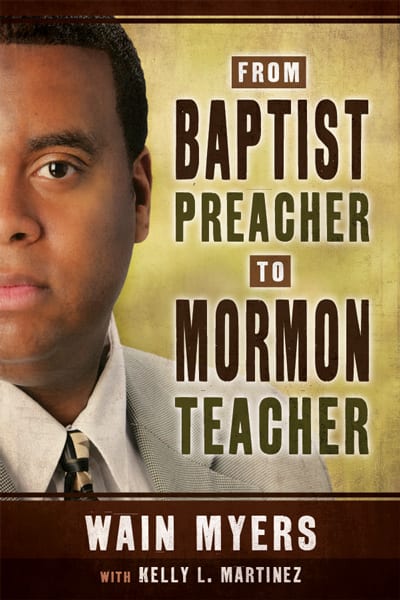
From-Baptist-Preacher-to-Mormon-Teacher_978-1-4621-1702-4Wain Myers is a native of Dayton, Ohio and a graduate of John H. Patterson High School where he was a state discus champion and musician. After graduation, Wain enlisted in the United States Army and served a tour of duty in Bad Kissingen, Germany. After his military career, Wain returned to the U.S. and began preaching at True Vine Missionary Baptist church. Where he preached for over five years and was then introduced to the LDS church by his now lovely wife Sebrina.

Wain developed a passion for finance after his military career and enrolled in the Alpha & Omega College Real Estate in Virginia Beach, Virginia, and became a loan originator in 2007. Investing into his insurance business, he and his family moved to Terre Haut, Indiana, in 2009. Wain became very active in the Terre Haute community.

Wain has also been an active member in The Church of Jesus Christ of the Latter-day Saints since 1995 and served on the Bloomington Indiana Stake High Council before moving to Salt Lake City, Utah, and being call as second counselor in the Genesis Group leadership.

Wain and Sebrina are the proud parents of seven amazing children; Le’Roy Jr., Isaiah; who is currently serving his mission in the Baton Rouge Louisiana mission, Bradford and his wife Paige, Quesley, Braxton, Spencer, and Ammon.

FairMormon-Rise-Up-iTunes-logo

QUESTIONS ADDRESSED IN THE INTERVIEW:

The story of you coming to find the church has some interesting twists and turns and would be a great way to get to know you. Would you tell us the story of your military career leading up to first starting as a baptist preacher?

What were some of the impressions that you had about the Mormon Church prior to becoming a member?

At one point in your story you had some difficulties with what has come to be called the Priesthood ban where those of black African decent were not allowed to hold the priesthood. You ended up having to come to terms with that and have since of course remained an active member. How did you view that part of church history, and how have you overcome it?

You are now involved in the Genesis Group. What is the Genesis Group?

You have a book coming out in October 2015 I believe called, at for now, From Baptist Preacher to Mormon Teacher. The title might be a little obvious, but what will the book be about?

Filed Under: Hosts, Nick Galieti, Podcast, Racial Issues, RiseUp Tagged With: 1978 Revelation on Priesthood, Blacks and Mormonism, Blacks and the Priesthood

RiseUp Podcast – Having conversations about the history of Blacks and the LDS Church

January 15, 2015 by NickGalieti

https://media.blubrry.com/mormonfaircast/www.fairlatterdaysaints.org/wp-content/uploads/2015/01/RiseUp-RaceandthePriesthood-Stevenson.mp3

Podcast: Download (25.9MB)

Subscribe: RSS

Race issues in the LDS Church can be difficult to understand and even more difficult to talk about. The church released an official statement regarding some history on this subject, but there are those who still have questions. Russell Stevenson has dedicated a good portion of his adult life to studying this history, and has written on this subject. He offers three suggestions on how to approach and discuss this controversial subject—namely the history of Black’s in the Mormon Church.

To purchase a copy of Russell Stevenson’s latest book: For the Cause of Righteousness — click here.

To purchase a copy of Russell Stevenson’s previous book, Black Mormon: The Story of Elijah Ables — click here.

FairMormon-Rise-Up-iTunes-logo

Filed Under: Podcast, Racial Issues, RiseUp Tagged With: Blacks and Mormonism, Elijah Ables

Articles of Faith 16: Margaret Blair Young – The Heart of Africa and The Welcome Table

October 20, 2014 by NickGalieti

https://media.blubrry.com/mormonfaircast/www.fairlatterdaysaints.org/wp-content/uploads/2014/10/AOF-MargaretBlairYoung.mp3

Podcast: Download (56.7MB)

Subscribe: RSS

Margaret-Blair-Young-150x150Margaret Blair Young was raised in the Church and learned the standard Mormon clichés and customary phrases of a Mormon testimony. As a child, she could imitate the strokes and expressions of Mormonism well, in time she came to understand these were expressions of an immature, inexperienced faith. Time propelled her further into the faith. In time she began to be immersed in more controversial areas of LDS history: race issues and the priesthood restriction, keeping those of African lineage from receiving the priesthood or temple blessings for over a century. She wrote three books and made two documentaries on these subjects with Darius Gray, a black man who joined the Church in 1964, fourteen years before the restriction was lifted.

Margaret Blair Young is the past president of the Association for Mormon Letters and has published eight books—novels and short stories. Three of these were co-authored with Darius Gray and give the history of Black Latter-day Saints. She and Gray also made the documentary Nobody Knows: The Untold Story of Black Mormons. She has written six encyclopedia articles and other scholarly papers on Blacks in the western USA, and particularly on Black Mormons. She used to teach creative writing at BYU but now travels the world in her off time.

Questions addressed during the interview:

You just got back from Africa. Where were you and what were you doing there?

How is the church doing in Africa? What is it like on a day to day basis?

What are some of the difficult questions or situations for which the African Saints are seeking answers or solutions?

There is an article on your blog through patheos, The Welcome Table, the article is entitled Developing Spiritual Taste. In your world travels and in your film directing efforts on church related themes, you have no doubt encountered critics or at least statements that seem to be critical of at least perceptions of church doctrines and culture. You even address the motivation for the article, at least in part, by offering this brief anecdote: When I was in my late twenties, someone said to me, “You’re too smart to be a Mormon.” Clearly, I’m not. But the picture of Mormonism this person had in mind does not represent the kind of Mormonism I live.” What is the kind of Mormonism that you live, the kind that you layout in this article?

You talk about, in your Mormon Scholars Testify Page, a story where your husband once gave you a priesthood blessing during a particularly trying moment. He said these words: “I bless you that your memories will be sanctified as the larger picture unfolds, and you will view all of the difficulties and trials you’re enduring now with gratitude and love.”This is the blessing of perspective. It illuminates not only my personal history, but the hard historical episodes of my religion. What has that blessing meant in your research into as you put it, the more controversial parts of Mormon History?

Margaret Blair Young is the author of several titles as well as director and producer of several documentaries on the history of Black members of the Church of Jesus Christ of Latter-day Saints.

Click here for more information on Margaret Blair Young’s upcoming Film Project, The Heart of Africa.

Click here to read from Margaret Blair Young’s entries at Patheos under the heading, The Welcome Table.

Filed Under: Articles of Faith, Faith Crisis, Hosts, Nick Galieti, Podcast, Racial Issues Tagged With: Blacks and the Priesthood, Faith Crisis

Does God Authorize His Prophets to Make Mistakes?

October 7, 2014 by SteveDensleyJr

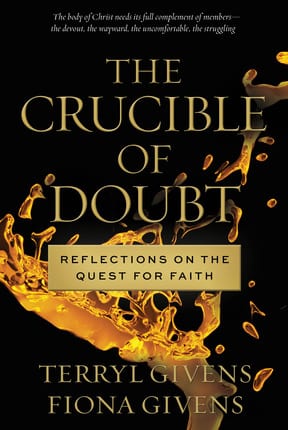
Crucible_of_Doubt

[The Crucible of Doubt can be purchased from the FairMormon Bookstore.]

Within the past year, the Church published an article addressing the fact that for a long period in the Church’s history, black men were not allowed to be ordained to the priesthood.[i] The article acknowledged that leaders of the Church gave explanations for the ban that we now recognize as being incorrect. For some people, this article has raised as many questions as it answered. While many have experienced a sense of relief in seeing the Church disavow explanations for the ban that denigrated those of African descent, others have experienced a new sense of anxiety over the question of the extent to which we can rely on the teachings of the prophets and apostles. And to what extent can we be confident that the policies adopted by the Church are ordained of God?

Terryl and Fiona Givens directly addressed the question of prophetic infallibility in their book Crucible of Doubt: Reflections on the Quest for Faith. Terryl Givens has earlier, if only briefly, addressed this question, in his “Letter to a Doubter.”[ii] In their new book, the Givenses expand on this issue. The “Letter to a Doubter” essentially limited itself to a discussion of the fact that prophets are human, and humans make mistakes. However, chapter six of The Crucible of Doubt goes into more depth regarding the principles of delegation of authority and prophets as agents for God.

The concept of God delegating his authority to men on Earth and making them His agents, who act on His behalf, is not a new one. However, the Givenses discuss the concept in a way that may help illuminate the mechanism by which prophets act on God’s behalf and why doing so does not ensure that mistakes will not be made by God’s agents.

The title of chapter six is “On Delegation and Discipleship: The Ring of Pharaoh.” This title is a reference to the story of Joseph of Egypt:

When Joseph of the many-colored coat had gained Pharaoh’s complete trust and confidence, “Pharaoh took off his ring from his hand, and put it upon Joseph’s hand.” With this gesture, Pharaoh transferred his own power and authority to the former Hebrew slave. “Without your consent,” the Pharaoh told him, “no one shall lift up hand or foot in all the land of Egypt.”[iii]

Of course, when authority is delegated, it does not mean that the agent will always do precisely what is intended by the one delegating authority. This is obvious in the context of human interactions. However, we sometimes may hope and expect that when God delegates authority to a prophet, that the human in this scenario will somehow rise to the level of perfection inhabited by the one who has delegated the authority; that if one is acting for God, one will act like God. However, the scriptures do not give us this assurance.

In fact, the scriptures provide plenty of examples of prophets making mistakes and acting in ways that could be considered ungodly. For example, Moses disobeyed God’s instruction to speak to the rock and instead hit it. He then attributed the miracle to himself and Aaron, saying, “Must we fetch you water out of this rock?” He was chastised by the Lord afterward. (Numbers 20.) Nathan told David that the Lord approved of his desire to build a temple, and that he should commence the project. The Lord later told Nathan that such was not His desire, and that he was to tell David that the temple would be built by another. (2 Samuel 7.) And Jonah felt some personal prejudices against Assyrians, to the point of expecting the Lord to give them fewer blessings than to Jews. (Jonah 4.)

So prophets can guide us and direct us, but they can also test our faith, not just in calling us to live on a higher plane, but also in demonstrating that they do not always reach a higher plane themselves. In light of this, the Givenses note:

And if delegation is a real principle—if God really does endow mortals with the authority to act in His place and with His authority, even while He knows they will not act with infallible judgment—then it becomes clearer why God is asking us to receive the words of the prophet “as if from mine own mouth, in all patience and faith.”[iv]

Of course, most of us are familiar with the observation made by Joseph Smith that “a prophet [is] a prophet only when he [is] acting as such” (HC 5:265). We also often hear repeated the scripture, “whether by mine own voice or by the voice of my servants, it is the same.” (D&C 1:38.) When these two statements are considered at once, we may tend to think that if we can just determine whether or not a prophet is acting as a prophet, or as God’s “servant,” we will know whether or not we can consider his words to be the infallible words of God. It may seem that if the president of the Church makes a statement that we later learn to be untrue, or enacts a policy that seems to have been mistaken, we can find comfort in the notion that the man may not have been acting on behalf of God on those occasions. This becomes more difficult, however, when a statement is made, or a policy announced, in General Conference, or on Church letterhead along with the signatures or other members of the First Presidency.

But perhaps in thinking this, we have misunderstood the principle of delegation of authority. For example, while there are statements that have been understood to mean that prophets, or God’s servants, cannot err when acting as God’s servants, the scriptures themselves undercut this interpretation. For example, while D&C Section 1 says “whether by mine own voice or by the voice of my servants, it is the same,” a few verses earlier, we read:

Behold, I am God and have spoken it; these commandments are of me, and were given unto my servants in their weakness, after the manner of their language, that they might come to understanding. And inasmuch as they erred it might be made known; And inasmuch as they sought wisdom they might be instructed; And inasmuch as they sinned they might be chastened, that they might repent; And inasmuch as they were humble they might be made strong, and blessed from on high, and receive knowledge from time to time.

(D&C 1:24-28; emphasis added).

Another commonly quoted statement in support of the concept of prophetic inerrancy is that of Wilford Woodruff, when, speaking of abandoning the practice of polygamy, he said:

The Lord will never permit me or any other man who stands as President of this Church to lead you astray. It is not in the programme. It is not in the mind of God. If I were to attempt that, the Lord would remove me out of my place, and so He will any other man who attempts to lead the children of men astray from the oracles of God and from their duty. [v]

However, in addition to the aforementioned reasons to doubt that this statement supports the view that prophets cannot make mistakes, Elders Packer and Uchtdorf have given us additional reasons to doubt this conclusion. Elder Uchtdorf said, “This is the Church of Jesus Christ. God will not allow His Church to drift from its appointed course or fail to fulfill its divine destiny.”[vi] Elder Packer added that “…even with the best of intentions, it [the governance of the Church by mortal priesthood holders] does not always work the way it should. Human nature may express itself on occasion, but not to the permanent injury of the work.”[vii] In other words, while leaders can make mistakes, God will not allow the leaders to utterly destroy the work of the latter-day Church or cause the members to lose their opportunity to receive exaltation.

So when God says that the prophet is His agent on Earth, perhaps He is not saying that, when acting as the prophet, the man will always do exactly what God wants any more than by giving Joseph his ring, Pharaoh was assuring the people of Egypt that Joseph would always do exactly what Pharaoh would have done in his place. Right or wrong, the people of Egypt were to consider Joseph’s actions to be the actions of Pharaoh and were to be bound by Joseph’s words and actions as if they were the words and actions of Pharaoh.

Of course, this principle is not limited to the delegation of authority to a prophet. The Givenses ask “If a bishop makes a decision without inspiration, are we bound to sustain the decision?” And what if an apostle makes a mistake in calling a stake president?

The story is told of a Church official who returned from installing a new stake presidency. “Dad, do you Brethren feel confident when you call a man as the stake president that he is the Lord’s man?” the official’s son asked upon his father’s return home. “No, not always,” he replied. “But once we call him, he becomes the Lord’s man.” The answer disconcerts initially. Is this not hubris, to expect God’s sanction for a decision made in error? Perhaps. It is also possible that the reply reveals the only understanding of delegation that is viable.[viii]

The Givenses continue by observing:

If God honored only those decisions made in perfect accord with His perfect wisdom, then His purposes would require leaders who were utterly incapable of misconstruing His intention, who never missed hearing the still small voice, who were unerringly and unfailingly a perfect conduit for heaven’s inspiration. And it would render the principle of delegation inoperative. The Pharaoh didn’t say to Joseph, your authority extends as far as you anticipate perfectly what I would do in every instance. He gave Joseph his ring…. And after calling Joseph Smith to his mission, the Lord didn’t say, I will stand by you as long as you never err in judgment. He said, “Thou wast called and chosen. . . . Devote all thy service in Zion; and . . . lo, I am with thee, even unto the end.”[ix]

In light of all this, what are we to believe, ask the Givenses, when confronted by “faith-wrenching practices (polygamy), missteps and errors (Adam-God), and teachings that the Church has abandoned but not fully explained (the priesthood ban).”[x] In response, they quote the Anglican churchman Austin Farrer, who said “Facts are not determined by authority. Authority can make law to be law; authority cannot make facts to be facts.”[xi] To this, they add the words of Henry Eyring, who once quoted his father as saying, “in this church you don’t have to believe anything that isn’t true.”[xii]

Of course, while we may harbor misgivings in our minds regarding some policy, teaching or practice, how are we to act when confronted with doubts about whether or not an agent of God is actually doing God’s will? In response to this issue, Farrer is again quoted: “If Peter and his colleagues make law in applying the Lord’s precepts, . . . their law is the law of Christ’s Church, the best (if you will) that God’s Spirit can make with human instruments there and then, and, as such, to be obeyed as the will of God Himself. But to call Peter infallible in this connection is to misplace an epithet.”[xiii]

To carry the metaphor of agency and delegation further, we can consider the legal realm. What recourse exists against a principle when the agent causes some harm? Under the doctrine of agency law, if a person is injured by an agent who is acting under the authority of the principle, the principle will be liable for the harm and is required to set things right. Of course, while all wrongs and injustices have not yet been set right in this imperfect world, Christ has already paid the price for such wrongs. In other words, the miracle of delegation of divine authority does not ensure that the agent will always act according to God’s will. Rather, it ensures that God will guarantee the actions of the agent, and if the actions are wrong, through Christ’s atonement, all will be made right in the end. Indeed, even those things that can cause fear, doubt and pain can be made to benefit us in the end:

One comfort is to be found in a God whose power is in His magnanimity as well as His wisdom. These two traits mean that His divine energies are spent not in precluding chaos but in reordering it, not in preventing suffering but in alchemizing it, not in disallowing error but in transmuting it into goodness.[xiv]

Even the agents of God, even when acting as God’s agents, can cause fear, pain and confusion in this world. Although this may frustrate us, it does not frustrate God’s plan. In closing, we are reminded that the words of God’s servants can provide comfort and direction, even when counseling us regarding the imperfect words and actions of God’s servants themselves:

“Imperfect people are all God has ever had to work with,” reminds Elder Jeffrey Holland. “That must be terribly frustrating to Him, but He deals with it. So should we.” Generosity with our own inept attempts to serve and minister to each other in a lay church, charity toward those in leadership who, as President Dieter Uchtdorf noted, have “said or done [things] that were not in harmony with our values, principles, or doctrine,” and faith in Christ’s Atonement that makes up the human deficit—these could be the balm of Gilead for which both wounded disciples and striving leaders seek.[xv]

[i] Race and the Priesthood.

[ii] Terryl L. Givens, “Letter to a Doubter,” Interpreter: A Journal of Mormon Scripture 4 (2013): 131-146. An audio version was published on FairMormon Blog.

[iii] Terryl Givens & Fiona Givens, The Crucible of Doubt (Salt Lake City: Deseret Book, 2014), 73, citing Genesis 41:42 & 44, NRSV.

[iv] Givens & Givens, 75, citing D&C 21:5 (emphasis added).

[v] Sixty-first Semiannual General Conference of the Church, Monday, 6 October 1890, Salt Lake City, Utah. Reported in Deseret Evening News (11 October 1890): 2; cited in LDS scriptures after Official Declaration 1.

[vi] Dieter F. Uchtdorf, “Come Join With Us,” general conference, October 2013.

[vii] Boyd K. Packer, “”I Say unto You, Be One,'” in BYU Devotional and Fireside Speeches, 1990–1991 (Provo, Utah: University Publications, 1991), 84, emphasis added.

[viii] Givens & Givens, 75-76, citing a personal conversation reported to authors by Robert L. Millet.

[ix] Ibid., 76, quoting D&C 24:1, 7, 8.

[x] Ibid., 74.

[xi] Ibid., 74, quoting Austin Farrer, “Infallibility and Historical Tradition,” in The Truth-Seeking Heart, ed. Ann Loades and Robert MacSwain (Norwich: Canterbury Press, 2006), 83.

[xii] Ibid., 74, quoting Henry J. Eyring, Mormon Scientist: The Life and Faith of Henry Eyring (Salt Lake City: Deseret Book, 2007), 4.

[xiii] Ibid., 74-75, quoting Farrer, “Infallibility,” 83–84.

[xiv] Ibid., 78.

[xv] Ibid., 82, quoting Jeffrey R. Holland, “Lord, I Believe,” Ensign, May 2013, 94 and Dieter F. Uchtdorf, “Come, Join with Us,” Ensign, November 2013, 22.

Filed Under: Apologetics, Book reviews, Doctrine, Racial Issues

Articles of Faith 13: Russell Stevenson FairMormon Conference Follow Up – Coming to Grips With Brigham Young and Race

August 18, 2014 by russellwades

https://media.blubrry.com/mormonfaircast/www.fairlatterdaysaints.org/wp-content/uploads/2014/08/AOF-FairConferenceFollowUp-RussellStevenson.mp3

Podcast: Download (39.0MB)

Subscribe: RSS

Russell Stevenson
Written by Russell Stevenson

That Brigham Young struggled with and eventually succumbed to racial insensitivities is an undisputed matter of the historical record. From the perspective of not a few nineteenth-century Americans, not to mention most anyone born in the last 50 years, Brigham Young peddled in racial rhetoric and promoted policies that bode poorly not only with our sensibilities but also with the spirit of the Book of Mormon: “All are alike unto God, both black and white, bond and free,” a vision established for the Saints in 1830, not 1978.

I view the races of mankind as fundamentally equal in privilege and love before God. Embracing the gospel as I do, I cannot believe otherwise. Few things bring me as much pain as reading that a man whom I want to revere could say things so far below his calling. So how can such a man be worthy of my respect, let alone my sustaining vote?

Were the Saints merely a product of their time? Perhaps. But so was Rees E. Price, a Mormon convert in Cincinnati in 1842 who had committed much of his time and resources to the absolute destruction of the slave system in America. Though he left the faith shortly after his baptism, he never left behind his principles that slavery was a blight so evil that he could not find words strong enough to condemn it. However much a radical he was, the Latter-day Saint message resonated with him and his anti-slavery principles. For Price, Mormonism need not be moderate on matters of race, however much Missouri had frightened Church leaders.

As I place the finishing touches on my forthcoming book, For the Cause of Righteousness, I have had occasion to reflect on how I view the man most closely associated with the priesthood restriction: Brigham Young. A man who succumbed to a weakness that the Saints are only beginning to overcome. Unlike Price, Young endorsed slavery, albeit with reservations. While politics likely played a role in Young’s support for it, he would have found himself in good company had he chosen to oppose it outright. How could Mormonism not only produce men with such differing ideologies but with one as its prophet and another as its apostate? Even by standards known and accessible in mid-nineteenth-century America, it is hard to explain away racial rhetoric when anti-slavery activists such as Price, William Lloyd Garrison, and Angelina Grimke were successfully meeting a much higher standard–––and paying a heavy price for it.

The meaning of the word sustain can provide some answers. Drawing from an old French root, sostenir, the word originally meant “to hold up, bear, suffer” or “endure.” It is noteworthy that sustenance also derives from a French term referring to “support [and] aid.” Webster’s 1828 dictionary defines it as “to bear; to uphold; to support; as a foundation sustains the superstructure; pillars.”

How have I worked through my support for Brigham Young? The dismissal of Brigham Young based on racism follows this line of logic:

1) Brigham Young said racially offensive things–––things worthy of our condemnation.

2) Brigham Young is no longer trustworthy as a prophet.

3) Prophetic authority is no longer trustworthy

Let’s look at these individually. 

1) Brigham Young said racially offensive things–––things worthy of our condemnation.

Yes, and we have a moral obligation to come to grips with it. For a fuller discussion of the details of this claim, please listen to FairMormon conference talk accompanying this blog post.

2) Brigham Young is no longer trustworthy as a prophet.

I endeavor to see everybody—living and dead alike—in the complicated way that God sees them. And people are complicated. Their motives elude us. We think we know who a person is, and then we learn that they are better—or worse—people than we ever considered them to be.

That tremendously talented people have deep-seated weakness is a familiar theme in literature. We even have a body part named after one: the Achilles’ heel, named after the part of Achilles’ body left untouched by the waters of the river Styx–––waters capable of rendering anything it touched invulnerable.  Why do we have such a difficult time accepting the notion today?

At this juncture, it is tempting to rattle off all the biblical figures who cast national aspersions on peoples (and they number not a few: Jonah, Peter, and even Paul, to name a meager few). But one should hope that mankind is a little bit more tolerant in 2014 than it was in first-century C.E. And given the hope and vision of my faith at the outset, I have no choice but to look at racial discrimination in its midst with a critical eye.

But was Brigham Young the one who started it all? As discussed in the presentation, Brigham Young tried to include a black priesthood holder, William McCary at Winter Quarters, in spite of the fact that he had married a white girl, Lucy Stanton, whose family was well-regarded (a taboo that could win a lynching in some places). After Brigham Young left Winter Quarters in early April, McCary experimented with (presumably unauthorized) polygamy, a social transgression that the already on-edge Winter Quarters Mormons could not abide. Word spread, and the Saints formed a mob to chase the McCarys out. It was in this context that local presiding officer Parley P. Pratt first declared that having Hamitic ancestry could disqualify a man (particularly McCary) from holding priesthood office. When Brigham Young returned that December, he learned of McCary’s offenses. Young’s jocularity warmth toward the young black man quickly soured. When he further heard of an interracial Mormon couple bearing a child in Massachusetts, his feelings descended into a kind of racial seizure. The meeting minutes reveal a man struggling with deeply-seated contradictions: a gospel vision he knew to be true versus entrenched views about the propriety of interracial couples bearing offspring.

But did not Brigham Young cite a revelation years later? In February 1852, he pointed to his position as prophet in declaring that African-Americans were not eligible to hold the priesthood. That he believed his statement to be inspired is certain; he knew well Joseph Smith’s comment that “a prophet is only a prophet when he is acting as such” (Link).

We also have the fortune of knowing how revelation happens in this Church, and it’s a process Brigham Young had participated in as well (e.g. D&C 136). So whatever his beliefs or justification, he did not follow the standard protocol for ratifying his comments as a binding revelation upon the Saints. As Apostle Neil L. Andersen has said, true doctrine is found in statements approved by the First Presidency and Quorum of the Twelve Apostles: “It is not hidden in an obscure paragraph of one talk. True principles are taught frequently and by many” (Link). For the next six generations, the Saints could never quite decide what the priesthood restriction was about. Was it the curse of Cain? The curse of Ham? Premortal failures? Or maybe the Saints just didn’t know? Calling the priesthood ban revelatory is a claim that fails the Andersen test with flying colors. And, as President Dieter F. Uchtdorf has said so clearly, “[T]here have been times when members or leaders in the Church have simply made mistakes. There may have been things said or done that were not in harmony with our values, principles, or doctrine” (Link).

Complicating matters further is the role that Brigham Young’s fellow travelers played in developing the priesthood restriction. In many ways, modern Mormons have accepted the easy trope that Brigham Young ruled the Mormon people with total control, molding their thoughts, feelings, visions, and actions in every particular.

But there is a problem with this paradigm: its usable simplicity is more than overwhelmed by its inaccuracy. In other words, it isn’t true.

At the time Young was looking McCary in the eye as he promised him that he had a safe place in Mormonism in spite of the Saints’ flurry of racial epithets, Young was only beginning to win the full confidence of a community still mourning Joseph’s death. Even Young himself confided in other members that he might not ever live up to Joseph’s legacy. “I feel my weakness, my bitterness. I hurt in the Almighty,” he told his Brethren in May 1847. “I shall yet be a Mormon.”  Young struggled to keep the Saints on-board with his initiatives. When he tried to consolidate his control over the Saints in spring 1846, he felt it necessary to threaten those who resisted with a “slap of revelation” if they would not obey. But his efforts failed him when the Saints waffled on his initiative to head for the mountains in summer 1846 (Link).

That Brigham Young supported blacks holding the priesthood as late as March 1847 is a clearly documented point. So who made the shift first? Brigham Young was well on his way to the Great Basin while McCary was scandalizing the Saints. Apostles Parley P. Pratt and Orson Hyde both spoke of his sexual escapades as a point of high-profile spectacle. Those few who did support McCary–––and they were few indeed–––were considered low-browed. Hyde compared the sectarian James J. Strang favorably to them. At least Strang was an “honorable imposter.” Pratt (for the first time, incidentally) connected race to a priesthood restriction: “[T]his Black Man . . . has got the blood of Ham in him which linage was cursed as regards the Priesthood.” Perhaps, it was for the best, Hyde concluded, as it was “taking away the tares who were his kindred spirits.” McCary had so enraged the Saints from lay to leader that apostasy and dissent had been cast as cheap, low-browed “black religion” along the order of what McCary peddled. While Brigham Young was declaring the Great Basin to be “the place,” the Saints had worked themselves into a frenzy about eradicating the black influence from their midst. Whatever the depth of Brigham Young’s commitment to black inclusion in March 1847, it was more than overwhelmed by the collective action of the Pratt, Hyde, and others to ensure that blackness was rooted out of Zion. Though they no longer faced the racial politics of Missouri during which locals so readily associated them with the black population, they continued to deal with Missouri’s ghosts. McCary represented exactly the reason they had lost their homeland some fourteen years earlier, and they were not ready to forgive and forget.

It is a messy narrative, and a painfully human one. A prophet can only be a prophet when the people want prophecy and expansiveness. Prophethood is not the unlimited capacity to compel a people to the Lord’s will, no matter the circumstances. The Lord allows his children to wander in the wilderness when they refuse to accept the greater truths he has prepared for them. It’s the story of how generally good Saints allowed themselves to countenance the great sin of the age–––slavery–––in spite of their having started out with such a noble vision of racial equality in the kingdom of God. In the Saints’ push to survive in the racially-tumultuous waters of nineteenth-century America, they adopted the very prejudices their gospel vision was designed to protect against.

3) Prophetic authority is no longer trustworthy.

As a child, I sat in a seminary class where the teacher handed out brownies and watched us greedily devour them, only to have him tell us that he had put a cockroach in the mix. I had heard the schtick before, but those around me gagged in disgust. “But it was a small cockroach,” he assured us. “Why are you making such a big deal out of it?” It was a lesson on the media, of course, and intended to teach us that even a “little bit” of inappropriate material makes the whole film, book, or song undesirable.

But imagine if we actually made that a motto for life? Imagine if we discarded a man or woman because they had a little–––or, in some cases, more than a little–––dirt in them. It might be a colorful way of teaching about good media, but it’s also a good way to reinforce self-righteousness and intolerance of others’ weaknesses. It certainly wasn’t the approach Jesus Christ took when he rubbed shoulders with lepers and the poor. He certainly was willing to overlook the hatred that Simon the Zealot harbored (not to be confused with the Zealot party that arose in later years) for all things Roman. Jesus happily entrusted Matthew with responsibilities of the kingdom, even if Matthew, who collected taxes for the Romans, collaborated in the oppression Simon had committed his life to opposing. When Jesus commissioned these men to take the lead in establishing his kingdom on earth, both had considerable prejudices to grapple with. And when Jesus told the story of the Samaritan kind enough to care for the dying man by the road, he chose his characters strategically, knowing full well that his listeners would recoil at the thought of a Samaritan being anything other than a disgusting example of the ills of racial intermarriage. After all, when locals wanted to hurl an easy insult at Jesus, they simply asked, “Say we not well that thou art a Samaritan, and hast a devil?” (John 8:48) Though he lived by the standard of perfection, he worked with radicals and bureaucrats alike, despite their deep-seated flaws.

If we dismissed people based on such character flaws, imagine which luminaries we would need to ignore. If Reverend Ralph Abernathy and most reports are to be believed, Martin Luther King, Jr. had serious problem with marital fidelity. What’s more, he certainly plagiarized a large portion of his dissertation. Malcolm X had a penchant for violent rhetoric, but he helped the black community to articulate a more assertive voice after generations of oppression. Yet I would count them among the inspired leaders of their times in their part of the Lord’s vineyard.

Faithful members need not defend, excuse, ignore, or even deflect the racial thinking of our fathers, and it should pain us when we hear of it. But owning a deep-seated flaw in our past is a very different thing from trying to burn the Church to the ground. Our history can be not only a powerful story of faith, love, and triumph, but also, as Terryl Givens has said, a “troubling morality tale” that reveals “the need for eternal vigilance in negotiating a faith that must never be unmoored from humaneness.”

References:

Neil L. Andersen, “Trial of Your Faith,” October 2012 General Conference.

Dieter F. Uchtdorf, “Come, Join with Us,” October 2013 General Conference.

General Meeting Minutes, in Selected Collections from the Archives of the Church of Jesus Christ of Latter-day Saints, DVD 18.

Joseph Smith, Journal, www.josephsmithpapers.org.

Russell Stevenson, Black Mormon: The Story of Elijah Ables (Afton, WY: PrintVision, 2013).

Russell Stevenson is the author of Black Mormon: The Story of Elijah Ables and For The Cause of Righteousness: A Global History of Blacks and Mormonism, 1830-2014 as well as several articles on race, sexuality, and politics in publications such as the Journal of Mormon History, Dialogue, and Oxford University Press’s American National Biography series.

Filed Under: Articles of Faith, Hosts, Nick Galieti, Podcast, Racial Issues

Mormon Fair-cast 244: FairMormon Conference 2014

July 8, 2014 by Ned Scarisbrick

https://media.blubrry.com/mormonfaircast/www.fairlatterdaysaints.org/wp-content/uploads/2014/07/MTSDDP7_6_141.mp3

Podcast: Download (18.0MB)

Subscribe: RSS

33480_1612609000660_2667876_nDanPetersonMartin Tanner who is the host of “Religion Today” on KSL FM 102.7 and AM 1160 interviews Steve Densley who is the executive vice-president of FairMormon and Daniel Peterson, Ph.D. who is a prominent Mormon apologist and professor of Islamic Studies and Arabic in the Department of Asian and Near Eastern Languages at Brigham Young University about the upcoming FairMormon conference that will be held in Provo Utah on the 7th and 8th of August this year. Tickets can be purchased here.

This broadcast originally aired on the 6th of July 2014.

The views and opinions expressed in this podcast may not represent those of the Church of Jesus Christ of Latter-day Saints or that of FairMormon.


Filed Under: Anti-Mormon critics, Apologetics, Bible, Book of Mormon, Conversion, Doctrine, Early Christianity, Evidences, FAIR Conference, Faith Crisis, First Vision, Gender Issues, General, Joseph Smith, Mormon Voices, News from FAIR, Podcast, Polygamy, Power of Testimony, Racial Issues, Science, Women

A New Church History Seminary Manual

February 5, 2014 by Stephen Smoot

Screen Shot 2014-02-05 at 11.17.54 PM
The cover page of the new edition of the Doctrine and Covenants and Church History seminary manual.

[Cross-posted from Ploni Almoni: Mr. So-and-So’s Mormon Blog.]

The Church has released a new edition of the Doctrine and Covenants and Church History manual for seminary students. One of the remarkable aspects of the new manual is that it includes a discussion of several sensitive topics in church history. These topics include the following.

1. The various accounts of the First Vision are highlighted in the new manual. “There are nine known accounts of the First Vision—four written or dictated by Joseph Smith and five written by others retelling his experience,” the manual states (p. 20).

The multiple accounts of the First Vision were prepared at different times and for different audiences. In these accounts, Joseph Smith emphasized different aspects of his experience of the First Vision, but the accounts all agree in the essential truth that Joseph Smith did indeed have the heavens opened to him and see divine messengers, including God the Father and the Lord Jesus Christ. Because the 1838 account was part of Joseph Smith’s official history and testimony to the world, it was included in the Pearl of Great Price as scripture. (p. 20)

The manual then recommends students to read articles by Milton Backman and Richard Lloyd Anderson published in the Ensign discussing the various accounts of the First Vision (pp. 20, 22).

2. There is an entire chapter devoted to the Mountain Meadows Massacre and the Utah War (Lesson 151). The manual gives a brief historical overview of the events leading up to the massacre and acknowledges the participation of “Latter-day Saint leaders and settlers” in the crime (p. 523). Besides citing an article on the Mountain Meadows Massacre published in theEnsign, the manual also reproduces this quote given by President Henry B. Eyring at the 150 year anniversary of the massacre.

The gospel of Jesus Christ that we espouse, abhors the cold-blooded killing of men, women, and children. Indeed, it advocates peace and forgiveness. What was done [at the Mountain Meadows] long ago by members of our Church represents a terrible and inexcusable departure from Christian teaching and conduct.

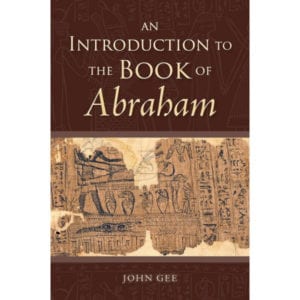
3. In a chapter on the history of the Pearl of Great Price there is a brief overview of the history of the Book of Abraham, including the loss and recovery of several papyrus fragments once in the possession of Joseph Smith (pp. 524–526). Included in the discussion about the Book of Abraham is this (which is actually reprinted from the Church’s Pearl of Great Price Student Manual).

In 1966 eleven fragments of papyri once possessed by the Prophet Joseph Smith were discovered in the Metropolitan Museum of Art in New York City. They were given to the Church and have been analyzed by scholars who date them between about 100 B.C. and A.D. 100. A common objection to the authenticity of the book of Abraham is that the manuscripts are not old enough to have been written by Abraham, who lived almost two thousand years before Christ. Joseph Smith never claimed that the papyri were autographic (written by Abraham himself), nor that they dated from the time of Abraham. It is common to refer to an author’s works as ‘his’ writings, whether he penned them himself, dictated them to others, or others copied his writings later. (p. 525)

(Incidentally, yours truly has written a thing or two on this subject over at the Interpreter blog, which you can access here.) The manual also states, “Although we do not know the exact method Joseph Smith used to translate the writings, we do know that he translated the book of Abraham by the gift and power of God” (p. 525).

4. The new manual has material covering the practice of plural marriage, including an entire chapter on Joseph Smith’s plural marriage (Lesson 140) and a mentioning of Post-Manifesto plural marriage. Below are a few pertinent excerpts from the manual.

In this dispensation the Lord commanded some of the early Saints to practice plural marriage. The Prophet Joseph Smith and many other Church leaders found this commandment difficult, but they obeyed it. After receiving revelation, President Wilford Woodruff issued the Manifesto, which was accepted by the Church as authoritative and binding on October 6, 1890. This led to the end of the practice of plural marriage in the Church (see Official Declaration 1). (p. 204)

While Joseph Smith was working on the inspired translation of the Old Testament in 1831, he read about some of the ancient prophets practicing plural marriage (also called polygamy). Under this practice, one man is married to more than one living wife. The Prophet studied the scriptures, pondered what he learned, and eventually took his questions about plural marriage to Heavenly Father in prayer. . . . the Prophet Joseph Smith was reluctant to begin the practice of plural marriage. He stated that he did not begin the practice until he was warned that he would be destroyed if he did not obey. . . . Because of a lack of historical documentation, we do not know about Joseph Smith’s early attempts to comply with the commandment. However, by 1841 the Prophet had begun to obey the commandment and to teach it to some members of the Church, and over the next three years he married additional wives in accordance with the Lord’s commands. The Prophet Joseph Smith’s obedience to the Lord’s commandment to practice plural marriage was a trial of faith for him and his wife Emma, whom he loved dearly. (pp. 477–478)

Practicing plural marriage brought additional challenges. Because the practice was initially kept very quiet, rumors began to spread about Church leaders marrying additional wives. These rumors greatly distorted the truth, slandered the names of the Prophet and other Church leaders, and contributed to increased persecution against the Saints. (p. 479)

A small number of Latter-day Saints continued to enter into new plural marriages after the Manifesto was given. In 1904, President Joseph F. Smith announced “that all [plural] marriages are prohibited, and if any officer or member of the Church shall assume to solemnize or enter into any such marriage he will be . . . excommunicated”. . . . This policy continues today. (p. 530)

Towards the end of the chapter on Joseph Smith’s plural marriage, the manual warns, “Much unreliable information pertaining to plural marriage exists on the Internet and in many print sources. Be cautious and wise with such information. Some authors who write about the Church and its history present information out of context or include partial truths that can be misleading. The intent of some of these writings is to destroy faith” (p. 479). I myself have raised a similar point in this post. The manual then concludes by recommending, “Reliable historical research concerning the practice of plural marriage can be found at josephsmithpapers.org and byustudies.byu.edu” (p. 480).

5. On describing the nature of the Joseph Smith Translation, the manual says the following.

Around the fall of 1830, Joseph Smith was commanded by the Lord to translate the Bible. He did not translate the Bible from one language to another; nor did he have an original biblical manuscript to work from. Instead, Joseph would read and study passages from the King James Version of the Bible and then make corrections and additions as inspired by the Holy Ghost. Thus, the translation was more of an inspired revision than a traditional translation.The Joseph Smith Translation is estimated to have affected at least 3,400 verses in the King James Version of the Bible. These differences include additions (to clarify meaning or context), deletions, rearranged verses, and complete restructurings of certain chapters. The Joseph Smith Translation clarified doctrinal content, especially the mission of Jesus Christ, the nature of God, the nature of man, the Abrahamic covenant, the priesthood, and the Restoration of the gospel. (pp. 180–181)

6. The historical circumstances surrounding the priesthood ban and President Spencer W. Kimball’s 1978 revelation are discussed in a chapter on Official Declaration 2 (Lesson 157). As part of this discussion, the manual reprints the introductory material to OD 2 printed in the 2013 edition of the scriptures.

The Book of Mormon teaches that ‘all are alike unto God,’ including ‘black and white, bond and free, male and female’ (2 Nephi 26:33). Throughout the history of the Church, people of every race and ethnicity in many countries have been baptized and have lived as faithful members of the Church. During Joseph Smith’s lifetime, a few black male members of the Church were ordained to the priesthood. Early in its history, Church leaders stopped conferring the priesthood on black males of African descent. Church records offer no clear insights into the origins of this practice.

There is also the recommendation at the end of the chapter for students to “go to Gospel Topics on LDS.org and search for ‘race and the priesthood'” to learn more about the priesthood ban (p. 545).

7. Finally, in discussing section 77 of the Doctrine and Covenants, the manual straightforwardly says, “The 7,000 years [in vv. 6–7]  refers to the time since the Fall of Adam and Eve. It is not referring to the actual age of the earth including the periods of creation” (p. 280).

I am sure there is more that could be said about the new manual, but suffice it to say from the above examples that the Church is implementing productive measures towards introducing these sort of issues in a faith-promoting, safe, and positive environment (seminary). This will hopefully serve to “inoculate,” to use the popular metaphor, seminary students against the often highly debatable claims and negative information one can currently find on the Internet. While one might perhaps quibble over how certain issues are addressed in the new manual, that there is even a discussion at all in Church curriculum is, in my estimation, a step in the right direction.

Filed Under: Apologetics, Book of Abraham, Book reviews, Faith Crisis, First Vision, Joseph Smith, LDS History, LDS Scriptures, Polygamy, Racial Issues, Science Tagged With: Blacks and the Priesthood, Book of Abraham, Church History, Doctrine and Covenants, First Vision, Joseph Smith Translation, Plural Marriage, seminary

  • « Go to Previous Page
  • Go to page 1
  • Go to page 2
  • Go to page 3
  • Go to page 4
  • Go to page 5
  • Go to page 6
  • Go to page 7
  • Go to Next Page »

Primary Sidebar

Faithful Study Resources for Come, Follow Me

Subscribe to Blog

Enter your email address:

Subscribe to Podcast

Podcast icon
Subscribe to podcast in iTunes
Subscribe to podcast elsewhere
Listen with FAIR app
Android app on Google Play Download on the App Store

Pages

  • Blog Guidelines

FAIR Latest

  • Come, Follow Me with FAIR – Doctrine and Covenants 137–138 – Part 2 – Autumn Dickson
  • Come, Follow Me with FAIR – Doctrine and Covenants 137–138 – Mike Parker
  • FAIR December Newsletter
  • Come, Follow Me with FAIR – Doctrine and Covenants 137–138 – Part 1 – Autumn Dickson
  • Prophets of God 

Blog Categories

Recent Comments

  • LHL on Come, Follow Me with FAIR – Doctrine and Covenants 132 – Mike Parker
  • Stephen Johnsen on Come, Follow Me with FAIR – Doctrine and Covenants 132 – Mike Parker
  • Bruce B Hill on Come, Follow Me with FAIR – Doctrine and Covenants 124 – Part 1 – Autumn Dickson
  • Gabriel Hess on Join us Oct 9–11 for our FREE virtual conference on the Old Testament
  • JC on When the Gospel “Doesn’t Work”

Archives

Follow Us

  • Facebook
  • Twitter
  • iTunes
  • YouTube
Android app on Google Play Download on the App Store

Footer

FairMormon Logo

FAIR is a non-profit organization dedicated to providing well-documented answers to criticisms of the doctrine, practice, and history of The Church of Jesus Christ of Latter-day Saints.

Donate to FAIR

We are a volunteer organization. We invite you to give back.

Donate Now

Site Footer