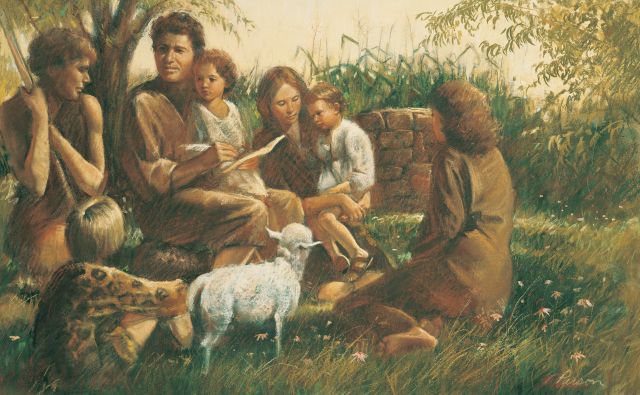
Part 45: CES Letter Witnesses Questions [Section A]
By Sarah Allen
When I sat down to gather my sources and figure out how I wanted to open this section of questions/concerns, the topic I kept circling back to was that of unanswered Gospel questions. We all have them. I have plenty of them myself. In that regard, none of us are very different from Jeremy or anyone else who has ever asked these and other questions. Having Gospel questions and the search for answers to those questions is how the restoration of the Gospel came about in the first place. It’s how each of us was able to gain and maintain a testimony. And it’s why Oliver Cowdery was given the revelation I’m going to address later in this post.
But, depending on how we go about it, that search for answers to those questions can lead us down several different paths. We’ve talked at length throughout this series about how to get answers to your questions: pray, study, experiment upon the word, and lean on God to direct your efforts. And if you ask in faith, nothing wavering, the Holy Ghost will manifest to you the truth of all things. [Read more…] about The CES Letter Rebuttal — Part 45
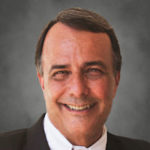 Jeffrey M. Bradshaw (PhD, Cognitive Science, University of Washington) is a Senior Research Scientist at the Florida Institute for Human and Machine Cognition (IHMC) in Pensacola, Florida (
 John Gee is the William (Bill) Gay Research Professor in the Department of Asian and Near Eastern Languages at Brigham Young University. He has authored more than 150 publications on topics such as ancient scripture, Aramaic, archaeology, Coptic, Egyptian, history, linguistics, Luwian, rhetoric, Sumerian, textual criticism, and published in journals such as British Museum Studies in Ancient Egypt and Sudan, Bulletin of the Egyptological Seminar, Enchoria, Ensign, FARMS Review, Göttinger Miszellen, Issues in Religion and Psychotherapy, Journal of Academic Perspecitves, Journal of the American Research Center in Egypt, Journal of Book of Mormon Studies, Journal of Egyptian History, Journal of the Society for the Study of Egyptian Antiquities, Lingua Aegyptia, Review of Books on the Book of Mormon, Studien zur altägyptischen Kultur, and Interpreter, and by such presses as American University of Cairo Press, Archaeopress, Association Égyptologique Reine Élisabeth, E. J. Brill, Carsten Niebuhr Institute of Near Eastern Studies, Czech Institute of Egyptology, Deseret Book, de Gruyter, Harrassowitz, Institut Français d’Archéologie Orientale, Macmillan, Oxford University Press, Peeters, Praeger, Religious Studies Center, and Society of Biblical Literature. He has published three books and has edited eight books and an international multilingual peer-reviewed professional journal. He served twice as a section chair for the Society of Biblical Literature.