• Skip to primary navigation
  • Skip to main content
  • Skip to primary sidebar
  • Skip to footer

FAIR

  • Find Answers
  • Blog
  • Media & Apps
  • Conference
  • Bookstore
  • Archive
  • About
  • Get Involved
  • Search

Gender Issues

Book Review: A Reason for Faith: Navigating LDS Doctrine & Church History

September 16, 2016 by Trevor Holyoak

Available from the FairMormon bookstore at 20% off

In the prologue of A Reason for Faith, the editor, Laura Hales, lays out the purpose of the book. Members of the church sometimes come across new information in an unfriendly setting that damages their faith. This book is a compilation of articles about many of the topics that are not often discussed in a church or family setting, and can be difficult to understand. They are laid out by scholars in an honest but faithful manner, and while they can’t possibly cover the topics completely in the amount of space given, they are meant to be a springboard for further study where necessary.

The first chapter is by Richard Bushman, on “Joseph Smith and Money Digging.” He recounts the history of scholarship in this area, where it was originally denied by those inside the church due to being based on accounts thought to be unreliable published by critics of the church. As he began his own research, he found evidence that convinced him that Joseph was indeed involved with folk magic and seer stones, and that these things were too common in the 19th century to invalidate Joseph’s prophetic claims or be scandalous. [Read more…] about Book Review: A Reason for Faith: Navigating LDS Doctrine & Church History

Filed Under: Apologetics, Bible, Book of Abraham, Book of Mormon, Book reviews, Chastity, DNA, Faith Crisis, Gender Issues, Homosexuality, Joseph Smith, LDS History, LDS Scriptures, Masonry, Polygamy, Prophets, Racial Issues, Science, Temples, Women

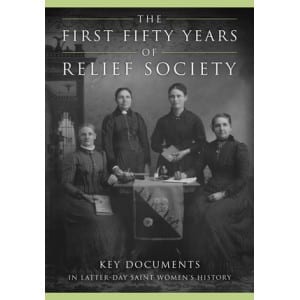
Book Review: The First Fifty Years of Relief Society: Key Documents in Latter-day Saint Women’s History

May 18, 2016 by Trevor Holyoak

Available from the FairMormon Bookstore at 15% off

This is the first publication from The Church Historian’s Press other than the Joseph Smith Papers. It is a collection of documents brought together for the first time that cover the first fifty years of the Relief Society, starting in Nauvoo, restarting in Utah, and then spreading throughout LDS settlements as far away as Canada. The book format and production procedures (transcription, verification, etc.) are very similar to how the Joseph Smith Papers are being done, and at least some of the staff (including editor Matthew J. Grow) are involved in both. And as with the JSP project, much of the book is available for free online. It is accessible at https://www.churchhistorianspress.org/the-first-fifty-years-of-relief-society

The book contains a general table of contents, then a Detailed Contents listing each document, followed by a list of illustrations, a general introduction, and a description of the editorial method. The main section is split into four parts, covering the time periods of 1830 and 1942 to 1845, then 1854 to 1866, 1867 to 1879, and finally 1880 to 1892. The end matter contains reference material including lists of the different Relief Society, Young Ladies’ Mutual Improvement Association, and Primary Association presidencies from 1842 to 1892, a biographical directory, works cited, acknowledgments, and then a pretty thorough index spanning 50 pages.

The main feature of this book is the Nauvoo Relief Society Minute Book, which was kept by Eliza R. Snow and then brought to Utah by her, where it was used in getting the Relief Society going again. This is the first time it has appeared in print, although it was included in the Selected Collections DVD set published in 2002, and more recently has been included in the online documents for the JSP project. Among other things, it has the only sermons given by Joseph Smith to the women of the church.

In one of these sermons, on April 28, 1842, Joseph Smith addressed speaking in tongues and administering to the sick: [Read more…] about Book Review: The First Fifty Years of Relief Society: Key Documents in Latter-day Saint Women’s History

Filed Under: Apologetics, Book reviews, Gender Issues, Joseph Smith, LDS History, Marriage, Polygamy, Women

RiseUp Podcast: Dealing with gender dysphoria – Finding inner peace through Christ

May 19, 2015 by NickGalieti

https://media.blubrry.com/mormonfaircast/www.fairlatterdaysaints.org/wp-content/uploads/2015/05/RiseUp-Kyle-Merkley-Transgender-Mormon.mp3

Podcast: Download (80.2MB)

Subscribe: RSS

Dealing with gender dysphoria: Finding inner peace through Christ – An interview with Kyle and Amy Merkley. To read Kyle’s story and be introduced to the Journey’s of Faith Project from NorthStarLDS, click here.

Kyle and Amy MerkleyKyle is the oldest of five children. He grew up in an amazing family and he’s grateful for the strength his family gives him. Kyle is currently attending graduate school at Brigham Young University studying Classical Languages and Literature. He loves literature and loves sharing this love of literature with others. Music has always been a huge part of his life and he plays trumpet, piano, and organ. Kyle has been married for almost five years to Amy who is one of the most amazing women in the world. She helps him to be a better person every day. Kyle loves reading, watching chick flicks, shopping with his wife, and all things nerdy.

Kyle is here with his wife Amy to talk about their very unique circumstances. For the sake of our conversation today, those unique circumstances will likely focus on the topic of Kyle identifying as being transgender or experiencing gender dysphoria. Kyle has contributed to a new project of the group NorthStar LDS entitled Journeys of Faith – The Journeys of Faith Project is a growing repository of personal essays by Latter-day Saint individuals and families wrestling with issues related to gender identity (e.g., gender dysphoria and/or transgenderism) and are striving to find congruence and peace within the context of the gospel of Jesus Christ.

RiseUp is a podcast designed to offer answers and frameworks for youth, or young adults who are seeking answers to difficult or critical questions about LDS Culture and doctrine.

Questions addressed in this episode:

There is so much to learn and absorb with the topic of being transgender or experiencing gender dysphoria, but let’s first set some foundational items for the basis of our getting to know you and some of the challenges that you face starting with the terms, the lexicon of words that are most welcome to be used when dealing with this subject. What does it mean to be transgender, and what does it mean to experience gender dysphoria in perhaps a more clinical or text book sense?

In your essay on the Journeys of Faith project, entitled: Jesus Wins: Finding Faith in Ambiguity” you express some concepts that may sound familiar to some teenagers in some respects, but maybe not in others. If you could talk about your experience with mirrors growing up.

With your specific life scenario, you were born a genetic male. When did you feel that just didn’t fit your mind’s eye of yourself?

How did your parents respond to this scenario?

It’s important to make the distinction, that in your experience, the thoughts you had were not related to sexual urges or attraction, per se, but just how you saw yourself.

Being a teenager is typically defined in some part with the experience of self-discovery, and the challenges that arise when your body goes through certain biological changes, as well as social independence. But here you are, with another layer to that, something very uncharted in the Mormon experience. In your essay you state that the atonement of Jesus Christ gave you hope, particularly Moroni 10:32 “Yea, come unto Christ, and be perfected in him, and deny yourselves of all ungodliness; and if ye shall deny yourselves of all ungodliness, and love God with all your might, mind and strength, then is his grace sufficient for you, that by his grace ye may be perfect in Christ…”

Music also became a part of your life a coping mechanism. We are both trumpet players as I understand it.

So, even with all that was going on with your life you decided to attend BYU as opposed to perhaps some other university where being transgender would be more either present, accepted, if not encouraged to a certain extent.

BYU led you to a mission call to the California Anaheim Mission. Opening that letter, Dear Elder Kyle Merkley. How did that feel to read that, given your trials and circumstances up to this point? Did you see this as a point of success, of achievement to even feel ready to put in your papers?

In your essay you state: “While serving a mission was really hard in some ways (I had to deal with constant depression, and living with all guys triggered my gender dysphoria), I found serving a mission also clearly defined a role for me. I didn’t have to struggle with the question of who I was. I was told exactly who I was and how I was supposed to act every day. It was that sense of purpose which kept me going.”

It was on your mission that you actually first learned the name for what you were experiencing, or at least a term that has been assigned to those experiencing similar emotions, transgender.

At some point you describe studying for hours, days, weeks, what have you, to find some guidance on what it means to be Transgender and a member of the Church of Jesus Christ of Latter-day Saints, and you kind of snap under the cognitive dissonance, or maybe it would be vacuum of space where questions remained unanswered.

In all this there were some coping mechanisms that you installed, some self-medication that served as a sort of pressure release for all that you were feeling. What were some of those things?

This is when Amy your now wife enters the picture. I have hears some very dear things about Amy, I can’t wait to hear her side of things. How did you two meet?

Kyle has some incredibly tender words to describe what you meant to him, “She asked me out when I didn’t have the self-confidence to ask anyone out. She liked me when I couldn’t find the strength to like myself. And eventually, she loved me when all I felt inside was self-loathing. When we started dating she brought happiness back into my life. Every time I was around her, I felt so right—a rightness I’d been searching for my whole life. She made the pain of gender dysphoria recede into the background. She brought light and color back into a world which was colorless and bleak. She gave me hope. She loves life so much and finds joy in so many little things. Every time I was with her I found little joyful reasons to love life as well. As we dated, she began the process of healing my broken spirit.”

Amy, when did you know this is what you meant to Kyle? When were you opened up to what Kyle was feeling?

You wrote a letter to Amy explaining what was going on, what was in that letter? Is that something public or too personal to be public?

That reprieve from the gender dysphoria came back three months after you were married. What happened? How did you choose to respond?

Here you are today, still together, and now putting your story out there in an effort to help others, to strengthen others to stay true, to know that there is an answer in the gospel of Jesus Christ, and the atonement is stronger than some of the most discouraging trials one can face.

Now that we know your story, and what an amazing story it is and will continue to be, the next little bit I would love to get some insights or suggestions both for those who may be experiencing gender dysphoria themselves, as well as for their family, friends, and even ecclesiastical leaders in order to help all understand this issue more fully, but also to find a path of faith, a journey of faith that includes gender dysphoria.

Starting with those who are experiencing gender dysphoria, if you haven’t already said it in the telling of your story, what would you say to the person listening that may be in that place? Kyle I would like you to answer first, and then Amy, if you could also have a response for that same person.

You go on to say in this essay, “I don’t always know how to deal with the pain of having gender dysphoria, and I constantly wonder how my identity as transgender fits with my identity as a member of the Church of Jesus Christ of Latter-day Saints.” I think members of the Church are in the same place, we don’t always know what to think or how to respond. I can think of the bishop sitting in his office and having someone come to them and say, Bishop, I think I am transgender, and that Bishop going, hmm… what does the handbook say about this? I have looked, and it’s currently blank on this issue. There are issues relating to chastity in which one may make some educated and hopefully inspired decisions, but it is one of those points where we will believe what God will reveal with respect to this issue, but until then, perhaps you could give your advice to a bishop or stake president that is approached with this issue and wants to do so with love, but also inspired guidance.

Perhaps you would be willing to provide some answers and insight you have received as you have fasted and prayed, in an effort to reconcile the lack of information in church manuals and scriptural sources on gender dysphoria specifically, with things like the Family: A Proclamation to the World which clearly asserts the teachings on gender.

Moving forward on the right path, or the choice you have made to remain faithful to your covenants; how does one live by faith when approaching gender dysphoria or being transgender?

Kyle and Amy Merkley are defining what it means to be on a journey of faith. We will post a link to Kyle’s essay as part of the Journeys of Faith project from NorthStarLDS, we encourage all to read it and come to feel the spirit of Kyle’s testimony. Please feel free to share this message with others as part of an effort to show forth love and support, to do as Elder Christofferson encouraged in the April 2015 general conference, to march with those who are experiencing gender dysphoria, and to extend a hand of fellowship as a way of building a zion people.

For Additional Resources on Gender Dysphoria or related issues, please visit NorthStarLDS’s resources by clicking here.

FairMormon-Rise-Up-iTunes-logo

Filed Under: Gender Issues, Hosts, Nick Galieti, Podcast, pornography, RiseUp, Youth Tagged With: LGBT, Transgender

Re-examining gay Mormon youth and suicide: What does the data say?

January 26, 2015 by FAIR Staff

salt-lake-city-downtown-21[This post originally appeared at Virtuous Society and is reposted here with the author’s permission.]

Written by Tom Stringham

Do young Latter-day Saints, and especially gay youth, commit suicide at a higher rate than other youth in the US? The short answer: with the data we have, we don’t know. So what do we know for sure? The Mormon teen suicide problem Some readers may have read a recent interview in the Huffington Post with Wendy Williams Montgomery, a Californian mom and LGBT advocate. In the interview, Montgomery refers to a widely recognized problem within Mormon culture: the high rate of suicides among gay youth. “Mormons,” Montgomery asserts, “have the highest rate of gay teen suicides in the country.”

Over the last few years, the idea that Mormons have a problem with teen suicide, especially among gay youth, has become common wisdom. In 2012, a Reuters article highlighted the issue of gay teen suicide in Utah. The Huffington Post has featured the issue multiple times, as in a 2012 post. High-profile Mormon critic John Dehlin frequently discusses gay teen suicide among Mormons, and recently referred to the phenomenon as epidemic. His characterization seems to fit the general impression: Mormons have a special problem with suicide among gay teens.

Missing data

There is no question that gay teen suicide is a reality among Mormon youth. In many cases, we have heard their stories, either through media or personal experience. Fortunately, we are more aware of this reality than we were in the past. Unfortunately, however, these stories seem to be accompanied, more and more frequently, by statistical claims that are not supported by data. Ms. Montgomery’s assertion that Mormons have the highest gay teen suicide rate in the country is unsourced in the original interview, and other blogs and outlets making similar claims are also missing sources. I surveyed all the government and health data I could find on youth suicide in the United States, and was unable to find any agency that collects public data by religion or sexual orientation (data so specific would be very difficult to collect). In fact, the American Association of Suicidology’s LGBT Resource Sheet notes, “to date, there is no empirical data regarding the number of completed suicides within the LGBT community.” The claim appears to be fabricated.

Other claims to the effect that Mormons, or Utahns, have a unique or unusually acute problem with gay teen suicide, or even teen suicide, cannot be supported by any data I can find.

The data we do have

Much of the interest in Mormons and teen suicide seems to originate from a 2006 article in the Deseret News, a newspaper owned by The Church of Jesus Christ of Latter-day Saints. The article pointed out a few statistics about suicide that would have been surprising to most readers at the time. First, that Utah had the highest rate of suicide among males age 15-24. Second, that Utah had the 11th highest overall suicide rate in the United States. And third, that the youth suicide rate in Utah had tripled over the preceding half-century (in fact, this is true across the United States). The newspaper didn’t cite its sources, but all of the categories of statistics they refer to are available through the CDC and other federal sources and appear to be genuine.

What else do we know? The data in that report is now nine years old, so it’s worth taking stock of the current reality. I’ve collected a set of more recent figures below, from public data and representative surveys:

A collection of more recent statistics is below:

  • Utah’s suicide rate among people age 15-24 is 9th highest in the United States, among 47 states with reliable data (CDC, 2013)
  • Utah’s suicide rate among males age 15-24 is 7th highest, among 46 states with reliable data (CDC, 2013)
  • Utah’s suicide rate among females age 15-24 cannot be reported as the number of cases is smaller than 20 (CDC, 2013)
  • Utah’s overall suicide rate is 5th highest in the United States (CDC, 2013)
  • Utah is 29th out of 40 states with available data for the rate of high school students who have attempted suicide (not completed suicide) (CDC, 2013)
  • Suicide is the second leading cause of death for Utahns age 10-17. (Utah Department of Health, 2012)
  • Across 9 sites surveyed (all in the Midwestern or Eastern US and California), lesbian and gay high school students had a rate of attempted suicide that was approximately 4 times higher than for straight students (CDC, 2011)
  • A representative survey of students in Grades 7-12 across the US using the Add-Health database found that Mormon gay teens reported significantly less depression and fewer suicidal thoughts than their nonreligious peers. (Add-Health, 2010)
  • The same survey found that religious gay teens had a lower attempted suicide rate than nonreligious gay teens (the number of cases did not allow for statistical significance, however).

To the best of my knowledge, these statistics are the closest we can come to answering the statistical questions surrounding gay teen suicide among Mormons, or within Utah. Specifically targeted data on completed or attempted suicide among gay Mormon teens simply isn’t available. The data speak well enough for themselves, but it’s worth pointing out that none of the relevant data points appear to justify an unusual suspicion about Utah (or, by extension, Mormons). This is especially true since the surprisingly strong link between high altitude and suicide rates has become well established. Among high-altitude states in the Rocky Mountain West, Utah appears to have overall rates within the average range, and youth rates slightly lower than the average. We have no empirical data specific to Utah for gay and lesbian youth, but we can assume that like other states, the rate of attempted suicide, and presumably completed suicide, is considerably higher than for straight youth.

It’s also worth noting that Utah’s overall suicide rate has increased relative to other states since 2006, while its youth suicide rate has fallen in comparison to other states. Furthermore, the Add- Health dataset mentioned above suggests that Mormon gay youth are relatively less at risk for suicide than nonreligious gay youth.

Conclusions

While only systematic recordkeeping and representative surveys can answer the questions we’re most interested in, we shouldn’t ignore anecdotal evidence about suicide. The sense among many concerned observers in Utah and elsewhere that the situation is bad and getting worse probably reflects an important reality. Youth suicide in the US has quickly gotten worse over the decades, and a disproportionate number of these suicides across the US, including within Utah, are among gay youth. Combined, these two trends might be giving an alarming impression to those concerned about the well-being of gay teens; an impression made locally that could be transformed into misplaced claims, such as Ms. Montgomery’s. So her hypothesis–that Mormons in particular have an unusually severe problem with gay teen suicide—could possibly be an observer’s local interpretation of nationwide trends, but it cannot be supported or rejected by the data itself, as far as I can tell.

The hypothesis cannot be confirmed or rejected by theory, either. Many advocates who highlight the issue of suicide among Mormons do so within the framework of a particular narrative, at the center of which is the idea that Latter-day Saint sexual values are harmful. Since there is no data to support the assertion of abnormal suicide rates, the theory seems to be doing all the work. But there are other theories that could be put forth—Latter-day Saints could just as well hypothesize that robust Mormon families and supportive faith communities lead to lower rates of suicide among gay youth. But this would also be unjustified; it would be best for everyone to refrain from attempting to explain phenomena for which there isn’t evidence in the first place.

Those who believe in Latter-day Saint sexual values and those who do not should be able to agree: one youth suicide is too many, including among gay youth. Even if the Mormon problem is not unique, it is still a problem. We don’t need statistics, and certainly not unsourced statistics, to tell us this.

[For further reading on this topic, please visit this link.]

Filed Under: Gender Issues, Homosexuality

Disconnect between Doctrine and Practice of Equality

September 13, 2014 by FAIR Staff

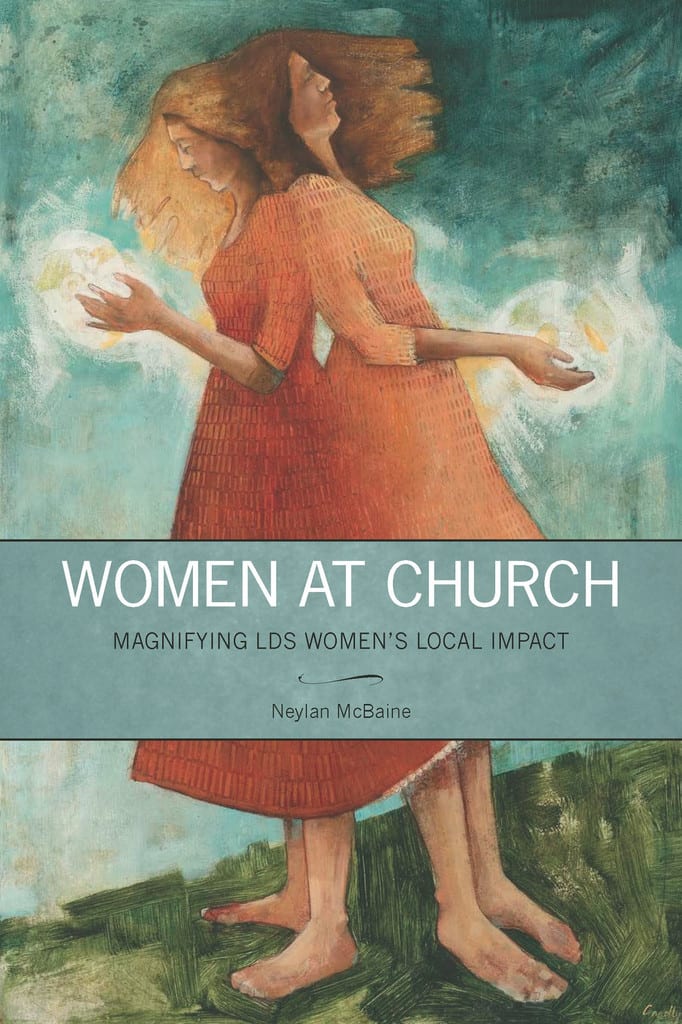
McBaine_Women_1024x1024[The following is an excerpt from Neylan McBaine’s new book Women at Church: Magnifying LDS Women’s Local Impact. It is reposted here with permission of the author and Greg Kofford Books.] 

In my August 2012 FairMormon conference talk, one of the most challenging points that I made is that I feel we do ourselves a disservice as Mormons—when communicating both to external audiences and internal audiences—when we continually assert that men and women are “equal” in our Church. While this may have made some listeners and readers squirm, almost all of the personal responses I received on this point expressed relief. It seems that while we feel confident in our doctrinal belief that men and women have the same worth in the sight of God, we feel uncomfortable doing the cognitive leaps required to claim that men and women are equal in our practice.

The questions seem to be: If we believe in equality, do we have an obligation to practice equality? And if we practice equality, what does that look like? These questions arise in our cultural consciousness because they are the same questions that American society has been wrestling with since the day we declared independence from Great Britain. It was literally “self-evident” to the founders of our country that all people are created equal. How that belief in equality actually translated into a practice of equality was a discussion that shaped the very foundation of our country: for our founders, practicing equality initially demanded that white settlers in America should have the same taxation and representation as their brothers in England. And from the first moments of the country’s founding, debate also raged over whether the equality the new Americans had fought to achieve extended to people of all races. Throughout the nineteenth and twentieth centuries, Americans asked themselves questions similar to those we had at our founding: What does equality look like? How do we practice it? What terms do we draw as a society to determine what opportunities, resources, and experiences are equal? How do our institutions support those terms? [Read more…] about Disconnect between Doctrine and Practice of Equality

Filed Under: Gender Issues, Women

Mormon FairCast Book Review: Women At Church by Neylan McBaine

September 8, 2014 by NickGalieti

https://media.blubrry.com/mormonfaircast/www.fairlatterdaysaints.org/wp-content/uploads/2014/09/MormonFairCast-NeylandMcBaine-WomenAtChurch.mp3

Podcast: Download (71.8MB)

Subscribe: RSS

Neylan McBain Interview - FairMomronNeylan McBaine grew up a member of the Church of Jesus Christ of Latter-day Saints (Mormon) in New York City and attended Yale University. She has been published in Newsweek, Dialogue: A Journal of Mormon Thought, Segullah, Meridian Magazine, and the Washington Post to name a few.

Neylan is the founder and editor-in-chief of The Mormon Women Project, a continuously expanding library of interviews with LDS women found at www.mormonwomen.com.

Neylan is the author of a collection of personal essays — How to Be a Twenty-First Century Pioneer Woman (2008) — as well as Sisters Abroad: Interviews from the Mormon Women Project (2013). She lives with her husband and three young daughters in Utah.

Questions:

Your bio speaks volumes about your passions to support and place a spotlight on Mormon Women. When did your first feel the sparks of this passion?

I actually wanted to start with the cover of the book. Aside from it being warm and fuzzy paper, easy to hold in your hand as you read, the artwork is also quite gripping. I don’t always have much to say about the covers, but I love the painting on the cover of your book. Could you describe it and how the cover actually speaks well to the theme of your book?

This theme of feminism has a wardrobe of interpretations that attempt to clothe a given message. Because there are so many different versions of feminism, could you please take a minute to describe your own interpretation of feminism, and how you frame your self in reference to it?

Your opening sentence is as clear a thesis as I have read however, “This book is predicated on a single belief: that there is much more we can do to see, hear, and include women in the church.” As I read it I wonder about one word in that sentence, the word “much” there is much more we can do to see, hear, and include women in the church. How bold, italicized, and underlined did you want the reader to read into the word “much?”

It is your clear assumption that women are not being heard, and in this same first chapter where you state that a good portion of your book is going to talk about the problem: that some women are feeling neglected, overlooked, and silenced in their church experiences. Is it that these women are feeling neglected and overlooked and silenced by men? By other women? Both?

You address the issue of hurt, of pain, that women are feeling. There are multiple accounts of this happening throughout the church. In a recent interview Terryl and Fiona Givens talked about their new book, The Crucible of Doubt. In that book they talk about the utility of suffering, of trials and tests. They consider these as part of the experience of worshiping deity. Then I read your book and I read about the primary effort to alleviating the hurt. For those that might see these two and feel that both offer some truth they may also seem paradoxical. How then do you define the place, utility, or role of hurt?

You call for greater empathy from general church membership with those who struggle or have hurt. The Savior called for the same thing in his day, and one could argue that seeking for greater charity is the cause of all who wish to be considered disciples of Christ. Discipleship, for men or women, tends to operate on a metaphorical scale where there is a balance of helping others being in ratio to others helping themselves. In reading your book, there is a clear indication that you feel that the church has not done enough to help women or to reach out to embrace women’s voices. What then is that balance as you see it?

We believe in a church of continuing revelation, a living church, one that should not fight flat out the idea of change. But that belief is also tempered by understanding from which changes are to come, and why they come. The first half of your book is meant to lay out the case that there is a need for change. The second part offers some perspectives and examples on how changes can come. How then are we to first acknowledge the need, in a faithful way, without doing so in attacking the system or those who are doing their best to administer the gospel with limited capacities?

In going through part 1 of the book you spend a lot of time talking about the deep need for change on these issues. It can be uncomfortable to sit with that material. While Part 2 of the book is example after of example of how people have enacted changes locally, things that people have done to adopt more equality. This is more a fulfillment of D&C 58:27 where people are being anxiously engaged in a good cause. What are some of those examples

Filed Under: Gender Issues, Hosts, Nick Galieti, Podcast, Women Tagged With: Neylan McBain, Women At Church

Continuing the conversation begun by Neylan McBaine’s “Women at Church”

August 28, 2014 by Chris Taber

At the recent 2014 FairMormon Conference, I picked up a pre-release copy of Neylan McBaine’s new book “Women at Church: Magnifying LDS Women’s Local Impact”, which is being released publically today. I started reading it on the airplane ride home on Saturday and couldn’t put it down and I finished it the next day after Church. It was amazing. Since it is officially being released today, I thought I would share my thoughts about the book and about the message that I think Neylan is trying to convey concerning how we can improve our Church culture and our rhetoric to match our doctrine.

This is not a book about doctrine, nor does Neylan intend for it to be. Instead, it is written for men and women, Church leaders and fill-the-pews-every-week Church members. First, it illustrates how some Church culture, rhetoric, and practices unnecessarily make some women (and in many cases the men who love and support those women) feel less-than, and then it provides several suggestions for how we might change our culture, rhetoric, and practices without requiring any changes in doctrine or official policy.

Both the descriptions of “the problem” and the suggestions for “solutions” are backed up by anecdotes from a wide range of sources that Neylan collected after considering some of the reactions to her 2012 FairMormon Conference address and being encouraged to expand her work there into a larger project. She sought for stories and suggestions from Church members across the belief and political spectrum. She then pulled them together to illustrate how, when we talk about gender balance in the Church, we are not only dealing with doctrine – we are dealing with emotions, culture, public relations, and long-standing group dynamics, many of which have little or nothing to do with the gospel of Jesus Christ.

Neylan’s message was full of “a-ha” moments for me. One occurred when I listened to her 2012 FairMormon Conference talk and heard her describe why language matters, both internal and external to the Church, when we talk about things like “equality”. For example, When we use the words “equal”, “alike”, or “equality” in a gospel setting:

“…and he denieth none that come unto him, black and white, bond and free, male and female; and he remembereth the heathen; and all are alike [or equal] unto God, both Jew and Gentile.” (2 Ne 26:33),

we have developed a good internal (as in, inside the Church) understanding of what “alike” or “equal” means and looks like: God loves everyone without regard to race, color, gender, occupation, etc., and we, as disciples of Christ should seek to emulate that same principle.

Where we run into trouble is when we try to pass off this internal definition or understanding of “equal” in our external public relations messaging as a Church. The rest of the world uses a measuring stick that is vastly different to measure “equality”, and our rhetoric will fall on deaf ears if we do not recognize this fact and adapt our message accordingly.

When I say “vastly different” from the rest of the world, I mean we are different by almost every criteria the world uses to gauge these sorts of things: prominence of women’s events compared with men’s, prominence of women leaders compared with men, emphasis on women’s public teaching and influence compared with men’s, opportunities for institutional or organizational “span-of-control” and “span-of-influence” positions for women compared with men, etc. All of these are simple, basic, easy-to-calculate, easy-to-see, measuring sticks by which the rest of the world gauges the word “equality”. We have to consider what the rest of the world hears when we put out our public relations messaging or our social media posts about media stories regarding gender-related issues in the Church. We need to realize that when we talk about “equality” between men and women within the Church, but then the world sees something totally different when they look at our organization, their reaction will be to discount or dismiss our comments and messaging as not credible or misleading. When we try to pass off our internal definition of “equality” as equivalent to the world’s definition of “equality,” we will fail every time. And when we fail in the public relations space, we lose credibility.

“But who cares?” we might ask. “Since when are we concerned with what the rest of the world thinks of us? Shouldn’t we be more concerned with what God thinks of us?” Sure. Absolutely. But if that were the only consideration, we would have no need for a Church Public Affairs function! It seems like at least one of those reasons should have something to do with aligning our internal and external rhetoric. As long as we want to maintain our ability to appeal to the rest of the world through our missionary efforts, we would do well to listen to people with the experience and expertise to help us at least reduce the number of “unforced errors” on this subject.

This is where I think McBaine’s approach is so valuable. By challenging us to refine our rhetoric first, and not agitating for changes in doctrine, she is reinforcing the point that it is not only important what we say, but how we say it.

One of my favorite parts in “Women at Church” is where Neylan points out the strong and empowering message that we could send to the world about the importance of women’s contributions in the Church by making those contributions more visible. We live in a visual world, and while words are important, so are images. The recent changes in seating assignments during General Conference, for example, where Relief Society, Young Women, and Primary General Presidencies have been invited to take a more central position on the rostrum, and the addition of these women’s portraits in the lobby of the Conference Center and in the center page of the Conference issue of the Ensign and Liahona alongside the General Authorities are some examples of this being put into practice. One of Neylan’s suggestions is that we consider inviting ward or stake Relief Society, Young Women, and/or Primary presidencies to sit on the stand during Ward or Stake Conferences.

Some may consider this an example of tokenism or window dressing, since these women do not preside over the meeting. But whereas changing who presides would require a change in doctrine (as Elder Oaks’ April 2014 General Conference address made clear), the change suggested by Neylan would require no change in doctrine, nor any change in official church policy. And the benefits could be great: both men and women, old and young, would see women as well as men recognized on the stand for the important work that they do in the Church. Our doctrine is clear on this: the work that Priesthood brethren do in the Church is no more nor less valuable than the work that sisters do in their Relief Society, Young Women, Primary, and other callings. So how can it hurt us to have a visible representation of the equal value of those contributions on the stand? Making women’s roles and responsibilities more visible to both the men and the women in the ward by having RS, YW and/or Primary leaders sit on the stand, even if only for Ward and Stake Conference, does not fly in the face of anything more than our traditions and customs (and perhaps in some cases our prejudices). And if it removes a potential hurdle for our youth or other members struggling because of the imbalance in the visibility of women’s contributions, all of whom are growing up and living in a world where the world’s definition and visual depiction of equality is what they live and experience every day at school, at work, and in their other non-Church associations, and if it can remove that hurdle without changing doctrine or policy, then indeed, why not!?

We ignore or minimize the distinction between our “gospel” understanding of these terms and concepts and the “worldly” understanding to our great detriment, as it undermines our ability to be “in the world but not of the world.”  We need to be not only multi-lingual in our missionary training centers as we teach the various languages of the world, but also multi-lingual in our cultural rhetoric and understanding. This will help us guide those who would welcome such empowering and ennobling doctrines if they could see them through a gospel lens, unburdened of the rhetorical baggage that otherwise prevents them from seeing the beauty of our doctrine.

Filed Under: Book reviews, FAIR Conference, Gender Issues, LDS Culture, Women Tagged With: #womenatchurch, Women

Book Review: “Women at Church: Magnifying LDS Women’s Local Impact”

August 25, 2014 by S. Hales Swift

McBaine_Women_1024x102410614220_10152602861189764_2459171662055093934_n


Neylan McBaine is one of several notable and thoughtful participants in the conversation that has been taking place about the roles and situation of women in The Church of Jesus Christ of Latter-day Saints. Her soon-to-be-released book, Women at Church: Magnifying LDS Women’s Local Impact, is both a tremendous synopsis of that conversation for those who are still trying to get a handle on its many facets and a valuable and constructive contribution in its own right. Sister McBaine is the founder of the Mormon Women Project, which collects stories of LDS women for the purpose of celebrating and highlighting their lives, accomplishments, and contributions, a worthy goal in a church that celebrates that which is of good report and praiseworthy, but also a worthy goal for one interested in better understanding the human condition.

Her book draws upon a wide variety of sources. I saw mention of most of the major discussants, a host of more minor ones, and many individual women and men who shared their experiences navigating the labyrinth of gender relations in the relative privacy of their own lives. Apart from merely having a large pool of sources from which to draw experience and wisdom, this book also accomplishes a measure of balance. The author explains both sides of many of the issues in LDS gender relations in terms proponents of each position will likely relate to. Thus people with a variety of opinions will be both informed and challenged by this book. The author also presents some challenging perspectives. Not all of her anecdotes end well. But this also plays the important role of highlighting the real human lives and souls that are at stake in the effort to live our religion in a truly thoughtful, inclusive, and Christ-like manner. Though the book contains a number of stories that are necessarily sorrowful, the book maintains a genuinely hopeful tone of focused optimism. This is not a book that should leave people depressed or hopeless, but instead give them perspective and ideas for how to improve.

For me personally, this book succeeded in accomplishing several important things. It helped me understand some of the more common or characteristic sources of frustration. It convinced me that having sisters more visible is important for spiritual reasons beyond any worldly arguments that may exist for it. And it helped reinforce my confidence that our leaders are working to improve these situations, and that there is significant scope for us to work for better relationships within the scope of our own stakes, wards, and branches.

Why is it important for women (or any sort of person, really) to be visible to others? In reading this book, a few reasons become apparent. One that the author brings up is that the process of creation necessarily involves models. When God created the earth, those creations were “spiritually, before they were naturally upon the face of the earth.” And it makes sense for us to desire models to use to form our own worlds as well. Jesus, who also famously counseled that we should do our alms in secret, commanded the disciples to “let your light so shine before this people, that they may see your good works and glorify your Father who is in heaven” (3 Nephi 12:16). While on the surface these two directives appear to be at variance, the principle appears to be that we are not rewarded of God for self-aggrandizement and seeking the praise of the world, but we nevertheless help to glorify God when our example teaches others how to succeed in living in accordance with His plan. Not every woman’s path will look the same, and it is important to have women who represent the variety of possible righteous lives visible so that others seeking to find a righteous example upon which to pattern a faithful life in their own circumstances can have the undergirding benefit of an example. The life of faith is one of challenges, but challenges that need not be encountered alone and without a map.

Turning attention to some of the means the author proposes for providing female role models, one of the most encouraging points she brings up is the fact that many of the practices that could be adopted to provide visibility to women on a local scale are already being modeled by our general leaders. She notes the recent deliberate inclusion of women auxiliary leaders in prominent positions in the seating arrangements for General Conference, as well as their inclusion in the Conference Ensign center sheets showing general leaders. Of particular interest in this last conference is a talk by Linda S. Reeves dealing with protecting the home from pornography. This talk sets a strong example of a general leader speaking to the whole church, just as one giving a talk in sacrament meeting (who likely holds some particular stewardship in the ward) speaks by default to the whole group rather than only those who they are assigned to serve in some particular capacity. This was further driven home by her choosing to address what has traditionally been thought of as a male problem, though participation by either gender is thoroughly unfortunate.

This idea of leaders speaking to the needs of the whole church rather than just one particular subset of it is further amplified in the council setting. In a ward council, the sisters who preside over the auxiliary organizations are asked to share their insights and inspiration on all matters that come before the council. The inspiration of these sister leaders is then able to benefit the entire ward body. When all functions properly, input from sisters functions on an equal footing with input from the brothers in the ward. This practice has likewise been modeled at the general level. Sister Eubank’s recent FairMormon talk included her recounting of her experiences with councils that made sure they heard and understood her insights before proceeding. Properly conducted ward councils have received strong encouragement from Elder Ballard, who has been counseling leaders to properly harness the full potential of their Ward Councils for 20 years. The more these councils fulfill their full potential, the more our sisters are able to fulfill theirs.

Neylan McBaine also discusses the great latitude that local leaders have to solve problems of visibility and recognition on the local level. She emphasizes the importance of spiritual creativity by leaders in the process. She discusses a number of approaches that have been taken with baby blessings to make sure the mother was recognized, while still keeping within the bounds of church policies. One of several discussed was inviting the mother to sit on the stand at the meeting where the blessing occurred so that she had a good view of the ordinance and so that she could be seen and receive the recognition of the congregation. A number of other good approaches were discussed. The key really does seem to be in spiritual creativity, and a willingness to explore ways to include and recognize the real and significant contributions and accomplishments of women. There is enough space within the church policies for these things to happen, if people are willing to experiment a bit, be patient with one another, and withhold judgment.

Another area where she identified possibilities for women to contribute is the sacrament. Apparently, (something I was less aware of before reading this book) women have historically provided bread for the sacrament, and any way you look at it, purchasing Wonder Bread is an assignment not strictly necessitating priesthood authority. Reading the beautiful account of a sister who prepared the sacramental bread, I couldn’t help recalling that the bread represented the flesh of the savior, and that, indeed, that flesh was molded and formed and prepared by a woman. Inviting then the Lord’s handmaids to provide the bread might even enhance the meaning of the ordinance and at the same time highlight one of the most uniquely key and feminine contributions to the salvific history of the human family.

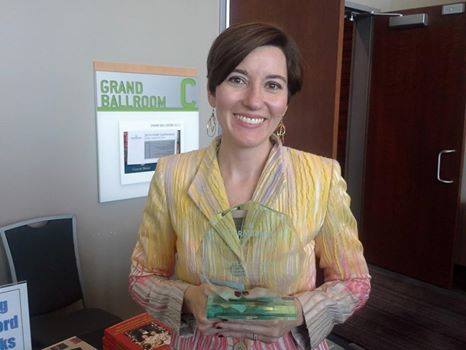
The insights shared in this review are a very small sampling of what one person got out of a remarkably thoughtful book. Anyone that would like to get up to date on the conversation about women in the Church of Jesus Christ should locate a copy of it immediately. I’d loan you mine (with a deposit), but I am but one man with but one copy. If you’d like, though, this is important enough of a book that we have them available for preorder at the FairMormon bookstore at a bit of a discount. The author was kind enough to personalize my copy while I was at the FairMormon Conference, where she received the FairMormon Award of Excellence. She wrote, “With hope in the future.” This book gives me a lot of reasons for hope.

Filed Under: Gender Issues, Women

“This is a Woman’s Church”

August 9, 2014 by Trevor Holyoak


Sharon Eubank’s presentation, given on August 8 at the 2014 FairMormon Conference, received the rare honor of a standing ovation. The transcript can be viewed here.

You can purchase access to the rest of the conference videos at the FairMormon Bookstore.


Sharon Eubank was born in Redding, California, to Mark and Jean Eubank. She received a bachelor’s degree in English from Brigham Young University and served as a full-time missionary for the Church of Jesus Christ of Latter-day Saints in the Finland Helsinki mission. Her career includes working as a legislative aide in the U.S. Senate for 4 years and owning a retail education store in Provo, Utah, for 7 years.

Since 1998, she has been employed by the Church in the Welfare Department. She helped to establish 17 international LDS employment offices Africa and Europe. For five years she directed the humanitarian wheelchair program expanding its scope to 50,000 individual donations each year and implementing World Health Organization training standards.

In 2008 Sharon became regional director of the LDS Charities for the Middle East Africa North area where she oversaw humanitarian work with active country offices in Egypt, Syria, Lebanon, Afghanistan, Jordan, and Morocco. She also served on the Relief Society general board during Sister Julie B. Beck’s administration until April 2012.

Currently, Sharon is the director of LDS Charities, the humanitarian organization of the Church of Jesus Christ of Latter-day Saints.

Filed Under: Apologetics, Doctrine, FAIR Conference, Gender Issues, LDS Culture, News from FAIR, Politics, pornography, Women

Mormon Fair-cast 244: FairMormon Conference 2014

July 8, 2014 by Ned Scarisbrick

https://media.blubrry.com/mormonfaircast/www.fairlatterdaysaints.org/wp-content/uploads/2014/07/MTSDDP7_6_141.mp3

Podcast: Download (18.0MB)

Subscribe: RSS

33480_1612609000660_2667876_nDanPetersonMartin Tanner who is the host of “Religion Today” on KSL FM 102.7 and AM 1160 interviews Steve Densley who is the executive vice-president of FairMormon and Daniel Peterson, Ph.D. who is a prominent Mormon apologist and professor of Islamic Studies and Arabic in the Department of Asian and Near Eastern Languages at Brigham Young University about the upcoming FairMormon conference that will be held in Provo Utah on the 7th and 8th of August this year. Tickets can be purchased here.

This broadcast originally aired on the 6th of July 2014.

The views and opinions expressed in this podcast may not represent those of the Church of Jesus Christ of Latter-day Saints or that of FairMormon.


Filed Under: Anti-Mormon critics, Apologetics, Bible, Book of Mormon, Conversion, Doctrine, Early Christianity, Evidences, FAIR Conference, Faith Crisis, First Vision, Gender Issues, General, Joseph Smith, Mormon Voices, News from FAIR, Podcast, Polygamy, Power of Testimony, Racial Issues, Science, Women

  • « Go to Previous Page
  • Go to page 1
  • Go to page 2
  • Go to page 3
  • Go to page 4
  • Go to Next Page »

Primary Sidebar

Faithful Study Resources for Come, Follow Me

Subscribe to Blog

Enter your email address:

Subscribe to Podcast

Podcast icon
Subscribe to podcast in iTunes
Subscribe to podcast elsewhere
Listen with FAIR app
Android app on Google Play Download on the App Store

Pages

  • Blog Guidelines

FAIR Latest

  • Come, Follow Me with FAIR – Doctrine and Covenants 137–138 – Part 2 – Autumn Dickson
  • Come, Follow Me with FAIR – Doctrine and Covenants 137–138 – Mike Parker
  • FAIR December Newsletter
  • Come, Follow Me with FAIR – Doctrine and Covenants 137–138 – Part 1 – Autumn Dickson
  • Prophets of God 

Blog Categories

Recent Comments

  • LHL on Come, Follow Me with FAIR – Doctrine and Covenants 132 – Mike Parker
  • Stephen Johnsen on Come, Follow Me with FAIR – Doctrine and Covenants 132 – Mike Parker
  • Bruce B Hill on Come, Follow Me with FAIR – Doctrine and Covenants 124 – Part 1 – Autumn Dickson
  • Gabriel Hess on Join us Oct 9–11 for our FREE virtual conference on the Old Testament
  • JC on When the Gospel “Doesn’t Work”

Archives

Follow Us

  • Facebook
  • Twitter
  • iTunes
  • YouTube
Android app on Google Play Download on the App Store

Footer

FairMormon Logo

FAIR is a non-profit organization dedicated to providing well-documented answers to criticisms of the doctrine, practice, and history of The Church of Jesus Christ of Latter-day Saints.

Donate to FAIR

We are a volunteer organization. We invite you to give back.

Donate Now

Site Footer