• Skip to primary navigation
  • Skip to main content
  • Skip to primary sidebar
  • Skip to footer

FAIR

  • Find Answers
  • Blog
  • Media & Apps
  • Conference
  • Bookstore
  • Archive
  • About
  • Get Involved
  • Search

Hosts

Faith and Reason 61: Uto-Aztecan Language

November 22, 2015 by FAIR Staff

https://media.blubrry.com/mormonfaircast/www.fairlatterdaysaints.org/wp-content/uploads/2015/11/Uto-Aztecan-Language.mp3

Podcast: Download (11.7MB)

Subscribe: RSS


From the book: Of Faith and Reason: 80 Evidences Supporting the Prophet Joseph Smith

by Michael R. Ash

When the Lehites arrived in the New World over two thousand years ago, they would have merged with existing native populations. Within a few generations, the spoken language of their descendants would likely have become that of their neighbors. It’s also possible, however, that some of the original Hebrew words used by the Lehites were picked up by their neighbors and continued to be used even after the Hebrew language disappeared. Near Eastern language expert Dr. Brian Stubbs argues for a possible link between Uto-Aztecan (a family of about thirty Native American Languages) and Hebrew. As a professional linguist, Stubbs avoids the pitfalls of amateurs who simply point to similar words between two different languages.

Michael R. Ash is the author of: Of Faith and Reason: 80 Evidences Supporting The Prophet Joseph Smith. He is the owner and operator of MormonFortress.com and is on the management team for FairMormon. He has been published in Sunstone, Dialogue: A Journal of Mormon Thought, the Maxwell Institute’s FARMS Review, and is the author of Shaken Faith Syndrome: Strengthening One’s Testimony in the Face of Criticism and Doubt.  He and his wife live in Ogden, Utah, and have three daughters.

Julianne Dehlin Hatton  has worked as a News Director at an NPR affiliate, Television Host, News Anchor, and Airborne Traffic Reporter. She graduated with an MSSc from the Maxwell School of Citizenship and Public Affairs at Syracuse University in 2008. Julianne and her husband Thomas are the parents of four children.

Music for Faith and Reason is provided by Arthur Hatton.
Filed Under: Faith and Reason, Julianne Dehlin Hatton, Michael R. Ash, Podcast Tagged With: Faith and Reason, Julianne Dehlin Hatton, Michael R. Ash

Faith and Reason 60: List of Book of Mormon Items

November 15, 2015 by FAIR Staff

https://media.blubrry.com/mormonfaircast/www.fairlatterdaysaints.org/wp-content/uploads/2015/11/List-of-Book-of-Mormon-Items-Podcast.mp3

Podcast: Download (5.6MB)

Subscribe: RSS

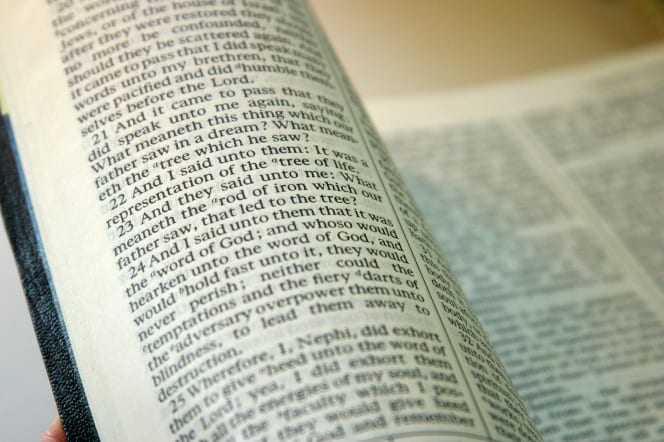
open-book-of-mormon-407425-gallery

From the book: Of Faith and Reason: 80 Evidences Supporting the Prophet Joseph Smith

by Michael R. Ash

Critics frequently claim that the Book of Mormon is contradicted by New World archaeology. This may have been true in 1830 when the Book of Mormon was published, but it is no longer true today. Dr. John Clark of the New World Archaeological Foundation recently compiled a list of sixty items mentioned in the Book of Mormon. The list includes items such as steel, swords, barley, cement, thrones, literacy and more. A dozen years after the Book of Mormon was printed only eight of those sixty items had been confirmed by archaeological evidence. By the turn of the twenty-first century , however, forty-five of those sixty items (or 75 percent) have been confirmed by archaeological evidence.

Michael R. Ash is the author of: Of Faith and Reason: 80 Evidences Supporting The Prophet Joseph Smith. He is the owner and operator of MormonFortress.com and is on the management team for FairMormon. He has been published in Sunstone, Dialogue: A Journal of Mormon Thought, the Maxwell Institute’s FARMS Review, and is the author of Shaken Faith Syndrome: Strengthening One’s Testimony in the Face of Criticism and Doubt.  He and his wife live in Ogden, Utah, and have three daughters.

Julianne Dehlin Hatton  has worked as a News Director at an NPR affiliate, Television Host, News Anchor, and Airborne Traffic Reporter. She graduated with an MSSc from the Maxwell School of Citizenship and Public Affairs at Syracuse University in 2008. Julianne and her husband Thomas are the parents of four children.

Music for Faith and Reason is provided by Arthur Hatton.

Filed Under: Faith and Reason, Julianne Dehlin Hatton, Michael R. Ash, Podcast

Faith and Reason 58: Cement

October 21, 2015 by FAIR Staff

https://media.blubrry.com/mormonfaircast/www.fairlatterdaysaints.org/wp-content/uploads/2015/11/Cement.mp3

Podcast: Download (4.0MB)

Subscribe: RSS

From the book: Of Faith and Reason: 80 Evidences Supporting the Prophet Joseph Smith

According to the critics and what was known about ancient America during Joseph Smith’s day, the Native Americans did not work in cement. Recent research, however, shows that some Native Americans began using cement extensively at about the time indicated in the Book of Mormon. One of the most notable uses of cement is in the temple complex at Teotihuacan, north of present day Mexico City.  According to David S. Hyman, the structural use of cement appears suddenly in the archaeological record, and its earliest sample is a highly developed product. Although exposed to the elements for over 2,000 years, this structure still exceeds many modern day building code requirements.

Michael R. Ash is the author of: Of Faith and Reason: 80 Evidences Supporting The Prophet Joseph Smith. He is the owner and operator of MormonFortress.com and is on the management team for FairMormon. He has been published in Sunstone, Dialogue: A Journal of Mormon Thought, the Maxwell Institute’s FARMS Review, and is the author of Shaken Faith Syndrome: Strengthening One’s Testimony in the Face of Criticism and Doubt.  He and his wife live in Ogden, Utah, and have three daughters.

Julianne Dehlin Hatton  has worked as a News Director at an NPR affiliate, Television Host, News Anchor, and Airborne Traffic Reporter. She graduated with an MSSc from the Maxwell School of Citizenship and Public Affairs at Syracuse University in 2008. Julianne and her husband Thomas are the parents of four children.

Music for Faith and Reason is provided by Arthur Hatton.
Filed Under: Faith and Reason, Julianne Dehlin Hatton, Podcast

Fair Issues 94: Moroni and the Hill Cumorah

August 23, 2015 by Ned Scarisbrick

https://media.blubrry.com/mormonfaircast/www.fairlatterdaysaints.org/wp-content/uploads/2015/08/Fair-Issues-94-pod.mp3

Podcast: Download (11.0MB)

Subscribe: RSS

MAThe Book of Mormon model for a Mesoamerican geography has – like virtually all scholarly models – a handful of anomalies or potentially problematic issues.  One of those areas of concern legitimately asks how the golden plates could have been dug out of the ground in upstate New York, if Book of Mormon events took place in Mesoamerica.

In this installment brother Ash discusses several possibilities concerning how Moroni may have traveled to deposit the golden plates on the family farm of Joseph Smith.

The full text of this article can be found at Deseret News online.

Brother Ash is author of the book Shaken Faith Syndrome: Strengthening One’s Testimony in the Face of Criticism and Doubt, as well as the book, of Faith and Reason: 80 Evidences Supporting the Prophet Joseph Smith. Both books are available for purchase online through the FairMormon Bookstore. Tell your friends about the Mormon Fair-Cast. Share a link on your Facebook page and help increase the popularity of the Mormon Fair-Cast by subscribing to this podcast in iTunes, and by rating it and writing a review.

The views and opinions expressed in the podcast may not reflect those of the Church of Jesus Christ of Latter-day Saints or that of FairMormon

Filed Under: Apologetics, Book of Mormon, Evidences, Fair Issues, Faith Crisis, General, Geography, Hosts, Joseph Smith, Michael R. Ash, Ned Scarisbrick, Podcast Tagged With: Book of Mormon Geography, Hill Cumorah

Fair Issues 93: Mesoamerican model: Evidences and anomalies

August 16, 2015 by Ned Scarisbrick

https://media.blubrry.com/mormonfaircast/www.fairlatterdaysaints.org/wp-content/uploads/2015/08/Fair-Issues-93-Pod.mp3

Podcast: Download (11.6MB)

Subscribe: RSS

MAIn this installment brother Ash discuss why most LDS scholars believe that ancient Mesoamerica was the home for most Book of Mormon events.

As Mesoamerican ethnohistory specialist Brant Gardner explains, it’s not a single thing but and accumulation and convergence of many different things that strengthen the case for a Mesoamerican geography.

The full text of this article can be found at Deseret News online.

Brother Ash is author of the book Shaken Faith Syndrome: Strengthening One’s Testimony in the Face of Criticism and Doubt, as well as the book, of Faith and Reason: 80 Evidences Supporting the Prophet Joseph Smith. Both books are available for purchase online through the FairMormon Bookstore. Tell your friends about the Mormon Fair-Cast. Share a link on your Facebook page and help increase the popularity of the Mormon Fair-Cast by subscribing to this podcast in iTunes, and by rating it and writing a review.

The views and opinions expressed in the podcast may not reflect those of the Church of Jesus Christ of Latter-day Saints or that of FairMormon


Filed Under: Anti-Mormon critics, Book of Mormon, Evidences, Fair Issues, Faith Crisis, General, Geography, Hosts, Joseph Smith, Michael R. Ash, Ned Scarisbrick, Podcast Tagged With: Book of Mormon Geography

Fair Issues 90: True scholarship vs. wishful thinking

August 9, 2015 by Ned Scarisbrick

https://media.blubrry.com/mormonfaircast/www.fairlatterdaysaints.org/wp-content/uploads/2015/06/Fair-Issues-90-Pod.mp3

Podcast: Download (11.6MB)

Subscribe: RSS

MAIn this installment brother Ash introduces the Mesoamerica model as a possible location for at least some of the Book of Mormon geography along with how an authentic ancient text should only be supported by rigorous scholarship and not wishful thinking and the misuse of scholarly data.

The full text of this article can be found at Deseret News online.

Brother Ash is author of the book Shaken Faith Syndrome: Strengthening One’s Testimony in the Face of Criticism and Doubt, as well as the book, of Faith and Reason: 80 Evidences Supporting the Prophet Joseph Smith. Both books are available for purchase online through the FairMormon Bookstore. Tell your friends about the Mormon Fair-Cast. Share a link on your Facebook page and help increase the popularity of the Mormon Fair-Cast by subscribing to this podcast in iTunes, and by rating it and writing a review.

The views and opinions expressed in the podcast may not reflect those of the Church of Jesus Christ of Latter-day Saints or that of FairMormon


Filed Under: Anti-Mormon critics, Apologetics, Book of Mormon, Evidences, Fair Issues, Faith Crisis, General, Geography, Hosts, Michael R. Ash, Ned Scarisbrick, Podcast Tagged With: Book of Mormon Geography

RiseUp Podcast – The Choice of Discipleship

August 7, 2015 by NickGalieti

https://media.blubrry.com/mormonfaircast/www.fairlatterdaysaints.org/wp-content/uploads/2015/08/RiseUp-TheChoiceOfDiscipleship.mp3

Podcast: Download (36.0MB)

Subscribe: RSS

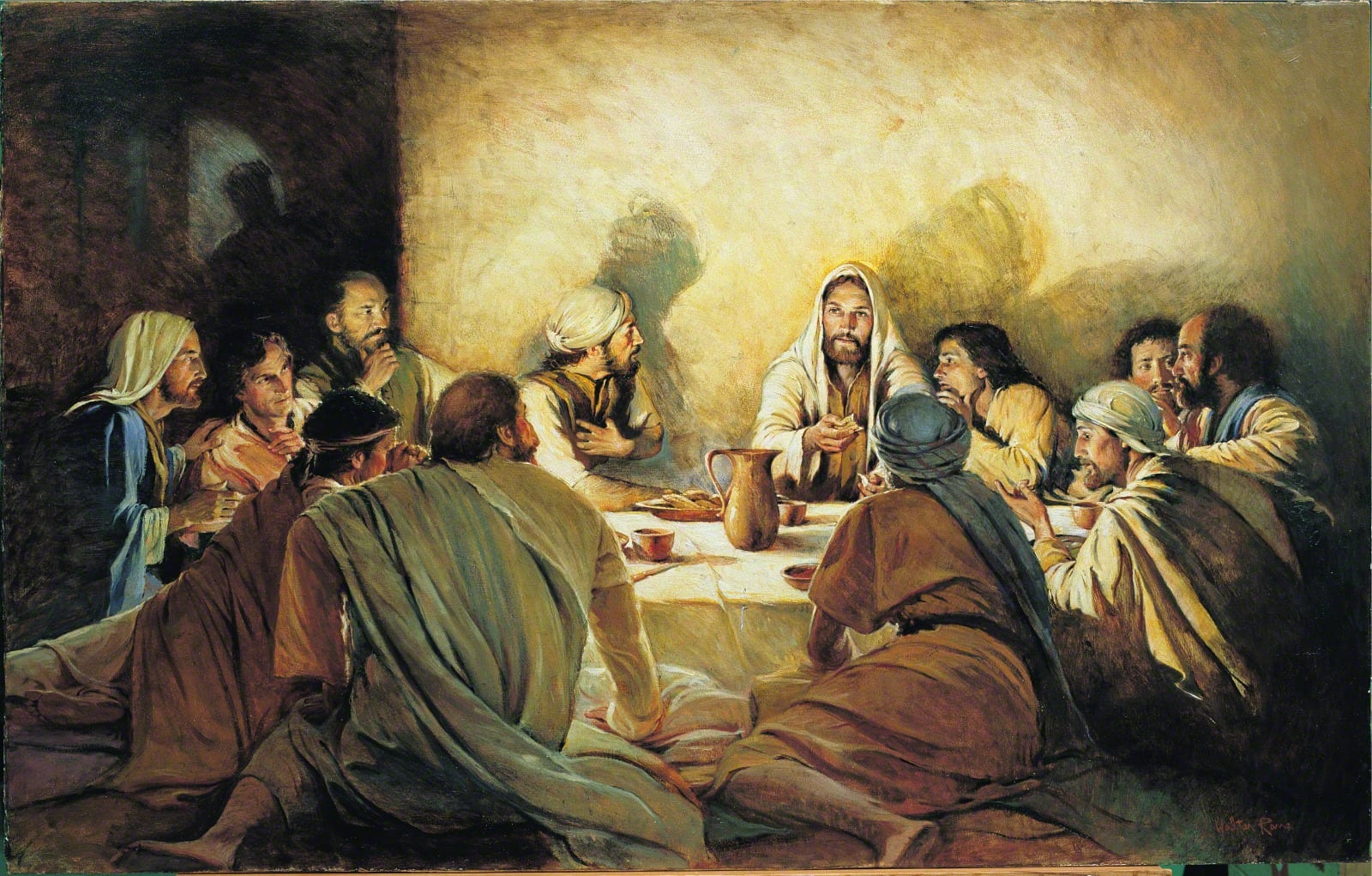
Last_supperSome of the greatest questions that we have in life don’t arise from an unknown piece of information, rather the choices we make in the direction of our lives. There is one choice that is so fundamental that it requires both ernest study, and a lifetime of reappraisal and recommitment to that choice. I speak of the choice of discipleship.

A disciple is a title given to followers of Jesus Christ. President James E. Faust defined discipleship this way in the October 2006 General Conference:

“The word for disciple and the word for discipline both come from the same Latin root—discipulus, which means pupil. It emphasizes practice or exercise. Self-discipline and self-control are consistent and permanent characteristics of the followers of Jesus, as exemplified by Peter, James, and John, who indeed “forsook all, and followed him.” The disciples of Christ receive a call to not only forsake the pursuit of worldly things but to carry the cross daily. To carry the cross means to follow His commandments and to build up His Church on the earth. It also means self-mastery.”

In D&C 41:5 God defines further what He considers to be a disciple, “He that receiveth my law and doeth it, the same is my disciple; and he that saith he receiveth it and doeth it not, the same is not my disciple, and shall be cast out from among you.”

In other scriptures are additional ways to describe the acts and therefore the character of a disciple. Sometimes this is further emphasized by stating behaviors that distinguish an individual as lacking the characteristics of a disciple. D&C 45:32 addresses the disciples choice to be steadfast and to be found doing the right things, in the right place, at the right time, “But my disciples shall stand in holy places, and shall not be moved; but among the wicked, men shall lift up their voices and curse God and die.”

D&C 52:40 addresses the need to love and care for our neighbors, “And remember in all things the poor and the needy, the sick and the afflicted, for he that doeth not these things, the same is not my disciple.”

D&C 103:27-28 speaks to the level of commitment that a disciple must have to the commandments and principles of Jesus Christ and His gospel, “Let no man be afraid to lay down his life for my sake; for whoso layeth down his life for my sake shall find it again. And whoso is not willing to lay down his life for my sake is not my disciple.”

President James E. Faust also taught this the same October 2006 General Conference talk:

What is discipleship? It is primarily obedience to the Savior. Discipleship includes many things. It is chastity. It is tithing. It is family home evening. It is keeping all the commandments. It is forsaking anything that is not good for us. Everything in life has a price. Considering the Savior’s great promise for peace in this life and eternal life in the life to come, discipleship is a price worth paying. It is a price we cannot afford not to pay. By measure, the requirements of discipleship are much, much less than the promised blessings.”

As stated before, the choice of discipleship is a two part choice. First one must study and come to know the life of a disciple. The second is to remain true to that commitment and to that lifestyle unceasingly. The best source for studying the life of a disciple is to study the life of Jesus Christ. He is the example of who a disciple can and should become, and it is in His teachings that we learn how to act as he would act. A disciple must choose to follow the Savior’s example and teachings.

When a person is baptized into the church, this acts as a formal declaration of discipleship. Elder Daniel L. Johnson of the Seventy said this in the October 2012 General Conference:

“Those of us who have entered into the waters of baptism and received the gift of the Holy Ghost have covenanted that we are willing to take upon ourselves the name of Jesus Christ, or in other words, we declare ourselves to be disciples of the Lord. We renew that covenant each week as we partake of the sacrament, and we demonstrate that discipleship by the way that we live.”

Those of who have been baptized have made the choice of discipleship, but we have also promised to always keep true to that commitment. This choice does not come with an exist strategy, vacation days, or an expiration date. President Dieter F. Uchtdorf said this in the April 2014 General Conference, “Being a disciple of Jesus Christ is not an effort of once a week or once a day. It is an effort of once and for all.”

When placed up against physical or spiritual trials, maybe even those where we question our faith, or waver in our commitments due to feeling a sense of being overwhelmed, the choice to continue in discipleship can seem especially difficult.

When a person comes across a troubling piece of history, or social pressures to accept a lifestyle or practice that is contrary to gospel standards, one may begin to question that choice of discipleship. Other times we observe challenges in our life that are more situational, such as a loss of job, the death of a loved one, or pressing issues like experiencing same sex attraction, gender confusion, or mental health issues like depression or anxiety, and wonder if God is real, or even ask “for what evil am I being punished?” Another question that is commonly asked is, “Why should I be so committed to something that is hard to understand, or seems to conflict with what I now know?” I too, have had moments where I questioned my commitments in light of certain trials of faith, or due to the choices others have made that have had an adverse impact on my dedication.

In those times I try to remind myself that I am not alone in these feelings. Even the Savior’s chosen Apostles in the old world, often called disciples in the scriptures, had periods of wavering commitment.

Jeffrey R. Holland gave a powerful lesson in the October 2012 General Conference entitled The First Great Commandment. I encourage a weekly study of that talk as part of our sacrament preparation. In that talk Elder Holland recounts the story of Peter and the other disciples being called, ministering for three years with the Savior, then going back to fishing-back to their previous life. I offer this story because within its text is the key to self-appraising our level of commitment, but also the methods to finding the desire to re-ignite that commitment time and time again.

“There is almost no group in history for whom I have more sympathy than I have for the eleven remaining Apostles immediately following the death of the Savior of the world. I think we sometimes forget just how inexperienced they still were and how totally dependent upon Jesus they had of necessity been. To them He had said, “Have I been so long time with you, and yet hast thou not known me … ?”

But, of course, to them He hadn’t been with them nearly long enough. Three years isn’t long to call an entire Quorum of Twelve Apostles from a handful of new converts, purge from them the error of old ways, teach them the wonders of the gospel of Jesus Christ, and then leave them to carry on the work until they too were killed. Quite a staggering prospect for a group of newly ordained elders.

Especially the part about being left alone. Repeatedly Jesus had tried to tell them He was not going to remain physically present with them, but they either could not or would not comprehend such a wrenching thought. Mark writes:

“He taught his disciples, and said unto them, The Son of man is delivered into the hands of men, and they shall kill him; and after that he is killed, he shall rise the third day. “But they understood not that saying, and were afraid to ask him.”

Then, after such a short time to learn and even less time to prepare, the unthinkable happened, the unbelievable was true. Their Lord and Master, their Counselor and King, was crucified. His mortal ministry was over, and the struggling little Church He had established seemed doomed to scorn and destined for extinction. His Apostles did witness Him in His resurrected state, but that only added to their bewilderment. As they surely must have wondered, “What do we do now?” they turned for an answer to Peter, the senior Apostle.

Here I ask your indulgence as I take some nonscriptural liberty in my portrayal of this exchange. In effect, Peter said to his associates: “Brethren, it has been a glorious three years. None of us could have imagined such a few short months ago the miracles we have seen and the divinity we have enjoyed. We have talked with, prayed with, and labored with the very Son of God Himself. We have walked with Him and wept with Him, and on the night of that horrible ending, no one wept more bitterly than I. But that is over. He has finished His work, and He has risen from the tomb. He has worked out His salvation and ours. So you ask, ‘What do we do now?’ I don’t know more to tell you than to return to your former life, rejoicing. I intend to ‘go a fishing.’” And at least six of the ten other remaining Apostles said in agreement, “We also go with thee.” John, who was one of them, writes, “They went forth, and entered into a ship immediately.”

But, alas, the fishing wasn’t very good. Their first night back on the lake, they caught nothing—not a single fish. With the first rays of dawn, they disappointedly turned toward the shore, where they saw in the distance a figure who called out to them, “Children, have you caught anything?” Glumly these Apostles-turned-again-fishermen gave the answer no fisherman wants to give. “We have caught nothing,” they muttered, and to add insult to injury, they were being called “children.”

“Cast the net on the right side of the ship, and ye shall find,” the stranger calls out—and with those simple words, recognition begins to flood over them. Just three years earlier these very men had been fishing on this very sea. On that occasion too they had “toiled all the night, and [had] taken nothing,” the scripture says. But a fellow Galilean on the shore had called out to them to let down their nets, and they drew “a great multitude of fishes,” enough that their nets broke, the catch filling two boats so heavily they had begun to sink.

Now it was happening again. These “children,” as they were rightly called, eagerly lowered their net, and “they were not able to draw it for the multitude of fishes.” John said the obvious: “It is the Lord.” And over the edge of the boat, the irrepressible Peter leaped.

After a joyful reunion with the resurrected Jesus, Peter had an exchange with the Savior that I consider the crucial turning point of the apostolic ministry generally and certainly for Peter personally, moving this great rock of a man to a majestic life of devoted service and leadership. Looking at their battered little boats, their frayed nets, and a stunning pile of 153 fish, Jesus said to His senior Apostle, “Peter, do you love me more than you love all this?” Peter said, “Yea, Lord; thou knowest that I love thee.”

The Savior responds to that reply but continues to look into the eyes of His disciple and says again, “Peter, do you love me?” Undoubtedly confused a bit by the repetition of the question, the great fisherman answers a second time, “Yea, Lord; thou knowest that I love thee.”

The Savior again gives a brief response, but with relentless scrutiny He asks for the third time, “Peter, do you love me?” By now surely Peter is feeling truly uncomfortable. Perhaps there is in his heart the memory of only a few days earlier when he had been asked another question three times and he had answered equally emphatically—but in the negative. Or perhaps he began to wonder if he misunderstood the Master Teacher’s question. Or perhaps he was searching his heart, seeking honest confirmation of the answer he had given so readily, almost automatically. Whatever his feelings, Peter said for the third time, “Lord, … thou knowest that I love thee.”

To which Jesus responded (and here again I acknowledge my nonscriptural elaboration), perhaps saying something like: “Then Peter, why are you here? Why are we back on this same shore, by these same nets, having this same conversation? Wasn’t it obvious then and isn’t it obvious now that if I want fish, I can get fish? What I need, Peter, are disciples—and I need them forever. I need someone to feed my sheep and save my lambs. I need someone to preach my gospel and defend my faith. I need someone who loves me, truly, truly loves me, and loves what our Father in Heaven has commissioned me to do. Ours is not a feeble message. It is not a fleeting task. It is not hapless; it is not hopeless; it is not to be consigned to the ash heap of history. It is the work of Almighty God, and it is to change the world. So, Peter, for the second and presumably the last time, I am asking you to leave all this and to go teach and testify, labor and serve loyally until the day in which they will do to you exactly what they did to me.”

Then, turning to all the Apostles, He might well have said something like: “Were you as foolhardy as the scribes and Pharisees? As Herod and Pilate? Did you, like they, think that this work could be killed simply by killing me? Did you, like they, think the cross and the nails and the tomb were the end of it all and each could blissfully go back to being whatever you were before? Children, did not my life and my love touch your hearts more deeply than this?”

My beloved brothers and sisters, I am not certain just what our experience will be on Judgment Day, but I will be very surprised if at some point in that conversation, God does not ask us exactly what Christ asked Peter: “Did you love me?” I think He will want to know if in our very mortal, very inadequate, and sometimes childish grasp of things, did we at least understand one commandment, the first and greatest commandment of them all—“Thou shalt love the Lord thy God with all thy heart, and with all thy soul, and with all thy strength, and with all thy mind.” And if at such a moment we can stammer out, “Yea, Lord, thou knowest that I love thee,” then He may remind us that the crowning characteristic of love is always loyalty.

“If ye love me, keep my commandments,” Jesus said. So we have neighbors to bless, children to protect, the poor to lift up, and the truth to defend. We have wrongs to make right, truths to share, and good to do. In short, we have a life of devoted discipleship to give in demonstrating our love of the Lord. We can’t quit and we can’t go back.”

If you want answers to questions about historical events, if you want answers on who to marry, if you want answers on wether or not to go or even stay on a mission, remembering and recommitting to your choice of discipleship will put you back in a mindset to feel and recognize the spirit. It is that spirit that will guide you into truth and will guide you to an exalted life. If we can answer that now famous question, “Do you love me?” with a “yes, I do love thee Lord,” we can feel of His love, we can be open to the promptings of the spirit, and we can find answers to difficult questions we may face. In essence we can feel peace. I have felt that peace in my own life and I can testify that this is true. I do love the Lord, and that choice to love the Lord is the choice of discipleship.

FairMormon-Rise-Up-iTunes-logo

Filed Under: Conversion, Faith Crisis, General, Hosts, Nick Galieti, Podcast, Power of Testimony, RiseUp, Youth Tagged With: commitment, discipleship

Fair Issues 92: A short history of LDS Mesoamerican scholars

August 2, 2015 by Ned Scarisbrick

https://media.blubrry.com/mormonfaircast/www.fairlatterdaysaints.org/wp-content/uploads/2015/08/Fair-Issues-92-pod.mp3

Podcast: Download (11.0MB)

Subscribe: RSS

MAIn this installment brother Ash relates the history of Dr. M. Wells Jakeman and Thomas Stuart Ferguson along with the work done by John L. Sorenson whose work was published in the 1984 Ensign.

The full text of this article can be found at Deseret News online.

Brother Ash is author of the book Shaken Faith Syndrome: Strengthening One’s Testimony in the Face of Criticism and Doubt, as well as the book, of Faith and Reason: 80 Evidences Supporting the Prophet Joseph Smith. Both books are available for purchase online through the FairMormon Bookstore. Tell your friends about the Mormon Fair-Cast. Share a link on your Facebook page and help increase the popularity of the Mormon Fair-Cast by subscribing to this podcast in iTunes, and by rating it and writing a review.

The views and opinions expressed in the podcast may not reflect those of the Church of Jesus Christ of Latter-day Saints or that of FairMormon


Filed Under: Apologetics, Articles of Faith, Book of Mormon, Evidences, Faith Crisis, General, Geography, Hosts, Joseph Smith, Michael R. Ash, Ned Scarisbrick, Podcast Tagged With: Book of Mormon Geography

Fair Issues 91: New light on Book of Mormon geography

July 26, 2015 by Ned Scarisbrick

https://media.blubrry.com/mormonfaircast/www.fairlatterdaysaints.org/wp-content/uploads/2015/07/Fair-Issues-91-pod.mp3

Podcast: Download (12.0MB)

Subscribe: RSS

MAIn this episode brother Ash sheds light on Book of Mormon geographic models from the perspective of both amateur enthusiasts and professional scholars.

The full text of this article can be found at Deseret News online.

Brother Ash is author of the book Shaken Faith Syndrome: Strengthening One’s Testimony in the Face of Criticism and Doubt, as well as the book, of Faith and Reason: 80 Evidences Supporting the Prophet Joseph Smith. Both books are available for purchase online through the FairMormon Bookstore. Tell your friends about the Mormon Fair-Cast. Share a link on your Facebook page and help increase the popularity of the Mormon Fair-Cast by subscribing to this podcast in iTunes, and by rating it and writing a review.

The views and opinions expressed in the podcast may not reflect those of the Church of Jesus Christ of Latter-day Saints or that of FairMormon


Filed Under: Anti-Mormon critics, Apologetics, Book of Mormon, Evidences, Fair Issues, General, Geography, Hosts, Joseph Smith, Michael R. Ash, Ned Scarisbrick, Podcast Tagged With: Book of Mormon Geography

RiseUp Podcast – Spiritual Calculators

July 24, 2015 by NickGalieti

https://media.blubrry.com/mormonfaircast/www.fairlatterdaysaints.org/wp-content/uploads/2015/07/RiseUp-SpiritualCalculator.mp3

Podcast: Download (15.0MB)

Subscribe: RSS

chMP900314189[1]This podcast is all about helping people find answers to spiritual and doctrinal questions. And I asked myself, how do I go about getting the right answer, as opposed to just SOME answer. If life were a math problem is there a calculator?

When a child is first introduced to basic mathematics, such 1+1=2, that individual is being taught the power of reason to come up with answers. For years many have assumed that this basic equation is correct, and in basic mathematical terms, it is and always will be correct. But in reality, even this simple equation can be questioned to the point that the answer may cause someone to even doubt their assumption that 1+1 may equals 2.

For example, one apple, plus one orange, does not equal two apples, or two oranges. That simple redefinition of what is being added may cause someone to think that even the simplest of equations don’t make sense anymore. What a shocking realization! Oh no, now what? Is the rest of math wrong? If 1+1 doesn’t always equal 2, I guess the universe is a random and chaotic existence that has no order, and no meaning. Call it a math crisis, right?

Some have called mathematics, the absolute truth. That is because 1 + 1 should always equal 2. However, as was just demonstrated, depending on how you view the equation, you can come up with a very different answer. One might even ask, “Is there an absolute truth after all?” It seems that even math has nuances to it making even something as simple as 1+1 may not always appear as equaling 2.

However, when this equation is stripped of it’s redefinition of being one apple and one orange, the equation becomes true again. 1+1=2 is true when we are dealing with simple numbers. When the numbers are what they are supposed to be, a numerical value, the math works.

In the Church of Jesus Christ of Latter-day Saints, members, and even church leaders, will speak of the doctrines and teaching of the Church as being the fullness of the gospel, the gospel is TRUE! There are those that view the gospel, or the Church and its doctrines, as simple 1+1=2 kind of thinking, and there are those who see it in grand complexity, but still know that even complex equations have a true answer. Then there are those who question that simplicity, they look for ways for that approach to appear flawed, incomplete, or incorrect. In an effort to do this, certain redefinitions take place, certain inferences or qualifiers can be attached to those things which are simple, in an effort to disprove even the simplest or fundamental of assumptions.

What then is the source of truth, how can we “prove” truth?

Calculators are an interesting device. Calculators are used in various forms as a way to assist the mind in coming to a mathematical answer. They are not swayed by hypotheticals, they are not influenced by false assumptions. Inside a calculator are the answers to a near infinite possibility of equations.

In High School, as students begin to venture in to more complex equations, the students may use scientific calculators. When entering this world of more complex mathematical equations many of the buttons on a scientific calculator have little to no meaning. As one learns the functions behind the various buttons, (cos, tan, x2, etc.) you also need to learn the order in which those buttons can be employed in order for the equation to come to the right answer. One must also learn things like the “order of operations” or the order in which the various equations need to be approached in order for the correct answer to come out. Trying to find the answer without using the order of operations will likely give you a vastly different answer than just going through an equation from left to right.

When I first learned about these things I thought, “How dumb! Why does math have to be so complicated, why do we have to remember all these rules and orders…” Then I asked the same question that so many seem to ask, “When am I ever going to use this in my real life?”

Well, here goes one application with math to be used in real life, and it has very little to do with math, directly. Think of this as a metaphor. Call it the “Parable of the Solar Powered Scientific Calculator” if you will. I won’t take the time to apply the metaphor, that’s up to you and hopefully the spirit. But listen with your spiritual ears.

Math is about finding answers. For many, the quest for discipleship, or even a higher spirituality is also about finding answers. Just like in math there is a source for all spiritual truth, a source that, when employed correctly, can help us find answers to the questions for which we seek an answer. But just like a math problem, we need to understand some basic principles of operation before we can get the correct answer. We need to ask the calculator the right equation. And just because we think we are using all the tools we have, doesn’t mean that the answer that we read on the little screen is the correct answer.

It is not uncommon to push the wrong button, or skip a step, or do something out of the order of operations. When this happens it is not the calculators fault for getting the wrong answer, it is user error that is likely to blame. That doesn’t mean a person is stupid, it just means give it another go and try something else. For me I have to write down every step of the equation as I go through it, even when using a calculator. Because the in between calculations that some algebraic equations would present, open up an exponential set of opportunities to miscalculate. Also I typically need to go back and check (and sometimes re-check) the answer that I ended up with just to make sure. I rarely take the first answer as the final answer. I would go back through each step after I came to an answer to make extra sure that I did each step in order and that I did each step correctly. If even one part of the equation was off, it would likely throw off the entire process and I would come to a vastly different answer than the right one.

That is the also the hard thing about math. You often come to an answer, but that doesn’t mean it is the right answer. Rarely do you get the dreaded “Big E” that comes up on the calculator where you know you have made a serious error. Most of the time, you do get a numerical value, but just because it is a number doesn’t mean it is the right number. Double check each step of the equation and make sure that step was completed correctly, write it down, and proceed through each step, in order.

I also have to tell myself that than no matter how many times I come to the wrong answer, it doesn’t automatically become the right answer. I have to remind myself, I am not inventing math, I am not creating new logic, I am learning the principles of math that are unchanging and applying them to the equation to get the right answer. With math we are not afforded the flexibility of going with the number we feel is right.

If you were anything like me in high school, the math book could have words explaining how an equation was done, but that didn’t mean I understood how to do the math. A teacher was often far more effective in explaining what each step meant, why each step was important, and so on. Good teachers helped math books make sense. Over time I could see the value in learning statistics, geometry, and yes, even in algebra.

In time, and with some help from others who know math far better than myself, I learned how to answer mathematical questions. I had great teachers, I had a scientific calculator, but I needed one more thing. I needed light to give power to my calculator. Every now and then, my solar powered calculator would need to be in the presence of light in order to charge it’s battery. Without that light, it didn’t matter how much I pushed those buttons I would not get an answer.

Ultimately, I learned to trust my teachers, I learned that a calculator was a powerful tool, but a tool that needed to be used and understood in the way it was intended. Eventually I would learn the right answer.

FairMormon-Rise-Up-iTunes-logo

Filed Under: Nick Galieti, Podcast, RiseUp Tagged With: finding answers

  • « Go to Previous Page
  • Go to page 1
  • Interim pages omitted …
  • Go to page 32
  • Go to page 33
  • Go to page 34
  • Go to page 35
  • Go to page 36
  • Interim pages omitted …
  • Go to page 49
  • Go to Next Page »

Primary Sidebar

Faithful Study Resources for Come, Follow Me

Subscribe to Blog

Enter your email address:

Subscribe to Podcast

Podcast icon
Subscribe to podcast in iTunes
Subscribe to podcast elsewhere
Listen with FAIR app
Android app on Google Play Download on the App Store

Pages

  • Blog Guidelines

FAIR Latest

  • The Family Proclamation—Words from God
  • Come, Follow Me with FAIR – The Family: A Proclamation to the World – Part 2 – Autumn Dickson
  • Come, Follow Me with FAIR – The Family: A Proclamation to the World – Part 1 – Autumn Dickson
  • The Eternal Gift of Testimony
  • Come, Follow Me with FAIR – The Articles of Faith and Official Declarations 1 and 2 – Part 2 – Autumn Dickson

Blog Categories

Recent Comments

  • lyrics to song on Come, Follow Me with FAIR – The Articles of Faith and Official Declarations 1 and 2 – Part 2 – Autumn Dickson
  • Nalo on Come, Follow Me with FAIR – The Articles of Faith and Official Declarations 1 and 2 – Part 2 – Autumn Dickson
  • Diana on Come, Follow Me with FAIR – Doctrine and Covenants 132 – Mike Parker
  • JC on The Lord Is Hastening His Work
  • LHL on Come, Follow Me with FAIR – Doctrine and Covenants 132 – Mike Parker

Archives

Follow Us

  • Facebook
  • Twitter
  • iTunes
  • YouTube
Android app on Google Play Download on the App Store

Footer

FairMormon Logo

FAIR is a non-profit organization dedicated to providing well-documented answers to criticisms of the doctrine, practice, and history of The Church of Jesus Christ of Latter-day Saints.

Donate to FAIR

We are a volunteer organization. We invite you to give back.

Donate Now

Site Footer