• Skip to primary navigation
  • Skip to main content
  • Skip to primary sidebar
  • Skip to footer

FAIR

  • Find Answers
  • Blog
  • Media & Apps
  • Conference
  • Bookstore
  • Archive
  • About
  • Get Involved
  • Search

Podcast

Articles of Faith: Samuel M. Brown – First Principles and Ordinances (Book)

December 8, 2014 by NickGalieti

https://media.blubrry.com/mormonfaircast/www.fairlatterdaysaints.org/wp-content/uploads/2014/12/AOF-SamuelBrown.mp3

Podcast: Download (73.8MB)

Subscribe: RSS

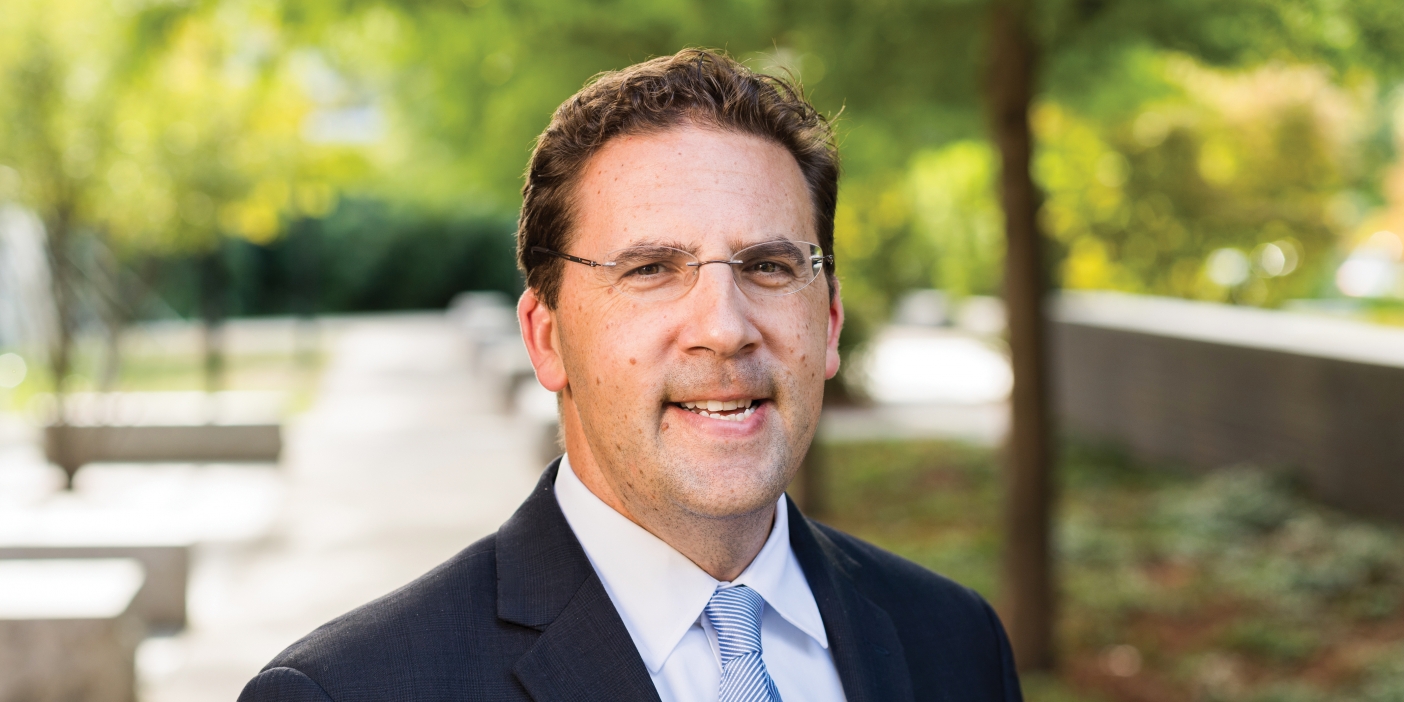
headshot-MikeStack-2014-09-24-art-background-croppedSAMUEL M. BROWN is Assistant Professor of Pulmonary and Critical Care Medicine and Medical Ethics and Humanities at the University of Utah and an intensive care physician in the Shock Trauma ICU at Intermountain Medical Center. His award-winning book In Heaven as It Is on Earth: Joseph Smith and the Early  Mormon Conquest of Death was published by Oxford University Press in 2012. He is also translator of Aleksandr Men’s Son of Man: The Story of Christ and Christianity. Here is here today to talk about his book First Principles and Ordinances: The Fourth Article of Faith in Light of the Temple being published by the Neal A. Maxwell Institute for Religious Scholarship.

Questions addressed in this interview:

Your book addresses, among other things, the topic of faith, but your journey through your own faith crisis becomes an important backdrop for your perspective as a writer. Perhaps you could give the cliff notes version of that to set the stage.

Your book is part of the Living Faith Book Series that is being put out by the Maxwell Institute at BYU. As I understand the series as a whole, and therefore part of the feel and function of your book, is the reconciliation of faith and knowledge which is particularly notable challenge some are having in discourse about Mormonism. How do you seek to approach the challenge of reconciling faith and knowledge with your book?

There is a statement that opens the promotional one-sheet that I received on your book that was quite gripping and thought provoking. I don’t know if you wrote it or if it was someone with the publishing side of this effort, but I want to share it and give you a chance to expound upon that in context of your book: “Familiarity can lead to a kind of blindness in life and in religion. The first principles and ordinances of the Latter-day Saint gospel are particularly at risk for misunderstanding through such familiar neglect.”

While not set up in such a way that it addresses critical questions that some may have about the church, there is a sort of positive apologetic angle, almost devotional feel to your book. Is that a fair assessment?

Your book addresses active faith initially. This is something that I have been studying and feeling for years now so it was nice to see some confirmation in your writings to that idea. You speak of two main models of faith at least the way Latter-day Saints talk about Faith, what are those two models?

Filed Under: Articles of Faith, Doctrine, Hosts, Nick Galieti, Podcast Tagged With: Baptism, faith, Prodigal Son, repentance, Temple

RiseUp Podcast: Helping People in Faith Crisis

December 3, 2014 by NickGalieti

https://media.blubrry.com/mormonfaircast/www.fairlatterdaysaints.org/wp-content/uploads/2014/12/RiseUp-HelpingPeopleInFaithCrisis.mp3

Podcast: Download (18.5MB)

Subscribe: RSS

Faith Crisis is a term describing a period of time or event where someone has serious doubts about their belief’s. You may have even experienced a faith crisis yourself. But how are we to approach those who are experiencing or have experienced this “faith crisis?” We have a few ideas….

There is a website called Millennial Mormon’s. It is a blog site that posts some decent articles but does so from a perspective and understanding shared by the rising generation, those of you who are in seminary or institute programs. The tag line of the site is “your grandpa’s gospel, now with #hashtags.

On that site was posted an article by Tanner Gilliland on November 4th, 2014. The article is entitled, “4 “DO NOTs” for Treating People in a Faith Crisis.” I actually found the article to be a pretty good opening reference that addresses some of the things that we may find ourselves doing or thinking with respect to people that experience a faith crisis. While I don’t agree with all the assertions they are minor and I trust that you will be smart enough and in tune enough to take in the correct spirit of the article, and not haggle over a couple of words.

4 “DO NOTs” for Treating People in a Faith Crisis

BY TANNER GILLILAND · NOVEMBER 4, 2014

With more and more information becoming available on the internet, more and more people are asking important questions about the church and its history. Sometimes these questions lead to serious doubts. Many of these doubts and concerns are not easily solved and require much prayerful effort, patience, and study.

Some people feel that they can’t find adequate answers to their questions so they leave the church. This usually is not an easy decision for them. Some lose friends or family, and others even lose their employment.

It is imperative that faithful members of the church, particularly millennials, learn how to appropriately interact with those who wrestle with doubt. To that end, I have created this list of things NOT to do when someone you know raises serious questions about religion:

1) Do NOT assume they are sinning

While sin is certainly darkens our minds, it is not always the cause of doubt. We must eliminate the stigma that those who doubt have some lurking evil, and that those who leave the church were just looking for a way out. This unrighteous judgment can be both harmful to us (it is a sin) and detrimental to the person we are judging.

2) Do NOT pretend that you know all the facts

Our religion is very complex. There are aspects of our doctrine and history that are very difficult to understand and we don’t claim to know all the answers. People who are deeply concerned with these issues have often given them many hours of study and consideration, so the “seminary answers” often don’t quite cut it. Rather than throwing out platitudes, try to understand their perspective. Share what you know and understand, and acknowledge that you don’t know everything. Always be honest.

3) Do NOT belittle their concerns

As one who ventures “down the rabbit hole” so to speak, I can testify of the frustration that comes when someone tells you not to worry so much. If we believe that our religious convictions will affect the our eternal destiny then of course we should worry about getting it right! What seems like a minuscule molehill to you may be a monstrous mountain for another. We can’t solve problems by ignoring them. Remember that our religion started with a boy who had some serious religious questions. Instead of disregarding the question, listen to the concerns and help find the answers.

4) Do NOT ostracize them

Though this is the last item, it is probably the most important. Nobody should feel like they aren’t able to express their concerns for fear of losing friends or family. Our love cannot be conditional upon someone’s level of belief. Christlike love is unconditional.To individuals with spouses whose beliefs are different, remember the counsel of Paul: “And the woman which hath an husband that believeth not, and if he be pleased to dwell with her, let her not leave him. For the unbelieving husband is sanctified by the wife, and the unbelieving wife is sanctified by the husband.” (1 Cor 7:13-14)People need your love, not your diagnosis. Expressing doubt or even leaving the church does not equate to being a bad person. In the end, even the acts of good by atheists will be accounted to them as righteousness. God’s love does not have a membership number or require a temple recommend. Neither should ours.From the Joseph Smith Papers project to the video about temple clothing, the church is taking progressive steps toward transparency and more open dialogue about controversial issues. I believe that our generation will be instrumental in continuing that trend. Let us always be quick to lend a listening ear, a supportive shoulder, and most importantly, an open heart.”

– End Article –

Wether you know someone right now experiencing some challenges to their faith or not, you will likely encounter someone in the not so distant future. So it is best to have this information and resource at the ready should this come up.

Should you be experiencing a faith crisis right now yourself, and someone is not following these 4 basic principles, try to do your best to also extend the same level of understanding you want others to have with you. Take these 4 things and reverse them…with a slight adjustment.

1) Don’t assume that people are judging you harshly.

2) Don’t assume that people know nothing about faith challenges – many go through them, and many come through them with even stronger faith than when they entered the faith crisis.

3) Do not belittle people who are trying to show concern but may not be the best at being crisis counselors.

4) Do not ostracize yourself. I once heard the analogy that the worst time to leave the storm shelter is when the hurricane is passing over you. In other words, if you are having a faith crisis and you are scared or upset and don’t know where to turn for help or answers, it is best to not leave the church, the source of strength that you need to help you through this time, especially when you are in the middle of the trial.

We don’t always know how to respond to people when they encounter difficulties in life, wether they be faith related or not. So, remember to be patient with others, as you would want them to be patient with you.

In conclusion I want to share with you a thought that was kind of sneaky from the October 2014 General Conference. Elder Anderson gave a talk and in the foot note of that talk was a quote from President Eyring that says this about how to approach those in faith crisis:

“In your love for them you may decide to try to give them what they ask. You may be tempted to go with them through their doubts, with the hope that you can find proof or reasoning to dispel their doubts. Persons with doubts often want to talk about what they think are the facts or the arguments that have caused their doubts, and about how much it hurts… You and I can do better if we do not stay long with what our students see as the source of their doubts… Their problem does not lie in what they think they see; it lies in what they cannot yet see… We do best if we turn the conversation soon to the things of the heart, those changes of heart that open spiritual eyes.”

(“‘And Thus We See’: Helping a Student in a Moment of Doubt” [address to Church Educational System religious educators, Feb. 5, 1993], 3, 4

FairMormon-Rise-Up-iTunes-logo

Filed Under: Faith Crisis, Podcast, RiseUp Tagged With: doubt, Faith Crisis

Faith and Reason 30: Nahom

November 27, 2014 by FAIR Staff

https://media.blubrry.com/mormonfaircast/www.fairlatterdaysaints.org/wp-content/uploads/2014/12/Evidence-35.mp3

Podcast: Download (6.7MB)

Subscribe: RSS


Nahom

Image of Nahom from The New Era

From the book: Of Faith and Reason: 80 Evidences Supporting the Prophet Joseph Smith

by Michael R. Ash

 In 1 Nephi chapter 7, not long after their departure into the wilderness, Nephi and his brothers return to Jerusalem to bring Ishmael and his daughters (which later become the wives of Lehi’s sons). In chapter 16 Ishmael died during their journey through the Arabian Peninsula and in verse 34 we read that Ishmael was buried “in the place that was called Nahom.” Ancient Hebrew did not use vowels, so NHM could have been translated with the use of various vowel sounds including Nahom as found in the Book of Mormon.

In the late twentieth century, a non-LDS German archaeological team was excavating an ancient temple in southern Arabia when they discovered the inscription of a man belonging to the tribe of NHM. A few years later, two more altars from the same excavation were also found to contain the tribal inscription of NHM. Since this area had been utilized for more than 2500 years (and was actively used during the days of Lehi,) non-LDS scholars have suggested that—in typical Near Eastern Fashion—NHM was not only a tribal name, but the name of a territory in which this tribe lived. This becomes even more interesting when we recognize that NHM was the largest burial site in all of ancient Arabia, and starting in around 600 BC (the same time that the Lehites fled Jerusalem,) anyone could be buried there.

Michael R. Ash is the author of: Of Faith and Reason: 80 Evidences Supporting The Prophet Joseph Smith. He is the owner and operator of MormonFortress.com and is on the management team for FairMormon. He has been published in Sunstone, Dialogue: A Journal of Mormon Thought, the Maxwell Institute’s FARMS Review, and is the author of Shaken Faith Syndrome: Strengthening One’s Testimony in the Face of Criticism and Doubt.  He and his wife live in Ogden, Utah, and have three daughters.

Julianne Dehlin Hatton  is a broadcast journalist living in Louisville, Kentucky. She has worked as a News Director at an NPR affiliate, Radio and Television Host, and Airborne Traffic Reporter. She graduated with an MSSc from the Maxwell School of Citizenship and Public Affairs at Syracuse University in 2008. Julianne and her husband Thomas are the parents of four children.

Music for Faith and Reason is provided by Arthur Hatton.

Filed Under: Faith and Reason, Julianne Dehlin Hatton, Michael R. Ash, Podcast Tagged With: Faith and Reason, Julianne Dehlin Hatton, Michael R. Ash

Fair Issues 74: What happened at the Tower of Babel?

November 23, 2014 by Ned Scarisbrick

https://media.blubrry.com/mormonfaircast/www.fairlatterdaysaints.org/wp-content/uploads/2014/11/Fair-Issues-74-Pod.mp3

Podcast: Download (10.9MB)

Subscribe: RSS

MAIn Genesis we are told that following the confusion of tongues the people were scattered across the earth (11:7-9).  Many people have traditionally assumed that the scattering or dispersion, was caused by the divergence in languages.

In this episode brother Ash explores the possibility of a serious drought and  strong winds that could have contributed to this event.

The full text of this article can be found at Deseret News online.

Brother Ash is author of the book Shaken Faith Syndrome: Strengthening One’s Testimony in the Face of Criticism and Doubt, as well as the book, of Faith and Reason: 80 Evidences Supporting the Prophet Joseph Smith. Both books are available for purchase online through the FairMormon Bookstore. Tell your friends about the Mormon Fair-Cast. Share a link on your Facebook page and help increase the popularity of the Mormon Fair-Cast by subscribing to this podcast in iTunes, and by rating it and writing a review.

The views and opinions expressed in the podcast may not reflect those of the Church of Jesus Christ of Latter-day Saints or that of FairMormon


Filed Under: Bible, Book of Mormon, Evidences, Faith Crisis, General, Geography, Hosts, Joseph Smith, Michael R. Ash, Mormon Voices, Ned Scarisbrick, Podcast

Faith and Reason 29: The Liahona

November 21, 2014 by FAIR Staff

https://media.blubrry.com/mormonfaircast/www.fairlatterdaysaints.org/wp-content/uploads/2014/11/Evidence-34-The-Liahona.mp3

Podcast: Download (6.6MB)

Subscribe: RSS

From the book: Of Faith and Reason: 80 Evidences Supporting the Prophet Joseph Smith

by Michael R. Ash

During the Lehites sojourn through the Arabian wilderness, Lehi was given a device called the Liahona, which helped guide them on their journey. Nephi described the Liahona as round, made of brass, and containing two spindles or arrows. Nephi called the ball a “compass” and mentions that there were things written in the Liahona which gave them instructions.

While critics often claim that the compass was unknown in Lehi’s day, it’s important to note that the function of magnetic hematite –the principle core or iron– was well understood in both the Old and New Worlds before Lehi left Jerusalem. Magnetite, or Lodestone, is, of course, naturally magnetic iron, and the word magnetite comes from the name of a place in which it was mined in Asia Minor by at least the seventh century BC, namely Magnesia.

Michael R. Ash is the author of: Of Faith and Reason: 80 Evidences Supporting The Prophet Joseph Smith. He is the owner and operator of MormonFortress.com and is on the management team for FairMormon. He has been published in Sunstone, Dialogue: A Journal of Mormon Thought, the Maxwell Institute’s FARMS Review, and is the author of Shaken Faith Syndrome: Strengthening One’s Testimony in the Face of Criticism and Doubt.  He and his wife live in Ogden, Utah, and have three daughters.

Julianne Dehlin Hatton  is a broadcast journalist living in Louisville, Kentucky. She has worked as a News Director at an NPR affiliate, Radio and Television Host, and Airborne Traffic Reporter. She graduated with an MSSc from the Maxwell School of Citizenship and Public Affairs at Syracuse University in 2008. Julianne and her husband Thomas are the parents of four children.

Music for Faith and Reason is provided by Arthur Hatton.

Filed Under: Faith and Reason, Julianne Dehlin Hatton, Michael R. Ash, Podcast

Mormon Fair-cast 319: #8, Is the Bible an authentic source of truth?

November 20, 2014 by Ned Scarisbrick

https://media.blubrry.com/mormonfaircast/www.fairlatterdaysaints.org/wp-content/uploads/2014/11/KT_AUTH-OR-BIBLE_8-POD.mp3

Podcast: Download (27.2MB)

Subscribe: RSS

i-believe-podcast-karen-239x300D.M. Johnson and I are back in this second-to-last podcast on the authenticity of the Bible. Today, we discuss undersigned coincidences. Undersigned coincidences are events or things in the Bible that could be coincidental, but there are just so many that they add up to real, compelling evidence.

As D.M. explains, “It becomes a little bit ridiculous to insist that all of these things are just purely happening by luck or some kind of random circumstance.”

We’ve got plenty of examples of such undersigned coincidences, from both inside and outside the Bible, including:

  • Jesus healing the sick;

  • The apostles keeping silent after the events on the Mount of Transfiguration;

  • And Jesus feeding the 500.

Jesus heals a woman.

We invite you to join us on this podcast, and again, to read and study the Bible for yourself. It truly is God’s word.

You can find the complete transcript at ibelievepodcast.com.

Read more: http://ibelievepodcast.com/1825/8-points-authenticity-bible-undesigned-coincidences-8-9#ixzz3JdTQNCy4

This series of podcasts were produced by the “I Believe” podcast group. They are used by permission of Karen Trifiletti the author of this work.

As always the view and opinions expressed in this podcast may not represent those of the Church of Jesus Christ of Latter-day Saint or that of FairMormon

Filed Under: Apologetics, Bible, Conversion, Doctrine, Early Christianity, Evidences, Faith Crisis, General, Mormon Voices, Podcast, Power of Testimony

RiseUp Podcast: President Eyring Defending Marriage at Vatican Colloquium

November 19, 2014 by NickGalieti

https://media.blubrry.com/mormonfaircast/www.fairlatterdaysaints.org/wp-content/uploads/2014/11/RiseUp-PresEyringAtVatican.mp3

Podcast: Download (24.5MB)

Subscribe: RSS

EyringHB_1Apr10President Eyring of the First Presidency of the Church of Jesus Christ of Latter-day Saints was invited to speak at a gathering at the Vatican-The headquarters for the Catholic Church worldwide—Think of it as the Salt Lake City of the Catholic Church..sort of….

(Here is a link to the Church’s press release and world report video on the gathering)

This gathering featured religious leaders from all over the world and from a variety of denominations. In some cases this gathering was called Humanum, in others the gathering was simply referred to the Colloquium.

The website for the event states this as the purpose of the gathering:

The Complementarity of Man and Woman: An International Colloquium is a gathering of leaders and scholars from many religions across the globe, to examine and propose anew the beauty of the relationship between the man and the woman, in order to support and reinvigorate marriage and family life for the flourishing of human society.

Witnesses will draw from the wisdom of their religious tradition and cultural experience as they attest to the power and vitality of the complementary union of man and woman. It is hoped that the colloquium be a catalyst for creative language and projects, as well as for global solidarity, in the work
 of strengthening the nuptial relationship, both for the good of the spouses themselves and for the good of all who depend upon them.

The Colloquium is sponsored by the Congregation for the Doctrine of the Faith and co-sponsored by the Pontifical Council for the Family, the Pontifical Council for Interreligious Dialogue, and
 the Pontifical Council for the Promotion of Christian Unity.

In short, the Catholic church put on a meeting of religious leaders from across the world to talk about and defend the family unit, but more specifically, marriage between a man and a woman. His presentation was about 13 minutes long. This was an important presentation for a few reasons that I can see, but there may be even more.

It was important because historically, such a connection between the LDS Church and the Catholic church was not such an open door. I personally consider this to be a tremendous act of kindness and christian fellowship on the part of the Catholic church to invite President Eyring, but also for President Eyring to attend.

This was also significant in light of the various perspectives and direction the laws of many nations throughout the world have taken with respect to legalizing same-sex marriage. Sometimes we might feel like a small minority of people who believe that marriage should be only between man and woman legally and lawfully married. This event stands to show that some of the largest and most well respected faith traditions in the world can be unified in our defense of God’s moral standard regardless of where some in the world advocate.

President Eyring stood as a prime example of what it means to defend our faith to all the world. He is an apostle and hopefully you will sense the nature of his calling coming through in the message he was sharing. He spoke with authority, and with purpose. While this particular environment was not considered hostile, other engagements between the communities of some of these faiths have not always been so kind to the LDS Church. President Eyring, without fear and without reservation bore his testimony of God our Father, Jesus his divine Son and our Savior, and of the central role of eternal marriage in the plan of Salvation. His example of both missionary work and being one to stand and defend the faith is a powerful example to the membership.

Additionally, this became a message to the larger audience of people that may have misconceptions about the LDS views on marriage in a polygamous sense. While not a direct part of his message, it should be clear that a top leader of the faith has 1 wife. The relationship of current church practice with regard to polygamy is still in question with many people in spite of a tremendous amount of transparency on the part of the church with regards to this issue.

His message is a call for a renascence or a rebirth of happy marriages. While many of you listening to this are young adults, and probably not married or even engaged, marriage is a topic that is something you should be educated on in order to either put your life in order, or know what it means to seek for and work towards having a happy marriage. When that time comes to get married, or what qualities you are to look for is a topic for another time. However, as you listen to President Eyring’s message, you may hear some important advice as you move on in life towards that goal.

So, I am going to play for you parts of the presentation, but I would encourage you to watch the presentation in its entirety.

Filed Under: Marriage, Podcast, RiseUp Tagged With: Family, Marriage, President Eyring, Vatican

Articles of Faith 20: Geoff Biddulph – Why Didn’t The Church Teach Me This Stuff?

November 17, 2014 by NickGalieti

https://media.blubrry.com/mormonfaircast/www.fairlatterdaysaints.org/wp-content/uploads/2014/11/AOF-GeoffBiddulph.mp3

Podcast: Download (53.8MB)

Subscribe: RSS

Geoff BiddulphGeoff Biddulph is a convert to the Church of just over 15 years. Before joining he read a lot of anti-Mormon literature. However, it was the Spirit that converted him and helped him be open to being baptized. Since then, Geoff has read the book of Mormon more than 10 times and have read the entire Bible at least five times. He has a large library of Church-related material from which he draws upon as he writes for the Millennial Star blog—where he has contributed for nearly a decade. He his wife Cindy were married in the Denver temple nearly 11 years ago and they now have five kids. He is joining us by phone today from Denver, CO. Geoff is here to talk about an article he wrote for the Millennial Star Blog entitled, “Why Didn’t the Church Teach Me This Stuff”

Questions:

During your time as an LDS blogger, how have you seen the “bloggernacle” as it is often referred to, the catalog of blogs who claim some voice in the Mormon Community, how have you seen it change during that time?

While we seek to focus on Articles that come from what would be considered more academic or scholarly, we do find articles from time to time that strike an apologetic tone and regardless of the level of scholarship, the argument presented can help those struggling to reframe their position in such a way that might help calm the stormy waters of a faith crisis. Your article entitled, Why Didn’t the Church Teach Me This Stuff, was released on November 12th, 2014. This was a response to a gospel topics essay that the Church released on Polygamy in the early church, specifically during the Kirtland and Nauvoo periods. If you could, for those that haven’t read the article, summarize what one might find in that piece, specifically the parts that have caused some stir in public discourse recently.

The Church released its gospel topics essay Around October 22nd. A google search just this morning showed a massive amount of news outlets posting articles just three days ago (from the date of this recording), so on November 11th there seemed to be this bump in interest, which makes me wonder what about this topic seems to be keeping this subject around so long?

Your article is in response to a strain of discourse that centers around some discontent or uneasiness with the Church’s release of this gospel topics article. What is that position and why did that strike as something that warranted a response?

You ask the question of the reader but I want to turn it back on you, Why didn’t the Church teach me this stuff?

It is a difficult position to respond to because you don’t want to demean what someone is feeling, that kind of hurt or shock is sometimes not so easily dismissed. So, how does your article serve to address that dissonance?

This may sound like a loaded question or one that is hard to answer in a short podcast, but if people are feeling that the church hid this from them, it begs the question, what is the role or responsibility the church has towards its members with respect to topics such as this? All the lurid details as you put it in your article?

The article concludes:

The Church did teach you stuff about even controversial topics. Perhaps you were distracted or didn’t pay attention or were not curious enough to explore on your own. You are ultimately responsible for your own learning, and you are responsible for how you respond to new information. That is what that whole “free agency” thing is all about.

Filed Under: Articles of Faith, Hosts, Joseph Smith, LDS History, Nick Galieti, Podcast, Polygamy Tagged With: Agency, blog, Polygamy

Mormon Fair-cast 314: #7, Is the Bible an authentic source of truth?

November 13, 2014 by Ned Scarisbrick

https://media.blubrry.com/mormonfaircast/www.fairlatterdaysaints.org/wp-content/uploads/2014/11/KT_AUTH-OR-BIBLE_7-POD.mp3

Podcast: Download (60.9MB)

Subscribe: RSS

i-believe-podcast-karen-239x300Critics and skeptics have long attacked Jesus’ Resurrection. Why so?? Well, in short, if the Resurrection can be disproved, all the other claims about Jesus Christ can also be dismissed. Christianity would crumble.

In this cast in the I Believe Podcast series on the Authenticity of the Bible (its reliability, not its perfection), guest D.M. Johnson and I will review much of the evidence which shows that the Resurrection of Jesus Christ is a validated, critical, wonderful historical event.

We’ll use the minimal facts approach, which means we’ll be looking at five key facts from the New Testament which can only be explained by the Resurrection.

Please join D.M. Johnson and I as we discuss this crucial area of Christianity. As always, we invite you to turn to the Bible yourself; it’s easy for some to hide behind the veneer of study and intellectual pursuit, to the exclusion of never coming to know whether or not something is true which comes by reading, study and sincere prayer which God alone can answer personally. This doesn’t exclude due diligence in any way, shape, or form, but means that once we have done that, we must come to a point of appealing to God for our ultimate witness and knowledge of truth. We are equipped to know it.  I witness that you can receive a witness that Jesus was indeed and is indeed Resurrected, if you will honestly ask from a desire to know. I assure you that God will speak to you in a language and way that you will understand.

You can read the complete transcript of this podcast here.

Read more: http://ibelievepodcast.com/1831/8-points-authenticity-bible-evidence-resurrection-7-9#ixzz3IunhhVcq

This series of podcasts were produced by the “I Believe” podcast group. They are used by permission of Karen Trifiletti the author of this work.

As always the view and opinions expressed in this podcast may not represent those of the Church of Jesus Christ of Latter-day Saint or that of FairMormon


Filed Under: Apologetics, Bible, Conversion, Early Christianity, Evidences, Faith Crisis, General, Podcast, Power of Testimony

Articles of Faith Podcast: Dan Peterson – Reason, Experience, and the Existence of God

November 11, 2014 by NickGalieti

https://media.blubrry.com/mormonfaircast/www.fairlatterdaysaints.org/wp-content/uploads/2014/11/AOF-DanPeterson-ReasonExperienceandtheexistenceofgod.mp3

Podcast: Download (46.7MB)

Subscribe: RSS

DanPetersonBio: Daniel C. Peterson holds a Ph.D., University of California at Los Angeles, is a professor of Islamic studies and Arabic at Brigham Young University, and is the founder of the University’s Middle Eastern Texts Initiative, for which he served as editor-in-chief until mid-August 2013. He has published and spoken extensively on both Islamic and Mormon subjects. He is the author, among other things, of a biography entitled Muhammad: Prophet of God.

Formerly chairman of the board of the Foundation for Ancient Research and Mormon Studies (FARMS) and an officer, editor, and author for its successor organization, the Neal A. Maxwell Institute for Religious Scholarship, his professional work as an Arabist focuses on the Qur’an and on Islamic philosophical theology. Peterson is most recently, although it may not seem so recent anymore, Chairman and President of the Interpreter found at Mormon Interpreter dot com. He is here to today to talk about an article that he recently released for The Interpreter Journal entitled Reason, Experience, and the Existence of God.

Questions and topics addressed in the interview:

Dan Peterson, loved by some, agitating to others, and probably a variety of opinions in between. But how does Dan Peterson view Dan Peterson?

You have a blog on Patheos entitled Sic et Non. What does it really mean and how does that frame your writing on that blog?

When you are not blogging, you have other irons in many fires it seems. One of those efforts is the Interpreter. I don’t know that enough people are aware of what The Interpreter is or what it’s goals are as a foundation. Perhaps you could take a minute to offer a brief introduction.

Both your professional work at BYU and the subject of the articles we are going to be addressing today centers around Islam, which uses the Qur’an as its central scripture. When did you first say, “This Islam stuff, I think I ought to check this out. Qur’an, yeah that sounds like a light read.” What was the genesis of your interest in Islamic studies?

What value is there in the average Latter-day Saint in picking up the Qur’an and at least giving it a read let alone dedicate and study time to it? Is there tempering caution with such a thing?

Referring somewhat back to the title of your blog Sic et Non, your article in the interpreter essentially asks the main question Must human faith be completed by reason, or not? Is reason the genesis of faith or the other way around? Please set the stage for how this article came into being.

This article takes the reader on quite a journey so I want to try and help navigate that read. What I mean by that is the article starts out with what you’ve said, then it refers somewhat back to your work and studies with Islamic literature, and commentaries on it, then hits on alien radio transmissions, then back to Faith and Reason. So, let’s take the next step in the article

In Robert Reilly’s book, The Closing of the Muslim Mind, the case is brought up that Reason is the pre-requisite for revelation which you feel is a problematic foundation for the development of faith. Why is that?

A quote was repeated by Riley in his book, but the original quote was from Qadi ‘Abd al-Jabbar, an Islamic theologian that lived about 1000 years ago who said, “Reason first needs to establish the existence of God before undertaking the question as to whether God has spoken to man. Natural theology must be antecedent to theology.” On the surface that sounds fairly convincing, but you find this also problematic, in what way? Can reason alone establish the existence of God?

Is the assumption here that if one can reason that there is a God, then from there the idea of revelation becomes more approachable, less of a deceptive thing where the individual is just fooling themselves into believing in God is talking with them?

What then is the role of reason in authenticating revelation? Is faith, as was taught in Alma 32, the seed, and reason is the fertilizer or perhaps the soil for what grows up into revelation and, symbolically, the Tree of Life? It seems to me that works because reason has produced a variety of symbolic plants, but the seed that reason must foster is one that leads to eternal life.

As your article is a journey that seems to end where it began, only coupled now with reason and experience, this interview is brought back around to the Interpreter and its core value. You end your article with the following:
“The Interpreter Foundation was established on the premise that both reason and revelation have their place in determining religious truth. We believe reasoned investigation to be essential, but we will not discount revelation.”

Moving forward, how will we see this evident in the works of The Interpreter? I believe you have some new titles coming out in joint effort with Eborn Books. What are those?

Daniel C. Peterson is the Chairman and President of The Interpreter found at Mormon Interpreter dot com. A link to this article Reason, Experience, and the Existence of God will be found at the posting for this episode at blog.fairmormon.org.

Click here to read Daniel C. Peterson’s article in the Interpreter – Reason, Experience, and the Existence of God.

Filed Under: Articles of Faith, Hosts, Nick Galieti, Podcast Tagged With: Reason, Revelation

  • « Go to Previous Page
  • Go to page 1
  • Interim pages omitted …
  • Go to page 52
  • Go to page 53
  • Go to page 54
  • Go to page 55
  • Go to page 56
  • Interim pages omitted …
  • Go to page 81
  • Go to Next Page »

Primary Sidebar

Faithful Study Resources for Come, Follow Me

Subscribe to Blog

Enter your email address:

Subscribe to Podcast

Podcast icon
Subscribe to podcast in iTunes
Subscribe to podcast elsewhere
Listen with FAIR app
Android app on Google Play Download on the App Store

Pages

  • Blog Guidelines

FAIR Latest

  • Come, Follow Me with FAIR – The Family: A Proclamation to the World – Part 2 – Autumn Dickson
  • Come, Follow Me with FAIR – The Family: A Proclamation to the World – Part 1 – Autumn Dickson
  • The Eternal Gift of Testimony
  • Come, Follow Me with FAIR – The Articles of Faith and Official Declarations 1 and 2 – Part 2 – Autumn Dickson
  • Come, Follow Me with FAIR – The Articles of Faith and Official Declarations 1 and 2 – Part 1 – Autumn Dickson

Blog Categories

Recent Comments

  • lyrics to song on Come, Follow Me with FAIR – The Articles of Faith and Official Declarations 1 and 2 – Part 2 – Autumn Dickson
  • Nalo on Come, Follow Me with FAIR – The Articles of Faith and Official Declarations 1 and 2 – Part 2 – Autumn Dickson
  • Diana on Come, Follow Me with FAIR – Doctrine and Covenants 132 – Mike Parker
  • JC on The Lord Is Hastening His Work
  • LHL on Come, Follow Me with FAIR – Doctrine and Covenants 132 – Mike Parker

Archives

Follow Us

  • Facebook
  • Twitter
  • iTunes
  • YouTube
Android app on Google Play Download on the App Store

Footer

FairMormon Logo

FAIR is a non-profit organization dedicated to providing well-documented answers to criticisms of the doctrine, practice, and history of The Church of Jesus Christ of Latter-day Saints.

Donate to FAIR

We are a volunteer organization. We invite you to give back.

Donate Now

Site Footer