• Skip to primary navigation
  • Skip to main content
  • Skip to primary sidebar
  • Skip to footer

FAIR

  • Find Answers
  • Blog
  • Media & Apps
  • Conference
  • Bookstore
  • Archive
  • About
  • Get Involved
  • Search

Blog

Articles of Faith – Sustaining the Brethren – Interview with Duane Boyce

July 14, 2015 by NickGalieti

https://media.blubrry.com/mormonfaircast/www.fairlatterdaysaints.org/wp-content/uploads/2015/07/AOF-DuaneBoyce-SustainingTheBrethren.mp3

Podcast: Download (48.5MB)

Subscribe: RSS

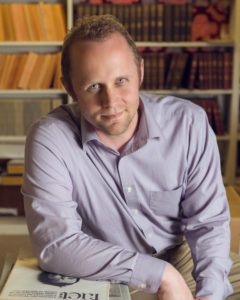
duane-boyceDuane Boyce received his academic training in psychology, philosophy, and the clinical treatment of families. He received a PhD from Brigham Young University and conducted his postdoctoral study in developmental psychology at Harvard University. He was a member of the Moral Studies Group at Brigham Young University (BYU) and served on the faculty there before becoming vice president of a steel company headquartered in St. Louis, Missouri. He is a founding partner of the Arbinger Institute, a worldwide management consulting and educational firm, and is the coauthor of four books. He has published academic essays on scriptural topics in BYU Studies, The FARMS Review, Religious Educator, and the Journal of the Book of Mormon and Other Restoration Scripture. He is also the author of the book, Even Unto Bloodshed: A Latter-day Saint Perspective on War (Kofford, 2015). Among other callings, he has served as a bishop and a stake president. He is the author of an article in The Interpreter entitled, “Sustaining the Brethren.”

Questions addressed in this interview:

In your article you call sustaining the brethren a “vital topic.” What about sustaining the brethren is vital?

This is a part of the making and keeping of sacred covenants within the church. Is there a distinction between sustaining the brethren, and sustaining our local leaders as it relates to these covenants?

When we raise our right arm to the square, is that a sort of covenant renewal? Almost sacramental in that regard?

Your article sets up an interesting paradigm where you discuss the differences between God’s character and humankind’s character and the vast differences that currently rest in chasm between the two. Could you please lay out that foundation for the rest of our discussion on sustaining the brethren?

For some this may sound a little like a forwarding of the “sheep” mentality, we should just do what they leaders tell us because God is telling them, and God is smarter, therefore let’s just be sheep to what they say. I don’t think that is what you are saying, but I can see how that position would be the conclusion some could come to with this paradigm. How would you respond to that position?

When it comes to sustaining the brethren, what is the difference (as you see it) between following the words of the combined Quorum of the Twelve and the First Presidency, as opposed to statements made by individuals within those council’s?

I want to now address some common criticisms that come up with respect to sustaining the brethren, and have you offer a few approaches to these criticisms:

There are waves of discord, disagreement, or discontent that seem to crash against the Church at different times and in slightly different ways. One that I have observed over the past five to seven years or so, is the idea that is clothed in the notion that the general church membership has a role or a place to be an advocate of systemic change to doctrines or practices in the church—and that this perspective allows a person to remain in a faithful position. How does that reconcile with the concepts that you present in your article on sustaining the brethren? Can one be an advocate for systemic change, and sustain the brethren at the same time?

There is a quote that you give from Elder Dallin H. Oaks that I love. It is an interesting perspective because critics of this idea of sustaining brethren at all, or even those who find it difficult to place their faith in the hands of leaders, forget that we are all operating in mortal capacities. The quote reads: “Revelations from God … are not constant. We believe in continuing revelation, not continuous revelation. We are often left to work out problems without the dictation or specific direction of the Spirit. That is part of the experience we must have in mortality. Fortunately, we are never out of our Savior’s sight, and if our judgment leads us into actions beyond the limits of what is permissible and if we are listening … the Lord will restrain us by the promptings of His Spirit.” How does this quote lay a solid foundation for sustaining the brethren while also giving room for their mortal fallibility?

Sustaining the brethren seems to be a great deal about the issue of trust. We are placing our trust in individuals who are hopefully placing their trust in God. Because we are dealing with eternal salvation, this trust is not an issue that should be taken lightly. So, how then do you, in your article make recommendations on how to navigate this issue moving forward?

Duane Boyce is the author of an article in The Interpreter entitled, “Sustaining the Brethren” as well as the book, Even Unto Bloodshed: A Latter-day Saint Perspective on War (Kofford, 2015).

Filed Under: Articles of Faith, Hosts, Nick Galieti, Podcast, Prophets Tagged With: Apostles, covenants, Prophets, Sustaining

Faith and Reason 49: Disarming Ammon

July 12, 2015 by FAIR Staff

https://media.blubrry.com/mormonfaircast/www.fairlatterdaysaints.org/wp-content/uploads/2015/07/Disarming-Ammon.mp3

Podcast: Download (10.7MB)

Subscribe: RSS


From the book: Of Faith and Reason: 80 Evidences Supporting the Prophet Joseph Smith

by Michael R. Ash

At least as early as the ninth century BC, artwork in the ancient Near East attests to the practice of cutting off the arms, hands, feet, or other body parts of vanquished enemies. Scholars who have studied this ancient custom suggest the severed limbs might have served as vouchers for rewards or mercenary pay upon presentation to an authority.

It has just recently been shown that the Aztecs had a similar practice. Ancient artwork depicts Aztec warriors holding the severed arms of their enemies like trophies. Aztecs who proved their prowess in battle often gained social privileges such as the right to wear special clothing and enjoy special foods. Bringing back the severed arms of an enemy was one way to prove valor in combat.

Michael R. Ash is the author of: Of Faith and Reason: 80 Evidences Supporting The Prophet Joseph Smith. He is the owner and operator of MormonFortress.com and is on the management team for FairMormon. He has been published in Sunstone, Dialogue: A Journal of Mormon Thought, the Maxwell Institute’s FARMS Review, and is the author of Shaken Faith Syndrome: Strengthening One’s Testimony in the Face of Criticism and Doubt.  He and his wife live in Ogden, Utah, and have three daughters.

Julianne Dehlin Hatton  is a broadcast journalist living in Louisville, Kentucky. She has worked as a News Director at an NPR affiliate, Radio and Television Host, and Airborne Traffic Reporter. She graduated with an MSSc from the Maxwell School of Citizenship and Public Affairs at Syracuse University in 2008. Julianne and her husband Thomas are the parents of four children.

Music for Faith and Reason is provided by Arthur Hatton.

Filed Under: Uncategorized

Faith and Reason 48: King Benjamin’s Speech

June 29, 2015 by FAIR Staff

https://media.blubrry.com/mormonfaircast/www.fairlatterdaysaints.org/wp-content/uploads/2015/06/King-Benjamins-speech1.mp3

Podcast: Download (7.1MB)

Subscribe: RSS


From the book: Of Faith and Reason: 80 Evidences Supporting the Prophet Joseph Smith

by Michael R. Ash

Secondary to the spiritual insight gained by reading the sermon of King Benjamin, we also find additional evidence of the Book of Mormon’s link with the ancient Old World. Not only does King Benjamin’s speech have strong similarities to ancient Near Eastern traditions, but so does his son Mosiah’s coronation.

Michael R. Ash is the author of: Of Faith and Reason: 80 Evidences Supporting The Prophet Joseph Smith. He is the owner and operator of MormonFortress.com and is on the management team for FairMormon. He has been published in Sunstone, Dialogue: A Journal of Mormon Thought, the Maxwell Institute’s FARMS Review, and is the author of Shaken Faith Syndrome: Strengthening One’s Testimony in the Face of Criticism and Doubt.  He and his wife live in Ogden, Utah, and have three daughters.

Julianne Dehlin Hatton  is a broadcast journalist living in Louisville, Kentucky. She has worked as a News Director at an NPR affiliate, Radio and Television Host, and Airborne Traffic Reporter. She graduated with an MSSc from the Maxwell School of Citizenship and Public Affairs at Syracuse University in 2008. Julianne and her husband Thomas are the parents of four children.

Music for Faith and Reason is provided by Arthur Hatton.

Filed Under: Uncategorized

RiseUp Podcast: Acquainted with Grief – Interview with Misty Nielson

June 25, 2015 by NickGalieti

https://media.blubrry.com/mormonfaircast/www.fairlatterdaysaints.org/wp-content/uploads/2015/06/RiseUp-MistyNielson.mp3

Podcast: Download (79.8MB)

Subscribe: RSS

Every now and then you hear the story of an individual that is able to demonstrate incredible faith, and endurance, that is as uncommon as is their life experience. That is the case with Misty Nielson. Her story shows the importance of family, just perhaps not in the way you may think.
3
Misty Nielson is 34 years old and a Mother to 5. Married for 16 years, she is a convert to the church, and the only member in her family.
She grew up in an abusive home, and was abandoned by both biological parents, only to be adopted into a home that was also abusive. She moved out when I was 16, was legally emancipated and joined the church when she was 17. Following her baptism she used the last of her money to move out west to Utah.
After married her husband Andrew, they have since had 5 children -One of which died shortly after childbirth.
After the death of that child, Misty did not attend church for a period of time. During her absence from church, I was prompted to start a business, called Baby Boards – where she creates memorial pieces for other women who have lost children.
After years of not attending she decided to come back to full activity At the beginning of 2013, and received a temple recommend after being without one for 10 years.
Her husband now has schizophrenia and is unable to participate in church because church is a trigger for him. Misty considers Andrew’s continued support, in spite of this condition, to be a huge blessing – – he wants to be with them, but cannot.
If that were not enough struggle in her life, one of their children also has mental illness – an anxiety disorder and OCD. In all this, Misty and her family have drawn closer to the Lord with a greater appreciation of what it means to have a Christ centered family. Misty also is well acquainted with the challenges that face individuals who do not attend church for one reason or another as they seek to return back to activity in the Church of Jesus Christ of Latter-day Saints.
FairMormon-Rise-Up-iTunes-logo

Filed Under: Faith Crisis, Hosts, Nick Galieti, Podcast, Power of Testimony, RiseUp, Women Tagged With: child abuse, loosing children, miscarriage

The Archaeology of the Council of Nicaea

June 24, 2015 by John Gee

[Cross-posted from Forn Spǫll Fira.]

Recent, under-informed assertions about the Book of Mormon and archaeology prompt this discussion.

Let’s ask a simple question:

What archaeological evidence do we have that the Council of Nicaea ever took place?

Unlike Zarahemla, or the Mitanni capital of Washshukanni, Nicaea is a site whose location is known. It has been excavated. We know what is there.

Archaeologically, Nicaea (modern Iznik) is most famous for its ceramic tiles, but they date from the Ottoman period. On the other end of the time spectrum, some neolithic pottery has been found at Iznik (Machteld J. Mellink, “Archaeology in Anatolia,” American Journal of Archaeology 89/4 (1985): 549).

The theater is 1st century, a typical Hadrianic style building that would have seated about 15,000 people. (Marie-Henriette Gates, “Archaeology in Turkey,” American Journal of Archaeology 98/2 (1994): 276.)

The city wall is also first century with numerous renovations in later times.

The church at Nicaea is 6th century (William Tabbernee, “Asia Minor and Cyprus,” in Early Christianity in Contexts, ed. William Tabbernee [Grand Rapids, Michigan: Baker Academic, 2014], 307.) The Koimeisis Church dates to the early eighth century (SEG XLI 1099) or late seventh century (SEG XLIV 1007).

So all of the Christian structures date at least two centuries after the Council of Nicaea. This is problematic.

The epigraphic corpus for Nicaea is extensive: Sencer Sahin, Katalog der antiken Inschriften des Museums von Iznik (Nikaia), 4 vols. (Bonn: Rudolf Habelt Verlag, 1979-87). With four volumes of inscriptions plus numerous additions in the SEG (Supplementum Epigraphicum Graecum), it is clear that Nicaea has more inscriptions than most Mesoamerican sites.

As far as epigraphic evidence we have:

1st century BC

  • a first century BC epitaph (SEG XXIX 1289).

1st century AD

  • an inscription of Nero (AD 54-68) regarding street repair (I Iznik I 13 = CIG 3743)
  • two first century AD dedications on the city gate to the Flavians (AD 70-79)  (SEG XXVIII 1028-29).
  • a building dedication to the Flavians (AD 78) (SEG LI 1709)
  • a statue of Domitian (AD 81-96) (SEG LVII 1275)
  • three first century inscriptions for Roman officals (SEG XXVIII 1025-27).
  • four first century epitaphs (SEG XXVIII 1032-33; XXX 1429; XLVII 1679)

2nd century AD

  • an aquaduct inscription of Hadrian (AD 117-138) (I Iznik I 1)
  • an architrave inscription of Hadrian (AD 117-138) (I. Iznik. I 30a = SEG XXIX 1282).
  • an altar dedicated to Hadrian (AD 117-138) (I Iznik I 32 = SEG XXIX 1283).
  • a dedicatory inscription from the reign of Hadrian (I Iznik I 56 = SEG XXXVII 1071 = SEG XLVI 1604)
  • three second century altars (SEG XXXIV 1263; SEG XLIII 897)
  • thirty-one second century epitaphs (SEG XXIX 1290-91; SEG XXX 1430; SEG XXXIV 1264-65; SEG XLIX 1789; SEG LI 1710-11; SEG LV 1346, 1348-56, 1358; SEG LVI 1392-93; SEG LVII 1278, 1281-88; SEG LVIII 1447).

3rd century AD

  • an honorary inscription from the reign of Elagabalus (AD 218-222) (I Iznik I 60 = SEG XXIX 1281).
  • a milestone of Julius Verus Maximinus (AD 235-38) (I Iznik 21 = CIL III 12226 = 13650)
  • two inscriptions of Claudius Gothicus (AD 268-70) regarding the rebuilding of the city wall (I Iznik I 11-12 = CIG 3747-48)
  • four third century dedications to Zeus (SEG LV 1337-39; SEG LVII 1276)
  • twelve third century epitaphs (SEG XXIX 1293; XXXIII 1080; SEG LI 1712-13; SEG LV 1344, 1357, 1359-63; SEG LVI 1394-95).
  • a fragmentary third century epitaph (SEG XXIX 1292).
  • a milestone of Diocletian and Maximian (AD 286-293) (I Iznik I 22)

4th century AD

  • a fourth century epitaph (SEG XXIX 1294).
  • a fourth century Jewish inscription quoting Psalm 135:25 (I Iznik II 615 = SEG XLVIII 1499)

Undated

  • an undated dedication to Ti. Claudius Aelianos Sabinos (I Iznik I 35 = SEG XXIX 1284).
  • six undated dedications to Zeus (SEG XXX 1428; SEG XL 1144-46; SEG XLVII 1678; SEG LX 1338)
  • an undated dedication to Zeus, Hera, and Athena (SEG XXVIII 1030)
  • an undated altar dedicated to Apollo (SEG LV 1340)
  • an undated altar dedicated to Hermes and Apollo (SEG LV 1341)
  • an undated honorary inscription (SEG XLVII 1677)
  • an undated altar dedicated to Tadenos and Okkonenos (SEG LX 1339)
  • three undated altar inscriptions (I Iznik I 43 = SEG XXIX 1288; SEG LI 1709 bis; SEG LX 1340).
  • three undated fragmentary dedications (I Iznik I 36, 42, 66 = SEG XXIX 1285-87; SEG XXXVI 1153).
  • two undated fragmentary inscriptions (SEG XXIX 1343-44).
  • fifty-nine undated epitaphs (SEG XXVIII 1034; SEG XXIX 1295-1318, 1320-24, 1326-31, 1333-38; XXX 1431-34; XXXIII 1081-82; SEG XLVII 1680-81; SEG LX 1341-49)
  • four undated Christian inscriptions (SEG XXIX 1339-42)
  • four undated Christian epitaphs (SEG XXIX 1319, 1325, 1331-32)
  • an undated testamentary regulation (SEG XLIX 1790)

There is no epigraphic evidence that Constantine paid the least attention to Nicaea. Furthermore, looking at the epigraphic evidence, we would conclude that fourth century inhabitants of Nicaea had converted from the worship of Zeus to Judaism, not Christianity. There is not a single inscription of Constantine’s from the site.

There appears to be no archaeological evidence that Constantine was ever in Nicaea, nor that there was a Christian council held there in the fourth century, and, of course, no archaeological evidence for the content of the Nicaean Creed. Should millions of creedal Christians therefore abandon their faith? They cannot point to a single piece of archaeological or epigraphic evidence that the Council of Nicaea ever took place. No reputable archaeologist has ever produced any. I can find no record of any reputable archaeological journals that have published any archaeological evidence that the Council ever took place or that support the creed that it supposedly produced.

Anyone who has actually worked trying to integrate archaeological with historical data can spot the problems with this sort of analysis easily. Some people, however, want to apply a double standard applying different standards to the Book of Mormon than they do to other historical events.

Filed Under: Book of Mormon

Book Review: “First Principles and Ordinances: The Fourth Article of Faith in Light of the Temple”

June 19, 2015 by russellwades

Brown-First-Principles-Cover-Final-Web-HiresBy Russell Stevenson

Note: The parenthetical citations reflect the enumeration found in the Kindle eBook version of this volume

Mormonism has never been merely a set of philosophical tenets, alienated from the material world. It is a religion of the here, the now, a religion that collapses the space between man and the cosmos, between the other-worldly and the earthly, and above all, between human beings. “This is my work and my glory,” the Christ of Mormonism declares, “to bring to pass the immortality and eternal life of man.” The stated purpose of Mormon project is more practical than ideological. Its success, the God of Mormonism declared, depends not on the propagation of tenets but upon the salvation of souls.

In First Principles and Ordinances: The Fourth Article of Faith in Light of the Temple, Samuel M. Brown offers up a doctrinal exegesis of Joseph Smith’s fourth article of faith as stated in his 1842 letter to John Wentworth. Primary children the world over can recite the article by memory: “We believe that the first principles and ordinances of the gospel are: first, Faith in the Lord Jesus Christ; second, Repentance; third, Baptism by Immersion for the Remission of Sins; and fourth, Laying on of hands for the Gift of the Holy Ghost.” Primarily intended as a devotional text, the book could find a comfortable home in a church service, or a family home evening. [Read more…] about Book Review: “First Principles and Ordinances: The Fourth Article of Faith in Light of the Temple”

Filed Under: Book reviews

Faith and Reason 47: Columbus

June 17, 2015 by FAIR Staff

https://media.blubrry.com/mormonfaircast/www.fairlatterdaysaints.org/wp-content/uploads/2015/06/Columbus-1.mp3

Podcast: Download (7.1MB)

Subscribe: RSS

From the book: Of Faith and Reason: 80 Evidences Supporting the Prophet Joseph Smith

by Michael R. Ash

In the early part of the Book of Mormon, Nephi saw in a vision a “man among the Gentiles” who left his people and crossed “many waters” (1 Nephi 12:22). Nephi saw that “the Spirit of God” was with this man who eventually came to the Americans and the descendants of the Lehites.  Latter-day Saints have interpreted this verse as referring to Christopher Columbus.

In the last few decades there has been a growth in scholarship regarding Columbus –much of it starting in 1991 with the translation of Libro de las profecias. This new look at Columbus reveals a spiritual man who was driven, in part, with a desire to spread Christianity. Columbus believed that he was guided to the New World by the Holy Spirit.

Michael R. Ash is the author of: Of Faith and Reason: 80 Evidences Supporting The Prophet Joseph Smith. He is the owner and operator of MormonFortress.com and is on the management team for FairMormon. He has been published in Sunstone, Dialogue: A Journal of Mormon Thought, the Maxwell Institute’s FARMS Review, and is the author of Shaken Faith Syndrome: Strengthening One’s Testimony in the Face of Criticism and Doubt.  He and his wife live in Ogden, Utah, and have three daughters.

Julianne Dehlin Hatton  is a broadcast journalist living in Louisville, Kentucky. She has worked as a News Director at an NPR affiliate, Radio and Television Host, and Airborne Traffic Reporter. She graduated with an MSSc from the Maxwell School of Citizenship and Public Affairs at Syracuse University in 2008. Julianne and her husband Thomas are the parents of four children.

Music for Faith and Reason is provided by Arthur Hatton.

Filed Under: Uncategorized

RiseUp Podcast – Doubt Your Doubts – Interview with Chad Conrad

June 17, 2015 by NickGalieti

https://media.blubrry.com/mormonfaircast/www.fairlatterdaysaints.org/wp-content/uploads/2015/06/RiseUp-ChadConrad-DoubtYourDoubts.mp3

Podcast: Download (32.8MB)

Subscribe: RSS

1668-2007-thickbox“Doubt Your Doubts” by Chad Conrad is an eye-opening read that will help readers strengthen their faith, confront controversial topics and find relevant answers to everyday life. The book addresses hot-button questions, such as “Why don’t women hold the priesthood?” and “How should we deal with homosexuality?” Readers’ toughest gospel questions can become testimony-builders with this timely and informative book.

To purchase a copy of Doubt Your Doubts, buy it at a discount through the FairMormon Bookstore.
FairMormon-Rise-Up-iTunes-logo

Filed Under: Apologetics, Hosts, Nick Galieti, Podcast, RiseUp Tagged With: critical questions, difficult questions, youth

Articles of Faith: Inside the Mind of an Inactive Member

June 15, 2015 by NickGalieti

https://media.blubrry.com/mormonfaircast/www.fairlatterdaysaints.org/wp-content/uploads/2015/06/AOF-LaurieWhite-InsidetheMindofanInActiveMember.mp3

Podcast: Download (42.9MB)

Subscribe: RSS

Profile_Facebook_2-25-12Laurie White is a mother of four and grandmother of ten in Sacramento, California.She often writes as Tudie Rose. She writes a weekly column for LDS Blogs at http://ldsblogs.com/.

She blogs as Laurie White about spiritual things (Thoroughly Mormon) at http://thoroughlymormon.wordpress.com/ She has written articles for Meridian Magazine and Familius. She comes on today to talk about an article she wrote for the Mormon Women Stand blog entitled, “Inside the Mind of An Inactive Member.”

Filed Under: Articles of Faith, Hosts, LDS Culture, Nick Galieti, Podcast Tagged With: home teaching, inactive, less active, minister, visiting teaching

Right on Target: Gidgiddoni

June 13, 2015 by John Gee

(Cross-posted from Ether’s Cave with permission.)

There are generally two approaches to Book of Mormon names. One of them searches for plausible etymologies for Book of Mormon names; the other looks at whether the name is actually attested. If it is attested it does not matter much whether or not we can figure out an etymology for the name (that is, whether we can determine what the name originally meant). Both of these approaches are useful and have their merits.

The Book of Mormon name Gidgiddoni can now be added to the list of names that are attested.

Gidgiddoni, it will be remembered, was “great commander of all the armies of the Nephites” (3 Nephi 3:18) during the reign of Lachoneus. He is first mentioned during events of “the sixteenth year from the coming of Christ” (3 Nephi 3:1), and is last mentioned ten years later (3 Nephi 6:6).

The name Gidgiddoni, with its reduplication and doubled consonant, is unusual for a Hebrew name. We now know that it is not. It is a well attested name in Neo-Assyrian records. It comes from the same Assyrian empire that is discussed so extensively in the works of Isaiah. The name is mentioned many times in Assyrian records, covering a number of individuals. It is spelled a number of ways:

    • Gíd-gi-da-nu (SAA 1: 152:6)
    • Gíd-gi-da-a-n[i] (SAA 1: 152 r 9)
    • [Gíd-g]i-da-a-[ni] (SAA 1: 152 r 6)
    • [Gí]d-gi-da-a-[ni] (SAA 1: 39 :4)
    • Gíd-gi-da-a-nu (SAA 6: 31 r 23)
    • Gíd-gíd-da-nu (SAA 11: 123 ii 13)
  • Gíd-gíd-da-[nu] (SAA 12: 51 r 12)

The variety of cuneiform spellings demonstrates the following points about the Assyrian name.

    1. The second d is doubled. (see Gíd-gíd-da-nu).
    2. The a is long. (see Gíd-gi-da-a-nu). This is important because Assyrian (Akkadian) long a goes to an o in Hebrew. Cuneiform does not have an osound and uses a variety of strategies to reproduce it.
    3. The form of the name borrowed into Hebrew is the oblique case. Hebrew does not have case endings but does have names ending in -i.

The form of the name borrowed into Hebrew must have been taken from the oblique case, which may have been the form of the name they heard most often. Hebrew often changes foreign names when it adopts them (think Marduk-apil-iddina becoming Merodach-Baladan).

The following individuals bearing the name are known from Neo-Assyrian records:

    1. An individual working in Dur-Sharrukin during the reign of Sargon II.
    2. A man from Kalhu listed in as a member of the chariotry during the reign of Sargon II.
    3. A tailor to the governor of Kalhu during the reign of Sargon II.
    4. A temple carpenter from Assur during the reign of Esarhaddon.
    5. A man from Assur during the reign of Assurbanipal.
    6. A man mentioned during the reign of Assur-etel-ilani.

(The Prosopography of the Neo-Assyrian Empire [Helsinki: The Neo-Assyrian Text Corpus Project, 1999], 1.2:422-23.)

The simplest explanation is that an Assyrian individual with the name Gidgiddanu was mentioned in the brass plates. This was then the source of the name for this particular military leader several centuries later.

Interestingly, the Neo-Assyrian Text Corpus Project was not able to determine an etymology or meaning for this name.

Thus the number of attested non-biblical names in the Book of Mormon has just increased by one.

Filed Under: Book of Mormon

  • « Go to Previous Page
  • Go to page 1
  • Interim pages omitted …
  • Go to page 117
  • Go to page 118
  • Go to page 119
  • Go to page 120
  • Go to page 121
  • Interim pages omitted …
  • Go to page 204
  • Go to Next Page »

Primary Sidebar

Faithful Study Resources for Come, Follow Me

Subscribe to Blog

Enter your email address:

Subscribe to Podcast

Podcast icon
Subscribe to podcast in iTunes
Subscribe to podcast elsewhere
Listen with FAIR app
Android app on Google Play Download on the App Store

Pages

  • Blog Guidelines

FAIR Latest

  • Adorned with the Virtue of Temperance
  • Come, Follow Me with FAIR – Genesis 1–2; Moses 2–3; Abraham 4–5 – Jennifer Roach Lees
  • Come, Follow Me with FAIR – Genesis 1–2; Moses 2–3; Abraham 4–5 – Part 2 – Autumn Dickson
  • Come, Follow Me with FAIR – Genesis 1–2; Moses 2–3; Abraham 4–5 – Part 1 – Autumn Dickson
  • In Memoriam: Sarah Allen

Blog Categories

Recent Comments

  • Matt on In Memoriam: Sarah Allen
  • Jerry Allred on Come, Follow Me with FAIR – Moses 1; Abraham 3 – Jennifer Roach Lees
  • Jann E Cahoon Campbell on In Memoriam: Sarah Allen
  • Terry Allen on In Memoriam: Sarah Allen
  • Bryan on In Memoriam: Sarah Allen

Archives

Follow Us

  • Facebook
  • Twitter
  • iTunes
  • YouTube
Android app on Google Play Download on the App Store

Footer

FairMormon Logo

FAIR is a non-profit organization dedicated to providing well-documented answers to criticisms of the doctrine, practice, and history of The Church of Jesus Christ of Latter-day Saints.

Donate to FAIR

We are a volunteer organization. We invite you to give back.

Donate Now

Site Footer