• Skip to primary navigation
  • Skip to main content
  • Skip to primary sidebar
  • Skip to footer

FAIR

  • Find Answers
  • Blog
  • Media & Apps
  • Conference
  • Bookstore
  • Archive
  • About
  • Get Involved
  • Search

Joseph Smith

FairMormon Conference Podcast #9 – Matthew Bowen, “Semitic Semiotics: The Symbolic, Prophetic, and Narratological Power of Names in Ancient Scripture”

June 28, 2018 by Trevor Holyoak

https://media.blubrry.com/mormonfaircast/www.fairlatterdaysaints.org/wp-content/uploads/2018/06/Matthew-Bowen.mp3

Podcast: Download (88.0MB)

Subscribe: RSS

This podcast series features a past FairMormon Conference presentation each month. Please join us for the 2018 FairMormon Conference coming up August 1-3. You can attend in person or purchase the video streaming.

Matthew Bowen, Semitic Semiotics: The Symbolic, Prophetic, and Narratological Power of Names in Ancient Scripture

Transcript available here.

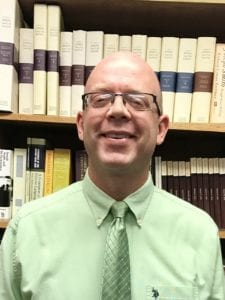
Matthew L. Bowen is an assistant professor of Religious Education at Brigham Young University–Hawaii where he has taught since 2012. He holds a Ph.D. in Biblical Studies from the Catholic University of America in Washington, DC, where he also earned an M.A (Biblical Studies). He previously earned a B.A. in English with a minor in Classical Studies (Greek emphasis) from Brigham Young University (Provo) and subsequently pursued post-Baccalaureate studies in Semitic languages, Egyptian, and Latin there. In addition to having taught at Brigham Young University–Hawaii, he has previously taught at the Catholic University of America and at Brigham Young University. Bowen is the author of numerous peer-reviewed articles on scripture- and temple-related topics and two forthcoming books on scriptural onomastics. Bowen grew up in Orem, Utah, and served a two-year mission in the California Roseville Mission. He and his wife, the former Suzanne Blattberg, are the parents of three children, Zachariah, Nathan, and Adele.

Audio and Video Copyright © 2017 The Foundation for Apologetic Information and Research, Inc. Any reproduction or transcription of this material without prior express written permission is prohibited.

Filed Under: Bible, Book of Mormon, Book of Moses, Evidences, FAIR Conference, FairMormon Conference, Joseph Smith, Podcast

FairMormon Conference Podcast #7 – Gerrit Dirkmaat, “Lost Teachings of the Prophets: Recently Uncovered Teachings of Joseph Smith and Others from the Council of Fifty Record”

June 4, 2018 by Trevor Holyoak

https://media.blubrry.com/mormonfaircast/www.fairlatterdaysaints.org/wp-content/uploads/2018/06/Gerrit-Dirkmaat.mp3

Podcast: Download (79.2MB)

Subscribe: RSS

This podcast series features a FairMormon Conference presentation each month. Please join us for the 2018 FairMormon Conference coming up August 1-3. You can attend in person or purchase the video streaming.

Gerrit Dirkmaat, Lost Teachings of the Prophets: Recently Uncovered Teachings of Joseph Smith and Others from the Council of Fifty Record

Transcript available here.

Gerrit J. Dirkmaat is an assistant professor of Church History and Doctrine at Brigham Young University. He received his PhD in American History from the University of Colorado in 2010 where he studied nineteenth-century American expansionism and foreign relations. His dissertation was titled “Enemies Foreign and Domestic: US Relations with Mormons in the US Empire in North America, 1844–1854.” He worked as a historian and writer for the Church History Department from 2010 to 2014 as historian on several volumes of the Joseph Smith Papers project. Since taking his position at BYU, he continues to work on the Joseph Smith Papers as a historian and writer. He currently serves as Editor of the academic journal Mormon Historical Studies, published by the Mormon Historic Sites Foundation, and on the Church History editorial board for BYU Studies. He is the author of dozens of scholarly articles and is the co-author, along with Michael Hubbard MacKay, of the book From Darkness Unto Light: Joseph Smith’s Translation and Publication of the Book of Mormon, published by Religious Studies Center at Brigham Young University and Deseret Book, 2015. He and his wife Angela have four children.

Audio and Video Copyright © 2017 The Foundation for Apologetic Information and Research, Inc. Any reproduction or transcription of this material without prior express written permission is prohibited.
Filed Under: FAIR Conference, FairMormon Conference, Joseph Smith, LDS History, Podcast

The Coming Revolution of Virtual Missionaries: Review of Books by Greg Trimble

May 3, 2018 by Trevor Holyoak

Available from the FairMormon Bookstore at 15% off

If I remember correctly, I first came across Greg Trimble’s blog by seeing his post “Quit Acting Like Christ Was Accepting of Everyone and Everything” shared by a friend on Facebook, apparently some time in 2014. I liked it enough that I shared it in a few places as well. He has since written a bunch of other posts that have also been shared widely, so most LDS people online are probably familiar with his name.

In the last year, Trimble has started publishing books. His first one, Dads Who Stay and Fight: How to Be a Hero to Your Family, showed up on Audible’s website, so I thought I’d give it a listen. It is a book about being a good father written by a young father, so it does have its weak spots. A lot of the chapters could have used fewer stories and more concrete examples. But there were some really good ones that made the whole thing worthwhile, in particular the ones on marriage, technology, and protecting your family from worldly influences.

A few months ago, I saw that he had published another book, The Coming Revolution Inside of Mormonism. I was curious enough about the title that I wanted to take a look at it, and I requested a review copy. When it arrived, it was accompanied by The Virtual Missionary: The Power of Your Digital Testimony, which had also recently been published. Since then, The Coming Revolution Inside of Mormonism has been retitled to The Cultural Evolution Inside of Mormonism, apparently because the original title had caused a lot of confusion. In order to avoid confusion here, I will refer to the book by its new title (and assume that none of the actual content has changed). [Read more…] about The Coming Revolution of Virtual Missionaries: Review of Books by Greg Trimble

Filed Under: Anti-Mormon critics, Apologetics, Atheism, Book of Mormon, Book reviews, Conversion, Doctrine, Faith Crisis, Interfaith Dialogue, Joseph Smith, LDS Culture, LDS History, Polygamy, Power of Testimony, Prophets, Questions, Resources, Temples, Testimonies Tagged With: blog, blogging, book review, digital missionary, Greg Trimble, Trevor Holyoak

Book Review: The Melchizedek Priesthood: Understanding the Doctrine, Living the Principles

April 26, 2018 by Trevor Holyoak

Available from the FairMormon Bookstore at 10% off

There have been some General Conference talks in recent years about the priesthood that have really stuck out for me, such as “Healing the Sick” by Dallin H. Oaks in April 2010, and “The Price of Priesthood Power” by Russell M. Nelson in April 2016. As an elder in the Melchizedek Priesthood, they have been very instructional but have also left me wanting to know more about the priesthood and how to better exercise priesthood power. This book, by apostle Dale G. Renlund and his wife, Ruth Lybbert Renlund, goes a long way towards doing that.

It consists of two parts, titled “Foundations of the Priesthood” and “Doctrine of the Priesthood.” In the first part, it explains what priesthood is, its purpose, the offices and keys, and the oaths and covenants associated with it. The second part talks about putting the priesthood into action and becoming better priesthood holders. At the end of the book there is also a small section of “Chapter Summaries” that can serve as a review of the material contained in the book.

It begins by talking about what the priesthood is. “The offices of the Aaronic and Melchizedek Priesthood do not constitute all of God’s priesthood, His total power and authority. Brigham Young taught that there are many aspects of God’s total priesthood power and authority that are not delegated to men on earth… the authority and power to produce bodies and spirits, create kingdoms, and organize matter.” (pages 12-13) It talks about God’s priesthood power and authority being used on the earth even between New Testament times and the restoration of the priesthood through Joseph Smith. It also addresses the issues of people of African descent being denied priesthood blessings for a time, and priesthood offices only being open to males. “Women in the Church frequently exercise priesthood power and authority, though they are not ordained to priesthood offices.” (page 18) [Read more…] about Book Review: The Melchizedek Priesthood: Understanding the Doctrine, Living the Principles

Filed Under: Book reviews, Doctrine, Gender Issues, General Conference, Joseph Smith, LDS History, Racial Issues

What Did the Lord Mean When He Said Moses Would Become “God to Pharaoh” During the Plagues of Egypt? (Old Testament Gospel Doctrine Lesson 13A)

March 26, 2018 by Jeffrey M. Bradshaw

Moses and Pharaoh

An Old Testament KnoWhy relating to the reading assignment for Gospel Doctrine Lesson 13: Bondage, Passover, and Exodus (Exodus 1-3; 5-6; 11-14) (JBOTL013A)

Question: What did the Lord mean when He said Moses would become “god to Pharaoh”? And how did the symbolism of the plagues undermine the worship of the Egyptian gods?

Summary: Surprisingly, Exodus 7:1 does not say that Moses was to be “like a god” to Pharaoh. Rather, the Lord’s words to the prophet in Hebrew read literally: “I have made you God/god to Pharaoh.” To make sense of this statement, it must be remembered that Pharaoh was considered to be a god by his people, “the living embodiment of the god Horus, god of kingship, represented by the falcon.” Thus, to prepare Moses for his summit meeting with the leader of Egypt, the Lord made him not only Pharaoh’s “equal” in rank but in addition also enabled him to demonstrate the greater potency of the true and living God whom he served. Because Pharaoh was divine in the eyes of the Egyptians, “he should have been the one to function as a god to Moses.” However, in a display of power whose symbolism would have been understood both by the Egyptians and the people of Moses, Jehovah, the God of Israel, turned the tables against Ra, the supreme sun-god of Pharaoh. By means of the plagues, the great I AM executed His judgment “against all the gods of Egypt,” a phrase meant to include Pharaoh and his firstborn son. Drawing primarily on the work of Rutgers professor Gary A. Rendsburg, this article will describe the significance of the means by which Jehovah devastated Ra.


The full article may be found at the Interpreter Foundation website: KnoWhy OTL13A — What Did the Lord Mean When He Said Moses Would Become “God to Pharaoh” During the Plagues of Egypt?

For Gary Rendsburg’s 8 March 2007 BYU Kennedy Center talk entitled “Light from Egypt on the Exodus Story,” see https://www.youtube.com/watch?v=_iwvTZnwSy0 .

To access Gary Rendsburg’s 2013 video presentation of “Moses the Magician” at the UCSD Exodus Conference “Out of Egypt: Israel’s Exodus Between Text and Memory, History and Imagination,” see https://www.youtube.com/watch?v=aYhNo1jC9Fg .

Filed Under: Bible, Joseph Smith, Lesson Aids, Questions, Resources, Temples Tagged With: Deification, Exodus, Gospel Doctrine: Old Testament, magic, Moses, Pharaoh, Plagues

FairMormon Conference Podcast #3 – Elizabeth A. Kuehn, “Finances and Faith in the Kirtland Crisis of 1837”

February 15, 2018 by Trevor Holyoak

https://media.blubrry.com/mormonfaircast/www.fairlatterdaysaints.org/wp-content/uploads/2018/02/Elizabeth-A.-Kuehn.mp3

Podcast: Download (54.3MB)

Subscribe: RSS

This podcast series features a FairMormon Conference presentation each month. If you would prefer to watch the videos, they can still be purchased here for the 2017 conference. Older conference presentation videos are available on our YouTube channel and FairMormon TV for Roku, Amazon Fire TV, and Android TV.

Elizabeth A. Kuehn, Finances and Faith in the Kirtland Crisis of 1837

Transcript available here.

Elizabeth A. Kuehn is a historian with the Joseph Smith Papers at the Church History Department of The Church of Jesus Christ of Latter-day Saints. She is a co-editor on two volumes of the Joseph Smith Papers to be published in 2017: Documents, Volume 5: October 1835–January 1838 and Documents, Volume 6: February 1838–August 1839. She is a PhD. Candidate at the University of California, Irvine. She earned her MA in History from Purdue University and her BA in History from Arizona State University. She specializes in nineteenth-century financial records and women’s and gender history.

Filed Under: FAIR Conference, FairMormon Conference, Joseph Smith, LDS History, Podcast

Book Review: The Joseph Smith Papers: Documents Volume 6: February 1838 – August 1839

February 12, 2018 by Trevor Holyoak

Available from the FairMormon Bookstore at 10% off

This volume of the Joseph Smith Papers was edited by Mark Ashurst-Mcgee, David W. Grua, Elizabeth A. Kuehn (who spoke at the FairMormon Conference last year about the Kirtland Crisis of 1837), Brenden W. Rensink, and Alexander L. Baugh. It covers the aftermath of the Kirtland Crisis of 1837 and the move to Far West, the identification of Adam-ondi-Ahman, the formation of the Danites, Hawn’s Mill, the Extermination Order, the stay at Liberty Jail, and the beginning of the building of Nauvoo.

As with all of the volumes, it contains an explanation of the Joseph Smith Papers Project and its methodologies, a volume introduction that gives the general history of the time covered by the volume, section introductions with more detailed history and context of the documents contained in each section, the documents themselves, and reference material such as source notes, timelines, maps, biographical information, organizational charts, and works cited. Each document is introduced by a source note and historical introduction. The document transcripts then contain extensive footnotes with sources and explanations. In some cases, the footnotes are multiple levels deep.

The editors did a good job of explaining controversial events and putting them in context, but also freely admitted when things are unclear. In the first document, the source note discusses Joseph Smith’s plural marriage with Fanny Alger, including Oliver Cowdery’s allegations of adultery. It is explained that “A few individuals who knew JS well recounted later that he had received a revelation about the doctrine of plural marriage as early as 1831, possibly in connection with his work on the revision, or new ‘translation’ of the Bible” (page 12). “After his separation from Alger and the controversy arising from Cowdery’s accusations, JS set aside the practice of plural marriage for several years” (page 13). A later footnote explains “It is unclear precisely what information JS entrusted to Cowdery regarding JS’s relationship with Fanny Alger. Later accounts variously claim that Cowdery performed a marriage ceremony between JS and Alger, was called upon by JS to mediate between JS and Emma Smith after the relationship with Alger was discovered, or had been taught the doctrine of plural marriage privately and took a plural wife contrary to JS’s instructions” (page 91, footnote 454). [Read more…] about Book Review: The Joseph Smith Papers: Documents Volume 6: February 1838 – August 1839

Filed Under: Book reviews, Joseph Smith, LDS History, Polygamy, Resources

Was Noah Drunk or in a Vision? (Old Testament Gospel Doctrine 6B)

February 3, 2018 by Jeffrey M. Bradshaw

Noah in His Vineyard, Holkham Bible, ca. 1325-1350. Here we see an industrious Noah diligently tending his vineyard, in striking contrast to a later depiction in the same Bible chapter that features him in an inebriated stupor. Scholars have noted the odd inconsistency between these two scenes.

An Old Testament KnoWhy for Gospel Doctrine Lesson 6: “Noah … Prepared an Ark to the Saving of His House” (Moses 8:19-30; Genesis 6-9; 11:1-9) (JBOTL06B)

Question: In Genesis 6:9, Noah is described as “a just man and perfect in his generations,” a noble patriarch who, like Enoch, “walked with God.” However, the story of Noah finishes in a puzzling way. Immediately after Noah makes his covenant with God, his sons find him “drunken” and “uncovered within his tent.” Can these two opposing pictures of Noah be reconciled?

Summary: It is difficult to know whether this contradiction is the result of different traditions, textual misunderstanding, or the abbreviated nature of the biblical account. Some scholars even wonder whether there was a deliberate effort to defame or belittle the character of Noah. What seems certain is that the biblical author deliberately framed this sequel to Noah’s Creation and Garden story as a replay of the scene of the Adam and Eve’s Fall and consequent judgment in Eden. Most often the instigator of this “Fall” is seen to be Noah, who, it is reported, succumbed to the intoxicating influence of wine from his vineyard. However, it is significant that the scriptures omit any hint of wrongdoing by Noah and put all the blame on Ham and his son Canaan. In the admittedly tentative interpretation given in this article, I will discuss the possibility that Ham’s wrongdoing consisted in his having approached, without authorization, the inner curtains of the sacred tent where Noah was enwrapped in vision. Some ancient traditions viewed Ham’s actions as part of an effort to steal Noah’s priesthood garment and undermine his authority.


The full article may be found at the Interpreter Foundation website: KnoWhy OTL06B — Was Noah Drunk or in a Vision?

As a video supplement to this lesson with additional details and artwork not included in this article, see Jeffrey M. Bradshaw, “The Ark and the Tent: Temple Symbolism in the Story of Noah” on the YouTube Interpreter Foundation channel (https://www.youtube.com/watch?v=kIfArfB54Mk ).

Filed Under: Bible, Joseph Smith, Lesson Aids, Prophets, Questions, Racial Issues, Temples Tagged With: Flood, Gospel Doctrine: Old Testament, Noah

Could Joseph Smith Have Drawn On Ancient Manuscripts When He Translated the Story of Enoch? (Old Testament Gospel Doctrine 5C)

January 27, 2018 by Jeffrey M. Bradshaw

George Campfield, fl. 1861: Enoch, Creation Window, All Saints Church, Selsley, England, 1861

An Old Testament KnoWhy for Gospel Doctrine Lesson 5:“If Thou Doest Well, Thou Shalt Be Accepted” (Moses 5-7) (JBOTL05C). See the link to video supplements to this lesson at the end of this article under “Further Reading.”

Question: Some say that Joseph Smith drew on ancient stories about Enoch not found in the Bible as he translated the chapters on Enoch in Moses 6-7. How similar are the stories of Enoch in ancient accounts to modern scripture? And could Joseph Smith have been aware of them?

Summary: Although an English translation of the Ethiopian book of 1 Enoch appeared in 1821, the ancient manuscripts that are most relevant to the LDS story of Enoch were not available during Joseph Smith’s lifetime. The Qumran Book of Giants, discovered in 1948, contains striking resemblances to Moses 6-7, ranging from general themes in the story line to specific occurrences of rare expressions in corresponding contexts. It would be thought remarkable if any nineteenth-century document were to exhibit a similar density of close resemblances with this small collection of ancient fragments, but to find such similarities in appropriate contexts relating in each case to the story of Enoch is astonishing.


The full article may be found at the Interpreter Foundation website: KnoWhy OTL05C — Could Joseph Smith Have Drawn On Ancient Manuscripts When He Translated the Story of Enoch?

As a first video supplement to this lesson with additional details and artwork not included in this article, see Jeffrey M. Bradshaw, “Could Joseph Smith Have Drawn on Ancient Manuscripts When He Translated the Story of Enoch?” available at The Interpreter Foundation (http://cdn.interpreterfoundation.org/ifvideo/180122-Could Joseph Smith Have Drawn on Ancient.m4v) and FairMormon (https://youtu.be/7zJwuZ_yPyY).

As a second video supplement to this lesson, see Jeffrey M. Bradshaw, “The LDS story of Enoch As a Temple Text (http://www.templestudies.org/2013-enoch-and-the-temple-conference/conference-videos/). Several other excellent video presentations on Enoch and the temple, including one by David J. Larsen discussing ancient parallels with the taking up of Enoch’s city to heaven, are available at this same link.

Filed Under: Best of Fair, Bible, Book of Moses, Evidences, Joseph Smith, LDS Scriptures, Lesson Aids, Questions Tagged With: 1 Enoch, 2 Enoch, 3 Enoch, Book of Giants, Enoch, Gospel Doctrine: Old Testament, Historicity, Joseph Smith Translation

How Does Moses 5-8 Illustrate the Consequences of Keeping and Breaking Temple Covenants One By One? (Old Testament Gospel Doctrine 5B)

January 27, 2018 by Jeffrey M. Bradshaw

Jan van Eyck, ca. 1395-1441: Offering of Abel and Cain, 1425-1429

An Old Testament KnoWhy for Gospel Doctrine Lesson 5: “If Thou Doest Well, Thou Shalt Be Accepted” (Moses 5-7) (JBOTL05B). See the link to video supplements to this lesson at the end of this article under “Further Reading.”

Question: Some people believe that the basic teachings and covenants available today in LDS temple ordinances were not revealed to Joseph Smith until he got to Nauvoo. Others say he knew a great deal about temple matters long before that time. What could the Prophet have learned about temple covenants as he translated Moses 5-8 in 1830-31?

Summary: Because the book of Moses tells the story of the Creation and the Fall of Adam and Eve, it is obvious to endowed members of the Church that the book of Moses is a temple text, containing a pattern that interleaves sacred history with covenant-making themes. What may be new to many Latter-day Saints, however, is that the temple themes in the book of Moses extend beyond the first part of this story that contains the fall of Adam and Eve — their “downward road.” There is a part two of the temple story given in the book of Moses that describes an “upward road” that is to be climbed by making and keeping an ordered sequence of temple covenants. Significantly, Moses 5-8 appears to have been structured so as to present the consequences of both keeping and breaking specific temple covenants one by one.


The full article may be found at the Interpreter Foundation website: KnoWhy OTL05B — How Does Moses 5-8 Illustrate the Consequences of Keeping and Breaking Temple Covenants One By One?

As a video supplement to this lesson, see Jeffrey M. Bradshaw, “The LDS story of Enoch As a Temple Text” (http://www.templestudies.org/2013-enoch-and-the-temple-conference/conference-videos/). Several other excellent video presentations on Enoch and the temple are available at this same link.

For additional discussion of evidence that Joseph Smith knew much about temple matters early on in his ministry, see: “What Did Joseph Smith Know about Temple Ordinances by 1836?” (http://interpreterfoundation.org/conferences/2014-temple-on-mount-zion-conference/2014-temple-on-mount-zion-conference-videos/).

Filed Under: Bible, Book of Moses, Joseph Smith, Lesson Aids, Masonry, Questions, Temples Tagged With: Gospel Doctrine: Old Testament, Joseph Smith Translation

  • « Go to Previous Page
  • Go to page 1
  • Interim pages omitted …
  • Go to page 27
  • Go to page 28
  • Go to page 29
  • Go to page 30
  • Go to page 31
  • Interim pages omitted …
  • Go to page 41
  • Go to Next Page »

Primary Sidebar

Faithful Study Resources for Come, Follow Me

Subscribe to Blog

Enter your email address:

Subscribe to Podcast

Podcast icon
Subscribe to podcast in iTunes
Subscribe to podcast elsewhere
Listen with FAIR app
Android app on Google Play Download on the App Store

Pages

  • Blog Guidelines

FAIR Latest

  • Come, Follow Me with FAIR – Doctrine and Covenants 137–138 – Part 2 – Autumn Dickson
  • Come, Follow Me with FAIR – Doctrine and Covenants 137–138 – Mike Parker
  • FAIR December Newsletter
  • Come, Follow Me with FAIR – Doctrine and Covenants 137–138 – Part 1 – Autumn Dickson
  • Prophets of God 

Blog Categories

Recent Comments

  • LHL on Come, Follow Me with FAIR – Doctrine and Covenants 132 – Mike Parker
  • Stephen Johnsen on Come, Follow Me with FAIR – Doctrine and Covenants 132 – Mike Parker
  • Bruce B Hill on Come, Follow Me with FAIR – Doctrine and Covenants 124 – Part 1 – Autumn Dickson
  • Gabriel Hess on Join us Oct 9–11 for our FREE virtual conference on the Old Testament
  • JC on When the Gospel “Doesn’t Work”

Archives

Follow Us

  • Facebook
  • Twitter
  • iTunes
  • YouTube
Android app on Google Play Download on the App Store

Footer

FairMormon Logo

FAIR is a non-profit organization dedicated to providing well-documented answers to criticisms of the doctrine, practice, and history of The Church of Jesus Christ of Latter-day Saints.

Donate to FAIR

We are a volunteer organization. We invite you to give back.

Donate Now

Site Footer