• Skip to primary navigation
  • Skip to main content
  • Skip to primary sidebar
  • Skip to footer

FAIR

  • Find Answers
  • Blog
  • Media & Apps
  • Conference
  • Bookstore
  • Archive
  • About
  • Get Involved
  • Search

Apologetics

Book Review: A Reason for Faith: Navigating LDS Doctrine & Church History

September 16, 2016 by Trevor Holyoak

Available from the FairMormon bookstore at 20% off

In the prologue of A Reason for Faith, the editor, Laura Hales, lays out the purpose of the book. Members of the church sometimes come across new information in an unfriendly setting that damages their faith. This book is a compilation of articles about many of the topics that are not often discussed in a church or family setting, and can be difficult to understand. They are laid out by scholars in an honest but faithful manner, and while they can’t possibly cover the topics completely in the amount of space given, they are meant to be a springboard for further study where necessary.

The first chapter is by Richard Bushman, on “Joseph Smith and Money Digging.” He recounts the history of scholarship in this area, where it was originally denied by those inside the church due to being based on accounts thought to be unreliable published by critics of the church. As he began his own research, he found evidence that convinced him that Joseph was indeed involved with folk magic and seer stones, and that these things were too common in the 19th century to invalidate Joseph’s prophetic claims or be scandalous. [Read more…] about Book Review: A Reason for Faith: Navigating LDS Doctrine & Church History

Filed Under: Apologetics, Bible, Book of Abraham, Book of Mormon, Book reviews, Chastity, DNA, Faith Crisis, Gender Issues, Homosexuality, Joseph Smith, LDS History, LDS Scriptures, Masonry, Polygamy, Prophets, Racial Issues, Science, Temples, Women

President Scott Gordon Reviews the 2016 FairMormon Conference

September 11, 2016 by FAIR Staff

https://media.blubrry.com/mormonfaircast/www.fairlatterdaysaints.org/wp-content/uploads/2016/09/2016-Fair-Mormon-Conference-in-Mono.mp3

Podcast: Download (17.9MB)

Subscribe: RSS

FFMM

“If we can’t have a discussion, then we might as well not have a conference” –Scott Gordon

In this edition of the Mormon FairCast, President Scott Gordon reviews the 2016 FairMormon Conference held at the Utah Valley Convention Center in Provo, Utah. Gordon offers three themes from this year’s conference:

  1. Women in the church
  2. The Book of Mormon
  3. How to do apologetics

Gordon also discusses how speakers are chosen and why FairMormon invites Dr. Daniel Peterson to deliver the closing address year after year.

Gordon

President Gordon retains his belief in “Big Tent” Mormonism and says we can all be good members yet have differing opinions on topics such as feminism, Book of Mormon geography, and LGBTQ issues. Gordon says FairMormon is dedicated to standing as a witness of Christ and His restored church.

SLT

Scott Gordon has an MBA from Brigham Young University, and a BA in Organizational Communications from BYU. He is currently an instructor of business and technology at Shasta College in Redding, California. Scott has held many positions in The Church of Jesus Christ of Latter-day Saints including serving as a bishop for six years. He is married and has five children.

Julianne Dehlin Hatton  is the recipient of FairMormon’s 2016 John Taylor Defender of the Faith Award. She has worked as a News Director at an NPR affiliate, Television Host, and Airborne Traffic Reporter. She graduated from the Maxwell School of Citizenship and Public Affairs at Syracuse University in 2008. Julianne and her husband Thomas are the parents of four children.

Filed Under: Apologetics, Faith and Reason, Julianne Dehlin Hatton, Podcast Tagged With: Add new tag, apologetics, FairMormon, Julianne Dehlin Hatton, Podcast, Scott Gordon

The Critic’s Big List of Problems

August 25, 2016 by Trevor Holyoak

by Michael R. Ash

hands-computer-828898-galleryAny member who has undergone a faith crisis knows that there are many critics on the Internet who are happy to share a Big List of Mormon Problems to help facilitate one’s exit from the Church. These lists can serve as the catalyst for the initial testimony damage, or contribute the final straw in a “death by a thousand cuts” (the “Big List of Mormon Problems” is not the real name of any list but designates features which all of these lists have in common).

Such lists have been around long before the Internet was invented but received limited interest and distribution. While some of the works found their way into member or investigator homes, in the hands of missionaries, or even in local libraries, much of the material was picked up only by those critics or LDS apologists (defenders) who found the topics interesting.

Today, however, anyone can create a quick Big List of Mormon Problems, convert it to a pdf, and post it on-line. Depending on the creator’s writing abilities and social networking skills, a well-written piece by an outgoing author could quickly attain viral status. [Read more…] about The Critic’s Big List of Problems

Filed Under: Anti-Mormon critics, Apologetics, Faith Crisis, Michael R. Ash

The Courage of Our Convictions: Embracing Mormonism in a Secular Age

August 17, 2016 by Trevor Holyoak


Patrick Mason’s presentation from the 2016 FairMormon Conference. The transcript can be viewed here.

Audio and Video Recording Copyright © 2016 The Foundation for Apologetic Information and Research, Inc. Any reproduction or transcription of this material without prior express written permission is prohibited.

You can purchase access to the rest of the conference videos here.

Patrick Q. Mason holds the Howard W. Hunter Chair in Mormon Studies at Claremont Graduate University, where he is also an associate professor of religion and chair of the Religion Department. After earning his BA in History from Brigham Young University, he attended the University of Notre Dame where he earned an MA in International Peace Studies and PhD in History. He is the author, editor, or co-editor of several books, including most recently Planted: Belief and Belonging in an Age of Doubt (Deseret Book and Neal A. Maxwell Institute), Out of Obscurity: Mormonism since 1945 (Oxford University Press), Directions for Mormon Studies in the Twenty-First Century (University of Utah Press), and later this fall an introductory college textbook called What Is Mormonism? (Routledge). A frequently sought-after expert on Mormonism and religion in American life, Mason has appeared in numerous media outlets including National Public Radio, the Today Show, New York Times, Los Angeles Times, Wall Street Journal, and the Huffington Post. He lives in Claremont, California, with his wife Melissa and their four children.

Filed Under: Apologetics, FAIR Conference, Faith Crisis

Charity Never Faileth

July 18, 2016 by Scott Gordon

And now abideth faith, hope, charity, these three; but the greatest of these is charity[1]

Last month, I had the pleasure of meeting with members in Norway, Sweden, and Scotland. I met with members who had strong testimonies, members who were struggling, and members who no longer believe. It was a wonderful experience, and I enjoyed every minute of it. Ok, almost every minute. There were some moments of being a bit uncomfortable in a discussion or two. But, by and large, I really enjoyed it.

With that in mind, I would like to tell you about my interaction with some of the Saints in Scotland. I loved my time in the Nordic countries as well, but I can only talk about one thing at a time. In Scotland, I met with three different stakes. I was really impressed that all of the stake presidents were kind and really cared about all of their people. They loved them. That came across strongly in their words and actions.

In two of the stakes, the Stake presidents had me meet with members who had concerns about the Church. [2]

Now, first of all, it is difficult to put a label on these members. We love to put labels on people. We routinely talk about active and less-active members in our wards. We sometimes even talk about faithful, or less faithful. I have heard labels such as disaffected, discouraged, or in extreme cases disloyal. I don’t think any of those labels apply perfectly to the individuals that I met with, and certainly the word disloyal would not apply at all. The best label I could have would be brothers and sisters in the Gospel who have concerns. Yes, some of them no longer attend church, but all of them wanted things to be better.

In my first meeting, I was one-on-one with a member who attends church but has questions.[3] He had spent significant time reading most of the Websites that FairMormon spends time responding to. In other words, they were Websites that I wouldn’t recommend for people who are interested in becoming and remaining faithful. But, the man was a lovely man. A wonderful man. A man whom I hope I can now count as my friend. His questions were not a burden or a problem. He wanted answers. He had been unable to find them. He had read some responses, but didn’t find them all persuasive. This made him concerned. He saw value in the Church, and value in FairMormon. He saw value in his family attending church. He made helpful suggestions.  We left with him giving me a list of concerns and me promising to read them all carefully. At this point, I have been really busy catching up at work, but I have read some of them and intend to read and examine all of them.

In the second meeting I walked in and found 15 to 20 (I didn’t count) people sitting there, most of them having significant questions about the Church. While things were a bit tense at first, after we got to know each other better, it became more of an exchange of experiences. Things became much more relaxed. As we were talking, I saw that these were good people. Salt-of-the-earth people. People who I would truly value and cherish. Let me put it this way, if I were sitting at a ward dinner, and one of these people came to sit down next to me, I would be really happy. If I saw them before they saw me, I would invite them over. I would love to have them at my house for dinner. If they ever come to Northern California, the invitation stands open. They were honest and sincere. They had legitimate concerns that they had not been able to reconcile, partly because, in my opinion, they fully embraced the outside narrative and discounted the faithful narrative. But, they had reasons for doing so. Did I convince anyone? I doubt it. That wasn’t really the point. I hope that by the time I left they became a little more trusting of the sources that promote the positive narrative, and a little more skeptical of the sources that promote the negative narrative. For my part, I know that I became more sympathetic to their concerns.

Think about this. They had concerns about the Church. Some of them don’t attend any more. The stake president had called and invited them to this meeting at the Church building and they came. They showed up! If I were in their position, I’m not sure I would have done the same.

Sometimes in our discourse about the truth claims of the Church, we forget that there are real people on the other side of the issue. In a recent blog post about online discussions Sean Blanda writes:[4]

It’s a preference to see the Other Side as a cardboard cutout, and not the complicated individual human beings that they actually are.

I see this happening on both sides.

The active (faithful, believing, true blue, whatever) members see the questioning (disaffected, discouraged, less active, whatever) members as attacking them personally when they raise questions about the fundamental truth claims of their belief. I believe some of this comes from a fear that we might not be able to answer the questions, or that there is no answer to the questions. This means we sometimes lash out in an attempt to silence them.

The questioning members, on the other hand, see this wall of silence from people who don’t want to hear their questions. Conversations, attempts to connect, and attempts to correct from the non-questioning (fully believing) side are sometimes seen in a less than charitable light. Let’s face it, many members have not studied the issues, and often their attempts to answer the questions are simply incorrect. Those sincere, but unsatisfying answers are seen as manipulative and misleading. Other times, for those who have completely left, their leaving experience was so painful that they feel justified in giving a little payback. I have been on the receiving end of that on more than one occasion.

I have seen some very hurtful things. The blogger Sean Blanda further writes:

Over time, this morphs into a subconscious belief that we and our friends are the sane ones and that there’s a crazy “Other Side” that must be laughed at — an Other Side that just doesn’t “get it,” and is clearly not as intelligent as “us.” But this holier-than-thou social media behavior is counterproductive, it’s self-aggrandizement at the cost of actual nuanced discourse and if we want to consider online discourse productive, we need to move past this.[5]

This is the message I would like to get across. We need to have charity for each other. We need to see others as our brothers and sisters – whether you or they remain in the Church or not. No matter which side you are on. Based on their experiences and information, the “Other side” is being rational. Those that leave are not evil, and those that stay are not “Living in a bubble.”[6] Charity never faileth. Let’s try to put that into practice.

[1] . 1 Corinthians 13:13

[2] I would like to talk about all three stakes, but I have to limit this to get through the post. You don’t want to have to read a post the length of War and Peace.

[3] In the interest of full disclose my wife and the Stake President were there as well. But, the two of us did most of the talking.

[4] https://medium.com/@SeanBlanda/the-other-side-is-not-dumb-2670c1294063#.d50kq3cjm

[5] ibid

[6] It would be difficult to portray me, or other FairMormon volunteers, as living in a bubble as we have read all of the criticisms that are out there. I have been reading anti Mormon literature since I was 14 years old. A few of my non-Mormon friends have tried to convert me. FairMormon gets multiple questions every day. Through long experience, I have learned to be skeptical of the less faithful narrative.


Picture of Scott Gordon
Scott Gordon

Scott Gordon is president of FairMormon.

Picture at the top of the blog is from Glamis Castle in Scotland. Source:Rev Stan (Flickr: Glamis Castle) [CC BY 2.0 (http://creativecommons.org/licenses/by/2.0)], via Wikimedia Commons

Filed Under: Apologetics

The CES Letter 50 to 65 Witnesses Continued

June 25, 2016 by Brian Hales

In Video Five in the FairMormon series: “The CES Letter, A Closer Look” Brian Hales examines claims posted by Jeremy Runnells in his “Letter to a CES Director”.

+

The CES Letter 50 to 65 Witnesses Continued

This video continues to examine The CES Letter’s treatment of the Book of Mormon witnesses on pages 50 to 65. Obviously hypnosis could not explain their experiences, but what about religious frenzy and hysteria? Also, alleged parallels to other testimonies regarding James J. Strang, and The Book and the Roll are scrutinized. In the end, the attempts of naturalists’ and The CES Letter to explain away the declarations of the Three Witnesses and the Eight Witnesses seem inadequate.

Brian C. Hales is the author of The CES Letter: A Closer Look, as well as seven books dealing with Mormon polygamy—most notably the three-volume, Joseph Smith’s Polygamy: History and Theology (Greg Kofford Books, 2013). His Modern Polygamy and Mormon Fundamentalism: The Generations after the Manifesto received the “Best Book of 2007 Award” from the John Whitmer Historical Association. He has presented at numerous meetings and symposia and published articles in the Journal of Mormon History, Mormon Historical Studies, Dialogue, as well as contributing chapters to The Persistence of Polygamy series. Much of his research materials are available at  www.MormonPolygamyDocuments.org.Theology (Greg Kofford Books, 2013). His Modern Polygamy and Mormon Fundamentalism: The Generations after the Manifesto received the “Best Book of 2007 Award” from the John Whitmer Historical Association. He has presented at numerous meetings and symposia and published articles in the Journal of Mormon History, Mormon Historical Studies, Dialogue, as well as contributing chapters to The Persistence of Polygamy series. Much of his research materials are available at  www.MormonPolygamyDocuments.org.

Filed Under: Apologetics, Book of Mormon Tagged With: Brian Hales, CES Letter, Joseph Smith, Three Witnesses

The CES Letter 50 to 65 Three Witnesses

June 19, 2016 by FAIR Staff

In Video Four of the FairMormon series: “The CES Letter, A Closer Look” Brian Hales examines claims published by Jeremy Runnells in his “Letter to a CES Director”. Installments in the series run every Monday and can also be found on the FairMormon youtube channel.

333

The CES Letter spends 15 pages discussing the witnesses of the Book of Mormon. The strategy is straightforward: discredit the witnesses and ignore what they say. This video also rebuts Dan Vogel who alleges that Joseph Smith hypnotized them and examines the witnesses’ reputations showing they were credible and respected men. It demonstrates that The CES Letter misrepresents their declarations to create the appearance of contradiction. It also analyzes the theory that Joseph Smith might have used hypnosis to induce a complex hallucination they later recalled as their encounter with the angel and the plates.

Brian C. Hales is the author of The CES Letter: A Closer Look, as well as seven books dealing with Mormon polygamy—most notably the three-volume, Joseph Smith’s Polygamy: History and Theology (Greg Kofford Books, 2013). His Modern Polygamy and Mormon Fundamentalism: The Generations after the Manifesto received the “Best Book of 2007 Award” from the John Whitmer Historical Association. He has presented at numerous meetings and symposia and published articles in the Journal of Mormon History, Mormon Historical Studies, Dialogue, as well as contributing chapters to The Persistence of Polygamy series. Much of his research materials are available at  www.MormonPolygamyDocuments.org.Theology (Greg Kofford Books, 2013). His Modern Polygamy and Mormon Fundamentalism: The Generations after the Manifesto received the “Best Book of 2007 Award” from the John Whitmer Historical Association. He has presented at numerous meetings and symposia and published articles in the Journal of Mormon History, Mormon Historical Studies, Dialogue, as well as contributing chapters to The Persistence of Polygamy series. Much of his research materials are available at  www.MormonPolygamyDocuments.org.

Filed Under: Apologetics, Book reviews Tagged With: Church History, Joseph Smith, The CES Letter, The three witnesses

A Case for Ancient Temple Ordinances

May 25, 2016 by Oliver Mullins

salt-lake-temple-exterior-789727-printThe most sacred structure to Latter-day Saints is the Temple. Of course, what makes the Temple sacred has nothing to do with the building; it is because of the holy ordinances that are performed inside. The Church teaches that only through those ordinances are the greatest blessings available through the Atonement to be had1.  The Church also teaches that Temple ordinances have been around since the time of Adam2. By contrast, most anti-Mormons believe that they are a modern invention, a mixture of Joseph Smiths imagination and plagiarized Freemason ritual.  This is simply not true. Although not a comprehensive analysis, I hope to give throughout this post a glimpse of the plentiful evidences that these ordinances were practiced anciently, and that divine revelation to Joseph Smith is a much better explanation for their genesis than pretending he made it up.

Before getting into the heart of the subject, I want clarify a couple of things. First, I am not suggesting that early Temple ritual was a carbon copy of what is practiced today. We just don’t know exactly what the ordinances were like in ancient times. How they are performed has been changed from time to time by the presiding authorities to better meet the needs of the Church membership (one of the beauties of continuing revelation), and so there is no need to assume that the ordinances have remained unchanged throughout history.  Also, it is entirely possible that there have been periods of time where the full spectrum of Temple ordinances has not been available on the earth (for example after the Children of Israel lost the Melchizedek Priesthood). But since those ordinances are critical to our salvation, the essential core aspects would have remained the same throughout time, and would have been known to the faithful.  As I hope to demonstrate, there are many evidences of this found within ancient texts and traditions.

Second, I’m purposefully not discussing in detail any connections to Freemasonry. This has been explored extensively, and FairMormon has plenty on the subject. The primary purpose of this post is to discuss documents and traditions relating to the Temple that pre-date Freemasonry. From my point of view, any connection between Temple ritual and Freemasonry need not be distressing. I believe that it is entirely possible (if not probable) that Joseph Smith was inspired to become a Mason so that he could better learn how to use dramatic ritual and symbols to teach complex ideas; and while some similarities undoubtedly exist, you cannot explain the ordinances of the Temple by looking at Freemasonry alone. [Read more…] about A Case for Ancient Temple Ordinances

Filed Under: Apologetics, Evidences, Joseph Smith, Temples

Fair Issues 101: Types of evidence and the Book of Mormon

May 25, 2016 by Ned Scarisbrick

https://media.blubrry.com/mormonfaircast/www.fairlatterdaysaints.org/wp-content/uploads/2016/05/Fair-Issues-101-Pod.mp3

Podcast: Download (12.1MB)

Subscribe: RSS

Ash (newer) PictureIn this installment brother Ash discusses the basic techniques used to establish different types of evidence and the Book of Mormon.

The full text of this article can be found at Deseret News online.

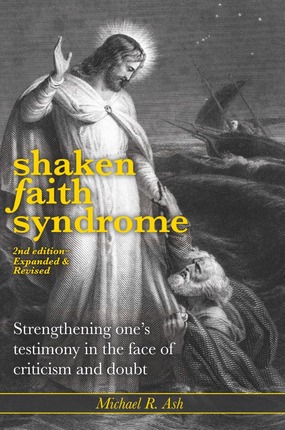
Brother Ash is author of the book Shaken Faith Syndrome: Strengthening One’s Testimony in the Face of Criticism and Doubt, as well as the book, of Faith and Reason: 80 Evidences Supporting the Prophet Joseph Smith. Both books are available for purchase online through the FairMormon Bookstore. Tell your friends about the Mormon Fair-Cast. Share a link on your Facebook page and help increase the popularity of the Mormon Fair-Cast by subscribing to this podcast in iTunes, and by rating it and writing a review.

The views and opinions expressed in the podcast may not reflect those of the Church of Jesus Christ of Latter-day Saints or that of FairMormon

Filed Under: Anti-Mormon critics, Apologetics, Book of Mormon, Evidences, Fair Issues, General, Hosts, Joseph Smith, Michael R. Ash, Ned Scarisbrick, Podcast Tagged With: Book of Mormon evidences

Book Review: Approaching Antiquity: Joseph Smith and the Ancient World

May 22, 2016 by Trevor Holyoak

Available from the FairMormon Bookstore at 15% off

This book is from the 2013 BYU Church History Symposium, held March 7–8, 2013. The Church History Symposium is a nearly annual (there apparently wasn’t one held in 2015) event that draws speakers from places such as Brigham Young University, other universities, the LDS Church History Department, and often LDS general authorities as well. The book contains many of the papers that were presented, but unfortunately there are a few missing, such as Steven C. Harper’s presentation on masonry. However, that and most of the other papers that were given (including all but one that is in the book) are available to view here, although the video presentations are generally abbreviated versions of what is in the book.

The conference spanned two days. The first day was held at BYU and the second was at the Conference Center in Salt Lake City. I was only able to attend the first day, which is one of the reasons I was interested in this book. The keynote address was given by Richard L. Bushman, and it was very crowded, which left many of us without seats until after he was done (apparently there were many students that had come just to hear Bushman).

The preface of the book states that the theme for the conference came out of a professional development training trip taken by new faculty from the BYU departments of Ancient Scripture and Church History and Doctrine to church history sites in Palmyra, Kirtland, and Nauvoo. As they visited these sites, they “were impressed as the extraordinary range of Joseph’s encounters with antiquity became increasingly apparent” (page xiii) and “deeper reflection upon these issues convinced us that there was an important, dynamic, and under-explored relationship between Joseph Smith’s personal interactions with ancient material and many of his unfolding revelations” (page xiv). [Read more…] about Book Review: Approaching Antiquity: Joseph Smith and the Ancient World

Filed Under: Apologetics, Bible, Book of Abraham, Book of Mormon, Book of Moses, Book reviews, Early Christianity, Geography, Joseph Smith, LDS History, LDS Scriptures, Masonry

  • « Go to Previous Page
  • Go to page 1
  • Interim pages omitted …
  • Go to page 21
  • Go to page 22
  • Go to page 23
  • Go to page 24
  • Go to page 25
  • Interim pages omitted …
  • Go to page 46
  • Go to Next Page »

Primary Sidebar

Faithful Study Resources for Come, Follow Me

Subscribe to Blog

Enter your email address:

Subscribe to Podcast

Podcast icon
Subscribe to podcast in iTunes
Subscribe to podcast elsewhere
Listen with FAIR app
Android app on Google Play Download on the App Store

Pages

  • Blog Guidelines

FAIR Latest

  • The Lord Looketh on the Heart
  • Come, Follow Me with FAIR – Christmas – Part 2 – Autumn Dickson
  • Other Bible Translations
  • Come, Follow Me with FAIR – Christmas – Part 1 – Autumn Dickson
  • The Family Proclamation—Words from God

Blog Categories

Recent Comments

  • Mary Louise Miner on Prophets of God 
  • Trevor Holyoak on Join us Oct 9–11 for our FREE virtual conference on the Old Testament
  • Nalo on Come, Follow Me with FAIR – The Articles of Faith and Official Declarations 1 and 2 – Part 2 – Autumn Dickson
  • Diana on Come, Follow Me with FAIR – Doctrine and Covenants 132 – Mike Parker
  • JC on The Lord Is Hastening His Work

Archives

Follow Us

  • Facebook
  • Twitter
  • iTunes
  • YouTube
Android app on Google Play Download on the App Store

Footer

FairMormon Logo

FAIR is a non-profit organization dedicated to providing well-documented answers to criticisms of the doctrine, practice, and history of The Church of Jesus Christ of Latter-day Saints.

Donate to FAIR

We are a volunteer organization. We invite you to give back.

Donate Now

Site Footer