• Skip to primary navigation
  • Skip to main content
  • Skip to primary sidebar
  • Skip to footer

FAIR

  • Find Answers
  • Blog
  • Media & Apps
  • Conference
  • Bookstore
  • Archive
  • About
  • Get Involved
  • Search

Hosts

Faith and Reason 41: Sheum

April 18, 2015 by FAIR Staff

https://media.blubrry.com/mormonfaircast/www.fairlatterdaysaints.org/wp-content/uploads/2015/04/Sheum2.mp3

Podcast: Download (10.8MB)

Subscribe: RSS

From the book: Of Faith and Reason: 80 Evidendences Supporting the Prophet Joseph Smith

By Michael R. Ash

Among the crops cultivated by the Nephites beginning in the second century BC we have not only barley but also sheum –for which critics claimed there was no translation. However, within the last forty years, we have learned the the most important cereal grain among the Akkadians of Mesopotamia was called she’um. It is certainly possible that the Jaredites –who originally lived in Mesopotamia may have given the name sheum to some new cultivated plant they encountered in the New World. Their descendants would have continued to use this name and passed it on to future generations.

Michael R. Ash is the author of: Of Faith and Reason: 80 Evidences Supporting The Prophet Joseph Smith. He is the owner and operator of MormonFortress.com and is on the management team for FairMormon. He has been published in Sunstone, Dialogue: A Journal of Mormon Thought, the Maxwell Institute’s FARMS Review, and is the author of Shaken Faith Syndrome: Strengthening One’s Testimony in the Face of Criticism and Doubt.  He and his wife live in Ogden, Utah, and have three daughters.

Julianne Dehlin Hatton  is a broadcast journalist living in Louisville, Kentucky. She has worked as a News Director at an NPR affiliate, Radio and Television Host, and Airborne Traffic Reporter. She graduated with an MSSc from the Maxwell School of Citizenship and Public Affairs at Syracuse University in 2008. Julianne and her husband Thomas are the parents of four children.

Music for Faith and Reason is provided by Arthur Hatton.

Filed Under: Faith and Reason, Julianne Dehlin Hatton, Michael R. Ash, Podcast

Best of FairMormon: April 2015 General Conference – An Apologetic Review (Part 1 – Saturday Sessions)

April 8, 2015 by NickGalieti

https://media.blubrry.com/mormonfaircast/www.fairlatterdaysaints.org/wp-content/uploads/2015/04/2015-General-Conference-Saturday-Sessions.mp3

Podcast: Download (96.3MB)

Subscribe: RSS

about-general-conf-interior-2012-03April 2015 General Conference featured presenters from the presiding quorums and general officers of The Church of Jesus Christ of Latter-day Saints. In this podcast, volunteers from FairMormon discuss the issues and quotes from selected talks through an apologetic perspective.

Panelists in this episode are Laura Hales, Stephen Smoot, and Neal Rappleye; moderated by Nick Galieti. In this episode, Part 1, the panel reviews the General Conference sessions that were broadcast on Saturday Morning, Saturday Afternoon, and The General Priesthood Session.

Click here for a listing of all the General Conference Presentations from LDS.org


Filed Under: Apologetics, Best of Fair, General Conference, Nick Galieti, Podcast, RiseUp Tagged With: doubt, Family, General Conference

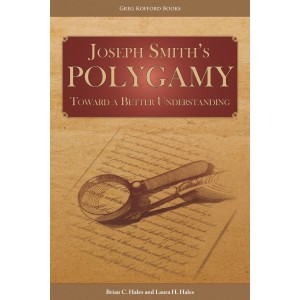
Articles of Faith Podcast: Joseph Smith’s Polygamy – Interview with Brian and Laura Hales

April 6, 2015 by NickGalieti

https://media.blubrry.com/mormonfaircast/www.fairlatterdaysaints.org/wp-content/uploads/2015/04/AOF-BrianandLauraHales-JosephSmithPolygamy.mp3

Podcast: Download (48.6MB)

Subscribe: RSS

Hales HeadshotsBio:

Brian and Laura Harris Hales are the co-authors of Joseph Smith’s Polygamy: Toward a Better Understanding. Brian is the award-winning author of six books on polygamy, including the first three volumes in the Joseph Smith’s Polygamy series. Together they are the co-webmasters of JosephSmithsPolygamy.org and speak frequently about the history of early polygamy. Laura is an active blogger and editor of an upcoming anthology on 16 topics of historical and theological significance to members of the LDS Church (BYU Religious Studies Center, early 2016). Laura and Brian, combined, have nine children.

Questions addressed in the interview:

How did you both work on this, what was the work contributed from each of you?

There are three sources of information that you use for information on Joseph Smith’s polygamy and basically the earliest teachings and implementations of polygamy. What are those three main sources?

Let’s start out with theological polygamy, what is the theological reasons for the practice of polygamy?

What is the difference (if there is a difference) between plural marriage and polygamy and what does that distinction matter?

You also make the distinction that there were times where plural marriage was permitted, and other times it was commanded. What are the examples of those differences?

With an issues such as Race and the Priesthood, there are many who distance themselves from the idea that God commanded the priesthood ban in the first place. Is there such a position when it comes to polygamy? Is there any merit to a dismissal of the practice as having no divine origin?

One of the conflicts that seems to catch people is the concept of Plurality of Husbands or Polyandry. There is a couple sections of your book that discusses this particular issue. What is the main question that people have here, and in what way does your text resolve questions about polyandry.

Emma Smith, Joseph Smith’s first and primary wife, had a role in this story that is heart wrenching at times, and can leave a person feeling conflicted. What was Emma’s view of polygamy?

Explain the Mini-biographies on Joseph Smith’s wives.

To purchase a copy of Joseph Smith’s Polygamy: Toward a Better Understanding, click here.

1630-1961-thickbox

Filed Under: Articles of Faith, Hosts, Joseph Smith, Marriage, Nick Galieti, Podcast, Polygamy, Women Tagged With: Joseph Smith's Polygamy, Plural Marriage, Polyandry

4th Watch: My Testimony

April 4, 2015 by Ned Scarisbrick

https://media.blubrry.com/mormonfaircast/www.fairlatterdaysaints.org/wp-content/uploads/2015/04/Easter-Testimony.mp3

Podcast: Download (14.3MB)

Subscribe: RSS

4thWatch SmallBrother Nick Galieti, the podcast manager for FairMormon, asked for our personal testimony as a special gift this Easter. I responded that it would be an honor. Testimonies are often given in LDS sacrament meetings on a local level to a few hundred; but as a podcaster I get the privilege to share my testimony to many thousands. It is indeed a true honor that I take seriously. There are places in the world today where any public expression of religious belief is met with ridicule and government suppression. With such a privilege comes responsibility and I would like to start my testimony with the words of Elder Holland. In the October 2014 conference of the Church of Jesus Christ of Latter-day Saints he said this in reference to the forth mission of the Church: To care for the poor and needy.

In what would be the most startling moment of His early ministry, Jesus stood up in His home synagogue in Nazareth and read these words prophesied by Isaiah and recorded in the Gospel of Luke: “The Spirit of the Lord is upon me, because he hath anointed me to preach the gospel to the poor; he hath sent me to heal the brokenhearted, to preach deliverance to the captives, and … set at liberty them that are bruised.”

Thus, the Savior made the first public announcement of His messianic ministry. But this verse also made clear that on the way to His ultimate atoning sacrifice and Resurrection, Jesus’ first and foremost messianic duty would be to bless the poor, including the poor in spirit.

From the beginning of His ministry, Jesus loved the impoverished and the disadvantaged in an extraordinary way. He was born into the home of two of them and grew up among many more of them. We don’t know all the details of His temporal life, but He once said, “Foxes have holes, and … birds … have nests; but the Son of man hath not where to lay his head.” Apparently the Creator of heaven and earth “and all things that in them are” was, at least in His adult life, homeless.

Down through history, poverty has been one of humankind’s greatest and most widespread challenges. Its obvious toll is usually physical, but the spiritual and emotional damage it can bring may be even more debilitating. In any case, the great Redeemer has issued no more persistent call than for us to join Him in lifting this burden from the people. As Jehovah, He said He would judge the house of Israel harshly because “the spoil of the [needy] is in your houses.”

“What mean ye,” He cried, “that ye beat my people to pieces, and grind the faces of the poor?”

The writer of Proverbs would make the matter piercingly clear: “He that oppresseth the poor reproacheth his Maker,” and “whoso stoppeth his ears at the cry of the poor … shall [also] cry himself, but shall not be heard.”

In our day, the restored Church of Jesus Christ had not yet seen its first anniversary when the Lord commanded the members to “look to the poor and … needy, and administer to their relief that they shall not suffer.” Note the imperative tone of that passage—“they shall not suffer.” That is language God uses when He means business.

I agree with Elder Holland. When the Lord uses this type of language, He means business. In the book of James chapter 1 verse 27, pure religion is defined: “Pure religion and undefiled before God the Father is this, to visit the fatherless and widows in their affliction, and to keep himself unspotted from the world.” As members of the Lord’s Church we have a sacred responsibility to succor the weak, lift up the hands which hang down, and strengthen the feeble knees as recorded in the 81st section of the Doctrine and Covenants. It is my testimony the Lord stands ready to receive all those who come until Him. He is the great healer. The perfect physician and His Church is committed to performing this great commission. In Jeremiah 29:11 we read. “For I know the plans1 I have for you, declares the LORD, plans to prosper2 you and not to harm you, plans to give you hope and a future.” This hope is found in the gospel of Jesus Christ and I for one stand ready at all times and in all places to give an answer to everyone who asks me a reason for the hope that is in me with kindness and patience for those with whom I witness and respect and reverence for almighty God. (1 Peter 3:15.)

Personally, I honor the 56 men who signed the Declaration of Independence concerning these penned words: “[W]ith a firm reliance on the protection of divine providence we mutually pledge to each other our lives, our fortunes and our sacred honor.” I can say with full purpose of heart that I pledge my life, whatever fortune I may have and my sacred honor to the Father of Heaven and Earth and His Son the Lord Jesus Christ and the Holy Spirit for Their purpose and glory. We read in Romans 8:16 that “the Spirit itself bears witness with our spirit, that we are the children of God.” It is to him that we need look for our purpose and hope in this life and the life to come. I so testify in the name of Jesus Christ. Amen.

As always the views and opinions expressed in this podcast may not represent those of the Church of Jesus Christ of Latter-day Saints or that of FairMormon.

Filed Under: Apologetics, Conversion, Doctrine, Evidences, Faith Crisis, General, General Conference, Hosts, Ned Scarisbrick, Podcast, Power of Testimony Tagged With: Building a Testimony

Articles of Faith Podcast: Syntax and Book of Mormon Authorship – Interview with Stanford Carmack

March 30, 2015 by NickGalieti

https://media.blubrry.com/mormonfaircast/www.fairlatterdaysaints.org/wp-content/uploads/2015/03/AOF-StanfordCarmack-BOM-Syntax.mp3

Podcast: Download (55.9MB)

Subscribe: RSS

stanford-carmackStanford Carmack has a linguistics and a law degree from Stanford University, as well as a doctorate in Hispanic Languages and Literature from the University of California, Santa Barbara, specializing in historical syntax. In the past he has had articles published on Georgian verb morphology and object–participle agreement in Old Spanish and Old Catalan. He currently researches Book of Mormon syntax as it relates to Early Modern English and contributes, by means of textual analysis, to volume 3 of Royal Skousen’s Book of Mormon critical text project.

Articles referenced in this interview:

The Implications of Past-Tense Syntax in the Book of Mormon

A Look at Some “Nonstandard” Book of Mormon Grammar

What Command Syntax Tells Us About Book of Mormon Authorship

Questions addressed in this interview:

The work that you do feels like forensic work, like something a coroner is doing to look back on the evidence that is before them and come to certain conclusions about what took place. Like a coroner would be able to tell the difference in the type of cut on a body and come to some conclusion about the type of blade that was used, or the skill with which the individual that made the cut demonstrated in the wound, etc. You seem to have the ability to look at an ancient text and see more than simply a group of letters that form a word, but the skill and education of the person that used it, the origins of the word, and from that you can come to certain conclusions. Is that an appropriate comparison?

You have written three articles in The Interpreter, to date, I am sure there will be more to come, but they all have to do with this rich analysis of the grammar and syntax of the Book of Mormon text. There are some criticisms of the Book of Mormon text that have been used by critics for years, what are some of those criticisms?

Did your effort in this regard come from wanting to give answers to the critics, or did you want to find answers for yourself to the critics questions and figured you would share your findings with others?

In your most recent article you make the statement that “Syntax resists manipulation” Meaning what with respect to its use in Book of Mormon authorship?

Let’s start with the first one that you did entitled A Look at Some “Nonstandard” Book of Mormon Grammar.” What were your findings with respect to what specific criticisms?

The next article was “What Command Syntax Tells Us About Book of Mormon Authorship.” This paper focuses on the use of one verb, COMMAND. It might seem a bit pf an overstatment to some, but how can the use of one word contribute to so as to either condemn or vindicate the claims to divine authorship of the Book of Mormon?

Your latest article is a bit of a heavy read, but it is quite impressive in that regard. The article is entitled, “The Implications of Past-Tense Syntax in the Book of Mormon.” Here again is an analysis of the text with respect to assumptions that the Book of Mormon simply copies or borrows from Biblical Texts.

Filed Under: Articles of Faith, Book of Mormon, Hosts, Joseph Smith, LDS Scriptures, Nick Galieti, Podcast Tagged With: Book of Mormon Critical Text Project, syntax

RiseUp Podcast – Freetown Movie – Interview with Garrett Batty and Melissa Larson

March 24, 2015 by NickGalieti

https://media.blubrry.com/mormonfaircast/www.fairlatterdaysaints.org/wp-content/uploads/2015/03/RiseUp-Freetown.mp3

Podcast: Download (58.8MB)

Subscribe: RSS

Click here to find showings of Freetown at a theater near you.


Films have an impact on how we view the world. But in some cases, films have an impact on the way the world views us. Freetown is the latest film from Garrett Batty, the director of The Sarratov Approach, With this film, the film makers wanted to help the world to see the power of faith with the story of young missionaries in Africa who had to trust in God, and teach the gospel, while their lives were being threatened in the midst of a bloody civil war.

In this episode of RiseUp, we interview Writer and Director Garrett Batty about his work with the film, why he included topics like race and the priesthood, as well as the impact films like this can have on the way individuals throughout the world and their perception of The Church of Jesus Christ of Latter-day Saints. We also interview Melissa Larson, the screenwriter of the film about what it meant to take a real life story of faith and hardship and translate that to the big screen.

FairMormon-Rise-Up-iTunes-logo

Filed Under: Hosts, Nick Galieti, Podcast, RiseUp Tagged With: Africa, film, Freetown, Ghana, movie, race and the priesthood, Racial Issues

Articles of Faith Podcast: In The Gospel, Faith Must Come First – Interview with Taylor Halverson

March 23, 2015 by NickGalieti

https://media.blubrry.com/mormonfaircast/www.fairlatterdaysaints.org/wp-content/uploads/2015/03/AOF-TaylorHalvorson-FaithFirst.mp3

Podcast: Download (41.4MB)

Subscribe: RSS

taylor-halverson-60Bio: Dr. Taylor Halverson received a B.A. from Brigham Young University in Ancient Near Eastern Studies in 1997, an M.A. in Biblical Studies from Yale University in 2001 and an M.S. in Instructional Technology from Indiana University in 2004. He completed Ph.D.s in Instructional Technology and Judaism & Christianity in Antiquity—both from Indiana University in 2006.

Dr. Halverson currently works at BYU full-time at the Center for Teaching and Learning. He is also the founder and co-chair of the Creativity, Innovation, and Design group, acting associate director of the Rollins Center for Entrepreneurship and Technology, and has taught a variety of courses at BYU including: “Old Testament,” “Book of Mormon,” “History of Creativity,” “Innovation Lab: The Design Thinking Experience,” and “Illuminating the Scriptures: Designing Innovative Scripture Study Tools.” Dr. Halverson is a contributor to the popular LDS Bible Videos project and the LDS Scripture Citation Index site and a columnist for the Deseret News. He and his wife Lisa lead travel tours to Israel, the Mediterranean, and Mesoamerica.

Questions addressed in the interview:

In preparation for this interview I went to TaylorHalverson.com, and in reading over the many things you are involved in, various chair positions at BYU, a tour guide for LDS themed travel, writer of multiple text books, articles for various publications and media outlets, this may seem like a judgmental question, and it is not meant to be, but where do you find to study the scriptures, and give time to your own personal faith development?

You are multi-lingual, Spanish, Biblical Hebrew, Greek, and a slew of others considered secondary languages. How has learning and knowing multiple languages changed your approach to learning the scriptures?

The article you wrote for the Deseret News, addresses a challenge or at least a shift in approach that we have seen with the world at large, and that is an evidence first approach. Disbelieve until proven logically true. At first, it seems like this is a prudent approach, but you call it difficult if not outright outlandish. Could you expound on that conclusion?

This relates to an exchange you had while attending Yale as follows:

Yale student: Where is the original Book of Mormon today? Where are the gold plates?

Taylor: They are gone.

Yale student: What do you mean that the original plates are gone?

Taylor: When Joseph Smith completed the translation of the gold plates into the Book of Mormon, he returned the plates to the angel Moroni. So we no longer have access to them. All that remains is Joseph Smith’s translation of the plates.

Yale student: I mean no disrespect, but this sounds both incredible and convenient for the story of the Book of Mormon. (Remember that the word “incredible” means unbelievable.) We have no way of source checking Joseph Smith’s story because the plates he claims to have worked with are no longer available. How can anyone even believe Joseph Smith or the Book of Mormon?

Taylor: Great questions. I have several questions for you.

Yale student: Sure.

Taylor: Are you a Christian?

Yale student: Yes.

Taylor: Do you believe in the bodily resurrection of Jesus Christ?

Yale student: Of course. That is the fundamental foundation of Christianity! Without the belief in the bodily resurrection of Jesus Christ there is nothing for Christianity.

Taylor: OK, then show me Jesus’ body.

Yale student: (Pausing to think with dawning comprehension) Oh, I see.

Taylor: What is more implausible: That someone claims to have translated a book and now the original book is missing, or that a physically dead body is now alive again? Just as Christians throughout the centuries have exercised faith in the claim that Jesus Christ died and rose again, so too members of The Church of Jesus Christ of Latter-day Saints exercise faith in that original claim as well as in the claim that God has brought forth additional scriptural witnesses, such as the Book of Mormon, for the life and mission of Jesus Christ

Sometimes people find themselves in a faith crisis, not simply a position of unknowing something, but that they feel they know something that has caused some cognitive dissonance. How does faith apply to someone in this intellectually conflicted position?

The article title asserts that faith must come first, that it is a matter of approaching spiritual matters with faith first. What tends to be the end result if faith comes second, or third or somewhere down the line?

This idea that we wait to act till we have knowledge is the opposite of what you inject at the end of your article, “As we act in faith, our knowledge increases and our views enlarge.” What sorts of things can we ONLY learn through faith as opposed to traditional empirical learning models?

Taylor Halverson is the author of the article In the Gospel, Faith Must Come First published by the Deseret News.

Filed Under: Articles of Faith, Faith Crisis, Hosts, Nick Galieti, Podcast Tagged With: faith, Faith Crisis, gospel

Front Page News Review Podcast #6

March 16, 2015 by NickGalieti

https://media.blubrry.com/mormonfaircast/www.fairlatterdaysaints.org/wp-content/uploads/2015/03/FrontPage6.mp3

Podcast: Download (36.7MB)

Subscribe: RSS

FairMormon’s Front Page News Review is a show that provides context and analysis of the past week’s media coverage of Mormons and the LDS church. Hosted by Nick Galieti manager of the FairMormon Front Page news service, Cassandra Hedelius.

We hope this will be an edifying and entertaining experience. What we present is not to be understood as being the official position of FairMormon or The Church of Jesus Christ of Latter-day Saints. We speak for ourselves, and sometimes not even then.

Past weeks Top Stories:

http://www.thedailybeast.com/articles/2015/03/13/a-great-utah-compromise-on-lgbt-equality-there-s-no-such-thing.html

http://www.msnbc.com/msnbc/utah-legislature-passes-mormon-backed-lgbt-nondiscrimination-law

http://www.reuters.com/article/2015/03/11/us-usa-mormons-excommunication-idUSKBN0M705920150311

http://www.sltrib.com/home/2229999-155/new-mormon-mission-how-to-teach

http://www.mcclatchydc.com/2015/03/07/258998/water-grab-pits-las-vegas-against.html

Facebook page hit 3,000 likes.

Plug FairMormon Front Page, signup at fairmormon.org

Filed Under: Fair Mormon Front Page News Review, Hosts, News from FAIR, News stories, Nick Galieti, Podcast Tagged With: John Dehlin, Legislation, LGBT

Faith and Reason 40: Thieves and Robbers

March 14, 2015 by FAIR Staff

https://media.blubrry.com/mormonfaircast/www.fairlatterdaysaints.org/wp-content/uploads/2015/06/Thieves-and-Robbers-MP3.mp3

Podcast: Download (4.0MB)

Subscribe: RSS


From  the book:

Of Faith and Reason: 80 Evidences Supporting the Prophet Joseph Smith

by Michael R. Ash

In the Book of Mormon, we find the terms thieves and robbers. To modern Americans, the words are interchangeable  (which is what we find in the King James Bible). Under ancient Near Eastern law, however, there is a significant difference between the two types of criminals and how the law should punish them. Without exception, the Book of Mormon uses the terms thieves and robbers correctly, according the specific type of criminal as well as what we now know about ancient Near Eastern law.

Michael R. Ash is the author of: Of Faith and Reason: 80 Evidences Supporting The Prophet Joseph Smith. He is on the management team for FairMormon. He has been published in Sunstone, Dialogue: A Journal of Mormon Thought, the Maxwell Institute’s FARMS Review, and is the author of Shaken Faith Syndrome: Strengthening One’s Testimony in the Face of Criticism and Doubt.  He and his wife live in Ogden, Utah, and have three daughters.

Julianne Dehlin Hatton  is a broadcast journalist living in Louisville, Kentucky. She has worked as a News Director at an NPR affiliate, Radio and Television Host, and Airborne Traffic Reporter. She graduated with an MSSc from the Maxwell School of Citizenship and Public Affairs at Syracuse University in 2008. Julianne and her husband Thomas are the parents of four children.

Music for Faith and Reason is provided by Arthur Hatton.

Filed Under: Faith and Reason, Hosts, Julianne Dehlin Hatton, Podcast Tagged With: Faith and Reason, Michael R. Ash, Podcast

4th Watch 19: Why are Mormons prejudiced?

March 12, 2015 by Ned Scarisbrick

https://media.blubrry.com/mormonfaircast/www.fairlatterdaysaints.org/wp-content/uploads/2015/03/4th-Watch-19-Pod.mp3

Podcast: Download (36.8MB)

Subscribe: RSS

4thWatch SmallLike all human begins we have our own personal preferences about everything in life.  There are things, people, ideas and places that we may like and prefer that others dislike that have nothing to do with being prejudiced.  When it comes to real prejudice we need to define what we are talking about.

In this podcast Brother Scarisbrick relates how our understanding of different times and cultural norms can change as we gain further light and knowledge.

As always the views and opinions expressed in the podcast may not reflect or represent those of the Church of Jesus Christ of Latter-day Saints or that of FairMormon.

Filed Under: Anti-Mormon critics, Apologetics, Chastity, Conversion, Doctrine, Evidences, Faith Crisis, General, Hosts, LDS Culture, Marriage, Ned Scarisbrick, Philosophy, Podcast, Politics, pornography, Power of Testimony, Racial Issues Tagged With: predjudice

  • « Go to Previous Page
  • Go to page 1
  • Interim pages omitted …
  • Go to page 35
  • Go to page 36
  • Go to page 37
  • Go to page 38
  • Go to page 39
  • Interim pages omitted …
  • Go to page 49
  • Go to Next Page »

Primary Sidebar

Faithful Study Resources for Come, Follow Me

Subscribe to Blog

Enter your email address:

Subscribe to Podcast

Podcast icon
Subscribe to podcast in iTunes
Subscribe to podcast elsewhere
Listen with FAIR app
Android app on Google Play Download on the App Store

Pages

  • Blog Guidelines

FAIR Latest

  • The Family Proclamation—Words from God
  • Come, Follow Me with FAIR – The Family: A Proclamation to the World – Part 2 – Autumn Dickson
  • Come, Follow Me with FAIR – The Family: A Proclamation to the World – Part 1 – Autumn Dickson
  • The Eternal Gift of Testimony
  • Come, Follow Me with FAIR – The Articles of Faith and Official Declarations 1 and 2 – Part 2 – Autumn Dickson

Blog Categories

Recent Comments

  • lyrics to song on Come, Follow Me with FAIR – The Articles of Faith and Official Declarations 1 and 2 – Part 2 – Autumn Dickson
  • Nalo on Come, Follow Me with FAIR – The Articles of Faith and Official Declarations 1 and 2 – Part 2 – Autumn Dickson
  • Diana on Come, Follow Me with FAIR – Doctrine and Covenants 132 – Mike Parker
  • JC on The Lord Is Hastening His Work
  • LHL on Come, Follow Me with FAIR – Doctrine and Covenants 132 – Mike Parker

Archives

Follow Us

  • Facebook
  • Twitter
  • iTunes
  • YouTube
Android app on Google Play Download on the App Store

Footer

FairMormon Logo

FAIR is a non-profit organization dedicated to providing well-documented answers to criticisms of the doctrine, practice, and history of The Church of Jesus Christ of Latter-day Saints.

Donate to FAIR

We are a volunteer organization. We invite you to give back.

Donate Now

Site Footer