• Skip to primary navigation
  • Skip to main content
  • Skip to primary sidebar
  • Skip to footer

FAIR

  • Start Here
  • Find Answers
  • Scripture Study
  • Blog
  • Events
    • FAIR Conference
    • Virtual Conferences
    • Special Events
  • FAIR Books
  • About
    • Media & Apps
  • Get Involved
  • Search

Scripture Study

Daniel T. Ellsworth

Writer · Researcher · Biblical Studies

Daniel T. Ellsworth, Latter-day Saint writer and researcher in biblical studies

Daniel T. Ellsworth is a Latter-day Saint writer and independent researcher with a particular interest in biblical studies, scripture interpretation, and the relationship between faith and academic approaches to scripture.

Ellsworth earned a BA in international studies from Brigham Young University and works professionally as a technology consultant. Alongside his professional career, he has pursued extensive study of the Bible and Latter-day Saint scripture, with particular attention to Isaiah, biblical authorship, historical-critical scholarship, and the assumptions scholars and believers bring to the interpretation of sacred texts.

His published work includes “Their Imperfect Best: Isaianic Authorship from an LDS Perspective,” which examines scholarly approaches to the composition and authorship of Isaiah and considers how Latter-day Saints can engage those approaches while taking Restoration scripture and prophetic revelation seriously. He has also written about faith, belief, and religious community.

At FAIR’s 2025 Virtual Conference, Ancient Truths for Modern Faith, Ellsworth presented “Defending the Old Testament: Ancient Israel’s Offering to the World.” His presentation explored what it means to defend the Old Testament from a Latter-day Saint perspective, emphasizing careful interpretation, awareness of underlying scholarly assumptions, and the enduring importance of revelation and prophetic authority.

Ellsworth’s work encourages believing readers to engage biblical scholarship thoughtfully while recognizing the role that worldview, methodology, and assumptions play in the conclusions we draw about scripture.

Bio last reviewed:

Contributions at FAIR

Statement of Faith

Statement of faith coming soon.

Date of Statement of Faith

Tyler Golightly

Researcher · Writer · Latter-day Saint Scripture & Theology

Tyler Golightly, FAIR researcher and writer on scripture, theology, and temple worship

Tyler Golightly is a Latter-day Saint researcher and writer with interests in scripture, theology, temple worship, and Church history. His work explores how ancient scriptural frameworks can illuminate Latter-day Saint belief and practice.

Golightly studied mechanical engineering with an aerospace emphasis at Brigham Young University. Alongside his technical studies, he has pursued a longstanding interest in Latter-day Saint history and theology, with particular attention to the Old Testament and the relationship between ancient Israelite worship and modern Latter-day Saint temple practice.

At FAIR’s 2025 Virtual Conference, Ancient Truths for Modern Faith, Golightly presented “Who Shall Ascend Into the Hill of the Lord?: An Old Testament Framework for Understanding the Exclusive Nature of the Temple.” His presentation examined biblical concepts of sacred space, holiness, preparation, and access to the presence of God as a framework for understanding modern Latter-day Saint temple worship.

Golightly’s work reflects an interdisciplinary interest in bringing careful scriptural study into conversation with questions facing Latter-day Saints today.

Bio last reviewed:

Contributions at FAIR

Statement of Faith

Statement of faith coming soon.

Date of Statement of Faith

John S. Thompson

Egyptologist · Hebrew Bible Scholar · Ancient Scripture Researcher

John S. Thompson, Egyptologist and scholar of the Hebrew Bible and ancient scripture

John S. Thompson is an Egyptologist and scholar of the Hebrew Bible whose research focuses on ancient scripture, the Book of Abraham, Egyptian religion and culture, and the ancient Near Eastern world. He currently researches and writes for Scripture Central.

Thompson earned a BA in ancient Near Eastern studies from Brigham Young University and an MA in ancient Near Eastern studies, with an emphasis in the Hebrew Bible, from the University of California, Berkeley. He later earned a PhD in Egyptology from the University of Pennsylvania.

For more than twenty-five years, Thompson worked with Seminaries and Institutes of Religion. His assignments included serving as coordinator and institute director in Cambridge, Massachusetts, where his work brought together academic study of the ancient world with the teaching of Latter-day Saint scripture and doctrine.

Thompson has written extensively on the Book of Abraham, its Egyptian context, the Joseph Smith Papyri, the Book of Abraham facsimiles, and concepts of translation. His broader scholarship includes the Hebrew Bible, ancient Near Eastern religion and culture, the Abrahamic covenant, creation, and ancient understandings of scripture.

His work contributes to ongoing Latter-day Saint scholarship examining the Book of Abraham in its historical, textual, and ancient contexts and exploring how Egyptology and ancient Near Eastern studies can inform the study of Restoration scripture.

Bio last reviewed:

Contributions at FAIR

Statement of Faith

Statement of faith coming soon.

Date of Statement of Faith

Christopher James Blythe

Historian · Folklorist · Latter-day Saint Literature Scholar

Christopher James Blythe, historian and folklorist specializing in Latter-day Saint religion and culture

Christopher James Blythe is a historian, folklorist, and scholar of Latter-day Saint literature whose work explores the history, beliefs, stories, and religious culture of the Latter Day Saint tradition. He is an assistant professor at Brigham Young University, where he teaches folklore and Latter-day Saint literature.

Blythe earned a PhD in American Religious History from Florida State University, an MA in history and a BA in religious studies from Utah State University, and a BA in anthropology from Texas A&M University. His scholarship brings together the methods of history, folklore, religious studies, and literary studies to examine how religious communities understand scripture, prophecy, supernatural experience, and sacred history.

Before joining the BYU faculty, Blythe worked as a historian and documentary editor for the Joseph Smith Papers and as a research associate at BYU’s Neal A. Maxwell Institute for Religious Scholarship. He co-edited three volumes of the Joseph Smith Papers Documents series and has served as an editor of the Journal of Mormon History.

Blythe is the author of Terrible Revolution: Latter Day Saints and the American Apocalypse, a study of Latter-day Saint apocalyptic thought and its relationship to American history. He is also a co-editor of Open Canon: Scriptures of the Latter Day Saint Tradition. His research has appeared in numerous academic publications and addresses subjects including prophecy, scripture, folklore, visionary experience, Latter-day Saint history, and religious belief.

His work for FAIR brings historical and folkloric context to subjects that can seem unusual to modern readers, examining how Latter-day Saint scripture and tradition developed within broader biblical, religious, and cultural worlds.

Bio last reviewed:

Contributions at FAIR

Statement of Faith

Statement of faith coming soon.

Date of Statement of Faith

Kerry Muhlestein

Egyptologist · Ancient Scripture Scholar · Author

Kerry Muhlestein, Egyptologist and professor of ancient scripture at Brigham Young University

Kerry Muhlestein is a professor of ancient scripture and ancient Near Eastern studies at Brigham Young University and director of the BYU Egypt Excavation Project. An Egyptologist and scholar of the ancient Near East, his research and writing explore ancient Egypt, the Hebrew Bible and Old Testament, covenant theology, and the Book of Abraham.

Muhlestein earned a BS in psychology with a Hebrew minor and an MA in ancient Near Eastern studies from Brigham Young University, followed by a PhD in Egyptology from UCLA. His first full-time academic appointment was a joint position in religion and history at BYU–Hawaii. He later joined the faculty at BYU and has directed its Egypt excavation project since 2011.

His scholarly work includes extensive research on Egyptological subjects and the Book of Abraham. He has also written for Latter-day Saint audiences on the Old Testament, Isaiah, ancient covenants, the gathering of Israel, and Joseph Smith’s First Vision. His books include Let’s Talk about the Book of Abraham, Learning to Love Isaiah, God Will Prevail, and The Essential Old Testament Companion.

Muhlestein has served in professional Egyptological organizations and was a visiting fellow at the University of Oxford during the 2016–17 academic year. He has taught in Jerusalem on multiple occasions and brings together archaeological, historical, linguistic, and Restoration perspectives in his study of scripture.

Bio last reviewed:

Contributions at FAIR

Statement of Faith

While the development of my testimony is too multifaceted and encompassing to relate in its entirety here, I am very pleased to be able to talk about my testimony in relation to my academic work. In the end, they are really both the result of my desire to search for truth. Because I want so much to be able to continue learning and to acquire as much truth as I can, I seek it via every avenue I can. I cannot imagine that the Lord does not expect us to employ every means available to us as we seek for enlightenment. Would he expect us to do anything less than bring everything we have to the table, every bit of emotional, social, intellectual, and spiritual capacity we possess?

Because of this conviction, I have sought to find God with all of my mind, with all of my soul, and with all of my heart. I have found him in all of these ways. Having done so, I also know the variations of reliability between these differing sources of knowledge. Epistemologically, spiritual revelation is a more reliable source than intellectual investigation. Simply put, experience has shown me that we are ever learning in our intellectual pursuits, learning today that what we taught yesterday was incorrect, but that this is never the case with that which I have learned through revelation.

I have had too many experiences confirming the truth of the existence of God, the atoning power of His Son, and the restoration of His gospel through Joseph Smith to be able to retell them all in any setting. Some of these epistemological experiences have been large and powerful. They have come in the way of direct answers to prayers via powerful communication. They have come in unsought-for moments when I have been engaged in work associated with the Gospel. They have at times come unexpectedly when I have been about the tasks of daily life, but have let my thoughts be drawn out to pondering all manner of ideas. They have come in moments of first waking and in hours of exhaustion. These communications have sometimes been so tangible that I have wondered if there were physical and tangible beings or objects nearby.

Yet more often I have experienced quiet confirming nudges of spiritual communication. These are not typically overwhelming or awe-inspiring, yet they are real and recognizable as reminders that those things I have already learned continue to be unchangeable and steadfast truths. It takes familiarity with the language of the spirit to come to recognize these frequent bolsterings of the soul, but in my view they are more important and wonderfully welcome than the ostensibly larger events of life

I know there are those who have not had these experiences, and so they either do not understand them, they doubt them, or they stubbornly refuse to acknowledge that they are possible. In this they are wrong, for I have experienced them and know them to be real. While I have no intent of condescension, I honestly feel sorry for those who have either not experienced or recognized spiritual communications. They have never developed a vital, important, and exhilarating sensory ability. Like someone who insists that ultra-violet does not exist on the color spectrum because he himself has not experienced it, they limit their acknowledgment of reality because of their limited sensory ability. My pity for those who have not taken advantage of the opportunity to develop other avenues of learning does not cause me to value this venue of knowledge less. While it may take away opportunities for open discussion, it does not detract from a more sure form of knowledge.

With hope I warmly welcome all to seek out this form of learning. Study the words of ancient and modern prophets to learn how to experience spiritual communication. It is real, and is readily available to all who sincerely seek it.

Anyone with any experience in academia is aware that we are continually developing both better tools and skills for learning, and a better store of knowledge. This is exactly what we should be about. Yet inherent in such a system is the fact that things we hold to be true today may no longer be accepted as truth tomorrow. Even in studies such as physics we often have to unlearn certain principles as further evidence demonstrates that our former belief/knowledge was incorrect. This is certainly true of my own discipline, Egyptology. I have taught many things in the past that I can no longer teach today because we have learned now that they are not correct. I have often uncovered data myself which contradicts things which I had championed in the past. This is the nature of my profession, and any honest and good academician will operate with this understanding in view.

Yet this is certainly not the case with knowledge revealed from God. Truths learned from Him, via inspiration and revelation, never change. Thus it would be quite foolish of me to discard truth I have learned from God in favor of truths I have learned from even the most vigorous inquiries of my discipline. Having learned countless times in numerous, undeniable, unmistakable, and powerful ways that Joseph Smith is a prophet, I would be ill advised to discard this truth because of information that seemed to contradict it in my discipline. Thus I value knowledge learned from God more highly than knowledge acquired by my flawed intellect.

Even so, I relish the opportunity to apply all of my limited mental facilities to try to find out both the things of God and of this world. I am enthralled with the pursuit of truth that I undertake in my Egyptological endeavors. Moreover, I have found that when I do my best intellectual discovering, my findings align with my spiritual discoveries. To me this confirms that I am on the right track academically.

I would like to be clear that I have not set about trying to verify my spiritual knowledge with academic knowledge. I have not felt the need to defend the prophetic abilities of Joseph Smith—that defense is best left to the spirit. Yet I have always felt an almost siren-like call to apply my research skills towards better understanding the things of the scriptures and of Joseph Smith’s revelatory abilities. I have also developed a passion for helping others with honest questions find those answers. This has not been done in an apologetic way, but rather rises out of a real thirst for knowledge and a sincere desire to help other honest seekers of truth. This line of investigation has been enticing and addicting to me. I have continually found that when I apply my best efforts to learning more, those efforts confirm the truth of what I had already learned via revelation.

Let me provide a few examples. Early in my graduate career I encountered the writings of Latter-day Saints who argued that the story about the near-sacrifice of Abraham in the Book of Abraham was supported by evidence that the Egyptians engaged in this kind of sacrifice. I was somewhat repulsed by this argument for two reasons. First, as I read the Book of Abraham, it was clear that the near-sacrifice of Abraham consisted of an amalgamation of ritual trappings stemming from Canaan, Mesopotamia, and Egypt. I did not see why some would insist that the human sacrifice element had to have come from Egypt (and am still not convinced that the text dictates such a reading). Second, as an Egyptologist I had been taught that the Egyptians did not do this sort of thing. I took it upon myself to ask a few respected colleagues, who assured me this was the case. Thus I taught in classes and other settings that the Egyptians did not engage in human sacrifice, and I made light of attempts to show otherwise.

One day a colleague of mine suggested I might be mistaken in this, and suggested I look into a particular incident archaeologically attested at the Nubian fortress of Mirgissa. As I looked into this I not only saw that I might be wrong, but I found myself intrigued by how such an incident fit into a larger concept of Egyptian culture. I decided to do my dissertation on the larger concept, hoping to come to a clearer understanding of the apparent human sacrifice at Mirgissa and how it fit into Egyptian religion and culture in general. This was partially inspired by a desire to set right anything incorrect I had taught, and partially by an innate curiosity that had seen a gap in knowledge that was fascinating to me. Thus I studied the role of religious violence in Egypt, with special attention to sanctioned killing. As I studied this larger phenomenon I came to recognize many examples of ritual human sacrifice in Egypt, and to understand the kinds of circumstances that would lead to it. As the picture more fully developed, I was surprised to one day realize that the settings I was describing matched perfectly with those set out by the Book of Abraham.

Without having set out to justify that Abrahamic story, I found that I understood him and his time better, and simultaneously I unexpectedly found my intellectual learnings aligning with my spiritual knowledge. I have since taught extensively, in the United States and internationally, about ritual slaying in ancient Egypt. I have been asked by other Egyptologists to speak and write about this topic for other Egyptologists. My findings have been widely accepted. It also provided the smallest nudge of confirmation that my spiritual sensitivities were correct. This spiritual knowledge needed no such nudge, but often such bolstering confirmations come when unsolicited.

This was neither the first nor the last time that my academic undertakings paralleled my revelatory experiences. I will share just one more. I once had a well spoken and well intentioned friend of another faith correspond with me about some questions he had regarding the Book of Abraham. He asked me if there were any known examples of Egyptian priests possessing texts which spoke of biblical figures. I realized that I did not know much about this, and was not sure if anyone did. I knew that the owner of the papyrus from which the Book of Abraham was most likely translated was a priest from Thebes around 200 BC. But I did not know much about what priests from this or other periods knew concerning Jewish beliefs. I was aware that this was a time of real internationalization in Egypt, and that among Hellenistic and Egyptian elites there was a vigorous search for intercultural knowledge. The Septuagint, the Greek translation of the Hebrew Bible that came from Egypt, arose at least partially from this cultural phenomenon. I was also aware of other phenomena which suggested that Egyptians had a knowledge of things biblical. But I was sure there was more to be learned about this. Both Latter-day Saints and people interested in Judaism, Early Christianity, and Egypt in general would be interested in this topic. Furthermore, I had recently become involved in a project that was investigating the rise of Christianity in Egypt, and I felt that a greater understanding of what Egyptians knew of the Bible would be important background knowledge for understanding the advent of Christianity in that country. And so I set about finding some answers. It seemed to me that I would better understand a great number of things important to Egyptology and Latter-day Saints much better if I knew more about the spread of biblical knowledge in Egypt.

I found that my good friend and colleague John Gee had already done work on this (as he typically has with anything Egyptological that is in any way connected with the Book of Abraham). I started with what John had done, and attempted to go a step or two further. It was a fun and invigorating project, requiring me to stretch my academic abilities and to acquire a great deal more knowledge on some key subjects than I already had. This was exciting. Careful research yielded more and more, until I decided that the project was really something that I would have to break down into a few separate studies and papers. Work on some of these continues forward even as I write this.

It became very clear that Egyptian priests had an extensive knowledge of stories about biblical characters, both those that were in the Bible and stories that went beyond the canon. While I don’t think we can generalize this statement to all priests in Egypt, it is inescapable that at least a number of priests in Thebes had such knowledge, and hence presumably had texts which conveyed this knowledge. What was surprising to me was the way the evidence forced me to a conclusion about the timing of this. As I attempted to determine when the latest date could be for these Theban priests to have gained access to such texts, the evidence led me to positing that it was certainly by 150 BC, and almost surely by 200 BC. This was astonishing. Since it appears, from examining the Joseph Smith Papyri, that the Book of Abraham was owned by a Theban priest about 200 BC, it was almost too serendipitous to find evidence that Theban priests in 200 BC had texts about biblical characters, both canonical and non-canonical, and especially about Abraham. I have never based my testimony on such evidences, and would never think that something like this demonstrates the truth of this scriptural record. Yet it is always exciting to find one avenue of pursuing truth that matches another. I still remember when I was first able to put a finger on the date 200 BC and the city of Thebes that I sat in my office and experienced a wash of both emotions and spiritual inflows. It was another small reminder of things I had already learned more powerfully and more surely earlier. Yet I am grateful for these reminders.

These are only a few of the examples I could share. Most of the learning experiences I have had are too personal to share in such an open forum.

I am grateful for all of the learning experiences I have had, for all of the various avenues of learning which I have experienced. I am awash in real revelations regarding the existence of God, His overwhelming love for us, the supernal gift of His Son, the incomparable power of the atonement, and the gracious gift of the restoration of the Gospel through Joseph Smith. I look forward to more and more opportunities to learn about these truths, and to understand them in ever expanding ways. I trust that I am only at the beginning, and that there is more growth and learning in store via more avenues than I have guessed. While I have some questions that have not yet been answered, all of my past experiences assure me that there is an abundance of answers that will come in an endless variety of ways. My past knowledge gives me great hope for the future. Not just hope, but an assurance of those things which have already come and which are yet to come.

March 2010

Study Resources for the Old Testament & Pearl of Great Price

Start Here

Question
What are the best Come, Follow Me Old Testament study resources for 2026?

Short Answer
FAIR provides a comprehensive weekly supplement for the 2026 Old Testament Come, Follow Me course, combining scripture study, apologetic insights, and responses to common criticisms. Each lesson aligns with the official Church manual while adding historical, doctrinal, and faith-strengthening context.
Key Takeaways
  • Weekly study resources aligned with Come, Follow Me 2026
  • Includes apologetic responses to common questions and criticisms
  • Designed for individuals, families, and teachers
  • Pairs FAIR insights with official Church materials
  • Covers all 52 weeks of the Old Testament

Use this page as a year-long index for FAIR’s 2026 Come, Follow Me study resources for the Old Testament and Pearl of Great Price. Each week includes a link to FAIR’s supplemental study page and a link to the corresponding lesson from The Church of Jesus Christ of Latter-day Saints.

Jump to a quarter below, then select the week you are studying. FAIR’s weekly pages are designed to help readers deepen scripture study, address common questions, and strengthen faith in Jesus Christ.

January–March April–June July–September October–December

January–March

January

Week 1: Dec 29–Jan 4

“The First Testament of Jesus Christ”

Introduction to the Old Testament

FAIR Resource | Church Lesson

Week 2: Jan 5–11

“This Is My Work and My Glory”

Moses 1; Abraham 3

FAIR Resource | Church Lesson

Week 3: Jan 12–18

“In the Beginning God Created the Heaven and the Earth”

Genesis 1–2; Moses 2–3; Abraham 4–5

FAIR Resource | Church Lesson

Week 4: Jan 19–25

“The Fall of Adam and Eve”

Genesis 3–4; Moses 4–5

FAIR Resource | Church Lesson

Week 5: Jan 26–Feb 1

“Teach These Things Freely unto Your Children”

Genesis 5; Moses 6

FAIR Resource | Church Lesson

February

Week 6: Feb 2–8

“The Lord Called His People Zion”

Moses 7

FAIR Resource | Church Lesson

Week 7: Feb 9–15

“Noah Found Grace in the Eyes of the Lord”

Genesis 6–11; Moses 8

FAIR Resource | Church Lesson

Week 8: Feb 16–22

“To Be a Greater Follower of Righteousness”

Genesis 12–17; Abraham 1–2

FAIR Resource | Church Lesson

Week 9: Feb 23–Mar 1

“Is Any Thing Too Hard for the Lord?”

Genesis 18–23

FAIR Resource | Church Lesson

March

Week 10: Mar 2–8

“Let God Prevail”

Genesis 24–33

FAIR Resource | Church Lesson

Week 11: Mar 9–15

“The Lord Was with Joseph”

Genesis 37–41

FAIR Resource | Church Lesson

Week 12: Mar 16–22

“God Meant It unto Good”

Genesis 42–50

FAIR Resource | Church Lesson

Week 13: Mar 23–29

“I Have Remembered My Covenant”

Exodus 1–6

FAIR Resource | Church Lesson

Week 14: Mar 30–Apr 5

“He Will Swallow Up Death in Victory”

Easter

FAIR Resource | Church Lesson

↑ Back to Top

April–June

April

Week 15: Apr 6–12

“Remember This Day, in Which ye Came Out from Egypt”

Exodus 7–13

FAIR Resource | Church Lesson

Week 16: Apr 13–19

“Stand Still, and See the Salvation of the Lord”

Exodus 14–18

FAIR Resource | Church Lesson

Week 17: Apr 20–26

“All That the Lord Hath Spoken We Will Do”

Exodus 19–20, 24; 31–34

FAIR Resource | Church Lesson

Week 18: Apr 27–May 3

“Holiness to the Lord”

Exodus 35–40; Leviticus 1, 4, 16, 19

FAIR Resource | Church Lesson

May

Week 19: May 4–10

“Rebel Not ye Against the Lord, Neither Fear”

Numbers 11–14, 20–24, 27

FAIR Resource | Church Lesson

Week 20: May 11–17

“Beware Lest Thou Forget the Lord”

Deuteronomy 6-8, 15, 18, 29–30, 34

FAIR Resource | Church Lesson

Week 21: May 18–24

“Be Strong and of a Good Courage”

Joshua 1–8, 23–24

FAIR Resource | Church Lesson

Week 22: May 25–31

“The Lord Raised Up a Deliverer”

Judges 2–4, 6–8, 13–16

FAIR Resource | Church Lesson

June

Week 23: June 1–7

“My Heart Rejoiceth in the Lord”

Ruth; 1 Samuel 1

FAIR Resource | Church Lesson

Week 24: Jun 8–14

“The Lord Looketh on the Heart”

1 Samuel 8–10, 13, 15–16

FAIR Resource | Church Lesson

Week 25: Jun 15–21

“The Battle Is the Lord’s”

1 Samuel 17–18; 2 Samuel 5–7

FAIR Resource | Church Lesson

Week 26: Jun 22–28

“Hear Thou in Heaven Thy Prayer”

2 Samuel 11–12; 1 Kings 3, 6, 9, 11

FAIR Resource | Church Lesson

Week 27: Jun 29–Jul 5

“If the Lord Be God, Follow Him”

1 Kings 12–13, 17–22

FAIR Resource | Church Lesson

↑ Back to Top

July–September

July

Week 28: July 6–12

“There Is a Prophet in Israel”

2 Kings 2–7

FAIR Resource | Church Lesson

Week 29: Jul 13–19

“He Trusted in the Lord God of Israel”

2 Kings 16–25

FAIR Resource | Church Lesson

Week 30: Jul 20–26

“Our Eyes Are Upon Thee”

2 Chronicles 14–20, 26, 30

FAIR Resource | Church Lesson

Week 31: Jul 27–Aug 2

“I Am Doing a Great Work”

Ezra 1, 3–7; Nehemiah 2, 4–6, 8

FAIR Resource | Church Lesson

August

Week 32: Aug 3–9

“Thou Art Come . . . for Such a Time as This”

Esther

FAIR Resource | Church Lesson

Week 33: Aug 10–16

“Yet Will I Trust in Him”

Job 1–3, 12–14, 19, 21–24, 38–40, 42

FAIR Resource | Church Lesson

Week 34: Aug 17–23

“The Lord Is My Shepherd”

Psalms 1–2, 8, 19–33, 40, 46

FAIR Resource | Church Lesson

Week 35: Aug 24–30

“I Will Declare What He Hath Done for My Soul”

Psalms 49–51, 61–66, 69–72, 77–78, 85–86

FAIR Resource | Church Lesson

Week 36: Aug 31–Sep 6

“Let Every Thing That Hath Breath Praise the Lord”

Psalms 102–3, 110; 116–19; 127–28; 135–39; 146–50

FAIR Resource | Church Lesson

September

Week 37: Sep 7–13

“He Shall Direct Thy Paths”

Proverbs 1–4; 15–16; 22; 31; Ecclesiastes 1–3; 11–12

FAIR Resource | Church Lesson

Week 38: Sep 14–20

“God Is My Salvation”

Isaiah 1–12

FAIR Resource | Church Lesson

Week 39: Sep 21–27

“A Marvellous Work and a Wonder”

Isaiah 13–14, 22, 24–30, 35

FAIR Resource | Church Lesson

Week 40: Sep 28–Oct 4

“Comfort ye My People”

Isaiah 40–49

FAIR Resource | Church Lesson

↑ Back to Top

October–December

October

Week 41: Oct 5–11

“He Hath Borne Our Griefs, and Carried Our Sorrows”

Isaiah 50–57

FAIR Resource | Church Lesson

Week 42: Oct 12–18

“The Redeemer Shall Come to Zion”

Isaiah 58–66

FAIR Resource | Church Lesson

Week 43: Oct 19–25

“Before I Formed Thee in the Belly I Knew Thee”

Jeremiah 1–3; 7; 16–18; 20

FAIR Resource | Church Lesson

Week 44: Oct 26–Nov 1

“I Will Turn Their Mourning into Joy”

Jeremiah 31–33; 36–38; Lamentations 1, 3

FAIR Resource | Church Lesson

November

Week 45: Nov 2–8

“A New Spirit Will I Put within You”

Ezekiel 1–3; 33–34; 36–37; 47

FAIR Resource | Church Lesson

Week 46: Nov 9–15

“There Is No Other God That Can Deliver”

Daniel 1–7

FAIR Resource | Church Lesson

Week 47: Nov 16–22

“I Will Love Them Freely”

Hosea 1–6, 10–14; Joel

FAIR Resource | Church Lesson

Week 48: Nov 23–29

“Seek the Lord, and ye Shall Live”

Amos; Obadiah; Jonah

FAIR Resource | Church Lesson

Week 49: Nov 30–Dec 5

“He Delighteth in Mercy”

Micah; Nahum; Habakkuk; Zephaniah

FAIR Resource | Church Lesson

December

Week 50: Dec 6–13

“Holiness unto the Lord”

Haggai 1–2; Zechariah 1–4, 10–14

FAIR Resource | Church Lesson

Week 51: Dec 14–20

“I Have Loved You, Saith the Lord”

Malachi

FAIR Resource | Church Lesson

Week 52: Dec 21–27

“We Have Waited for Him, and He Will Save Us”

Christmas Focus

FAIR Resource | Church Lesson

↑ Back to Top

Search topics Old Testament; Come Follow Me; Book of Moses; Temple; Sacrifice; Law of Moses; Atonement; Prophets; Scripture Study CES Letter; Mormon Church Abuse; LDS Finances; Mormon LGBTQ; Polygamy; Mormon Racism; Are Mormons Christian

New Doctrine and Covenants resources available from lds.org and Interpreter

February 3, 2013 by S. Hales Swift

At FAIR, we like to keep abreast of various resources which become available for studying, understanding, and teaching the gospel. With the current Sunday School year focusing on the Doctrine and Covenants, there are two new resources to which we would particularly like to call your attention, as well as some old favorites. The first is found here:

http://history.lds.org/series/doctrine-and-covenants-revelations-in-context?lang=eng#

and contains articles written by historians discussing with balance and grace some of the key characters and events associated with the restoration. A particular focus is the context in which the revelations in the Doctrine and Covenants were received. These historical papers provide a golden opportunity for teachers and students to better understand the context and process through which Joseph received many of the early canonized revelations so that they can better apply the process in obtaining divine guidance in their own lives. They also provide an excellent opportunity to better understand the historical unfolding of the restoration.

The Scripture Roundtables, hosted by Interpreter: A Journal of Mormon Scripture provide a second useful resource in the study of the Doctrine and Covenants. Each Roundtable involves a rotating collection of scholars discussing the gospel doctrine lessons. The discussions are roughly forty minutes each and may be found here:

http://www.mormoninterpreter.com/category/scripture-roundtable/

The guests have included a number of BYU professors, scholars associated with FAIR, students at Claremont Graduate University and other specialists who each bring unique insights and perspective to the study of the scripture. Interpreter’s multimedia platform makes it especially ideal for those who like to learn on the go. Their roundtable discussions are available as an itunes podcast as well as in the youtube format linked above.

A few other notable resources bear mention. This site: http://bit.ly/ldsarcdc provides teachers notes, slide shows, and class handouts for the Doctrine and Covenants.

Another resource, located at http://scripture.byu.edu, provides references for each time a scripture has been used in, for example, General Conference, and allows a teacher or student to get an idea how a particular scripture is typically employed in teaching.

Used wisely, these various (ultimately explanatory) resources help us fulfil our divinely mandated duty to “seek ye diligently and teach one another words of wisdom; yea, seek ye out of the best books words of wisdom, seek learning even by study and also by faith” (D&C 109:7) and also to “Teach ye diligently and my grace shall attend you, that you may be instructed more perfectly in theory, in principle, in doctrine, in the law of the gospel, in all things that pertain unto the kingdom of God, that are expedient for you to understand;” (D&C 88:78)

Filed Under: General, Gospel Doctrine: D&C, LDS History, Lesson Aids Tagged With: D&C, Doctrine & Covenants, Doctrine and Covenants, Gospel Study, history.lds.org, Interpreter Roundtable, Scripture, Scripture Study, study, study resources

FAIR Conference – Home

FAIR’S FLAGSHIP ANNUAL CONFERENCE

The FAIR Conference

For more than 25 years, the FAIR Conference has brought together scholars, researchers, authors, and thoughtful Latter-day Saints to explore questions of faith, scripture, history, doctrine, and the Restoration.

Faithful scholarship. Serious questions. Meaningful conversation.

Explore the 2026 Conference
Browse the Conference Archive

EST. 1999 | 25+ YEARS | HUNDREDS OF PRESENTATIONS | FAITH • SCHOLARSHIP • COMMUNITY

LATEST CONFERENCE · 2026

Explore the 2026 FAIR Conference

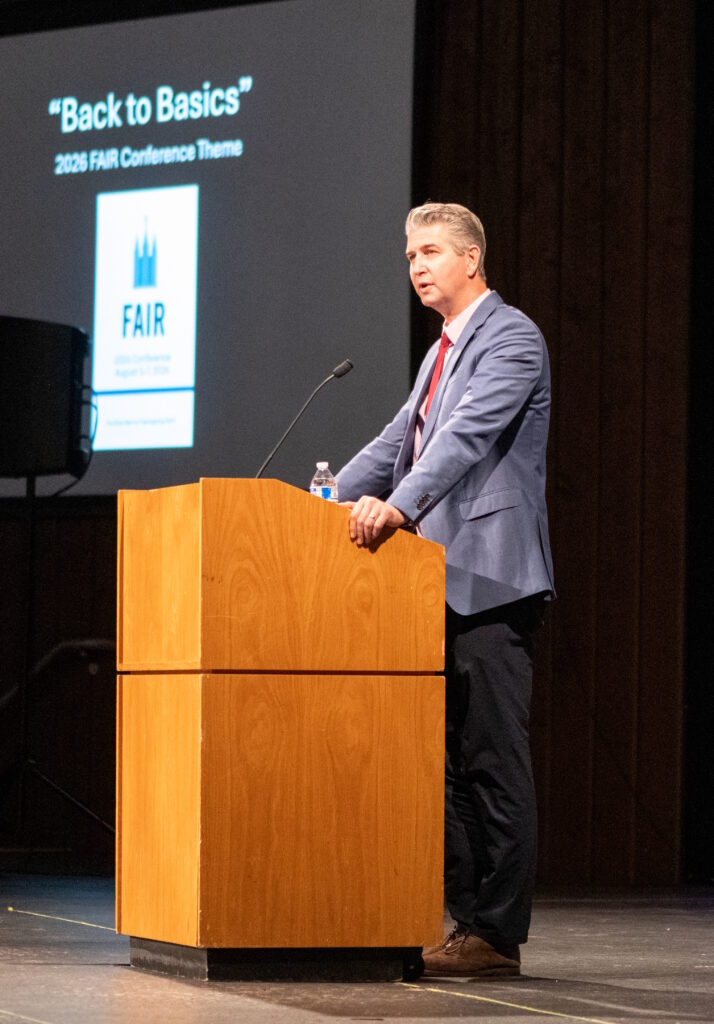
August 5–7, 2026 · Thanksgiving Point · Lehi, Utah

The 2026 FAIR Conference brought together scholars, researchers, authors, and Latter-day Saints for three days of presentations exploring scripture, Church history, doctrine, apologetics, and questions facing members of the Church today.

EXPLORE THE 2026 CONFERENCE →

THE FAIR CONFERENCE ARCHIVE

More Than 25 Years of Faithful Scholarship

Since 1999, the FAIR Conference has brought together scholars, historians, researchers, authors, and other thoughtful voices to explore Latter-day Saint scripture, history, doctrine, culture, and questions of faith.


Today, those presentations form an extensive archive of faithful scholarship—

available to watch, read, study, and explore.

Explore by Year

Dan Peterson speaking at the 2025 FAIR Conference

2025 FAIR Conference

EXPLORE →

2024 FAIR Conference

EXPLORE →

LaJean Carruth speaking at the 2023 FAIR Conference

2023 FAIR Conference

EXPLORE →

2022 FAIR Conference

EXPLORE →

Keith Erekson speaking at the 2021 FAIR Conference

2021 FAIR Conference

EXPLORE →

Jennifer Roach speaking at the 2020 FAIR Conference

2020 FAIR Conference

EXPLORE →

Earlier FAIR Conferences

Explore presentations from earlier FAIR Conferences, beginning with FAIR’s first conference in 1999.

2019–2015

Explore five years of FAIR Conference presentations →

2014–2010

Explore FAIR Conference presentations from 2010–2014 →

2009–2005

Explore FAIR Conference presentations from 2005–2009 →

2004–1999

Explore FAIR’s earliest conference presentations →

EXPLORE THE ARCHIVE

Conference Scholarship by Topic

Looking for a particular subject rather than a particular year?

Explore FAIR Conference presentations across decades of scholarship on Latter-day Saint scripture, history, doctrine, and questions of faith.

Book of Mormon

Evidence, translation, history, scripture, and ancient context

Explore presentations →

Temples

Temple worship, ordinances, symbolism, covenants, and ancient parallels

Explore presentations →

Joseph Smith

History, translation, revelation, the First Vision, and the Restoration

Explore presentations →

Science & Religion

Science, archaeology, DNA, creation, and questions of faith


Explore presentations →

Church History

Restoration history, people, events, controversies, and historical context

Explore presentations →

Apologetics

Evidence, methodology, reasoning, criticism, and faithful response

Explore presentations →

Scripture Study

Old and New Testaments, Book of Mormon, Restoration scripture, and interpretation

Explore presentations →

Theological Issues

Doctrine, revelation, grace, salvation, covenants, and Latter-day Saint thought

Explore presentations →

Explore FAIR Events

More Ways to Connect With FAIR

From our annual conference to focused online gatherings and special events, FAIR offers opportunities to learn, connect, and explore faithful scholarship.

You Are Here

Annual FAIR Conference

FAIR’s flagship annual gathering for faithful scholarship, apologetics, and thoughtful conversation.

Virtual Conferences

Focused online conferences exploring scripture, history, doctrine, and questions of faith.

EXPLORE VIRTUAL CONFERENCES →

Special Events

Regional, international, and one-of-a-kind FAIR gatherings for audiences around the world.

EXPLORE SPECIAL EVENTS →

Primary Sidebar

Faithful Study Resources for Come, Follow Me

Subscribe to Blog

Enter your email address:

Subscribe to Podcast

Podcast icon
Subscribe to podcast in iTunes
Subscribe to podcast elsewhere
Listen with FAIR app
Android app on Google Play Download on the App Store

Pages

  • Blog Guidelines

FAIR Latest

  • Come, Follow Me with FAIR – Isaiah 58–66 – Part 1 – Autumn Dickson
  • Jesus Lives to Lift
  • Come, Follow Me with FAIR – Isaiah 50–57 – Part 2 – Autumn Dickson
  • Come, Follow Me with FAIR – Isaiah 50–57 – Jennifer Roach Lees
  • Come, Follow Me with FAIR – Isaiah 50–57 – Part 1 – Autumn Dickson

Blog Categories

Recent Comments

  • Willie Louise Truitt on The Joy of a Covenant Relationship with God
  • Katrina on In memory of Chandler “Chuck” Hendry
  • Nancy Farmer on Come, Follow Me with FAIR – Psalms 49–51; 61–66; 69–72; 77–78; 85–86 – Part 1 – Autumn Dickson
  • Nicko De Leon on In memory of Chandler “Chuck” Hendry
  • Becky Matson on In memory of Chandler “Chuck” Hendry

Archives

Follow Us

  • Facebook
  • Twitter
  • iTunes
  • YouTube
Android app on Google Play Download on the App Store

Footer

FairMormon Logo

FAIR is a non-profit organization dedicated to providing well-documented answers to criticisms of the doctrine, practice, and history of The Church of Jesus Christ of Latter-day Saints.

Donate to FAIR

We are a volunteer organization. We invite you to give back.

Donate Now

Site Footer

The use of the temple in past and current logos and the name "Mormon" are licensed for use by The Church of Jesus Christ of Latter-day Saints.